
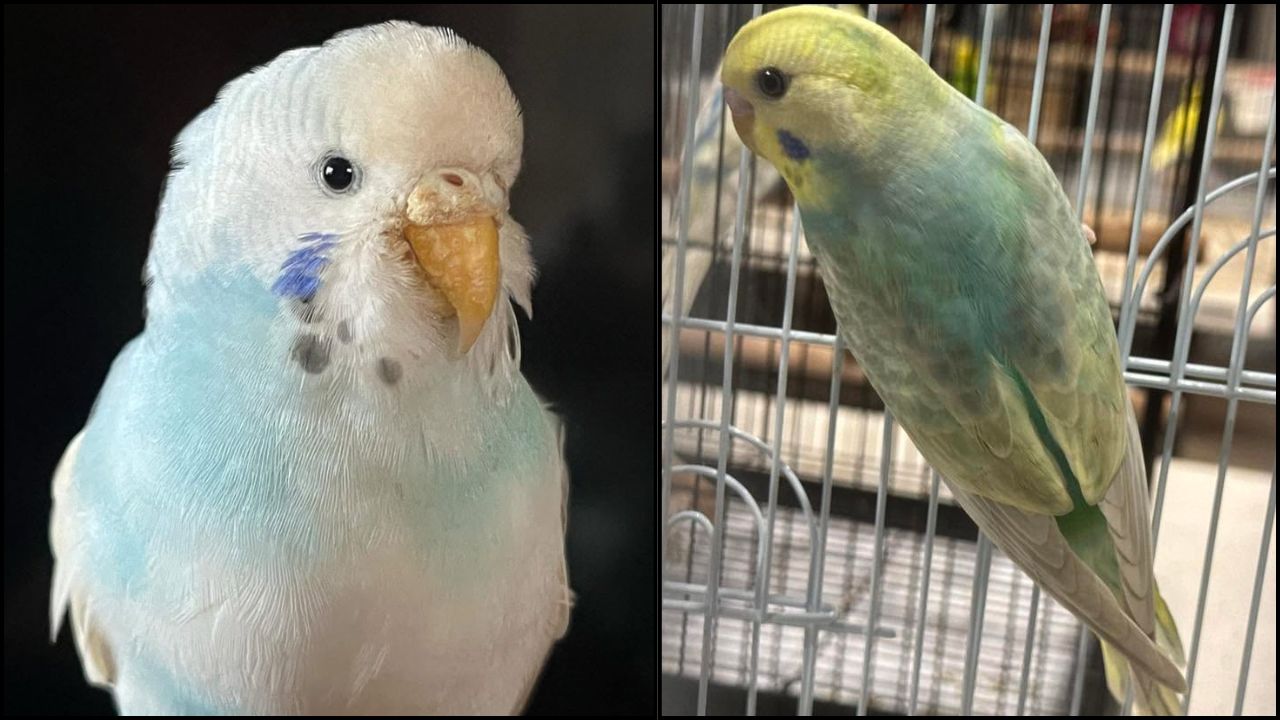

Neil has kept, bred, and sold budgerigars at Paradise Pets Swindon since 1988 — over 35 years of first-hand experience with this species. The RSPB’s updated guidance on trichomonosis this summer is genuinely significant, and budgie owners specifically keep asking me what it actually means for them. This is his direct, practical answer.
A regular customer caught me at the till last week, phone in hand, showing me a headline about the RSPB warning of a disease affecting garden birds this summer. She keeps two budgies and an aviary in her garden, and she wanted to know, quite reasonably, whether this was something she needed to act on or just news about wild birds that had nothing to do with her.
The honest answer is somewhere in between, and I think budgie owners specifically deserve a clear, direct set of actions rather than a general explanation of the disease. So that is what this article is — not the background science, which I have covered properly elsewhere, but exactly what you, as a budgie owner, should actually do right now.
What The RSPB Has Actually Said
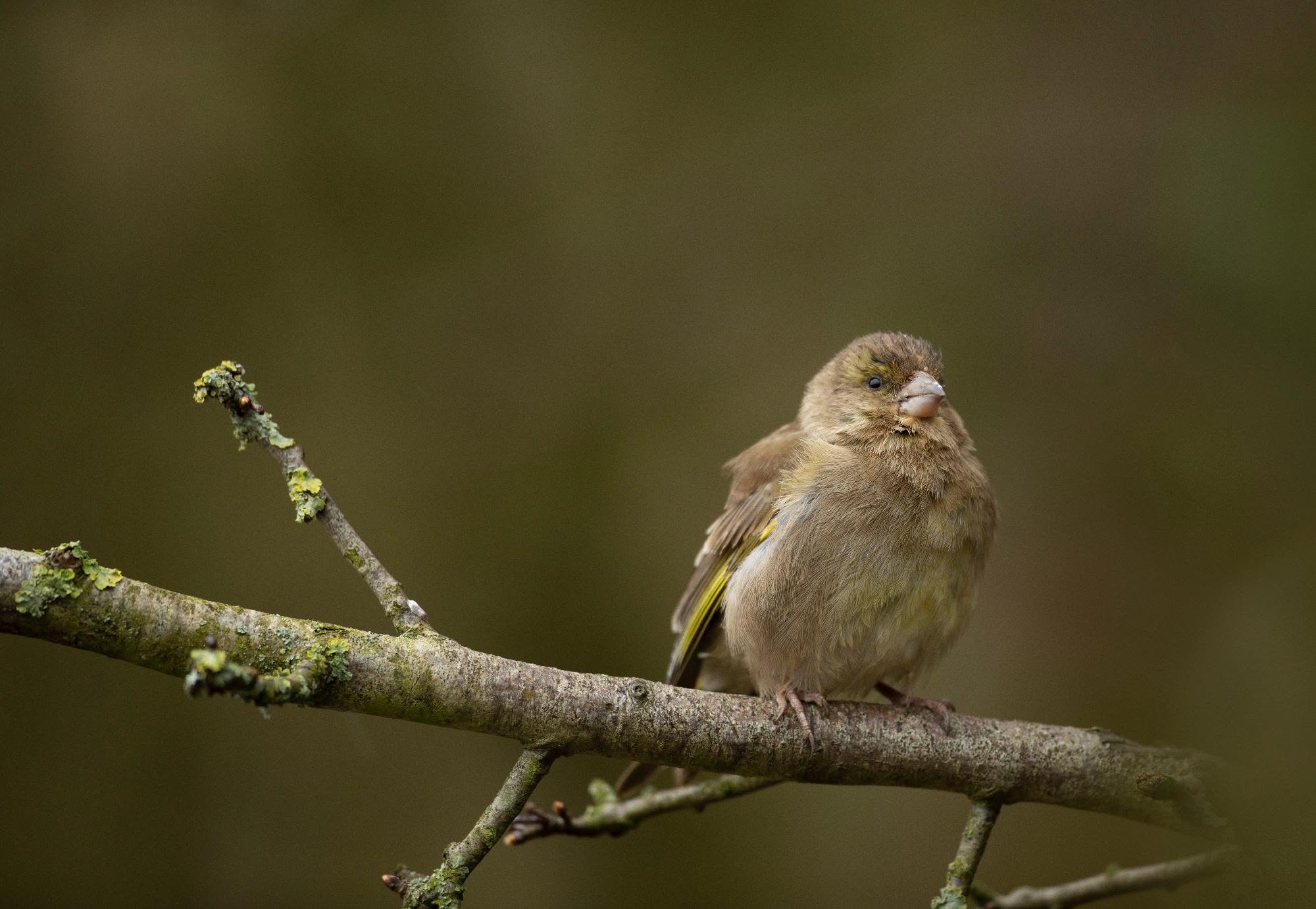
Following the 2026 Big Garden Birdwatch results and a review carried out with the British Trust for Ornithology and the Institute of Zoology, the RSPB has updated its long-standing garden bird feeding advice in direct response to the disease trichomonosis, which has driven a population decline of more than 65% in Greenfinches over the past three decades and is now considered a serious, ongoing wildlife health crisis.
RSPB Chief Executive Beccy Speight summed up the position clearly: feeding birds is something millions of people value, and the science shows species such as Greenfinches have been affected by disease spreading at feeders — but the answer is not to stop feeding, only to feed in a way that protects birds’ long-term health.
The core of the new guidance is to feed seasonally and feed safely, with several specific, practical changes that matter directly to any budgie owner with an outdoor element to their setup.
Why This Matters Specifically For Budgie Owners
Most coverage of this disease focuses, quite reasonably, on wild garden birds. But if you keep budgies in an outdoor aviary, let your birds use a garden flight cage, or simply have garden bird feeders anywhere near your budgies’ outdoor space, you are not a bystander to this story — you have a genuine, practical connection to it.
Trichomonosis spreads through regurgitated food and saliva, both directly between birds feeding one another and indirectly through contaminated food and water sources. An infected wild bird visiting a feeder near your budgie’s outdoor enclosure, or using a water source your budgies also have access to, creates a real transmission pathway — not because budgies and wild finches are the same species, but because the parasite spreads through shared contact points, and your garden may contain exactly that kind of shared point without you realising it.
This is the genuine, practical reason every budgie owner with any outdoor element should pay attention to this guidance, rather than assuming it only applies to people who feed wild birds and nothing else.
What Every Budgie Owner Should Do Right Now
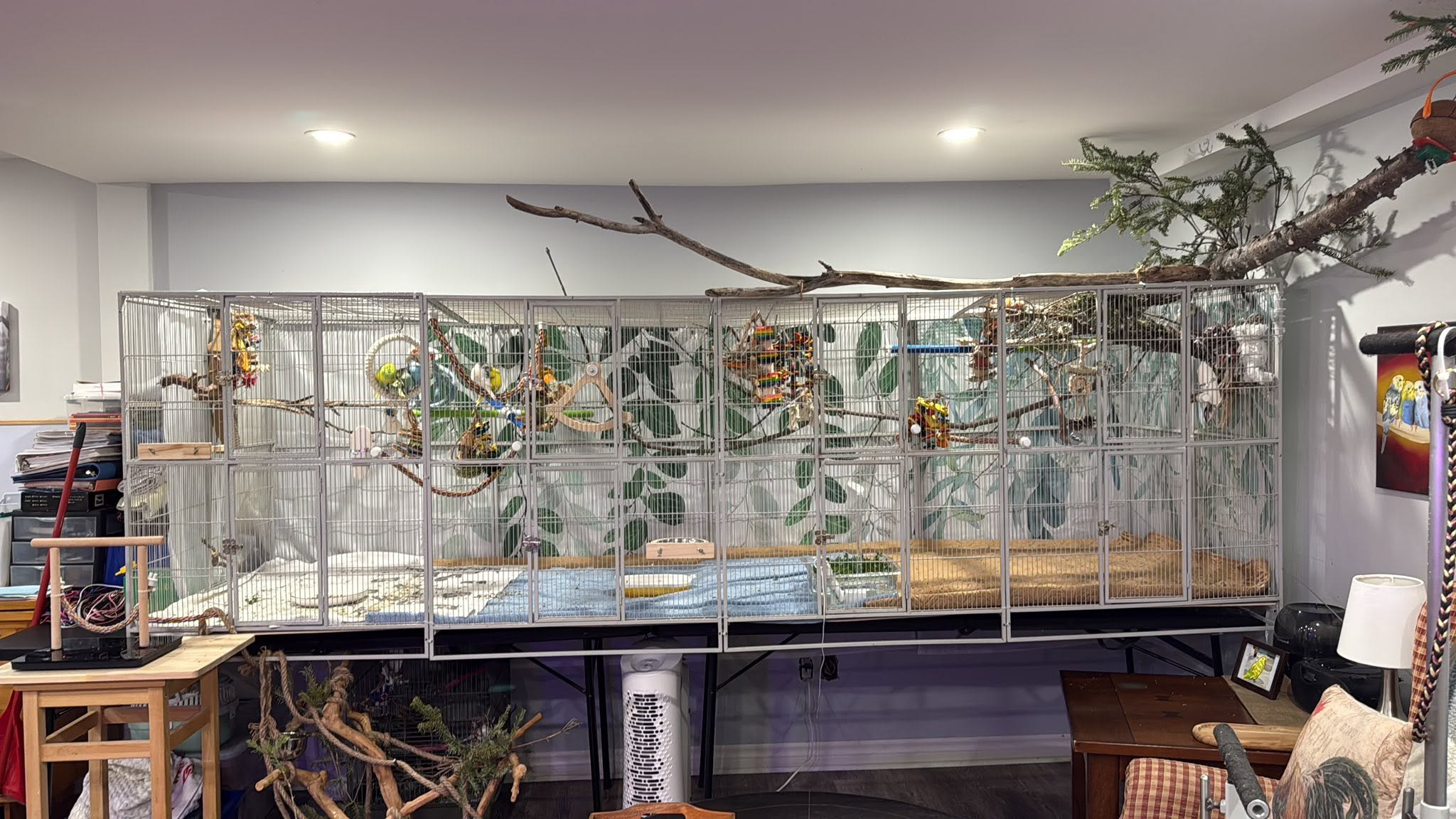
Here is the direct, practical checklist. If you have any outdoor element to your budgie keeping, work through every item below today.
- Check the distance between your budgie’s outdoor space and any garden bird feeders.
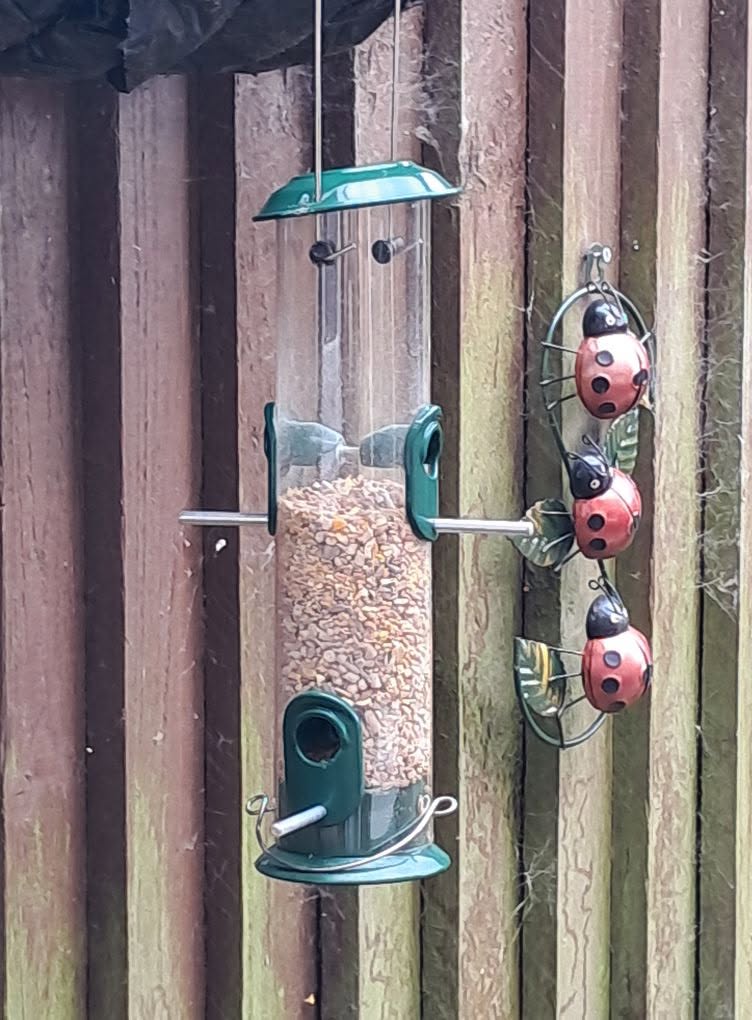
If they are close together or share any surface, water source, or airflow path where droppings or food debris could transfer, separate them properly or relocate one. - Switch any flat-surfaced feeder in your garden to a tube or hopper style immediately.
Bird tables and window feeders allow contaminated regurgitated food to sit and be picked up by other birds, even with daily cleaning. This is one of the clearest, most actionable changes in the new guidance. - Pause seed and peanuts in your garden bird feeders from May through October.
Small amounts of mealworms, fat balls, or suet can continue. This single seasonal change significantly reduces the disease risk in your garden generally, which protects any pet bird with proximity to it. - Clean and relocate every garden feeder weekly, without exception, through the rest of this summer.
Move them to a slightly different spot each time to stop contaminated debris building up in one place. - Change any water source — for wild birds or your budgies — every single day, using fresh tap water.
Standing water is one of the clearest indirect transmission routes for this disease. - Wash your hands thoroughly after handling garden feeders, before touching your budgies, their food, or their enclosure.
You are very often the actual link between a contaminated outdoor surface and your indoor or aviary birds, not the air or the birds themselves.
If You Keep Budgies Entirely Indoors
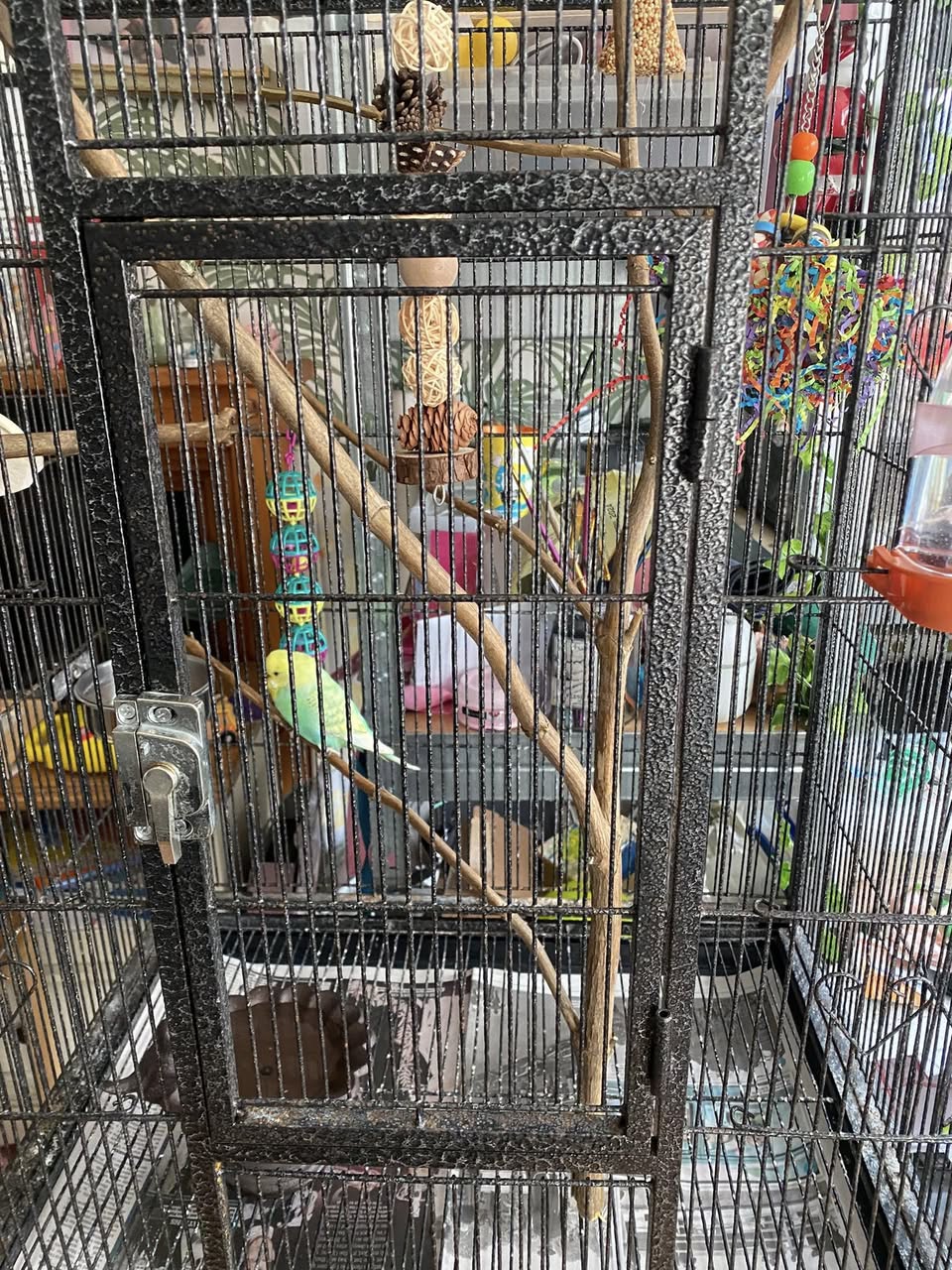
If your budgies have no outdoor aviary time, no garden flight cage exposure, and no contact whatsoever with garden bird feeding areas, your direct risk from this specific disease through this specific route is genuinely very low. You do not need to panic, and the guidance above is far less urgent for your specific situation.
That said, two things are still worth doing. First, if you also feed garden birds anywhere near your home, following the updated RSPB guidance protects the wild bird population regardless of your own indoor birds’ risk level, and I think that is worth doing simply because it is the right thing to do for the birds outside your window. Second, never bring an injured or orphaned wild bird into the same space as your indoor budgies without proper quarantine — that remains the one genuine crossover risk for an otherwise fully indoor setup.
What To Watch For In Your Own Budgies This Summer
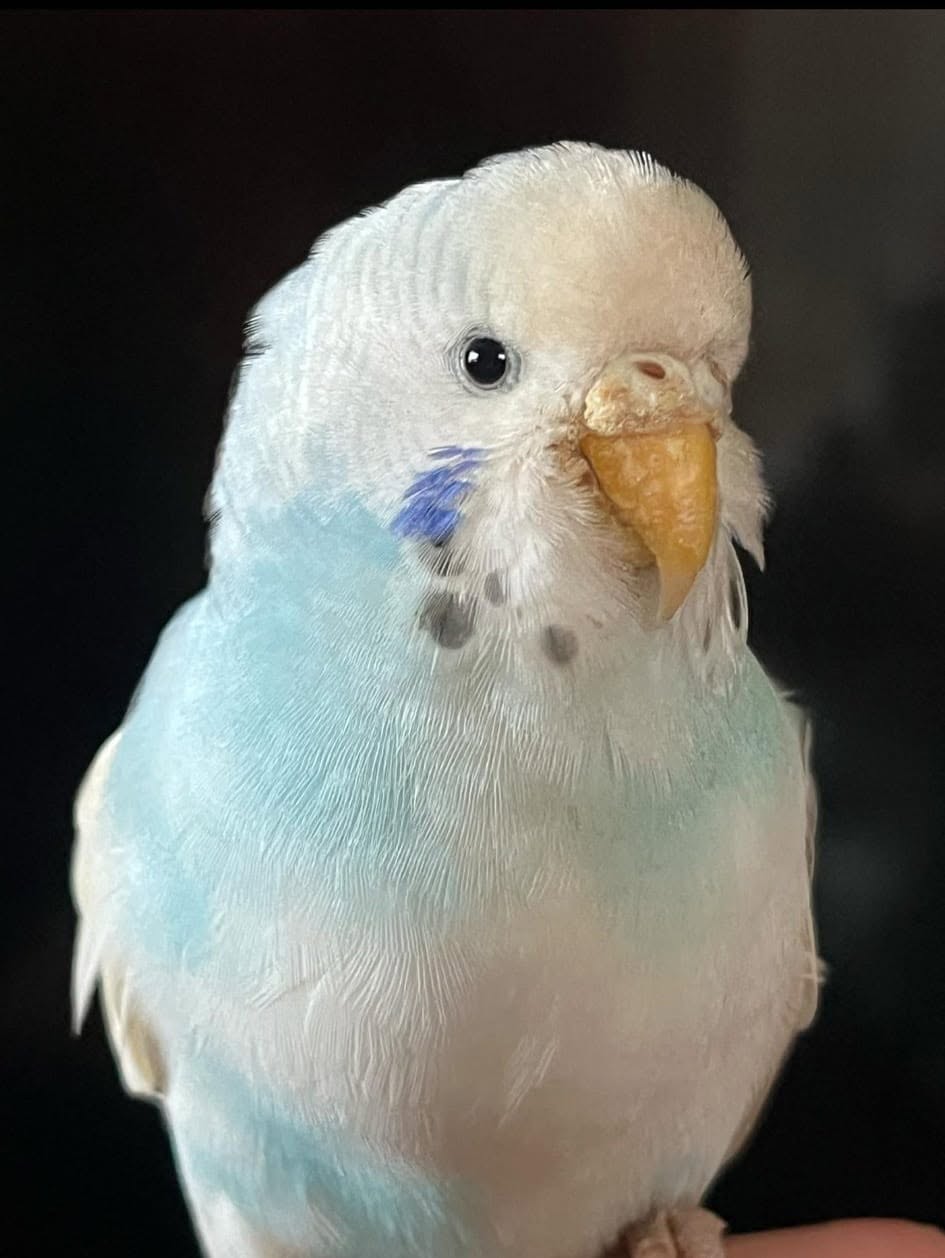
Whether your setup is indoor, outdoor, or somewhere in between, it is worth knowing exactly what trichomonosis looks like in a bird, so you can act promptly if you ever see it.
The combination most specific to this disease, rather than general illness, is matted or wet plumage around the beak together with visible difficulty swallowing. If you see that pattern in any of your birds this summer, do not wait to see whether it resolves on its own.
Why The Timing Of This Guidance Matters
The new advice is specifically built around the fact that trichomonosis spreads more easily when birds gather around feeders, particularly in summer and autumn — exactly the period we are in right now. This is not advice for some future risk window. It is advice for the next several months specifically, which is why I think it deserves immediate action rather than being filed away as something to think about eventually.
The Scottish SPCA has echoed this with their own updated guidance, noting that their rescue officers and wildlife centre regularly see high numbers of birds with trichomonosis in the summer months specifically, at varying degrees of severity. That consistency between multiple wildlife organisations, all pointing to the same seasonal pattern, is part of why I am treating this as genuinely time-sensitive advice rather than a general year-round precaution.
What This Doesn’t Mean
I want to be clear about what this guidance is not saying, because I think some of the more alarming headline framing risks overstating the message.
This is not a reason to stop feeding garden birds altogether — the RSPB has been explicit that feeding remains genuinely beneficial when done in line with the updated seasonal and hygiene advice. It is not evidence that budgies and other pet birds are at high direct risk purely from being kept outdoors in general — the risk is specifically tied to shared contact points with wild birds, not simply being outside. And it is not a reason to bring an outdoor aviary bird indoors permanently — a well-managed outdoor setup, separated appropriately from wild bird feeding areas and kept clean, remains a genuinely good way to keep budgies.
What it is, is a specific, actionable update that matters directly to anyone whose budgie-keeping setup has any crossover with the areas where wild birds gather to feed.
Frequently Asked Questions
Do I need to bring my outdoor budgie aviary birds indoors because of this warning?
No, this is not what the guidance recommends. A well-managed outdoor aviary, kept separate from wild bird feeding areas and following good hygiene practices, remains a perfectly good way to keep budgies. The recommendation is to manage the specific risk points described in this article, not to abandon outdoor keeping altogether.
How far should my budgie aviary be from garden bird feeders to be safe?
There is no single official distance figure, but the principle is to avoid any shared surfaces, water sources, or direct proximity where droppings or food debris could realistically transfer between the wild bird feeding area and your budgies’ space. If in doubt, more separation and dedicated, non-shared equipment is always the safer choice.
Can I still use feeders in the same garden as my budgie aviary if I follow the new guidance properly?
Yes, this is a reasonable approach for many owners — following the updated RSPB guidance properly, including pausing seed and peanuts through summer and autumn, retiring flat-surfaced feeders, and cleaning and relocating feeders weekly, significantly reduces the disease risk in the shared garden environment.
Is this disease something my vet can test for if I’m worried about my budgie?
Yes, an avian vet can diagnose trichomonosis, typically through examination and appropriate testing, and treat it with antiprotozoal medication if confirmed. Prompt diagnosis and treatment generally lead to good outcomes.
Should I be more worried if I keep a flock of budgies rather than just one or two?
A larger group sharing the same outdoor space, food, and water sources does mean that if one bird were to become infected through an external source, the close shared contact within the group could allow further spread between your own birds. This makes the preventive steps in this article, particularly around hygiene and water changes, even more worthwhile for larger setups.
Where can I get more detail on the disease itself, beyond what to do about it?
We have covered the fuller picture of trichomonosis and what it specifically means for indoor bird owners in another article on this site, which goes into the disease’s history, transmission, and broader context in more depth than this practical checklist does.
One Last Thing From Me
The customer who showed me that headline at the till left with exactly the checklist above, written out by hand because she wanted something concrete to act on rather than a vague sense of concern. She came back a few days later to tell me she had switched her garden feeder, repositioned her budgie aviary slightly, and felt considerably less anxious about the whole thing once she had something specific to actually do.
That is really the purpose of this article. The RSPB’s warning is genuinely significant, and it deserves to be taken seriously. But for a budgie owner specifically, it translates into a short, clear list of actions — most of which take only a few minutes — rather than something to worry about without a plan.
If you want help reviewing your own outdoor setup, or have any concern about your budgies this summer, come and find us at Manor Garden Centre, Cheney Manor, Swindon SN2 2QJ. Get in touch here or call 01793 512400.
Want Help Reviewing Your Budgie’s Outdoor Setup? Come And Talk To Us
We stock tube and hopper feeders, aviary supplies, and everything you need to keep your budgies safe this summer. If you have any concerns following the RSPB’s guidance, come in and talk to us — and if your bird shows any signs of illness, please contact an avian vet promptly.