
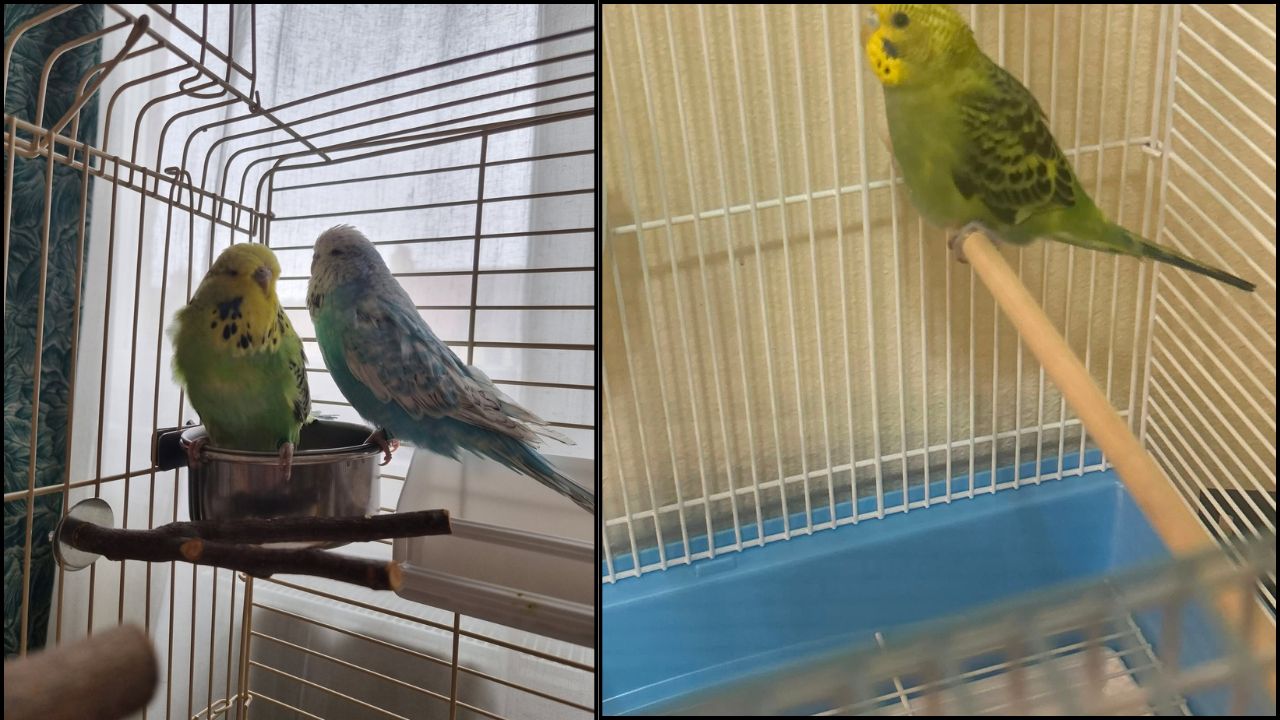

Neil has kept, bred and sold birds at Paradise Pets Swindon since 1988. A 2026 Oxford study on young wild birds found that extreme heat and heavy rain together can have a much stronger effect than either condition alone. The study was not about pet budgies, but the practical lesson for bird owners is clear: heat, humidity, airflow and fresh water all need checking during unsettled summer weather.
A recent University of Oxford study looked at long-term data from great tits in Wytham Woods, Oxfordshire. The researchers used decades of breeding records and found that different weather extremes affect young birds at different stages of development.
The headline number is striking: when extreme heat coincided with heavy rain, fledging mass was reduced by up to 27% in some broods. Heat alone or rain alone had a much smaller effect.
That does not mean a pet budgie is automatically at the same risk as a wild great tit nestling. The study was about wild birds, not cage birds. But it does highlight something pet bird owners should take seriously: heat becomes more difficult for birds to manage when airflow is poor and humidity is high.
What the Oxford Study Found
The Oxford research used long-term data from great tits in Wytham Woods. The researchers looked at how extreme weather during the nestling period affected body mass at fledging.
The study found that cold snaps and heavy rain can reduce growth and survival prospects in young birds. Heat and heavy rainfall together had a stronger combined effect, with fledging mass reduced by up to 27% in some cases, especially in later-season broods.
Body mass matters because young birds leaving the nest with lower reserves may have a harder time surviving. The study does not provide a simple pet-bird risk percentage, and it should not be read that way. It is evidence that weather combinations can matter more than one condition alone.
What This Means for Budgie Owners
Your budgie is not a great tit nestling in a woodland nest. A pet bird lives in a human-controlled environment, which means the owner has more control over risk.
But that control only helps if the cage is in the right place and the room conditions are being checked. A cage in a warm, still room can become uncomfortable quickly, especially if it is near direct sun, cooking heat, poor ventilation or stale air.
Birds do not sweat like humans. When they become too hot, they may hold their wings away from the body, pant, become quieter or move to the coolest part of the cage. High humidity and poor airflow can make heat harder to manage.
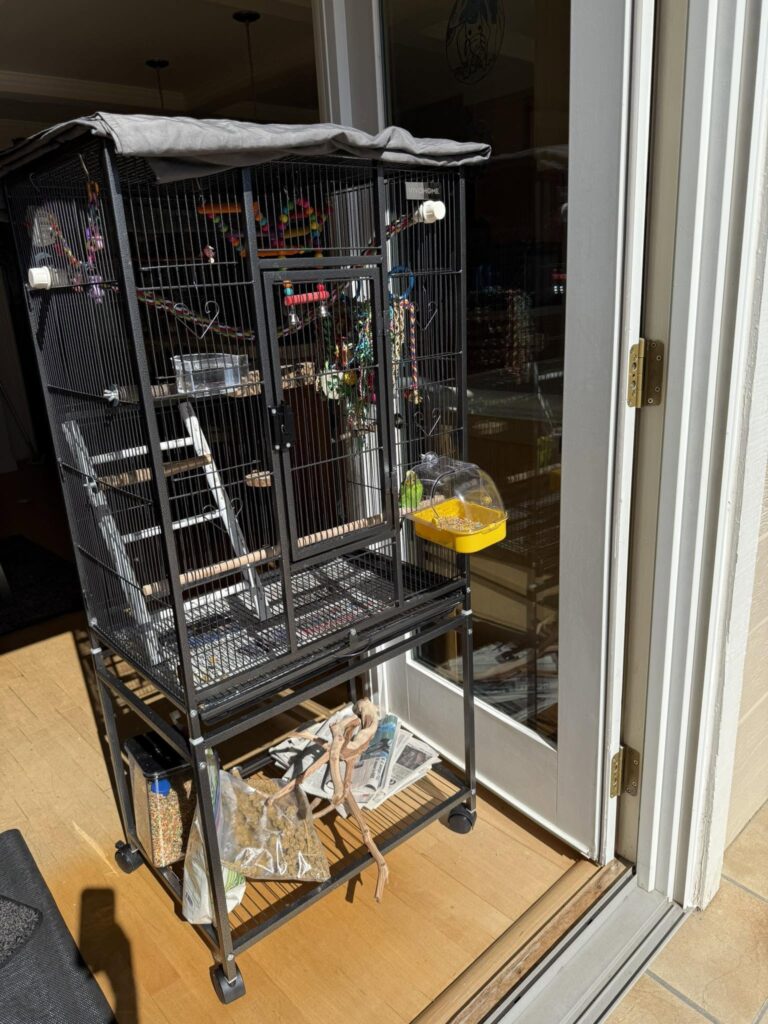
The Cage Checks to Make During Hot or Humid Weather
These checks are simple, but they matter. Do them before your bird shows signs of distress.
- Check direct sunlight. Make sure the cage is not receiving direct sun at any point of the day, especially near a window.
- Refresh water. Replace drinking water at least daily, and more often during hot weather.
- Improve safe airflow. Ventilate the room without placing the cage in a direct draught.
- Check room heat. Feel the room at cage height, not just where you are sitting.
- Avoid kitchen fumes. Do not keep birds near cooking fumes, steam, aerosols or non-stick cookware fumes.
- Watch humidity. If the room feels warm and sticky, treat it as higher risk than dry warmth.
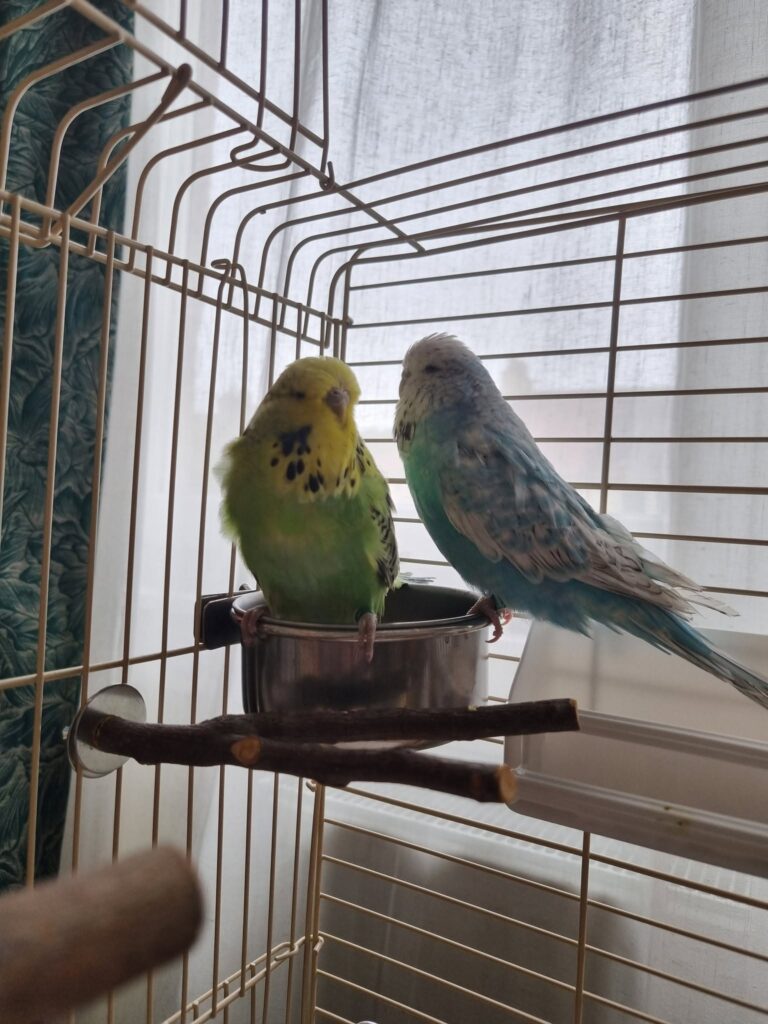
Signs Your Bird May Be Too Hot
Heat stress can become serious quickly in small birds. If you see concerning signs, move the bird to a cooler, safer environment and contact an avian vet for advice.
- Wings held away from the body. This can be an early sign that the bird is trying to lose heat.
- Open-beak breathing or panting. This is more concerning and should be acted on quickly.
- Quietness or reduced activity. A bird that is unusually still during a normal active period needs attention.
- Sitting low or on the cage floor. This is a serious warning sign.
- Laboured breathing, collapse or inability to perch. Contact an avian vet immediately.
Do not put a bird into sudden cold water or place it directly in front of a strong fan. The safer first steps are shade, cooler room, fresh water, gentle airflow and urgent veterinary advice if symptoms are serious.
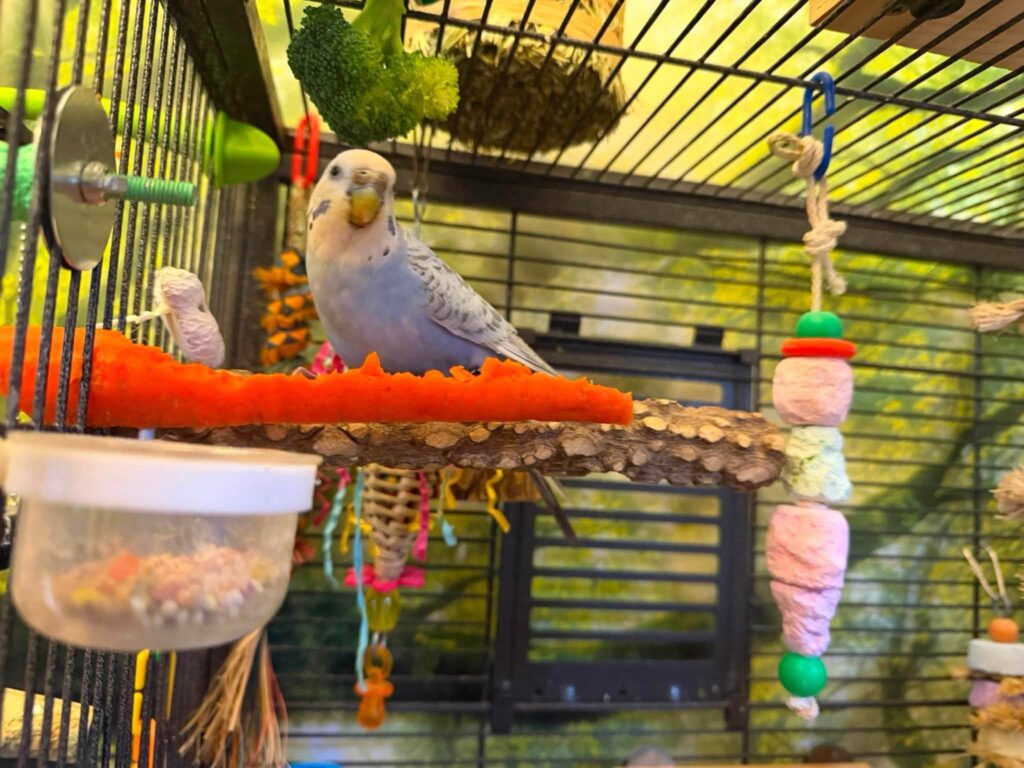
What About Air Conditioning?
Air conditioning can help if it keeps the room at a stable, safe temperature. But owners should not assume the cage is safe just because the room has an AC unit.
Check the actual cage position. Make sure the bird is not in a direct cold draught, not in direct sun and not in a corner where air is still. A simple room thermometer near the cage can be useful during hot weather.
Frequently Asked Questions
Does the 27% figure mean my budgie is 27% more likely to die?
No. The 27% figure refers to reduced fledging mass in wild great tit nestlings under specific weather conditions. It is not a pet budgie death-risk percentage. The useful lesson is that heat combined with wet or humid conditions can be more stressful than heat alone.
Does this only matter for young birds?
The Oxford study focused on wild nestlings. Adult pet birds are different, but young birds, moulting birds, elderly birds and birds with health problems may have less reserve during hot or humid conditions. All birds should be monitored carefully in hot weather.
Should I use a fan near my bird?
Gentle room airflow can help, but do not point a strong fan directly at the bird and do not create a cold draught. The goal is safe ventilation, not blasting the cage.
How often should I change water in hot weather?
At least once daily, and more often if the room is warm or the water becomes dirty. Bowls should be cleaned properly, not just topped up.
When should I call a vet?
Call an avian vet urgently if your bird is open-mouth breathing, weak, collapsed, sitting on the cage floor, unable to perch, or not responding normally. Heat stress can become serious quickly.
Where can I get cage-position advice in Swindon?
You can visit Paradise Pets at Manor Garden Centre, Cheney Manor Industrial Estate, Swindon SN2 2QJ, or call 01793 512400. We can talk through cage position, airflow, shade, water and bird-safe summer setup.
One Last Thing From Me
The Oxford study is a wildlife study, not a pet-care instruction manual. But after more than 35 years with birds, I think the practical message is worth hearing: summer bird safety is not just about avoiding direct sun.
Heat, humidity, poor airflow and stale water can combine into a worse situation than owners realise. The fix is usually simple if you act early.
Check the cage today. Check where the sun lands. Change the water. Improve safe airflow. Watch your bird’s breathing, posture and activity.
If something does not look right, do not wait and hope. Speak to an avian vet.
Questions About Your Bird’s Summer Cage Setup?
Come and speak to us at Paradise Pets. We can help you check cage position, airflow, water setup, perches, enrichment and safer summer routines for budgies, cockatiels, canaries and other cage birds.
Sources Checked for This Article
Last checked: 16 July 2026. These sources are included so readers can verify the Oxford study and practical welfare guidance discussed in this article.
- University of Oxford: climate extremes hinder early development in young birds
- Global Change Biology: Developmental stage-specific responses to extreme climatic events
- PubMed Central: full text of the Oxford great tit study
- EurekAlert summary of the Oxford study
- RSPCA advice for pets in hot weather
- RCVS Find a Vet