
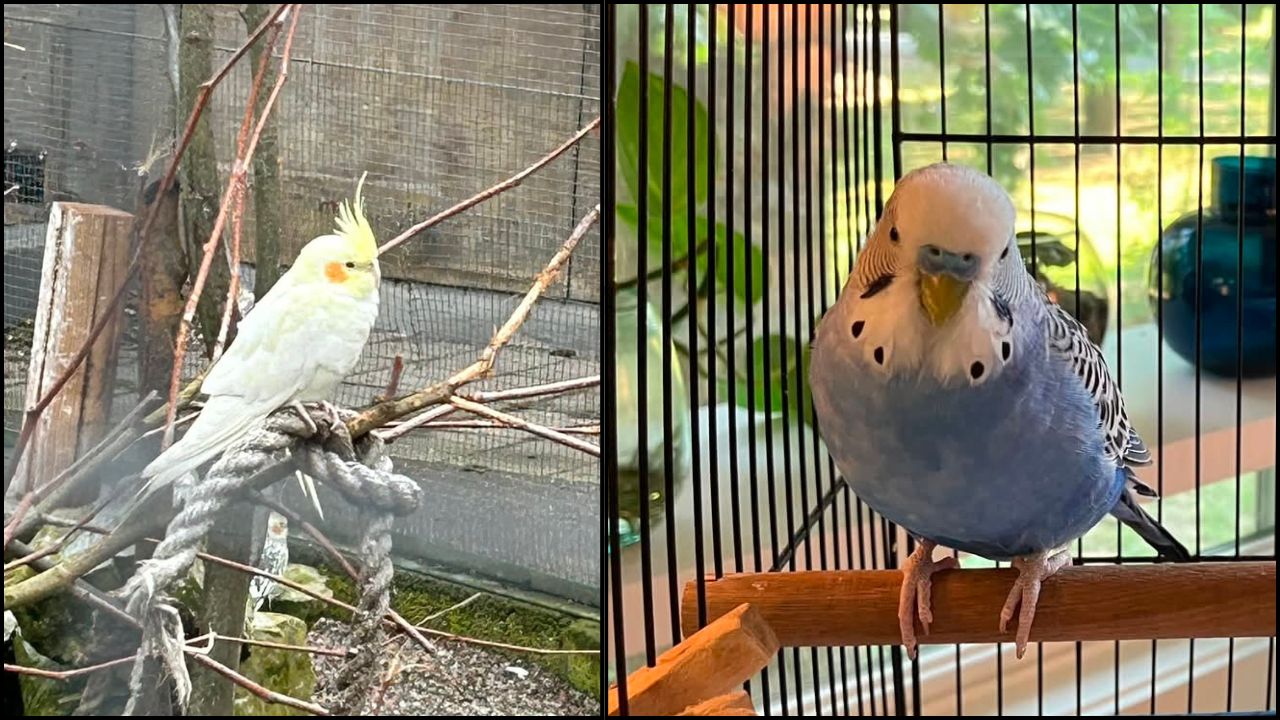

Neil has kept, bred, and sold cage and aviary birds at Paradise Pets Swindon since 1988 — over 35 years of first-hand experience with budgerigars, cockatiels, canaries, finches, and dozens of other species. Scientists have confirmed what many in the bird world have been observing for years: climate change is already affecting UK birds in measurable, documented ways. This article explains what that science is actually saying, why it matters directly to pet bird owners, and the one specific thing every budgie and cockatiel owner should do this weekend.
A customer came in on Thursday and mentioned she had read something about climate change and UK birds — scientists confirming things were shifting faster than expected, breeding seasons changing, species moving. She asked whether any of it meant anything for her cockatiel. Whether it was connected.
I told her yes. More directly than most people realise.
Not because climate change is going to reach through the window of her living room and affect her cockatiel directly in some science-fiction sense. But because the science that documents what is happening to wild UK birds is documenting changes in temperature, in weather patterns, and in seasonal conditions that are already showing up in domestic settings — in the kinds of summers UK homes are now experiencing, in the heatwave frequency that has changed in the last decade, in the air quality and seasonal extremes that are different from what they were when I started in this trade in 1988.
The climate is changing. The homes that pet birds live in are part of that climate. And the specific thing every budgie and cockatiel owner should do this weekend is a direct, practical response to what the science is telling us is now a permanent feature of UK summers rather than an exceptional one.
What Scientists Have Actually Confirmed About Climate Change and UK Birds
The research confirming climate change impacts on UK birds is not speculative or future-oriented. It is documenting changes that have already happened and are continuing to accelerate.
Breeding seasons for many UK species have shifted measurably earlier over the past several decades — a direct response to warmer springs arriving sooner. The distribution of species is changing, with some moving northward as temperatures rise and others experiencing range contraction as conditions in their traditional habitats shift beyond what they can tolerate. Phenological mismatches — timing gaps between when birds need food and when that food is available — are creating breeding failures that are being documented in long-term datasets.
The British Trust for Ornithology, the RSPB, and multiple academic research groups have produced data showing that the pace of change is faster than many models predicted even a decade ago. The summers that were projected for 2050 are arriving in the 2020s. The frequency of days above 30 degrees Celsius in the UK has increased. The number of heatwave events per decade has risen. The length and intensity of hot periods has changed.
For wild birds, these changes are stressful and in some cases catastrophic — but wild birds have at least the option of behavioural response. They can move to shade. They can alter foraging patterns. They can, at a population level over generations, shift their ranges.
A pet bird in a cage cannot do any of these things. It is fixed in whatever environment its owner provides, in whatever position its cage is in, in whatever temperature its home reaches. The climate changing outside matters to a pet bird precisely because the pet bird has no ability to respond to it. The owner has to respond instead.
Why Budgies and Cockatiels Are Specifically Worth Thinking About
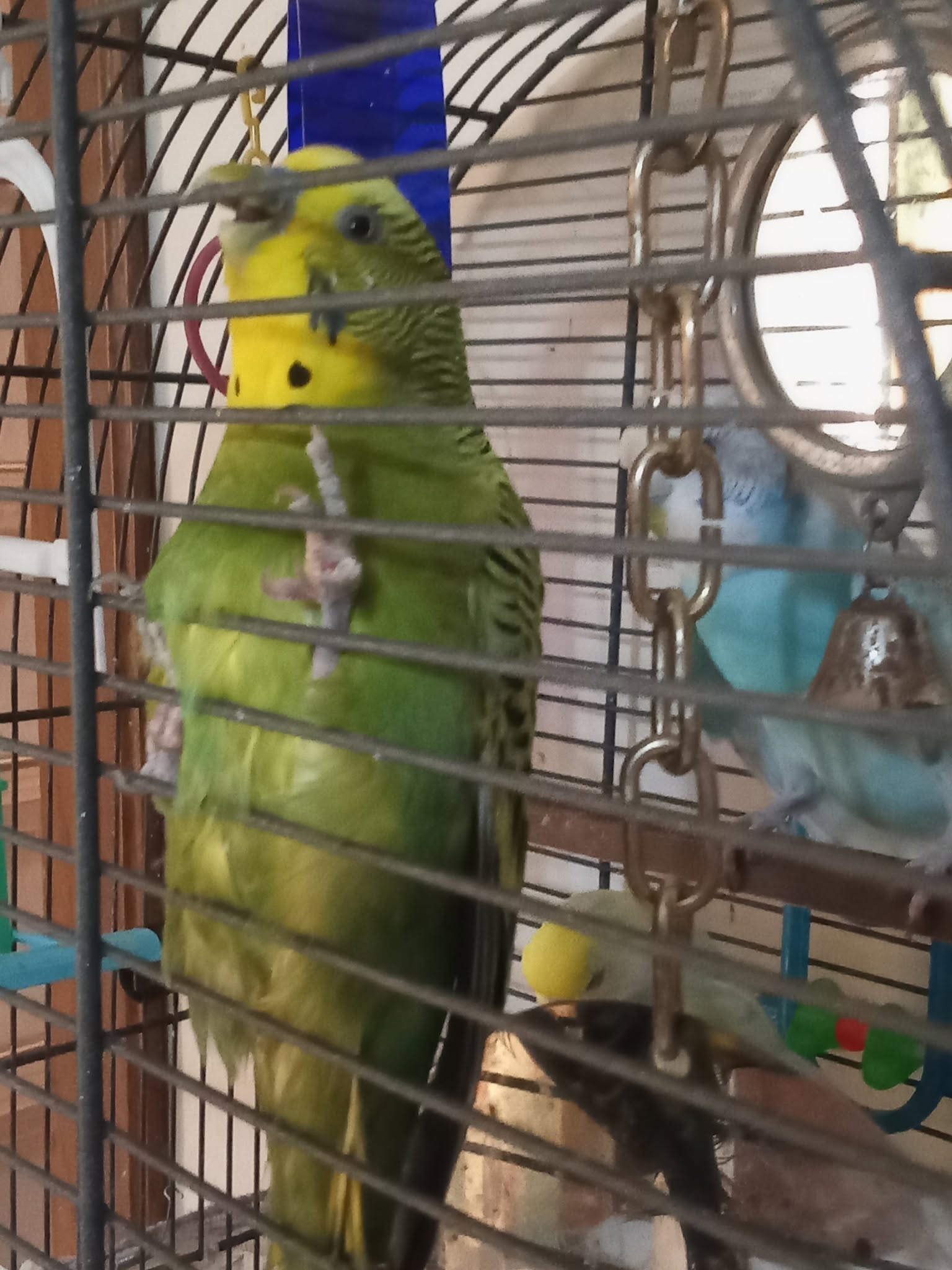
Of all the pet bird species kept in UK homes, budgerigars and cockatiels are by far the most common, and they are the species I want to focus on here because their natural biology creates a specific context that most owners are not aware of.
Both species originate from Australia. Both evolved in environments that are genuinely hot — far hotter than the UK has historically been. This leads many owners to assume that heat is simply not a risk for these birds, that their Australian origins give them a natural tolerance for high temperatures that makes UK summers straightforwardly fine.
This assumption is wrong in a specific and important way, and understanding why requires thinking about what Australian conditions actually look like for these birds in the wild, rather than what UK owners imagine Australian conditions to be.
Wild budgerigars in Australia manage heat through behaviour. They shelter during the hottest part of the day. They find shade. They reduce activity. They seek water. They are almost never exposed to direct solar radiation without the option of moving away from it. Their tolerance for high ambient temperatures comes with the assumption that they can thermoregulate behaviourally — and a pet bird in a cage, positioned in a UK home in direct sunlight during a summer afternoon, has none of these options available to it.
Furthermore, the relevant temperature is not the outdoor temperature or even the room temperature — it is the temperature inside the cage, which in direct sunlight can be dramatically higher than either. A cage in front of a south-facing window on a July afternoon in a UK home experiencing heatwave conditions can reach temperatures that are lethal to a budgie or cockatiel within an hour, regardless of what the thermometer on the wall says.
Australian origins do not protect against this. The biology that makes birds unable to sweat is the same in a wild Australian budgerigar as in your pet one. What protects wild birds is the ability to move. Your bird does not have that.
What Has Changed Since 1988 — Why This Matters More Now Than It Did
I want to say something that I think is important context for everything that follows.
When I started in this trade in 1988, a genuinely hot UK summer was an infrequent event. A day above 30 degrees Celsius was notable. A sustained period of high heat — what we now call a heatwave — was something that happened rarely enough that owners who were not prepared for it could be forgiven for being unprepared. The risk was real but the frequency was low enough that reactive management was possible. You heard the forecast, you moved the cage, it was fine.
That is no longer an accurate description of UK summers. The frequency of days above 30 degrees Celsius has increased significantly. The number of heatwave events per decade has risen. The record temperatures set in the last few years would have been essentially unimaginable in the UK of 1988. The summers that are now normal were exceptional within living memory.
This means that the approach of being reactive — of waiting for the specific forecast and responding to it — is no longer adequate. A reactive approach to a low-frequency risk is reasonable. A reactive approach to something that now happens regularly across every summer is an approach that will be caught out. The correct response to a permanent change in summer conditions is a permanent change in how the home environment for a pet bird is set up and managed.
That is the shift I am asking every budgie and cockatiel owner to make this weekend. Not a response to this specific weekend’s weather. A permanent structural change to how the bird’s environment is managed from now on.
The One Thing to Do This Weekend — And Why It Is Permanent, Not Temporary
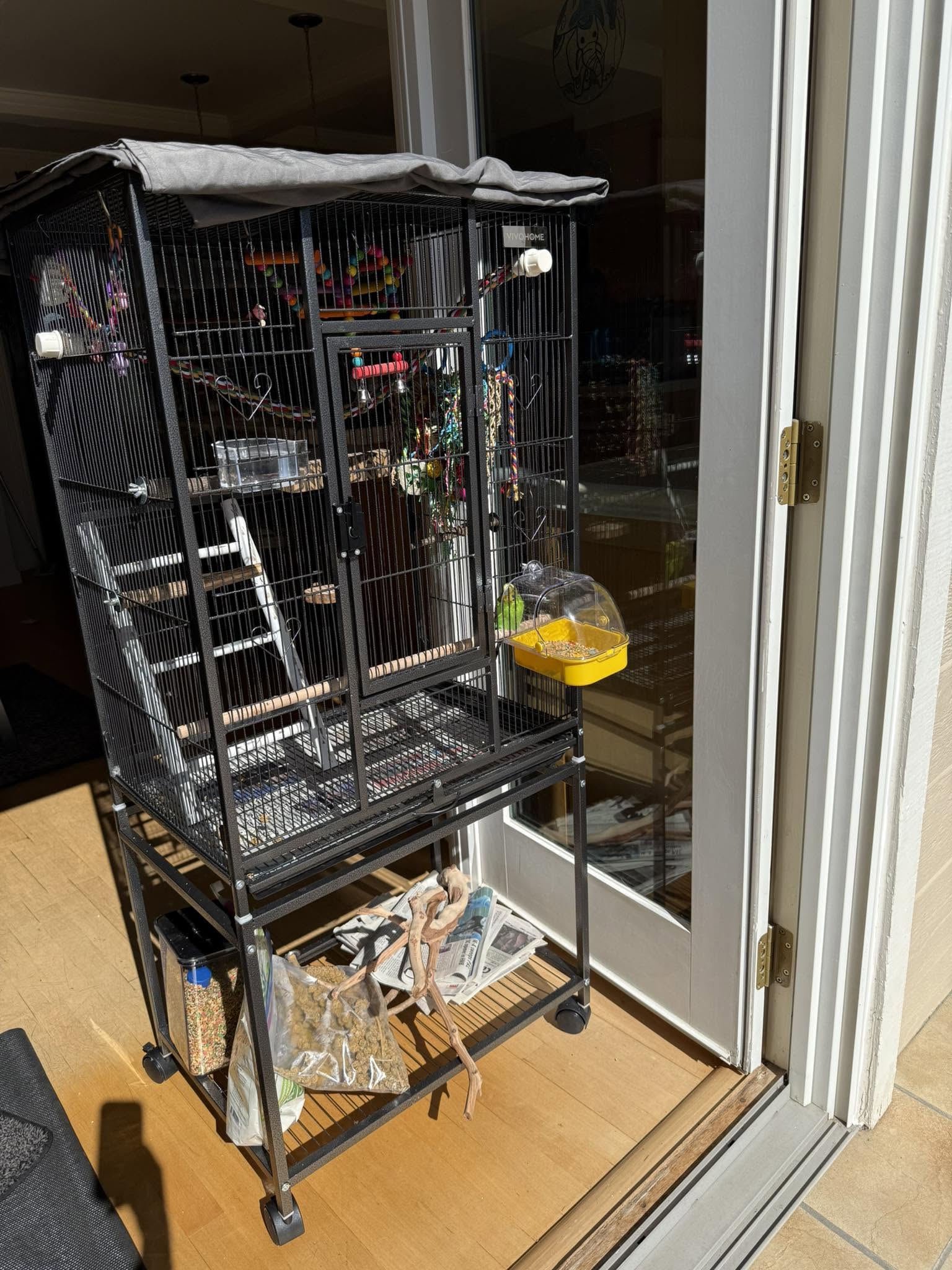
The single most impactful thing every budgie and cockatiel owner in the UK should do this weekend is this: move the cage to a position where direct sunlight cannot reach it at any point during the day, and commit to keeping it there permanently.
Not for the weekend. Not until the heatwave passes. Permanently, as the baseline position from which the cage does not move unless there is a specific reason assessed against the criteria below.
Here is what that position looks like, practically:
Away From Direct Solar Exposure at All Hours
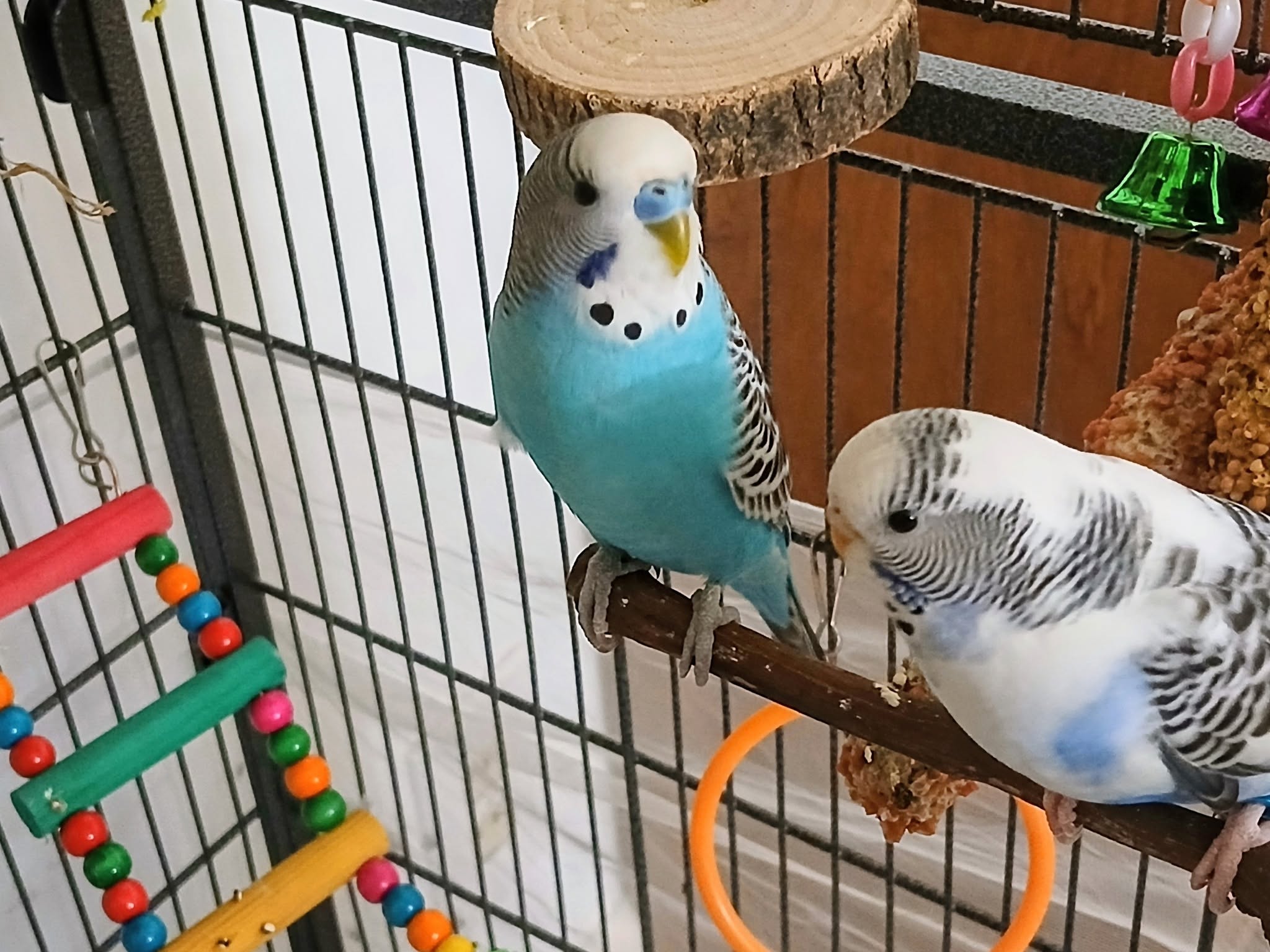
The sun moves throughout the day. A window that faces east is safe from afternoon sun but receives direct morning sun. A south-facing window receives direct sun through most of the day in summer. A west-facing window receives the most intense afternoon sun — the hottest part of the day combined with the most aggressive solar angle. A north-facing wall receives no direct solar radiation at any time of year and is the safest orientation for a cage in a UK home.
If a north-facing wall is not available, a position where curtains or blinds can be drawn on sun-facing windows without eliminating all natural light from the room is the next best option. The cage needs indirect natural light — it does not need direct solar exposure, and in summer direct solar exposure is a risk rather than a benefit.
Away From the Kitchen
This is year-round guidance, not summer-specific, but summer cooking patterns make it more pressing. Non-stick cookware at high temperatures releases fumes that kill birds rapidly — this is not a theoretical risk, it is a well-documented cause of bird death in UK homes. The cage should never be in the kitchen, and the room where the bird is kept should not have direct connected airflow to the kitchen when cooking is happening.
With Consistent Natural Light but No Draughts
The cage position should allow the bird to experience the natural light cycle — important for physiological health and behaviour — without being in the path of draughts from open windows. In summer, these two requirements can come into tension. The resolution is to ensure that open windows for ventilation are not creating a direct airflow path across the cage, using fans to circulate room air rather than relying on through-draughts, and positioning the cage where ambient air moves through the room rather than across the cage directly.
At a Stable Temperature
Stability matters as much as the absolute temperature. A room that is warm but consistent is less stressful for a bird than one that swings between cool and hot as sun exposure changes through the day. The position that provides the most consistent temperature — typically an interior room with good but not direct ventilation — is the best permanent position for the cage in the UK climate of 2026.
What Else to Do Alongside the Cage Move
The cage position is the most important single change, and it is the one I want to be emphatic about. But there are several supporting actions that together constitute a permanently climate-appropriate home environment for a pet bird in the UK in 2026.
Fresh Water Checked Twice Daily in Hot Weather
Water in a warm room heats faster than most owners expect and degrades in quality quickly. A bird drinking warm water gets less physiological benefit from it. In warm weather, check and refresh water morning and evening at minimum, and more frequently during sustained heat. The water dish should be cleaned each time it is refreshed, not simply topped up.
Light Misting Offered During Hot Periods
Most budgies and cockatiels tolerate and often genuinely enjoy a fine mist of cool — not cold — water during the hottest part of a warm day. This is not a substitute for proper cage positioning but it is a useful addition. A clean spray bottle, plain water, a fine mist setting, and a bird that is observed during and after to confirm it is comfortable with the experience. Most are. Some are not, and should not be forced.
A Thermometer Near the Cage
This costs a few pounds and provides genuinely useful information. Knowing the actual temperature near the cage — not the outdoor temperature, not the room temperature on the other side of the room, but the temperature in the specific microclimate where the bird lives — is the basis for informed management rather than guesswork. A reading above 30 degrees Celsius near the cage in summer should prompt review of position and ventilation. A reading above 35 degrees Celsius is a warning that needs to be acted on immediately.
A Veterinary Contact Established Before It Is Needed
Every point I have made in this article converges on one underlying principle: proactive management is the correct response to a permanent change in risk. The veterinary equivalent of this is having an avian-experienced vet identified, the practice number known, and the out-of-hours cover understood — before the bird is in difficulty, not during it. A bird showing signs of heat stress at six o’clock on a Saturday evening needs to reach veterinary care that evening. The owner who has this information in advance is in a fundamentally different position from the one who is searching for it while the bird is deteriorating.
Reading the Signs — What to Watch For This Weekend and Beyond
Alongside the structural changes, knowing what to look for is the other half of the response. These are the signs in a budgie or cockatiel that indicate heat stress or developing illness in summer conditions:
- Open-beak breathing in a comfortable-temperature environment. In genuine heat, this is expected thermoregulatory behaviour. In a room that is not hot, it is a sign of respiratory distress.
- Wings held significantly away from the body. A small amount of wing-holding is normal temperature regulation. Marked wing extension combined with reduced activity indicates overheating.
- Sitting on the cage floor. A bird healthy enough to perch will perch. A bird on the cage floor in warm conditions is a bird that has lost the strength or balance to maintain normal posture — this is an emergency.
- Unresponsiveness to your voice or presence. A bird that does not respond normally to familiar stimuli is a bird whose condition has deteriorated beyond normal tiredness. Act immediately.
- Reduced vocalisation over several days in warm conditions. Not dramatic silence but a sustained reduction in the normal level of chattering and song that is typical for the bird. This is a behavioural change worth noting and monitoring.
- Nasal discharge or changes in droppings alongside any other symptom. Any respiratory or gastrointestinal sign accompanying a behaviour change in summer warrants a call to the avian vet rather than a wait-and-see approach.
Frequently Asked Questions
My budgie comes from Australia. Surely it can handle a hot UK summer?
This is the most common misunderstanding I encounter on this topic, and I have addressed it in detail above — but the short answer is: wild Australian budgerigars manage heat through behaviour, primarily by seeking shade and reducing activity. Your pet budgie in a cage cannot do either of these things. The Australian origin is not a protection against heat when the bird has no ability to behaviourally thermoregulate. The cage position is the protection, because it is the only thing that controls the bird’s thermal environment.
How do I know if the room is too hot for my bird without a thermometer?
The honest answer is that you do not know reliably without one, which is why I recommend getting one. The subjective rule of thumb is that if you feel uncomfortably warm sitting in the room, the bird is almost certainly in difficulty — because the cage microclimate, particularly near any sun exposure, will be warmer than your experience of the room suggests. But thermometers are cheap, the information they provide is precise, and there is no good reason to manage something this important on guesswork.
Is climate change going to keep making UK summers worse for pet birds?
Based on the science, yes — the trend in UK summer temperatures is upward, the frequency of extreme heat events is increasing, and the projections suggest this will continue. This is why I am framing the cage position change as permanent rather than seasonal. The UK summer that requires this level of attention to pet bird environments is not an occasional exception anymore. It is the expected condition, and the management should reflect that.
What should I do if my bird shows signs of heat stress right now?
Move the cage to the coolest part of the house immediately. Offer fresh cool water. Mist lightly with cool water — not cold. Do not use ice. Ensure airflow through the room without a direct draught across the cage. If the bird does not show clear improvement within fifteen to twenty minutes, or if it is already unresponsive or on the floor of the cage, call your avian vet immediately. Heat stroke in birds requires veterinary intervention — home cooling is first aid, not treatment.
Where can I get advice about my bird’s summer setup in Swindon?
Come into Paradise Pets at Manor Garden Centre, Cheney Manor, Swindon SN2 2QJ or call us on 01793 512400. We will go through your specific home layout, the cage position, and the summer management approach with you honestly. Free advice, no obligation — and if we think a vet is needed for anything you describe, we will tell you that too.
One Last Thing
The science that confirmed climate change is hitting UK birds hard is not telling us something we did not already see coming. Those of us who have watched birds closely for decades have been watching the summers change, watching the heat events become more frequent, watching the conditions that used to be exceptional become routine.
The response for wild birds is a conservation challenge that extends far beyond what any individual can address. The response for pet birds is something every individual owner can address this weekend, in their own home, with the cage in their living room.
Move the cage. Check the water. Get a thermometer. Know your avian vet’s number. Do these things not as a response to this weekend’s weather but as the permanent baseline from which you manage your bird’s environment from now on. The summers are different. The management needs to be different too.
That is the honest, complete answer to the question my customer asked on Thursday. I hope it is useful to everyone reading it today.
Want to Make Sure Your Bird’s Summer Setup Is Right? Come In This Weekend
We will go through cage position, ventilation, water management, and anything else you are uncertain about — honestly, with 35 years behind the answer. Free advice, no obligation. Call us on 01793 512400 or come in today.