


Neil has kept, bred, and sold budgerigars at Paradise Pets Swindon since 1988 — over 35 years of first-hand experience with these birds. A budgie sleeping standing up is one of the questions that comes from a place of genuine concern — an owner who has noticed something about their bird and wants to understand it. In most cases the answer is entirely reassuring. In a small number of cases it points to something worth checking. This guide explains both.
It comes up most often from newer owners. They have noticed their budgie on the perch, eyes closed, completely still — standing upright on both feet rather than lying down or sitting flat. They assumed birds slept horizontally, or curled up, or in some position that looks more obviously like sleep to a human eye. What they are seeing does not match that expectation, and the mismatch has made them wonder if something is wrong.
In almost every case, nothing is wrong. A budgie sleeping while standing on the perch is a budgie doing exactly what budgies do. The biology behind it is straightforward, the behaviour is universal across healthy birds, and once you understand why birds sleep this way the question answers itself.
But there are specific variations on this pattern that do carry meaning — and knowing what to look for within the normal behaviour is what separates an owner who is unnecessarily worried from one who catches something early.
I have been watching budgies sleep for thirty-five years. Here is what it all means.
Why Birds Sleep Standing Up — The Biology
The reason budgies — and most birds — sleep while standing on a perch comes down to a specific anatomical feature that most owners have never heard of: the flexor tendon locking mechanism.
A bird’s foot and leg are connected by tendons that run from the muscle above the knee down through the ankle and into the toes. When a bird bends its knee — which it does automatically when it settles its weight onto a perch — the tendon is pulled taut. That tension causes the toes to close and grip around the perch. The critical point is that this grip requires no muscular effort to maintain. The toes are held closed by the mechanics of the bent leg, not by active muscle contraction.
This means that a bird sitting on a perch is gripping that perch involuntarily and effortlessly. The grip does not relax when the bird falls asleep. It does not require the bird to remain conscious or alert to maintain. A bird on a perch is, in a mechanical sense, locked to it — and it stays locked whether it is awake, asleep, or anywhere in between.
This is why birds do not fall off their perches when they sleep. It is also why a budgie sleeping upright is not doing something that requires effort or balance. The perch is holding the bird as much as the bird is holding the perch.
What Normal Sleeping Looks Like — So You Know What to Compare
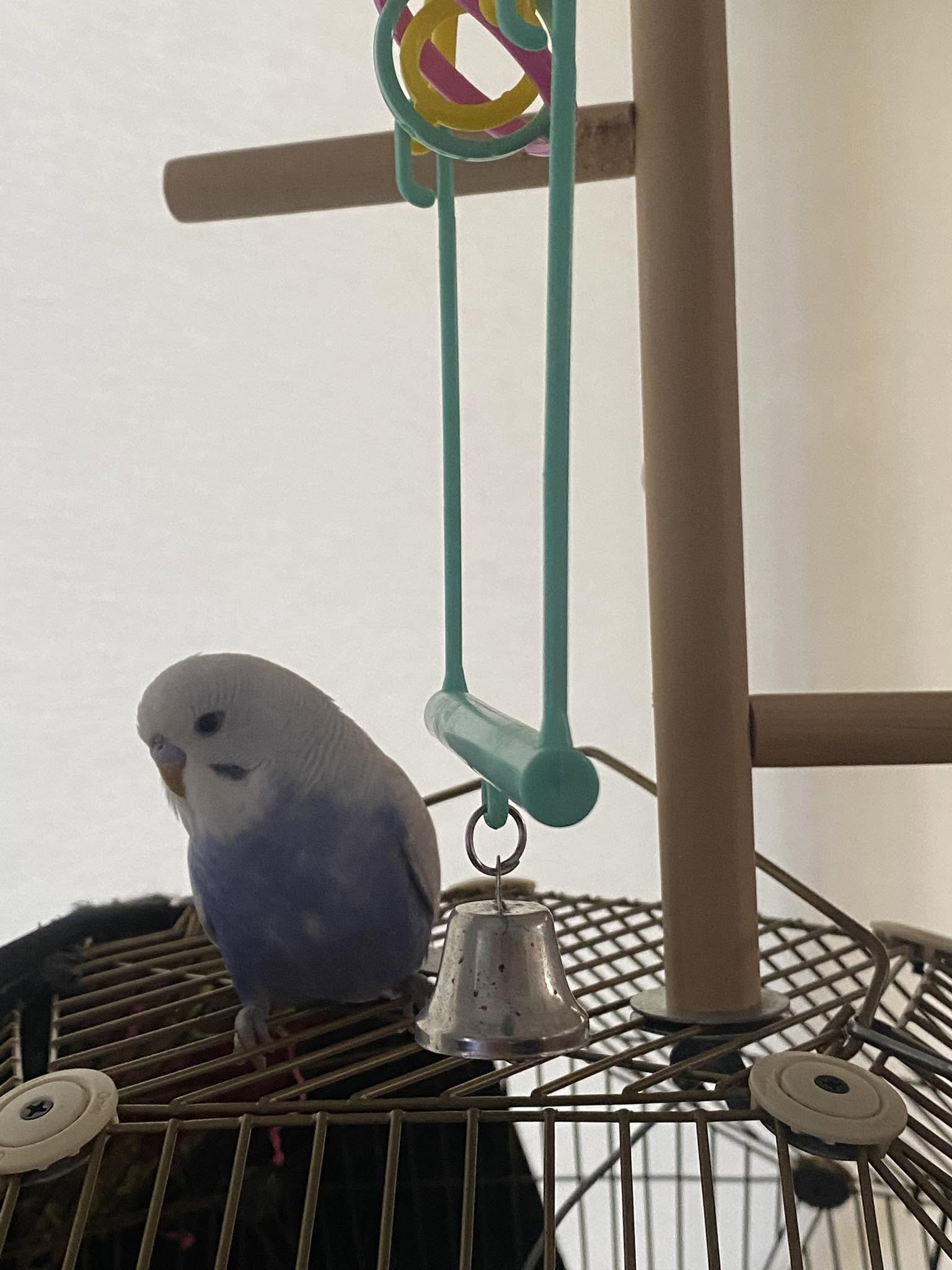
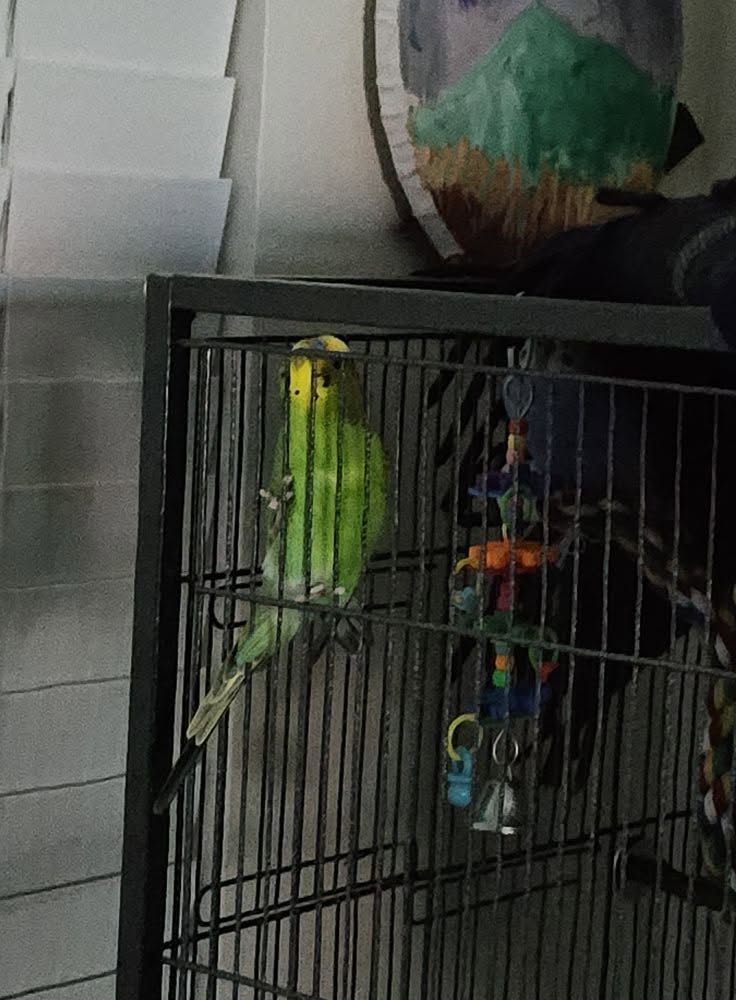
A healthy budgie in normal sleep settles on the perch in the highest, most sheltered position available — usually the highest perch in the cage, with its back toward the room if possible. It stands on one foot, the other tucked up into the belly feathers. Its feathers are slightly raised — not the pronounced fluffing of an unwell bird, but a mild puffing that traps a layer of warm air close to the body. Its beak is often tucked into the feathers of the upper back or shoulder. The eyes are closed.
The bird is still but not rigid. If you move close to the cage, a healthy sleeping budgie will rouse — opening an eye, lifting the head, registering your presence — within a second or two of being disturbed. It does not take long to respond. A sleeping bird is not unconscious. It is in a light, easily interrupted rest state that allows it to react quickly to a perceived threat.
Deep sleep in budgies typically happens in the early hours of the night, after the initial settling period. At other times the bird may appear to be sleeping but is actually in a doze — resting with eyes partially or fully closed but mentally alert enough to respond rapidly.
Knowing what normal looks like makes the abnormal much easier to spot when it appears.
One Foot Tucked Up — Normal and Healthy
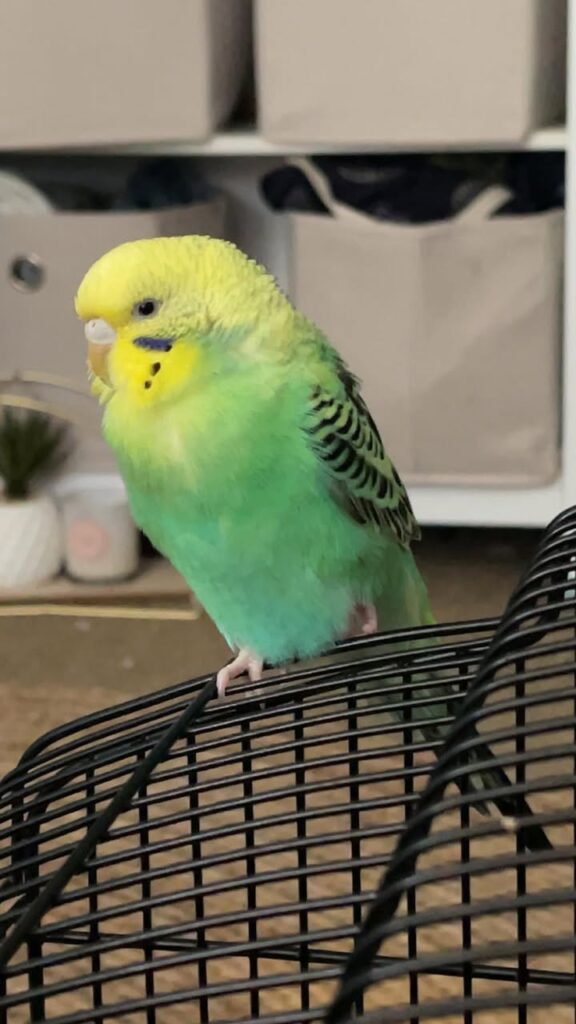
The single-foot sleeping posture is the one that triggers more questions than any other aspect of budgie sleep, and the reassurance is straightforward: it is completely normal, it is universal across healthy budgies, and it is a sign of a comfortable, well-thermoregulated bird.
The unfeathered legs of a budgie are a significant source of heat loss. By tucking one leg up into the belly feathers, the bird reduces that heat loss by half — insulating one leg while the other maintains the grip on the perch. It is a simple and effective piece of thermal management that birds have been doing for a very long time.
A bird that sleeps consistently on one foot, alternating which foot it tucks from night to night or even within the same night, is a healthy bird with a normal thermoregulation behaviour. There is nothing to be concerned about.
Where the one-foot posture becomes worth noticing is if the bird is always tucking the same foot — particularly if that foot or leg shows any visible abnormality when the bird is active. A bird that consistently favours one side may be resting a leg that is uncomfortable. That is a different pattern from the normal alternating tuck, and it is worth examining the favoured leg more carefully for signs of injury, swelling, or abnormal foot position.
Head Tucked Into Feathers — Normal and Healthy
Another sleeping posture that regularly prompts concern from new owners: the beak tucked into the feathers of the upper back or shoulder, so that the bird appears almost headless from a distance.
This is normal. The beak is uninsulated — bare skin, no feather covering — and in sleep it is a source of meaningful heat loss. Tucking it into the feathers of the back provides insulation and reduces that loss. Birds in colder conditions tuck deeper. Birds in warmer conditions may sleep with the beak less buried or resting on the chest rather than fully tucked.
The tucked-head posture in a sleeping budgie is a sign of a bird that is comfortable enough to commit to deep rest. It is, in that sense, a positive sign — not one to worry about.
Sleeping During the Day — When It Is Normal and When It Is Not
Budgies are diurnal — active during daylight, resting when it is dark. That is the basic framework. But within that framework, healthy budgies also take short rest periods during the day — brief dozes, particularly in the afternoon, that are a normal part of the diurnal cycle.
A budgie that closes its eyes for ten or fifteen minutes in the early afternoon, then becomes active again, is doing something normal. A budgie that spends a significant portion of the day sleeping — multiple extended rest periods, or a general reduction in activity and alertness that persists across the day — is a different situation.
Excessive daytime sleeping in a budgie that is otherwise behaving normally may be a sign of insufficient night sleep — a room that is not dark enough, a noise that is disturbing the bird’s rest, or a covering routine that is inconsistent. In that case the solution is environmental: improve the night sleep conditions and the daytime pattern should normalise.
Excessive daytime sleeping alongside any other sign of illness — fluffing, reduced appetite, changes in droppings, reduced vocalisation — is not a sleep problem. It is a health problem that is presenting partly as lethargy and reduced activity. That bird needs a vet visit, not a later bedtime.
The distinction to apply: is the bird sleeping more than usual but otherwise normal in every other respect? Or is the increased sleep one of several things that have changed? The answer to that question determines the response.
Sleeping on the Cage Floor — The Sign That Changes Everything
A budgie sleeping on the perch, in any of the postures described above, is doing something normal. A budgie sleeping on the cage floor is not.
The floor of the cage is the last resort for a bird that can no longer manage the perch. It is cold, it is exposed, it is the furthest point from the safety of height that a prey animal seeks instinctively. A bird that has chosen the floor over the perch has done so because it does not have the strength, the balance, or the physical capacity to maintain a perch position.
The causes of a budgie sleeping on the floor range from severe illness — systemic infection, organ failure, advanced nutritional collapse — to injury that prevents perching, to a bird that is in the final stage of a condition that has been progressing for some time.
If you find your budgie on the floor, particularly if it is also fluffed, slow to respond, or feels lighter than usual when you pick it up — this is a same-day vet visit. Do not wait until morning. Do not wait to see if it improves. A bird that has reached the floor is a bird that has been unwell for longer than may have been apparent, and the window for effective intervention may already be narrowing.
Keep the bird warm while you arrange the vet visit. A sick bird loses heat rapidly and being cold adds physiological stress to an already compromised system. A small box with air holes, lined with a soft cloth, placed near — not on — a gentle heat source, is better than leaving the bird in a cold cage.
Sleeping Fluffed — The Difference Between Comfortable and Unwell
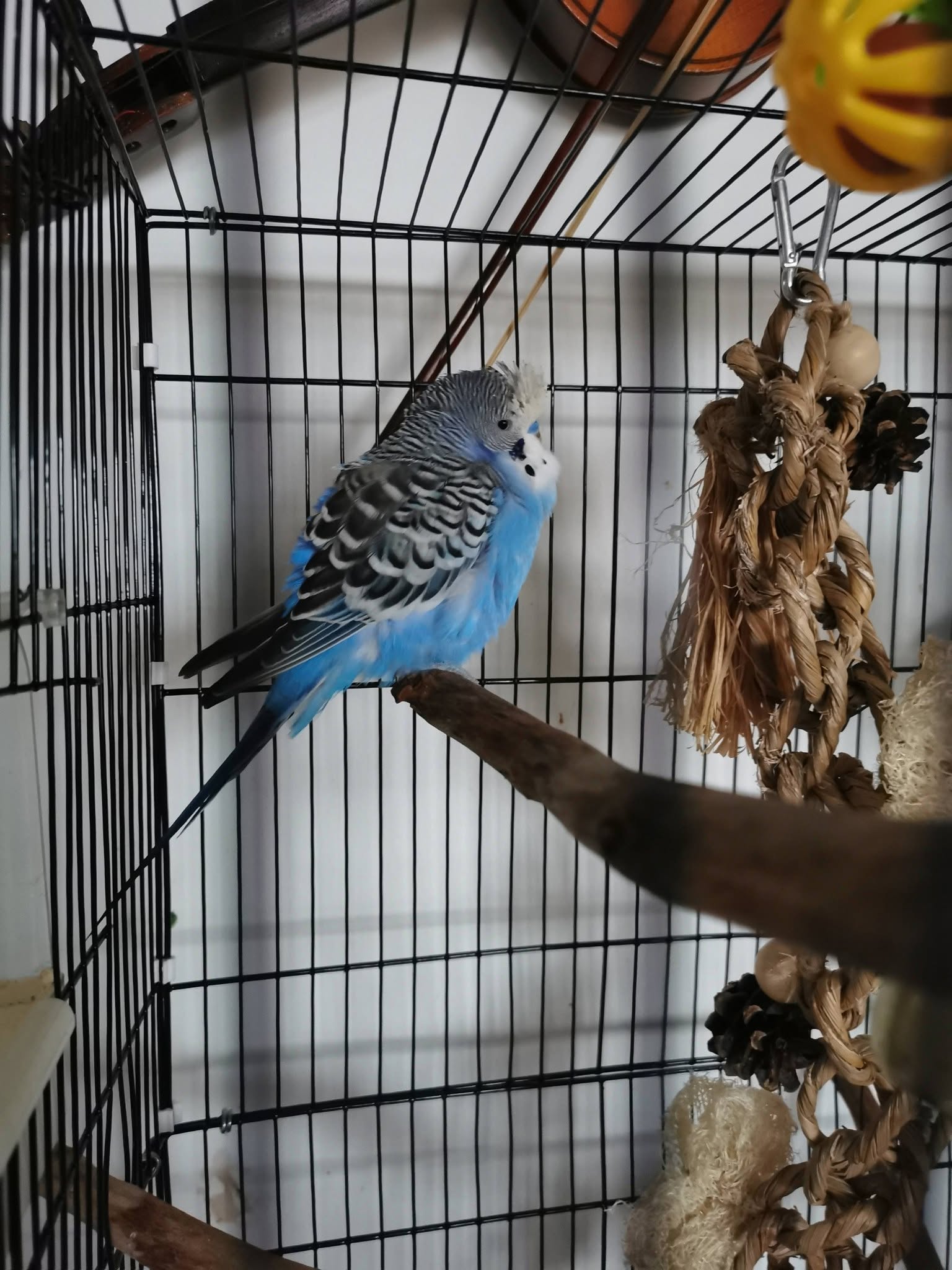
Fluffing — the raising of the feathers to trap warm air — is a normal part of sleep. A bird that is comfortably resting will puff its feathers slightly. This mild fluffing is part of normal thermoregulation and is not a sign of illness.
The fluffing that signals illness is more pronounced and more persistent. An unwell budgie will be significantly more puffed than a bird in normal rest — feathers raised to the point where the bird looks larger and rounder than usual, the head pulled in, the eyes partially closed not in the relaxed way of sleep but in the laboured way of a bird that is spending its energy maintaining body temperature rather than being active.
The critical distinction: a healthy bird that is fluffed and resting will un-fluff when it becomes active or alert. It fluffs to rest and de-fluffs when it returns to normal activity. An unwell bird remains fluffed even when it should be active — during the day, when you approach, when other birds in the cage are moving. The fluffing is not a sleep posture. It is the bird’s response to being unable to maintain normal body temperature because something is wrong internally.
If your budgie is fluffed during the day, not just during rest periods, and particularly if it has been fluffed for more than a day — that is a vet visit this week at the latest. Persistent daytime fluffing is one of the clearest signs that a budgie is unwell.
Sleeping More Since a Change in the Home — Environmental Causes
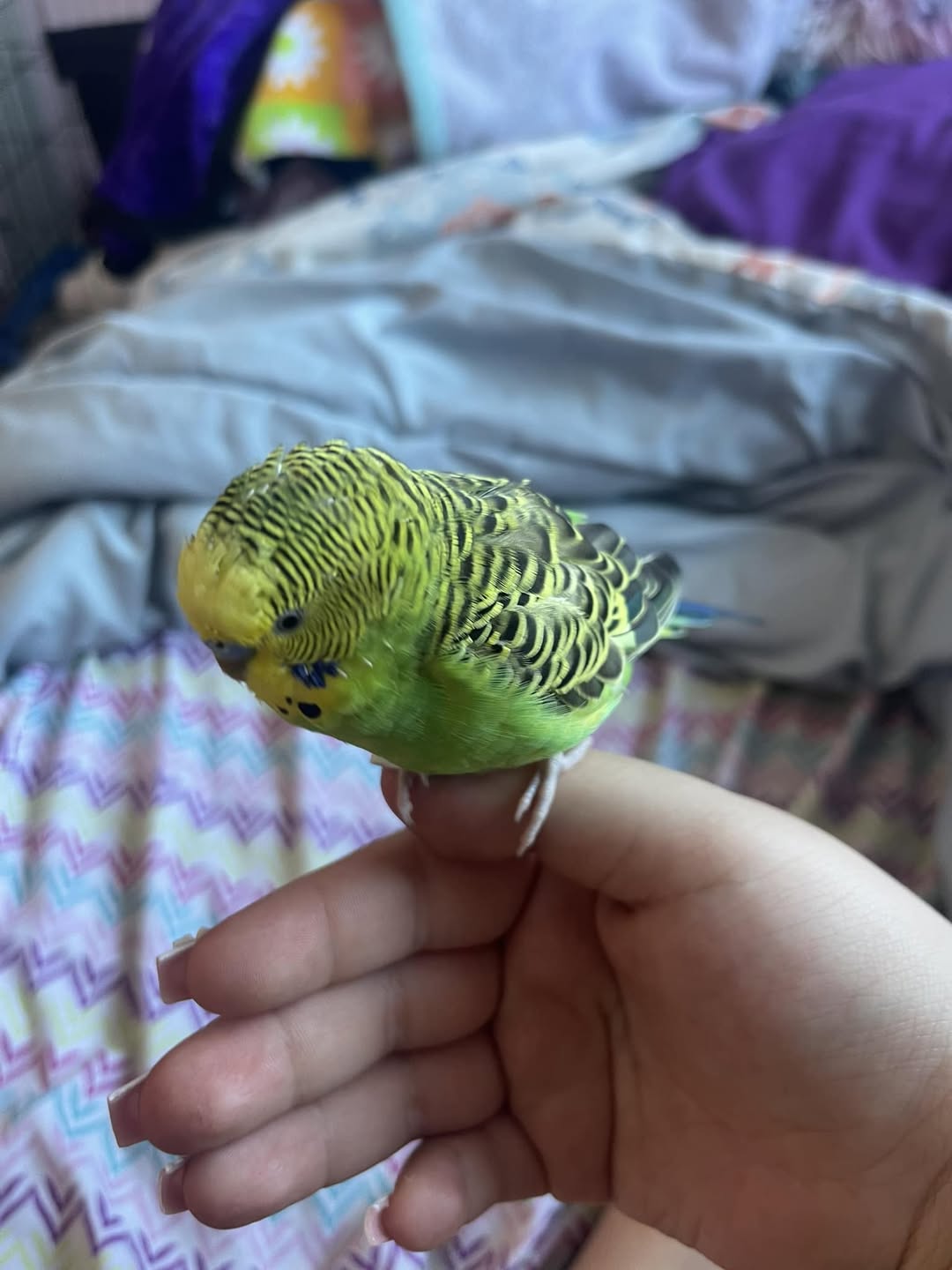
Sometimes increased sleeping or changes in sleep pattern are not about the bird’s health at all — they are a response to something that has changed in the environment.
A new pet in the house — particularly a cat or dog that now has visual access to the cage — can produce a chronically alert, stressed bird that is not sleeping properly at night and compensating with more rest during the day. The bird is not ill. It is hypervigilant, and the hypervigilance is exhausting.
A change in routine — a new work schedule that means the household is quieter or louder at different times, a new baby, building work nearby — can disrupt the predictable pattern that budgies depend on for settled sleep. The bird adjusts eventually, but during the adjustment period its sleep pattern will be different from normal.
A room that has become warmer — central heating turned up for winter, a change in the cage position relative to a heat source — can make a bird more lethargic and inclined to rest. Equally, a room that has become colder can produce more fluffed resting as the bird manages its body temperature.
These are worth considering alongside health causes, particularly when the change in sleep pattern corresponds to a specific change in the household. Environmental causes are usually resolvable once identified. Health causes require veterinary input. The pattern and timing of the change is often the clearest indicator of which category applies.
What I Tell Budgie Owners at the Counter
When someone comes in concerned about their budgie sleeping standing up, nine times out of ten the conversation is brief and reassuring. The bird is doing exactly what birds do. The tendon locking mechanism, the one-foot tuck, the beak in the feathers — these are all normal, they all make biological sense, and there is nothing to worry about.
The tenth conversation is a different one — because somewhere in the description there is a detail that does not fit the normal pattern. The bird is sleeping on the floor. The bird is sleeping fluffed during the day. The bird is sleeping much more than it used to. The bird is not rousing quickly when disturbed. Those details change the conversation entirely.
The message I want every budgie owner to leave with is this: knowing what normal sleep looks like is one of the most useful things you can do for your bird. Not because you need to monitor every nap, but because when something is different you will know it immediately — and that knowledge is what allows you to act early enough for the response to make a difference.
A budgie sleeping upright on the perch, one foot tucked, head in the feathers, in the highest corner of the cage — that is a healthy, comfortable, well-settled bird. It is one of the better things you can see when you look at your bird at the end of the day.
Come in if you want to talk through anything you are seeing. We are at Manor Garden Centre, Cheney Manor Industrial Estate, Swindon, SN2 2QJ — open every day. Or call us on 01793 512400.
- “It must be uncomfortable sleeping standing up” — It is not uncomfortable at all. The tendon locking mechanism means the bird is not actively gripping — the perch holds the bird passively. There is no muscular effort involved. The bird is as relaxed standing on a perch as a human is lying in bed. The position that looks effortful to us is effortless for the bird.
- “It sleeps with its head turned backwards — that can’t be right” — Tucking the beak into the upper back feathers does turn the head significantly. From the front it can look alarming if you have not seen it before. It is normal, it is comfortable, and it is the bird insulating the one part of its body that has no feather covering. It is not a sign of distress or discomfort.
- “My budgie sleeps a lot — it must be bored” — Boredom in budgies tends to produce repetitive stereotyped behaviours — pacing, bar-chewing, excessive preening — rather than sleeping. A bird that is genuinely sleeping more than normal is more likely to be unwell, sleep-deprived from poor night conditions, or responding to a stressful environment than to be bored. Boredom and excessive sleep are different problems with different causes.
- “It fell off the perch while sleeping — that means it’s seriously ill” — Falling from the perch during sleep does happen occasionally in healthy birds — usually the result of a night fright, a sudden noise, or an unusual movement rather than a failure of the grip mechanism itself. One incident of falling does not confirm serious illness. A pattern of falling, or a bird that is struggling to maintain its position on the perch when awake, is a different matter.
- “I covered the cage and it’s still not sleeping — the cover isn’t working” — A cage cover blocks light, which is its primary function. If the bird is still not sleeping despite a cover, the cause is likely noise rather than light — a sound that is disturbing the bird in the dark. The cover is doing its job. The disturbance is coming from somewhere else.
- Budgie sleeping upright on perch, one foot tucked, beak in feathers, otherwise active and well during the day.
Completely normal — no action needed. This is healthy budgie sleep. The biology behind it is explained above. Nothing to be concerned about. - Budgie sleeping more than usual during the day but otherwise behaving normally.
Check night sleep conditions first — is the room dark enough, is there noise disturbing the bird overnight? Improve night conditions and monitor. If daytime sleeping persists despite good night conditions, vet visit to rule out health cause. - Budgie always tucking the same foot, never alternating.
Watch the consistently tucked leg when the bird is active. If the leg or foot shows any sign of abnormality — swelling, abnormal position, reluctance to bear weight — vet this week. If the leg looks normal and the bird uses it properly when active, monitor. - Budgie sleeping fluffed significantly during the day, not just during rest periods.
Possible illness — vet this week. Daytime fluffing that persists when the bird should be active is one of the clearest early signs of a budgie that is unwell. - Budgie found sleeping on the cage floor, fluffed, slow to respond.
Urgent — same-day vet. Keep the bird warm immediately. A bird that has moved to the floor has exhausted its capacity to maintain a perch position. Act without delay. - Budgie difficult to rouse from sleep, appears limp or unresponsive rather than simply deeply asleep.
Veterinary emergency — this is not deep sleep. A healthy sleeping bird responds within seconds to disturbance. A bird that cannot be roused normally needs immediate veterinary attention.
Visit Us at Paradise Pets Swindon
We stock budgerigars year-round alongside a full range of cage and aviary birds — all UK-sourced, kept in proper conditions before going to a new home. If you have a question about your budgie’s behaviour or health, or you are thinking about getting your first bird and want to understand what normal looks like before anything goes wrong, come in and talk to us.
We also stock gerbils and hamsters, guinea pigs, and rabbits.