
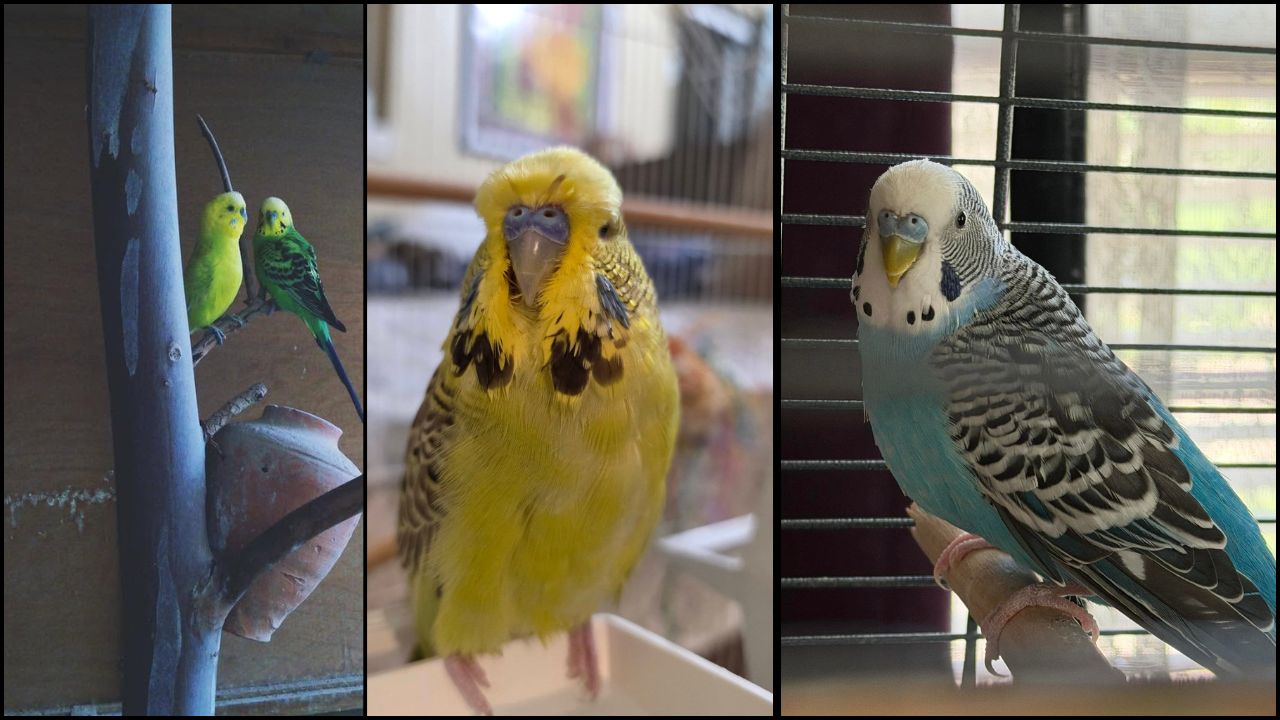

Neil has kept, bred, and sold budgies at Paradise Pets Swindon since 1988 — over 35 years of first-hand experience with these birds. UK summers have changed during that time, and the calls he receives about heat-stressed budgies have increased significantly. This is his honest, practical guide on what to do when your home gets too hot — and what not to do, which matters just as much.
A woman came into the shop on a Saturday in July two summers ago. She was carrying her budgie — a pale blue female called Iris — in a travel cage, and she was visibly distressed.
Iris was panting. Wings held slightly away from her body. Sitting low on the perch. The owner had left her in the conservatory while she went to run errands, and the temperature in there had climbed to something approaching 35 degrees before she came home and found the bird like this.
I took one look at Iris and told the owner to put the travel cage in a cool, shaded room immediately, offer fresh cool — not cold — water, and do nothing else except watch. No ice. No fan blowing directly on the cage. No misting. Just shade, ventilation, and water.
Forty minutes later, Iris was alert, drinking, and had started chirping. She made a full recovery.
The owner told me she had been about to run cold water over the cage because she had read somewhere that it would help. It would not have helped. In a seriously heat-stressed bird, a sudden drop in temperature causes rapid physiological shock that can kill faster than the heat itself. The advice was well-intentioned and completely wrong, and it is exactly the kind of wrong advice that circulates online and costs birds their lives.
So let me give you the correct version — what actually happens to a budgie in heat, how to recognise heat stress at every stage, and exactly what to do and what not to do when your UK home gets too hot.
What Temperature Is Too Hot For A Budgie In A UK Home
Budgies are comfortable between approximately 18 and 26 degrees Celsius. This is their safe operating range — the temperature band in which they thermoregulate without significant effort and experience no physiological stress.
Above 26 degrees, budgies begin to work harder to stay cool. They will hold their wings slightly away from their body — creating a gap between the wing and the side to allow heat to escape — and may breathe a little more rapidly. This is normal thermoregulatory behaviour, not a sign of distress. A budgie in a 28-degree room that is drinking normally, alert, and active is managing the situation adequately.
Above 30 degrees, the situation becomes concerning. Budgies are not well-adapted to sustained high heat. Unlike mammals, they cannot sweat. Their primary cooling mechanism is respiratory — evaporation of moisture from the respiratory tract through open-beak breathing, which is why you will see a bird panting in a very hot room. This is effective up to a point, but it is physiologically costly and has limits.
Above 35 degrees, you have a genuine emergency. A budgie at this temperature is at serious risk of heat stroke — a rapid, potentially fatal collapse of the body’s ability to regulate core temperature. Conservatories, south-facing rooms with large windows, and cars can reach these temperatures on a UK summer day far faster than most owners realise.
The critical practical point: a room that feels hot to you is often already in the concerning range for your bird. If you are uncomfortable, your budgie almost certainly is too — and its tolerance for sustained heat is lower than yours.
The Signs Of Heat Stress In A Budgie — What To Look For At Each Stage
Heat stress in budgies progresses through recognisable stages. Knowing what you are looking at means you can intervene at the right moment rather than either panicking unnecessarily or missing the window when action matters most.
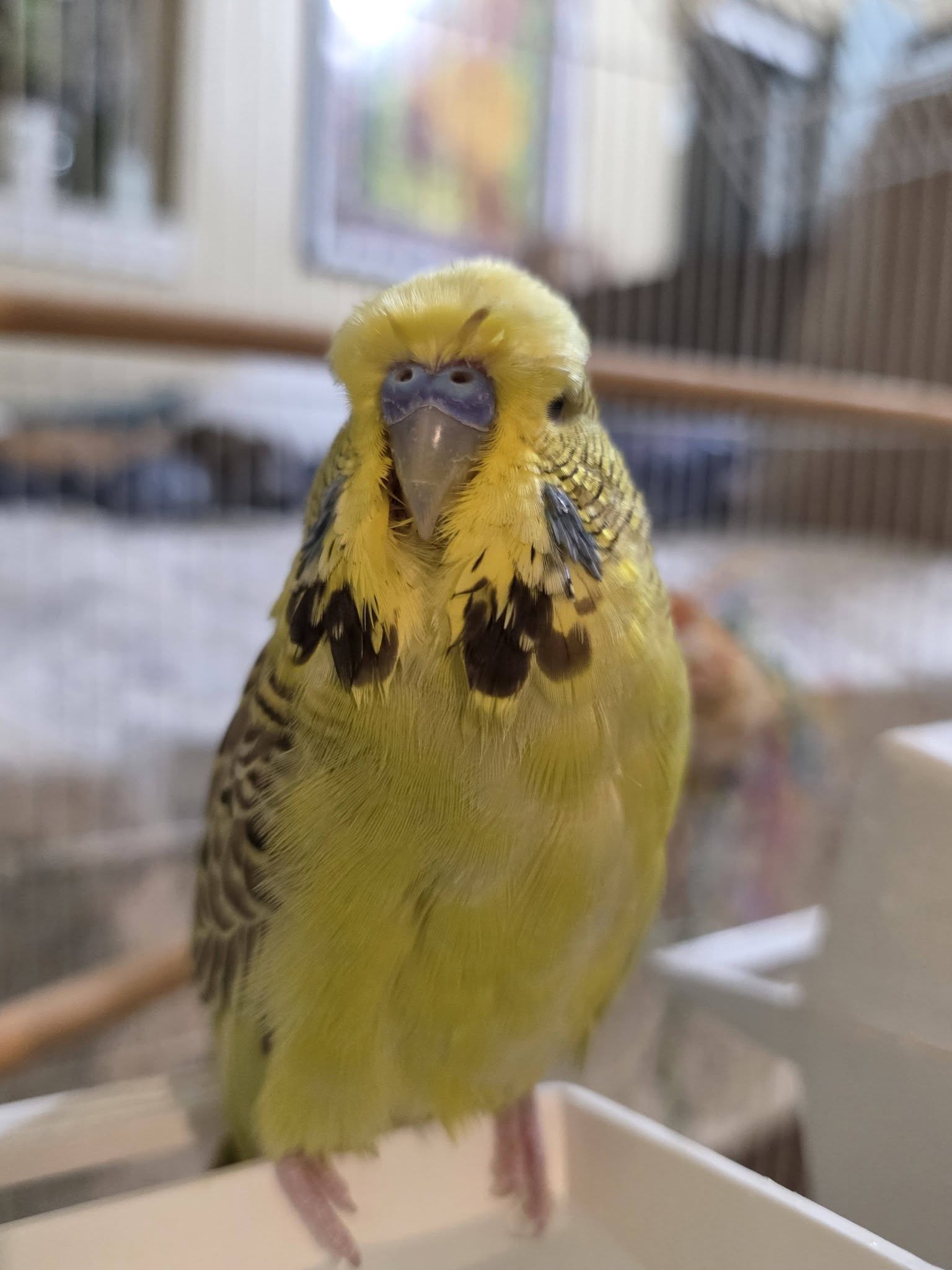
Early Heat Stress — The Bird Is Coping But Working At It
- Wings held slightly away from the body at rest — not fully extended, but noticeably not tucked in as normal; the bird is creating ventilation gaps to dissipate heat
- Breathing a little faster than usual, but mouth closed — increased respiratory rate is the first thermoregulatory response; this alone is not yet alarming
- Drinking more frequently than normal — the bird is trying to replace moisture lost through increased respiration
- Less active than usual — spending more time sitting rather than climbing or foraging; activity generates metabolic heat the bird is trying to reduce
- Feathers sleeked down tightly rather than fluffed — in heat, budgies sleek feathers flat to reduce insulation rather than fluffing; this is the opposite of cold-weather fluffing
At this stage the bird is telling you something before it becomes a crisis. Move the cage to a cooler area, ensure ventilation, and top up the water. The bird will generally recover quickly without further intervention.
Moderate Heat Stress — Action Required
- Open-beak breathing at rest — the bird is panting continuously, not just briefly after activity; this is the clearest moderate heat stress signal
- Wings held well away from the body — a clear, visible gap rather than a slight separation
- Sitting very still, often lower on the perch than usual — the bird is conserving every possible resource
- Eyes may be partially closed — reduced alertness alongside the physical signs of heat stress
- Unsteady on the perch in some cases — the beginning of the physical weakness that progresses to serious heat stroke
- Droppings more watery than usual — a result of increased water consumption as the bird tries to stay hydrated
This is the stage at which most owners become alarmed and make the mistake of overcorrecting — ice water, cold misting, fans blowing directly at the cage. Do not do these things. I will come to what you should do in the next section.
Severe Heat Stress — This Is An Emergency
- Open-beak panting that is not reducing when moved to a cooler area — the thermoregulatory system is overwhelmed and cannot recover without intervention
- Falling from the perch or unable to grip properly — the bird has lost muscular control; this is a critical sign
- Collapsed on the cage floor — cannot maintain any upright position
- Unresponsive or minimally responsive to you — a bird at this stage needs a vet immediately, not further home management
- Wings extended fully rather than just held slightly away — the body is making a last attempt to shed heat through every available surface area
A bird at this stage needs veterinary attention immediately — do not wait to see if it recovers on its own. Keep it shaded and ventilated while you get it to an avian vet as fast as you can.
What To Actually Do When Your Budgie Is Too Hot
Here is the correct response to heat stress, in order of priority.
Step One — Move To Shade And Ventilation Immediately
The first action is always to get the bird out of the heat source. Move the cage to the coolest room in the house — usually a north-facing room, a room away from direct sunlight, or an interior room that has not been heating up through the day. Ensure there is airflow in the room. Open a window if the outside air is cooler than the inside, which in a UK summer it often is by late afternoon or evening.
Do not move the bird to an air-conditioned room if the temperature differential is significant. Moving from 35 degrees to 18 degrees is as stressful as the heat itself. A room at 22 to 24 degrees that is shaded and ventilated is ideal.
Step Two — Offer Fresh, Cool Water
Replace the water in the cage with fresh, cool water — from the tap is fine, but let it run for a moment so it is at room temperature rather than very cold from the mains. The goal is cool, not cold. A heat-stressed bird that drinks very cold water can go into shock. Room-temperature to cool tap water is correct.
Place the water container where the bird can access it easily from its current position on the perch or cage floor. Do not force the bird to move far for it.
Step Three — Allow The Bird To Cool Gradually And Watch
Once you have shade, ventilation, and water, your primary job is observation. Watch the bird every few minutes. You are looking for the panting to slow and the wings to begin to return to normal position — these are the signs that the bird’s thermoregulation is recovering. This should begin within fifteen to thirty minutes for a bird with moderate heat stress.
If the bird is not improving within thirty minutes, or if it is showing severe signs — falling from the perch, collapsed, unresponsive — call an avian vet immediately.
What You Can Do In Addition, Carefully
A very light misting with a spray bottle — plain water, room temperature — on a bird with moderate to severe heat stress can help, but only if done extremely carefully. One or two very fine mists in the direction of the bird, not directly at its face. The goal is to slightly dampen the feathers so evaporation can help cool the bird. Over-misting or misting with cold water can cause the same rapid cooling shock described above. If you are not confident doing this correctly, skip it and rely on shade and ventilation alone.
A gentle fan in the room — not pointed directly at the cage, but circulating air in the general space — is helpful for maintaining ventilation without creating a draught directly on the bird.
What You Must Not Do
- Do not run cold water over the cage or the bird — rapid temperature drop causes shock; this is one of the most widespread pieces of wrong advice on the internet and it kills birds
- Do not place the cage near a fan blowing directly on it — sustained forced air directly on a stressed bird causes respiratory problems on top of the heat stress
- Do not put ice in the water bowl — cool tap water is correct; ice-cold water in a heat-stressed bird risks the same shock response as external cold water
- Do not put the bird in a very cold room — a temperature drop that is too rapid is dangerous; gradual, managed cooling is what you want
- Do not leave the bird unobserved for extended periods — a heat-stressed bird can deteriorate quickly; watch it closely until it has clearly stabilised
How To Prevent Heat Stress In The First Place — UK Practical Guide
Prevention is considerably easier than management, and with UK summers becoming more consistently hot over recent years, it is worth thinking about your setup actively rather than waiting for an emergency to prompt the conversation.
Cage Position Is The Most Important Factor
The single most common cause of heat stress in UK pet budgies is cage placement in a room that heats up severely in summer — conservatories, south or west-facing rooms with large windows, rooms that trap heat during the day.
A cage that is in a fine position in October can be genuinely dangerous in July. The room you chose for the bird’s permanent location should be assessed in summer conditions, not winter ones. If the room reaches 30 degrees or above on a hot day, the cage needs to move during summer months.
- Best position for a budgie cage in a UK summer — a room that gets morning light but not afternoon sun, with a window that can be opened, away from south or west-facing glass that will act as a heat trap in the afternoon
- Use a thermometer, not your own comfort, to assess the room — a room that feels warm to you may already be above 28 degrees; a simple room thermometer near the cage removes the guesswork
- Close south and west-facing blinds or curtains in the morning on hot days — acting before the room heats up is far more effective than trying to cool it down once it has; closed blinds on sun-facing windows from early morning make a significant difference by afternoon
- Open north-facing or shaded windows for ventilation — cool air from a shaded aspect flowing through the room is the most effective passive cooling measure available in a UK home
Never Leave A Budgie In A Conservatory In Summer
I say this directly because I see the consequences of it regularly. UK conservatories are, by design, heat traps. They can reach temperatures in the mid-thirties on an ordinary summer day, not just during a heatwave. A budgie left in a conservatory on a warm July afternoon while the owner goes out for a few hours is a bird in serious danger.
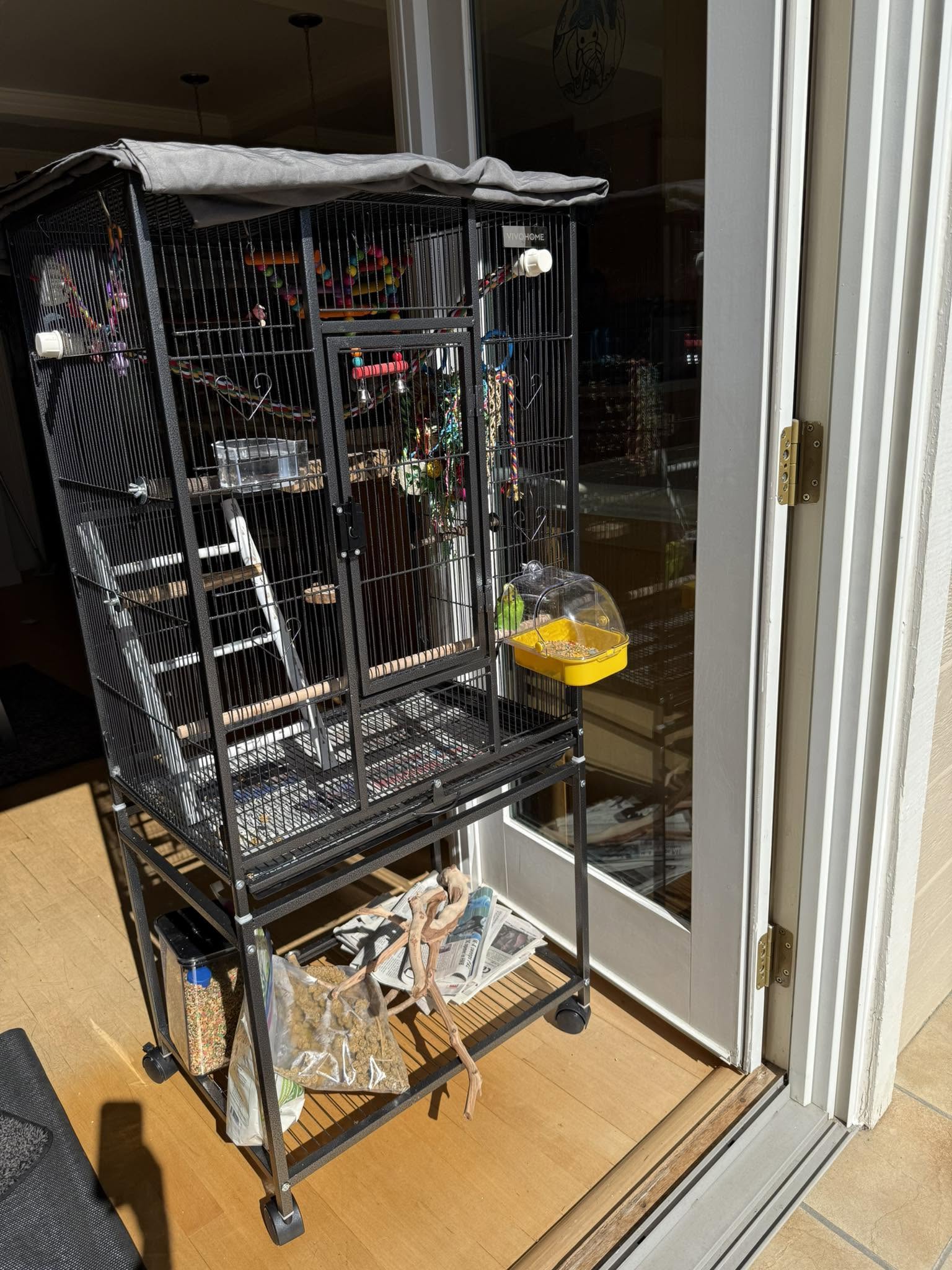
If your budgie’s cage is currently in a conservatory, it needs to be moved for the summer months — not to a slightly different spot in the conservatory, but to a different room entirely.
Keep Fresh Water Available At All Times
- Water in a hot room warms quickly — warm water is less palatable to budgies; refresh the water two or three times during a hot day so it remains cool and clean
- A bird that is already heat-stressed needs to be drinking well to support thermoregulation — stale, warm water in the bowl at the moment the bird needs to hydrate most is a problem you can easily prevent
- Check the water bowl every time you check the bird during hot weather — if it is warm or contaminated, replace it immediately
Higher-Risk Budgies — Where The Margin Is Smaller
The guidance above applies to healthy adult budgies. There are specific situations where the risk is significantly higher and the margin for error is smaller.
- Older budgies — birds over six or seven years — have reduced physiological reserve and thermoregulate less efficiently; they can progress from early heat stress to severe heat stress faster than a young bird; act at the first signs of early heat stress rather than waiting to see how the bird manages
- Budgies with existing health issues — respiratory conditions, liver compromise from long-term seed-only diet, or any ongoing illness; a respiratory condition combined with the increased respiratory demand of thermoregulation in heat can cause rapid deterioration; if your bird is not fully healthy, treat hot weather events as higher risk
- Overweight budgies — excess weight increases the metabolic heat the bird generates and reduces its ability to dissipate that heat efficiently; a budgie on a seed-only diet that has become overweight is one of the most vulnerable birds to UK summer heat; this is one of many reasons the diet conversation matters
Frequently Asked Questions
What temperature is too hot for a budgie in a UK home?
Budgies are comfortable between 18 and 26 degrees Celsius. Above 26 they begin to work harder to stay cool. Above 30 degrees the situation is concerning and you should take action to cool the room or move the cage. Above 35 degrees you have an emergency — a bird at this temperature is at serious risk of heat stroke and needs immediate intervention.
How do I know if my budgie is too hot?
The clearest signs of heat stress are wings held noticeably away from the body, open-beak panting, reduced activity, and increased water consumption. Early signs include wings slightly apart and more frequent drinking. Moderate to severe signs include sustained open-beak breathing, sitting very still or low on the perch, and in severe cases falling from the perch or collapse. If you see the latter, contact an avian vet immediately.
Can I put ice in my budgie’s water to cool it down?
No. Ice-cold water given to a heat-stressed bird can cause physiological shock, which can be as dangerous as the heat itself. Offer fresh, cool tap water — at room temperature or slightly cool. Replace it several times during a hot day to keep it from warming up, but do not use ice.
Should I use a fan to cool my budgie down?
A fan that circulates air in the room without pointing directly at the cage is helpful for ventilation. A fan blowing directly at the cage creates a sustained forced draught that can cause respiratory problems. Shade and natural ventilation — an open window in a shaded room — is preferable to a direct fan for a heat-stressed bird.
My budgie was in a hot conservatory — what should I do now?
Move the cage to the coolest, best-ventilated room in the house immediately. Offer fresh cool water. Do not move the bird to an air-conditioned room if the temperature drop will be significant — gradual cooling is safer than rapid cooling. Watch the bird closely for the next hour. If open-beak panting reduces and the bird becomes more alert and active, it is recovering. If there is no improvement within thirty minutes or the bird worsens, contact an avian vet.
Can budgies be kept in a conservatory in the UK?
In winter, with proper monitoring, possibly. In summer, no — UK conservatories regularly reach temperatures in the mid-thirties on warm days, which is well into emergency territory for budgies. If a budgie’s cage is currently in a conservatory, it should be moved to a different room for the summer months.
One Last Thing From Me
UK temperatures during summer are genuinely different from what they were when many of the bird-keeping guides most owners rely on were written. The advice to simply keep the cage out of direct sunlight was adequate when a British July meant occasional warm days. It is not adequate now.
If your budgie’s cage has been in the same position for years without incident, that is not evidence the position is permanently safe. Check the temperature in that room on the next warm day — actually check it with a thermometer — and assess whether it is still appropriate for the bird. If the answer is that it regularly reaches 28 degrees or above on a summer afternoon, the setup needs to change before there is an emergency, not after.
Iris recovered fully that Saturday. Not every bird I hear about in similar situations does. The difference is usually speed of response and whether the owner knew what to do. If you have read this far, you now do.
Concerned About Your Budgie In Hot Weather? Come In And Talk To Me.
No appointment needed, no obligation. Bring your questions or bring the bird if you are worried. After 35 years of doing this I have very probably seen the exact situation you are dealing with. That is what we are here for.