
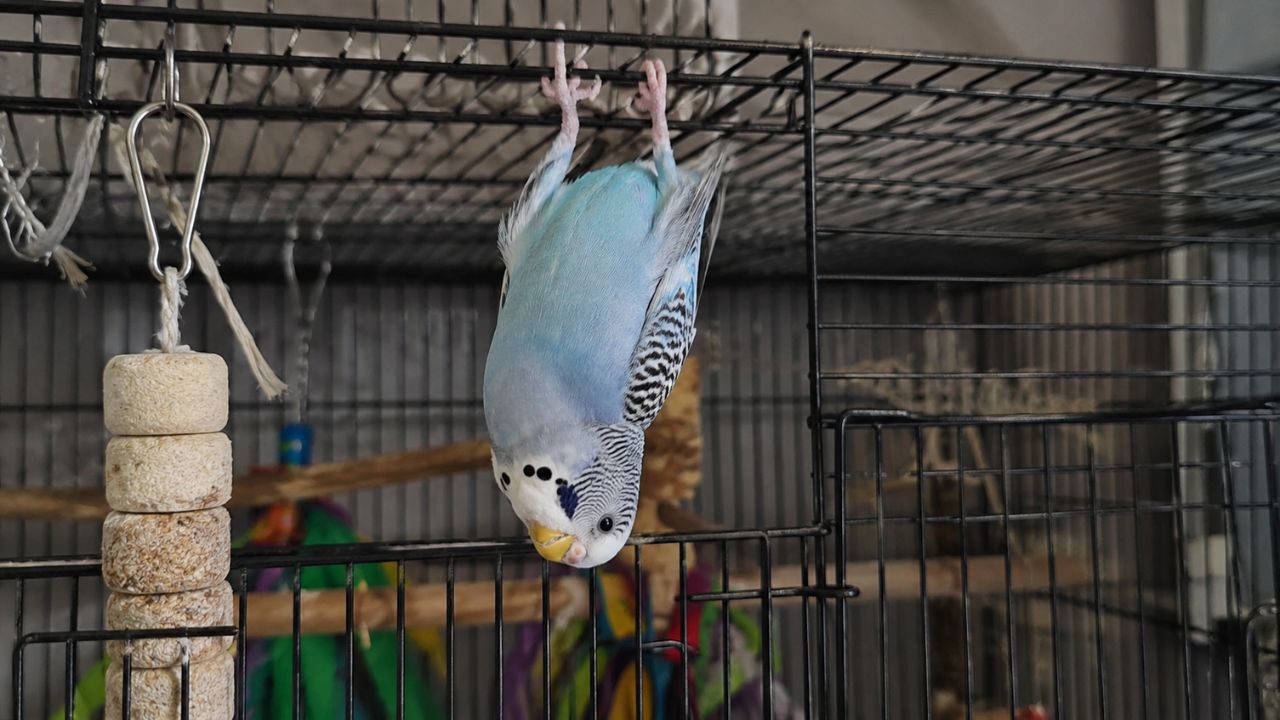

Neil has kept, bred, and sold budgies at Paradise Pets Swindon since 1988 — over 35 years of first-hand experience with these birds. In that time, he has watched countless UK owners walk into the shop convinced their budgie had injured itself or developed a strange illness because it kept hanging upside down from the top of the cage. This is his honest, practical guide on what this distinctive behaviour really means — when it is delightful normal play, and when it is genuinely worth paying closer attention to.
A father walked into the shop one Friday afternoon with his teenage daughter, both of them clearly amused and confused. “Neil,” he said, “we have had Bluey for two years and he has just started doing this thing. He climbs up to the top of the cage, hangs upside down from the bars like a little bat, and just stays there. Sometimes for half an hour. He looks happy. But we have never seen it before and we cannot work out if something has changed in his brain.”
I laughed and reassured them straight away. Bluey was almost certainly fine. Hanging upside down from the cage top is one of the most distinctive normal budgie behaviours, and one that often takes UK owners completely by surprise the first time they see it. After 35 years of selling these birds, I can tell you that the vast majority of upside-down hanging is genuinely just budgies being budgies — and is actually a sign of a happy, confident, well-adjusted bird.
The father and his daughter went home reassured that day, and they ended up filming Bluey’s “bat impressions” and sharing them with friends. They became one of those families who had discovered something delightful about their pet that they never would have known without seeing it for themselves. That is the experience I want every UK owner reading this article to have — understanding what they are seeing, knowing it is usually wonderful, and being able to spot the rare cases when it is not.
This article is the conversation I have at the counter with curious or worried owners about this behaviour. By the end of it, you will know exactly what hanging upside down means, when to enjoy watching it, and when to take a closer look at what is really going on.
First — Why This Behaviour Looks So Unusual To New Owners
The first time you see a budgie hanging upside down from the top of its cage, it is genuinely startling. The bird is gripping the bars with its feet, body dangling underneath, often turning its head almost 360 degrees to look around at the world from this strange angle. For a UK owner who has never witnessed it before, the immediate reaction is usually concern — “is the bird stuck? Is it hurt? Is it having some kind of seizure?”
None of these worries are correct in the vast majority of cases. What you are actually watching is one of the most natural and instinctive budgie behaviours in existence. In the wild, budgies cling to all sorts of awkward positions on branches, eucalyptus seed pods, and rocky outcrops in Australia. They have evolved bodies that handle upside-down positioning effortlessly. Their feet have a natural locking mechanism that keeps them gripped to bars or branches without any conscious effort. Their inner ear handles the orientation change with no dizziness. Their digestion works fine in any position.
For a budgie, hanging upside down is no more difficult than perching upright. It just provides a different view of the world, a different way to stretch and exercise, and — perhaps most importantly — a different way to feel proud and confident in its own environment. Owners often notice that the bird looks pleased with itself while doing it. That is not your imagination.
The Six Real Reasons Budgies Hang Upside Down
After 35 years of watching this behaviour, the causes fall into six distinct patterns. Most are positive. A few are worth paying attention to. Here is what each one looks like.
1. Play And Acrobatic Fun (The Most Common Reason)
This is by far the most common cause, and the one I see most often at the counter when owners come in asking about it. A confident, healthy, settled budgie discovers that it can hang upside down from the cage top, finds this position genuinely fun, and starts incorporating it into its daily routine. The bird is essentially playing.
Signs of play-driven hanging:
- Bird performs the behaviour during active, alert daytime hours
- Often accompanied by chattering, vocalising, or singing
- The bird moves between hanging and normal perching repeatedly
- Wings may be partially open, beak active
- The behaviour appears casual and unforced
- Bird returns to normal activities — eating, drinking, playing with toys
- Overall body language is relaxed and confident
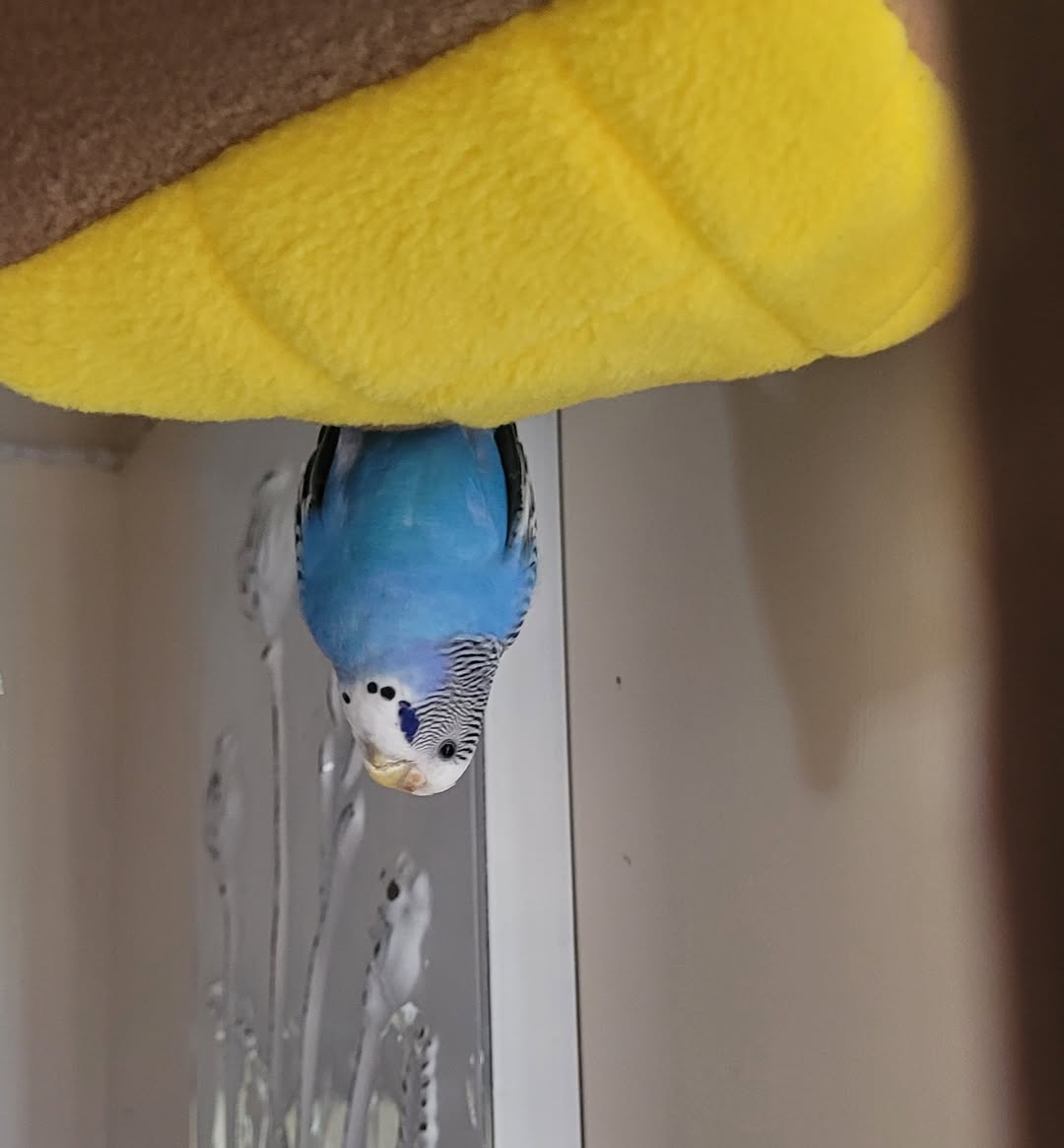
If this matches your bird, there is absolutely nothing to worry about. Enjoy watching it. The bird is showing you it feels safe, confident, and at home in its environment. This is one of the most rewarding behaviours a UK owner can witness because it is a clear signal of psychological wellbeing.
2. Exercise And Stretching
Budgies need to move, stretch, and use their muscles every single day. Hanging upside down provides a different type of muscle engagement than normal perching — it stretches the chest muscles, exercises the gripping strength of the feet, and gives the bird a workout it cannot get any other way inside the cage.
Signs of exercise-driven hanging:
- Often performed after waking up or after a period of inactivity
- The bird stretches wings while hanging
- May be combined with leg stretches and yawn-like beak movements
- Duration tends to be shorter — minutes rather than half-hours
- The bird shows clear movement and engagement during hanging
- Often followed by flying, climbing, or general activity
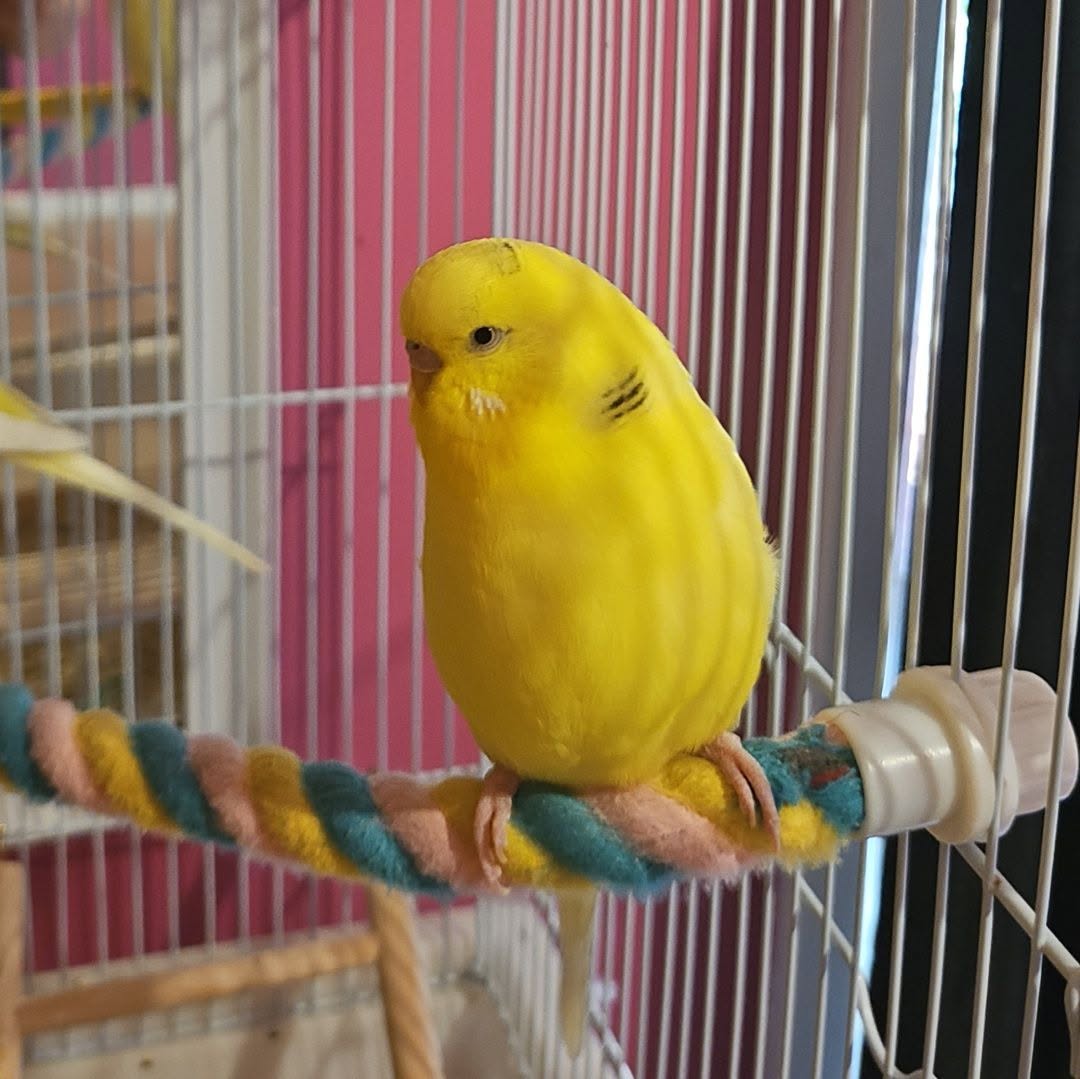
This is also completely positive. Birds that exercise themselves naturally are healthier, happier, and less prone to obesity and feather problems. A budgie using cage-top hanging as part of its physical activity routine is doing well.
3. Curiosity And Exploration
Some budgies use hanging upside down as a way to see the world differently. The bird wants a better view of something — what is going on outside the cage, who has just walked into the room, what the cat is doing on the windowsill — and hanging from the top provides a unique vantage point.
Signs of curiosity-driven hanging:
- The behaviour happens in response to something interesting in the environment
- The bird’s head is turned to watch something specific
- Often shorter episodes, lasting until the bird’s curiosity is satisfied
- The bird may move along the cage top to maintain its view
- Body language is alert and focused
- Frequently happens at the same times of day — when people come home, when food is being prepared
This is curiosity in action and another sign of a healthy, engaged bird. Budgies that take active interest in their surroundings are mentally stimulated and behaviourally well.
4. Heat Regulation (Summer Behaviour)
This is a specific UK summer phenomenon many owners do not realise. In hot weather, budgies sometimes hang upside down with wings slightly open as a way to cool themselves. The position allows air to circulate around the chest and underwing areas, helping with thermoregulation when the bird is feeling warm.
Signs of heat-driven hanging:
- Behaviour appears during hot weather, particularly UK summer days
- Wings are visibly held slightly open while hanging
- The bird may be panting or breathing more visibly
- Often combined with seeking cooler spots in the cage
- Reduced activity overall during the hottest hours
- May occur near a window where there is more airflow

This is normal cooling behaviour but it is also a signal to check whether your bird is comfortable. If the room temperature is genuinely uncomfortable for the bird, move the cage to a cooler spot, ensure fresh water is available, and consider offering small amounts of cucumber or other hydrating vegetables. For more on summer care, our guide on heatwave management covers this in detail.
5. Hormonal Behaviour (Spring And Breeding Condition)
This is where the behaviour starts to be worth watching more carefully. Some budgies in hormonal condition incorporate hanging upside down into courtship displays, particularly males. The behaviour becomes more frequent, more theatrical, and may be combined with other hormonal signs.
Signs of hormonal-driven hanging:
- Increased frequency in spring or when daylight hours are long
- Combined with vocalising, head-bobbing, or regurgitation
- Cere colour changes — vivid blue in males, crusty brown in females
- The bird may direct the behaviour at a mirror, toy, or another bird
- Mounting attempts or other courtship behaviours nearby
- Increased general activity and vocalisation
The hanging itself is not a problem — but the underlying hormonal state can sometimes cause issues like egg binding in females or persistent frustration in single males. Worth monitoring if you see other hormonal signs combined with the hanging.
6. Territorial Display Or Showing Off
Some budgies use hanging upside down as a way to display themselves, particularly in households with multiple birds or where the bird wants attention from humans. The behaviour becomes performative — the bird is showing the world how impressive and confident it is.
Signs of display-driven hanging:
- Bird performs more often when watched by humans or other birds
- Combined with vocalising or singing
- The bird may pause and look at you while hanging
- Often becomes more theatrical when attention is given
- Tail spreading or wing displays may accompany hanging
- The bird seems to enjoy the response from observers
This is genuinely charming behaviour and another positive sign — a bird that wants to interact with and impress its human family is well-bonded and confident.
When Hanging Upside Down Is Genuinely Worrying
Now for the part that matters most. While most upside-down hanging is positive, there are a few specific situations where it can mean something else. Knowing these helps you spot the rare cases when something is wrong.
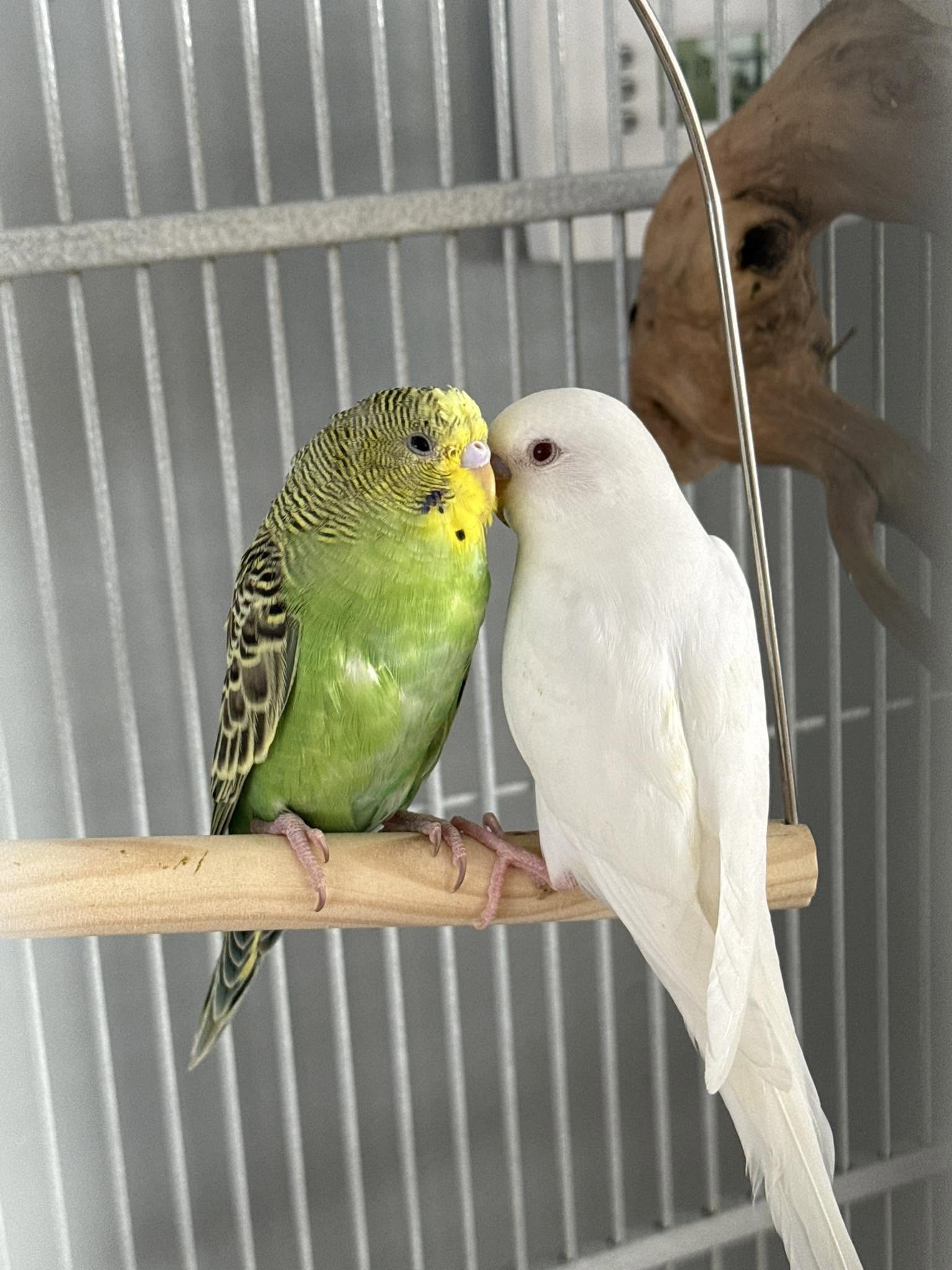
- Bird cannot right itself easily — struggles to return to normal perching
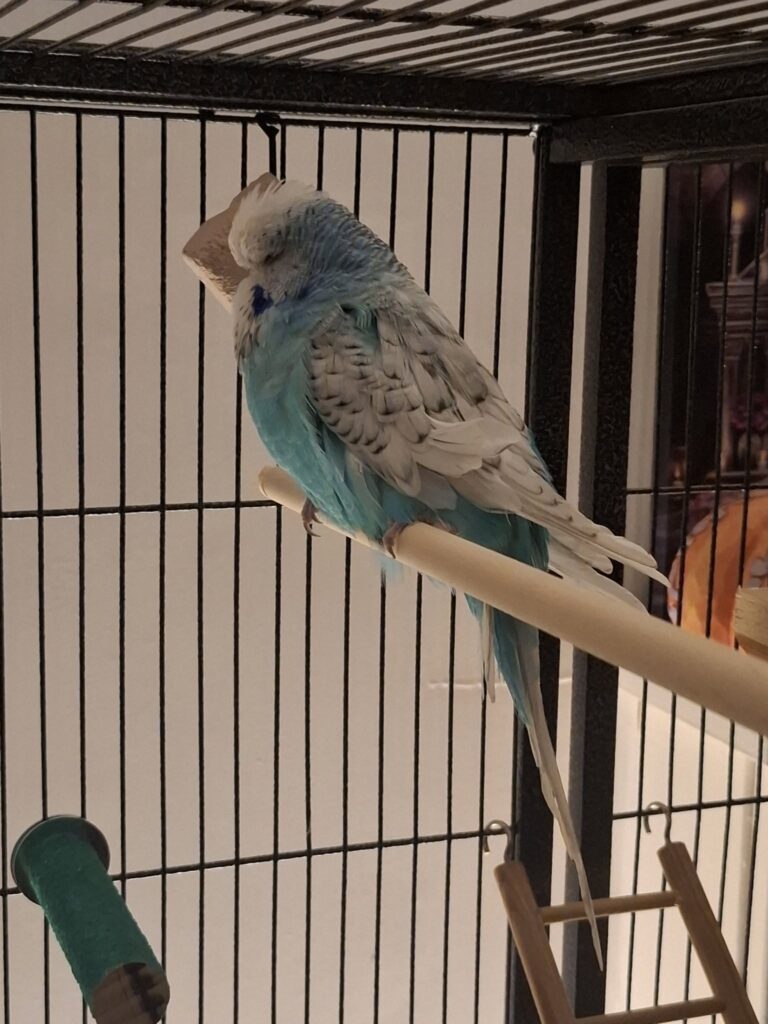
- Fluffed up posture while hanging — sign of illness combined with the behaviour
- Lethargic or listless overall — not engaged with anything else
- Hanging for very extended periods — hours rather than minutes
- Hanging while sleeping — should always sleep upright on a perch
- Trembling, shaking, or unsteady movements
- Breathing difficulty or tail bobbing
- Recent change from normal hanging to sustained, unusual hanging
- Hanging combined with reduced eating or drinking
- Bird seems to fall into the position rather than choose it
If any of these are present alongside the hanging behaviour, the issue is not really the hanging itself — it is an underlying health problem that is making the bird’s behaviour change. Contact an avian vet promptly.
The Difference Between Healthy Hanging And Worrying Hanging
This is the practical skill that matters most. Here is the clear comparison I work through with worried owners at the counter.
| Sign | Healthy Hanging | Worrying Hanging |
|---|---|---|
| Duration | Minutes at a time, comes and goes | Long periods, hours, or constant |
| Bird’s posture | Alert, sleek, engaged | Fluffed up, hunched, listless |
| Overall activity | Active, playful, eating normally | Lethargic, reduced eating or drinking |
| Voice | Vocalising normally, chattering | Quiet, reduced vocalisation |
| Movement | Easy transitions to and from hanging | Struggling to right itself or move |
| Breathing | Normal, quiet | Visible effort, tail bobbing |
| Combined behaviours | Playing, exploring, interacting | Solitary, withdrawn, repetitive |
| Recent change | Has been doing it for months | Sudden new behaviour with other concerns |
The honest rule of thumb — if your bird is otherwise healthy, active, eating, vocalising, and behaving normally, the hanging is just play. If anything in the right column matches what you are seeing, look more carefully and consider veterinary advice.
What I Ask Owners At The Counter About Hanging Behaviour
When a UK owner asks me about their budgie hanging upside down, here is the order I work through to identify what is going on. Five minutes of questions usually clarifies everything.
- How old is the bird, and how long have you had it?
Young birds learning new behaviours is normal. Older birds suddenly starting may need more thought. - When did the hanging behaviour start?
Gradual development over weeks is positive. Sudden onset with other changes is worth investigating. - How often does the bird hang upside down each day?
A few times a day is fine. Constantly hanging is unusual. - How long does each hanging episode last?
Minutes is play. Hours is something to look at. - Is the bird otherwise behaving normally?
Eating, drinking, vocalising, posturing? The wider picture matters more than the hanging itself. - What time of year is it?
Spring hanging often hormonal. Summer hanging often heat-related. - Is the bird kept alone or with others?
Solo birds sometimes use it for display. Paired birds show different patterns. - Any other unusual signs?
Fluffed up, quiet, off food? Those matter more than the hanging.
Five minutes of questions usually clarifies whether the hanging is delightful play or worth investigating further. The vast majority of cases turn out to be normal, healthy behaviour.
What To Do If You Are Worried
For UK owners reading this with a budgie that has just started hanging upside down and wanting to be sure everything is fine, here is the practical immediate action plan.
- Observe the bird carefully for two days
Watch how often the hanging happens, how long each episode lasts, what the bird does between episodes. - Score the behaviour against the comparison table above
Most signs in the left column = normal play. Any signs in the right column = closer look needed. - Check the bird’s general health properly
Posture when not hanging, eyes, breathing, droppings, eating, drinking. - Note the time of year and weather
Spring? Summer heat? These often explain the behaviour completely. - Watch for other hormonal or illness signs
Cere changes, fluffed-up posture, reduced eating? - If everything else is normal, enjoy watching
This is one of the most charming budgie behaviours and worth celebrating. - If any concerns persist, see an avian vet
Particularly if other signs of illness are present alongside the hanging. - Take a video if possible
Useful for vet consultations and just for your own enjoyment of the bird’s personality.
For most owners, the answer is — observe, reassure yourself the bird is healthy, and enjoy this distinctive behaviour. For the rare cases where something is wrong, the hanging is usually one symptom among others, and the wider picture makes the issue clearer.
Encouraging Or Discouraging The Behaviour
Some UK owners ask me whether they should try to stop their budgie hanging upside down, or whether they should encourage more of it. The honest answer is — neither, really. Let the bird be a bird.
Why you do not need to stop healthy hanging:
- It is completely natural and normal behaviour
- The bird is not in any physical danger from it
- It provides genuine exercise and mental stimulation
- It is a sign of psychological wellbeing
- Trying to stop natural behaviour can stress the bird
Why you do not need to specifically encourage it:
- Not all budgies do it, and that is also normal
- The behaviour develops naturally if the bird is suited to it
- Forcing or training cage-top hanging is unnecessary
- Other exercise opportunities are equally important
The right approach — provide a good cage with a proper top section that allows access, plenty of toys, daily out-of-cage time, and a healthy environment. Some budgies will develop the hanging behaviour naturally and you can enjoy it. Others will not, and that is equally fine. Neither pattern indicates anything about your bird’s quality or your care.
What Makes A Cage Top Suitable For Hanging
For UK owners whose budgies enjoy hanging from the top, here are the practical features that make this safe and comfortable.
- Proper bar spacing — under 12mm to prevent feet getting stuck
- Horizontal bars on the top — easier to grip than vertical-only
- Strong but not sharp bars — should support weight without causing foot injury
- Clean and rust-free — important for any bird-contact surface
- Adequate height clearance — bird should not bump into anything when extended
- Coated or stainless steel material — avoid bare zinc or worn finishes
- Easy access from perches — bird should be able to reach the top easily
- Not directly above food or water — prevents droppings contamination
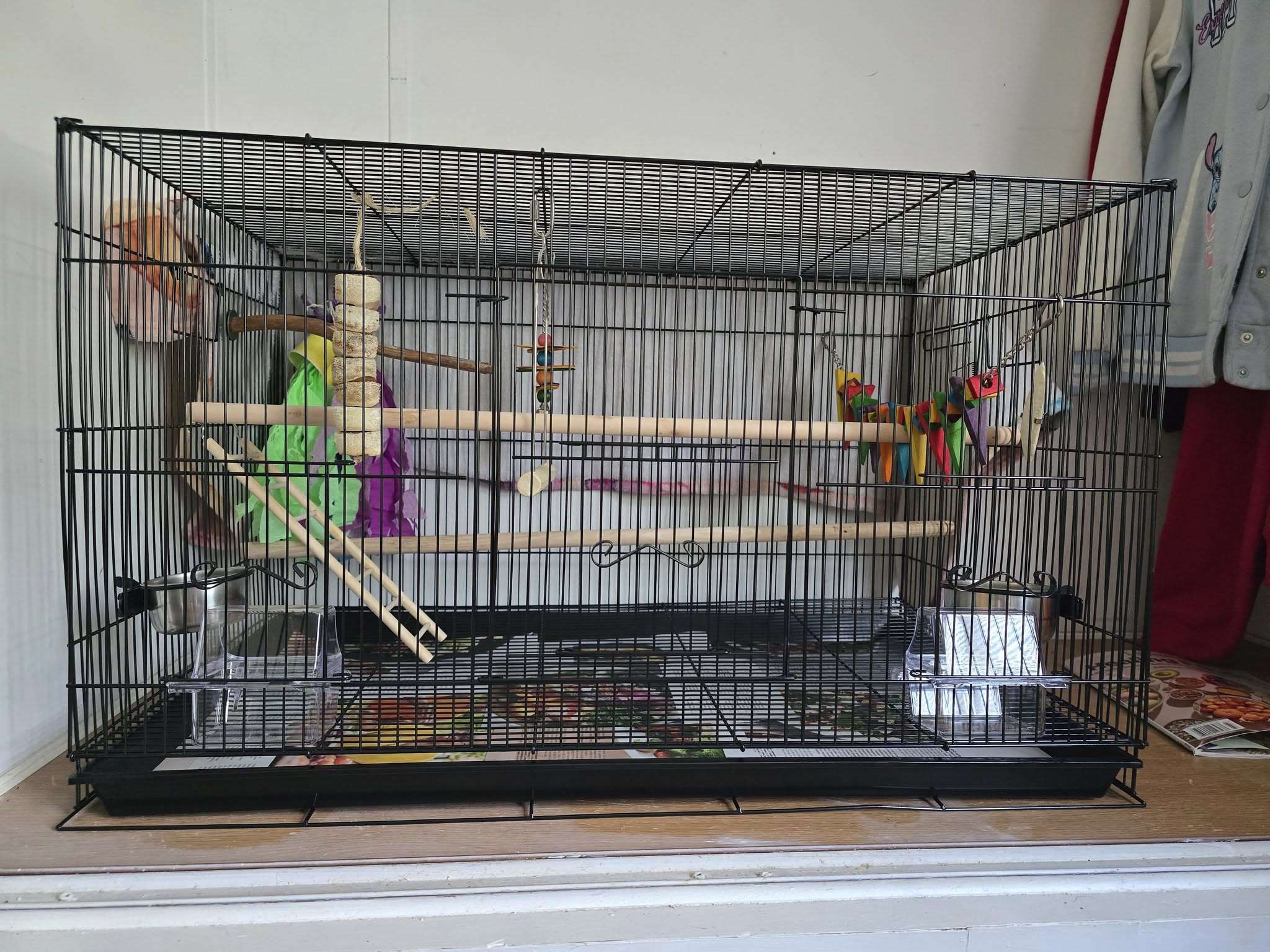
If your cage meets these standards and your bird enjoys hanging from the top, you have provided exactly what they need. For more on cage selection, our complete UK budgie cage guide covers everything else you need to know.
How To Tell If Your Budgie Is Genuinely Thriving
The hanging behaviour is one of several signs of a happy, healthy budgie. For UK owners who want to know whether their bird is doing well overall, here is the wider picture of what genuine thriving looks like.
- Active and engaged throughout the day — exploring, playing, vocalising
- Healthy appetite — eating proper proportions of seed, vegetables, and treats
- Normal droppings — formed white and dark portions, normal frequency
- Bright eyes and smooth feathers — visible signs of health
- Sociable with family — recognises voices, responds to your presence
- Confident behaviour — including playful tricks like hanging upside down
- Normal sleeping pattern — quiet at night, alert during the day
- Vocal but not constantly noisy — varied sounds, chatter, occasional singing
- Plays with toys regularly — chews, throws, investigates
- Maintains a healthy weight — not gaining or losing dramatically
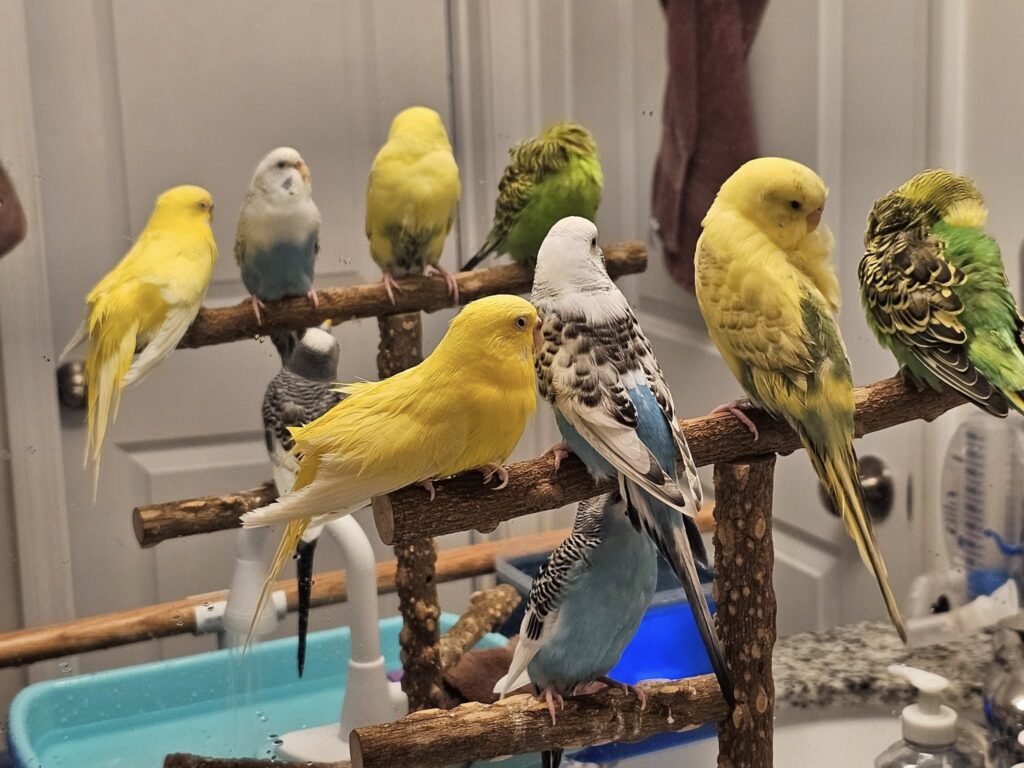
If most of these match your bird, you are providing excellent care and the upside-down hanging is just one charming expression of a well-adjusted budgie. If many of these are missing, the hanging is less important than addressing the underlying wellbeing issues.
Frequently Asked Questions
Is it normal for a budgie to hang upside down?
Yes, completely normal and very common. Hanging upside down from the cage top is one of the most distinctive budgie behaviours and is almost always positive — a sign of play, exercise, curiosity, or confidence. The vast majority of budgies that do this are healthy, happy, and well-adjusted.
Why does my budgie hang from the top of the cage and not move?
A bird hanging quietly without moving is usually fine, particularly if it is alert, breathing normally, and otherwise healthy. Budgies sometimes settle into hanging positions to observe their surroundings calmly. However, if the bird looks fluffed up, has eyes partially closed, is not responding to you, or shows other signs of illness, take a closer look and consider veterinary advice.
Should I be worried if my budgie hangs upside down a lot?
Not by itself. Frequent hanging in an otherwise healthy, active, eating, vocalising bird is just a behaviour the bird enjoys. Worry only if the hanging is combined with illness signs — fluffed-up posture, reduced eating, lethargy, breathing difficulty, or other changes. The hanging is rarely the problem; surrounding behaviour tells the real story.
Why has my older budgie suddenly started hanging upside down?
A sudden new behaviour in an older bird can simply reflect natural development of confidence, particularly if the bird has been in your home long enough to feel completely secure. It may also follow a change in environment, a new toy or cage layout, or hormonal changes in spring. As long as the bird is otherwise healthy, the new behaviour is usually positive — the bird is showing increased confidence and engagement.
Can hanging upside down hurt my budgie?
No, not in itself. Budgies are physically adapted to hang upside down without any harm. Their feet lock onto bars naturally, their digestion handles any orientation, and the position is genuinely comfortable for them. The only real risks would be if the bird could not safely access or leave the position because of an unsuitable cage, which is rare.
Why does my budgie hang upside down while sleeping?
This is unusual and worth looking at more carefully. Healthy budgies sleep upright on perches with one foot tucked up and head turned back into shoulder feathers. A bird sleeping while hanging upside down may be unwell, exhausted, or in an unsuitable cage. Observe carefully and consider veterinary advice if this is sustained behaviour.
Where can I get honest budgie advice in Swindon?
Come and see us at Paradise Pets, Manor Garden Centre, Cheney Manor, Swindon SN2 2QJ. Or give us a ring on 01793 512400. Bring the bird if you can, or even better — show me a video of the behaviour on your phone. The advice is free and we have been doing this for 35 years.
One Last Thing From Me
“Why is my budgie hanging upside down from the cage?” is one of the questions I am most happy to answer, because the answer is almost always good news. The honest answer, after 35 years of selling these birds, is — your budgie is showing you it feels safe, happy, and confident. This is one of the most charming positive behaviours these little birds display, and it is something to enjoy rather than worry about.
The father and his teenage daughter with Bluey that Friday afternoon? They went home reassured, started watching Bluey’s hanging episodes with delight rather than concern, and a few weeks later popped back into the shop with a phone full of videos. The daughter had given Bluey a new nickname — “Bat” — which made everyone in the shop laugh. Bluey was thriving, the family was enjoying him more than ever, and they had learned to read one of his distinctive behaviours properly. That is the experience I want every UK owner to have with their budgie.
The skill is in knowing the difference. Healthy hanging is one of the most beautiful behaviours a budgie can show you. Worrying hanging is rare but real, and is always combined with other illness signs that you can spot if you know what to look for. Trust the wider picture. A healthy budgie that hangs upside down is genuinely just playing. A sick budgie has multiple symptoms, and the hanging is incidental.
If you are reading this with a budgie that has just started hanging upside down, please do not panic. Watch the behaviour for a day or two. Check the bird’s general condition. Score it against the comparison table. And then, in the overwhelming majority of cases, simply enjoy what you are seeing. Your bird is happy, confident, and at home — and that is one of the best things any UK owner can hope for.
Questions About Your Budgie’s Behaviour? Come And See Me
Bring the bird in, ring us, or show me a video on your phone. Five minutes of watching plus a few honest questions usually clarifies what is going on. Free advice, no obligation. That is how we have done things for 35 years.