
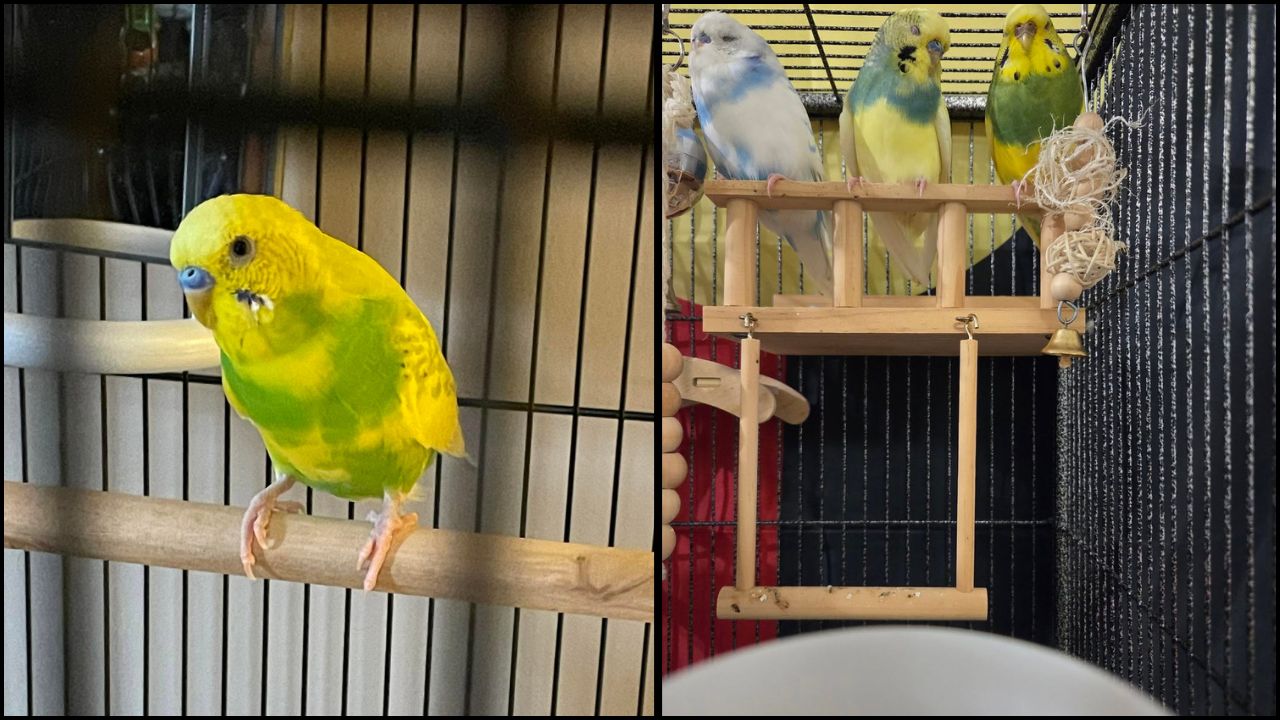

Neil has kept, bred, and sold budgies at Paradise Pets Swindon since 1988. This article is about a specific, real situation that comes to him at the counter several times a year in various forms — an owner who loses a bird suddenly and cannot understand why. In almost every case, the reason is where the cage was. This guide exists so that conversation happens before the loss, not after.
I am going to tell you something that I have thought about saying in writing for a long time.
Customers come back into this shop after losing a bird. Sometimes it was illness. Sometimes it was old age. Sometimes it was something unavoidable. But several times a year — more often than I would like — a customer comes in and describes a bird that was perfectly well, and then suddenly was not, and then was gone. No obvious illness. No vet had seen it sick. Just a normal bird, in its normal cage, in what seemed like a normal spot in the house, and then it was dead.
In the majority of those cases, when I ask enough questions, the answer comes back to the same thing.
The cage was in the wrong place.
Not obviously wrong. Not the kind of wrong that is visible. The kind of wrong that is invisible until something goes catastrophically wrong, and by then it is too late to change anything.
I have sat across the counter from people who were genuinely devastated — who had done everything they thought was right, who had provided good food and fresh water and regular handling, who had loved their bird — and had to explain to them that a cage near a kitchen, or in a sunlit conservatory, or positioned in a corridor draught, or a few metres from a newly installed gas fire, had made everything else they did irrelevant.
I am writing this because I do not want to have that conversation with you after the fact.
Position One — The Kitchen
I start here because it is the most common dangerous position and the one most likely to have killed a bird quickly, without the owner understanding why.
The kitchen is where PTFE fumes come from. PTFE — polytetrafluoroethylene, sold under brand names including Teflon — is the coating on most non-stick cookware. At normal cooking temperatures, it is harmless to humans. When a pan is overheated — left empty on a high flame, heated dry, left on the hob while the owner is in another room — it releases fumes that are invisible and odourless to humans but can be lethal to birds within minutes.
I have described this in detail in our guide on the biggest mistake UK bird owners make. The relevant point here is specifically about cage position.
A cage in the kitchen, or in a room immediately adjacent to the kitchen with an open doorway between them, is within the fume reach of an overheated pan in the same house. Budgies extract oxygen from air with extraordinary efficiency — which also means they extract airborne toxins at concentrations that humans do not notice. By the time a fume event is visible or detectable to the person cooking, a bird in the kitchen or adjacent room may already have been fatally affected.
The customer whose bird this headline refers to — she had her cage in a small kitchen-diner. Open plan. She overheated an old non-stick pan one afternoon while making dinner. She noticed the bird behaving oddly about fifteen minutes later. It was dead within the hour. The vet confirmed toxin exposure. She had no idea non-stick cookware posed any risk at all. Nobody had told her.
The cage must not be in the kitchen. Not in a conservatory that shares an open kitchen wall. Not in a room that opens directly and without a door onto a kitchen where non-stick cookware is used. This is not a minor precaution. It is the most important single piece of cage positioning guidance I give, and I give it to every budgie buyer before they leave this counter.
Position Two — The Conservatory or Direct Sunlight Through Glass
This one tends to kill birds more slowly than the fume scenario, but more reliably over a UK summer — and it is the position people most consistently assume is fine.
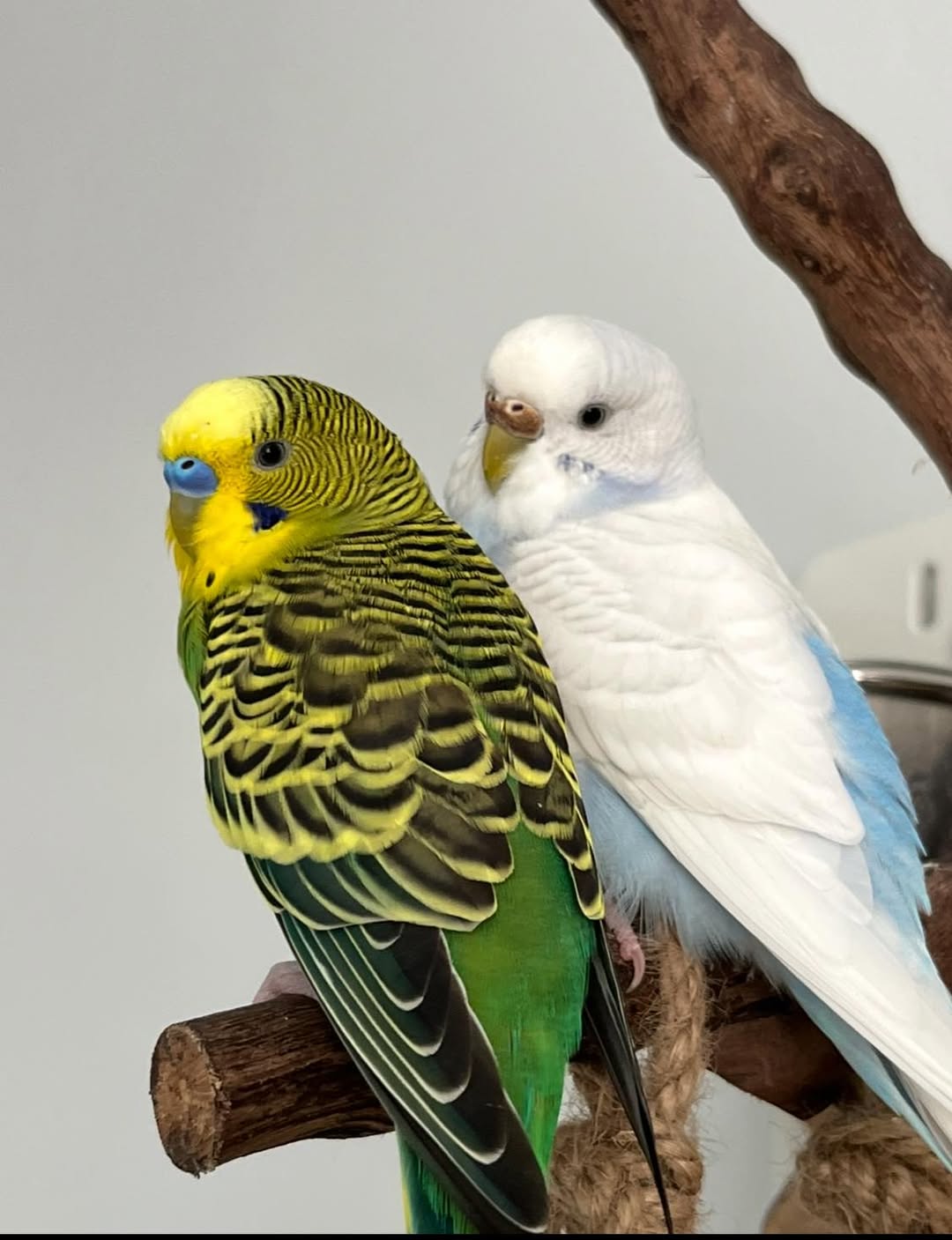
A conservatory feels like a wonderful place for a bird. Light, warm, visible garden, pleasant environment. And in winter or in a cool UK spring, it might be entirely acceptable. But glass transmits sunlight while being much less effective at radiating heat back out, which means a conservatory — or any cage positioned in direct sun through a window — becomes a greenhouse effect in miniature on a warm day.
Interior temperatures in a conservatory in direct summer sun can reach 35, 40, or more degrees Celsius. A budgie’s upper safe temperature threshold is around 29 to 30 degrees Celsius, above which heat stress begins and above which, sustained, it becomes genuinely life-threatening. The bird has no way of moving to a cooler area. It cannot open a window. It can pant — beak open, breathing rapidly, trying to dissipate heat through evaporation — but if the ambient temperature is too high and the air too dry, panting cannot keep up with the heat load.
I have had this conversation with customers after losing a bird in a conservatory on a hot July afternoon. The owner had gone out for a few hours. The weather forecast had said 24 degrees. The conservatory hit 38 inside by two in the afternoon. The bird, in a cage with no shade and no escape route, died of heat stroke.
I have written specifically about the summer window risk in our guide on what summer heat means for budgies near windows. The practical check is simple: at the warmest part of the day, put your hand in the cage’s position and note whether it is in direct sun and significantly warmer than the rest of the room. If it is — move the cage, today.
Position Three — The Draught Corridor
This one kills birds more slowly and less visibly than the above two, but it kills them consistently — through chronic respiratory damage followed by opportunistic infection that the owner attributes to illness rather than environment.
A draught is not the same as a cold room. A uniformly cold room, while not ideal for a budgie, is manageable for a healthy bird. A draught — intermittent, unpredictable cold airflow across the bird’s position — creates a temperature fluctuation that the bird’s thermoregulation has to work constantly to compensate for.
Draught positions in a typical UK home: the hallway, particularly near the front or back door. A corridor between frequently opened rooms. Near a window that does not seal properly and allows cold air through even when closed. Near an air conditioning vent. At the foot of stairs where cold air from above moves down past the cage.
The hallway is the position I see most often. It seems like a sensible place — central to the house, the bird sees all the family comings and goings, there is some natural light. What it also has is the front door opening multiple times a day, each time admitting a rush of cold outdoor air directly into the corridor where the cage is. In winter, that temperature differential can be 15 degrees or more between the corridor temperature and the blast from outside.
A bird in a draught position does not die dramatically. It becomes susceptible. Its immune system — already working to compensate for temperature fluctuation — is less effective at managing the respiratory pathogens that budgies normally cope with without difficulty. A bird that would have easily managed a mild respiratory challenge in a stable, draught-free position cannot manage it as effectively in a draught corridor. The illness that follows is real, and it is what the vet sees, but the root cause is the environment.
Move the cage to a main living room — the one where the family spends most of its time, where the temperature is consistent and managed, where there is no regular blast of cold outside air from a frequently opened exterior door. This resolves draught risk entirely.
Position Four — Near a New or Recently Serviced Gas Fire, Wood Burner, or Boiler
This is the one that comes up specifically in autumn and early winter, when heating goes on for the first time since spring.
Any combustion appliance — gas fire, wood burner, open fire, gas boiler — produces combustion products as part of normal operation. In a well-maintained, properly ventilated system, those products are largely expelled through the flue. In practice, particularly with:
— A gas fire that has not been serviced recently, or one with a slightly imperfect seal on the flue connection.
— A wood burner using damp or unseasoned wood, which produces significantly more particulate and carbon monoxide than properly dried fuel.
— An open fireplace that draws imperfectly, allowing combustion products to drift into the room before rising up the chimney.
— the combustion products that enter the room air can reach concentrations that a human does not notice but a budgie’s respiratory system registers as a toxic challenge.
The specific risk from first use in autumn is that a fire or boiler that has sat unused for six months may have accumulated dust, debris, or minor maintenance issues in the flue or seals that normal summer maintenance would not have revealed. The first few firings can produce elevated emissions that would not be present in a properly burning, regularly used system.
I do not know how many birds have been lost to this cause specifically, because it is one of the hardest to identify after the fact. I do know that every time I hear about a bird lost suddenly in autumn or early winter in a household with a gas fire or wood burner, this is among the first questions I ask about.
The practical response: keep the cage well away from any combustion heat source, in a room that is not the same room as the fire or boiler, with a door between them ideally. Have combustion appliances serviced annually. Use only properly seasoned dry wood in wood burners. And if a bird shows sudden signs of distress in a room with any combustion heat source — fresh air immediately, windows open, bird to another room, and call a vet.
Position Five — The Bedroom (For a Slightly Different Reason)
I have written about this specifically in our guide on budgies in toddlers’ bedrooms, but the bedroom danger applies beyond toddlers and beyond the specific night fright risk. It is worth stating here in the context of cage positioning generally, because the bedroom creates a specific hazard that other rooms do not.
Bedrooms are where humans sleep. While sleeping, humans produce carbon dioxide in higher concentrations than in a ventilated, active living space. In a small, well-sealed bedroom with the door closed overnight, CO₂ levels can rise to levels that are not harmful to a human but represent a reduced-oxygen environment compared to the rest of the house. A budgie in a small, sealed bedroom, overnight with the door closed, is breathing slightly more CO₂-enriched air than it would be in an open living room.
This is not the same as an immediate fume hazard. It is a chronic, mild reduction in air quality that compounds over time. A bird sleeping in a sealed bedroom every night of its life is in a slightly more challenging respiratory environment than a bird in a well-ventilated living room.
The more acute bedroom risk is what I have covered elsewhere — night frights from a sleeping occupant, mutual sleep disruption, and in the specific case of a parent’s bedroom, strongly scented products like perfume, hairspray, and similar aerosols which are all airborne irritants to a budgie’s respiratory system at the concentrations that accumulate in a closed room overnight.
The practical answer is the one I always give: the main living area, consistently, is the correct location for a budgie cage.
The Correct Position — What I Tell Every New Owner
The positive version of everything above is straightforward to describe. A budgie cage should be in a room that meets all of these conditions simultaneously.
Away from any kitchen, or with a closed door separating it from any kitchen where non-stick cookware is used. This is non-negotiable.
Away from direct sunlight through any window, at any time of day. Including south or west-facing windows in summer, and including conservatory walls.
Away from any exterior door that opens regularly. The draught each opening creates should not reach the cage position.
Away from any combustion heat source — gas fire, wood burner, open fire. A different room, with a door between them, is the safest arrangement.
In a room where the temperature is consistent and managed. The main living room, where the household spends its active time, where the heating is on during occupied hours and not dramatically off at night, is almost always the correct room.
At a height between waist and eye level. Not on the floor, where draughts are stronger and the bird feels exposed. Not high enough that the ceiling heat differential becomes significant in warm weather.
In a room with some natural light, but not in the direct path of the light. Indirect natural light from a window that the cage is perpendicular to, or set back from, rather than directly in front of.
This does not describe a complicated setup. It describes a typical UK living room, with the cage set back from the window, away from the kitchen, not in the hallway, not in a conservatory, not next to a gas fire. Most households have exactly this option. The problem is simply that most people do not know they need to think about it deliberately.

- “We put it near the kitchen because that’s where we spend most of our time” — The reason to be near the kitchen is the right instinct — birds need the company of the household — but the kitchen itself, or an open-plan kitchen-diner, creates the PTFE fume risk that no amount of other good care can mitigate. The living room serves the same companionship purpose without the fume risk.
- “It’s in the conservatory so it gets lots of natural light” — Natural light is beneficial for budgies. Direct summer sun through glass in a conservatory, which can reach temperatures the bird cannot tolerate, is not. Indirect light in a stable-temperature room achieves the light benefit without the heat risk.
- “The hallway is the busiest part of the house” — Busyness and the draughts from a frequently opened exterior door come together in a hallway. The bird sees the family activity; the bird also gets a blast of cold outdoor air every time the front door opens. Main living room achieves the activity and eliminates the draught.
- “We’ve got a new gas fire but it’s modern so it’s definitely safe” — Even modern, well-installed combustion appliances should not share an unventilated room with a bird cage. The risk is not that the fire is faulty — it is that any combustion produces products that a bird’s respiratory system is more sensitive to than a human’s.
- “It’s always been in that spot and it’s been fine” — This is the phrase I hear most often just before someone tells me their bird has died. Most cage position risks are cumulative or conditional — they do not produce immediate, obvious problems, and then one day the conditions align and the invisible risk becomes visible. A cage in a risky position that has been fine so far is a cage in a risky position.
The Checklist — Do This Today
- Is the cage in the same room as the kitchen, or in a room with no door between it and a kitchen where non-stick cookware is used?
If yes — move the cage to the main living room and switch to stainless steel or cast iron cookware. Both of these changes need to happen. One without the other is not sufficient. - Does the cage receive direct sunlight through a window at any point during the day, or is it in or near a conservatory?
If yes — check the temperature at the cage position during the warmest part of the day. If it is noticeably warmer than the rest of the room, or in direct sun, move the cage or shade the window. Summer conditions specifically make this check necessary even if the same position was fine in spring. - Is the cage in a corridor, hallway, or any room that receives a regular draught from an exterior door or imperfectly sealed window?
If yes — move to the main living room. The draught risk in corridors and hallways is consistent and cumulative. - Is the cage in the same unventilated room as any combustion heat source — gas fire, wood burner, or open fireplace?
If yes — move to a room separated by a closed door from the heat source. Ensure all combustion appliances are serviced and maintained. - Is the cage in a bedroom, particularly one where aerosols, perfumes, or hairsprays are used?
If yes — consider moving to the main living room for the bird’s long-term respiratory health and for both the bird’s and the household’s undisturbed sleep.
If any of these apply to your current setup — move the cage today. Not when it is more convenient. Not when you get round to rearranging the room. Today. Because the conversation I do not want to have with you is the one at the other end of a cage position that has been wrong for months, after the bird is already gone.
 Come and see us if you want to talk through your specific setup before or after making any changes. We are at Manor Garden Centre, Cheney Manor Industrial Estate, Swindon, SN2 2QJ — open every day. Or call us on 01793 512400.
Visit Us at Paradise Pets Swindon
We stock budgies year-round — all UK-bred, all handled from a young age. We also stock appropriate cages, stainless steel cookware where available, and everything needed to set up a safe, correctly positioned bird environment. Come in and let us check your setup with you if you are not sure.
We also stock a full range of cockatiels, canaries, and finches, alongside guinea pigs, rabbits, and gerbils and hamsters.