
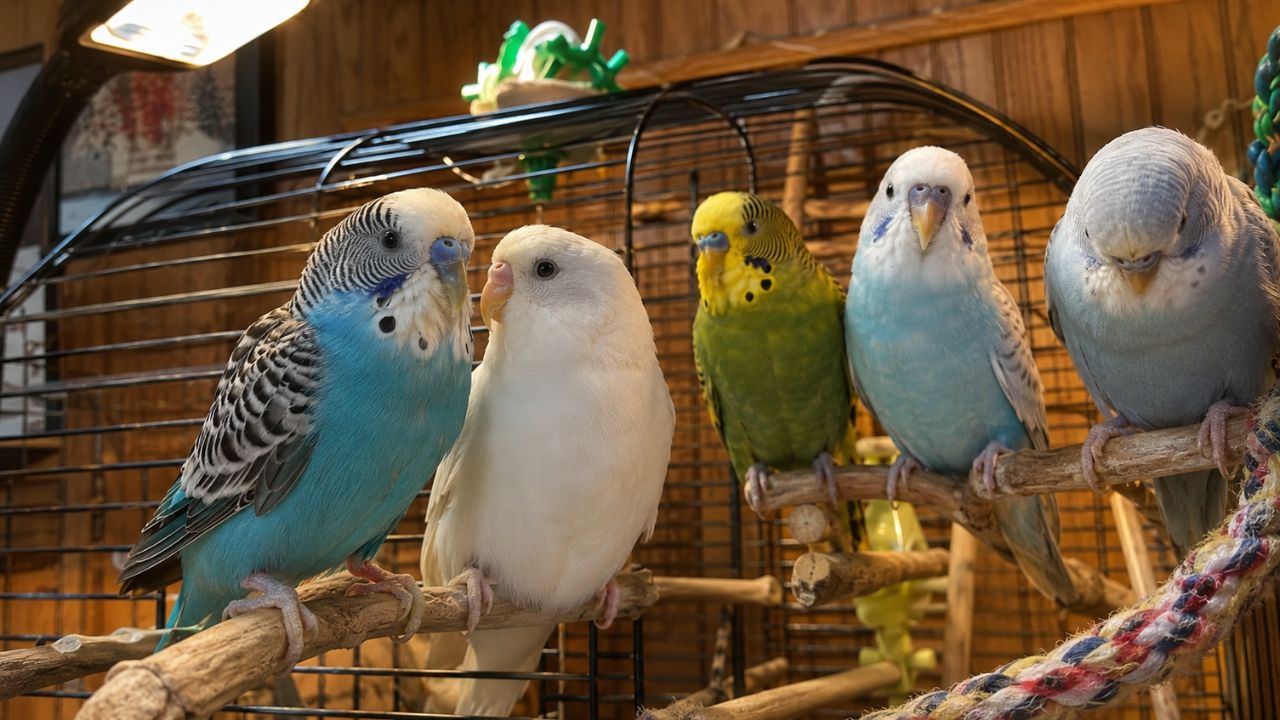

Neil has kept, bred, and sold budgies at Paradise Pets Swindon since 1988 — over 35 years of first-hand experience with these birds. In that time, the question of which budgie suits a work from home lifestyle has become one of the most common conversations he has at the counter. This article is his honest answer.
A graphic designer came into the shop about two years ago. She had been working from home full-time for eighteen months and had found, to her surprise, that the silence of her flat was getting to her. She was not lonely exactly — she had friends, she went out at weekends — but the hours between nine and five in her home office felt very quiet, and she was wondering whether a budgie might help.
She asked me a question I have heard many versions of over the years. “Which budgie should I get?”
I told her that was the wrong question. The right question was — what kind of budgie relationship do you actually want, and what can you realistically offer the bird in return? Because there are several different answers to “best budgie for a home worker,” depending on what that person wants from the experience and what their home and daily routine actually look like.
We spent about twenty minutes at the counter going through it properly. She left with two birds — a male and a female, kept in a large cage in her office. She rings me every few months to give me an update. Both birds are thriving. She says the background chatter while she works is, as she puts it, the best thing she has added to her working day in years.
That conversation is the one I want to have with you in this article.
Why Working From Home Is Actually Ideal for Budgie Keeping
Let me start with something positive — because working from home genuinely is one of the best situations you can be in as a budgie owner, and I want you to understand why before we get into the specifics.
The single biggest welfare problem I see in budgies kept in UK homes is isolation. Owners who go to work for eight or nine hours a day, leaving a single budgie alone in silence, are keeping a flock animal in conditions that are fundamentally unsuited to its nature. The bird gets bored, stressed, and in many cases, unwell.
A home worker does not have that problem. You are there. You are moving around the house. You are talking on calls, making cups of tea, opening windows. To a budgie in its cage, all of that is stimulation — the sounds, the movement, the presence of its person. You are, in effect, providing the background flock activity that budgies are designed to have around them.
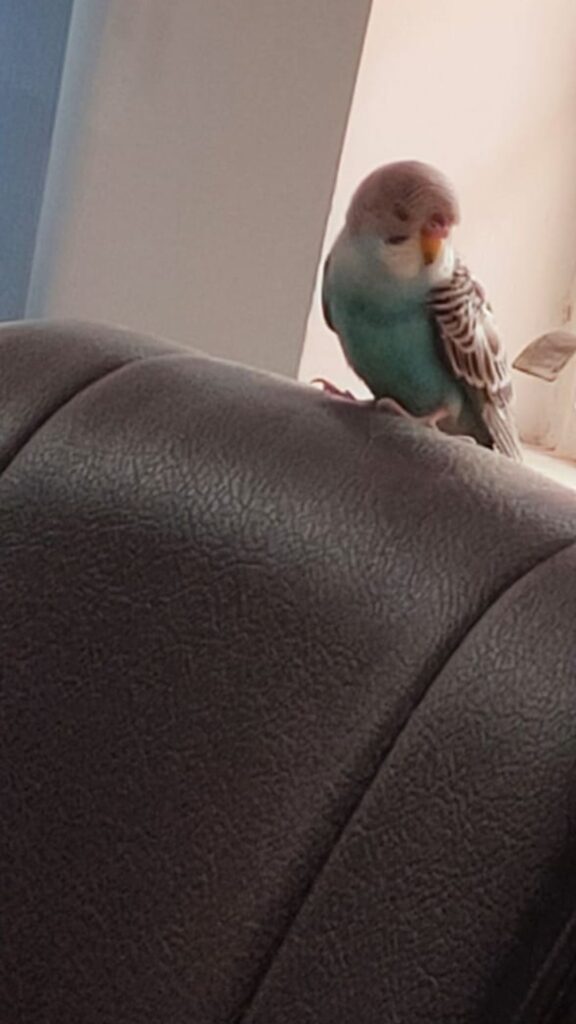
This does not mean any budgie in any setup will automatically thrive because you work from home. But it does mean you are starting from a much better position than most owners. The question is how to build on that advantage properly.
Male or Female — Which Is Better for a Home Worker?
This is the first decision most people face, and it is one where I have a clear view based on 35 years of watching how these birds actually behave in home environments.
For someone who works from home and wants a budgie that is actively engaging — one that vocalises, responds to the sounds of the household, learns to whistle tunes, and becomes genuinely interactive — a male budgie is almost always the better choice.
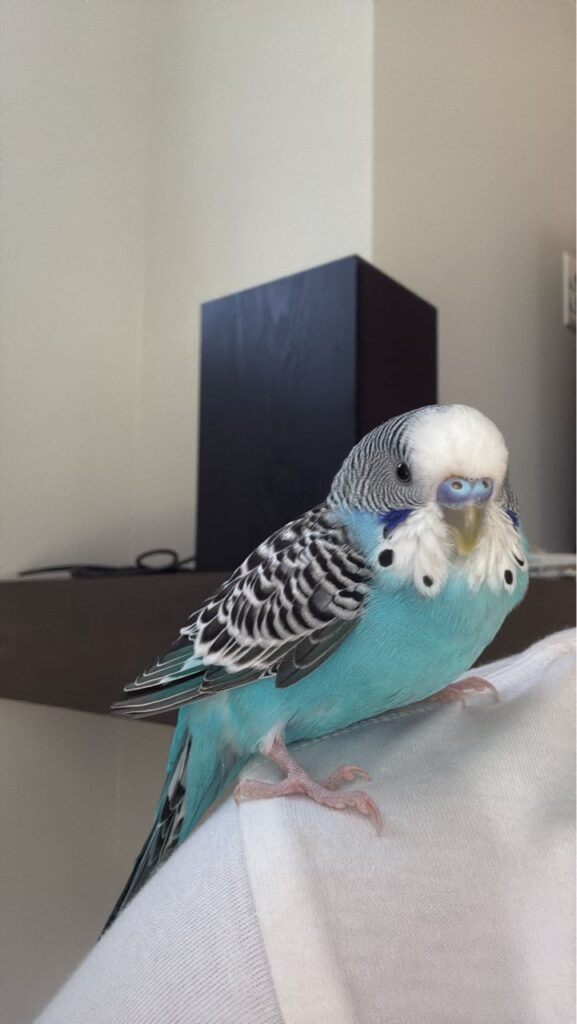
Male budgies are more vocal. They are more likely to learn words and phrases. They whistle tunes, sometimes inventing their own. They are generally more outgoing and more willing to engage with sounds and activity around them. For a home worker who wants background company and the occasional interaction without leaving their desk, a male budgie is extraordinarily well-suited.
Female budgies are quieter and less inclined to learn speech or tunes. They can be equally affectionate and equally characterful — but the vocalisation that makes a budgie feel like a genuine presence in a room is more consistent in males.
- Look at the cere — the fleshy area just above the beak where the nostrils are. In adult males, the cere is typically blue or purplish-blue. In adult females, it is brown, beige, or white.
- Young birds are harder to sex — in birds under four months old, both sexes may have a pinkish or purplish cere. Wait until the bird has had its first moult for a clearer indication.
- Behaviour gives clues — males tend to be more vocal and more likely to bob their heads. Females tend to be more independent and less interested in vocalising.
- If in doubt, ask us — we sex birds regularly at the shop and can usually give you a reliable answer for adult birds. Our full guide on telling male from female budgies covers everything you need to know.
Single Bird or a Pair — The Most Important Decision
This is the question I spend the most time on at the counter, because it is the one with the biggest impact on both the bird’s welfare and the owner’s experience.
Let me give you the honest version — because there are two very different ways of thinking about this and both have merit depending on what you actually want.
- Single bird, maximum human bonding — a single budgie, kept without another bird, will direct all of its social energy toward you. It will be more likely to seek you out, step up readily, learn your voice patterns, and become closely bonded to you as its primary companion. The downside is that this bird is entirely dependent on you for social contact — when you close the office door for a call, when you go out, when your routine changes, that bird has nothing. The pressure this puts on a single bird is real.
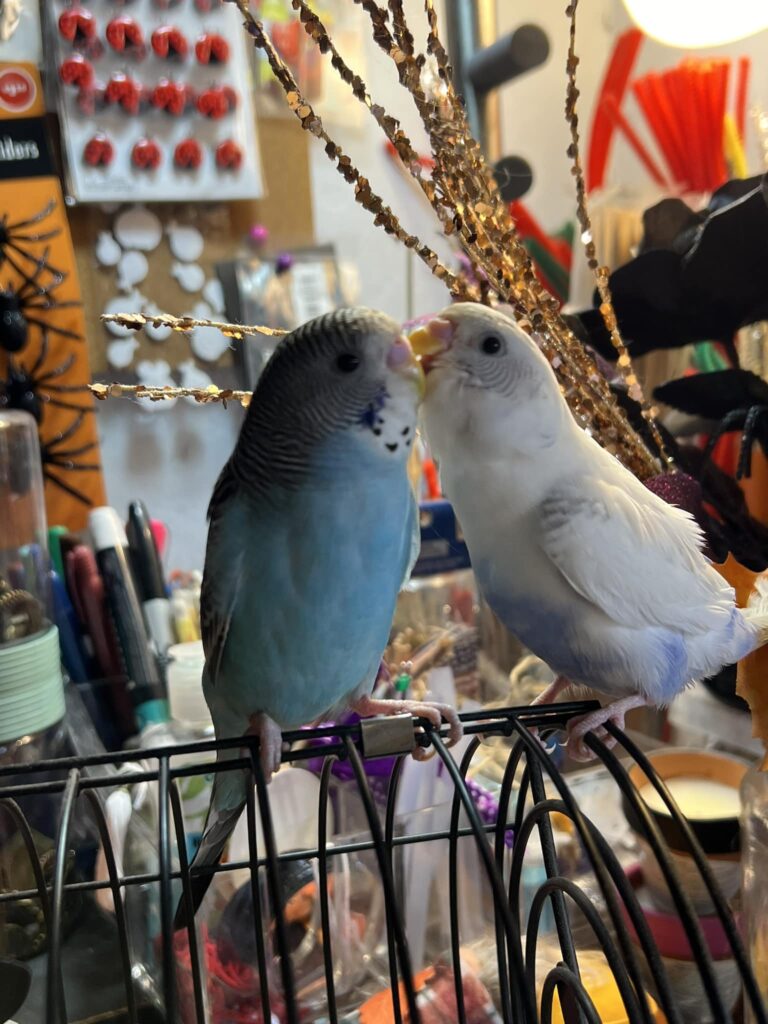
- A pair, more natural and more resilient — two budgies together have each other. They are more relaxed, less anxious, and live longer on average than single birds. They are also slightly less intensely bonded to you individually — not less affectionate, but less desperate. The graphic designer I mentioned at the start has two birds. She says they respond to her voice, come to the cage bars when she speaks to them, and are excellent company — while also being perfectly content when she is on a call and cannot interact with them directly.
My honest recommendation for most home workers is a pair — specifically two males, or a male and a neutered female if you do not want breeding attempts. Two males together are generally harmonious, vocal, and mutually entertaining. They provide each other with the constant social contact that a flock animal needs, and they still interact warmly with their owner.
The one situation where a single bird makes more sense is if you are home almost all day, every day, and specifically want the experience of a closely bonded individual bird that you will interact with directly for extended periods. In that case, one well-socialised male, given the right environment and daily attention, can thrive as a single bird.
What Colour Should You Get — And Does It Matter?
Let me be direct about this one, because it is something people spend a lot of time thinking about and the honest answer is fairly simple.
Colour does not affect personality, temperament, or how well a budgie suits a home working environment. A yellow budgie and a green budgie, kept in identical conditions with identical care, will behave in essentially the same way. The colour mutations that exist in budgies are the result of selective breeding for appearance — they do not come with personality traits attached.
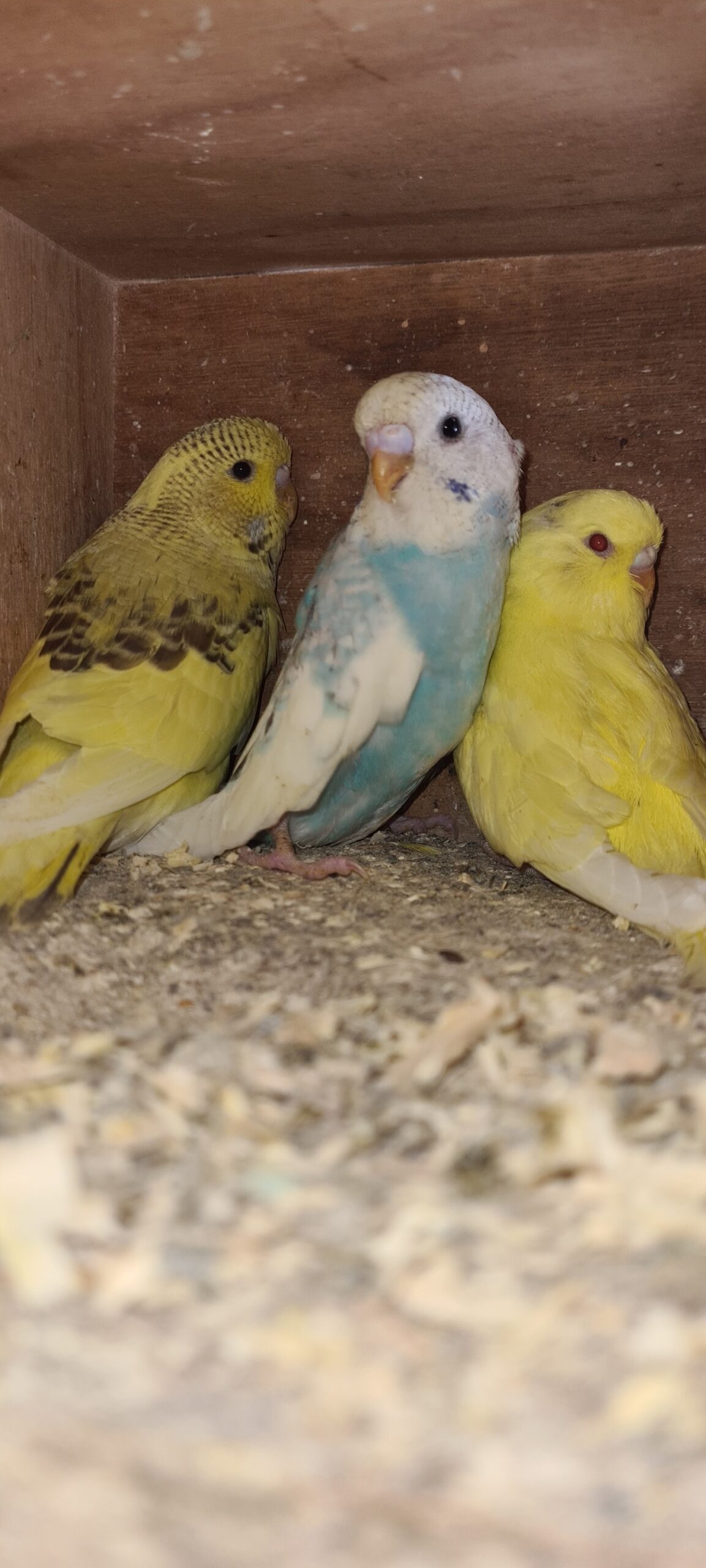
What does affect personality is individual temperament, how the bird was raised, and how it has been handled since hatching. A well-socialised bird from a good breeder or a reputable shop, whatever its colour, will be far better suited to life as a home working companion than a poorly socialised bird of any colour.
When people come into the shop asking which colour to get, I always tell them the same thing — choose the bird, not the colour. Spend a few minutes watching the birds available. Look for the one that is alert, curious, and not particularly frightened by your presence near the cage. That individual bird’s temperament is what you will be living with for the next eight to ten years — the colour is what it looks like.
Where To Put the Cage in Your Home Office
This is something most owners do not think carefully enough about, and it makes a significant difference to how well the arrangement actually works.
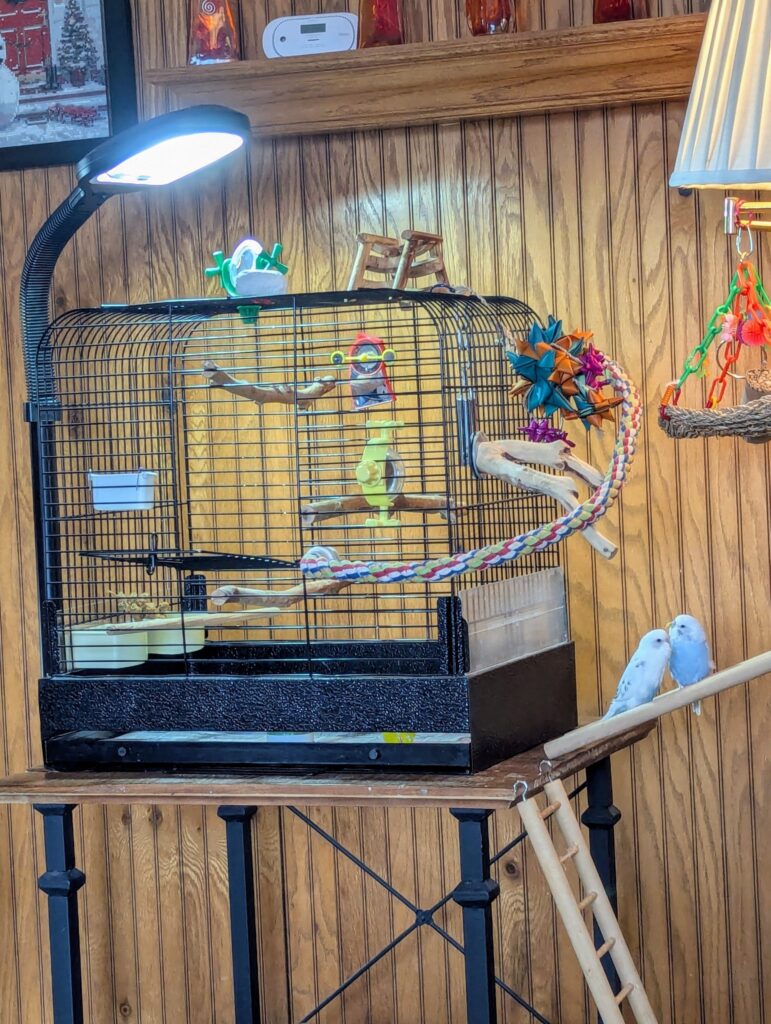
- At eye level, where the bird can see you — a budgie that can see its owner across the room has something to engage with. A bird on the floor in the corner does not. Eye level or just below is ideal — the bird feels part of the room rather than an afterthought.
- Near natural light but not in direct sun — natural light is important for a budgie’s health and mood, but direct afternoon sun can overheat a bird very quickly. A position with good natural light that does not receive direct sunlight through the glass is ideal.
- Not directly next to your desk speakers or monitors — high-pitched electronic sounds and sudden loud audio from calls or videos can stress a bird. A position in the same room but not immediately next to your main audio sources is better.
- Away from the window if there are cats outside — a bird that can constantly see a cat on the windowsill is a bird under chronic predator stress. Think about what the bird can see as well as what you can see.
- Not in the kitchen — cooking fumes, non-stick cookware, aerosol cleaning products. The kitchen is the most dangerous room in the house for a budgie, and it should never be the room where the cage lives.
How Working From Home Changes the Budgie Dynamic — The Honest Reality
I want to be upfront about something that the graphic designer discovered — and that catches some home workers off guard.
When you work from home with a budgie in the room, the budgie will respond to you. It will call when you leave the room. It will vocalise when you come back. It will chat during your quiet working periods and occasionally during your calls. A vocal male budgie, doing his morning song at full volume, does not understand that you are on a client call.
For most home workers, this is exactly what they wanted and they love it. For some people, particularly those who need complete quiet for extended periods or who are on sensitive calls regularly, it requires some thought.
The practical solutions are straightforward — a cover over part of the cage can reduce vocalisation during calls. Moving to a different room for particularly sensitive calls is an option. Some birds settle into the rhythm of the household and become quieter during periods when you are consistently quiet yourself.
None of this is a reason not to have a budgie if you work from home. It is just the reality of sharing your working day with a flock animal that has opinions about your schedule.
What a Budgie Actually Needs From You as a Home Worker
This is the part that determines whether the arrangement works well or not — what the bird actually needs, beyond the cage and food.
- Daily interaction — not hours at a time necessarily, but genuine, focused engagement every day. Talk to the bird. Whistle to it. Spend time near the cage. Even five minutes of direct interaction morning and evening makes a significant difference to a budgie’s wellbeing
- Out-of-cage time — at least twenty minutes a day of supervised out-of-cage flight in a safe room. This is not optional — it is an important part of a budgie’s physical and mental health
- Consistency — budgies thrive on routine. Feeding at the same time, lights on and off at the same time, the familiar sounds and rhythms of your working day. The predictability of your home office schedule is actually an advantage here
- A varied diet — pellets, fresh vegetables daily, limited seed. I cover this in our article on the 5 mistakes UK budgie owners make in detail
- A properly sized cage — minimum 60cm wide for a single bird, larger for a pair. Wider is more important than tall — budgies fly horizontally
- Daily observation — one of the hidden advantages of working from home is that you will notice changes in your bird’s behaviour far earlier than an owner who is out all day. Use that advantage — watch the bird every morning and know what normal looks like
What I Would Recommend to a Home Worker Coming Into the Shop Today
Right. If you walked into Paradise Pets today and told me you worked from home and were thinking about getting a budgie, here is exactly what I would say.
I would recommend two young male budgies, well-socialised and from a reputable source. I would set them up in a cage of at least 80cm wide — bigger than the minimum, because you will be with them all day and a cramped cage in a home office will become very obvious very quickly. I would position the cage at eye level in your office, with good natural light but not direct sun, somewhere you can see them and they can see you.
I would tell you to talk to them from day one. Not just at feeding time — throughout the day, whenever you speak in the room. Budgies learn voices and they respond to familiarity. Within a few weeks, the birds will know your voice, your routine, and probably the sound of your kettle.
And I would tell you that in my experience, the people who work from home with budgies in the room are, almost without exception, the owners whose birds thrive the most. The arrangement suits both parties remarkably well — an owner who is present, consistent, and nearby, and birds who have company, stimulation, and a flock to belong to.
Frequently Asked Questions
Is a budgie a good pet for someone who works from home?
Yes — in my experience, home workers are among the best budgie owners precisely because they are present. The biggest welfare risk for budgies in UK homes is isolation — being left alone for eight or nine hours a day. A home worker eliminates that problem almost entirely. The background presence, the sounds, the routine of a working day at home all provide the stimulation and company that budgies need.
Will a budgie distract me when I am working?
Honestly, yes — occasionally. A vocal male budgie will have opinions about your day and will not always time them tactfully. Most home workers find this charming rather than problematic, and you adapt to each other’s rhythms within a few weeks. If you regularly need complete silence for extended periods, position the cage in a room you can close off during those times, or consider whether a quieter species might suit your working style better.
Should I get one budgie or two if I work from home?
My honest recommendation for most home workers is two — specifically two males. Two budgies together are more relaxed, less anxious, and live longer on average than single birds. They entertain each other during the periods when you are unavailable, and they still interact warmly with you when you are free. If you specifically want a very closely bonded single bird and you are home almost all day every day, one well-socialised male is also a valid choice.
Which colour budgie should I get?
Colour does not affect temperament, personality, or suitability for a home working environment. Choose the individual bird whose personality appeals to you — watch how it behaves when you approach the cage, look for curiosity and alertness rather than fearfulness. A well-socialised bird of any colour will serve you far better than a poorly socialised bird of any colour.
Where should I put the budgie cage in my home office?
At eye level, with good natural light but not direct sun, not immediately next to speakers or monitors, and away from any window where cats can be seen from outside. Not in the kitchen under any circumstances — cooking fumes and non-stick cookware are serious hazards for budgies.
Where can I get honest budgie advice in Swindon?
Come and see us at Paradise Pets, Manor Garden Centre, Cheney Manor, Swindon SN2 2QJ. Or give us a ring on 01793 512400. The advice is free and I have been doing this for over 35 years.
Thinking About a Budgie For Your Home Office? Come And See Me
Bring your questions and your honest situation. I will help you decide what setup actually suits your working life — and make sure you go home properly set up. Free advice, no pressure, no obligation. That is how we have done things for over 35 years.