
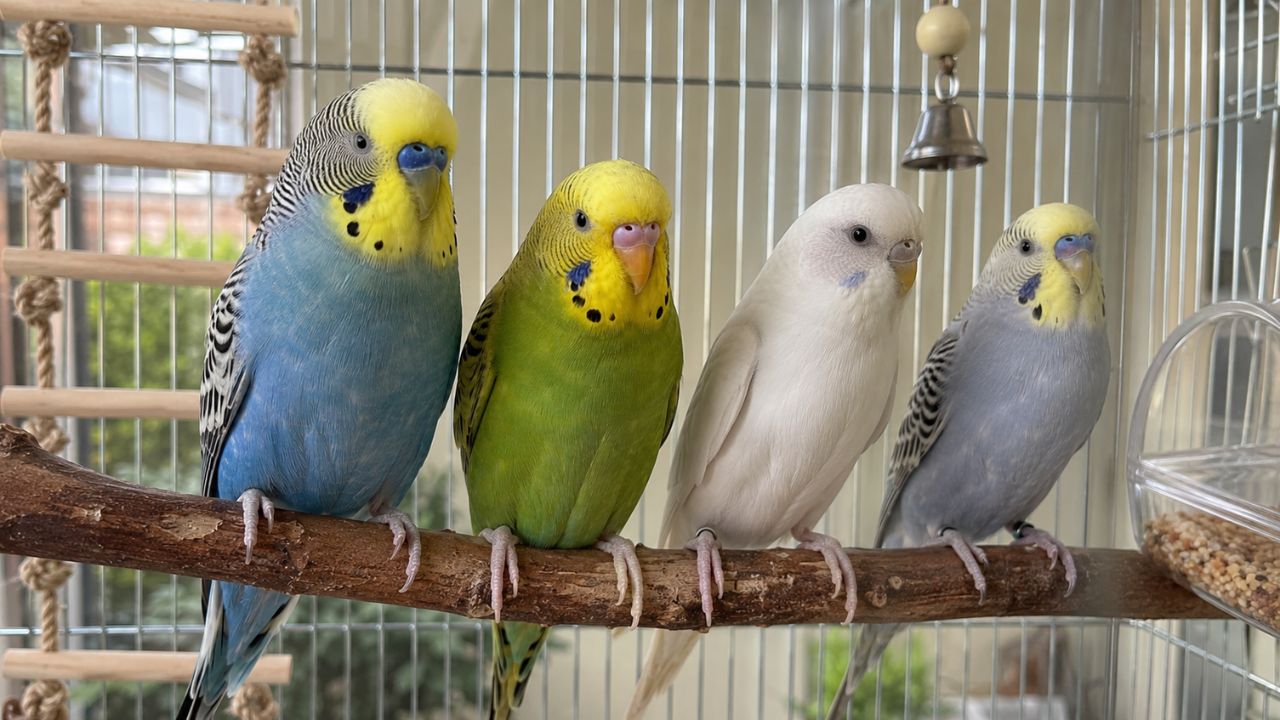

Neil has kept, bred, and sold budgies at Paradise Pets Swindon since 1988 — over 35 years of first-hand experience with these birds. In that time, he has helped hundreds of UK seniors and retirees choose the right budgie for the next stage of their lives. This article is his honest guide on which budgies genuinely suit older owners — and which ones to avoid.
A gentleman in his late seventies came into the shop a couple of weeks ago. He had recently lost his wife and his daughter had suggested a pet might help with the quiet of the house. “Neil,” he said, “I want a budgie. I had them as a boy, and I think one would be good company. But I am 78 now. What do I actually need to know that I did not need to know fifty years ago?”
It was one of the most honest conversations I have had at the counter in a long time, and it is one I now have at least once a month. Because there is a real, genuine difference between buying a budgie at 30 with a young family around you and buying one at 70 living more quietly on your own. Different needs. Different practical considerations. Different breeds that suit you best.
And the honest truth is — budgies can be exceptional companions for UK seniors and retirees, but only if you choose the right one for your situation. Not every budgie is well-suited to a calmer, quieter home. Some are too active, too noisy, too demanding. Others are absolutely perfect — and seniors who pick well often have wonderful, deeply rewarding relationships with their birds for years.
In 35 years of selling budgies in Swindon, I have watched countless older customers come in for a “little bit of company” and leave with the right bird. Some of those budgies have lived in those homes for a decade or more — quiet, gentle company through good days and difficult ones. The right budgie at the right time of life is genuinely one of the best small pets there is for an older person.
This article is the conversation I have at the counter with senior customers, written down properly. It will walk you through which budgie types suit a quieter, more retired lifestyle, what to look for when choosing, and what practical setup makes the difference between a budgie that thrives in a senior’s home and one that does not.
Why Budgies Suit Seniors So Well — When Chosen Properly
Let me start by explaining why budgies, of all the small pets, are genuinely one of the best choices for older UK owners. Because once you understand this, the question of which budgie to pick becomes much clearer.
Budgies offer something most other pets do not. They are:
- Genuinely companionable — they recognise their humans, respond to voices, and form real bonds over time
- Manageable physically — no walks, no lifting heavy bags of food, no need to bend down to clean a litter tray
- Easy to fit into a quiet home — they do not need acres of space and they like calm households
- Long-lived enough to matter — 8 to 12 years gives you a proper relationship without being an overwhelming commitment
- Affordable to keep — the ongoing costs are modest compared to dogs or cats
- Cheerful presence — the chirping, the activity, the small daily routines genuinely lift a home
- Independent enough — they cope fine if you go to bed early or sleep in late
For seniors living alone, recently widowed, or simply enjoying a quieter pace of retirement, a budgie offers a meaningful presence without becoming a burden. That is a genuinely valuable combination, and it is why I have helped so many older customers find their bird over the years.
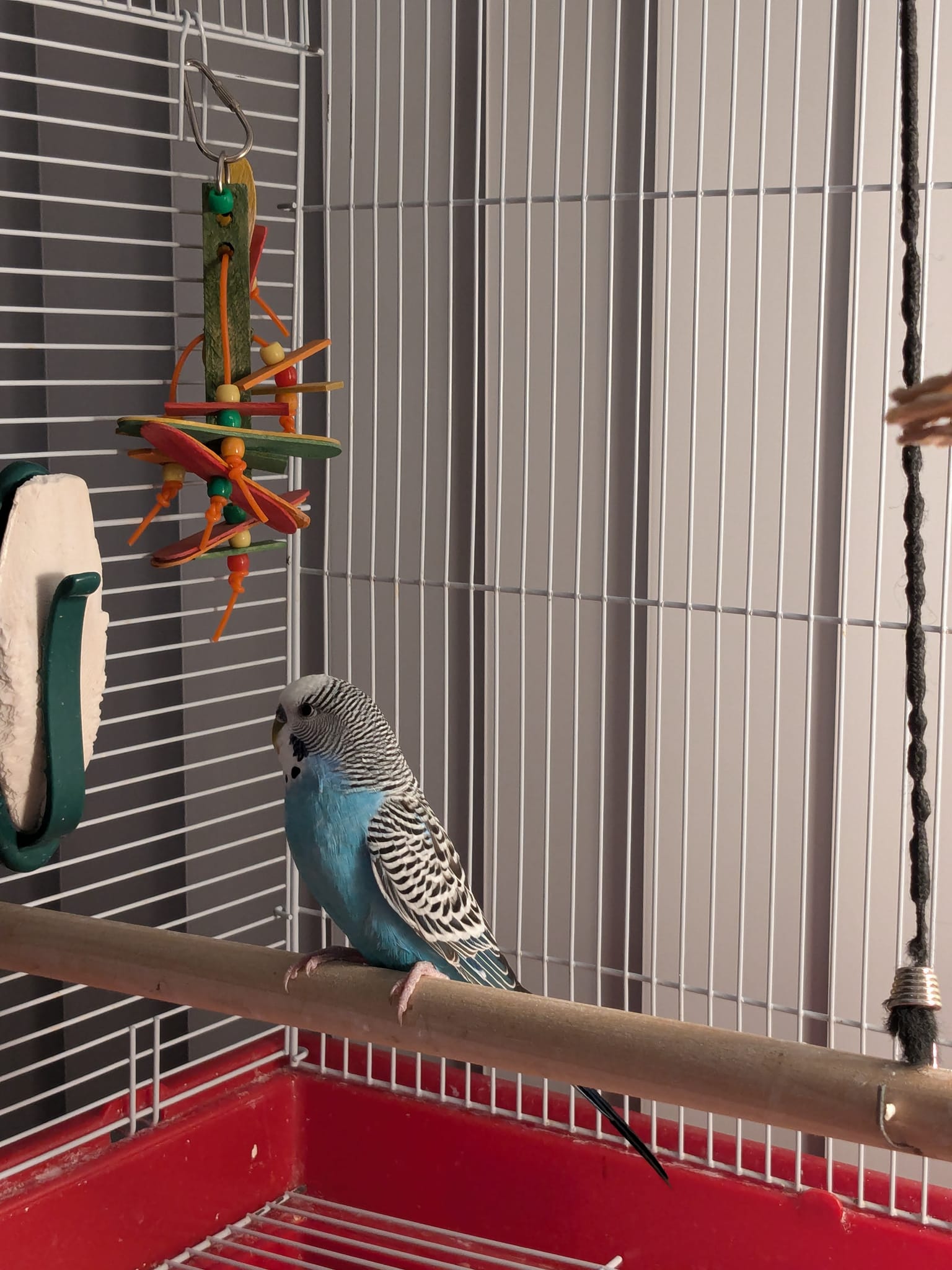 But — and this is important — only the right budgie does this well. The wrong choice can be the opposite of what you wanted. A nervy, noisy, demanding bird in a calm home is stressful for both the bird and the owner. So the choice matters.
The Two Budgie Types That Suit Seniors Best
This is where my advice for older customers differs significantly from my advice for younger families. For families with children, I usually recommend lively young wild-type budgies. For seniors, my advice is different — and there are good reasons for it.
For older UK owners, the two budgie types I most often recommend are:
1. Hand-Reared Young Wild-Type Budgies
A wild-type budgie that has been hand-reared from a chick is one of the best companion birds you can buy. They are calm with humans, less startled by handling, more willing to come out of the cage, and significantly more likely to bond closely with one person. For a senior living alone, this kind of close bond is genuinely valuable.
Hand-reared budgies are more expensive than parent-reared ones — typically £40 to £80 versus £20 to £30 — but for an older owner the extra cost is well worth it. You get a bird that is comfortable being a true companion rather than something to watch from across the room.
2. Mature, Already-Tame Wild-Type Budgies
This is the option many seniors do not realise exists. Sometimes we have older budgies in the shop that are already hand-tame, often coming from breeders who have kept them as companions or from previous owners who could not keep them. A 2 or 3 year old hand-tame budgie can be the perfect choice for an older person — already settled, already comfortable with humans, with most of its potentially difficult adolescent phase behind it.
The lifespan is slightly shorter (you “use up” 2-3 years of the bird’s potential 10), but the bird is calmer, easier to handle from day one, and avoids the work of taming a young bird. For some seniors, this is genuinely the right choice.

What About English Budgies For Seniors?
This is the question I get asked often by older customers, and the honest answer surprises some people. English budgies — the larger, fluffier “show budgies” — are sometimes assumed to be ideal for older owners because they are calmer and slower-moving. There is some truth to this, but there are also real downsides for seniors specifically.
- Pro: Calmer, slower-moving, less startled by handling
- Pro: Larger and easier to see for owners with reduced eyesight
- Pro: Often more tolerant of gentle handling
- Con: Shorter lifespan — 5 to 7 years versus 8 to 12 for wild-types
- Con: More prone to health problems requiring vet visits
- Con: More expensive to buy — £40 to £80
- Con: Less likely to bond closely or learn to mimic speech
- Con: Harder to find healthy young birds in many UK shops
For some seniors — particularly those whose main need is “something nice to watch” rather than active companionship — English budgies can be a good choice. For seniors who want a real bond, particularly someone living alone who wants a bird to talk to and interact with, a hand-reared wild-type is usually better.
The shorter lifespan of English budgies is worth thinking about honestly. For an owner in their 80s, 5 to 7 years can be a reasonable commitment. For someone younger, the longer-lived wild-type makes more sense.
One Budgie Or Two For A Senior Home?
This is the most important practical question I work through with older customers, and the answer for seniors is different than it is for families. Let me explain both options honestly.
One Single Budgie
For most seniors I see at the counter, a single hand-reared budgie is genuinely the better choice. Here is why:
- The bird bonds closely with the one person who is around most of the time
- It learns to recognise your voice, your routine, your patterns
- It is more likely to come out of the cage and interact
- It is more likely to whistle, mimic, and learn words
- The relationship becomes deeply personal rather than the bird being focused on a companion bird
- One bird is easier to care for, clean up after, and manage in older age
The trade-off is that a single budgie depends on you for social stimulation. That is actually a feature, not a bug, for many seniors — having something that needs your company gives the day structure and purpose.

A Pair Of Budgies
For some seniors, particularly those who go out a lot or whose health means they cannot give regular daily attention, a pair makes more sense:
- The birds keep each other company when you are out or resting
- Less reliance on you for social needs
- Generally healthier and longer-lived than lonely singles
- You get to watch lovely interactions between the two birds
- Less guilty if you cannot always engage with them
The trade-off is reduced human bonding — paired birds usually relate to each other first, with humans second.
For most seniors I help at the counter — particularly those living alone who want a genuine companion — I recommend one hand-reared budgie. For those with health concerns who want the gentler option of paired birds keeping each other company, a bonded pair works well too.
The Most Important Practical Considerations
Right — let me be properly honest about the practical side of budgie keeping for older owners. Because some things matter more in later life than they did when you were younger.
1. Cage Cleaning And Maintenance
A budgie cage needs cleaning. Daily food and water changes, weekly thorough cleans, regular wiping down. For seniors with mobility issues, this can become genuinely difficult if the cage is set up wrong.
The fixes are simple but important:
- Cage on a stand at waist height — no bending down for daily care
- Pull-out tray at the bottom — much easier to clean than fixed bases
- Side door at handling height — easier than reaching across the cage
- Paper liners instead of seed catchers — easier to change daily
- One large food bowl rather than multiple small ones — fewer items to remove and clean
A well-set-up cage means daily care takes 5 minutes rather than 20. For an older owner, that difference matters.
2. Lifting And Handling
Budgies are light, but the cage with food, water, and substrate gets heavy. Older owners should not need to lift a full cage. The setup should be permanent — pick a spot, set it up properly, and leave it there.
3. Vet Access
Finding a rabbit-savvy vet matters even more for seniors than younger owners, because you do not want to be driving to the next county in an emergency. Find a local avian-savvy vet before you need one, register with them, and have their number written somewhere obvious. For seniors who do not drive, knowing which family member can help with a vet trip in an emergency is worth thinking through in advance.
4. Cage Location In The Home
This matters a lot for seniors. The budgie should be:
- In a room you spend significant time in — usually the living room
- Visible from your favourite chair — half the joy is watching them
- Not in the bedroom — disturbs sleep, dust affects breathing
- Not in the kitchen — cooking fumes are dangerous to budgies
- Away from draughts and direct sunlight
- Away from your TV speakers — loud sound disturbs budgies
A budgie cage on a stand by the window, next to where you watch TV, gives you a constant companion through the day. That is the setup that works for most seniors.
- Are you home most of the day?
Yes = single hand-reared budgie ideal. No = paired birds may suit better. - Do you have any mobility issues?
Helps me recommend the right cage setup — height, door placement, tray type. - Do you have an avian-savvy vet nearby?
If not, we can suggest options before you bring the bird home. - Do you have help available for occasional heavy tasks?
Family member who can help with cage moves, vet trips, etc. - What experience do you have with birds?
First budgie ever, or coming back to it after many years? Affects what kind of bird suits you. - What is your day-to-day routine like?
Helps me match a bird’s nature to your lifestyle. - Are you set on a particular colour or breed?
Honestly, temperament matters more than colour. But preferences are fine.
How To Choose The Right Individual Budgie At The Shop
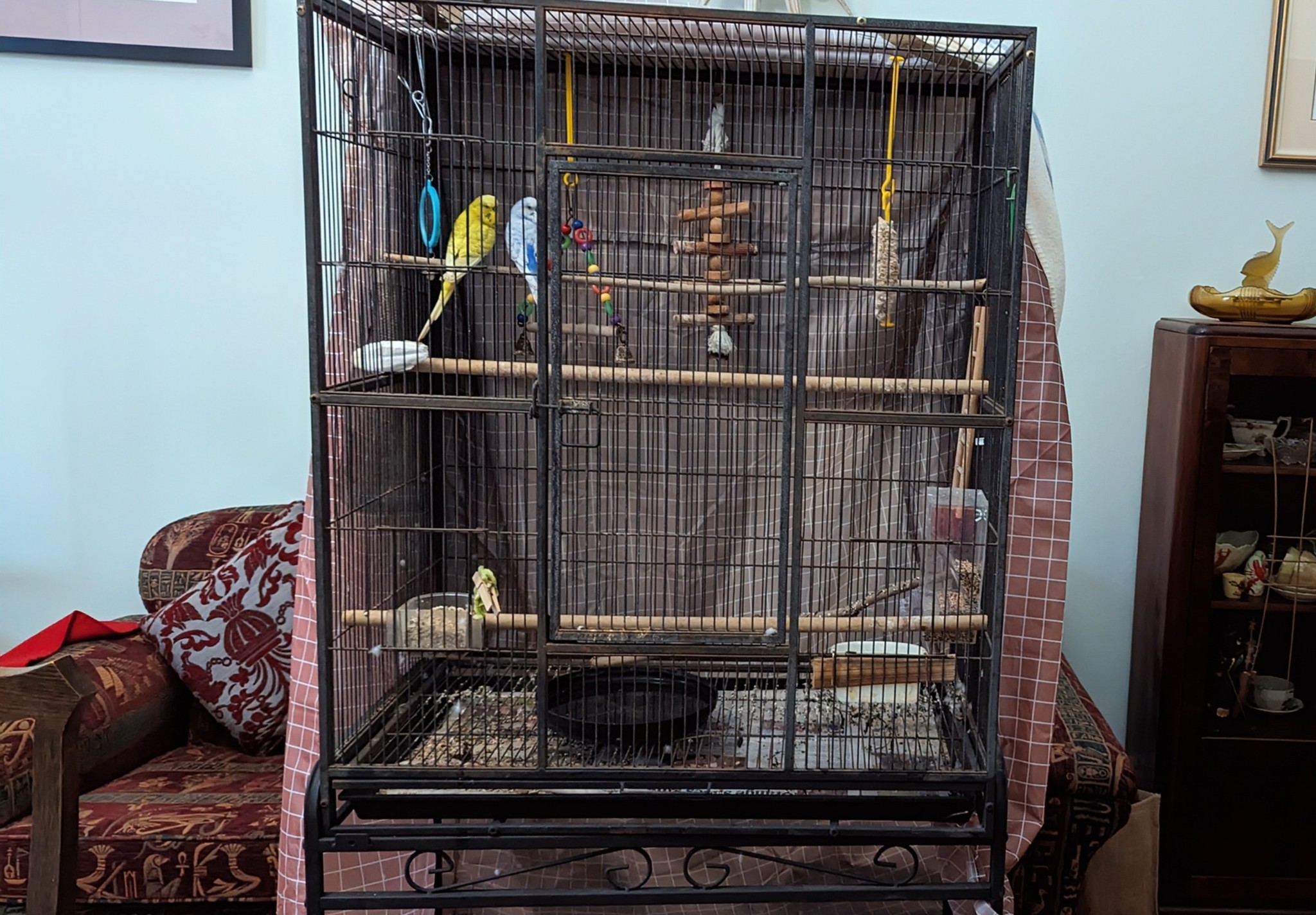
Even when you have decided on a hand-reared wild-type, there are still individual differences between birds. Choosing well at the shop matters enormously. Here is what I tell senior customers to look for.
1. Calm Temperament
Watch the birds for 10 to 15 minutes before choosing. You want the bird that:
- Watches you with curiosity rather than fear
- Does not panic when you approach the cage
- Is active but steady, not frantic
- Sits comfortably while other birds fly around
- Eats and preens normally even when watched
Avoid the wildest, fastest-moving birds. Their energy is impressive but they are exhausting to live with in a calmer home.
2. Healthy Appearance
This goes without saying, but it matters more for seniors who do not want early vet visits.
- Bright, alert eyes — fully open and clear
- Sleek, well-groomed feathers — not fluffed up
- Clean vent area — no soiling or matted feathers
- Active and balanced — perching properly on both feet
- Breathing quietly — no tail-bobbing or open-mouth breathing
- Eating and drinking normally
- Bright, clean nostrils — no discharge
- Smooth beak with no overgrowth or damage
3. Confirmed Sex If It Matters To You
For seniors who want a vocal bird — one that whistles, sings, and might learn to talk — choose a male. Male budgies are generally more vocal, calmer with handling, and slightly more likely to bond closely with one person. Females are perfectly good pets too, but tend to be more independent and slightly more territorial.
For more on telling male from female budgies at the shop, our guide on how to tell male from female budgies walks you through the differences.
4. Right Age For You
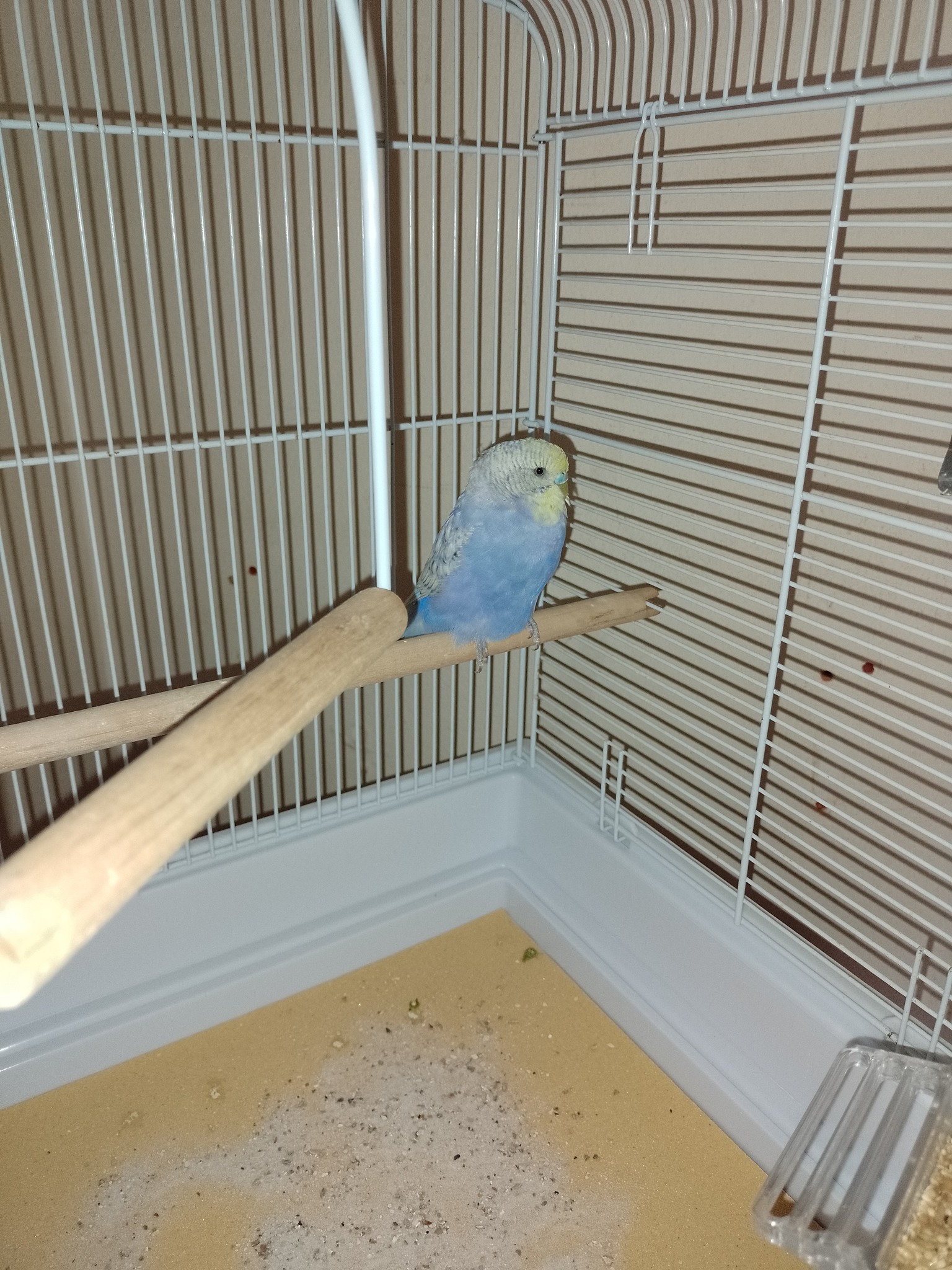
For a senior buying their first budgie in years, my honest recommendation is:
- Hand-reared young budgie (8-12 weeks) — best for owners who want to develop the bond from scratch and have a long-lived companion
- Hand-tame mature budgie (1-3 years) — best for owners who want a calm bird from day one without the work of taming a young bird
Avoid older parent-reared budgies that have never been handled. They rarely become tame, and an older owner does not want to spend years trying to make a relationship that may never work.
The Best Budgie Colours For Senior Owners
Colour is less important than temperament, but there are some considerations specific to older owners that are worth knowing.
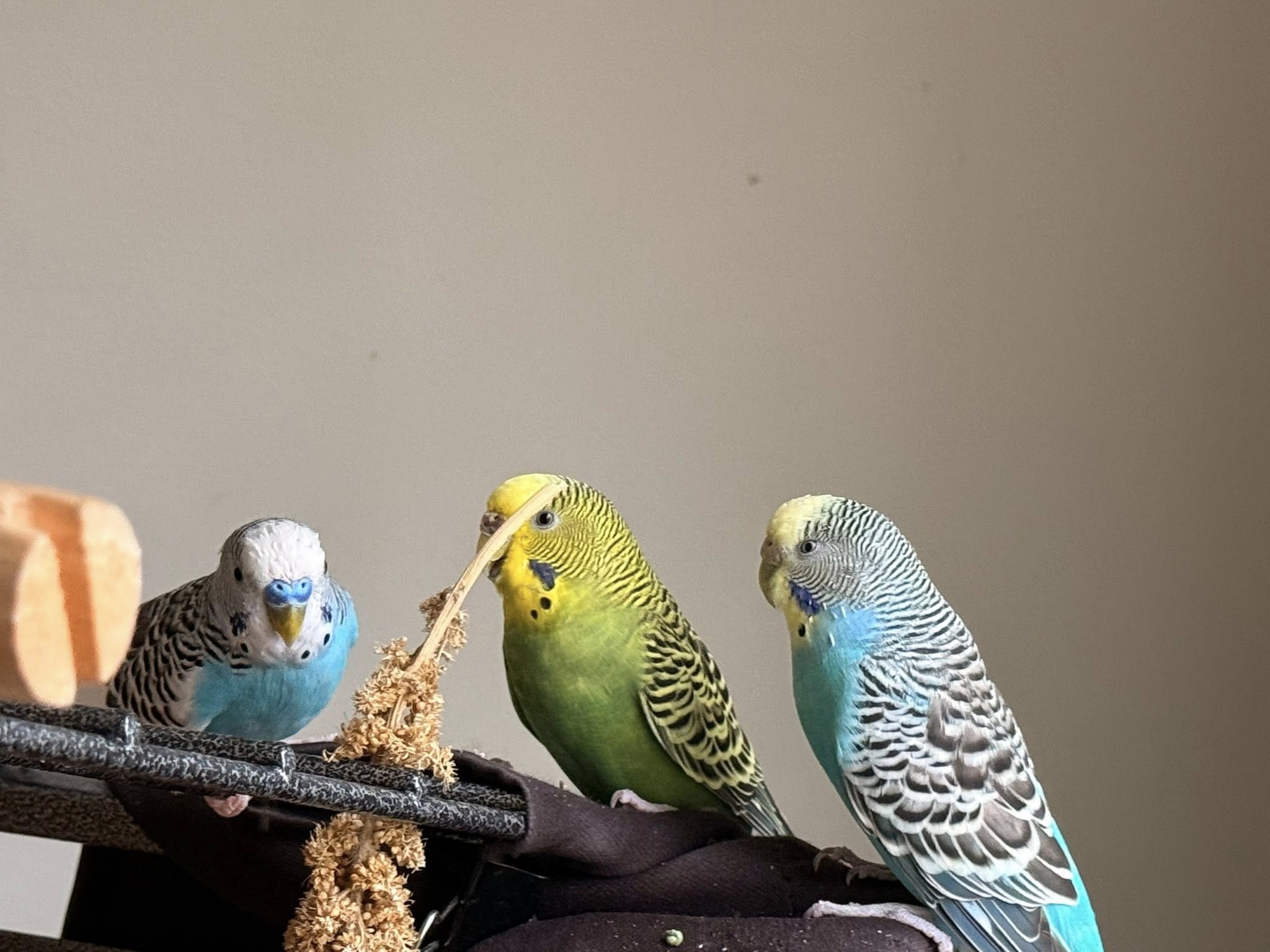
| Colour Variety | Suitability For Seniors | Notes |
|---|---|---|
| Sky blue | ✅ Excellent | Beautiful classic colour, easy to see, traditional choice. |
| Light green | ✅ Excellent | Cheerful, bright, easy to see against most backgrounds. |
| Yellow (lutino) | ✅ Very good | Striking colour, but note these have red eyes — completely normal for the variety. |
| White (albino) | ⚠️ Workable | Less visible against pale walls. Has red eyes naturally. Lovely birds but can be harder to see. |
| Cobalt and dark blue | ✅ Good | Beautiful but can be harder to see against dark furniture. |
| Olive and dark green | ⚠️ Workable | Lovely but harder to see in dim lighting. |
| Pied varieties | ✅ Very good | Distinctive markings, easy to spot, often great personalities. |
| Spangled varieties | ✅ Excellent | Beautiful patterning, very visible, popular family choice. |
For owners with reduced eyesight, brighter colours (sky blue, light green, yellow, white) on a darker cage background work best for visibility. For owners with sensitive eyes to bright light, more muted colours may be more comfortable to watch.
Setting Up The Cage For An Older Owner
This is where small adjustments make a big difference. A budgie cage set up properly for a senior owner is a pleasure to maintain. Set up wrong, it becomes a daily struggle.
- Cage on a stand at chest height — most stands put the cage at waist or chest level. No bending.
- Wide cage rather than tall — budgies fly horizontally, not vertically. Wide cages are better for the bird and easier to clean.
- Pull-out tray at the base — slide it out, line with paper, slide back in. Easier than reaching into the cage.
- Side door at handling height — so you can offer your finger or change food without crouching
- Large clip-on food and water containers — easier to remove and refill
- Cuttlefish bone clipped to the side — important for calcium, easy to replace
- 2-3 toys, rotated occasionally — not so many that cleaning becomes a chore
- Natural wood perches at different heights — comfortable for the bird’s feet
- Cover for nighttime — light cloth that ensures 10-12 hours of darkness
For more on the broader basics of budgie care, our complete budgie care guide for UK owners covers what every owner needs to know about looking after these birds properly.
What If My Health Changes And I Cannot Look After The Bird?
This is the difficult question I sometimes need to raise with older customers, and I think it should be addressed honestly rather than avoided. A budgie lives 8 to 12 years. If you are 70 when you buy it, you are committing through age 80. If you are 80, through your 80s. Health changes happen.
The honest answer is that this is worth planning for in advance. The options:
- Family member willing to take the bird if needed — have the conversation in advance, ideally before buying
- Local bird breeder or rescue who can rehome — we can sometimes help with this at the shop
- Plans included in your wishes — written down so family know what to do
- Pet trust arrangements — for those who want formal financial provision
This is not a comfortable topic, but having a plan is genuinely better than leaving family members in difficult positions. Most senior bird owners I help have someone in mind from day one, and that gives both the owner and the bird the right kind of security.
What I Tell Senior Customers To Avoid
After 35 years, I have watched plenty of senior budgie purchases go wrong. Here are the most common mistakes I would tell every older UK customer to avoid.
| Mistake | Why it goes wrong | What to do instead |
|---|---|---|
| Buying an untamed adult budgie | Will not bond, owner gets no real companionship | Hand-reared young bird or already-tame mature bird |
| Choosing the wildest, most active bird | Stressful for owner, bird is constantly anxious in calm home | Pick the calm, watchful one |
| Putting the cage in the bedroom | Disturbs sleep, dust affects breathing | Living room corner, on a stand |
| Buying the cheapest small cage | Bird is stressed, owner struggles with cleaning access | Spend on a proper wide cage on a stand |
| Not having a vet plan | Panic when something goes wrong | Find avian vet before you need them |
| Buying without a backup care plan | Family stuck if owner’s health changes | Have the conversation with family in advance |
| Expecting the bird to be instantly tame | Disappointment when relationship takes time | Plan for 4-8 weeks of patient bonding even with hand-reared birds |
Frequently Asked Questions
Are budgies good pets for elderly people?
Yes, genuinely. Budgies are one of the best pets for UK seniors because they offer real companionship without the physical demands of a dog or cat. They are manageable, affordable, long-lived enough to matter, and provide a cheerful presence in a quieter home — provided you choose the right individual bird.
What is the best budgie for an older person living alone?
A hand-reared young wild-type budgie, ideally male, with a calm temperament. This combination gives you the closest possible bond between bird and owner — the bird recognises your voice, learns your routine, and becomes a genuine companion in the home.
Are budgies easy to look after for an older person?
Yes, with the right setup. A cage on a stand at chest height, with a pull-out tray and side door, makes daily care a 5-minute task. The key is buying proper equipment from the start — cheap small cages are harder to clean and worse for the bird.
How long do budgies live in a quiet home?
A well-cared-for wild-type budgie in a calm UK home typically lives 8 to 12 years. Quiet environments actually tend to help budgies live longer because stress is one of the biggest factors that shortens their lives. Seniors often have some of the longest-lived budgies I see.
Should an older person get one budgie or two?
Usually one, particularly for seniors who are home most of the day. A single hand-reared budgie bonds closely with one person and becomes a real companion. If you go out a lot or want the birds to keep each other company, two work well — but you get less of the personal bond.
Do budgies make good pets for someone living alone?
Excellent, in fact. The chirping, the activity, the small daily routines genuinely brighten a quiet home. For someone living alone, having a bird that recognises their voice and responds to their presence makes a meaningful difference. Many of the most contented older customers I have helped over the years had budgies for this reason.
Where can I get honest budgie advice in Swindon?
Come and see us at Paradise Pets, Manor Garden Centre, Cheney Manor, Swindon SN2 2QJ. Or give us a ring on 01793 512400. The advice is free and we have been doing this for 35 years.
One Last Thing From Me
“What is the best budgie for an older person?” is the question. The honest answer, after 35 years of helping UK seniors choose their birds, is — a calm, hand-reared wild-type, male if you want a talker, in a properly-set-up cage in a quiet sociable room of the house. Get those things right and you have one of the best small pets there is for the later stages of life.
The gentleman I mentioned at the start of this article? He left the shop that day with a young hand-reared sky-blue cock budgie. He named him Charlie. A few months later he came back to tell me that Charlie had transformed his daily routine — chatting to the bird in the morning, watching him through the day, gentle company in what had been a very quiet house. The bird had given him a reason for the small daily rhythms that matter at any age but matter especially when you live alone.
That is the outcome I want for every senior who comes through my door. Not just a pet, but a proper companion — a small living presence in the home that brightens the days. Budgies do this remarkably well when they are chosen properly and looked after with care.
If you are thinking about a budgie for yourself in retirement, or for an older relative, come and see us. We will sit down and work through your situation honestly, show you what we have, and help you pick the right bird for the right reasons. There is no rush and no pressure. That is how we have done things for 35 years, and I would much rather help you make the right choice than see anyone go home with the wrong bird.
Thinking About A Budgie In Retirement? Come And See Me
Bring your questions, your situation, your honest thoughts. I will help you choose the right bird for your home and your stage of life. Free advice, no obligation. That is how we have done things for 35 years.