
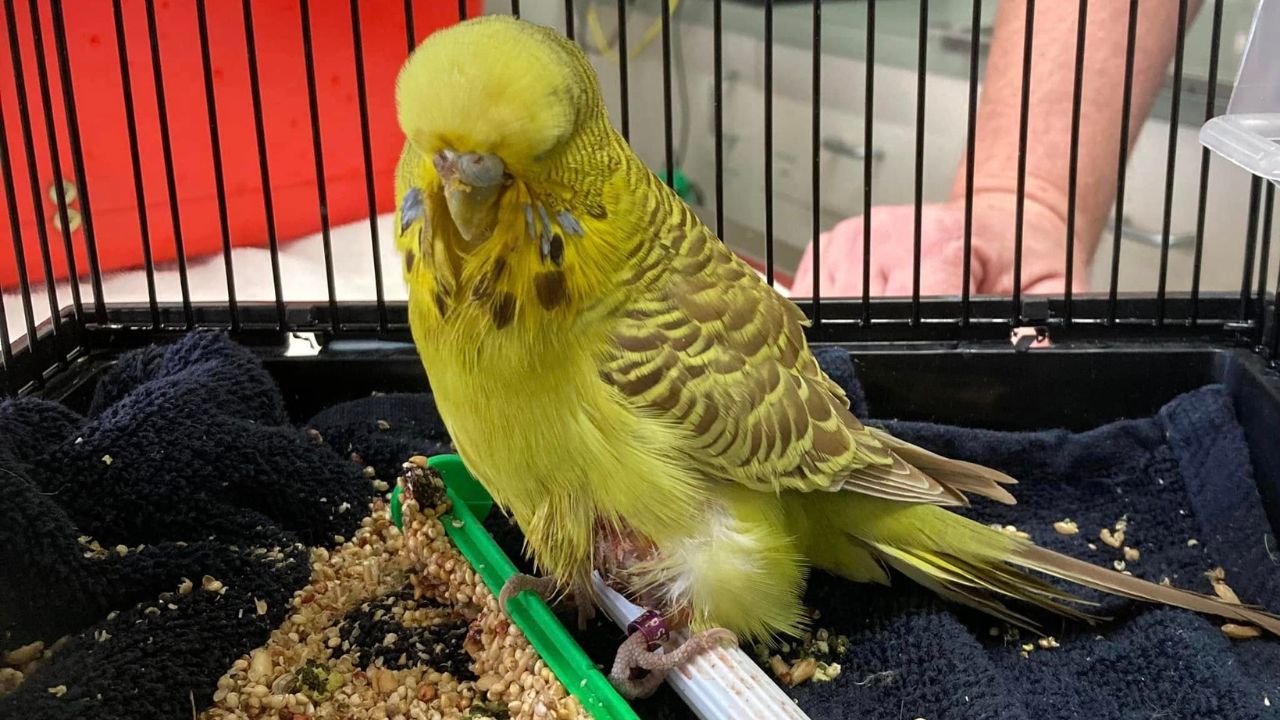

Neil has kept, bred, and sold cage and aviary birds at Paradise Pets Swindon since 1988 — over 35 years of first-hand experience with budgerigars, cockatiels, canaries, finches, and dozens of other species. Every summer he hears the same thing from avian vets and from customers who have had to use them: more birds presenting with respiratory and heat-related illness than at any other time of year. This summer, the pattern is more pronounced than usual. Here is why — and what every indoor bird owner needs to know right now.
I had a conversation last week with a customer whose cockatiel had just come back from the avian vet. The diagnosis was a respiratory infection that had been developing quietly for several weeks before it became obvious enough to notice. The vet told her it was the third bird that week with a similar presentation. She asked me why. I told her what I am going to tell you now.
Summer is consistently the time of year when avian vets across the UK see the highest volume of sick pet birds. Not because summer is inherently dangerous for birds — it is not — but because of a specific set of conditions that summer creates in UK homes, and because bird owners are, for entirely understandable reasons, less prepared for summer risks than for winter ones.
Most bird owners know to worry about draughts and cold in winter. Far fewer understand that summer creates its own, equally serious set of risks — and that those risks are concentrated around the kinds of decisions owners make without realising they are decisions at all. Where they put the cage. How they ventilate the house. What cleaning products they use. Whether they move the cage outside. Whether the windows they open actually help or create a problem they have not considered.
This summer the pattern is, from what I am hearing, more pronounced than usual. The combination of higher temperatures, longer heatwave periods, and the behavioural responses those conditions produce in UK households is creating a set of circumstances that is presenting at avian practices in numbers that vets are noticing. I want to explain what those circumstances are, clearly and specifically, because most of what is driving this is preventable.
Why Summer Creates Specific Risks for Indoor Pet Birds
To understand what is happening, it helps to think about what changes in a typical UK home during a warm summer — because several of those changes create conditions that are directly harmful to birds, without the owner ever intending them to.
Windows Opened for Ventilation
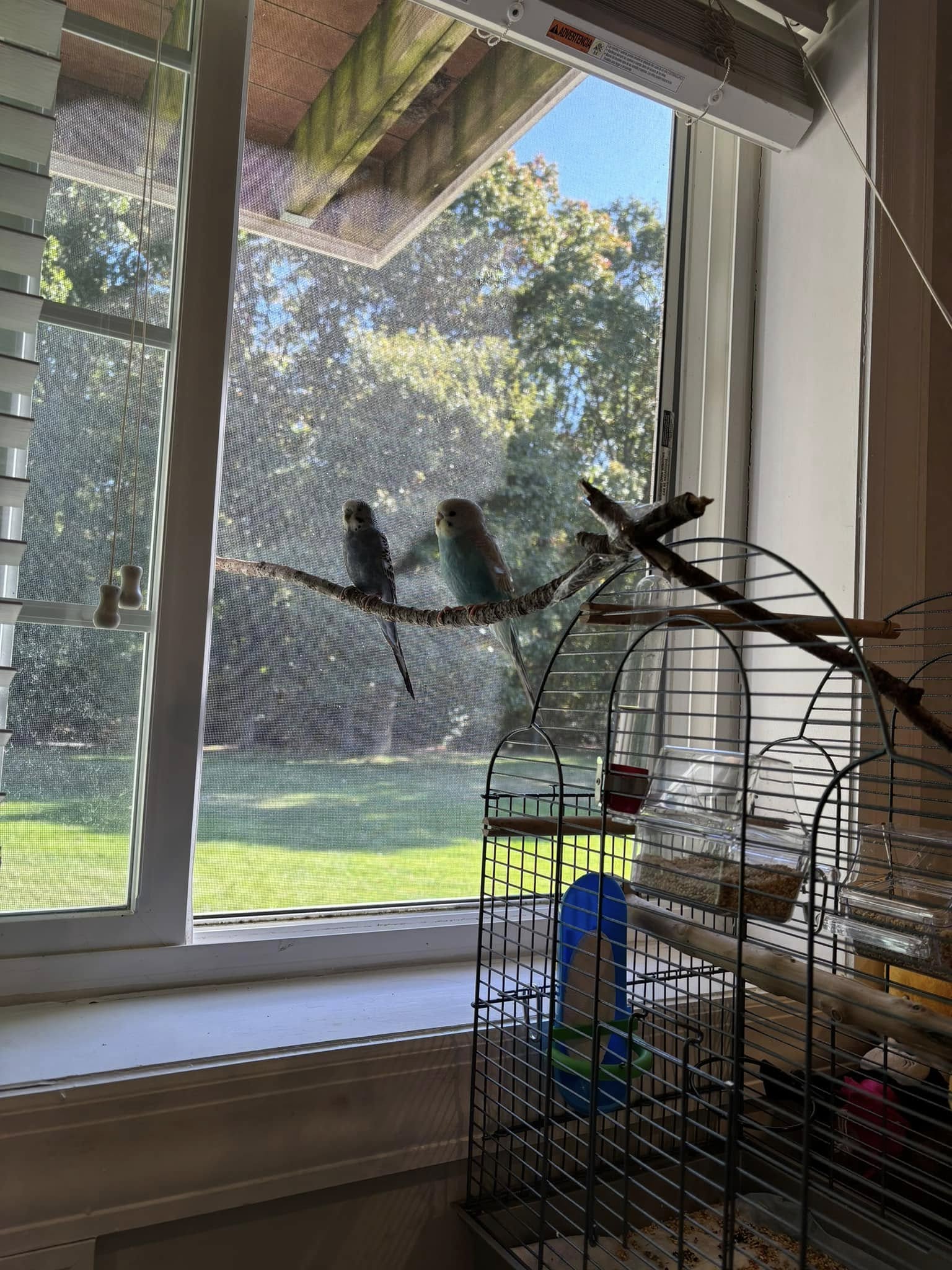
The instinct when a house is hot is to open windows. This is the right instinct for the humans in the house. For a caged bird, it introduces a set of risks that owners rarely consider.
An open window creates a draught that, if it passes across the cage or through the room where the bird is kept, subjects the bird to rapid, unpredictable temperature fluctuations. A bird that has been warm all morning and is then hit by a sustained draught from an open window for several hours is a bird experiencing the kind of environmental stress that depresses immune function and creates vulnerability to respiratory infection. Birds are significantly more susceptible to draughts than most owners realise, and the fact that it is warm outside does not mean the airflow through an open window is harmless.
The solution is not to keep windows closed — that creates the heat risk I have written about separately. The solution is to think about where the cage is relative to open windows, to ensure airflow moves through the room without passing directly across the cage, and to use fans to circulate room air rather than relying entirely on through-draughts.
Cleaning Products Used More Frequently
Warm weather accelerates bacterial growth in cage environments, and the responsible response is to clean more frequently. But many owners clean with products that are not safe around birds — standard household disinfectants, bleach-based cleaners, aerosol sprays — without realising that birds have respiratory systems that are acutely sensitive to airborne chemicals in ways that humans are not.
A bird kept in a room that is being cleaned with a standard household spray cleaner is breathing fumes that, at concentrations harmless to a human, can cause measurable respiratory irritation in a bird. Accumulated over repeated summer cleaning sessions, this is a genuine contributor to the kind of subclinical respiratory stress that becomes a clinical problem. The solution is to use bird-safe cleaning products only, to clean the cage in a different room from where the bird is kept when using any cleaning product, and to ensure full ventilation and dissipation of any fumes before returning the bird to the space.
Non-Stick Cookware Used More
This is the risk I feel most urgently about, because it is the one that kills birds fastest and with the least warning. Non-stick cookware — pans, baking trays, anything coated with PTFE (the substance marketed as Teflon and under various other brand names) — releases fumes when overheated that are harmless to humans but lethal to birds. At high temperatures, these fumes kill birds within minutes, with no prior warning and no chance for the owner to intervene.
In summer, UK households cook differently. More barbecuing means more grilling indoors when weather turns. More baking. More high-temperature cooking on the hob with less ventilation because the kitchen windows may already be providing other airflow. The risk from non-stick cookware does not increase in summer specifically because of the season — it increases because summer cooking patterns in UK homes bring it closer to the conditions under which the risk is realised.
The rule is simple and non-negotiable: never use non-stick cookware in a kitchen connected to the room where a bird is kept, or in a home with a bird, without ensuring that any fumes are fully ventilated away from the bird’s environment. Better still, replace non-stick cookware with stainless steel or cast iron. This is not an overreaction. It is the correct response to a risk that is real, fast, and irreversible.
Taking Birds Outside Without Understanding the Risks
Summer prompts some owners to take their birds outside — into the garden, onto a patio, in front of an open window or door — with the intention of giving them fresh air and natural light. The intention is good. The execution is frequently dangerous in ways the owner has not anticipated.
A bird taken outside is a bird exposed to wild birds. Wild birds carry diseases — Psittacosis, various respiratory pathogens, parasites — that domestic pet birds have not been exposed to and have no immunity to. A pet bird in a cage placed outside, particularly under trees or near bird feeders, is exposed to droppings from wild birds landing on or above the cage, and those droppings are a direct disease transmission route.
A bird placed in direct outdoor sunlight without shade available overheats faster than in indoor conditions because outdoor air temperature plus direct solar radiation combined creates a more extreme heat environment than a sunny room. A shaded outdoor position in genuinely cool conditions — early morning, light breeze, no direct sun — is a different proposition from a cage placed on a south-facing patio at two in the afternoon.
And a bird taken outside in a cage that is not completely secure, or in conditions where predators — cats, sparrowhawks, magpies — are present, is a bird under significant stress from threat perception even if nothing actually attacks it. The stress response to perceived predation is physiologically real and immunologically costly.
If you want your bird to benefit from natural light and fresh air in summer, a properly positioned indoor location near a screened, open window — one that provides indirect natural light and fresh air without direct sun exposure, draughts, or access to wild bird droppings — is a far safer option than outdoor placement.
The Air Freshener and Scented Candle Problem
Summer brings open windows, which in some households prompts more use of air fresheners and scented candles to manage household odours. These products — aerosol air fresheners, plug-in diffusers, scented candles, essential oil diffusers — all release airborne compounds that are disproportionately harmful to birds relative to humans.
A bird living in a home where scented candles are burned regularly, or where plug-in air fresheners are running continuously, is chronically exposed to airborne chemical compounds that accumulate in the respiratory system over time. The effects are not always dramatic or sudden — they present as the kind of subclinical respiratory irritation that becomes a clinical problem when combined with other summer stressors.
The answer is to keep these products out of rooms where birds are kept, and to be thoughtful about using them in adjacent rooms with connecting airflow. A bird-safe home is a lower-scent home. This is one of those cases where the inconvenience to the owner is genuinely minor and the benefit to the bird is genuinely significant.
Why Birds Do Not Show These Problems Until They Are Serious
Running through all of the above is the fundamental challenge of bird health that I return to again and again: birds are prey animals that evolved to hide illness until they cannot sustain the concealment. By the time a bird is visibly unwell — sitting fluffed up, breathing audibly, not eating, tail bobbing — it has typically been dealing with a subclinical problem for some time.
This means that the summer conditions I have described — draughts, cleaning product fumes, scented candles, outdoor exposure to wild birds — can be affecting a bird’s respiratory system for weeks before any visible sign appears. The bird that presents to an avian vet in July with a respiratory infection did not become ill that week. The conditions that produced that illness were developing throughout June, and potentially earlier.
The practical implication is that waiting for a bird to show signs before reviewing the summer environment is waiting too long. The review should happen now — before the bird shows any sign of illness — because by then the conditions are either safe or they are not, and adjusting them proactively is far simpler than treating the consequences of not doing so.
The Summer Environment Audit — What to Check Right Now
- Cage position relative to open windows. Is the cage in a direct draught path when windows are open? If yes, move it — to a position where air circulates through the room without passing directly across the cage.
- Cleaning products used near the bird. Are you using standard household sprays, bleach-based products, or aerosols anywhere near the bird or in rooms with connected airflow? Switch to bird-safe alternatives and clean the cage in a separate space.
- Non-stick cookware. Does your kitchen use PTFE-coated pans, baking trays, or any non-stick surface? Assess the ventilation between kitchen and bird, and consider replacement with stainless steel or cast iron if the bird is in a connected space.
- Scented products in the home. Air fresheners, plug-in diffusers, scented candles, essential oil diffusers. Remove from rooms where the bird is kept. Be thoughtful about connected spaces.
- Outdoor placement habits. Are you taking the bird outside this summer? Assess the position for direct sun, predator visibility, wild bird access, and proximity to feeders or trees. Err toward a well-positioned indoor location near a screened open window instead.
- Cage hygiene frequency. Warm weather accelerates bacterial growth — if you are cleaning weekly in winter, consider increasing to more frequent spot-cleaning in summer, using bird-safe products only.
- Water freshness. Water heats in warm rooms and degrades faster. Check and refresh water more frequently than you might in cooler months.
What the Birds Presenting to Vets This Summer Have in Common
Based on what I am hearing from customers who have come in after vet visits this summer, and from the broader pattern I have observed over 35 years, the birds presenting with summer respiratory illness tend to share several features.
They are typically indoor birds kept in homes where windows have been opened widely for ventilation, often with the cage in or near the path of the resulting airflow. They are often in homes where cleaning has intensified in response to the warm weather, using standard household products. Many are in homes where scented products are in use. A smaller but significant number have been taken outside at some point during summer and exposed to conditions that created either thermal stress, draught exposure, or contact risk with wild bird droppings.
What these birds do not have in common is a single dramatic event. None of their owners can point to the moment things went wrong, because there was no moment. There was a gradual accumulation of low-level environmental stressors that eroded respiratory resilience over weeks until the bird’s immune system could no longer compensate, and then a rapid decline to a clinical presentation that seemed sudden but was not.
This is the pattern that is repeatable and preventable, and it is the pattern that the summer environment audit above is designed to interrupt before it reaches the point of a vet visit.
Signs That Warrant a Vet Call This Summer
Alongside the proactive environmental review, knowing what to look for and when to act is the other half of the response. These are the signs in a bird that warrant contacting an avian vet promptly rather than monitoring at home:
- Any open-beak breathing that is not obviously heat-related. In hot conditions, open-beak breathing can indicate heat stress — address the heat first and monitor. In a comfortable environment, open-beak breathing is always a flag.
- Nasal discharge or crusty nares. Any discharge, wetness, or crust around the nostrils warrants veterinary investigation in summer as in any other season.
- Audible breathing sounds — clicking, wheezing, rattling. Normal bird breathing is silent. Any audible respiratory noise is abnormal and needs assessment.
- Tail bobbing with each breath. Visible tail movement coordinated with breathing indicates respiratory effort — the bird is working to breathe. Same-day veterinary attention is appropriate.
- Reduced activity or prolonged quiet during normal active periods. A bird that is less active, less vocal, and less responsive than normal during the hours it is typically active is showing a non-specific but meaningful sign that something is wrong.
- Changes in droppings alongside any other symptom. On its own, a temporary change in droppings can have multiple causes. Combined with any respiratory symptom, it warrants a call to your avian vet.
Frequently Asked Questions
Why are summer respiratory problems in pet birds not more widely known about?
Partly because the connection between specific summer household behaviours — opening windows, cleaning more, using scented products — and bird health is not intuitive. Partly because birds conceal illness until it is obvious, so the pattern is less visible than it might otherwise be. And partly because the bird-keeping community is relatively small and the information does not always reach owners who are not actively seeking it. This is one of the reasons I write these articles — the knowledge exists within avian veterinary practice and among experienced keepers, but it does not always reach the people who need it.
Is it safe to have a candle near my bird’s room?
I would not do it in the same room, and I would be thoughtful about adjacent rooms with connected airflow. Scented candles release combustion products and fragrance compounds that, at concentrations unproblematic for humans, have a cumulative effect on bird respiratory health. Unscented candles are less problematic for fragrance but still produce combustion products. In a room where a bird lives, I would avoid them entirely and use alternative lighting.
My bird went outside last weekend and seemed fine. Should I be worried?
A single brief outdoor exposure in safe conditions is unlikely to have caused significant harm. What I would do is: monitor more carefully than usual over the next week or two, looking for the subtle signs I have described. If nothing changes and the bird is behaving normally, the exposure was probably without lasting consequence. What I would not do is continue outdoor placements without thinking carefully about the specific risks involved — exposure to wild bird droppings in particular is a cumulative risk that increases with frequency.
How do I find a bird-safe cleaning product in the UK?
Look specifically for products labelled as safe for use around birds or small animals — several specialist pet brands produce these and they are available from good pet retailers and online. As a general principle, any product with a strong chemical or perfume smell is worth treating as potentially problematic around birds. Plain hot water and a clean cloth, with thorough drying, is always a safe baseline for surfaces. Come in and ask us — we stock bird-safe cleaning products and can advise on what to use.
Where can I get advice about my bird’s summer environment in Swindon?
Come into Paradise Pets at Manor Garden Centre, Cheney Manor, Swindon SN2 2QJ, or call us on 01793 512400. We will go through the specific setup with you and give you an honest view of what looks safe and what needs changing. If we think a bird needs a vet, we will tell you that too. Free advice, no obligation.
One Last Thing
The customer whose cockatiel had just come back from the vet — she was genuinely shocked, because she considered herself a careful owner. She had not been negligent by any ordinary measure. She had not done anything dramatic or obviously wrong. She had simply opened the windows for ventilation, cleaned more because it was warm, and used the candle on the kitchen table she always used. None of those things, on their own, would have been enough. All of them together, over several weeks, had been.
That is the nature of this pattern, and it is why the awareness matters so much. The summer risks to pet birds are not dramatic. They are ordinary household behaviours applied in conditions that make them harmful to an animal that cannot tell you it is being affected. The response is not dramatic either — it is a quiet review of a few specific things, done now, before the bird is affected.
Check the window position. Check the cleaning products. Check the cookware. Move the scented candle. Think before taking the bird outside. These are small actions with a disproportionate effect on whether your bird gets through summer well.
Do them today.
Worried About Your Bird’s Summer Environment? Come In and We Will Go Through It With You
Tell us about your setup — cage position, ventilation, what products you use — and we will give you an honest view of what looks safe and what to change. Free advice, no obligation. Call us on 01793 512400 or come in today.
⭐ Customer Reviews
Amazing Bird Selection
Had a lovley visit today,staff were very friendly and very helpful,such a great petshop,their selection of birds is incredible,really impressed,thank so much to the staff at Paradise Pets

Friendly Helpful Staff
I have been coming to this place for years and they have a great stock of food for all types of pets. Have a great selection of small mammals and a lot of birds. Staff are friendly and helpful.

Great Quality Hutch
Bought a guinea pigs hutch and run combo, very happy with the service, the hutch was put in my car for me without even asking for help. The wood quality is very good, the instructions easy to follow and we are extremely happy with the fully built hutch. A good size for 2 guinea pigs

Response from Paradise Pets | Wiltshire
Thank you Melanie Latus Nice to provide services to you.
Best Bird Shop Around
It’s the best pet shop in and around Swindon. They always have an amazing selection of birds and all you need to keep them happy. I keep birds myself and the guys there are happy to answer questions and really know their stuff. I have seen budgies etc. in chain pet shops in the area looking really unhealthy and ill – I wouldn’t go anywhere else than Paradise Pets for animals.

Highly Recommended Bird Shop
I could not praise this shop enough. Really helped my Grandson buy his first bird and he’s loving it. Travelled from Somerset and was welcomed with open arms.

Great Shop with Competitive Prices
Great shop with amazing selection for small animals, hamsters, mice ect, highly recommend!
Also has a great selection for dogs & cats too & very competitive prices! 💖

