
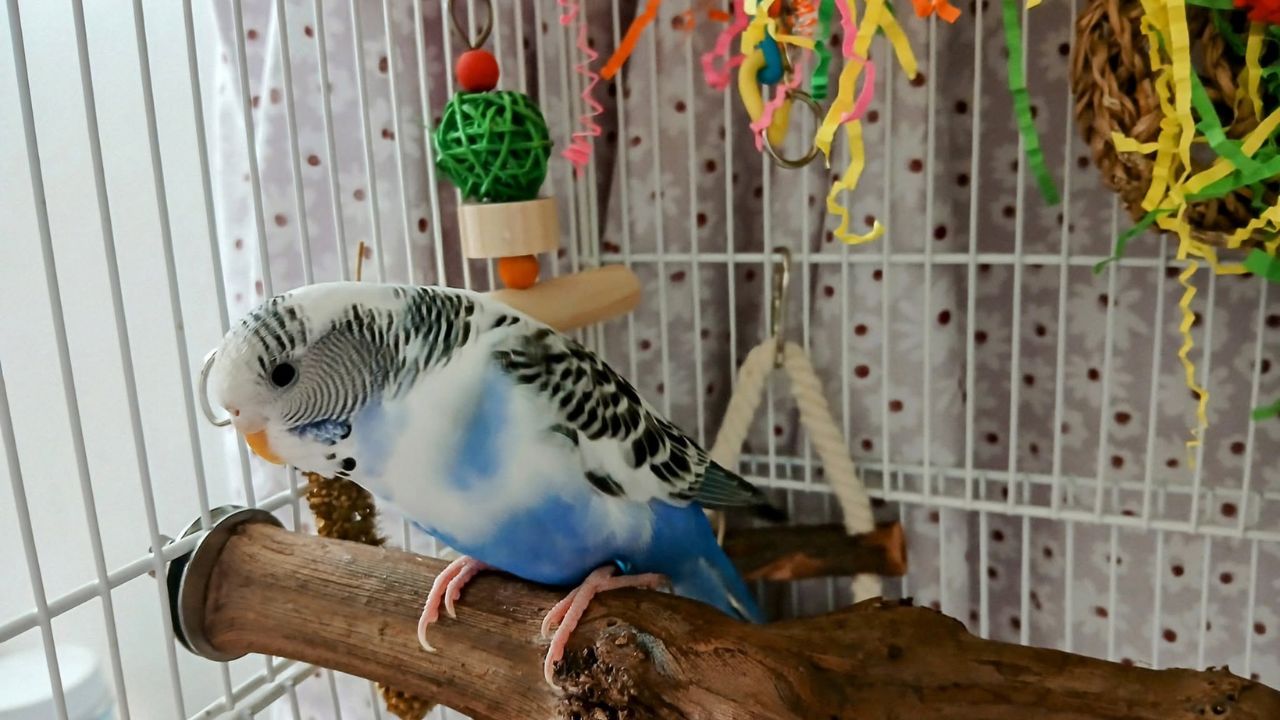

Neil has kept, bred, and sold budgies at Paradise Pets Swindon since 1988 — over 35 years of watching these birds in homes across Swindon and beyond, and gradually understanding that the most important thing he could teach any budgie owner was not how to feed or tame the bird, but how to read it. This article is about what a lonely budgie looks like — specifically and practically — and why it so rarely looks like what owners expect.
I want to start with a customer I have thought about many times since the visit.
She had owned her budgie for four years. A single male, in a cage in her living room, by all appearances content. She came in regularly, bought seed and millet, occasionally asked about vitamins. One afternoon she mentioned almost as an afterthought that she had a question — something she had noticed that she could not make sense of.
She said: “He used to talk a lot more. When I first got him he was chattering all the time. Now he’s quieter. Not ill-looking — he eats, he moves around. He’s just… less.”
Less.
That word. I have heard it in various forms more times than I can count across 35 years. Not sick. Not obviously distressed. Just less than before. Less than it seemed he could be. Less than the bird on the day it came home.
I explained what I believed had happened — the slow attrition of a social animal’s social expression when there is no appropriate social outlet for it. She had attributed the change to the bird growing up, settling down, maturing. What had actually happened was more specific and more significant than that.
This article is about that process. About what it looks like, stage by stage. About the signs that are present but quiet, that owners interpret as personality rather than as the behavioural fingerprint of deprivation. And about what can be done when you recognise them.
Why Budgie Loneliness Produces Quiet Signs Rather Than Obvious Ones
I have explained the biological basis of this in other articles, but it is essential context for everything that follows.
Budgies are prey animals. In the wild, a budgie that shows obvious distress — that sits in the open appearing depressed, that vocalises in ways that signal weakness — is a budgie that attracts predators. The evolutionary pressure on these animals to mask suffering and maintain an appearance of normality is intense. It is not a character trait. It is baked into their physiology in the same way that their flock behaviour is.
What this means for a lone pet budgie is specific: the animal experiencing genuine chronic social deprivation does not display it in ways that look like distress. It displays it in ways that look like personality. It displays it in ways that look like the bird being calm, relaxed, settled. And the owner who is watching that bird and interpreting the quietness as contentment is missing something real.
The silent signs of loneliness in budgies are quiet exactly because they are the signs of an animal that has adapted to its conditions rather than one that is fighting them. The fighting stage passed weeks or months ago. What remains is the adaptation — and the adaptation looks, superficially, like a fine bird.
Silent Sign One — The Morning Quiet
This is the sign that most owners are best placed to notice and least likely to act on, because it develops so gradually that the change is almost imperceptible in any single day.
A new budgie brought into a home is almost always vocal in the morning. The cover comes off the cage and within minutes the bird is chattering — to itself, to the household sounds, to anything that seems worth responding to. This is instinctive. It is the budgie doing what budgies do at dawn in the wild: re-establishing contact with the flock, participating in the collective auditory activity that tells every bird that the group is still present and intact.
In a lone bird, there is no flock to contact. The calls go unanswered in the species-specific way they are designed to be answered. Over weeks and months, something changes. Not immediately. Not obviously. But gradually, the morning vocal activity becomes shorter. Less varied. The bird still makes sounds — it does not go silent — but the exuberance of the early weeks diminishes. The chattering becomes more episodic. The periods of quiet between bouts of vocalisation become longer.
Owners who notice this typically interpret it as the bird settling down. Growing up. Becoming calmer. Some of this may be true — a bird does mature and its behaviour changes. But the specific pattern of diminishing morning vocalisation in a lone bird that was previously more vocal is the most reliable early indicator of developing social deprivation that I know of. It is the bird’s contact call system gradually winding down in the absence of any return signal.
Keep a mental baseline of your bird’s morning vocalisation. If it is less than it was six months ago — shorter, quieter, less varied — that change is worth taking seriously.
Silent Sign Two — The Bar Patrol
This sign is often described as the bird being energetic, playful, or just exploring. It is sometimes described as the bird exercising. It is, in most of the cases I have observed, something else.
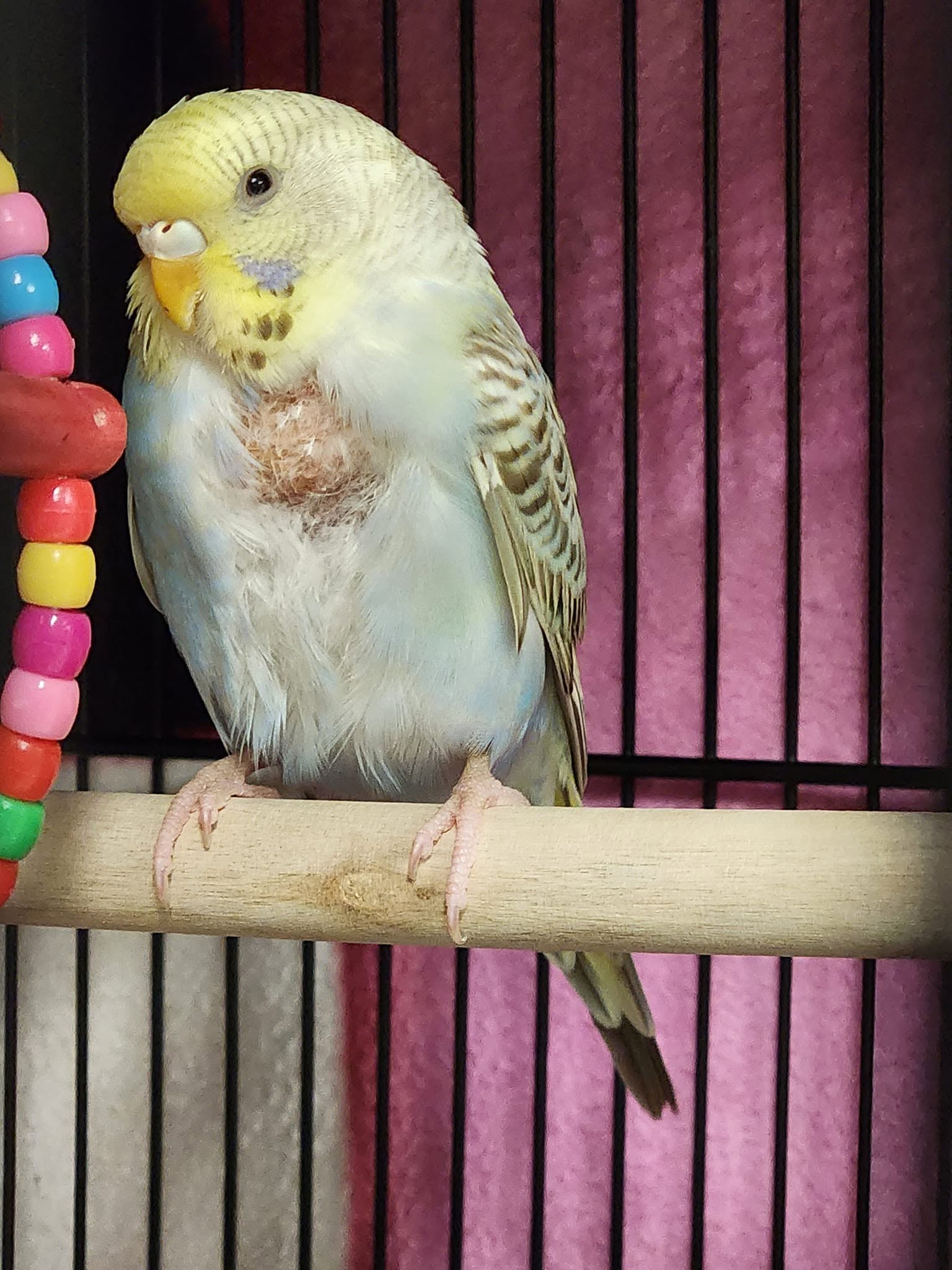
A budgie that repeatedly climbs the same section of cage bars — going up, coming across, going down, repeating the circuit — without any obvious trigger or reward at the end of the circuit, is demonstrating stereotypic behaviour. The term is used in animal welfare science to describe repetitive, invariant actions that are not directed at any functional goal. They develop in animals living in environments that cannot meet their behavioural needs.
The bar patrol is the most common version of this in lone budgies in small cages. The bird is not exercising. It is not exploring. It has run out of meaningful things to do and is repeating a motor pattern in the way that any nervous system will default to repetition when purposeful activity is unavailable.
It looks like activity. It is the appearance of activity in the absence of meaningful activity. The distinction matters because it is easy to see a bird climbing bars and conclude that the bird is engaged with its environment. The question is whether the engagement is purposeful — the bird doing something that leads to an outcome — or repetitive in the specific way I am describing.
A bird that climbs the bars to reach a toy, or to investigate something new, or to get closer to a family member, is not demonstrating this sign. A bird that climbs the same section of bars in the same pattern at the same time of day, repeatedly, with no apparent purpose, is.
Silent Sign Three — The Mirror Marriage
The mirror is the most commonly provided substitute for budgie companionship in the UK, and it produces the most consistently misread sign of loneliness I encounter.
A budgie that has become intensely focused on its mirror — that spends long periods in front of it, singing to it, regurgitating to it, bobbing rhythmically, returning to it immediately after being moved away from it — is a bird whose social drives have become fixated on the only available substitute for genuine social exchange. The mirror reflects movement but cannot reply. It cannot groom. It cannot alarm call. It cannot provide the physical warmth of proximity. The bird keeps returning to it because the underlying need is never actually met.
What this looks like from outside the cage is an engaged, active bird. It appears to have a companion. It appears to be in social relationship with something. Owners often find the mirror behaviour charming or amusing — the bird singing to its reflection, the apparent delight of the interaction.
What it is, in fact, is a compulsive cycle driven by an unmet social need. The more the bird focuses on the mirror, the more the behaviour becomes self-reinforcing, and the more the underlying need remains unaddressed. Over time, the mirror behaviour can become so dominant that it occupies most of the bird’s active hours — which is not what an engaged, socially fulfilled budgie looks like. An engaged, socially fulfilled budgie has a companion to spar with, to groom, to call to, to sit next to.
The intensity of mirror engagement is roughly proportional to the degree of social deprivation. A bird mildly interested in a mirror is one thing. A bird that appears to live for the mirror, that is visibly distressed when the mirror is removed, is telling you something specific about what it has not got.
Silent Sign Four — The Owner-Shadow
This is the sign that owners most often describe to me as a positive — and the one I have to approach most carefully, because challenging it requires the person to reframe something that feels like love.
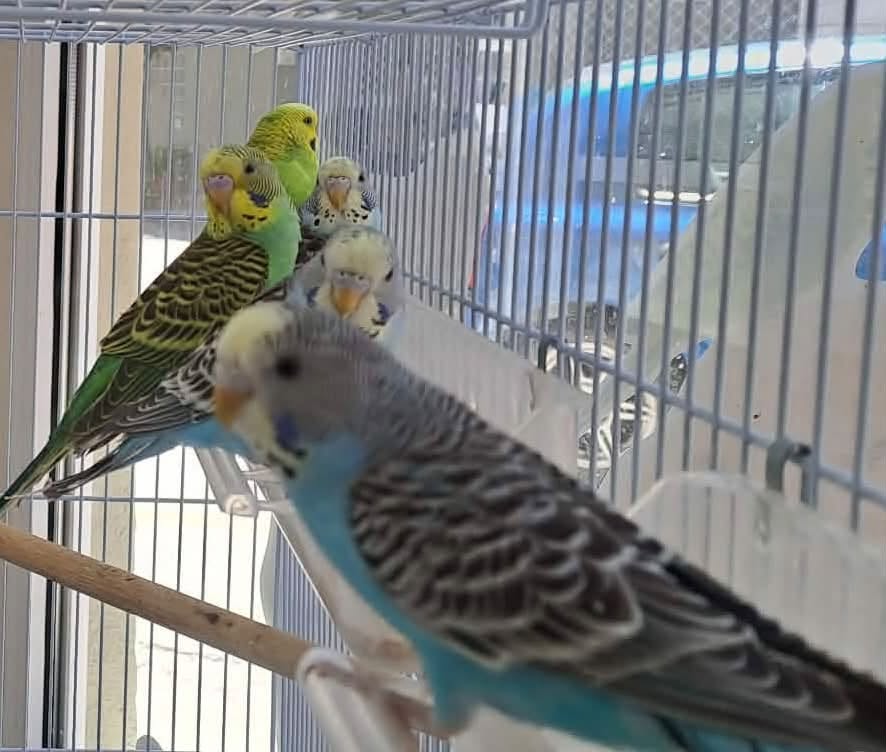
A lone budgie that tracks its owner around the house — that calls whenever the owner leaves the room, that presses against the cage bars when the owner is near, that becomes visibly distressed when the owner is away for any extended period — is displaying what looks like devoted attachment. It is, in some sense, devoted attachment. The bird has identified its owner as the only available social figure in its world and has calibrated its entire social life around that person.
The problem is what this behaviour reveals rather than what it feels like. The level of dependency is not a sign of a bird that is thriving — it is a sign of a bird that has transferred its entire social need onto the one available source. A budgie with a companion bird still bonds with its owner. It still responds to the owner’s presence. But the response is different in character from the response of the lone bird. It is affectionate rather than desperate. Interested rather than dependent.
The owner-shadow behaviour — the tracking, the distress at absence, the intense response to presence — is the lone bird’s social need expressed at the one available outlet. The question it asks is not “how deeply does this bird love me?” but “what else does this bird have?”
Silent Sign Five — The Shrinking World
This is the hardest sign to describe clearly but the one I think is most informative once you understand what to look for.
A budgie in a good environment — socially fulfilled, mentally stimulated, in appropriate physical condition — explores. It investigates its cage, uses different perches at different times of day, interacts with toys and foraging materials, responds to new objects introduced to the cage with evident curiosity. Its world, within the cage, is genuinely inhabited.
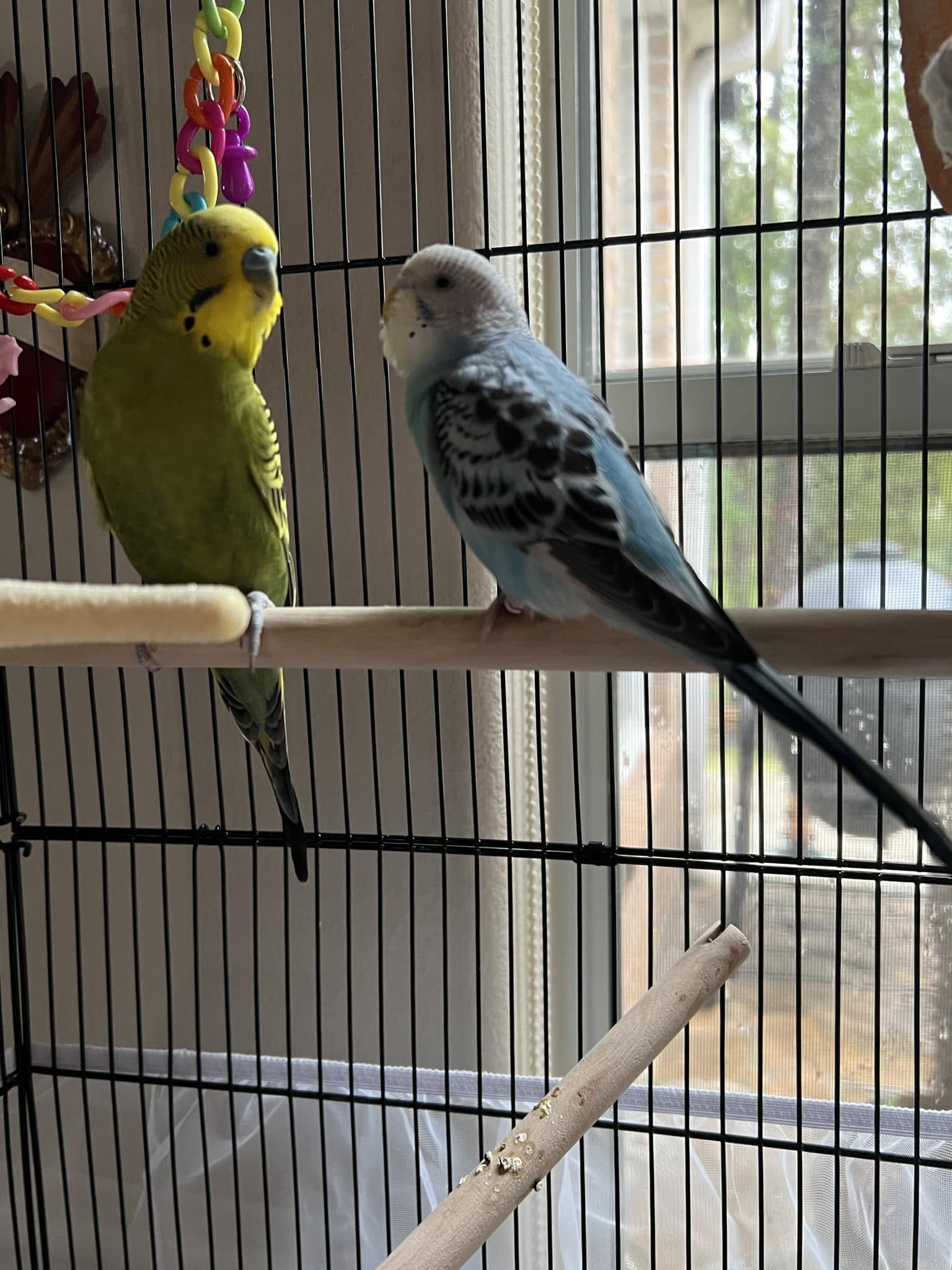
A lone budgie over time often develops a smaller world. It gravitates toward one or two perches. Toys that were investigated enthusiastically when first introduced are no longer touched. New objects placed in the cage are ignored rather than investigated. The bird’s active territory within the cage contracts to a small area — usually near the food bowl and near whatever human-facing surface is closest.
This contraction is not a sign of a relaxed bird that knows its preferences. It is a sign of an animal whose motivation to explore and engage has reduced because the social stimulation that normally drives exploration is absent. In the wild, budgies investigate things because other birds are investigating things — curiosity is partly social. A lone bird has lost that social driver, and its engagement with its environment reflects the loss.
The owner watching this often sees a bird that has found its spot, that knows what it likes, that is settled and content. The more accurate description is a bird whose behavioural range has narrowed in the absence of the input that should be keeping it wide.
Silent Sign Six — The Feather That Is Never Preened Properly
This sign requires knowing your bird’s plumage in reasonable detail — the kind of detailed familiarity that comes from handling the bird regularly and looking at it closely.
Mutual preening — allopreening — is a central social behaviour in budgies. Paired or grouped birds groom each other, particularly around the head and neck: areas that a bird cannot easily reach with its own beak. In a pair, the head feathers are kept in the neat, tight condition that the bird maintains in other areas of its body through self-preening.
A lone bird cannot adequately preen its own head. It can manage the accessible areas of its body but the crown, the top of the head, and the area around the nape and neck may show slightly dishevelled or less tidy feathers than the rest of the body — not strikingly so, and not in the way that illness produces obviously abnormal feathers. Just slightly less immaculate than they would be if another bird were attending to them.
This sign is subtle and should not be used in isolation — many factors affect feather condition, including nutrition, moulting stage, and health. But in a bird that is otherwise healthy and well-nourished, consistently slightly less tidy head feathering compared to the body is consistent with the absence of allopreening.
More practically: a bird that self-grooms excessively — that spends long periods scratching its own head with a foot — may be attempting to address the deficit that allopreening normally meets. This excessive self-scratching is worth noting alongside the other signs I have described.
The Combined Picture — When Signs Cluster
Any single one of the signs I have described above might have an innocent explanation — a specific personality quirk, a temporary change, normal developmental progression. What distinguishes genuine developing loneliness from normal individual variation is the clustering of multiple signs in the same bird over a sustained period.
A bird that is slightly quieter than before, that has developed strong mirror focus, that tracks its owner around the house, that climbs the same section of bars regularly, and that has become less interested in its toys than it was six months ago is not showing one sign that might have an innocent explanation. It is showing five signs that, together, form a consistent picture.
That picture is a bird whose social needs are chronically unmet. The appropriate response is a companion bird — not a mirror, not additional toys, not more human time, though these are better than nothing. A companion bird.
Why These Signs Are So Consistently Missed
I want to address this directly because it matters for understanding why the problem persists.
The signs I have described are quiet, gradual, and require a baseline for comparison. You cannot walk into a room with a lone budgie you have never met and assess whether it is lonely — you have no reference for what it was like before. The changes only become visible if you know what the bird used to be like, and if you are paying the kind of attention that notices difference over time rather than simply registering the daily status.
Most owners assess their bird’s wellbeing on the question “is it fine today?” rather than “is it less than it was three months ago?” The first question is about current state. The second question — the one that catches these signs — is about trajectory. And trajectory requires memory and comparison.
This is compounded by the natural human tendency to interpret ambiguous animal behaviour in the most benign way available. A quiet bird is a calm bird. A bar-climbing bird is an active bird. A mirror-focused bird is a charming bird. None of these interpretations are unreasonable from the outside. All of them can be wrong in specific cases.
The solution is not to be a more suspicious observer. It is to be a more historically attentive one. To have a genuine sense of what your bird was like at its most engaged and most expressive, and to notice when it is less than that.
What to Do When You Recognise These Signs in Your Bird
The straightforward answer is: get a companion bird, introduced through the proper neutral-territory process.
I understand that this answer comes with complications. The owner who has built a strong bond with a lone bird is sometimes ambivalent about sharing that bird with another bird. The fear that the companion will reduce the bond with the human is real, even if it is not how it typically works in practice. In reality, a budgie with a companion is usually a happier bird that engages more fully with all aspects of its life — including its human.
The introduction process requires care. A new bird should never be placed directly into the existing bird’s cage — this is the resident bird’s territory and will produce defensive behaviour that poisons the introduction. Both birds should be introduced in a neutral space, with multiple food and water points, and allowed to establish their social relationship without territory as a complicating factor. The process takes days to weeks and usually resolves into a settled pair.
While you are working toward a companion — if that process takes time — there are interim measures that partially address the problem. More engaged daily human interaction. Varied enrichment changed regularly. A larger foraging environment. Radio or television providing a background of human voices. These things are better than nothing. They are not a replacement.
- Morning vocalisation has become shorter, quieter, less varied than it was earlier in the bird’s life: The contact call system is winding down in the absence of a response.
- Repetitive bar climbing in the same pattern without apparent purpose: Stereotypic behaviour — not exercise, not exploration.
- Intense, compulsive mirror focus — the bird returns to the mirror immediately and repeatedly: Social drive fixated on an inadequate substitute.
- Distress when the owner leaves, intense response to the owner’s presence: Social need concentrated on the only available outlet.
- Reduced engagement with toys and environment — the bird’s active territory has shrunk: Exploration motivation reduced in the absence of social stimulus.
- Head feathering slightly less tidy than the body; excessive self-scratching around the head: Allopreening deficit — the bird cannot properly groom the areas another bird would attend to.
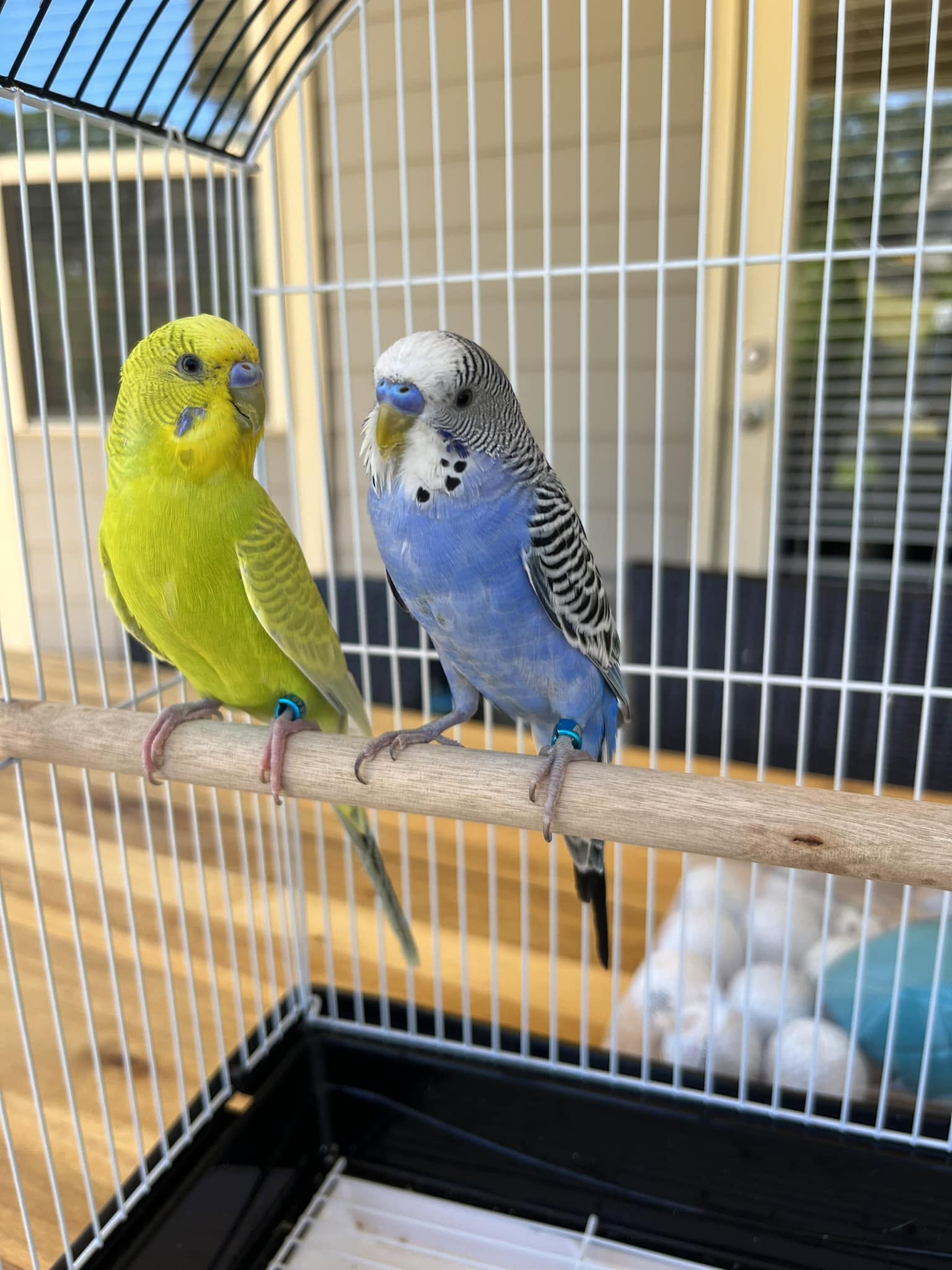
Quick Reference — Lonely Budgie vs Thriving Budgie
| Behaviour | Lonely Lone Bird | Thriving Paired Bird |
|---|---|---|
| Morning vocalisation | Shorter, quieter, less varied than early months. May become intermittent. | Active, varied, genuinely conversational — the two birds answer each other. |
| Movement in cage | May include repetitive bar patrol without clear purpose. | Varied, purposeful — moving between perches with social intent, foraging, interacting. |
| Mirror behaviour | Often intensely focused on mirror — returns repeatedly, may become compulsive. | May investigate mirror briefly but not as a primary social focus. Has real companions. |
| Response to owner absence | Marked distress — loud calling, visible agitation at owner leaving room. | Responds to owner but has companion — absence not experienced as abandonment. |
| Engagement with toys | Often reduced over time — environmental motivation diminishes without social stimulus. | More consistent, particularly with foraging toys where partner is also engaged. |
| Head feather condition | May be slightly less tidy than body feathers — allopreening deficit. | Head feathers immaculate — companion maintains them through regular grooming. |
| Overall impression | Quiet, settled, calm — easy to interpret as contentment. Is often adaptation to deprivation. | Active, varied, vocal — the full range of what the species is capable of. |
Frequently Asked Questions
How do I know if my budgie is lonely or just calm by nature?
The key is comparison with the bird’s own earlier behaviour rather than comparison to some general standard. A bird that has always been quiet may simply be quieter by nature. A bird that was clearly more vocal and more active in its first year and has progressively become quieter and less engaged since then is showing the trajectory pattern associated with developing loneliness. Track the change over time, not just the current state. The signs I have described — bar patrol, mirror compulsion, reduced environmental engagement — are more specific indicators than quietness alone.
My budgie seems devoted to me — does that mean it’s not lonely?
An intense bond with the owner is one of the signs of loneliness, not evidence against it. A lone bird whose entire social world is its owner will display intense owner-attachment — distress when the owner leaves, excitement when the owner returns, strong bar-pressing toward the owner’s presence. This is real attachment and it is real for the bird. It is also the sign of a bird that has no other social outlet. A paired bird still bonds with its owner — sometimes very strongly — but the bond has a different quality because the bird’s other social needs are being met.
Will getting a second bird reduce my bond with the first one?
In practice, no — and I understand why the question is asked, because it reflects a real concern. What usually happens is different from what owners fear. The first bird, once settled with a companion, is more relaxed, more active, more engaged with its environment — including its human. The relationship with the owner often deepens rather than diminishes because the bird is interacting from a place of wellbeing rather than desperate dependency. Some birds remain extremely human-bonded even with a companion. Most become more balanced.
Is the mirror definitely bad for my budgie?
Not definitely, and not in all circumstances. A mirror as one object in an enriched environment for a bird that already has a companion is fine — it is just an object. A mirror as the primary social substitute for a lone bird, used intensively to the exclusion of other activities, is problematic in the specific way I have described. The intensity of use is the relevant factor, not the mirror’s presence.
My budgie is old — is it worth getting a companion now?
Yes, with appropriate care. An older bird introducing to a new companion requires a more gradual and careful introduction process, and should be health-checked by a vet before the introduction to confirm it is in a suitable condition to manage the adjustment. The benefits — reduced chronic stress, species-appropriate social interaction, the return of some of the vocalisations and behaviours that disappeared — are real at any age. An older bird with a well-chosen companion will almost always show improvement in its quality of life.
Where can I get a companion budgie and advice on introduction in Swindon?
Come and see us at Paradise Pets — Manor Garden Centre, Cheney Manor, Swindon SN2 2QJ. I am happy to talk through which individual bird would make a suitable companion for your existing bird and how to manage the introduction properly. This is one of the conversations I consider most important, and I will not rush it. Call 01793 512400 before visiting.
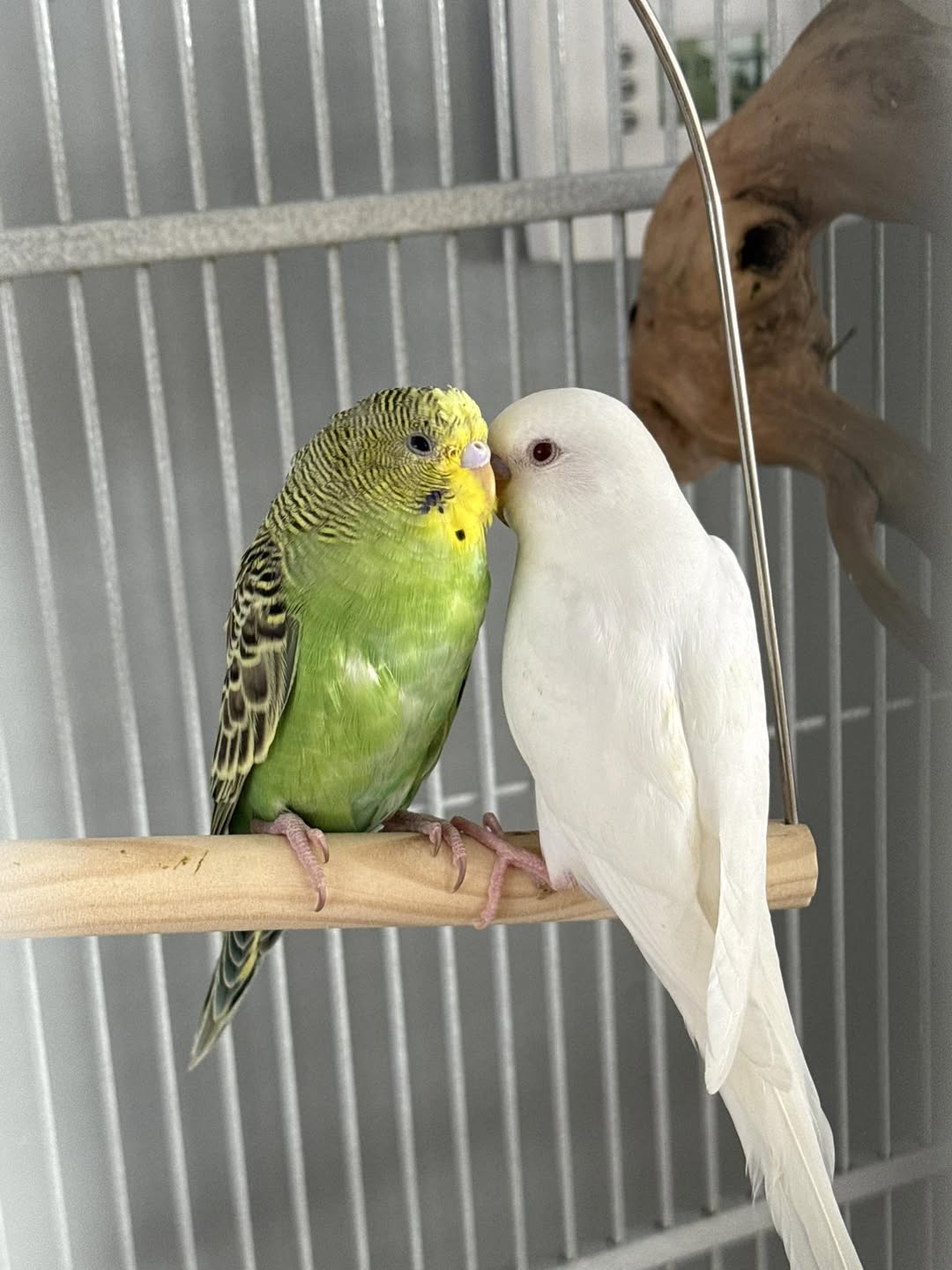
Think Your Budgie Might Be Showing These Signs? Come and Talk
If you have read this and recognised your bird in any of the descriptions — the quietness, the bar patrol, the mirror fixation, the intense owner-tracking — come in. Bring the bird or a short video. I will tell you honestly what I see and what I recommend. This is the conversation that changes things for these birds.