
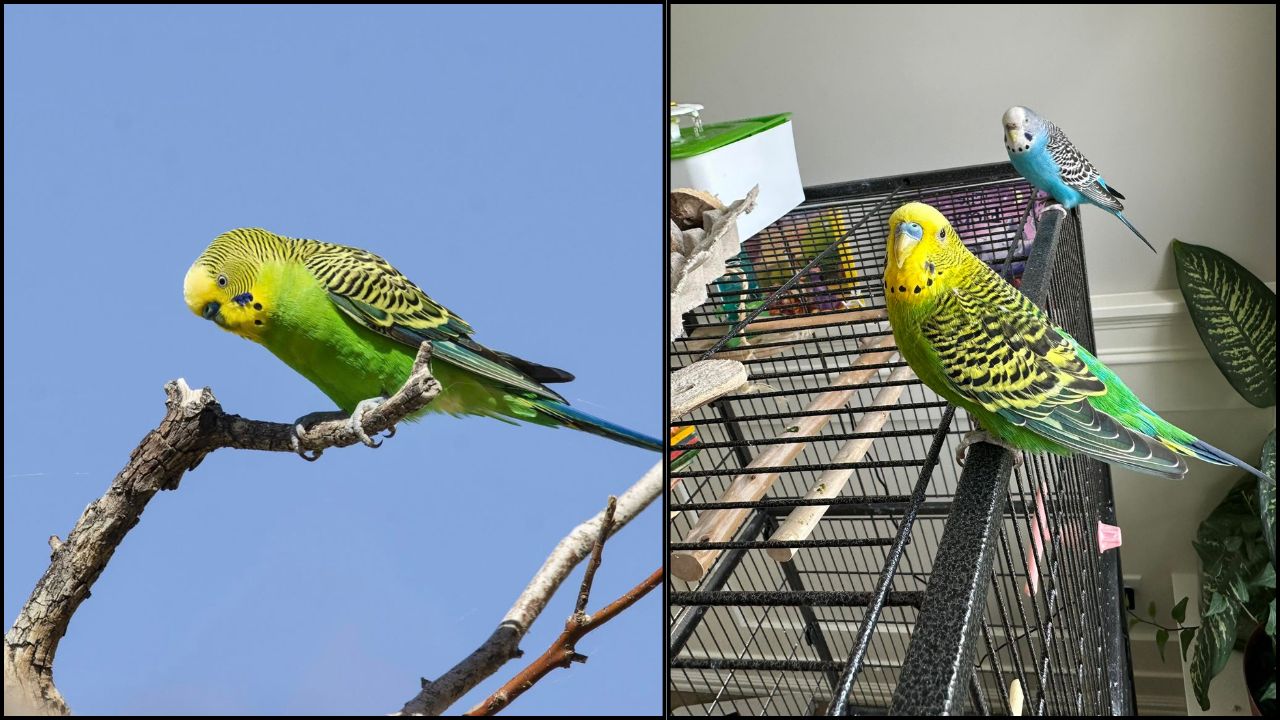

Neil has kept, bred, and sold budgies at Paradise Pets Swindon since 1988 — over 35 years of watching UK households develop genuine relationships with the bird species that has remained Britain’s most popular pet bird for decade after decade. The UK Pet Food Association (PFMA) confirms that over one million pet budgies live in UK homes today — a substantial UK community reflecting genuine affection for the species. But after 35 years at the counter, Neil has identified one specific welfare mistake that a significant proportion of UK budgie owners are still making, often without realising it is a mistake at all. This is his honest, welfare-led take on the single most common UK pet budgie welfare mistake, why it persists despite decades of welfare research showing otherwise, why it matters for individual UK pet birds even if the owner is otherwise providing excellent care, and exactly what UK owners can do to correct it — starting today.
A woman came into the shop one Wednesday morning, clearly upset and looking for honest advice. She had owned her pet budgie Sky for three years. Sky was fed a proper varied diet, lived in a good-sized welfare-standard cage, had daily interaction, had appropriate toys and enrichment, saw her vet regularly, and was by every measurable standard receiving genuinely excellent care from a knowledgeable, welfare-conscious UK owner. But Sky had recently started showing worrying behaviours — excessive chirping when she was out of the house, obsessive attachment to a small mirror toy, and what the owner described as “an anxious edge” that had not been there when Sky first arrived. She wanted to know whether Sky was ill, whether something in the cage was wrong, whether she was somehow failing her bird despite trying so hard.
I sat with her for half an hour and explained the honest answer, which is one I have given hundreds of times over 35 years — Sky was not ill. The cage was not wrong. The owner was not failing. But Sky was solo. And after 35 years of watching UK pet budgies both in the shop and in the homes of visiting customers, I have come to believe that keeping budgies alone — a single budgie without a companion of its own species — is genuinely the single most common welfare mistake UK owners make, often without any awareness that it is a mistake at all. The owner was trying her best. She was providing excellent care by every conventional standard. But she had missed the one specific welfare consideration that makes the biggest difference to individual UK pet budgie wellbeing — and Sky was showing the classic signs of the welfare gap that solo keeping creates.
I am writing this article because with over a million pet budgies in UK homes today according to UK Pet Food Association (PFMA) data, a substantial proportion — from my 35 years of observation, I would estimate somewhere between 40% and 60% — are being kept solo. And while many of those solo-kept UK budgies are receiving otherwise excellent care from genuinely welfare-conscious owners, they are being denied the one specific welfare need that budgies as a species genuinely require to thrive — the daily social contact with another budgie that their wild flock-based biology has evolved to expect. This is not a minor welfare issue. It is not a nice-to-have companion consideration. It is a genuine core welfare need that is being missed at scale across the UK pet budgie community.
This article is the conversation I have at the counter with UK budgie owners who genuinely care about their birds and want honest welfare-led guidance. By the end of it, you will understand exactly why UK pet budgies need same-species companionship, why human interaction alone is not enough, what the specific welfare gap of solo keeping looks like in your bird, exactly how to introduce a companion budgie to your existing bird if you have been keeping solo, and why this one welfare change genuinely makes more difference to UK pet budgie wellbeing than any other single practice change UK owners can make.
The UK Million Budgies Context — And The Welfare Reality Behind It
For UK readers wanting to understand where the concern about solo keeping fits, here is the honest picture based on 35 years of watching the UK pet budgie community evolve.
What the UK pet budgie context genuinely looks like:
- Over 1 million pet budgies in UK homes according to PFMA and industry data
- Budgies are Britain’s most popular pet bird species by wide margin
- Estimated 40-60% of UK pet budgies are kept solo based on 35 years of counter observation
- Solo keeping remains common practice across independent shops and chain retailers historically
- Welfare science consistently shows budgies are flock-based social birds
- Wild budgies live in flocks of hundreds or thousands in Australia
- Same-species contact is genuine welfare need not optional companion consideration
- Solo welfare gap develops over months and years rather than causing immediate visible harm
- Otherwise-excellent owners often unknowingly maintain this welfare gap
- The mistake is completely correctable at any stage of a budgie’s life
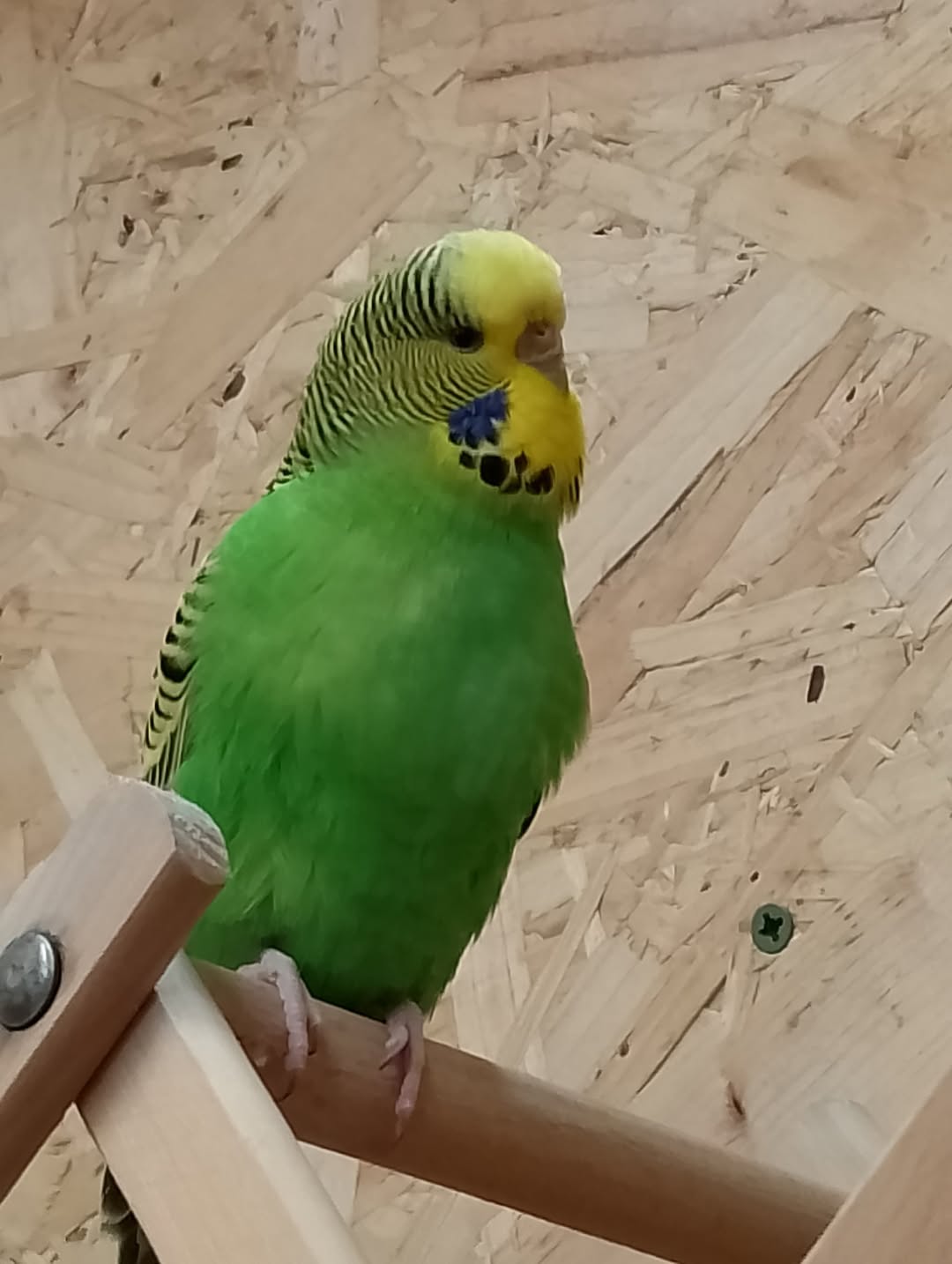
The scale of the UK pet budgie community is genuinely substantial — over a million individual birds, kept by hundreds of thousands of UK households across every kind of living situation and demographic. That scale means that even a small proportion of birds being kept in welfare-inadequate conditions represents a substantial cumulative welfare issue. My honest estimate — based on 35 years of watching UK customers, their birds, and the questions they bring to the counter — is that hundreds of thousands of UK pet budgies today are being kept solo, and that the welfare gap this creates is the single largest addressable UK pet budgie welfare issue.
For more on the UK pet budgie population context, our recent article on why the UK now has over a million pet budgies covers the celebratory community context that makes this welfare consideration matter — the community is large enough that improving one specific practice would benefit substantial numbers of individual UK birds.
Why Solo Keeping Is Genuinely A Welfare Mistake
For UK budgie owners wanting to understand why solo keeping matters as a welfare issue, here is the honest picture based on welfare science and 35 years of watching UK pet budgies.
What the welfare science actually shows about budgie social needs:
- Budgies are highly social flock-based birds — evolved for constant same-species contact
- Wild budgies live in flocks numbering hundreds to thousands in Australian grasslands
- Flock contact provides psychological stability through species-specific communication
- Same-species social behaviours cannot be replicated by human interaction
- Budgie vocalisations serve social flock functions not just entertainment
- Mutual preening between budgies is a core welfare behaviour that cannot be replaced
- Sleep-time flock proximity is important for security and stability
- Daytime flock activity supports mental engagement throughout waking hours
- Isolation from own species creates measurable stress responses in scientific studies
- Solo-kept budgies show higher rates of certain welfare-related behaviours including feather plucking, obsessive attachment to inanimate objects, and stress-related vocalisations
Why solo keeping persists despite the welfare science:
- Historical UK pet shop practice sold single budgies for many decades without explaining welfare implications
- Cost consideration for UK owners — two birds initially seemed twice the expense
- Belief that human interaction substitutes for same-species companionship
- Assumption that solo budgies bond better with humans is misapplied welfare thinking
- Space concerns in UK homes — belief that pair housing requires much more space
- Fear that adding a second bird will disrupt existing one
- Lack of clear UK pet shop welfare guidance at point of purchase historically
- Welfare symptoms of solo keeping develop gradually and are often misattributed to other causes
- Owner attachment to solo bird’s status as sole household focus
- Well-meaning owner priorities often prioritise other visible welfare aspects over social housing
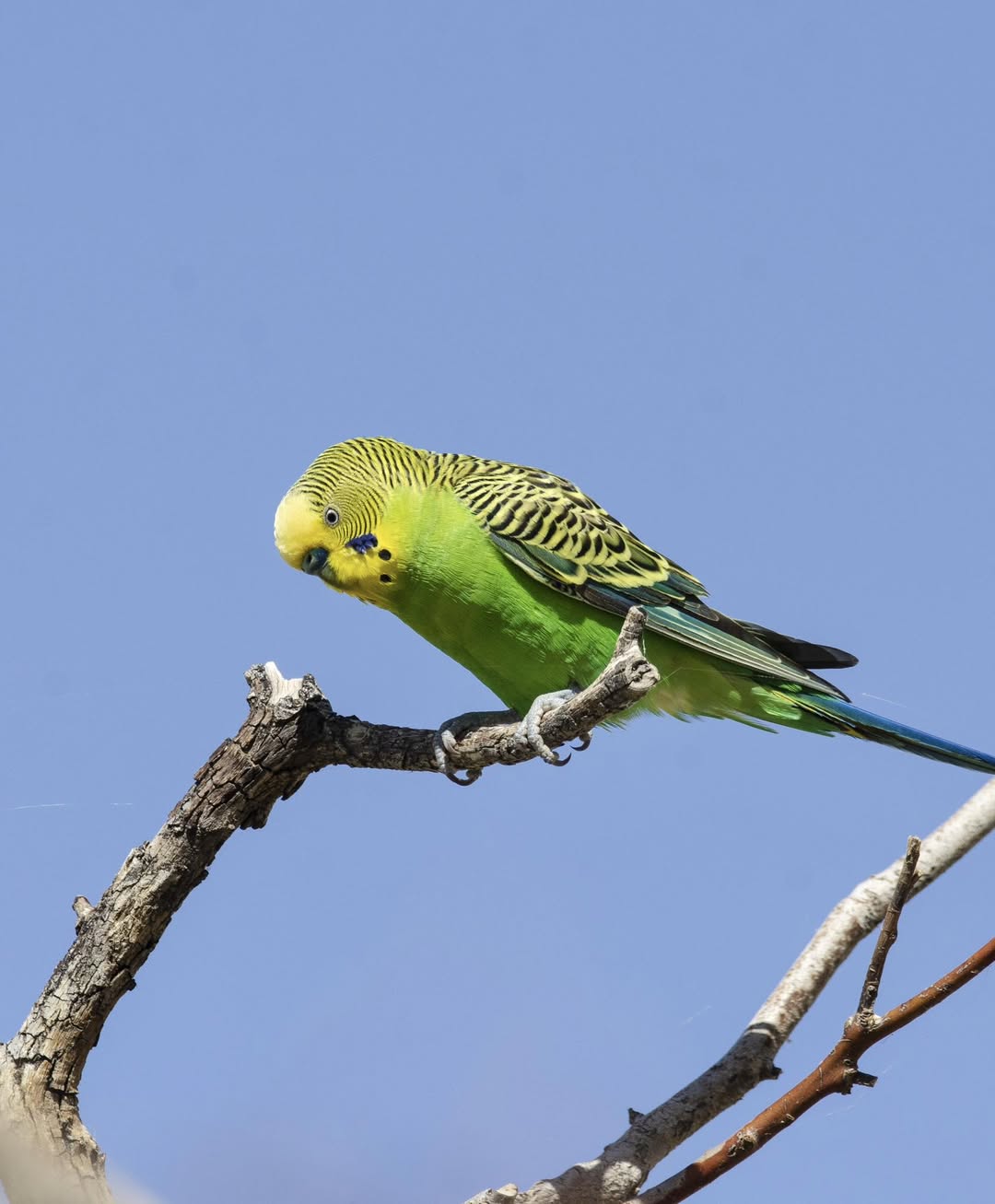
After 35 years at the counter, I have come to believe UK owners keeping budgies solo are almost never doing so out of neglect or lack of care. They are doing so because they were not adequately told about the welfare implications, because they applied logic that seemed sensible (human interaction as substitute), and because the welfare gap of solo keeping develops over time rather than producing immediate visible harm. The mistake is genuine, but the owners making it are typically otherwise excellent budgie keepers who would readily address the issue if they understood it.
What Solo Keeping Welfare Gap Looks Like In UK Pet Budgies
For UK owners wondering whether their solo budgie shows signs of the welfare gap, here is the honest picture of what to watch for. The signs are typically subtle rather than dramatic, and often misattributed to other causes.
Common signs of solo-keeping welfare gap in UK pet budgies:
- Excessive attachment to inanimate objects — mirrors, toys, human hands as substitute flock members
- Persistent regurgitation to a mirror or toy — courtship behaviour without appropriate outlet
- Excessive chirping when owner leaves the room — separation distress with sole social connection
- Feather plucking or over-preening — stress-related behaviours affecting plumage
- Persistent egg-laying without a mate in female birds — hormonal issues from solo housing
- Obsessive cage-bar chewing or repetitive behaviours
- Excessive vocalisation, particularly stress calls
- Reduced play with toys the bird previously enjoyed
- Increased fearfulness or nervousness over time
- Weight fluctuations or eating irregularities stress-related
- Reduced daytime activity and engagement
- Anxious edge to overall behaviour — subtle but observable to attentive owners
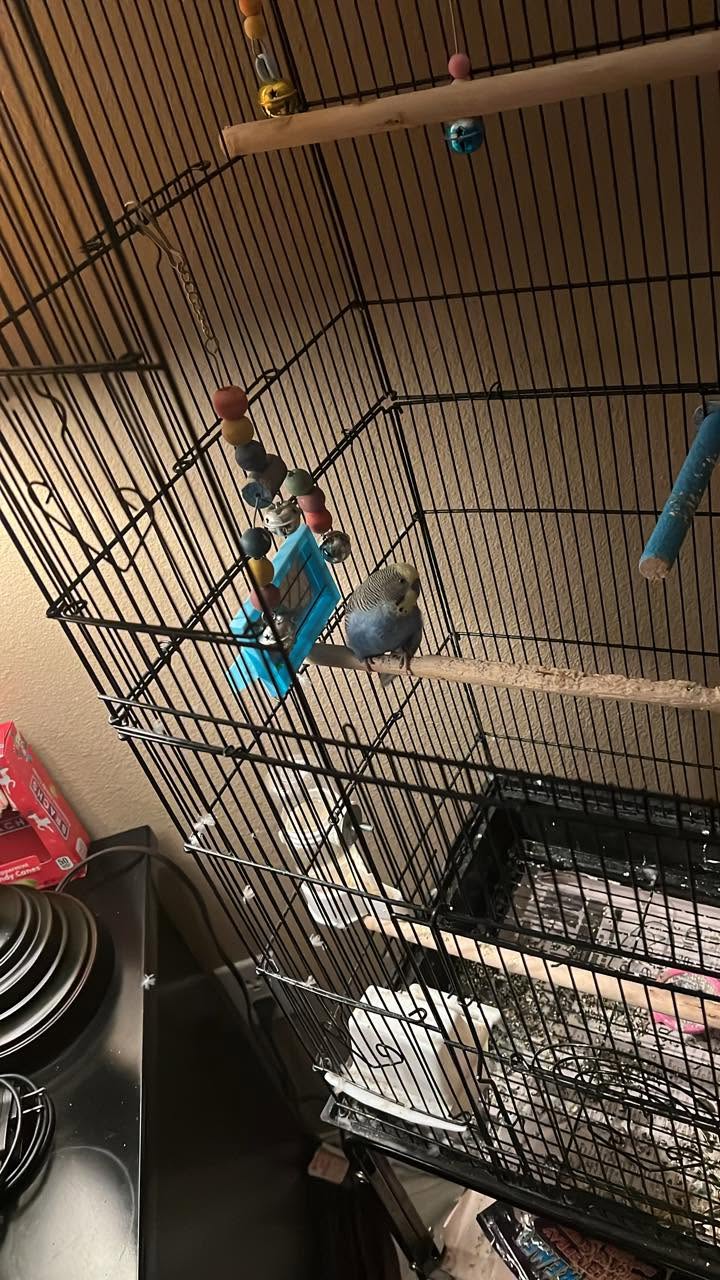
The honest observation is that these signs develop gradually over months and years of solo keeping. A budgie kept solo for six months may show few signs. A budgie kept solo for six years often shows several. UK owners frequently describe their long-term solo budgies as “just how she is” or “his personality” without recognising that the anxious, obsessive, or attachment-heavy characteristics may reflect welfare adaptation to solo housing rather than genuine individual personality.
For more on UK pet budgie welfare behaviours generally, our article on why UK pet shops are still selling this one thing that is harming budgies covers the specific mirror-related welfare issue that overlaps with solo keeping, and our article on how to tell if your budgie is happy covers the positive welfare indicators for comparison.
Why Human Interaction Is Not A Substitute — The Honest Explanation
For UK owners who genuinely believe their attention and interaction is sufficient for their solo budgie, here is the honest welfare-led explanation of why human contact — however loving — cannot substitute for same-species companionship.
Why UK pet budgies need same-species contact regardless of human attention:
- Budgies communicate through species-specific vocalisations that humans cannot replicate
- Same-species preening is a core welfare behaviour humans cannot provide adequately
- Flock security responses require same-species presence — psychologically distinct from human presence
- Budgies learn welfare-appropriate behaviours from other budgies across their lifespan
- Human absence during work/sleep/travel creates predictable welfare gaps for solo birds
- Human interaction is fundamentally inter-species — cannot fulfil intra-species social needs
- Same-species conflict resolution behaviours are important for psychological stability
- Budgies bond with same-species companions differently from bonding with humans
- Long-term welfare outcomes differ substantially between paired and solo housing
- Species-specific play and interaction is a genuine welfare need
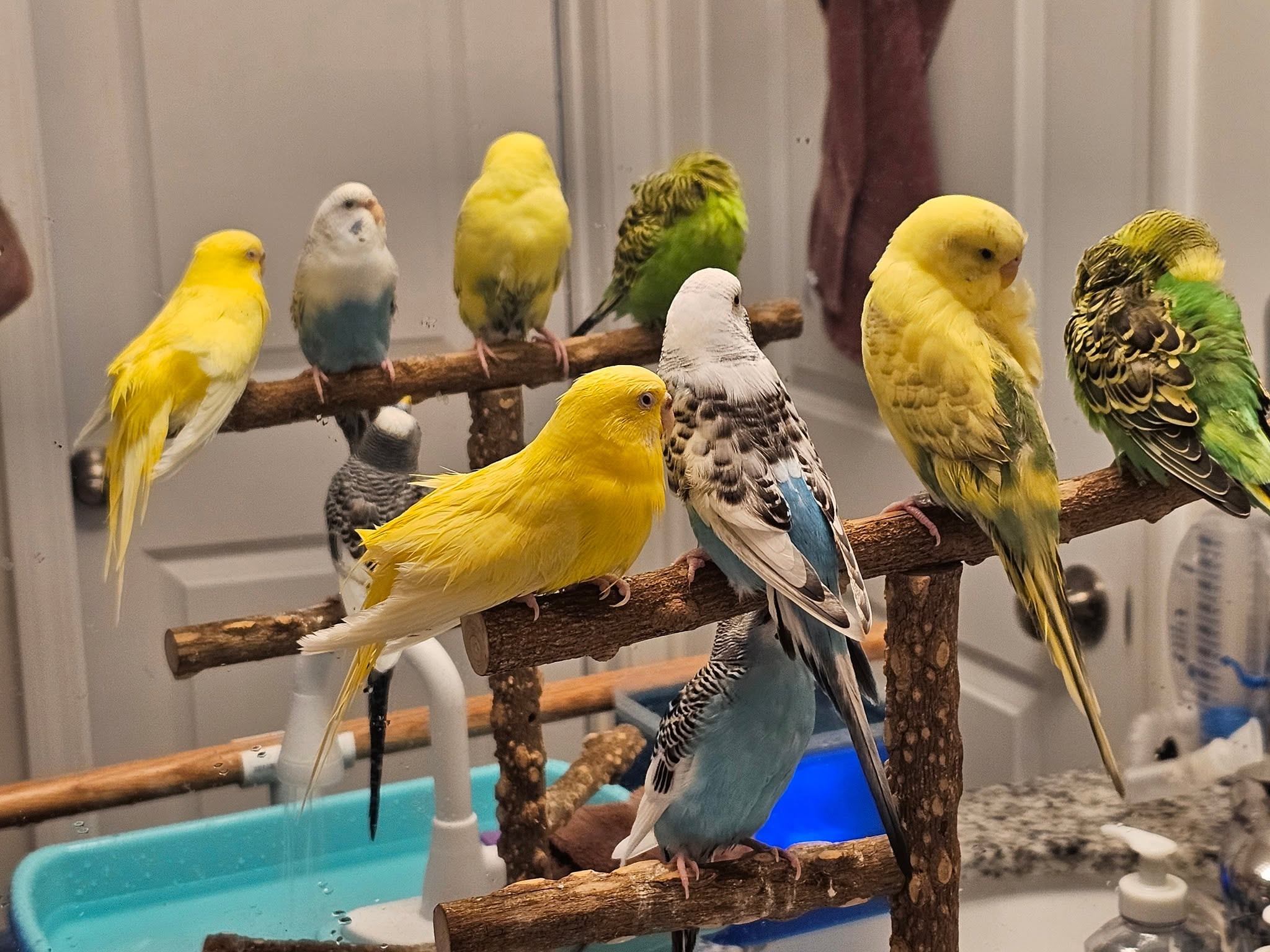
The honest observation is that UK owners providing genuinely excellent care to solo budgies are typically providing everything except the one thing budgies genuinely need most — same-species contact. It is not a failing of the owner. It is a failing of the arrangement, which cannot deliver species-appropriate social welfare regardless of how loving or attentive the human contact is.
After 35 years at the counter, I have come to believe UK owners who understand this distinction — that human interaction and same-species companionship are welfare-different rather than substitutable — make the most welfare-appropriate keeping decisions for their pet budgies. The choice is not between paired birds getting less attention and solo birds getting more attention. The choice is between paired birds getting welfare-appropriate social housing plus attention, and solo birds getting only attention without welfare-appropriate social housing.
How To Correct Solo Keeping — Introducing A Companion Budgie
For UK owners recognising that their solo budgie would benefit from a companion, here is the honest step-by-step guidance for introducing a second budgie successfully. The process is genuinely achievable at any stage of a budgie’s life.
- Consider whether you can commit to two birds long-term
Space, time, cost implications. If yes, proceed. If genuinely no, focus on maximising existing welfare instead. - Choose the right second bird
Similar age preferred. Same sex reduces breeding complications. Compatible temperament matters. - Quarantine the new bird for 30 days minimum
Separate cage in separate room. Reduces disease transmission risk between the birds. - Prepare a larger shared cage
Two budgies need approximately 60% more space than one. Welfare-standard for pair is essential. - Allow visual contact through separate cages initially
Position cages in same room after quarantine period. Let birds see and hear each other for 1-2 weeks. - Neutral territory first meeting
Cage-free introduction in a room neither bird considers their territory. Supervise closely. - Watch initial interaction carefully
Normal beak fencing OK. Actual biting or drawing blood means separate and try again slower. - Move to shared cage gradually
Multiple positive neutral meetings before permanent housing together. - Provide plenty of resources in shared cage
Two food bowls, two water bowls, multiple perches, plenty of toys. - Monitor the pair for 4-6 weeks
Most successful introductions establish comfortable pairing within this period.
The honest reality is that most UK budgie introductions succeed with patience and appropriate process. Failures typically result from rushing the timeline, choosing incompatible birds, providing insufficient cage space for the pair, or introducing without adequate preparation. When the introduction succeeds — which it does in the vast majority of cases with proper approach — the welfare improvement is often visible within weeks.
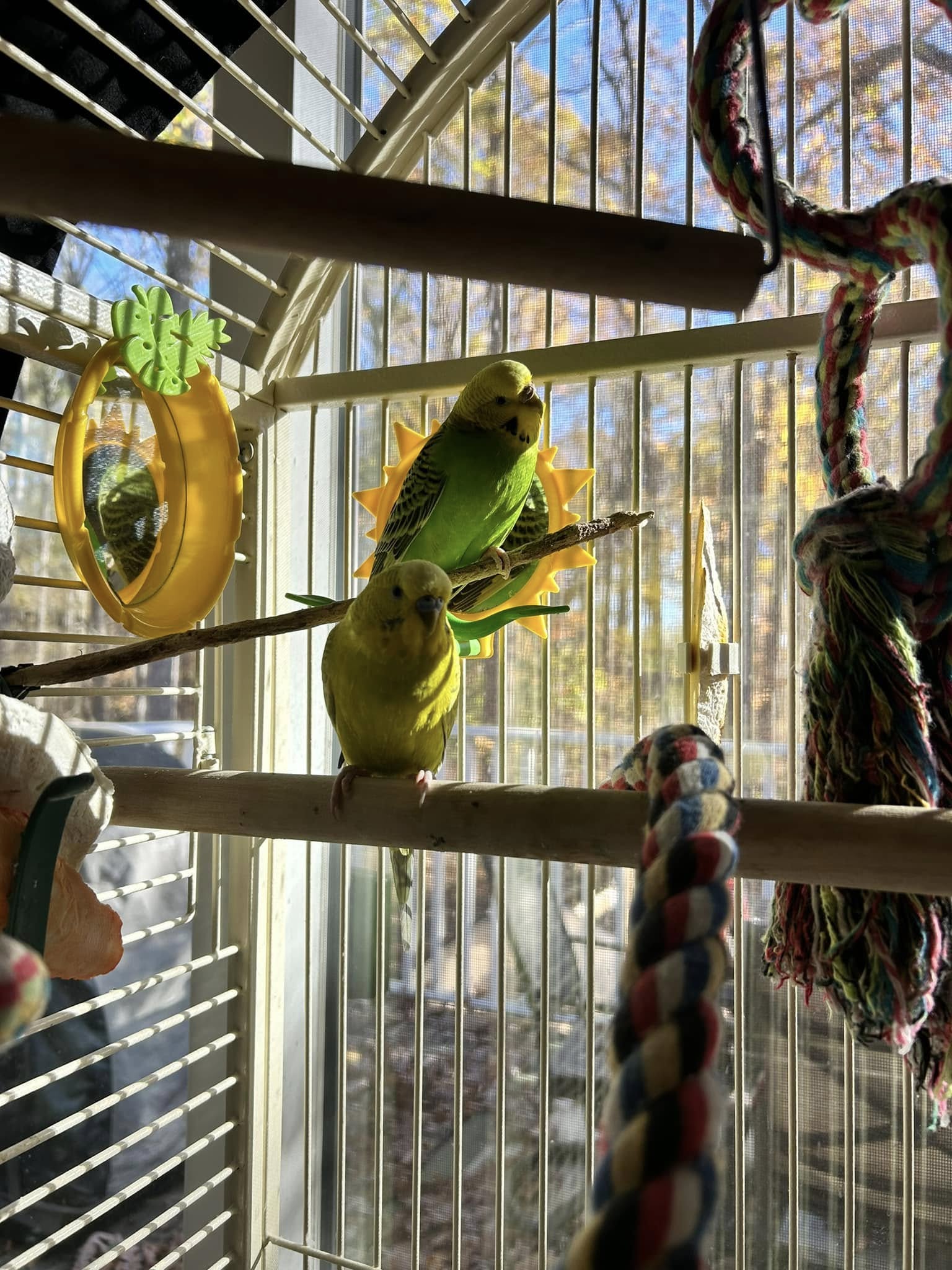 UK owners who complete this process typically report that their previously-solo budgie shows visible welfare improvements — reduced attachment to inanimate objects, more relaxed body language, more varied behaviour, reduced separation distress when the owner is out, and a general sense that the bird is more genuinely at ease. The welfare gap of solo keeping closes when same-species contact is finally provided.
For UK owners who genuinely cannot provide paired housing — whether due to space, cost, or specific circumstances — the honest advice is to maximise welfare in other ways whilst acknowledging that the solo housing itself remains a welfare compromise that cannot be fully offset.
Common UK Owner Concerns About Adding A Second Budgie
For UK owners considering the change but worried about specific issues, here is the honest response to the most common concerns I hear at the counter.
- “Will my existing budgie stop bonding with me?”
No. Paired budgies still form meaningful relationships with their human owners. The nature of interaction may shift slightly but the bond remains real. - “Isn’t two budgies twice the work?”
Marginally more work. Feeding, water, cage cleaning scale slightly. Interaction time actually often decreases as birds entertain each other. - “Two birds means twice the cost?”
Not really. Food costs marginally increase. Vet care similar per bird. Purchase cost is one-time. Cage cost is the main change (larger pair-appropriate cage). - “My bird is too old to accept a companion”
Not typically true. UK budgies of any age can accept companions with appropriate introduction process. Older birds may need more time but usually adapt. - “My bird is territorial and might attack a new bird”
Possible with rushed introduction. Very unusual with proper process. Neutral territory introduction addresses this concern. - “I do not have space for a larger cage”
Consider whether your existing space genuinely cannot accommodate a slightly larger cage. Often the space concern is less absolute than assumed. - “What if the birds do not get along?”
Very rare with proper introduction. If genuinely incompatible after process, separate cages with visual contact still offers welfare benefit over solo. - “I have heard female budgies fight”
Sometimes. Two females can pair successfully with proper introduction. Two males typically easier. Mixed sex increases breeding considerations. - “My budgie might catch a disease from the new bird”
Quarantine period addresses this. 30 days separation with health monitoring reduces disease transmission risk substantially. - “What if I cannot afford proper pair housing right now?”
Wait until you can. Compromised pair housing is not better than good solo housing. But make the pair transition when you can.
The honest summary is that most UK owner concerns about adding a second budgie reflect worry rather than genuine obstacle. With proper approach, planning, and patience, the transition from solo to paired housing succeeds in the vast majority of UK households and produces measurable welfare improvement for the existing bird.
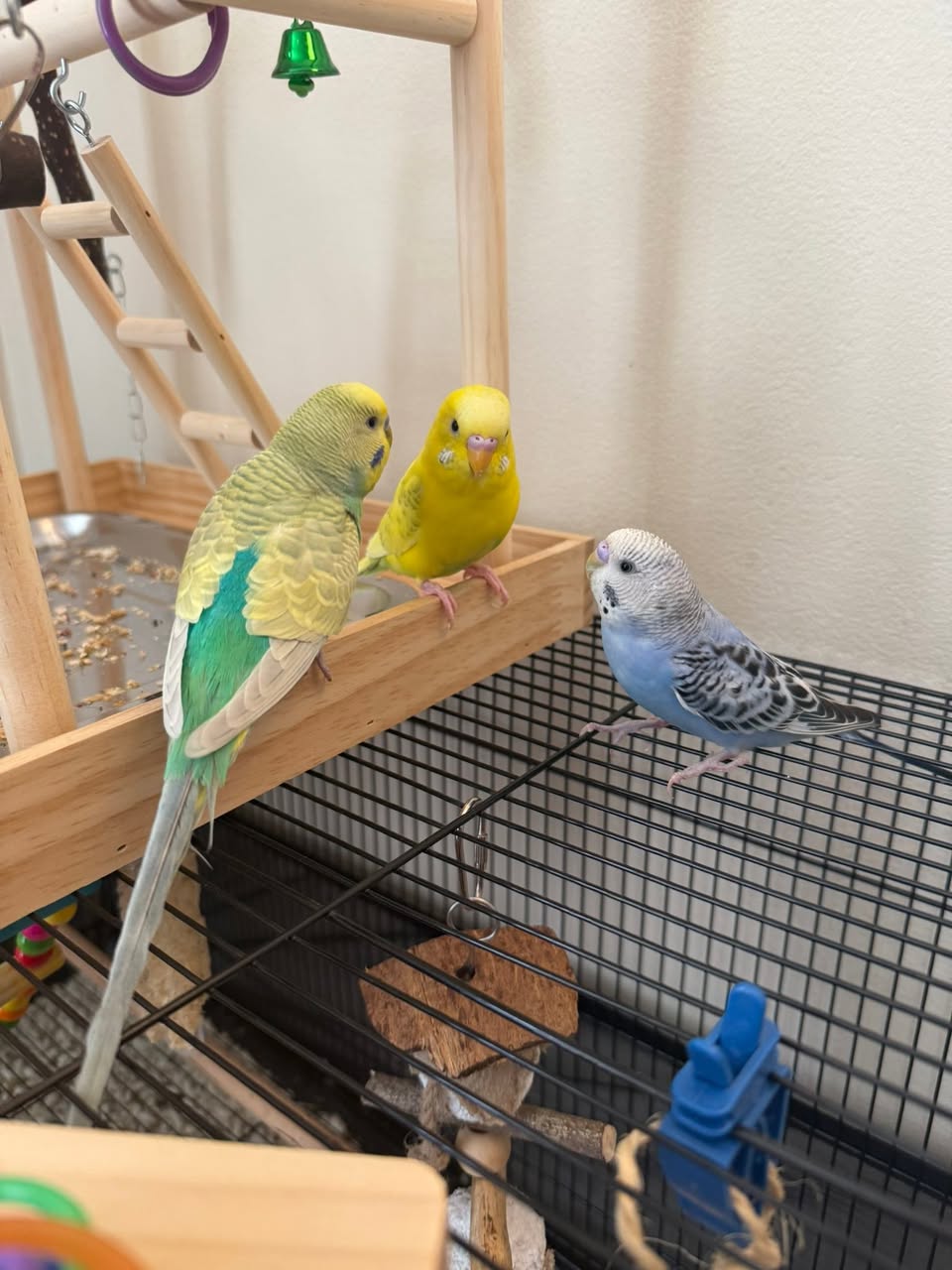 For UK owners who are genuinely stuck on any specific concern, please come in for a chat. After 35 years of helping UK owners through this transition, I can usually help identify whether the concern reflects a real obstacle or a solvable worry.
Frequently Asked Questions
Do UK pet budgies really need a companion of their own species?
Yes — welfare science consistently shows budgies are flock-based social birds who genuinely need daily same-species contact to thrive. Wild budgies live in flocks numbering hundreds to thousands in Australian grasslands, and this evolved biology remains present in UK pet budgies. Same-species behaviours including mutual preening, species-specific vocalisation, flock security responses, and social interaction cannot be replicated by human contact regardless of how loving or attentive that human contact is. UK pet budgies kept solo commonly develop subtle welfare adaptations over months and years — obsessive attachment to inanimate objects, separation distress, feather plucking, persistent regurgitation to mirrors, hormonal issues in female birds. Same-species housing addresses these welfare gaps.
Can I have just one UK budgie if I spend lots of time with it?
Human interaction, however loving, cannot fully substitute for same-species companionship for UK pet budgies. Same-species contact and inter-species human contact are welfare-different rather than substitutable — budgies need both, but same-species contact is the more fundamental welfare requirement. Solo-kept UK budgies often show subtle welfare gaps that develop over months and years, even in otherwise excellently-cared-for birds. If you can only keep one budgie, the honest answer is that this is a welfare compromise that cannot be fully offset regardless of how much attention you provide. The better answer is to keep two.
What if my solo UK budgie has been alone for years — is it too late?
No — UK budgies of any age can accept companions with appropriate introduction process. Older birds may need more time and more patient introduction, but usually adapt successfully. The welfare improvement from adding a companion often becomes visible within weeks even for birds who have been solo for many years. It is genuinely never too late to correct the solo-keeping welfare gap. If you have kept your UK budgie solo for years and now want to add a companion, please come in for a chat about the specific introduction process for your situation. After 35 years of helping UK owners through this transition, we can usually identify the approach most likely to succeed.
Will my UK budgie stop bonding with me if I add a second bird?
No. Paired UK budgies continue to form meaningful relationships with their human owners. The nature of the interaction may shift slightly — the bird may spend more time with its companion during quiet periods — but the bond with humans remains real. Many UK owners of paired budgies report that both birds actually engage more confidently with humans once they have same-species social security, because the underlying social welfare need is met and interaction becomes optional enrichment rather than sole social contact.
How much bigger does a UK cage need to be for two budgies vs one?
A welfare-standard cage for two UK budgies is approximately 60% larger than for one budgie. The exact minimum dimensions vary by welfare guidance, but as a practical rule, the larger the cage the better the welfare regardless of one or two birds. Most UK households find they can accommodate a pair-appropriate cage in the space they currently use for a smaller solo cage. If you are considering pair housing but concerned about space, come in for advice on the specific cage that would work for your particular UK home.
What signs show that my solo UK budgie has welfare problems?
Common signs of solo-keeping welfare gap include excessive attachment to inanimate objects (mirrors, toys, human hands as substitute flock members), persistent regurgitation to mirrors, excessive chirping when the owner leaves the room, feather plucking or over-preening, persistent egg-laying without a mate in female birds, obsessive cage-bar chewing or repetitive behaviours, excessive vocalisation, reduced play, increased fearfulness, and general anxious edge to behaviour. These signs develop gradually over months and years rather than appearing suddenly. If you recognise several of these in your UK budgie, the honest welfare-led response is to consider adding a companion.
Where can I get UK budgie welfare advice in Swindon?
Come and see us at Paradise Pets, Manor Garden Centre, Cheney Manor, Swindon SN2 2QJ. We stock welfare-standard budgie cages, pair-appropriate housing, and offer honest advice on solo-to-paired transition specifically. Free thoughtful advice based on 35 years of helping UK budgie owners provide welfare-led care including proper same-species social housing. Ring us on 01793 512400.
One Last Thing From Me
“Am I failing my budgie by keeping her alone?” is the question UK owners ask me most often when they finally confront the solo-keeping issue, and one I want to answer with complete honesty and without judgement. The honest answer, after 35 years of watching UK owners genuinely try their best for their pet budgies, is — you are not failing your budgie by having kept her solo. You are almost certainly a caring, welfare-conscious UK owner who was not adequately told about the welfare implications of solo keeping at point of purchase, who applied logic that seemed sensible about human interaction as substitute, and who has been providing excellent care by every conventional standard. The failing is not yours — it is the historical UK pet shop practice, the welfare guidance that has not adequately reached UK owners, and the subtle nature of solo-keeping welfare gap that develops over time rather than appearing suddenly. But now that you understand the issue, the response matters more than any assignment of past blame. UK pet budgies genuinely need same-species contact to thrive. Solo-kept UK budgies experience welfare gaps that develop gradually. Adding a companion budgie addresses this welfare gap and produces measurable improvement, often visible within weeks. The process is genuinely achievable at any stage of a budgie’s life with proper introduction protocol. After 35 years at the counter, I have come to believe UK owners who make this specific welfare change make the single most impactful improvement possible to their pet budgie’s daily quality of life. It is the one thing over a million UK budgie owners can do — should do — that would genuinely improve UK pet budgie welfare at scale across the community.
The woman with Sky that Wednesday morning? She went home reassured that Sky was not ill, understanding for the first time that solo keeping was likely contributing to Sky’s anxious behaviours, and planning a considered introduction of a companion budgie over the following weeks. Two months later, when she came back to the shop for supplies, she was accompanied by both Sky and Sky’s new companion Cloud. She had followed the introduction protocol carefully, both birds had adapted well, and Sky’s behaviours had already begun to shift — less obsessive attachment to the mirror toy (which had been removed), reduced excessive chirping when the owner left the room, more varied play activities, and what the owner described as “a settled quality” that had been missing before. Sky was now a genuinely thriving budgie rather than a stressed solo bird masking as thriving. Cloud had gained a welfare-standard home. The owner had gained the peace of mind of knowing her welfare-led care was now complete rather than partial.
That is what I want for every UK pet budgie owner reading this article. Not the guilt of thinking you have been failing your bird. Not the defensiveness of assuming your existing care is complete. But the genuine understanding of what UK pet budgies need at species level, honest recognition of whether you have been providing that, and the practical knowledge of exactly what to do if the honest answer is that you have been keeping solo without appreciating the welfare implications.
Over a million UK pet budgies live in British homes today. Somewhere between 40% and 60% of them are being kept solo. Every one of those solo-kept UK budgies could have their welfare meaningfully improved by the addition of a same-species companion. That is genuinely the single largest welfare improvement UK pet budgie owners could collectively make. If you own a solo UK budgie today and this article has made you think about the welfare implications for the first time, please consider whether adding a companion is possible for your household. Your budgie has been trying to tell you they need company for their whole solo life. This article is my honest 35-year attempt to translate that message into practical UK owner guidance.
If you are local to Swindon and want to come in to talk about your specific solo budgie situation, the introduction process for your particular circumstances, or any aspect of UK welfare-led pet budgie keeping, we are always happy to have that conversation. After 35 years at the counter, helping UK budgie owners provide welfare-appropriate social housing is one of the most genuinely valuable things any independent UK pet shop can do.
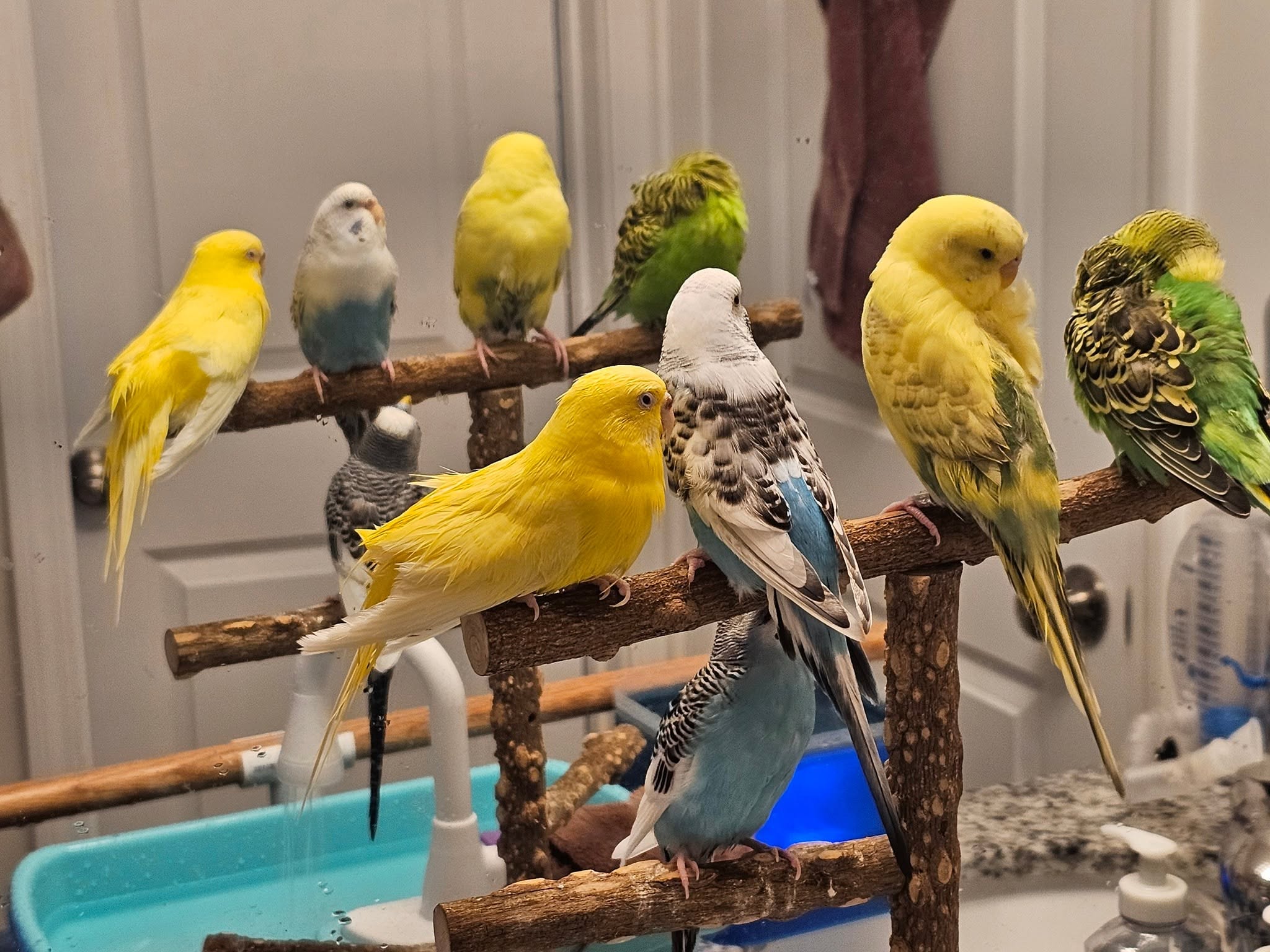
Considering A Companion For Your Solo UK Budgie? Come And See Me
We stock pair-appropriate welfare-standard budgie cages, healthy young budgies for pairing with existing birds, and offer honest introduction advice specific to your UK household situation. Free thoughtful welfare-led advice based on 35 years of helping UK owners provide proper same-species social housing. That is how we have done things since 1988.