
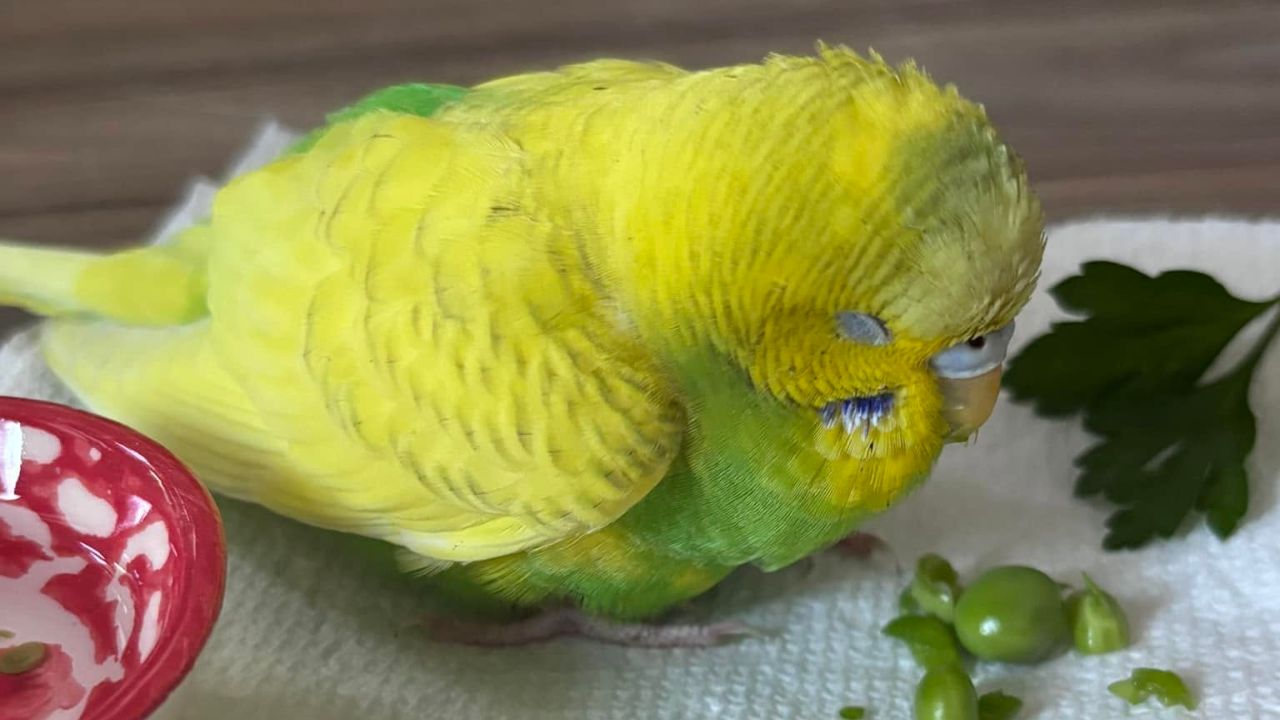

Neil has kept, bred, and sold budgerigars and cage birds at Paradise Pets Swindon since 1988 — over 35 years of first-hand experience with budgies of every age and background. “My budgie hasn’t eaten all day — is that an emergency?” is one of the calls he takes most seriously at the counter. This is his honest guide to when it is, when it is not, and how to tell the difference quickly.
A man rang the shop on a Sunday afternoon, his voice tight with worry. “Neil, I’ve not seen my budgie eat anything since this morning. He’s just sitting there. Is he going to be alright?”
I asked him three questions before I answered. How is he sitting — on a perch or on the floor? Has he been drinking? Is he fluffed up? The answers to those three questions told me almost everything I needed to know, and within two minutes I had given him a clear answer and a clear instruction.
That phone call happens at this shop more than almost any other kind. A budgie that has not eaten is one of the most common worries owners bring to me — and it is also one of the situations where the right answer genuinely depends on a small number of specific details, not on guesswork or hoping for the best.
In 35 years of keeping and selling budgies, I have learned that a bird going off its food is sometimes nothing dramatic and sometimes one of the clearest emergency signals a small bird can give you. The skill is not panicking automatically and it is not dismissing it automatically either. It is asking the right questions, quickly, and acting on the answers.
This article is my honest attempt to give you that same framework — the questions I ask at the counter, the answers that tell you to wait and watch, and the answers that tell you to act right now.
Why A Budgie Not Eating Is Different From A Dog Or Cat Not Eating
Before I go through the framework, I want to explain why this situation deserves more urgency in a budgie than the equivalent situation would in a larger pet — because understanding the biology changes how seriously you take the clock.
A budgie has an extremely high metabolic rate relative to its body size. Small birds burn through their energy reserves far faster than larger animals do, which means the time a budgie can go without food before facing serious physiological consequences is short — measured in hours rather than days. A healthy adult budgie that stops eating entirely can begin to experience dangerously low blood sugar and the early stages of starvation-related organ stress within as little as 12 to 24 hours, depending on the individual bird, its size, and its existing health status.
This is fundamentally different from a dog or cat, which can typically go a day or two without food with relatively little immediate risk, particularly if otherwise healthy. The size and metabolism of a budgie remove that buffer almost entirely.
The second reason this matters is that birds hide illness exceptionally well. A budgie that has stopped eating because it is unwell will often continue to look reasonably normal for a period before showing obvious signs of distress — which means the moment you notice reduced or absent eating is often later in the underlying problem than you would like, not earlier. There is less time to spare than the bird’s outward calm might suggest.
Put these two things together — a fast metabolic clock and a tendency to mask illness until it is well established — and you have a situation where “wait and see for a day or two” is not a safe default. The framework below exists because waiting is sometimes the right answer and sometimes a genuinely dangerous one, and the difference depends on specifics you can check quickly.
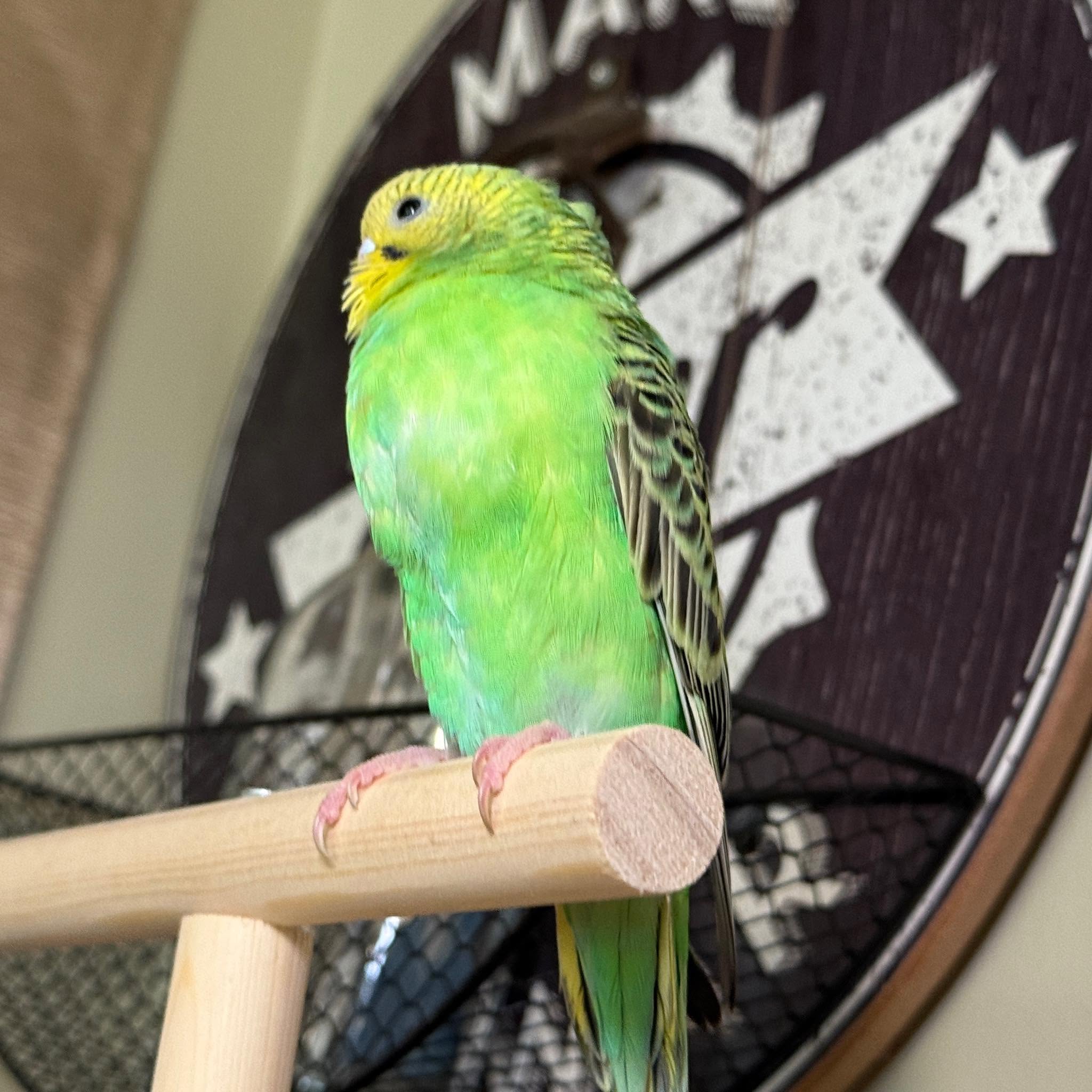
The Three Questions I Ask First — Always
When an owner calls or comes in worried about a budgie not eating, these are the first three things I ask, because the answers immediately narrow down how seriously to take the situation.
- Is the bird sitting on a perch normally, or on the cage floor? A budgie perched normally, even if not actively eating, is in a meaningfully different situation from one sitting on the cage floor. A bird on the floor that is not usually there is too weak or unwell to perch, and this alone elevates the urgency significantly.
- Is the bird drinking water? A bird that is still drinking normally, even if it has gone off food, is in a different category from one that has stopped both eating and drinking. The combination of no food and no water is far more urgent than reduced eating alone, because dehydration accelerates the physiological decline much faster than reduced calorie intake on its own.
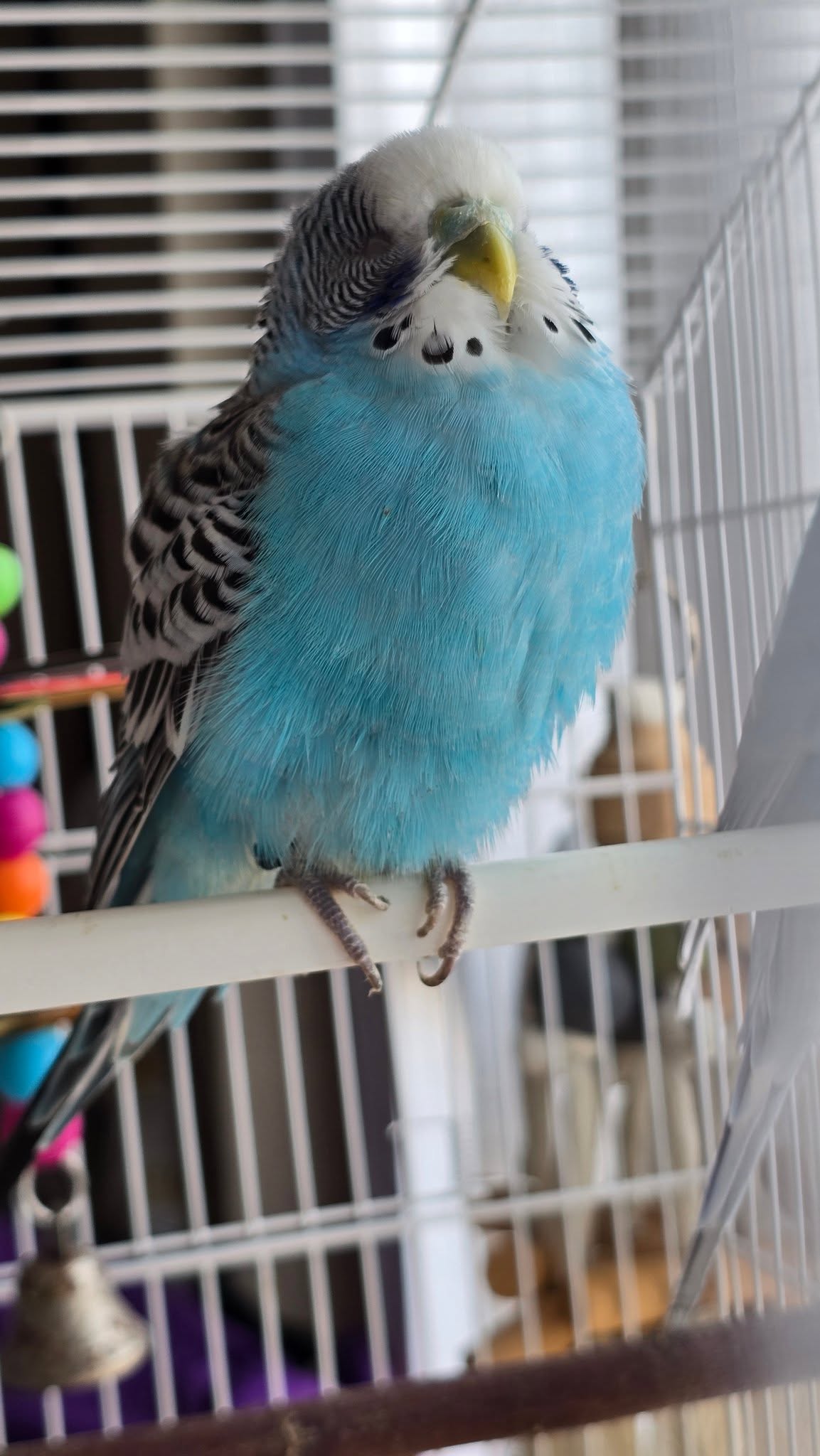
- Is the bird fluffed up, or sitting with normal sleek feathers? A budgie with feathers held normally close to the body that is simply not eating is different from a budgie that is visibly fluffed, which is a sign the bird is unwell and trying to conserve body heat. Fluffing combined with reduced eating is a more serious combination than reduced eating alone.
These three questions take under a minute to answer and they tell you an enormous amount. A budgie perched normally, drinking, with sleek feathers, that simply has not been seen eating today is a very different situation from a budgie on the cage floor, not drinking, fluffed up. Both are described by the same opening sentence — “my budgie hasn’t eaten” — and they require completely different responses.
When Not Eating Is Probably Not An Emergency — But Still Needs Watching
There are situations where a budgie genuinely eating less, or appearing to eat less, does not represent an immediate crisis. I want to be honest about these because not every reduction in eating means the worst, and unnecessary panic does not help anyone.
You Have Not Actually Seen It Eat, But It Has Been Eating
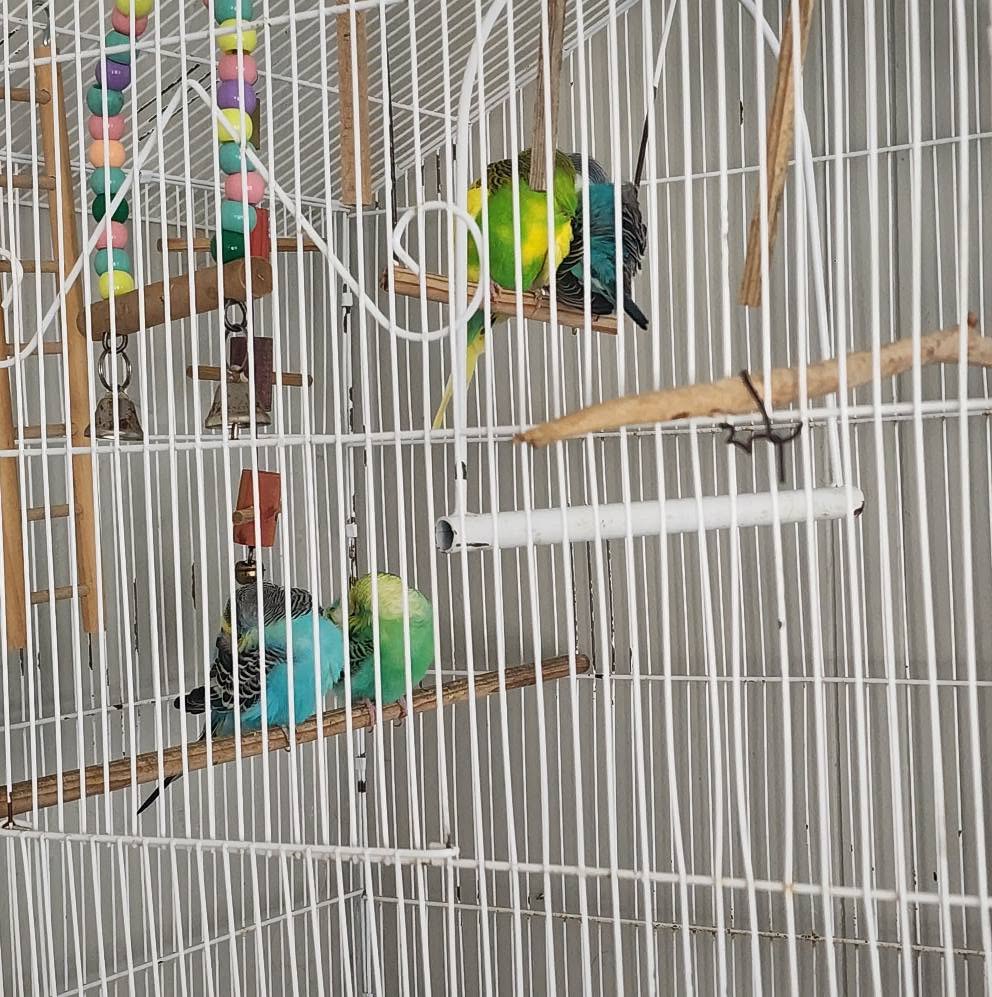
The single most common false alarm I encounter is an owner who has not personally witnessed their budgie eating today, and has concluded from that absence of direct observation that the bird has not eaten at all. Budgies often eat in short bursts throughout the day, sometimes when the owner is not in the room, and the seed level in a dish can drop without anyone seeing the moment it happened. Check the food bowl carefully against what you would expect a normal day’s consumption to look like, and check the cage floor and tray for husks and scattered seed — these are signs of eating activity even if you did not witness the act itself.
A Recent Change In Food Or Position
A budgie that has just had its food changed to a new brand or mix, or whose cage has recently been moved or rearranged, may eat less for a day or two simply through caution around the unfamiliar. This is worth monitoring closely but is not automatically an emergency if the bird is otherwise bright, perched normally, and drinking. If reduced eating persists beyond a day or two, treat it more seriously regardless of the recent change.
The Start Of A Moult
Birds in heavy moult sometimes show a temporary reduction in appetite or a shift in feeding pattern as energy is redirected toward feather production. This should be a modest reduction, not a complete absence of eating, and should be accompanied by other signs of moult — visible pin feathers, some feather drop, increased preening. A bird in moult that has stopped eating entirely is not simply moulting; something else is also going on.
Hot Weather
On very hot days, budgies sometimes reduce their food intake slightly while increasing water consumption, similar to the pattern seen in many animals during heat. This should be a modest shift, not a complete cessation of eating, and should resolve as temperatures normalise. If your bird has stopped eating entirely during a heatwave, this is more likely to be heat stress than a benign appetite change, and the heat stress signs I have written about elsewhere — wings held away from the body, open beak breathing, lethargy — should be checked for specifically.
In all of these situations, the instruction is the same: watch closely, check food and water levels regularly through the day, and if the reduced eating persists beyond 24 hours or is accompanied by any of the more serious signs I describe below, move to treating it as urgent.
When It Is A Genuine UK Emergency — Act Today, Not Tomorrow
This is the section that matters most. These are the situations and combinations of signs that mean you need to see an avian vet today — not after monitoring overnight, not after waiting to see if things improve.
- Not eating combined with sitting on the cage floor — a bird too weak or unwell to perch normally is a bird in significant distress. This combination alone is sufficient reason to seek same-day veterinary care
- Not eating and not drinking — the combination of no food and no water accelerates decline far faster than either alone. This is urgent regardless of any other signs present
- Not eating combined with fluffed feathers and lethargy — a bird that is visibly unwell in addition to not eating is showing you a clear and serious picture. Do not wait
- Not eating for more than 24 hours, even with no other obvious signs — given the speed at which a budgie’s condition can deteriorate without food, a full day with no observed eating is itself a threshold that warrants veterinary assessment, even if the bird otherwise appears outwardly normal
- Vomiting or regurgitation alongside reduced eating — this points to a digestive problem that needs proper diagnosis, not time to resolve on its own
- Visible weight loss or a noticeably thin keel bone — if you can feel the breastbone prominently when you would not normally, the bird has already lost significant condition and needs assessment urgently
- Difficulty breathing alongside reduced eating — open beak breathing, tail bobbing, or clicking sounds combined with not eating point to a respiratory problem that is affecting the bird’s overall condition. This is urgent
- Sudden onset in a previously completely healthy bird with no obvious cause — a bird that was eating completely normally yesterday and has stopped entirely today, with no identifiable trigger such as a diet change or house move, deserves prompt investigation precisely because there is no benign explanation visible
- Any neurological signs — loss of balance, head tilt, falling from the perch, alongside reduced eating, is an emergency requiring immediate veterinary attention
- The bird is elderly or has a known existing health condition — an older budgie or one with a history of illness has less physiological reserve, and reduced eating in this group should be treated with extra urgency even if the signs alone would otherwise seem moderate
I want to be direct about the 24-hour threshold specifically, because it is the one owners most often push against. I understand the instinct to wait and see — nobody wants to rush to an emergency vet unnecessarily, and the cost and inconvenience of a same-day appointment are real considerations. But in a bird this small, with a metabolic rate this fast, a full day with no observed eating is already at the edge of what is safe to monitor without professional input. Waiting a second day to see if things improve is, in my honest assessment after 35 years, waiting too long in the majority of cases.
What Causes A Budgie To Stop Eating — The Underlying Possibilities
Understanding what might be causing the problem helps you describe the situation clearly to a vet and gives you a sense of what to expect.
Respiratory infections are one of the most common causes of reduced appetite in budgies, particularly when accompanied by any breathing changes. The bird feels unwell generally and eating is one of the first behaviours to be affected.
Digestive problems, including crop infections, impactions, or gastrointestinal disease, directly affect a bird’s ability or willingness to eat, and are often accompanied by changes in droppings or regurgitation.
Egg binding in female budgies — a condition where an egg becomes stuck in the reproductive tract — causes significant distress and is commonly accompanied by reduced appetite, lethargy, and a hunched or strained posture. This is a genuine emergency requiring prompt veterinary intervention.
Liver disease, which is relatively common in budgies, particularly those on poor diets or who are overweight, can present with reduced appetite alongside other signs such as overgrown beak or changes in droppings.
Heavy metal poisoning, from sources such as chewing on certain metal cage parts, toys, or curtain weights, can cause sudden loss of appetite alongside neurological signs and is a genuine emergency.
Tumours and other internal masses, more common in older budgies, can cause reduced appetite as one of the presenting signs, often alongside other gradual changes in condition or behaviour.
Stress from an environmental change, a new bird introduced to the household, a frightening incident, or a change in routine, can suppress appetite temporarily — though this should be a modest and short-lived effect rather than a complete and prolonged cessation of eating.
I list these not so that you can diagnose your own bird at home — that is exactly what I would not want you to attempt — but so that you understand why a vet visit matters. The range of possible causes is wide, several of them are serious, and the only way to know which one applies to your bird is a proper examination.
What To Do While You Are Getting To The Vet
If you have identified that your situation falls into the emergency category and you are arranging veterinary care, there are some sensible steps to take in the meantime.
Keep the bird warm. A budgie that is unwell loses the ability to regulate its own body temperature as effectively, and supplementary warmth — a heat lamp at a safe distance, or simply keeping the room comfortably warm rather than cool — can help stabilise the bird while you arrange transport to the vet.
Minimise handling and stress. Move the bird as little as possible, and when you do need to transport it, use a small, secure, dark carrier that limits unnecessary stimulation.
Offer easily accessible food and water at a height the bird can reach without significant effort, in case it attempts to eat or drink during the journey, but do not force feed or force water on a bird without veterinary guidance, as this carries its own risks if done incorrectly.
Bring information with you. Note when you last saw the bird eat normally, what changes if any have occurred recently in diet or environment, and any other signs you have observed. This information will help the vet reach a diagnosis more quickly.
Quick Reference — Budgie Not Eating At A Glance
| Situation | Likely Severity | Action |
|---|---|---|
| Have not witnessed eating, but bird is perched, bright, drinking | ✅ Probably fine | Check food/dropping evidence, monitor through the day |
| Recent food or cage change, otherwise normal | ✅ Likely temporary | Monitor 24 hours, vet if it persists |
| In moult, slight appetite reduction | ✅ Usually normal | Monitor — should be modest, not total absence |
| Not eating, bird on cage floor | 🔴 Emergency | Avian vet today |
| Not eating and not drinking | 🔴 Emergency | Avian vet today |
| Not eating, fluffed and lethargic | 🔴 Emergency | Avian vet today |
| No eating observed for over 24 hours, no other signs | 🔴 Treat as urgent | Avian vet today, do not wait further |
| Not eating plus breathing difficulty | 🔴 Emergency | Avian vet immediately |
| Not eating with neurological signs | 🔴 Emergency | Avian vet immediately |
Frequently Asked Questions
How long can a budgie safely go without eating?
A healthy adult budgie can typically tolerate around 12 to 24 hours without food before facing significant physiological stress, though this varies by individual bird, size, and existing health status. This is considerably shorter than the timeframe for larger pets due to the budgie’s high metabolic rate. A full 24 hours with no observed eating should be treated as a threshold for seeking veterinary assessment, even in the absence of other obvious symptoms.
My budgie is eating a little but much less than usual — is that urgent?
A modest reduction in eating is less immediately concerning than a complete absence of eating, but it should not be ignored. Monitor the bird closely for other signs — fluffed feathers, lethargy, sitting low, changes in droppings — and if the reduced eating continues beyond a day or two without improvement, or if any other signs appear, seek veterinary advice. Partial reduction is a yellow flag rather than a red one, but it deserves attention rather than dismissal.
Can stress alone cause a budgie to stop eating completely?
Significant stress — such as a frightening incident, a major environmental disruption, or the loss of a companion bird — can suppress appetite, sometimes considerably. However, stress-related appetite loss should generally improve within a day as the bird settles, and the bird should not show the more severe signs such as sitting on the cage floor or fluffing persistently. If stress seems the most likely explanation but the bird has gone a full day without eating, treat it with the same urgency as any other cause, because the physiological risk to the bird is the same regardless of the underlying trigger.
Should I try to hand feed my budgie if it has stopped eating?
Not without veterinary guidance. Hand feeding or force feeding a bird that is unwell carries genuine risks if done incorrectly, including aspiration. If your budgie has stopped eating and you are concerned, the right step is veterinary assessment, not home intervention with feeding. A vet can advise on or directly provide appropriate supportive feeding if it is needed and can do so safely.
My budgie has not eaten since I introduced a new bird to the cage — what should I do?
Social stress from a new bird introduction can genuinely suppress appetite, and this is a situation worth monitoring closely. Ensure the existing bird has secure access to its own food source without being driven away by the newcomer, and watch for any signs of bullying or conflict. If the appetite loss persists beyond a day, or if you see other signs of distress, treat it with the same urgency as any other cause of not eating — the underlying cause matters less than the physiological risk of prolonged non-eating in a small bird.
Where can I get honest bird advice in Swindon?
Come and see us at Paradise Pets, Manor Garden Centre, Cheney Manor, Swindon SN2 2QJ. Or give us a ring on 01793 512400. If your bird is showing any of the emergency signs, call an avian vet first — but we are here to help you assess the situation and we will always tell you honestly when a vet visit cannot wait.
One Last Thing From Me
The man who called on a Sunday — his budgie was perched normally, drinking, with sleek feathers, and had simply not been observed eating that particular morning before the worry set in. I told him to check the cage tray for husks, watch over the next hour, and call me back. He called back within the hour to say the budgie had eaten while he was watching, and that the whole panic had been over nothing.
That outcome is the one I hope for every time this question comes up. But I have had the other version of this call too — the one where the answers to my three questions told me, clearly, that this was not a wait-and-see situation, and where the owner who acted that same day gave their bird the best possible chance.
The difference between those two outcomes is not luck. It is knowing which questions to ask and being honest with yourself about the answers. A budgie perched normally, drinking, with sleek feathers, who simply was not seen eating, is a different situation from a budgie on the cage floor, not drinking, fluffed up. Both situations start with the same sentence. They do not end with the same response.
If you are ever in doubt, the safest assumption with an animal this small and this good at hiding illness is to act sooner rather than later. Being wrong and feeling relieved costs you a vet consultation fee. Being wrong in the other direction costs you something you cannot get back.
Worried About Your Budgie Not Eating? Come And Talk It Through Or Ring Us
Tell us what you are seeing and we will help you work through it honestly — including telling you clearly when this needs to be a same-day vet visit. Free advice, no obligation. That is what we have been doing for 35 years.