


Neil has kept, bred, and sold rabbits at Paradise Pets Swindon since 1988 — over 35 years of first-hand experience with these animals. Foot thumping is one of the most universal rabbit behaviours, and also one of the most consistently misunderstood. This is his honest guide to why it happens and what it means.
A young lad came in last year with his mum, both of them a bit rattled. Their new rabbit had thumped its back foot against the floor of the hutch the night before — loud enough that they had heard it from the next room. They had got up, gone to check, found the rabbit sitting normally, and gone back to bed none the wiser about what had happened or whether something was wrong.
I asked them what time it was. Late evening, they said, around the time they usually let the dog out into the garden. The hutch was near the back door.
I told them their rabbit had almost certainly heard or seen the dog go past, decided this was worth telling the rest of the household about, and thumped its foot to do exactly that. It was not hurt, not having some kind of episode, and not unwell. It was doing one of the most fundamentally rabbit things a rabbit can do.
They came back a few weeks later and told me the thumping had become a regular evening occurrence, always around the same time the dog went out, and they had stopped worrying about it entirely. That is usually how this conversation ends, once people understand what the behaviour actually is.
Why Rabbits Thump — The Real Reason
Wild rabbits live in warrens, often in groups, and they are prey animals with very few natural defences beyond speed and vigilance. When one rabbit in a group spots something that might be a threat — a predator, an unfamiliar sound, sudden movement — it needs a fast way to alert every other rabbit in the warren, including those underground who cannot see what is happening.
The thump is that alarm system. A rabbit drives its powerful hind legs against the ground hard enough to produce a loud thud, which travels through the ground and through the air to every rabbit nearby. It is instantaneous, requires no learning, and is hardwired into the species. A domestic rabbit kept as a single pet in a hutch still has this instinct fully intact, even though there is no warren of other rabbits to warn.
This is the single most important thing to understand: thumping is communication, not an accident, not pain, and not random. Your rabbit is telling you — or anyone else who might be listening — that it has noticed something it considers worth flagging.
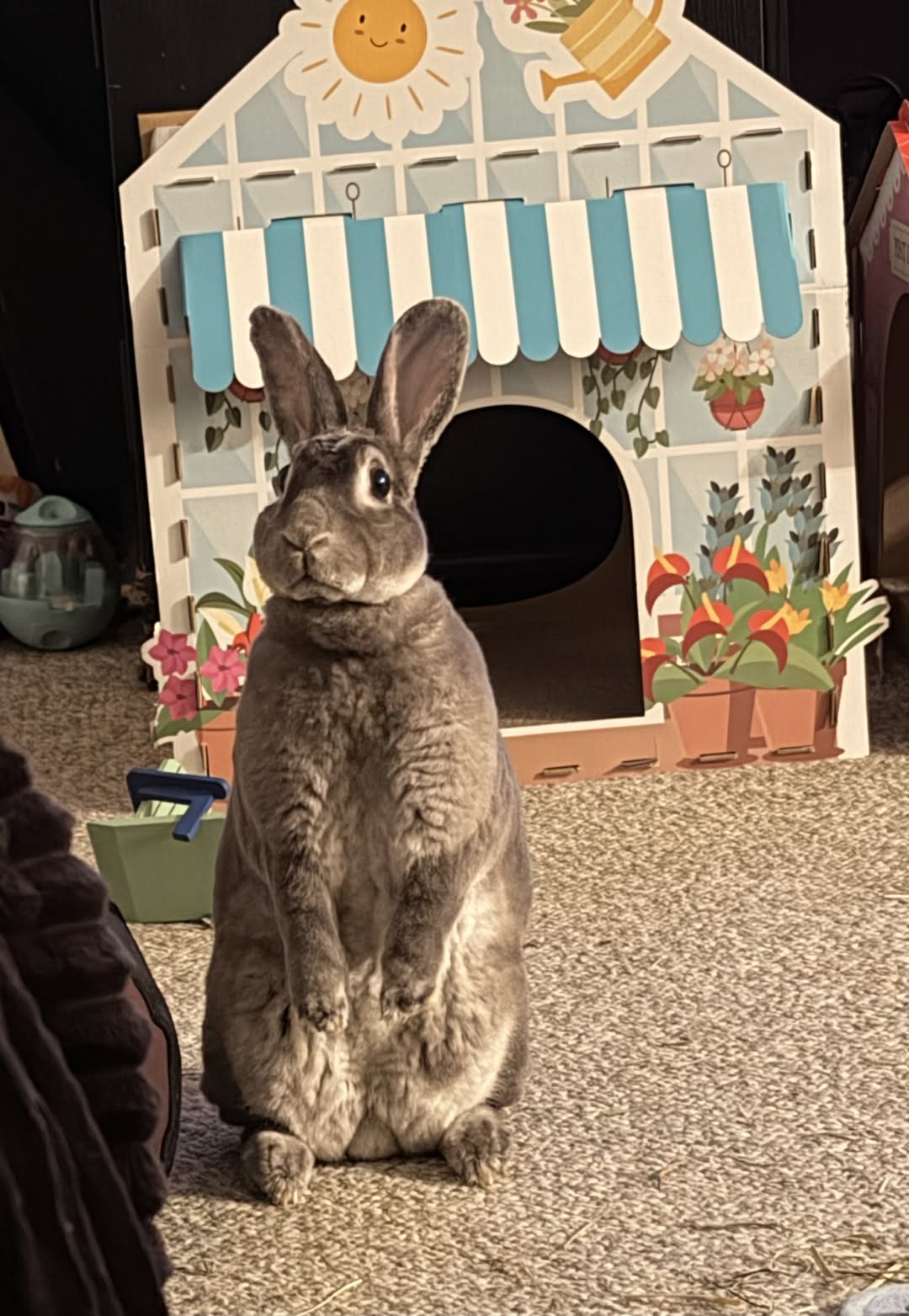
The Things That Actually Trigger A Thump
Once you know what to look for, the trigger is usually identifiable, even if it is not always obvious at first.
A Perceived Predator
This is the classic trigger, and in a domestic setting it usually means something that resembles a predator to a rabbit’s instincts rather than an actual threat. A cat walking past the garden, a dog moving suddenly, a bird of prey overhead, even an unfamiliar person approaching can all set it off. The rabbit does not need to be in genuine danger — it only needs to perceive something as potentially dangerous.
A Sudden Or Unfamiliar Noise
Fireworks, a car backfiring, a door slamming, thunder — any sudden loud or unfamiliar sound can trigger a thump, particularly in a rabbit that has not been gradually accustomed to that specific noise. This is one of the most common causes of an isolated, one-off thump that does not repeat.
A Change In The Environment
Rabbits are highly attentive to their surroundings, and something as simple as a new object near the hutch, a piece of furniture moved, or an unfamiliar smell can be enough to prompt a wary, watchful thump while the rabbit assesses the change.
Frustration Or Displeasure
This is a slightly different category from the alarm thump, though it can look similar. Some rabbits will thump when they are annoyed — being put back in a hutch after free-range time, having a routine disrupted, or simply not getting their own way about something. This thump is often a single, more deliberate-feeling thud rather than the rapid, urgent quality of a genuine alarm response, though the distinction is not always crisp and comes with knowing your individual rabbit.
Mimicking Other Rabbits
In a household with more than one rabbit, a thump from one will often prompt a thump from another nearby, even if the second rabbit has not independently noticed anything. This is the warren-alert system working exactly as it would in the wild — one animal’s warning is taken seriously by the rest of the group.

What Usually Happens After A Thump
Watching what the rabbit does immediately after thumping tells you a great deal about how seriously it is taking whatever triggered the behaviour.
A rabbit that thumps once and then resumes normal behaviour — eating, grooming, moving around calmly — has registered something, flagged it, and decided it was not a major concern. This is the most common pattern and nothing to worry about.
A rabbit that thumps and then freezes, ears up, very still and alert, watching intently in one direction, is taking the perceived threat more seriously and is in a heightened state of vigilance. This usually settles within a few minutes once the rabbit satisfies itself that nothing further is happening.
A rabbit that thumps repeatedly and then bolts to hide is genuinely frightened, and whatever triggered it should be identified and, where possible, addressed or removed from the environment if it is going to be a recurring source of stress.

Is Thumping Ever A Sign Of Pain Or Illness?
Generally, no — thumping itself is a behavioural, instinctive response rather than a symptom of pain. But context matters, and it is worth being aware of the distinction.
A rabbit that is genuinely unwell is far more likely to become quiet, withdrawn, and inactive than to engage in an energetic alarm behaviour like thumping. Thumping requires a healthy, alert rabbit reacting to its environment — it is not typically something a lethargic or unwell rabbit does.
Where it is worth paying closer attention is if thumping becomes notably more frequent alongside other changes — reduced appetite, hiding more than usual, changes in droppings, or reluctance to move normally. In that combination, the thumping itself is probably incidental, but the overall pattern of change deserves a vet visit to rule out an underlying health issue.

Should You Try To Stop Your Rabbit Thumping?
I get asked this fairly often, usually by owners whose rabbit’s hutch is positioned somewhere the noise disturbs the household at night. The honest answer is that you should not try to eliminate the behaviour itself — it is a fundamental, healthy instinct, and suppressing it is neither realistic nor desirable. What you can reasonably do is manage the environment to reduce unnecessary triggers.
Identify The Recurring Trigger
If your rabbit thumps at a consistent time or in response to a consistent event — a neighbour’s cat, a regular evening noise, the dog going out — you have something specific to work with. Sometimes simply knowing the cause is enough to stop the thumping from being concerning, even if it does not reduce how often it happens.
Consider The Hutch Location
If a rabbit’s enclosure is positioned somewhere with constant visual or auditory exposure to potential triggers — directly facing a road, next to a cat flap, beside a frequently used door — moving it to a calmer spot can genuinely reduce how often the rabbit feels the need to sound the alarm.
Allow Gradual Habituation
Rabbits do habituate to noises and sights that occur repeatedly without consequence. A rabbit that thumps every time it hears a particular regular household sound will often, over weeks, stop reacting to it once it has learned through repetition that the sound never precedes anything genuinely threatening.

What A Thump Sounds And Looks Like, So You Know What You Are Dealing With
For anyone who has not yet experienced this and wants to know what to expect: a rabbit thump is produced by both hind feet, or sometimes one, striking the ground forcefully. It is loud — genuinely startling the first time you hear it, often far louder than people expect from such a small animal. It is usually a single thud, though a particularly alarmed rabbit may repeat it several times in quick succession.
Visually, the rabbit will typically be standing with all four feet on the ground just before the thump, ears oriented toward whatever has caught its attention, and the thump itself is a quick, forceful stamping motion of the back legs. Immediately after, most rabbits freeze briefly in an alert posture before either relaxing or continuing to watch.
Frequently Asked Questions
My rabbit thumps every night at roughly the same time — is that normal?
Very normal, and usually means there is a consistent trigger occurring at that time — a neighbour’s cat doing its rounds, a regular noise outside, household activity the rabbit has come to associate with something worth flagging. Once you identify the pattern, it generally stops being concerning.
Does thumping mean my rabbit is scared of me?
Not typically, unless the thump occurs specifically and consistently around your approach or handling, in which case it is worth reviewing how you interact with the rabbit. Most thumping is directed at external stimuli — other animals, noises, environmental changes — rather than at the owner.
Why does my rabbit thump and then run away rather than just thumping once?
This pattern suggests the rabbit perceives a more significant threat and is both alerting others and removing itself from the perceived danger. It is a stronger version of the same instinct, and usually settles once the rabbit reaches a hiding spot and confirms it is safe.
Can two rabbits in the same hutch set each other off thumping?
Yes, this is common and entirely normal. One rabbit’s thump is taken as a genuine warning by companion rabbits, who will often thump in response even without independently noticing a trigger themselves. It is the alarm system working as it is designed to.
Is it bad for rabbits to thump a lot — does it hurt them?
No, a healthy rabbit’s hind legs and feet are well suited to this behaviour and it does not cause injury under normal circumstances. The concern is not the physical act itself but rather a pattern of frequent thumping suggesting ongoing stress, which is worth addressing for the rabbit’s overall wellbeing rather than because the thumping itself is harmful.
Should I comfort my rabbit after it thumps?
If your rabbit is genuinely alarmed and seeks reassurance, calm, quiet presence nearby can help, though many rabbits prefer to assess the situation on their own terms without being picked up or handled while alert. Let the rabbit’s own behaviour guide you — if it approaches you, gentle reassurance is fine; if it is hiding or keeping its distance, give it space to settle.
One Last Thing From Me
The lad and his mum who came in worried about that late-night thud left with a completely different relationship to the sound. It went from being a mystery that woke them up wondering if something was wrong, to being a small, slightly funny piece of evidence that their rabbit was alert, healthy, and doing exactly what rabbits have done for thousands of generations.
That is usually all this particular concern needs — context. The thump itself was never the problem. Not understanding it was.
If you want to talk through your own rabbit’s behaviour, or anything else about keeping rabbits well, come and find us at Manor Garden Centre, Cheney Manor, Swindon SN2 2QJ. Get in touch here or call 01793 512400.
Got Questions About Your Rabbit’s Behaviour? Come And Talk To Us
We stock rabbits and everything you need to keep them happy and well. If something about your rabbit’s behaviour has you wondering, come in and talk to us — we have been answering questions like this for 35 years.
⭐ Customer Reviews
Amazing Bird Selection
Had a lovley visit today,staff were very friendly and very helpful,such a great petshop,their selection of birds is incredible,really impressed,thank so much to the staff at Paradise Pets

Friendly Helpful Staff
I have been coming to this place for years and they have a great stock of food for all types of pets. Have a great selection of small mammals and a lot of birds. Staff are friendly and helpful.

Great Quality Hutch
Bought a guinea pigs hutch and run combo, very happy with the service, the hutch was put in my car for me without even asking for help. The wood quality is very good, the instructions easy to follow and we are extremely happy with the fully built hutch. A good size for 2 guinea pigs

Response from Paradise Pets | Wiltshire
Thank you Melanie Latus Nice to provide services to you.
Best Bird Shop Around
It’s the best pet shop in and around Swindon. They always have an amazing selection of birds and all you need to keep them happy. I keep birds myself and the guys there are happy to answer questions and really know their stuff. I have seen budgies etc. in chain pet shops in the area looking really unhealthy and ill – I wouldn’t go anywhere else than Paradise Pets for animals.

Highly Recommended Bird Shop
I could not praise this shop enough. Really helped my Grandson buy his first bird and he’s loving it. Travelled from Somerset and was welcomed with open arms.

Great Shop with Competitive Prices
Great shop with amazing selection for small animals, hamsters, mice ect, highly recommend!
Also has a great selection for dogs & cats too & very competitive prices! 💖

