
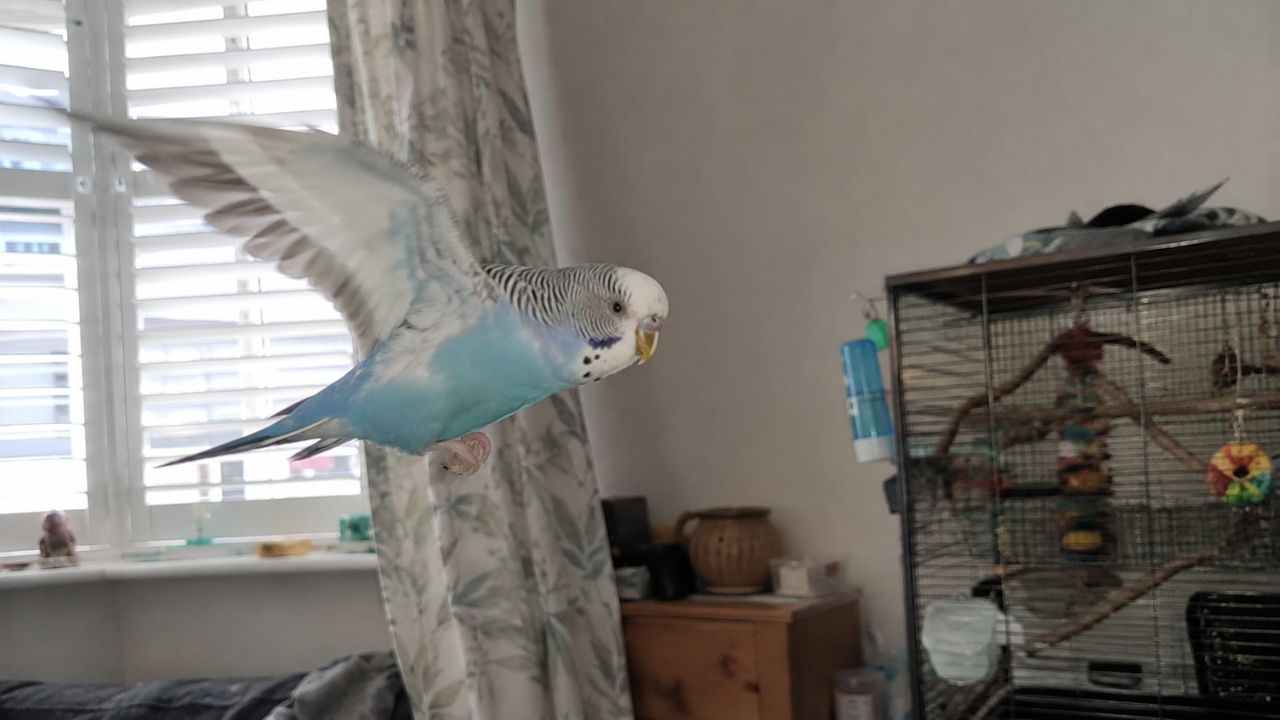

Neil has been keeping, breeding, and selling budgies at Paradise Pets Swindon since 1988 — over 35 years of daily first-hand experience with these birds and the owners who keep them. A budgie flying into objects — walls, windows, mirrors, cage bars — is a sign that most owners either dismiss as clumsiness or panic about without knowing which possibility actually applies. In most cases the cause is identifiable and the right response is clear. This is his honest guide to every reason it happens, what each one looks like, and exactly when the situation requires a vet.
A couple came into the shop one Saturday morning looking visibly shaken. Their budgie — about two years old, normally a confident flier — had crashed hard into the living room window the previous evening during out-of-cage time. It had hit the glass, dropped to the floor, sat dazed for a few minutes, and then flown back to its cage. This morning it seemed fine. Was it fine? Should they have gone to a vet last night? Was something wrong with the bird, or had it just misjudged the window?
I asked a few questions. Had the curtains been open when it happened? Yes. Was it dusk — the light outside similar to the light inside? Yes. Had the bird been out of the cage at that time of day before? Occasionally. Had it done this before? No, first time.
The most likely explanation was straightforward — a window, at dusk, with the light outside matching the light inside, is essentially invisible to a bird. It sees through the glass to what appears to be open space and flies toward it. This is one of the most common causes of window strikes in pet birds and it is not a health problem. It is an environmental one with a simple fix.
But — and this is the part that matters — that answer is only the right one when the context fits. A budgie that flies into things regularly, that seems disoriented during flight, that collides with objects in its own cage, or that strikes surfaces and shows neurological signs afterwards is telling a different story. And that story requires different action.
Understanding Budgie Vision First — Because It Changes Everything
Before I go through the causes, I want to give you a clear picture of how budgies actually see — because most owners have never thought about this and it explains several of the causes immediately.
Budgies have eyes positioned on the sides of their head rather than facing forward. This gives them an extraordinarily wide field of view — close to 340 degrees — which is enormously useful for a prey animal that needs to detect approaching threats from almost any direction. What it does not give them is strong binocular vision in the forward direction. The overlap where both eyes work together, which is what allows humans and predators to judge distance accurately, is very narrow in a budgie.
This means budgies judge distance less accurately than you might expect from an animal that flies so confidently. They are brilliant at detecting motion across a wide visual field. They are less precise at judging exactly how far away a stationary surface is — particularly a transparent one like glass, or a reflective one like a mirror, that does not register as a surface at all.
Understanding this baseline means you can immediately see why certain environments produce collisions in completely healthy birds — and why a change in flying behaviour in a bird that has always navigated its environment confidently is a meaningful signal that something has changed.
The Causes — From Benign To Urgent
I am going to go through these in order from the most common and most benign to the most serious. Read through all of them before deciding which applies to your bird — the context clues for each are what make the distinction.
Cause 1 — Window Strikes At Dusk Or In Bright Light (Benign — Environmental Fix)
This is the most common cause of single collision events in pet budgies during out-of-cage time, and it is the one that applies to the couple who came in that Saturday morning.
A window at dusk — when the light outside is similar to the light inside — is functionally invisible to a bird. The glass reflects nothing distinctive, transmits light from outside, and gives the bird no visual information that tells it a surface is there. It sees what appears to be open space and flies toward it. The same thing happens in bright daylight when a window is very clean and well-lit — the glass disappears visually and the garden beyond it looks like accessible space.
- When it happens — during out-of-cage time; most commonly at dusk or when the window is brightly back-lit; occasionally in full daylight with very clean glass
- What it looks like — a single, hard strike; the bird drops, sits dazed for a short period, then recovers and flies normally; no repeated collisions; the bird navigates its familiar cage environment without difficulty
- What to do immediately after — place the bird gently in a quiet, dim space; do not handle it more than necessary; allow it to recover; monitor closely for the next hour for any neurological signs — loss of balance, head tilt, inability to perch
- The environmental fix — net curtains, window decals, or frosted film breaks up the visual transparency of glass and gives birds the visual information they need to recognise it as a surface; closing curtains before out-of-cage time at dusk eliminates the problem entirely
- When to see a vet despite apparent recovery — if the bird hit the glass with significant force; if it was unconscious even briefly; if it shows any sign of asymmetry in its movement, head tilt, or balance problems in the hours after; a bird that had a hard strike and seemed fine and then deteriorated several hours later needs same-day vet attention
Cause 2 — Mirror Confusion (Benign — Environmental Fix)
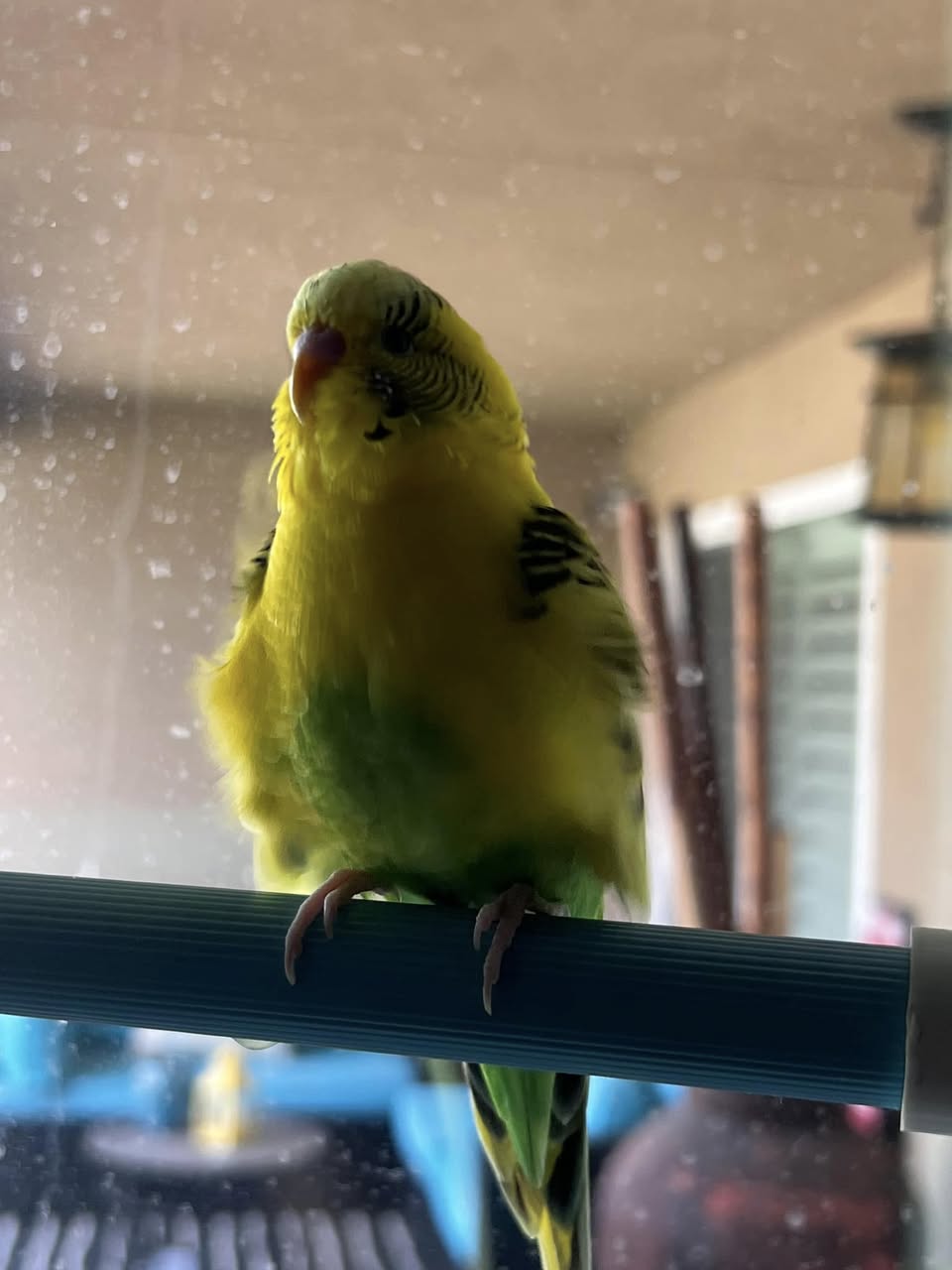
A mirror creates the same problem as a glass window but in a different way. Where a window appears to be open space, a mirror appears to be a continuation of the room — the bird sees what looks like more space behind the reflective surface and can fly toward it with significant force.
- When it happens — during out-of-cage time in a room with large mirrors; wall mirrors, mirrored wardrobes, and mirrored furniture are all potential hazards for free-flying birds
- What to do — cover large mirrors during out-of-cage time; the bird does not need to access every surface in the room; a covered mirror during the 30 to 60 minutes the bird is out costs nothing and eliminates the risk
- Note on cage mirrors — a small mirror inside the cage rarely produces collision injuries because the bird approaches it slowly during social behaviour rather than at flight speed; the hazard is full-speed flight toward a large mirror in an open room
Cause 3 — Night Frights (Benign But Needs Management)
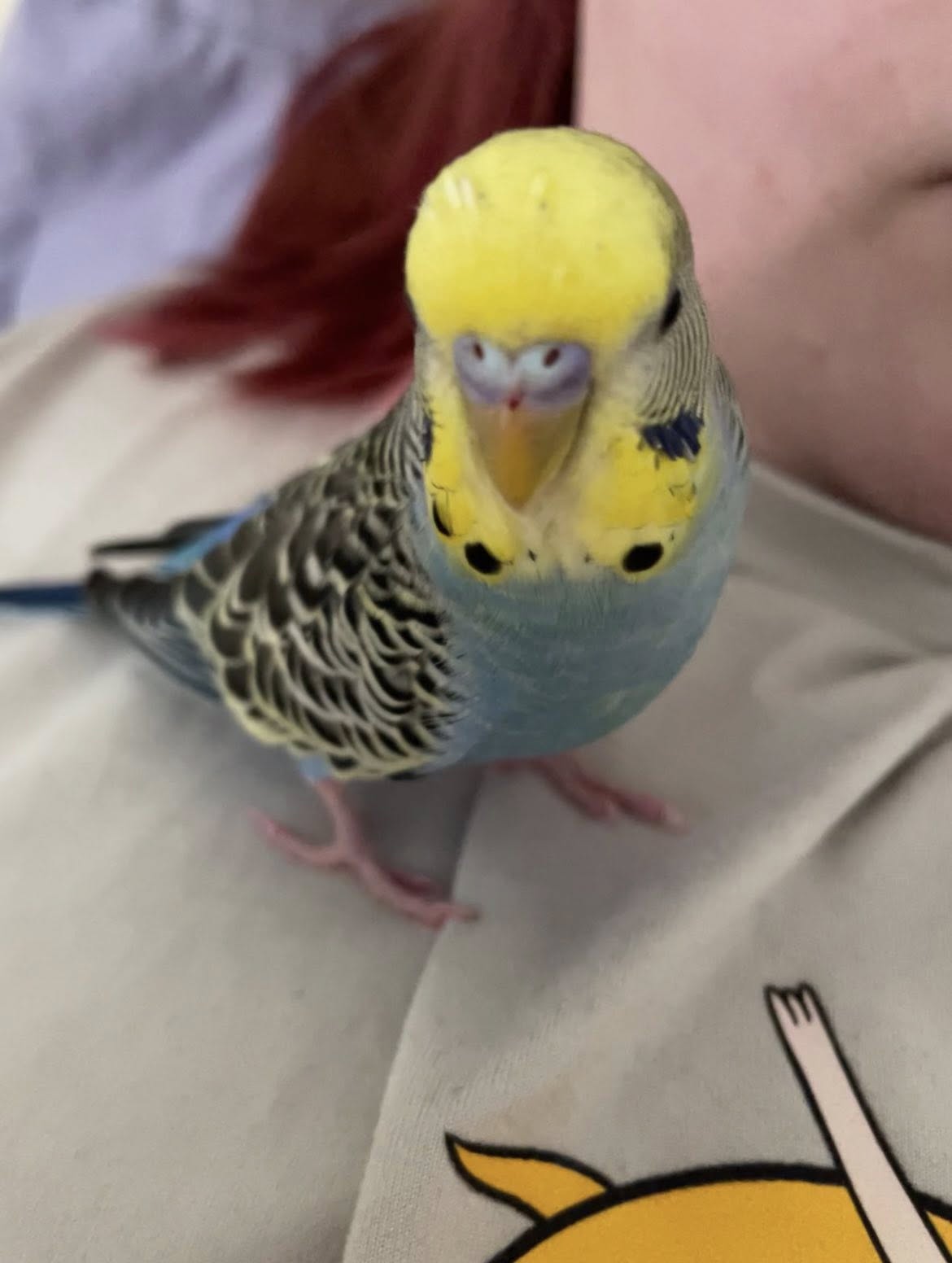
Night frights are one of the most common and least understood causes of cage collisions in pet budgies. A night fright is exactly what it sounds like — the bird is startled awake in darkness by a sound, a movement, or a shadow, panics, and flies blindly around the cage, colliding with bars, perches, toys, and the cage walls before it settles.
The noise that triggers a night fright does not need to be dramatic. A car passing outside with its headlights sweeping across a wall. A cat moving in the room. A sound from a neighbouring property. A gust of wind against the window. Something that would barely register during the day becomes alarming when a bird is woken from sleep in complete darkness with no visual information about its environment.
- What it sounds like — sudden violent flapping and crashing sounds from the cage at night; can be genuinely alarming to hear in a quiet house
- What you will find — a bird clinging to the side of the cage, or on the cage floor, breathing hard; possibly with slightly ruffled feathers; recovers within a few minutes in most cases
- What to do immediately — turn on a dim light — not a bright overhead light, just enough for the bird to see its environment; speak quietly and calmly; allow the bird to settle on its own; do not open the cage unless the bird is clearly injured
- How to reduce night frights — a small nightlight near the cage gives the bird enough visual information to orient itself if woken; covering the cage on three sides rather than completely allows air circulation while reducing the chance of alarming shadows; consistent evening routine — same cover time, same quiet period before lights out — reduces the likelihood of a sound-startled waking
- When to be concerned — if night frights are happening multiple times per week; if the bird is injuring itself during them — blood on the cage or on the bird — or if the bird shows signs of ongoing distress after recovering from the initial fright
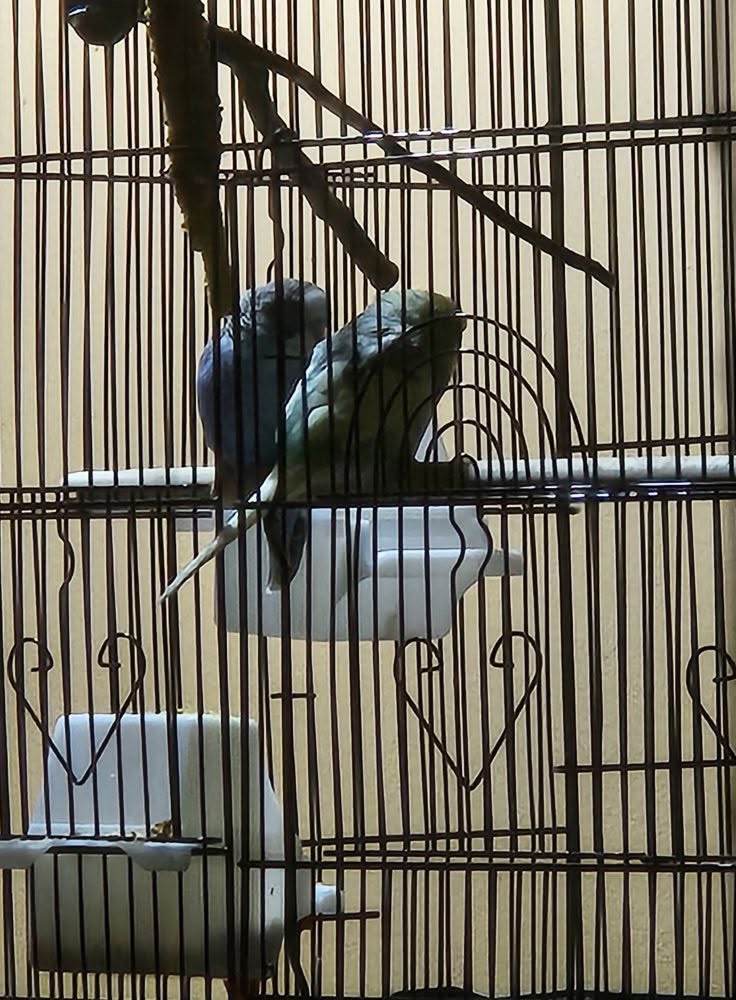
Cause 4 — A New Or Rearranged Environment (Benign — Temporary)
A budgie that has spent months navigating its cage and its regular out-of-cage room has developed a precise spatial map of that environment. It knows exactly where the perches are, where the food is, where the window is, and how much space there is to fly in which direction. When something changes — a new piece of furniture, a cage moved to a different position, a different room for out-of-cage time, a new object introduced to the cage — that spatial map is temporarily inaccurate, and collisions can result while the bird updates it.
- What it looks like — collisions happen in the period immediately after a change; the bird misjudges distances or collides with new objects that were not in its previous spatial model; the collisions reduce and stop as the bird learns the new layout
- What to do — introduce environmental changes gradually where possible; allow the bird time in a new space before letting it fly freely; monitor closely in the first few days after any significant rearrangement
- When to be concerned — if the bird continues to collide with familiar objects in an unchanged environment; a bird that has been flying confidently in the same space for months and begins misjudging familiar objects is not adapting to change — it is showing a change in its own capacity to navigate
Cause 5 — Vision Problems (Medical — Vet Required)
This is where the conversation moves from environmental management to health concern. A budgie with deteriorating or impaired vision will show it in its flight — misjudging distances, flying tentatively, bumping into familiar objects in its own cage, hesitating before landing on perches it has used a hundred times.
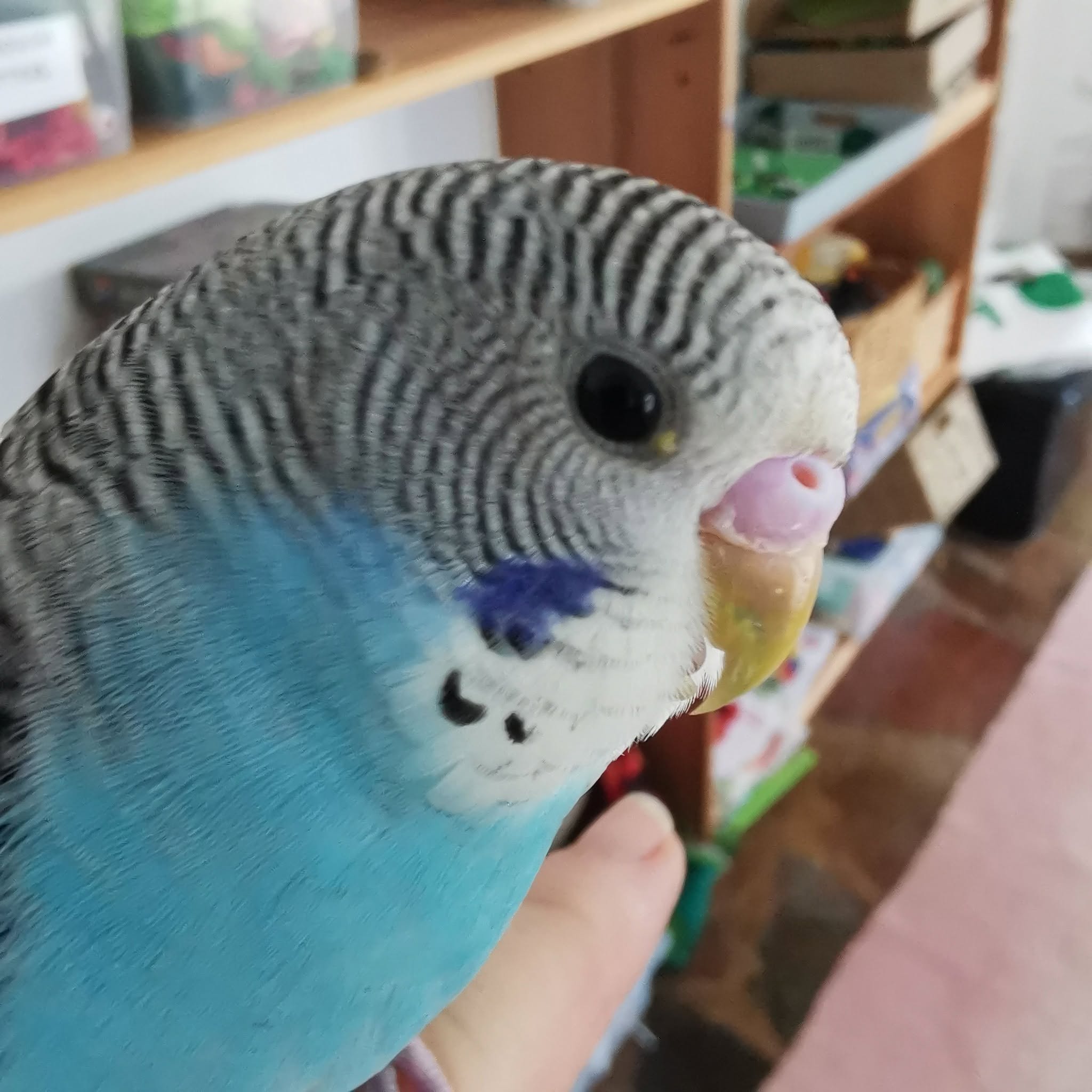 Vision problems in budgies can result from several causes:
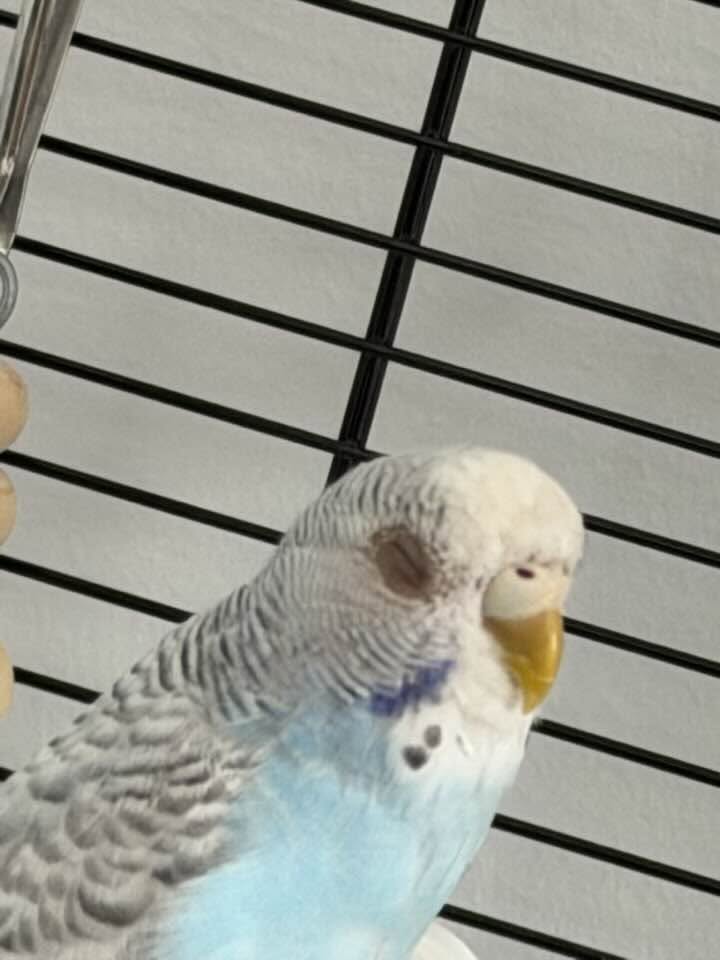
- Cataracts — more common in older budgies; the lens of the eye becomes progressively opaque; you may be able to see a cloudy or bluish appearance to one or both eyes; the bird begins to struggle in lower light conditions before showing obvious daytime impairment
- Eye infection or injury — a swollen, discharge-producing, or partially closed eye alongside collision behaviour is a combination that needs same-day vet attention; infection can progress rapidly in a small bird
- Tumours pressing on the optic pathways — unfortunately common in budgies; a tumour in certain positions can affect vision without being visible externally; progressive worsening of flight accuracy alongside other subtle changes in behaviour is a pattern worth investigating
- Nutritional deficiency affecting the eyes — specifically Vitamin A deficiency, which is common in birds on seed-only diets and which can cause progressive damage to mucous membranes including those in and around the eye
- Collisions happening in familiar, unchanged environments the bird has navigated confidently before
- The bird approaching perches or food tentatively, overshooting or missing them
- Any visible change to one or both eyes — cloudiness, discharge, swelling, asymmetry
- The bird seeming more confident in bright light than in dim conditions — or vice versa
- Progressive worsening over days or weeks rather than a single incident
- Any of these signs in a bird over four or five years old — age-related vision changes become more likely
Cause 6 — Neurological Problems (Medical — Urgent)
This is the cause that requires the most urgent response, and the one I want every budgie owner to know how to recognise — because the signs are specific and acting on them quickly makes a real difference to outcome.
A budgie with a neurological problem — whether from a head injury, an infection affecting the brain or nervous system, a tumour, or a stroke — will fly into things not because it cannot see properly but because its ability to process spatial information and coordinate its body in flight is compromised. The flight itself looks wrong — erratic, uncontrolled, listing to one side, unable to correct course.
- Head tilt — one of the clearest neurological signs; the bird holds its head at an angle, often with the affected side lower; it may circle to one side; this is called torticollis and it requires same-day vet attention
- Loss of balance on the perch — falling from perches, unable to maintain grip, landing awkwardly and not recovering the normal perching posture
- Erratic or asymmetric flight — not just colliding but flying in a way that looks visibly wrong; circling, spiralling, flying in one direction and unable to correct
- Seizure activity — trembling, convulsions, loss of consciousness; these are emergencies that require a vet immediately, not in the morning
- Deterioration following a head strike — a bird that seemed to recover from a window collision and then develops any of the above signs hours later has likely sustained a head injury; this is a same-day emergency
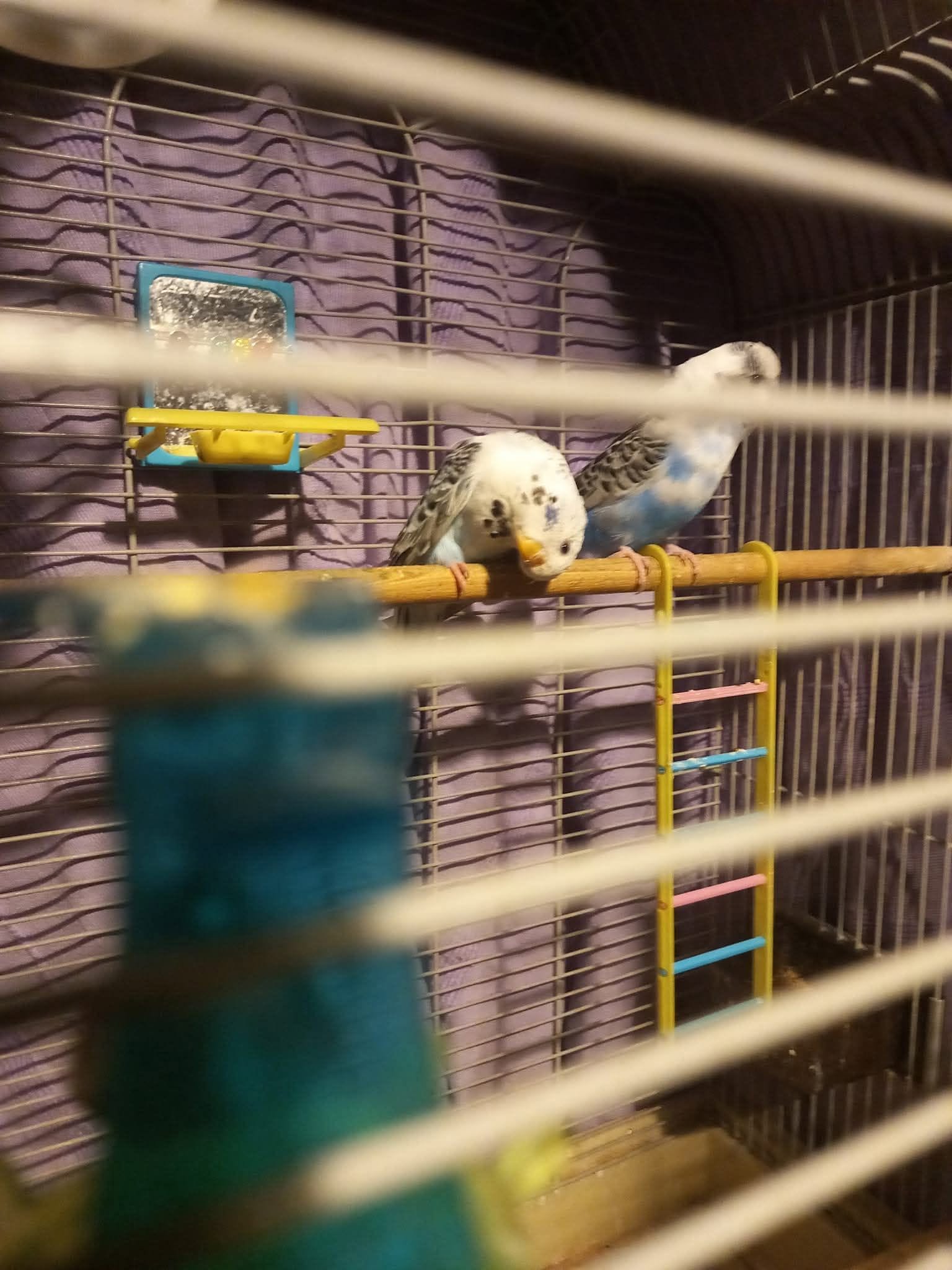
Cause 7 — Poisoning Or Toxic Fume Exposure (Medical — Emergency)
This is the cause that can be easiest to miss because owners do not immediately connect it to something in the environment. A budgie exposed to toxic fumes — from non-stick cookware, aerosol sprays, scented candles, cleaning products, cigarette smoke, or paint fumes — may show disorientation, erratic flight, and collision behaviour as early signs of respiratory or neurological toxicity.
- Has anything changed in the environment recently? — new cleaning products used nearby, cooking in the kitchen, scented candles lit, recent painting or varnishing in the house
- PTFE fumes from overheated non-stick cookware are acutely lethal to birds — even at concentrations that cause no obvious symptoms in humans; a bird showing disoriented flight after someone has been cooking nearby needs fresh air and emergency vet attention immediately
- What to do — move the bird to fresh air in a clean room immediately; ventilate the house; if the bird does not begin improving within 15 minutes in fresh air, emergency vet contact is essential
- Do not wait to see if it improves — toxic fume exposure in a bird is a situation where the window between intervention and loss of the bird can be very short
After A Collision — What To Watch For
Regardless of the cause, any budgie that has had a significant collision needs careful monitoring in the hours that follow. The table below gives the honest picture of what different post-collision pictures mean.
| What You See After The Collision | What It Means | What To Do |
|---|---|---|
| Bird sits dazed for 2–5 minutes, then flies normally. Fully recovered within 15 minutes. | Minor concussion or shock from impact. Most likely benign. | Keep bird warm and quiet. Monitor for 2 hours. Vet if any deterioration. |
| Bird recovers but seems slightly quieter than normal for the rest of the day. | Mild impact shock. Usually resolves with rest. | Monitor closely. Reduce stimulation. Vet if not back to normal by next morning. |
| Bird develops head tilt, circling, or balance problems in the hours after impact. | Head injury with neurological involvement. Serious. | Vet same day. Do not wait overnight. |
| Bird was unconscious even briefly after impact. | Significant head trauma. Even apparent full recovery masks potential injury. | Vet today regardless of current apparent condition. |
| Bird is bleeding — from beak, nares, or visible injury. | Physical injury from impact. Requires assessment. | Vet same day. |
| Bird cannot grip perch or is sitting on cage floor after impact. | Weakness or neurological involvement. Serious. | Vet today. Keep bird warm while arranging transport. |
| Bird shows seizure activity — trembling, convulsions — after impact. | Severe neurological event. Emergency. | Vet immediately. This does not wait. |
Preventing Collisions During Out-Of-Cage Time
For owners who give their budgie regular supervised out-of-cage time — which I recommend, because the flight is genuinely beneficial to the bird’s physical health — these are the practical steps that eliminate the most common collision risks.
- Close curtains before out-of-cage time at dusk — this is the single most effective prevention for window strikes; a window with curtains drawn is visible to the bird as a barrier
- Apply window decals or frosted film to large windows used in the flight room — breaks up the visual transparency of the glass without significantly reducing light; inexpensive and effective
- Cover large mirrors during out-of-cage time — a light cloth over a mirror takes seconds and eliminates a significant collision risk
- Choose a consistent room for out-of-cage time — the bird builds a spatial map; a room it knows well is significantly safer than a different room each time
- Avoid out-of-cage time in rooms with ceiling fans — a rotating ceiling fan is one of the most serious hazards for a free-flying budgie; if the room has one, keep it off during out-of-cage time
- Do not change the room layout immediately before out-of-cage time — new furniture, moved objects, or rearranged items need to be learned by the bird before it flies freely around them
- Keep the room well-lit but not with strong back-lighting behind windows — even lighting throughout the room reduces the chance of windows appearing as open space
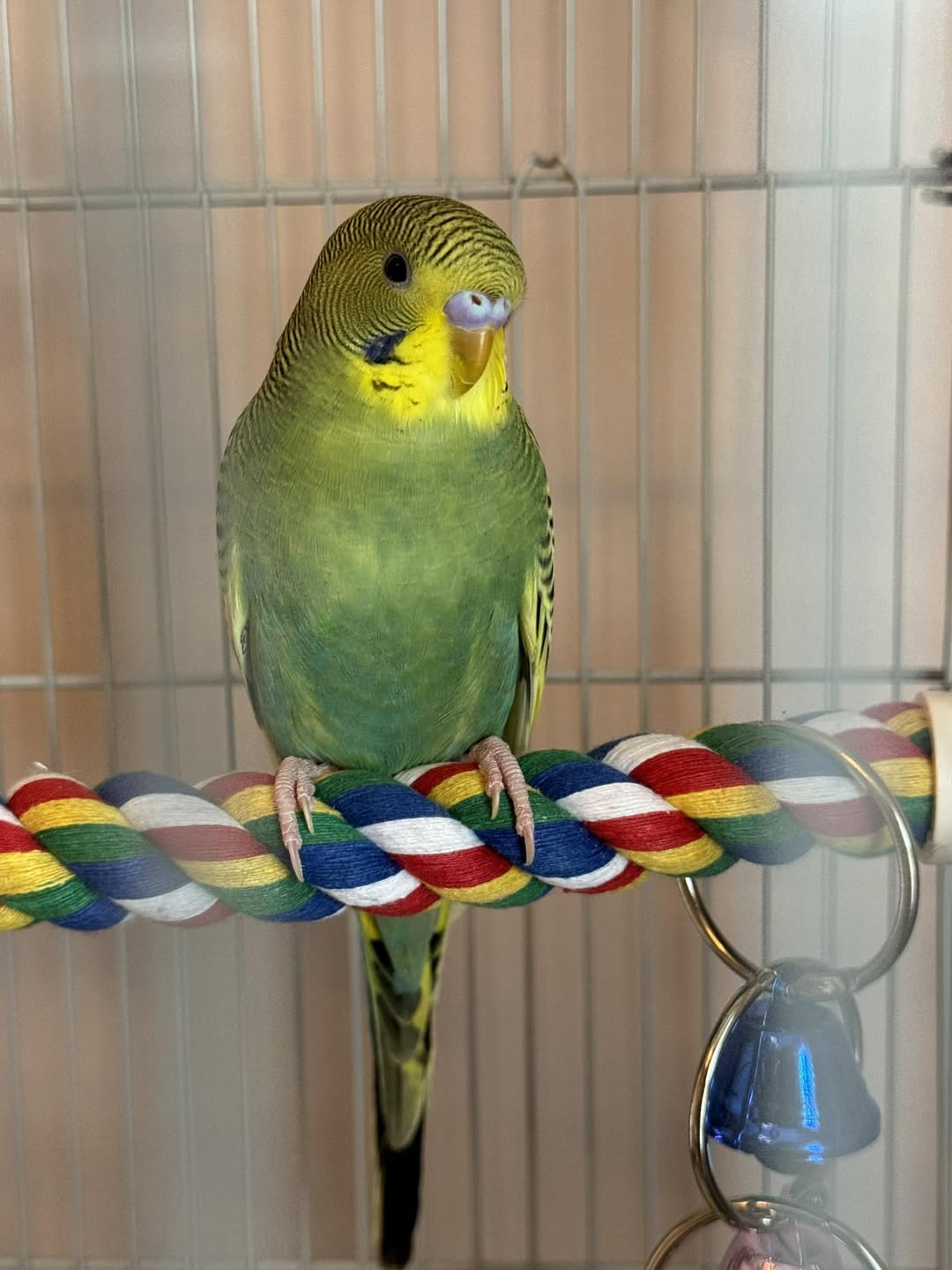
Frequently Asked Questions
My budgie flew into a window and seems fine now. Do I still need to see a vet?
If the bird recovered completely within 15 minutes and is behaving exactly as normal — eating, perching, vocalising, flying without difficulty — a single window strike that produced full recovery does not automatically require a vet visit. However, monitor closely for the next 24 hours. A bird that develops any neurological signs — head tilt, balance problems, circling — hours after an apparently full recovery has sustained a head injury and needs same-day vet attention. If the strike was hard and the bird was unconscious even briefly, a vet check is advisable regardless of apparent recovery.
My budgie keeps flying into the cage bars. Is this normal?
Occasional contact with cage bars during active flight is normal, particularly in a smaller cage. A bird that is repeatedly and forcefully flying into bars — as opposed to landing on them — is telling you something different. Possible causes include night frights that are happening regularly, a cage that is too small for the bird to fly comfortably, a vision problem affecting its spatial judgement, or a neurological problem affecting flight coordination. Assess which of these fits the pattern you are seeing and respond accordingly.
Could my budgie be flying into things because the cage is too small?
Yes. A cage that does not give a bird enough space to fly properly — to take proper wing-beats between perches rather than just hopping — produces clumsy, uncontrolled movement that can result in collisions with the bars and cage furniture. This is one of the most common and most preventable causes of cage-related collision. A bird in an adequately sized cage, with well-positioned perches that allow proper flight, should be able to move around without regularly hitting the sides.
My budgie seems to fly into things more at night. What is happening?
Almost certainly night frights — the bird is being woken in darkness by a sound or movement, panicking, and flying blindly. This is a very common problem and it is almost always manageable with environmental changes. A small nightlight near the cage gives the bird visual orientation if it wakes; covering three sides of the cage rather than all four with a breathable cover reduces alarming shadows from outside; consistent evening routine reduces unexpected disturbances. If night frights are happening very frequently despite these measures, a vet check is worth having to rule out any underlying cause.
My budgie has started flying into things it never hit before. Should I be worried?
Yes — this is the pattern that warrants closest attention. A bird that has been confidently flying in a familiar environment and then begins misjudging it has changed, not the environment. The possible causes — deteriorating vision, neurological problem, the beginning of a systemic illness — all require veterinary assessment. Do not dismiss this as the bird getting older or clumsier. Get a vet check within 24 to 48 hours and describe the change in behaviour specifically.
Could toxic fumes cause my budgie to fly erratically?
Yes, and this is one of the more urgent possibilities to rule out. Toxic fume exposure — from non-stick cookware, aerosols, scented products, cleaning chemicals, or cigarette smoke — can cause disorientation, erratic flight, and collision behaviour as early signs of toxicity. If the erratic flight has started suddenly and there has been any cooking, cleaning, or use of scented products in or near the room, move the bird to clean fresh air immediately and contact a vet if it does not begin to improve within 15 minutes.
My budgie hit a window, fell, and is now sitting on the bottom of the cage. What should I do?
This is a situation that needs a vet today. A bird on the cage floor after a collision has either sustained a significant physical injury, a neurological injury, or is in shock severe enough that it cannot maintain its perch. Keep the bird warm — around 30°C near the bird — while you arrange emergency transport. Do not handle it more than necessary. Do not wait overnight to see if it improves. Call an avian-experienced vet now.
Where can I get advice about my budgie flying into things in Swindon?
Ring us on 01793 512400 and describe what you are seeing — the pattern of collisions, when they happen, what the bird does afterwards, and anything else that seems different about its behaviour. We can help you work out which category you are likely dealing with and whether it needs veterinary attention today. Paradise Pets is at Manor Garden Centre, Cheney Manor Industrial Estate, Swindon SN2 2QJ. For anything that sounds urgent — a bird on the cage floor, neurological signs, toxic fume exposure — ring the vet first.
One Last Thing From Me
The couple who came in that Saturday morning went away reassured — the dusk window strike, the full recovery, the normal behaviour since — everything pointed toward an environmental accident rather than a health problem. They left with window decals in a bag and a clear picture of what to watch for over the next 48 hours.
About two weeks later the husband rang to let me know the bird was completely fine. They had put the decals on the window and closed the curtains before out-of-cage time. No further incidents.
“It seems obvious now,” he said, “that the window was the problem and not the bird. But at the time I had no idea how to tell the difference.”
That is the honest purpose of this article. Not to alarm owners who have seen a single collision and have a bird that has fully recovered. But to give every budgie owner the framework to tell the difference — between an accident and a pattern, between a surface hazard and a health problem, between a bird that needs curtains drawn and a bird that needs a vet today.
If you are reading this and you are not sure which side of that line your bird is on — ring us. Describe what you are seeing. We will tell you honestly what we think. That call is free and it takes five minutes. Five minutes is a worthwhile investment when the alternative is getting this distinction wrong.
Worried About Your Budgie Flying Into Things? Come In Or Ring Us
Describe what is happening — when it occurs, how often, what the bird does afterwards. We will tell you honestly whether we think it is environmental or medical and whether a vet needs to be involved. Free advice, no obligation. That is how we have done things here for 35 years.
⭐ Customer Reviews
Amazing Bird Selection
Had a lovley visit today,staff were very friendly and very helpful,such a great petshop,their selection of birds is incredible,really impressed,thank so much to the staff at Paradise Pets

Friendly Helpful Staff
I have been coming to this place for years and they have a great stock of food for all types of pets. Have a great selection of small mammals and a lot of birds. Staff are friendly and helpful.

Great Quality Hutch
Bought a guinea pigs hutch and run combo, very happy with the service, the hutch was put in my car for me without even asking for help. The wood quality is very good, the instructions easy to follow and we are extremely happy with the fully built hutch. A good size for 2 guinea pigs

Response from Paradise Pets | Wiltshire
Thank you Melanie Latus Nice to provide services to you.
Best Bird Shop Around
It’s the best pet shop in and around Swindon. They always have an amazing selection of birds and all you need to keep them happy. I keep birds myself and the guys there are happy to answer questions and really know their stuff. I have seen budgies etc. in chain pet shops in the area looking really unhealthy and ill – I wouldn’t go anywhere else than Paradise Pets for animals.

Highly Recommended Bird Shop
I could not praise this shop enough. Really helped my Grandson buy his first bird and he’s loving it. Travelled from Somerset and was welcomed with open arms.

Great Shop with Competitive Prices
Great shop with amazing selection for small animals, hamsters, mice ect, highly recommend!
Also has a great selection for dogs & cats too & very competitive prices! 💖

