
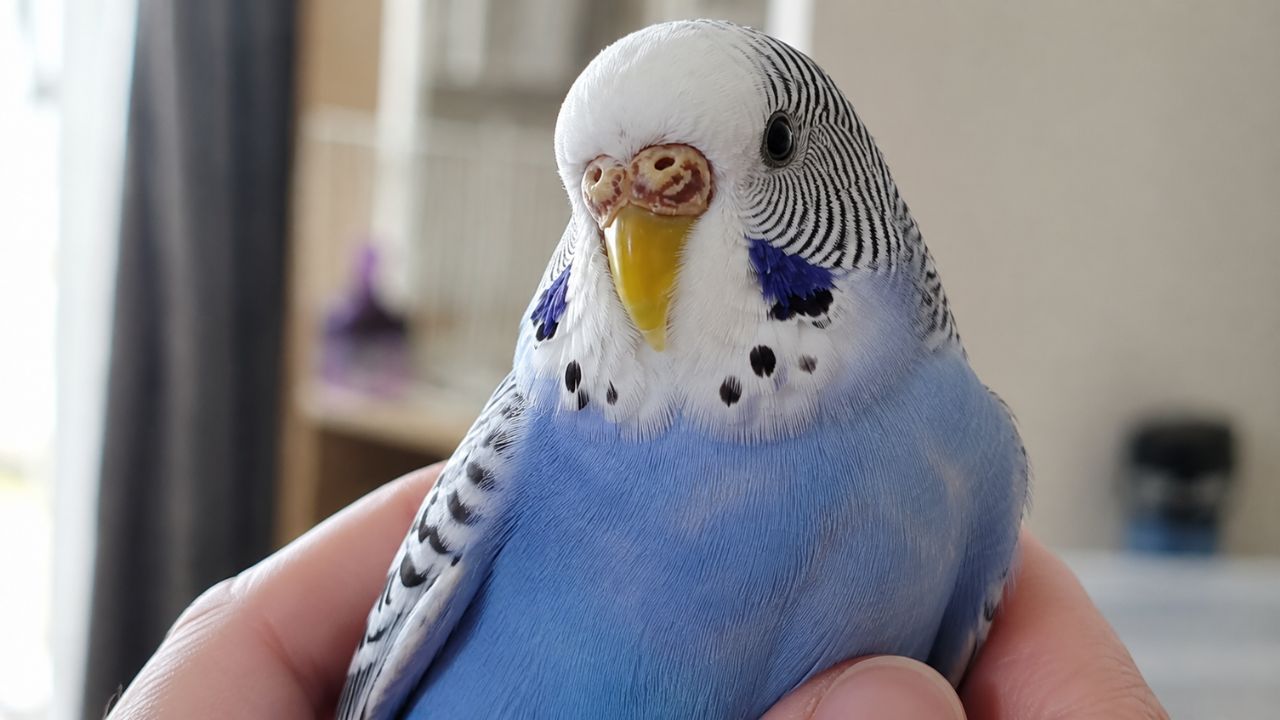

Neil has kept, bred, and sold budgies at Paradise Pets Swindon since 1988 — over 35 years of first-hand experience with these birds. In that time, he has had hundreds of worried owners walk in clutching a budgie whose cere had changed colour overnight, convinced something was terribly wrong. This is his honest, practical guide on what a changing cere actually means — and the very real difference between the changes that are completely normal and the ones that genuinely need a vet.
A woman came into the shop one Friday afternoon with her budgie in a small carrier. She was clearly upset. “Neil,” she said, “I have had Charlie for two years and his cere has always been bright blue. This morning it looks crusty and almost brown. He seems fine in himself — eating, chirping, playing. But the change is so sudden. What is wrong with him?”
I asked her to bring him out so I could have a proper look. Within thirty seconds I had a strong idea of what was going on — Charlie was an older male budgie going through a hormonal change that had affected his cere. Nothing wrong, nothing dangerous, just biology doing what biology does. By the time she left the shop she was reassured, and a follow-up phone call two months later confirmed the cere had settled back to its normal blue.
The cere is the small, fleshy area just above your budgie’s beak where the nostrils are. It changes colour throughout the bird’s life for a long list of reasons — some of them harmless, some of them important. The skill is in knowing which is which, and when to act.
This article is the conversation I have at the counter with worried owners who have noticed a cere change. By the end of it, you will know exactly what each colour and texture change means, what is normal across a budgie’s life, and the specific signs that should send you to an avian vet today.
First — What The Cere Actually Is
Before we get into colour changes, it helps to understand what the cere is and why it matters. Many UK owners I see at the counter have never really looked at this part of their bird properly.
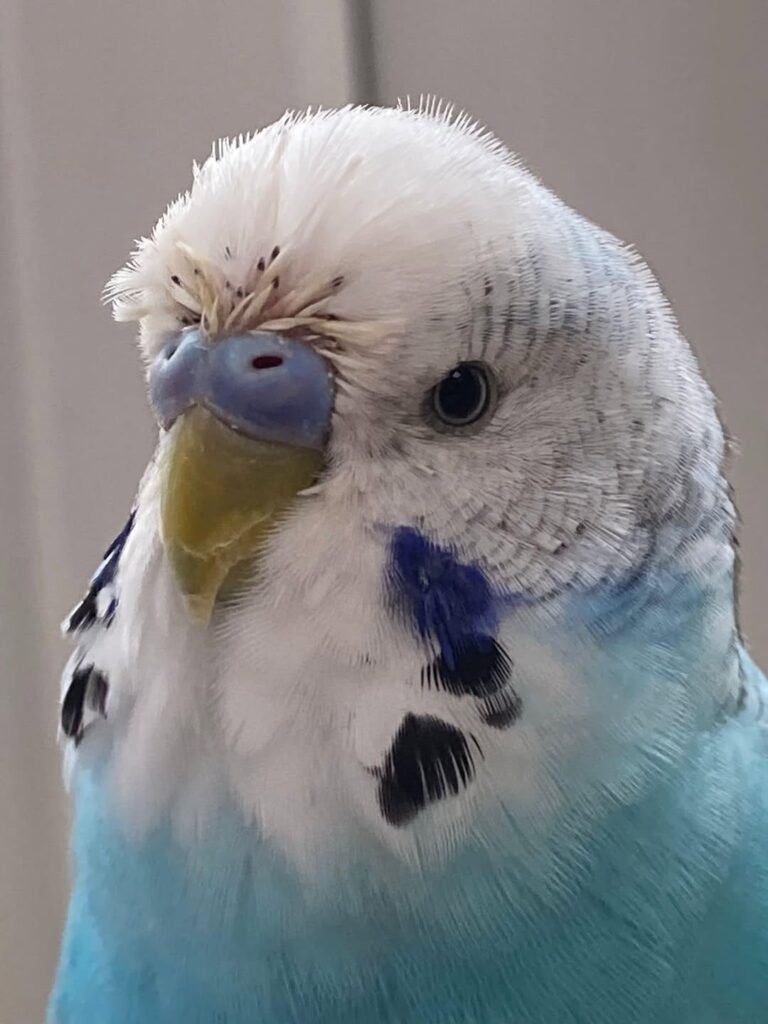
The cere is the small, slightly raised, fleshy area sitting at the very top of the budgie’s beak, just below the forehead feathers. The two small holes you can see in it are the bird’s nostrils. The cere is made of soft, smooth tissue that contains pigment cells responding to the bird’s hormones, age, and overall health.
In a healthy adult budgie, the cere should be:
- Smooth in texture — not crusty, flaky, or peeling
- Even in colour — no patches, no marbling, no strange spots
- Dry but not dried out — neither shiny-wet nor crusty
- Free from discharge — no fluid around the nostrils
- The right colour for the bird’s age and sex — and this is where things get interesting
Because the cere responds so directly to the bird’s hormones and overall condition, it is one of the most reliable visible indicators of what is going on inside. A change in the cere is almost never random — it is the bird telling you something specific.
The Normal Cere Colours — Sex And Age
The first thing to understand is that cere colour varies normally based on the budgie’s sex and age. A cere that looks “wrong” to a new owner may simply be the right colour for that particular bird at that particular life stage. Let me walk you through what is normal.
Baby Budgies (Under 4 Months)
In very young budgies, the cere does not yet show clear sex differences. Most baby budgies have a pinkish, purplish, or light bluish cere regardless of sex. The colour is often pale and slightly translucent. You usually cannot reliably tell male from female from cere colour alone until the bird matures.
This is the stage when many UK owners panic about cere changes — because they are watching their young bird mature and the colour shifts as it does. Cere changes between 2 and 6 months are almost always developmental, not problematic.
Male Budgies (Adult)
In a sexually mature healthy male budgie, the cere is typically:
- Bright blue — the most common colour for adult males
- Royal blue or vivid blue in breeding condition
- Smooth and even in texture
- Slightly more vivid in spring when hormones peak
- Sometimes pinkish in certain colour mutations — particularly recessive pieds, albinos, lutinos, and some lacewings (these males have lifelong pink-purple ceres)
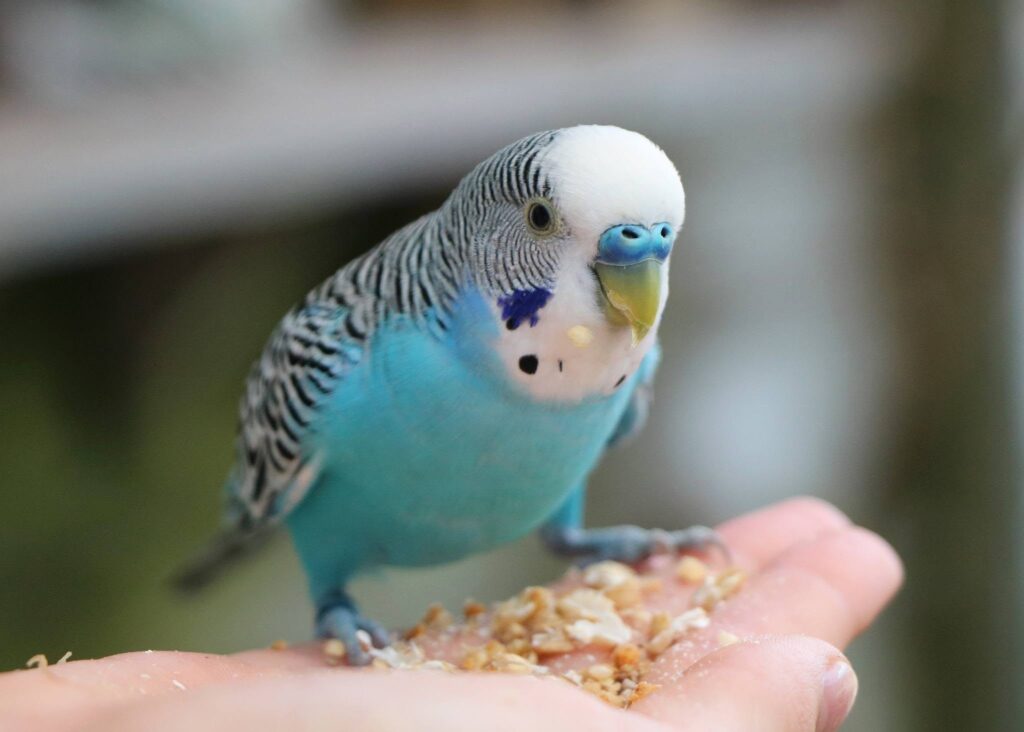
The colour mutation point is important. If you have an albino, lutino, or recessive pied male, his cere will stay pinkish-purple throughout his life — that is normal for those mutations. It does not mean he is female or unwell.
Female Budgies (Adult)
In a sexually mature healthy female budgie, the cere is typically:
- Pale brown, tan, or beige when not in breeding condition
- Whitish or very pale blue in some young females
- Dark brown and crusty when in active breeding condition
- Pinkish or pale outside of breeding condition
- Can change dramatically across her life depending on hormonal state
This is where things get genuinely confusing for UK owners. A female budgie’s cere can shift between pale pink, white, tan, light brown, and dark crusty brown across the year — and most of these changes are completely normal hormonal cycling.
The Hormonal Cere Changes — Completely Normal
The single biggest reason for cere colour change in adult budgies is hormones. Both males and females go through hormonal cycles, and the cere reflects those cycles visibly. Understanding this prevents an enormous amount of unnecessary worry.
Females Entering Breeding Condition
This is the most dramatic and the most commonly worrying change UK owners see. A female budgie entering breeding condition typically shows:
- Cere darkens noticeably — from pale beige to medium brown to dark brown
- Texture becomes thicker and crusty — sometimes quite pronounced
- Sometimes appears almost flaky or rough
- Often combined with nest-seeking behaviour, paper shredding, increased territoriality
- The bird may seek dark corners or food bowls to “nest” in
- Increased interest in male budgies or her reflection
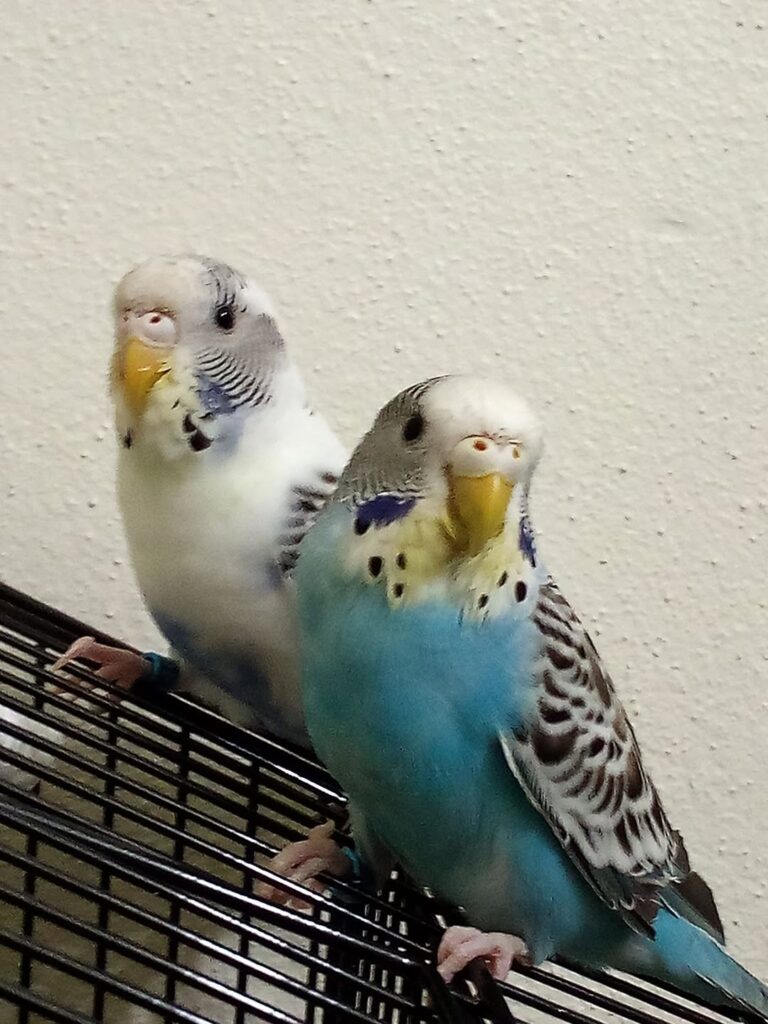
This is normal hormonal cycling. The crusty dark cere of a breeding female looks alarming if you have not seen it before, but it is what a healthy adult female does. It typically lasts a few weeks at a time and gradually softens and lightens as the hormonal phase passes.
Males Entering Breeding Condition
In males, the change is less dramatic but still visible. A male budgie entering breeding condition typically shows:
- Cere becomes more vividly blue
- The blue takes on a slight royal or purplish tint
- Texture stays smooth (unlike females)
- Combined with increased singing, regurgitating to mirrors or toys, head-bobbing displays
- The bird becomes more active and vocal overall
Male hormonal changes are gentler than female ones, and the cere stays smooth throughout. A male cere going from “normal blue” to “vivid blue” with smooth texture is just breeding condition — not a problem.
Why Spring And Daylight Hours Matter
Both male and female hormonal changes are heavily driven by daylight hours. Spring in the UK — when days suddenly get longer — triggers strong hormonal responses in budgies. You will see far more cere changes in March, April, and May than in November or December.
This is why owners often notice cere changes around the same time every year. The bird is responding to the same seasonal cycle wild budgies would respond to in Australia. It is normal, it is consistent, and it usually passes within a few weeks.
When The Cere Change Is Genuinely Worrying
Now for the part that matters most. Some cere changes are not normal hormones — they are signs of genuine illness, and acting promptly makes a real difference. Knowing what to look for is the most important part of this article.
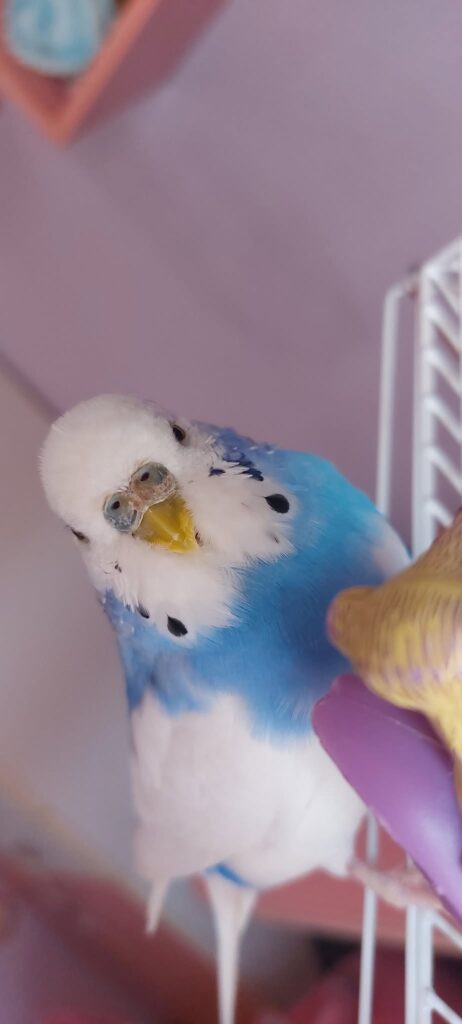
- A male’s blue cere turning brown — particularly in an older male, can indicate testicular tumours
- Sudden colour change combined with the bird being unwell — fluffed up, quiet, off food
- Bleeding, crusting, or scabbing of the cere itself — beyond normal female breeding texture
- Visible growths, lumps, or unusual textures — particularly nodules or hard areas
- Discharge from the nostrils — clear, cloudy, bloody, or green
- Cere texture becoming severely crusty in a male — males should stay smooth
- Asymmetry — one nostril or one side looking different from the other
- Colour change that does not resolve over months — persistent, not cyclical
- Black, very dark, or strangely discoloured patches
The combination of cere change with any other illness sign is the most important warning. A healthy bird with a hormonally changing cere is one situation. A quieter, off-food, fluffed up bird with a changing cere is a completely different one — and needs a vet visit today.
The Specific Conditions That Cause Cere Changes
For completeness, here are the genuine medical conditions that affect the cere in UK pet budgies. Knowing what these look like helps you spot them early.
1. Testicular Tumours In Older Males (The Big One)
This is the cere change every UK owner of an older male budgie should know about. When a male budgie develops a testicular tumour, the cere can gradually change from its normal vivid blue to a brown or pinkish colour — looking almost like a female’s cere.
This happens because the tumour can produce female hormones (oestrogen), which override the bird’s normal male hormonal balance. The cere responds visibly to the hormonal shift.
Signs to watch for:
- Older male budgie (typically over 4-5 years)
- Gradual change from blue to brown or pinkish cere over weeks or months
- Sometimes combined with weight loss, reduced activity, or breathing changes
- Possibly increased thirst or other systemic signs
- Cere texture may become slightly different too
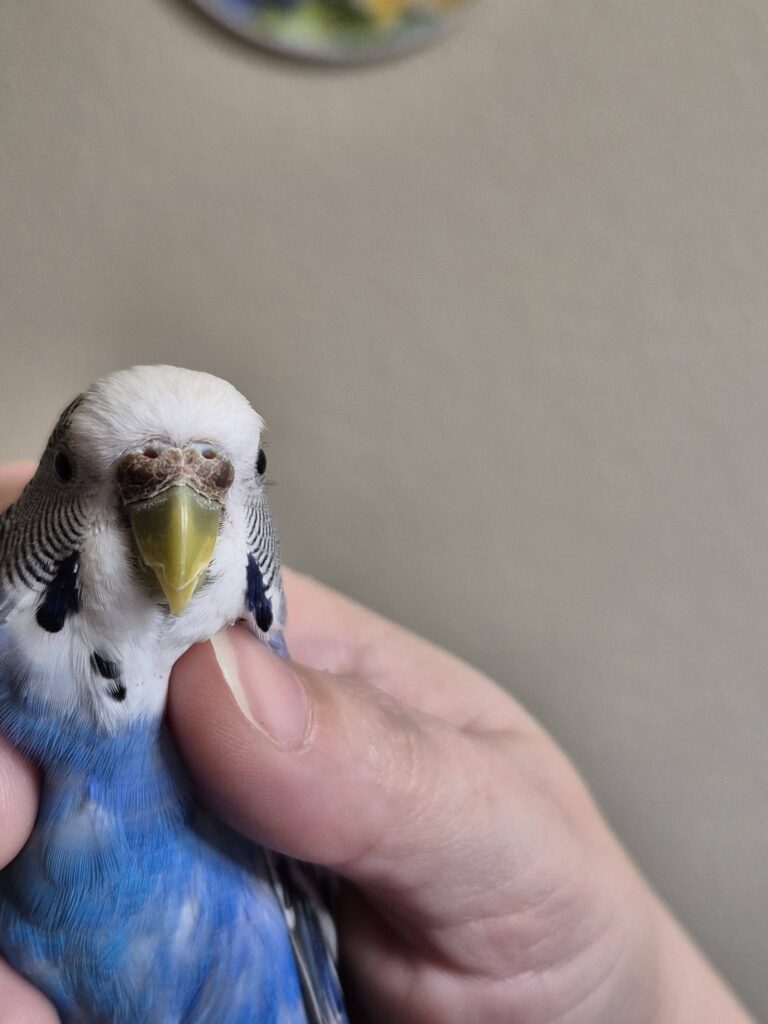
What to do: see an avian vet. Testicular tumours are diagnosed through examination, sometimes with imaging. Treatment options vary depending on the bird’s overall condition, but knowing what is happening is essential.
2. Brown Hypertrophy Of The Cere
This is a specific condition where a female budgie’s cere becomes excessively thick, crusty, and overgrown — beyond normal breeding hormone changes. It is essentially the female’s natural cere response going into overdrive, sometimes due to chronic hormonal stimulation.
Signs:
- Female budgie with massively thickened, brown, crusty cere
- The cere may start to overgrow and block the nostrils
- The bird may scratch at her face frequently
- Sometimes the overgrowth peels off in layers but regrows
- Breathing may be affected if the nostrils become blocked
What to do: see a vet. Treatment usually involves gentle removal of the excess cere material and sometimes hormone management. Left untreated, severe cases can affect breathing.
3. Mites — Knemidocoptes (Scaly Face Mite)
This is a parasitic infection that primarily affects the cere, beak, and sometimes legs. The mites burrow into the skin and cause characteristic crusty, honeycomb-like growths.
Signs:
- Crusty, honeycomb-textured growths on the cere
- Often spreads to the beak edges and around the eyes
- The growths look almost like small holes or pitting
- The bird may scratch at its face
- Untreated cases can deform the beak permanently
- Can spread to other budgies if you have more than one
What to do: see an avian vet promptly. Scaly face mite is treatable with proper prescription anti-parasitic medication. Do not use shop-bought sprays alone — they often do not clear the infestation properly.
4. Respiratory Infection Spreading To The Cere
Some respiratory infections in budgies can cause changes around the cere and nostrils — discharge, crusting around the nostrils, sometimes colour changes from inflammation.
Signs:
- Discharge from one or both nostrils
- Crusting or matting of feathers around the cere
- Sneezing, breathing changes, tail bobbing
- The bird may be quieter than usual or off food
- Sometimes accompanied by eye changes too
What to do: see a vet. Respiratory infections in budgies need proper diagnosis and antibiotic treatment. Early intervention makes an enormous difference.
5. Nutritional Or Hormonal Imbalances
A budgie on a poor diet — primarily seed without proper vegetables, calcium, or vitamins — can develop cere changes from nutritional deficiencies. The colour and texture may shift gradually over months as the bird’s overall health declines.
Signs:
- Gradual loss of vivid colour in the cere
- Texture becoming dull or rough
- Often combined with feather quality decline
- Bird may be less active overall
- History of poor diet — heavy seed reliance, no fresh foods
What to do: improve diet immediately and see a vet if the bird seems unwell. Proper nutrition often resolves mild nutritional cere changes within months.
How To Tell Normal Cere Changes From Worrying Ones
This is the practical skill that matters most. Here is the clear comparison I work through with worried owners at the counter.
| Sign | Likely Normal | Likely Worrying |
|---|---|---|
| Pattern | Cyclical, comes and goes | Constant, persistent, getting worse |
| Bird’s overall behaviour | Normal eating, activity, vocalising | Quieter, off food, less active |
| Texture | Smooth (males) or moderately crusty (females) | Severely crusty, bleeding, scabbed, growths |
| Symmetry | Both sides look the same | One side different, asymmetric |
| Nostrils | Clear, no discharge | Discharge, blocked, crusted |
| Surrounding feathers | Clean, normal | Matted, discoloured, discharge stained |
| Bird’s age and sex | Change matches normal pattern for that bird | Male’s blue turning brown, particularly in older birds |
| Duration | Weeks, resolves naturally | Months, gets progressively worse |
The honest rule of thumb — if the bird is otherwise healthy and the cere change is part of a normal seasonal or developmental pattern, you can usually wait and watch. If anything in the right column matches what you are seeing, see an avian vet.
What I Ask Owners At The Counter About Cere Changes
When a UK owner brings in or rings about a cere change, here is the order I work through to identify what is going on. Most cases resolve in the first five questions.
- How old is the bird, and is it male or female?
This affects what’s “normal” for the cere dramatically. - How long has the change been going on?
Days, weeks, months? Pattern matters more than the current moment. - Is the bird otherwise behaving normally?
Eating, drinking, playing, vocalising? Normal behaviour with cere change = usually hormonal. - What does the texture look like?
Smooth or crusty? Even or lumpy? Symmetrical or asymmetric? - Is there any discharge from the nostrils?
Yes = vet today. No = continue assessment. - What time of year is it?
Spring changes often hormonal. Mid-winter persistent changes more concerning. - What is the bird’s diet?
Seed-only diets can cause gradual cere quality decline. - Has the bird been around any new birds recently?
Mite infestations can be introduced by contact.
Five minutes of these questions usually identifies whether the cere change is hormonal cycling, age-related, or something needing veterinary attention.
What To Do Right Now If Your Budgie’s Cere Has Changed
For UK owners reading this with a worried mind and a changing cere at home, here is the practical immediate action plan.
- Take clear photographs of the cere right now
Good lighting, multiple angles. You’ll want a record to compare against in coming weeks. - Check the bird’s overall condition properly
Posture, eyes, breathing, droppings, eating, drinking. The broader picture matters more than the cere alone. - Note the bird’s sex and approximate age
Critical context for whether the change is normal. - Look at the texture carefully
Smooth or crusty? Any visible growths, scabs, or bleeding? - Check the nostrils
Clear, or any discharge? - Compare to the warning sign list above
Any match = vet visit today. - Take a second photo in 7 days for comparison
Hormonal changes evolve. Concerning changes usually worsen. - If in doubt, see a vet rather than wait
Better to have a normal change confirmed than miss a serious one.
For most cases of cere change in otherwise healthy budgies, the answer is reassurance and watchful waiting. For the cases where something is genuinely wrong, early veterinary intervention makes a real difference.
How To Support A Healthy Cere Long-Term
Most cere problems can be prevented or minimised by giving the bird the conditions it needs to thrive. Here is what every UK owner should do.
- Proper varied diet — quality seed mix, plus daily fresh vegetables, plus occasional fruit. Pellets in moderation.
- Cuttlefish bone always available — calcium is essential for hormonal health
- Stable, comfortable temperature — 18-24°C, no extreme draughts or heat
- Adequate sleep — 10-12 hours of dark, quiet sleep every night
- Quarantine new birds — prevents introducing mites or infections
- Regular observation — daily look at the cere as part of routine checks
- Avoid hormonal triggers — limit mirror time, dark nesting spots, excess light exposure
- Annual avian vet check for older birds — catches age-related issues early
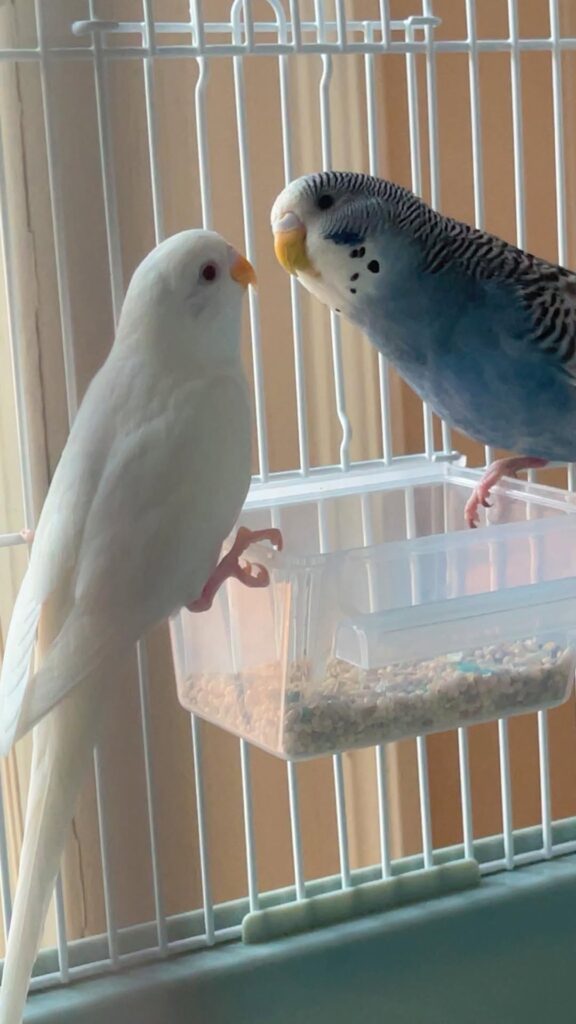
For more on supporting overall budgie health, our complete UK budgie feeding guide covers proper diet in detail, and our guide on the biggest mistake UK bird owners make covers the husbandry foundations that prevent most problems.
The Special Case Of Colour Mutation Budgies
One quick but important note for owners of unusual colour mutations. Some mutations have lifelong unusual cere colours that do not follow the standard male-blue, female-brown pattern.
- Albino and lutino males — pinkish-purple ceres throughout life, never blue
- Recessive pied males — pink-purple ceres throughout life
- Dark-eyed clear males — variable cere colours
- Some lacewing mutations — atypical cere colours
- Females of all mutations — generally follow standard female cere patterns (brown/tan/pale)
If your bird is one of these mutations, do not panic when the cere looks “feminine” — that is normal for the mutation. Worry instead about texture changes, discharge, asymmetry, or growths.
Frequently Asked Questions
Why is my male budgie’s cere turning brown?
In a young male, this can sometimes be developmental as the bird matures into adult colouring. In an older male (over 4 years), a blue cere gradually turning brown is one of the warning signs for testicular tumours and warrants a vet visit. The combination of cere change with any other symptom — weight loss, breathing changes, reduced activity — makes it more urgent.
Why is my female budgie’s cere crusty?
A crusty, darker brown cere in a female budgie is almost always a sign of breeding hormones. It typically becomes thick and crusty when the bird is in active breeding condition, particularly in spring. The crustiness usually softens and lightens after a few weeks as the hormonal phase passes. If it stays severely crusty for months, becomes excessive enough to block the nostrils, or causes the bird obvious discomfort, see a vet.
Can a budgie’s cere change colour with age?
Yes, absolutely. Young budgies have indistinct ceres that develop their adult colours by 4-6 months. Older birds may show gradual cere changes as their hormonal balance shifts with age. Significant colour changes in older birds — particularly males turning brown — can sometimes indicate health issues. The combination of cere change with other symptoms is what matters most.
What does a healthy budgie cere look like?
A healthy budgie cere should be smooth in texture (for males, and outside breeding condition for females), even in colour (no patches or asymmetry), free from discharge around the nostrils, and the right colour for the bird’s age, sex, and mutation. Males are typically bright blue, adult females are typically pale beige to brown depending on hormonal state.
Is a colour change in my budgie’s cere always serious?
No — most cere colour changes are normal hormonal cycling, particularly in females. The changes that genuinely worry me are those that come with other illness signs (off food, fluffed up, breathing changes), persistent severe crusting that does not resolve, visible growths or scabs, discharge from the nostrils, asymmetry between the two sides, or a male’s blue cere turning brown in an older bird.
How do I tell if my budgie has scaly face mite?
Scaly face mite (knemidocoptes) causes characteristic honeycomb-textured, crusty growths on the cere, beak edges, and sometimes around the eyes. The pattern looks almost like tiny holes or pitting in the skin. If you see this, see an avian vet promptly — it is treatable but needs proper prescription anti-parasitic medication, and it can spread to other birds.
Where can I get honest budgie advice in Swindon?
Come and see us at Paradise Pets, Manor Garden Centre, Cheney Manor, Swindon SN2 2QJ. Or give us a ring on 01793 512400. Bring the bird if you can — five minutes of looking at the cere in person tells me more than half an hour on the phone. The advice is free and we have been doing this for 35 years.
One Last Thing From Me
“My budgie’s cere has changed colour — should I worry?” is one of the most common questions I get from UK budgie owners, and one of the most reassurance-worthy. The honest answer, after 35 years of selling these birds, is — most of the time, no, it is just biology doing what biology does. But sometimes, yes, it is the bird’s body telling you something important.
The skill is in reading the cere properly. A young bird maturing into its adult colours is normal. A female going through hormonal cycling is normal. A male turning slightly more vivid blue in spring is normal. These are all just budgies being budgies.
But a male’s blue turning brown in an older bird, a cere becoming crusty and growing into the nostrils, a sudden change combined with the bird being unwell, visible scaling and pitting that looks like mites — these are the cases where acting promptly genuinely matters. By the time you can see the change clearly, the underlying process has often been developing for some time.
The woman with Charlie that Friday afternoon? Charlie was an older male going through a slow hormonal shift, and we caught his cere change early. She brought him in to her vet for a check-up — partly for peace of mind, partly to rule out a tumour given his age. The vet confirmed he was healthy, and two months later his cere had settled. She rang the shop to thank me for the reassurance, and to say she now takes a photo of his cere every couple of weeks just to keep an eye on it. That is the level of awareness I want every UK budgie owner to have — not anxiety, but informed observation.
If you are reading this with a budgie whose cere has changed, take a calm look. Take a photo. Check the bird’s overall condition. Compare against the lists in this article. And if anything feels off, do not wait — see an avian vet today. If you are local to Swindon and unsure, come and see us. We have helped hundreds of UK owners through exactly this worry, and we are always happy to take a proper look.
Worried About Your Budgie’s Cere? Come And See Me
Bring the bird in or send a clear photo. Five minutes of looking at the cere in good light, plus a few honest questions, usually identifies what is going on. Free advice, no obligation. That is how we have done things for 35 years.
⭐ Customer Reviews
Amazing Bird Selection
Had a lovley visit today,staff were very friendly and very helpful,such a great petshop,their selection of birds is incredible,really impressed,thank so much to the staff at Paradise Pets

Friendly Helpful Staff
I have been coming to this place for years and they have a great stock of food for all types of pets. Have a great selection of small mammals and a lot of birds. Staff are friendly and helpful.

Great Quality Hutch
Bought a guinea pigs hutch and run combo, very happy with the service, the hutch was put in my car for me without even asking for help. The wood quality is very good, the instructions easy to follow and we are extremely happy with the fully built hutch. A good size for 2 guinea pigs

Response from Paradise Pets | Wiltshire
Thank you Melanie Latus Nice to provide services to you.
Best Bird Shop Around
It’s the best pet shop in and around Swindon. They always have an amazing selection of birds and all you need to keep them happy. I keep birds myself and the guys there are happy to answer questions and really know their stuff. I have seen budgies etc. in chain pet shops in the area looking really unhealthy and ill – I wouldn’t go anywhere else than Paradise Pets for animals.

Highly Recommended Bird Shop
I could not praise this shop enough. Really helped my Grandson buy his first bird and he’s loving it. Travelled from Somerset and was welcomed with open arms.

Great Shop with Competitive Prices
Great shop with amazing selection for small animals, hamsters, mice ect, highly recommend!
Also has a great selection for dogs & cats too & very competitive prices! 💖

