
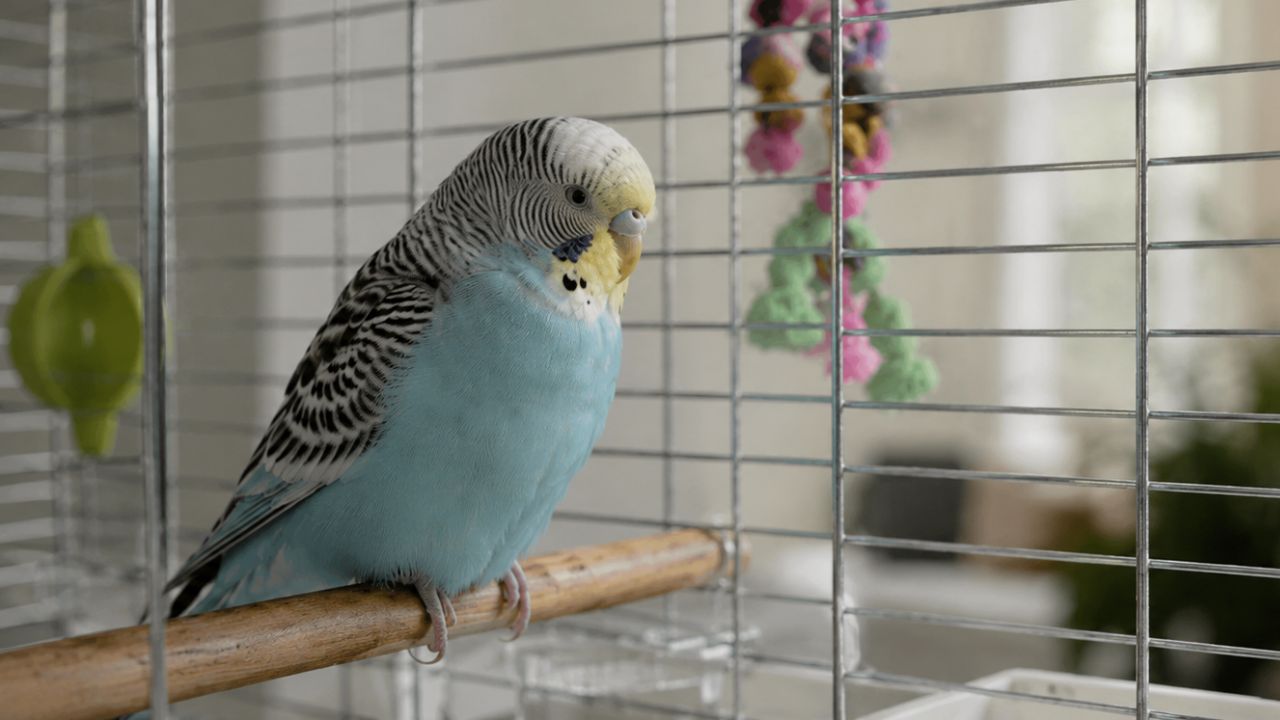

Neil has kept, bred, and sold budgies at Paradise Pets Swindon since 1988 — over 35 years of first-hand experience with these birds. In that time, he has taken hundreds of frightened phone calls that all start the same way: “Neil, my budgie has gone silent overnight.” This is his honest, practical guide on exactly what that silence means — and the difference between the cases that resolve themselves and the ones that need action today.
A woman rang the shop one Tuesday morning, her voice shaking. “Neil,” she said, “I came down to make breakfast and my Charlie hasn’t made a single sound. He was chirping his head off when I covered him last night. He’s just sitting there. Is he going to die?”
I asked her to take a deep breath and answer four quick questions while we spoke. Where is the cage? Did anything change in the room yesterday? Is Charlie puffed up or hunched? Is there anything in his droppings overnight? By the time she had answered the fourth question, I already had a strong idea of what was going on. The cage had been moved closer to the window the previous evening because she had been hoovering. The window had been slightly open overnight. Charlie had spent the night in a cold draught — and he was telling her about it in the only way budgies can, by going completely quiet.
That bird was fine within two days of being moved back to his proper spot and the window being kept shut overnight. But the call could just as easily have gone the other way, and that is the honest truth of this article — a sudden silent budgie is almost always trying to tell you something specific, and after 35 years I can tell you the silence itself is rarely the real problem. The problem is in what comes with it.
Most owners panic the moment their budgie goes quiet, because for these birds quietness is so unusual. And most owners are right to take it seriously, because budgies hide illness instinctively — going silent can be either nothing at all or the very first sign of trouble. The skill, after 35 years, is in knowing which is which within the first few minutes.
This article is the conversation I have at the counter with worried owners. By the end of it, you will know exactly what to look for, what the silence usually means, and when you need to stop reading and pick up the phone to a vet.
First — Why Quiet Is So Unusual For A Budgie
To understand what a silent budgie means, you first have to understand just how unusual silence is for a healthy bird. In the wild, budgies live in huge flocks across Australia, sometimes thousands of birds together. Constant vocal contact is how they stay connected, how they warn each other of danger, and how they bond with their partners. Sound is not optional for a budgie — it is survival.
A pet budgie kept in a UK home treats you and your family as its flock. The chattering, whistling, mumbling, and chirping you hear from morning to night is genuinely the bird “talking” to its flock. A healthy, settled budgie should be vocalising during most of its waking hours — twelve to fourteen hours a day of more or less constant sound, with occasional quiet naps in the middle of the day.
So when a budgie goes suddenly quiet — particularly overnight, when the change feels dramatic — it is almost never random. Something has caused it. Either something in the environment, something inside the bird, or something in its social or emotional world. Working out which is the first job. The good news is that most of the time the answer is visible within the first two minutes of looking at the bird properly.
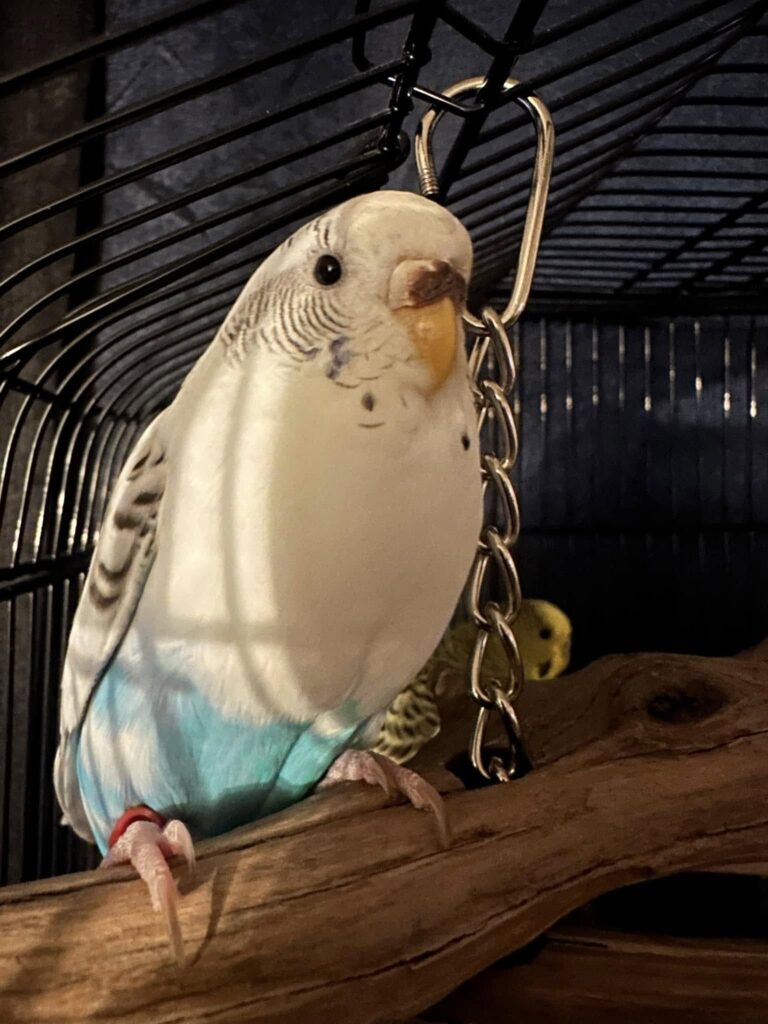
The First Two Minutes — Look Before You Worry
Before we go into the seven reasons for silence, spend two minutes looking at the bird properly. Do not open the cage. Do not poke at it. Do not try to make it sing. Just observe. Most of what you need to know is visible if you watch quietly for two minutes.
- Posture — Is the bird perched normally, alert, weight on one foot? Or hunched, puffed up, gripping the perch with both feet?
- Eyes — Bright, fully open, watching you move? Or half-closed, dull, partially shut even when you approach?
- Breathing — Chest rising gently and quietly? Or visible tail bobbing with each breath, beak slightly open, effort visible?
- Position in cage — Normal perch? Or sitting on the cage floor, low down, or somewhere unusual?
- Droppings on the cage floor — Several normal-looking droppings from overnight? Or very few, or any that look wrong?
- Food and water — Has the bird touched its seed or water this morning, or moved nearby food?
If the bird is alert, upright, eyes bright, breathing normally, and there are normal droppings on the floor — you have time. The silence is most likely environmental or behavioural, and the bird is not in immediate danger. Work through the seven causes below.
If the bird is puffed up, hunched, eyes partly closed, breathing visibly, sitting low or on the floor, no overnight droppings, no interest in food — that is not a quiet budgie, that is a seriously unwell budgie. Stop reading and contact an avian vet today. A budgie that goes silent because it is unwell is showing late-stage illness, and time genuinely matters.
- Puffed up and hunched, with eyes partly or fully closed
- Sitting on the floor of the cage, or unable to perch properly
- Visible breathing effort, tail bobbing with each breath, or open-beak breathing
- No overnight droppings on the cage floor, or droppings that look very wrong
- No interest in food or water for several hours
- Discharge from nostrils, eyes, beak, or vent
- Unsteady on the perch, or has fallen
This combination is a budgie showing late-stage illness — and birds hide illness instinctively until they cannot any longer. Contact an avian vet today, not tomorrow.
For everyone else — the bird looks essentially normal but has just gone unusually quiet — let me walk you through the seven most common reasons I see at the counter, in roughly the order I encounter them.
1. Something In The Environment Has Changed
This is by far the most common reason for sudden overnight silence, and the one I work through first with every worried owner. Budgies are creatures of intense routine. They notice things in their environment that most owners do not even register — and a change that seems trivial to you can completely throw a budgie’s sense of safety for days.
Owners often tell me “nothing has changed” — and then five minutes of careful questioning reveals that they have moved the sofa, painted a wall, got a new puppy, or had visitors. To a budgie, every one of those is a major event.
- Has the cage been moved? Even a small move within the same room can unsettle a budgie for days
- Has the room changed visually? New furniture, a new picture, different curtains, rearranged ornaments
- Has anything new been added to the cage? A new toy, perch, mirror, food bowl, or treat
- Has anything large appeared nearby? A coat rack, a TV, a plant — anything in the bird’s eyeline
- Has the household routine changed? Different work hours, holidays, visitors, a new baby or pet
- Has the bird seen a predator? A cat at the window, a sparrowhawk in the garden, a bird outside
- Has there been a loud noise event? Building work, fireworks, vacuum, a slammed door, a party
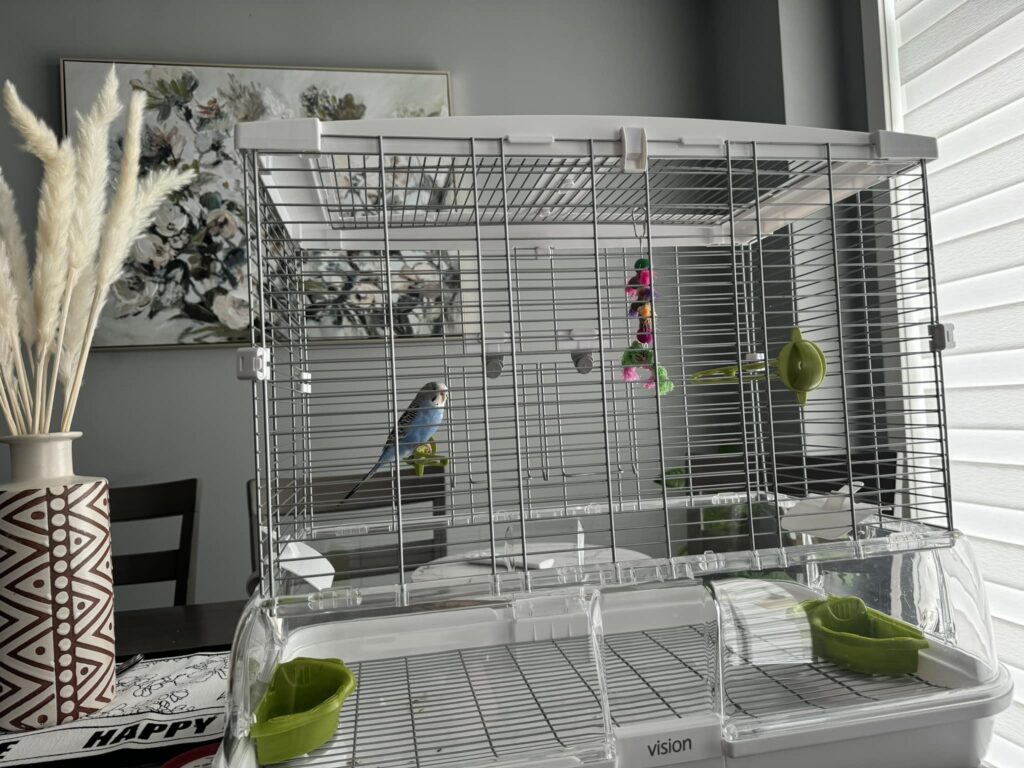
A budgie unsettled by environmental change typically goes silent for one to three days, then gradually returns to normal as it accepts the new situation. The bird itself is fine — it is just being cautious. As long as it is eating, drinking, and posturing normally, the noise will return on its own once the bird decides the world is safe again.
2. The Bird Is Cold
This is the second most common reason for overnight silence in UK homes, particularly during autumn, winter, and early spring. Budgies originated in the warm interior of Australia. They tolerate normal UK indoor temperatures well once they are acclimatised, but they cannot cope with sudden drops, draughts, or being placed in a room that gets noticeably colder overnight.
A cold budgie goes quiet, puffs up to trap warm air against its body, and tries to conserve energy. It may also sit lower than usual, tuck its head into its back feathers, or stop moving as much. This is the bird’s emergency response to cold — and while it is not immediately fatal if caught early, prolonged cold stress weakens the immune system and can lead to serious respiratory illness.
Common UK cold-stress situations I see at the counter:
- Cage placed near a single-glazed window where overnight temperatures plummet
- Cage in a conservatory, porch, utility room, or any space without proper heating
- Cage near an external door that opens regularly during the evening
- Heating turned down significantly overnight to save energy bills
- A draught from under a door or window the owner had never noticed
- Thin cage cover, or cover removed during a particularly cold night
- Cage on the floor where cold air pools

The ideal indoor temperature for a UK pet budgie is somewhere between 18 and 24 degrees Celsius. Anything dropping below 15 degrees for any meaningful length of time will cause stress, and below 10 degrees is dangerous. If you suspect cold, move the bird to a warmer, draught-free spot today, cover the cage properly tonight, and check that overnight temperatures in the room stay reasonable. Most cold-stressed budgies start vocalising again within 48 hours of being properly warmed.
3. The Bird Is Moulting
This catches a lot of UK owners by surprise. Budgies moult — usually once or twice a year — gradually replacing their old feathers with new ones. The process takes several weeks and is genuinely tiring for the bird. Many budgies go noticeably quieter during a heavy moult, sometimes for several days at a stretch, and this is completely normal.
Signs that a moult is the cause:
- Body feathers and pin feathers (small spiky new feathers) visible on the cage floor
- The bird looks slightly ragged, untidy, or scruffy compared to its usual self
- Increased preening behaviour throughout the day
- Visible new pin feathers, especially around the head and neck
- Sleeping more than usual, including short daytime naps
- Eating, drinking, and posturing otherwise completely normal
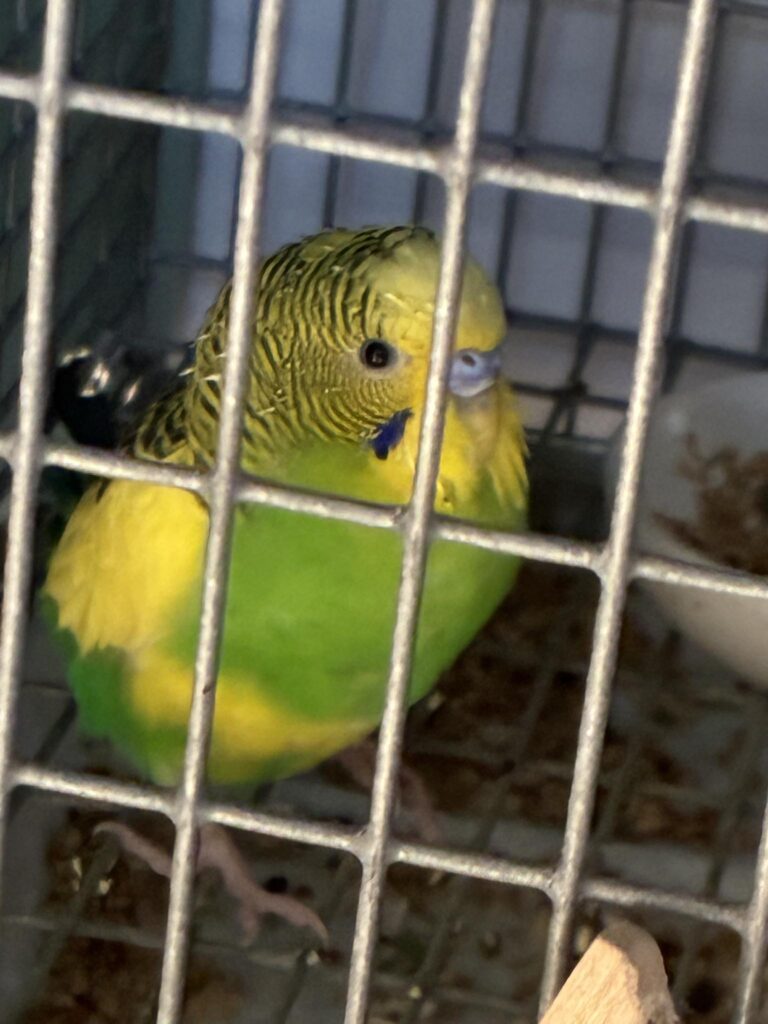
A moulting budgie may go quieter for the duration of the moult, which is normal and not a cause for concern as long as the bird is eating well and posturing properly. Support the moult by making sure there is plenty of cuttlefish bone in the cage, offering daily fresh vegetables for the extra nutrition, and keeping the environment calm. The chatter will return when the moult finishes — usually within two to four weeks.
4. The Bird Is Sleep-Deprived
Sleep is something UK budgie owners underestimate, and it is genuinely critical for budgie wellbeing. A budgie needs around ten to twelve hours of proper dark, quiet sleep every single night. Less than that, over several consecutive nights, leads to exhaustion — and an exhausted budgie goes quiet during the day.
Common UK sleep problems I see at the counter:
- Cage in a room where the TV is on late into the evening
- Streetlights, car headlights, or porch lights through uncovered windows
- Cage not properly covered at night, so the bird never gets full darkness
- Late-night household activity, slamming doors, or footsteps disturbing the bird
- A new pet (cat, dog, baby) causing low-level nighttime stress
- Inadequate cover — too thin, slipping off, or only covering part of the cage
- Long summer evenings without artificial darkness control

If you suspect sleep is the issue, the fix is straightforward. Cover the cage properly with a thick, breathable cover from dusk until morning. Move the cage to a quieter room overnight if possible. Keep evening household activity calm and predictable. Most sleep-deprived budgies return to their normal vocal selves within three to five nights of proper, uninterrupted rest.
5. Loneliness Or A Lost Companion
This is a quieter cause that many UK owners miss entirely. Budgies are intensely social birds. A bird kept alone bonds tightly to its human family, and if that bond is suddenly weakened — because the family has been away on holiday, the owner has returned to work full-time, or the household has otherwise changed — the bird can go silent for days or even weeks.
The clearest example I see is in budgies kept in pairs, where one bird has died. The surviving partner can go completely silent for a week or more, sometimes longer. This is grief — and yes, birds genuinely experience something very like it. The silence reflects the bird’s confusion, loss, and disorientation.
Signs of social silence:
- Recent change in human company — owner travelling, returning to work, family moved out
- A partner or cage-mate has recently died or been removed
- The bird spends more time staring at the window, door, or empty perches
- Reduced interest in toys and mirrors, but still eating
- The silence has lasted days rather than just one morning
- The bird seems generally subdued but not physically unwell
The fix depends on the cause. If a partner has died, considering a new companion bird is sometimes the right answer — but only after a few weeks have passed, and only if the surviving bird is otherwise healthy. If the cause is reduced human company, the bird needs more direct interaction — talking to it through the day, keeping the cage in a busy area, and giving it focused attention every evening. Most socially silent budgies recover gradually as the new routine becomes familiar.
6. Early-Stage Illness — The Warning Sign Most Owners Miss
This is the cause every responsible UK budgie owner needs to be alert to. Budgies hide illness instinctively. In the wild, a sick bird that shows weakness is the first one picked off by predators. They have evolved to mask their symptoms for as long as physically possible — and the very first sign of trouble, before any other symptom appears, is often a subtle change in vocalisation.
The bird does not look ill yet. The bird is not visibly puffed up. The bird is still eating and moving around. But the chatter has stopped. The whistle is missing. The bird is quieter than it has been in months, and you cannot quite say why.
This is the silence that worries me most. Not because it always means illness, but because if it does, you have caught it earlier than most owners do — and that is genuinely the best chance you have of treating it successfully.
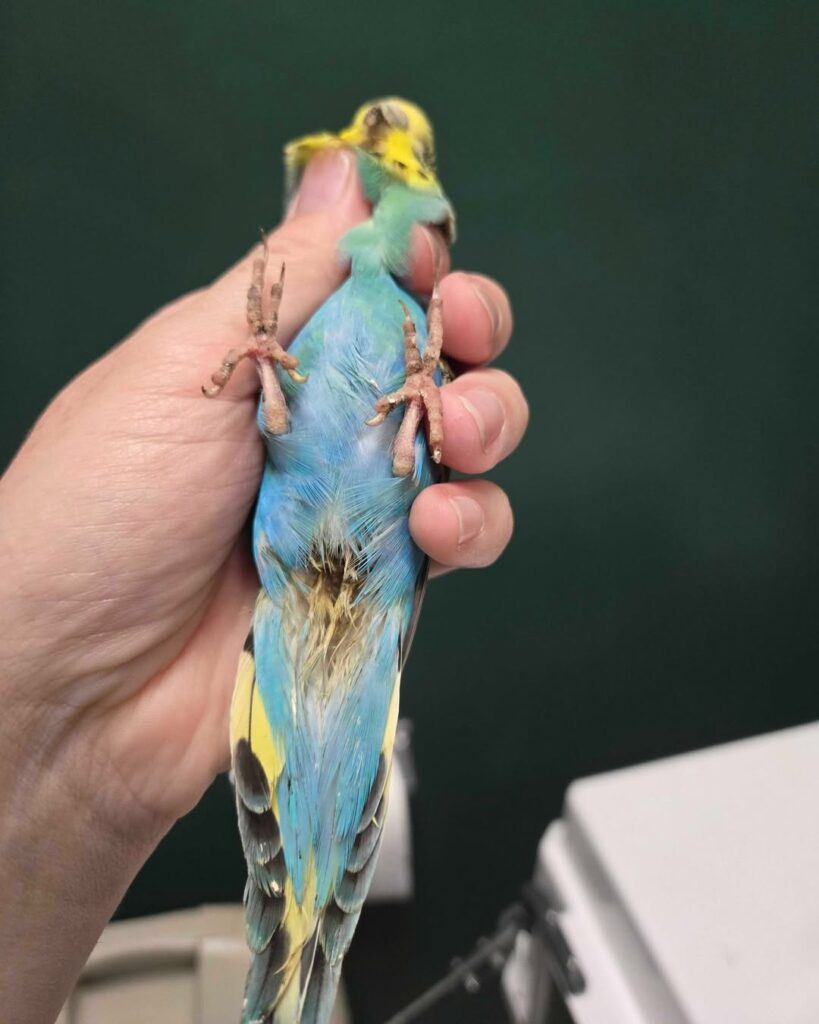
- Slight change in droppings — colour, consistency, or quantity
- Eating a bit less than usual, or being fussier with food
- Sitting more, flying or climbing less
- Less interactive with toys, mirrors, or people
- Slightly less alert when you walk into the room
- Sleeping during the day more than usual
- Tail bobbing very slightly with each breath, even at rest
- Cere or feathers looking slightly off
If you see any of these subtle signs alongside sudden silence, do not wait. Contact an avian vet, describe the changes carefully, and get professional advice. By the time a sick budgie is visibly unwell, the illness has usually progressed significantly. Acting on subtle early signs is exactly what gives the bird the best chance of recovery — and it is the difference I have seen between birds that recover and birds that do not, more times than I would like to count.
7. Hormonal Changes
This one is more common than people realise, particularly in spring and early summer when daylight hours suddenly increase. Hormonal budgies — both males and females — go through behavioural shifts that can include sudden changes in vocalisation. Some hormonal birds become noisier than usual; some go noticeably quieter. Either pattern is possible, and both can be normal.
Signs of hormonal silence:
- The bird is at sexual maturity (six months and older)
- The season is spring or early summer, or daylight hours have suddenly increased
- Cere colour may have brightened or changed subtly
- Increased interest in nest-like spots — paper, corners, dark spaces, food bowls
- Female birds may be shredding paper or showing nesting behaviour
- Male birds may be regurgitating to mirrors or toys
- The bird is otherwise eating, moving, and looking healthy
Hormonal silence in itself is harmless and will pass as the hormonal phase ends. However, hormonal birds — particularly females — can develop secondary problems like egg binding, so monitoring the bird carefully throughout this period is sensible. If a hormonal female stops vocalising AND stops eating, that is a vet matter immediately.
How To Tell The Causes Apart — Neil’s Counter Approach
When an owner brings in or rings about a quiet budgie, here is the order I work through to identify the cause. Most cases resolve in the first three or four questions.
| Question | What The Answer Tells Me |
|---|---|
| Is the bird puffed up, hunched, or showing emergency signs? | Yes = illness, vet today. No = continue. |
| Has anything changed in the room or routine in the last 48 hours? | Yes = environmental cause, resolves in days. |
| Is the room cold, draughty, or has overnight temperature dropped? | Yes = cold stress, fix the environment. |
| Are there feathers on the cage floor? | Yes = likely moult, support with nutrition and patience. |
| Has the bird been getting proper dark, quiet sleep? | No = sleep deprivation, cover the cage properly. |
| Has there been a change in company or a lost cage-mate? | Yes = social cause, give time and gentle attention. |
| Is it spring, and is the bird showing nesting behaviour? | Yes = hormonal, monitor for related issues. |
| Any subtle signs of illness alongside the silence? | Yes = vet advice today, do not wait. |
Working through these questions in order usually identifies the cause within five minutes. The vast majority of silent budgies fall into the first five categories, and most resolve themselves within 48 hours once the underlying cause is addressed.
Your First 24 Hours — Practical Action Plan
For UK owners who have just discovered a silent budgie this morning, here is the practical immediate action list — assuming the bird is not showing emergency signs.
- Do the two-minute observation — Posture, eyes, breathing, droppings, food. Confirm no emergency signs.
- Check the environment carefully — Temperature, draughts, recent changes, cage position. Fix anything obvious.
- Do not crowd the bird — Give it space and quiet today. Approach calmly when you do approach.
- Keep food and water fresh and accessible — Offer the usual variety, plus a small fresh vegetable portion if not normally given.
- Cover the cage properly tonight — Full coverage from dusk to morning. Quiet room if possible.
- Watch the droppings throughout the day — Normal droppings mean the bird is eating and processing food. Good sign.
- Note any other changes — Eating amounts, posture shifts, alertness, breathing rate.
- Reassess tomorrow morning — If still silent but otherwise normal, give it another day. If anything has worsened, ring a vet.
For most environmental, cold, moult, sleep, social, or hormonal causes, you will see noticeable improvement within 24 to 48 hours of addressing the underlying issue. Birds that remain completely silent and show any decline in posture, eating, or droppings need professional advice without delay.
What NOT To Do With A Silent Budgie
There are a few things owners do with the best of intentions that can actually make things worse. Avoid these.
- Do not pick the bird up or handle it unnecessarily — A stressed or unwell bird needs calm, not interaction
- Do not try to force it to vocalise — Playing recordings, whistling at it, or tapping the cage adds stress
- Do not feed unusual foods or supplements — Stick to the bird’s normal diet during a quiet period
- Do not move the cage “to see how it reacts” — Adding more change is exactly the opposite of what the bird needs
- Do not introduce a new bird hoping it will cheer up — A stressed or unwell bird should never have a new cage-mate
- Do not give it more than 48 hours of silence without action — If nothing improves, get professional help
- Do not try home remedies you have read online — Most are useless, some are actively harmful
When To Contact A Vet — Honest Guidance
After 35 years of selling these birds, this is when I tell owners to stop watching and start phoning.
- The bird is puffed up, hunched, or sitting on the cage floor
- Breathing is laboured, with visible tail bobbing or open beak
- The bird has not eaten or drunk for several hours
- Droppings have stopped or look very wrong
- Eyes are partially closed or look dull
- The silence has continued for more than 48 hours despite addressing obvious causes
- Any discharge from nostrils, eyes, beak, or vent
- The bird is unsteady on the perch or has fallen
- You see any of the subtle illness signs listed earlier in this article
A specialist avian vet is genuinely worth the extra journey. General small-animal vets often do not have the specific experience with budgies that makes the real difference. If you do not know an avian vet in your area, ring us at Paradise Pets and we will try to point you in the right direction.
Getting Your Budgie Vocal Again
For most causes of silence, recovery is gradual rather than dramatic. The bird will start with a few small contact chirps, then build back to normal chatter over a few days. Here is how to support that recovery without rushing it.
- Maintain a calm, predictable routine — Same times for uncovering, feeding, lights off
- Talk to the bird gently as you pass — Normal conversation helps re-establish the flock feeling
- Keep the radio or TV at low volume — Some background noise helps budgies relax and feel less alone
- Offer a small piece of millet spray — A favourite treat can be a positive trigger
- Avoid sudden movements or loud noises near the cage — Approach gently, speak as you do
- Give it time — Forcing vocalisation never works. Patience and stability do.
Most recovered budgies start with quiet contact calls — small soft chirps when you walk into the room. From there, the volume and variety builds back over days. By the end of a week, a recovered bird is usually back to its normal noisy self, chattering at you while you make the tea.

Frequently Asked Questions
Is it normal for a budgie to be quiet all day?
No. A healthy, settled budgie should vocalise during most of its waking hours. Brief quiet periods during the day — particularly around midday when budgies often nap — are completely normal. But a budgie that is completely silent for an entire day is showing something. Check the environment, posture, and recent changes first. If the silence continues into a second day, take it more seriously.
Why has my budgie gone silent overnight if he was singing yesterday?
Sudden overnight silence usually points to one of two things — an environmental change you may not have noticed (room change, cold draught, new noise), or the very first sign of illness. Look at the bird’s posture and droppings first. An alert bird with normal droppings probably has an environmental cause. A puffed-up bird with sparse droppings needs a vet today.
How long can a budgie be quiet before I should worry?
Up to 48 hours of unusual quietness, with the bird otherwise behaving and posturing normally, is usually not a cause for panic. Beyond that, or if any other signs appear — puffed-up posture, reduced eating, changed droppings — it becomes a real concern. Trust your instincts as an owner. If something feels wrong, it usually is.
Can a budgie go silent purely from stress?
Yes, absolutely. Stress is one of the most common causes of sudden silence. Environmental changes, predators spotted through the window, loud household events, new pets, or unexpected visitors can all cause a budgie to go quiet for hours or days. Identify the stressor, remove or reduce it, give the bird time, and the chatter usually returns without further intervention.
My budgie has gone quiet since its partner died. What should I do?
This is genuine grief and confusion, and it is harder on budgies than most owners realise. Make sure the surviving bird is eating, drinking, and posturing well. Give it extra gentle attention, talk to it more, and keep its routine stable. The silence may last days or even weeks. Consider a new companion only after a few weeks have passed and the bird is otherwise healthy and stable.
Should I uncover my budgie at night to check on it?
No, not at unusual times. Constantly uncovering and checking on a budgie disrupts the very rest it needs to recover. If you are worried, simply listen quietly — a healthy sleeping budgie occasionally rustles, shifts, or makes very small sounds. Complete silence at night is normal. Daytime behaviour is what you should be watching, not nighttime.
Where can I get honest budgie advice in Swindon?
Come and see us at Paradise Pets, Manor Garden Centre, Cheney Manor, Swindon SN2 2QJ. Or give us a ring on 01793 512400. Bring the bird if you can — five minutes of observation in person tells me far more than half an hour on the phone. The advice is free and we have been doing this for 35 years.
One Last Thing From Me
“My budgie has gone quiet overnight — is he going to die?” is one of the most common worried questions I get from UK owners, and one of the hardest to answer briefly. The honest answer, after 35 years of selling these birds, is — usually no, but sometimes yes, and the difference is always in the details.
Most silent budgies are not seriously ill. They are cold, stressed, moulting, under-rested, lonely, hormonal, or reacting to a change you may not have even noticed. Give them stability, warmth, proper sleep, and patient attention, and the chatter comes back. Most owners who walk into the shop worried walk out reassured, and a week later their budgie is singing along with the radio again.
But some silent budgies are showing the very first sign of illness — and those are the cases where catching it early genuinely matters. Trust the silence. Look properly at the bird. Check the environment honestly. And if something feels wrong, do not wait for it to look wrong before you act. By the time a budgie is visibly ill, the disease has often progressed beyond easy treatment.
The woman who rang me about Charlie that Tuesday morning? She moved the cage back to its proper warm spot, kept the window shut overnight, and gave him a couple of days of calm and warmth. By the Thursday morning, Charlie was singing along with her morning radio. She came in the following weekend with a tin of biscuits for the staff and tears in her eyes from the relief of it. That is the conversation I want every worried owner to have — answered quickly, fixed simply, and the bird back to its noisy, happy self within days.
If you are reading this and your budgie has just gone quiet, please do not panic. Go through the checks calmly. Address the obvious causes. Give it a day or two of stability. And if you are local and unsure, come and see us. We have helped hundreds of UK owners through exactly this worry, and we are always happy to take a look at the bird and talk things through properly.
Worried About Your Silent Budgie? Come And See Me
Bring the bird in or give us a ring. Five minutes of careful observation and a few honest questions usually identify what is going on. Free advice, no obligation. That is how we have done things for 35 years.
⭐ Customer Reviews
Amazing Bird Selection
Had a lovley visit today,staff were very friendly and very helpful,such a great petshop,their selection of birds is incredible,really impressed,thank so much to the staff at Paradise Pets

Friendly Helpful Staff
I have been coming to this place for years and they have a great stock of food for all types of pets. Have a great selection of small mammals and a lot of birds. Staff are friendly and helpful.

Great Quality Hutch
Bought a guinea pigs hutch and run combo, very happy with the service, the hutch was put in my car for me without even asking for help. The wood quality is very good, the instructions easy to follow and we are extremely happy with the fully built hutch. A good size for 2 guinea pigs

Response from Paradise Pets | Wiltshire
Thank you Melanie Latus Nice to provide services to you.
Best Bird Shop Around
It’s the best pet shop in and around Swindon. They always have an amazing selection of birds and all you need to keep them happy. I keep birds myself and the guys there are happy to answer questions and really know their stuff. I have seen budgies etc. in chain pet shops in the area looking really unhealthy and ill – I wouldn’t go anywhere else than Paradise Pets for animals.

Highly Recommended Bird Shop
I could not praise this shop enough. Really helped my Grandson buy his first bird and he’s loving it. Travelled from Somerset and was welcomed with open arms.

Great Shop with Competitive Prices
Great shop with amazing selection for small animals, hamsters, mice ect, highly recommend!
Also has a great selection for dogs & cats too & very competitive prices! 💖

