
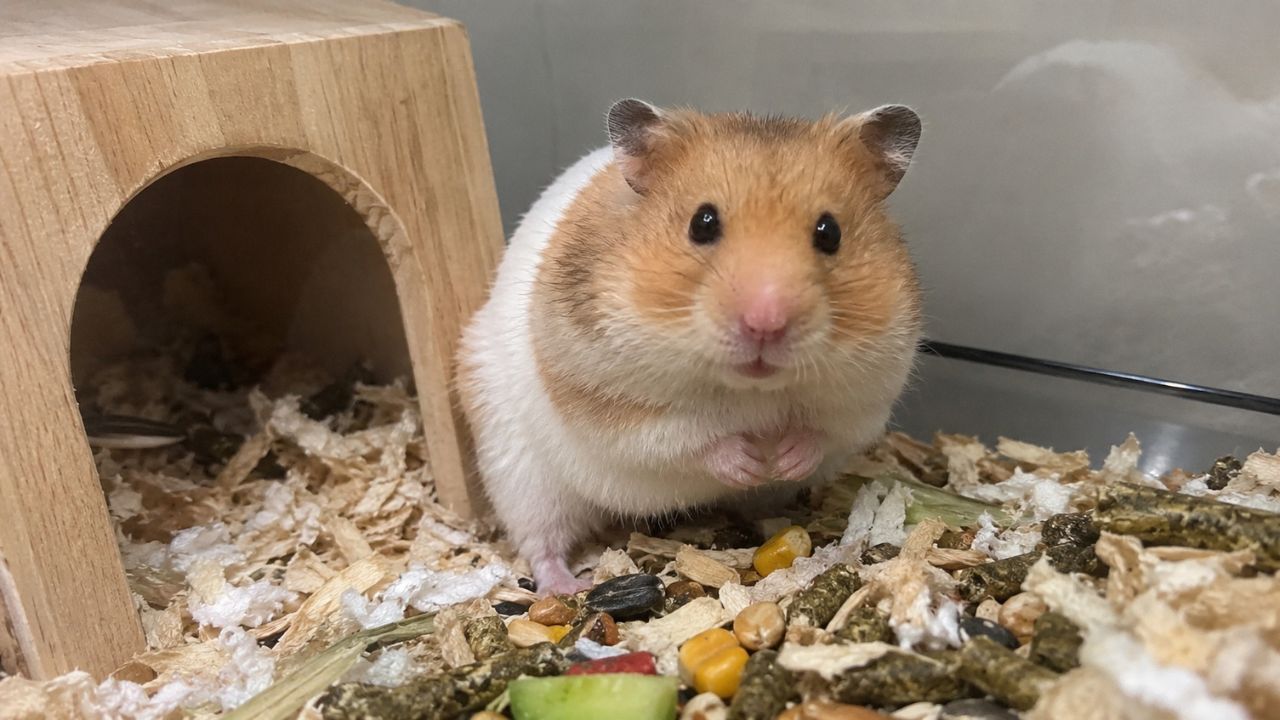

Neil has kept, bred, and sold hamsters at Paradise Pets Swindon since 1988 — over 35 years of first-hand experience with Syrian and dwarf hamsters. In that time, he has watched countless UK owners stare in delighted disbelief at their hamster’s stuffed cheeks. This is his honest, practical guide on what cheek-pouching really means in a hamster — and when (rarely) it might be a problem.
A young girl came into the shop one Saturday morning with her dad, clutching her phone. She was about nine years old and bursting with excitement. “Neil,” she said, “look at this video of Daisy. Her face is HUGE! Is she okay? Has she got mumps? Look at her cheeks!” She showed me a video of her Syrian hamster waddling around with cheeks bulging so dramatically that her face looked nearly twice its normal size.
I had to smile, because it is one of the most charming questions I get at the counter. Her dad looked a bit worried too. “We were not sure if it was normal,” he said. “She looks like a different animal.”
I showed the girl how to look for signs that the pouching was healthy (which it was), explained the wild instinct behind the behaviour, and reassured both of them that Daisy was a perfectly happy little hamster doing exactly what hamsters are designed to do. The girl went home delighted, and her dad rang the next week to thank me. Daisy was thriving, and the family had a new favourite thing to watch.
In 35 years of selling hamsters at Paradise Pets, I have answered the “why does my hamster stuff its cheeks” question more times than I can count. And every time, the answer is the same — it is completely normal, completely natural, and one of the joys of keeping these little animals. There are a few rare situations where cheek pouching can indicate a problem, and I will cover those too, so you have the complete picture.
This article is the conversation I have at the counter, written down for every UK hamster owner who has watched their pet’s cheeks bulge to incredible sizes and wondered what is going on. By the end of it, you will know exactly what your hamster is doing, why it is doing it, and when (very rarely) to be concerned.
First — What Is Actually Happening Inside Those Cheeks
Let me start with the biology, because it is genuinely fascinating once you understand it. A hamster’s cheeks are not just stretchy skin — they are specialised pouches built into the inside of the cheeks that can hold a remarkable amount of food and material.
These pouches:
- Extend from the cheeks all the way back to the shoulders — yes, really, that far
- Can stretch enormously — sometimes doubling the apparent size of the hamster’s head
- Are made of tough, dry tissue — designed to carry rough materials safely
- Do not produce saliva — food stays dry while transported
- Have a special muscle system — the hamster controls filling and emptying
- Are essentially mobile storage units — biological shopping bags
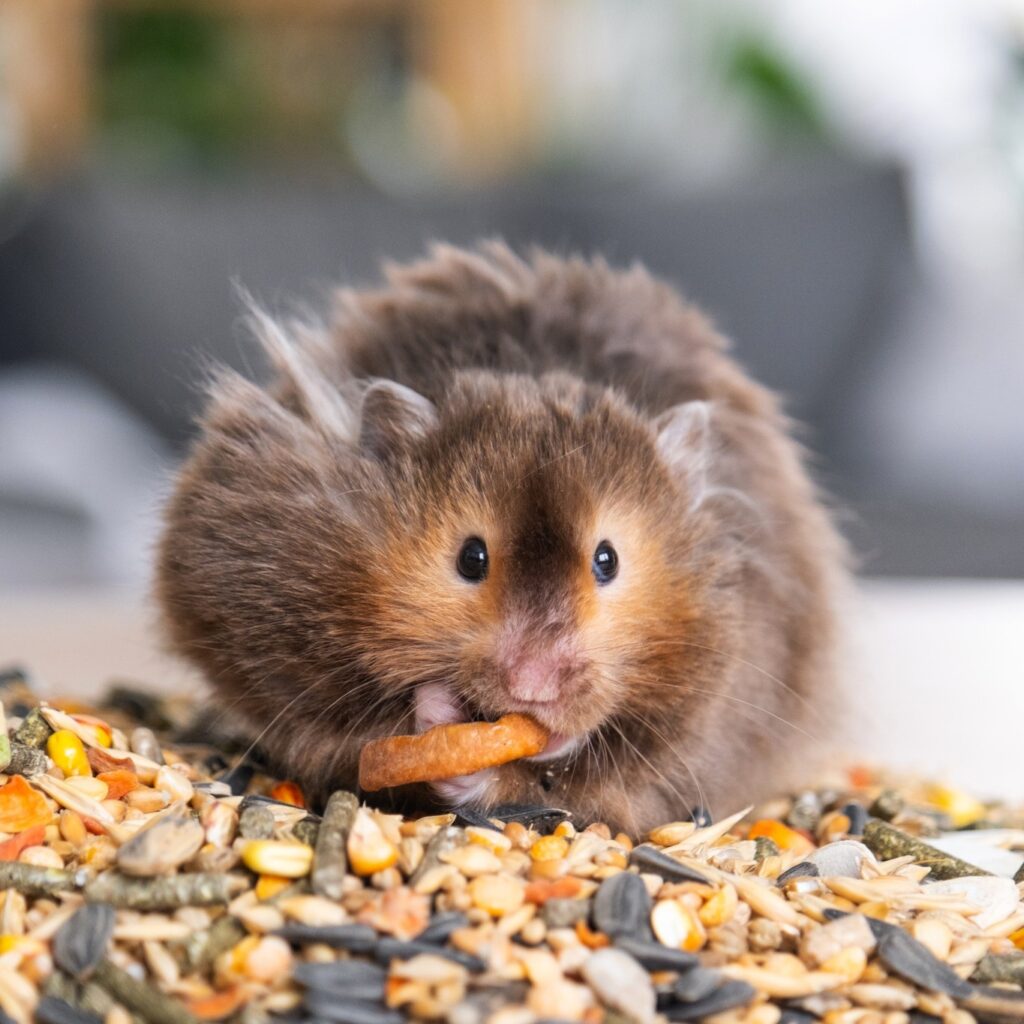
The amazing thing is that hamsters can fit truly impressive amounts in their pouches. A Syrian hamster can carry around 20% of its body weight in food at once. Dwarf hamsters carry proportionally similar amounts. It is the equivalent of a person carrying a full backpack of groceries — but tucked into their face.
This is not a quirk or accident of evolution. It is a highly developed system that has helped hamsters survive in harsh desert environments for thousands of years. Understanding this changes how you see the behaviour completely.
Why Hamsters Stuff Their Cheeks — The Real Reasons
After 35 years, I can tell you the main reasons hamsters do this. All of them are positive, and understanding them helps you see your pet’s behaviour with proper context.
Reason 1: Hoarding For Their Hidden Stash — The Main Driver
This is the cause behind almost all hamster pouching. Hamsters are compulsive hoarders by nature. They do not eat all their food where they find it — they collect it, carry it, and stash it in hidden caches throughout their territory. This behaviour is so deeply hard-wired that even hamsters that have never known hunger still hoard every single day.
The instinct dates back to their wild ancestors. Syrian hamsters originated in the deserts of Syria and Turkey. Food was scarce. Storms could bury access for days. Predators could prevent foraging. A hamster that could carry large amounts of food back to a hidden burrow at night had a much better chance of surviving the next drought, storm, or threat.
Your domestic hamster has no idea it lives in a safe cage with reliable food. Every instinct still tells it to stockpile against future shortages. So it stuffs its cheeks, waddles back to its favourite corner, and unloads its treasure into its private hoard. Then it goes back for more.
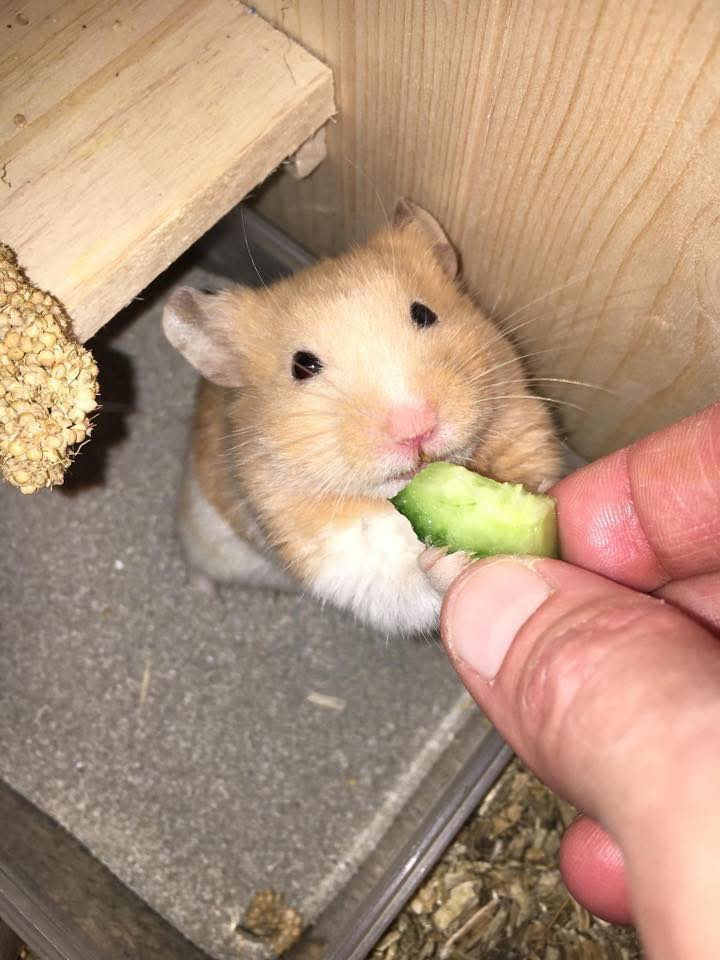
- Seeds and dry food
The most common pouched items — easy to carry, easy to store. - Pellets
Larger pieces packed efficiently into the pouches. - Fresh vegetables and fruit
Hamsters will pouch these too, though they spoil — see warning below. - Bedding material
Often pouched and used to line the favourite sleeping spot. - Small toys or treasures
Some hamsters pouch tiny objects that fit — sometimes amusingly. - Treats
Any small treat may be immediately pouched for “later.”
Reason 2: Saving Food For Later
This is related to hoarding but worth covering separately. Even when not actively building a stash, a hamster will often pouch food it cannot eat immediately. If you put down more than the hamster can eat right away, it will pouch the rest and take it to its favourite location to eat at leisure.
This is normal behaviour for a meal-time hamster — eat some, pouch the rest, return to a safe spot to finish eating. You will often see this when you put fresh food in the cage. Within minutes, the hamster has cleared the bowl by transporting the food to a hidden location piece by piece.
Reason 3: Carrying Material For Nesting
Hamsters use their cheek pouches for bedding too. When they decide it is time to update their nest, you may see them carrying mouthfuls of bedding from one location to another. This is particularly common when:
- You have just cleaned the cage and added fresh bedding
- The hamster is preparing for sleep
- It is moving its nest location
- Cold weather triggers more nest-building
- A pregnant female is preparing for babies
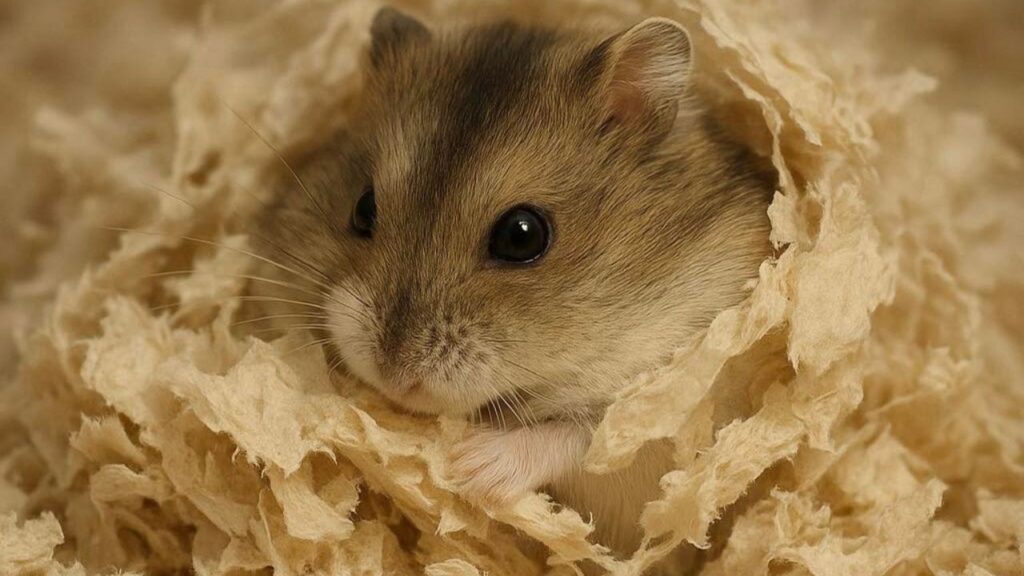
This is one of the funniest things to watch — a hamster waddling along with cheeks bulging full of soft bedding, looking like it has its arms full of pillows. The behaviour is completely normal and shows the hamster is engaged in healthy natural behaviours.
Reason 4: Avoiding Cage-Mate Theft (Less Common In UK Pets)
In wild hamster colonies, pouching food is also a way to keep it safe from other hamsters. By the time a competitor sees the food, it is already in the pouch and being transported to a private location.
In UK pet keeping this matters less because Syrian hamsters should be kept alone (they fight if housed together) and dwarf hamsters often hoard regardless of whether they have cage-mates. But the instinct is part of why the behaviour persists so strongly even in solitary pet hamsters.
Reason 5: Fast Transport During Foraging
The final cause is purely practical. Cheek pouches let a hamster grab a lot of food quickly during a brief foraging window, then transport it back to safety. In the wild, the longer a hamster spends out in the open foraging, the more vulnerable it is to predators. Pouching allows quick gathering followed by safe consumption later.
Your domestic hamster still has this instinct. The faster it can clear an area of food, the safer it feels. So if you scatter food for foraging enrichment, expect to see speedy pouching as the hamster collects everything before returning to its safe space to enjoy it.
What Healthy Cheek Pouching Looks Like
This is the part owners often ask about, because the appearance can be dramatic. A hamster with completely stuffed cheeks looks comical and slightly alarming to new owners. Here is what healthy pouching looks like.
- Cheeks fill and empty regularly
The hamster pouches, transports, unloads, repeats. Movement is constant, not stuck. - Both cheeks fill roughly evenly
Most hamsters use both sides, even if one slightly more than the other. - The hamster moves normally
Even with full cheeks, the hamster waddles confidently and behaves normally. - No drooling or saliva on the cheeks
Healthy pouches stay dry — the inside is designed for dry storage. - Hamster can still eat from the pouches
You will see the hamster reach into its pouches with its paws to pull food out. - Cheeks completely deflate after unloading
After the hamster transports its load, the cheeks return to normal flat appearance. - Hamster is otherwise active and eating
Pouching happens alongside normal behaviour, not instead of it.
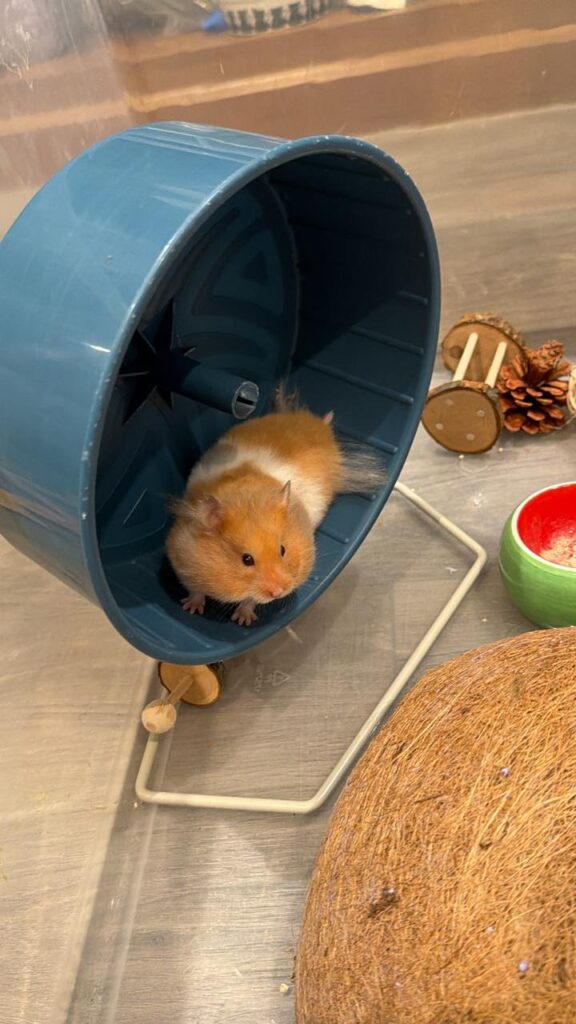
A healthy hamster will fill and empty its pouches multiple times a day, particularly when fresh food is provided. The behaviour is dynamic — load up, transport, unload, return for more. If you watch over an hour or two, you will see the whole cycle play out several times.
How A Hamster Empties Its Pouches
This is genuinely one of the cutest things to watch. A hamster empties its pouches using a combination of muscle contractions and its tiny paws.
The process:
- Hamster arrives at its hoard or eating spot
- Sits up on its haunches
- Uses its front paws to “milk” the cheek pouches from back to front
- Items pop out one at a time into the paws or onto the floor
- The hamster either sorts them, eats them, or places them in its stash
- Cheeks visibly deflate
- Hamster either eats, rests, or heads back for more
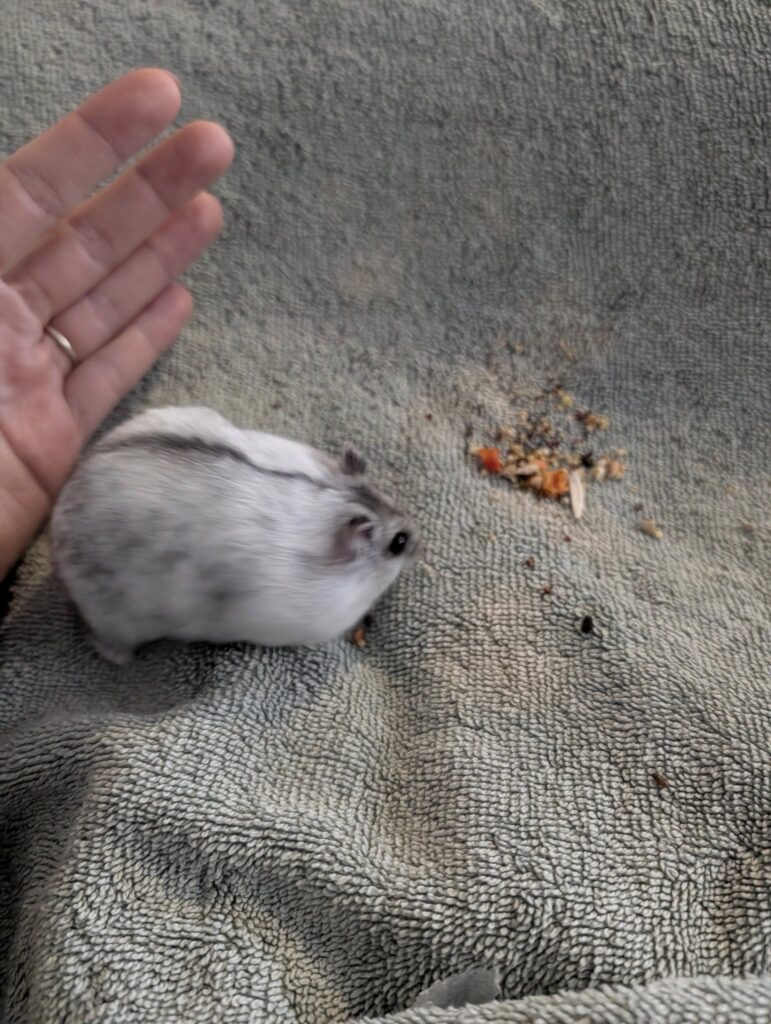
Watching this process is one of the small daily pleasures of hamster keeping. The level of skill and dexterity in those tiny paws is remarkable, and the seriousness with which the hamster handles each item is genuinely entertaining.
The 5% — When Cheek Pouching Might Be A Problem
In the interest of being honestly thorough, let me address the rare situations where cheek pouching can indicate a problem. About 95% of the time, stuffed cheeks are perfectly normal and healthy. But occasionally, there are genuine concerns to watch for.
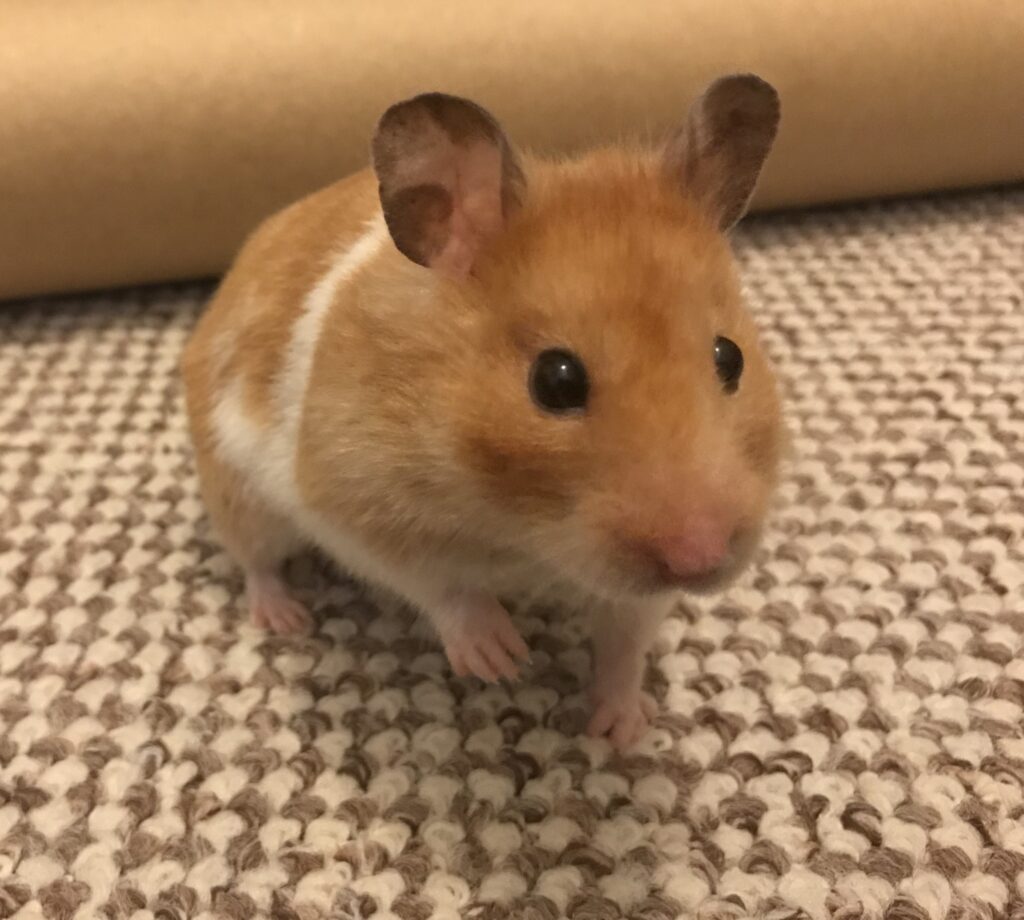
- Cheeks stay swollen and do not empty — even after the hamster reaches its usual hoard spot
- One cheek significantly larger than the other for days — without alternating
- Visible discharge, drooling, or wetness around the mouth — pouches should stay dry
- Bad smell from the mouth or face area
- Hamster paws at its face repeatedly — suggests something stuck or painful
- Reduced eating despite full-looking cheeks
- Hamster appears unwell — lethargic, fluffed up, not active
- Weight loss alongside persistent pouch swelling
The conditions that can cause these signs are uncommon but worth knowing about.
1. Impacted Cheek Pouches
Sometimes food, bedding, or other material gets stuck inside the pouch and the hamster cannot expel it. This is called impaction. It can be caused by sticky foods (bread, peanut butter, sticky fruit), sharp objects, or simply too much packed in too tightly.
Signs: cheek stays full for hours or days, hamster paws at the face, possible bad smell.
What to do: see a small-animal-savvy vet. The vet can usually empty the pouch under sedation. Do not try to do this yourself — pouches are delicate and you can cause real damage.
2. Pouch Infection
Sometimes food gets trapped, decomposes, and causes a bacterial infection inside the pouch. The hamster’s pouch becomes inflamed and may swell visibly.
Signs: one cheek persistently swollen, possible drool or wetness, bad smell, hamster off food.
What to do: vet visit. Treatable with antibiotics and pouch cleaning, but needs proper diagnosis.
3. Pouch Eversion (Rare)
This is uncommon but worth mentioning. Occasionally, a hamster’s cheek pouch turns inside out and protrudes from the mouth. It looks alarming — a pink, fleshy mass visible at the mouth.
Signs: visible pink tissue protruding from mouth, hamster distressed.
What to do: emergency vet visit. Pouch eversion needs prompt veterinary attention. Treatable but requires expert care.
4. Tumours In The Pouch
Older hamsters can develop tumours, sometimes in the pouch area. These cause persistent swelling that does not come and go like normal pouching.
Signs: persistent swelling that does not deflate over days, possibly affecting one cheek consistently, often in older hamsters.
What to do: vet examination. Hamster tumours are sometimes treatable depending on type and location.
For more on hamster health emergencies, our honest UK guide on hamsters that stop eating covers the broader emergency picture every UK owner should know.
What You Should And Should Not Feed A Hamster That Pouches
Since cheek pouching is such a constant behaviour, what you feed your hamster matters for the pouches’ health. Some foods are problematic for pouching, even if they are fine for the hamster overall.
- Sticky foods — bread, peanut butter, sticky honey-coated treats. Can cause impaction.
- Sharp or pointed foods — broken nuts with sharp edges, hard sharp seeds. Can scratch the pouch lining.
- Sugary wet foods — soft fruit pieces that release juice in the pouch. Can encourage bacterial growth.
- Hot foods — anything warm should never go in the cage. Burns possible.
- Spoiled food — never offer food past its prime.
- Cotton wool or fluffy bedding — can get stuck and cause impaction or strangulation.
Safe pouching-friendly foods include:
- Quality dry hamster mix (the foundation of the diet)
- Pellets formulated for hamsters
- Small dried fruit pieces (in moderation)
- Sunflower seeds (small treat amounts)
- Fresh vegetables in small bite-sized pieces (eaten promptly)
- Plain unscented paper-based bedding
The Strange Things Hamsters Pouch — Owner Stories
Over 35 years, I have heard some genuinely funny stories from UK hamster owners about the unexpected things their pets have pouched. It is worth knowing that hamsters will sometimes pouch items you would not expect.
Common “surprise” items hamsters have pouched (according to UK customers over the years):
- Small toys belonging to other pets
- Pieces of cardboard from the cage
- Tiny bits of plastic (potentially dangerous — see warning)
- Their own droppings (not always, but some hamsters do this)
- Small stones from a play area
- Their own babies (mother hamsters move babies this way — completely normal)
- Coins, buttons, anything tiny they find loose
The lesson — keep small loose items out of the hamster’s reach during out-of-cage time. Anything small enough to fit in the pouch is fair game, and not everything is safe to be pouched.
The Mother Hamster Story — Babies In Pouches
This deserves its own brief mention because it can be alarming if you do not know about it. Mother hamsters move their babies by carrying them gently in their cheek pouches. New owners who breed hamsters sometimes panic when they see a mum hamster with a baby in her cheeks — it looks like she is eating it.
She is not. This is completely normal maternal behaviour, used to move babies between nest locations or to bring stragglers back to the nest. The babies are unharmed and the mother is being a good parent. Leave her to it and do not disturb her.
How To Support Healthy Cheek Pouching In Your Hamster
Most pouching happens naturally without any intervention from owners. But there are a few things you can do to support healthy pouching behaviour and minimise the rare risks.
- Provide a varied dry food mix — gives the hamster plenty of pouching options
- Offer foraging opportunities — scatter food, hide it, let the hamster work for it
- Use safe paper-based bedding — never cotton wool or fluffy synthetic materials
- Provide a proper sleeping/nesting area — gives the hamster a destination for its hoards
- Avoid sticky, sharp, or sugary foods that cause pouch problems
- Watch the cheek-emptying behaviour daily — quick check that everything is normal
- Clean the cage thoroughly weekly — including hidden hoards which can spoil
- Replace any hoarded fresh food before it rots — particularly fruit and vegetables
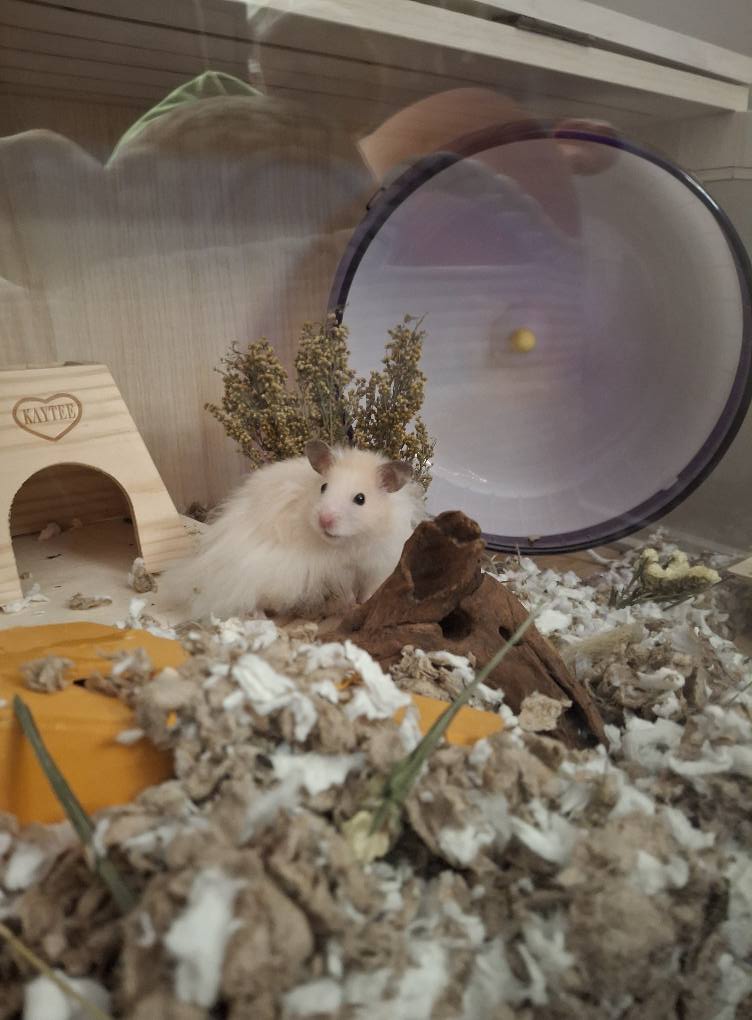
For more on overall hamster husbandry, our complete UK hamster care guide covers the housing, diet, and routine that supports healthy pouching and overall welfare.
What I Tell Owners At The Counter About Cheek Pouching
When a UK owner asks me about their hamster’s stuffed cheeks, the conversation is usually short and reassuring. Here is what I ask, and what the answers tell me.
- How long has the cheek been full?
Hours of normal filling-and-emptying = fine. Days of persistent swelling = vet check. - Are both cheeks fluctuating, or is one stuck?
Both moving = normal. One stuck for days = possible problem. - Is the hamster otherwise active and eating?
Yes = healthy pouching. No = investigate further. - Any drool, wetness, or smell around the face?
None = normal. Yes = vet check. - What have you been feeding?
Any sticky, sharp, or unusual foods recently? - Has the hamster been pawing at its face?
Suggests something stuck or uncomfortable. - How old is the hamster?
Older hamsters more prone to tumours.
Five minutes of these questions usually confirms that the pouching is completely normal and the owner can stop worrying. The rare cases that flag a problem are usually clear within these questions.
Frequently Asked Questions
Is it normal for hamsters to stuff their cheeks?
Yes, completely normal. Cheek pouching is one of the most natural and important behaviours a hamster does. They use their pouches to carry food, bedding, and treasures back to their hidden stash. A hamster that frequently fills and empties its cheeks is showing healthy normal behaviour. The pouches extend all the way back to the shoulders and can hold a remarkable amount of material.
How much can a hamster fit in its cheek pouches?
A Syrian hamster can carry approximately 20% of its body weight in its cheek pouches. The pouches extend from the cheeks back to the shoulders and can stretch enormously, sometimes nearly doubling the apparent size of the hamster’s head. Dwarf hamsters carry proportionally similar amounts. The capacity is genuinely impressive for such a small animal.
Why does my hamster’s cheek look stuck or swollen?
Usually, the hamster is in the middle of transporting items and will empty the pouches when it reaches its destination. If the cheek stays swollen for more than a day, particularly with only one cheek affected, drool, or bad smell, this could indicate an impacted pouch, infection, or in older hamsters a possible tumour. See a small-animal-savvy vet if persistent swelling occurs.
Can hamsters choke on what they pouch?
The cheek pouches are separate from the throat, so items in the pouches do not block breathing. However, hamsters can have problems with impaction (items stuck in the pouch) from sticky foods, sharp items, or cotton wool bedding. The choke risk comes more from sharp or inappropriate items being pouched, not from filling the pouches itself.
What should I do if my hamster has something stuck in its cheek?
Do not try to remove anything from a hamster’s cheek pouch yourself — the pouches are delicate and you can cause serious injury. If you suspect impaction, see a small-animal-savvy vet. The vet can examine the pouch and, if needed, empty it under sedation. Most pouch problems are treatable with proper veterinary care.
Why does my mother hamster carry her babies in her cheeks?
This is normal maternal behaviour. Mother hamsters move their babies between nest locations or retrieve straying babies by gently carrying them in their cheek pouches. It looks alarming if you have not seen it before, but the babies are unharmed. Leave the mother undisturbed — this is good parenting, not anything to worry about.
Do dwarf hamsters pouch the same as Syrian hamsters?
Yes, all hamster species use cheek pouches, including all dwarf varieties (Roborovski, Campbell’s, Russian Winter White, Chinese). The behaviour is universal across hamster species. Dwarf hamsters have proportionally similar pouches and the same instinct to hoard. The only difference is smaller scale — they look less dramatic when full than a Syrian hamster does.
Where can I get honest hamster advice in Swindon?
Come and see us at Paradise Pets, Manor Garden Centre, Cheney Manor, Swindon SN2 2QJ. Or give us a ring on 01793 512400. The advice is free and we have been doing this for 35 years.
One Last Thing From Me
“Why does my hamster stuff its cheeks?” is the question. The honest answer, after 35 years of selling these animals, is — because hamsters are clever, hard-wired hoarders, and their cheek pouches are one of nature’s most beautiful and efficient designs. It is normal, it is healthy, it is one of the joys of keeping them, and you can simply enjoy watching it.
The young girl and her dad I mentioned at the start of this article? They left the shop that day delighted. The girl had a new appreciation for what Daisy was actually doing, and the whole family started watching for the cheek-stuffing behaviour every evening when Daisy came out to play. They told me later that watching Daisy waddle around with her stuffed cheeks had become one of the family’s favourite things. Even the dad, who had been initially worried, had become fascinated by the behaviour.
That is the outcome you want — a delighted understanding of one of the most charming things your pet does, rather than worry about whether something is wrong. Cheek pouching is a feature of being a hamster, not a bug. Embrace it, watch it, photograph it, share it with friends. Daisy and every hamster like her is showing off one of the most remarkable adaptations in the animal kingdom.
If you are reading this with a stuffed-cheek hamster on your screen right now, take a moment to appreciate the engineering. Pouches that extend to the shoulders. Dry tissue designed to carry rough materials safely. Muscular control that lets the hamster fill and empty at will. Tiny paws that “milk” the pouches when unloading. It is genuinely amazing.
And if you ever have one of the rare situations where pouching does become a problem, you now know what to look for. Most owners will never need to worry. The few who do can act quickly with proper vet care.
If you have any questions about your specific hamster, come and see us. We are happy to talk through any behavioural curiosity or concern. That is what we are here for, and helping owners understand and enjoy their pets is one of the most rewarding parts of the job.
Curious About Your Hamster? Come And See Me
Bring your questions about your hamster, its behaviour, or anything else. I will help you understand what is normal and what is not. Free advice, no obligation. That is how we have done things for 35 years.