


Neil has kept, bred, and sold hamsters at Paradise Pets Swindon since 1988 — over 35 years of first-hand experience with Syrian and dwarf hamsters. In that time, he has answered more “why is my hamster squeaking at night?” questions than he can count. This article is his honest, practical guide on what each sound actually means.
A young mum came into the shop on Monday morning, tired and worried. Her daughter’s hamster had been making strange squeaking sounds for the last three nights, keeping the whole family awake. “Neil,” she said, “we don’t know if he’s in pain, scared, or just being noisy. None of us have slept properly. Is he ill?”
It is a question I get asked at the counter at least once a week, usually by tired parents who have been woken up at 2am by sounds they have never heard before. And the honest truth is — most of the time, the hamster is fine. But “most of the time” is not “always,” and the difference matters.
In 35 years of selling hamsters, the most consistent lesson I have learned is this: a hamster’s sounds tell you exactly what is going on, if you know how to read them. Some squeaks are completely normal. Some are warning signs. And telling the difference is something every UK hamster owner should learn — because it can be the difference between a peaceful night and a vet emergency.
This article is the conversation I have at the counter properly, written down for every worried parent and family who has been woken up by hamster sounds they do not understand. By the end of it, you will know what each squeak means and what to do about it.
Why Do Hamsters Squeak At Night Specifically?
Let me start by answering the question most owners do not realise they should be asking. Because the timing of the squeaking matters more than the squeaking itself.
Hamsters are nocturnal animals. That means they sleep through most of the day and become genuinely active from late evening through to the early hours of the morning. By the time a UK family is going to bed at 10 or 11pm, the hamster is just getting properly awake. By 2 or 3am, it is at peak activity. By 6am, when most families are starting to stir, the hamster is settling down to sleep.
So when you hear a hamster squeaking at night, you are usually just hearing the sounds it makes during its normal active hours. The hamster is doing what hamsters do — eating, drinking, running on the wheel, exploring, communicating. The squeaking is part of that activity, and most of the time it is completely normal.
The reason you only notice it at night is because the house is quiet. During the day, the same sounds would be lost in the background noise of normal life. At night, every small squeak echoes through the house. This catches new owners off guard.
That said, some squeaks are not normal — and those are the ones we need to talk about.

The 7 Main Hamster Sounds — And What Each One Means
After 35 years, I can usually tell what a hamster is communicating just by listening to it. Here are the seven main sounds I hear in the shop, what they mean, and whether they should worry you.
Sound 1: Short High-Pitched Squeaks (Excitement Or Greeting)
This is by far the most common sound new owners hear at night, and it is almost always completely fine. Short, high-pitched squeaks — usually in quick bursts of two or three — are the hamster’s way of expressing excitement, anticipation, or greeting.
You will hear this when the hamster sees you coming, when you put fresh food in the bowl, when it climbs onto its wheel, or when it discovers something new in the cage. The sound is brief, sharp, and often paired with active movement — running to the cage front, standing up on hind legs, sniffing the air.
This is the equivalent of a dog wagging its tail. Nothing to worry about. In fact, frequent excited squeaks are usually a sign of a happy, engaged hamster.

What to do
Nothing — enjoy it. These sounds mean your hamster is alert, engaged, and interested in its world. If anything, they are a positive welfare sign. The only adjustment you might want to make is moving the cage out of a bedroom if the squeaks are disrupting sleep — that is about your comfort, not the hamster’s wellbeing.
Sound 2: Continuous Squeaking Or Squealing (Stress Or Fear)
This one is different, and worth taking seriously. A hamster that is producing continuous high-pitched squeaks or squeals — usually loud, urgent, and lasting several seconds at a time — is usually frightened or stressed.
The typical situations where you hear this:
- When picked up by someone the hamster does not trust
- When startled by a sudden loud noise or light
- When two hamsters are housed together and fighting
- When a cat or dog is too close to the cage
- When the hamster feels trapped or cornered
- When children are too rough during handling
This is not a “normal background” sound. If you hear it, something is wrong in the immediate environment.
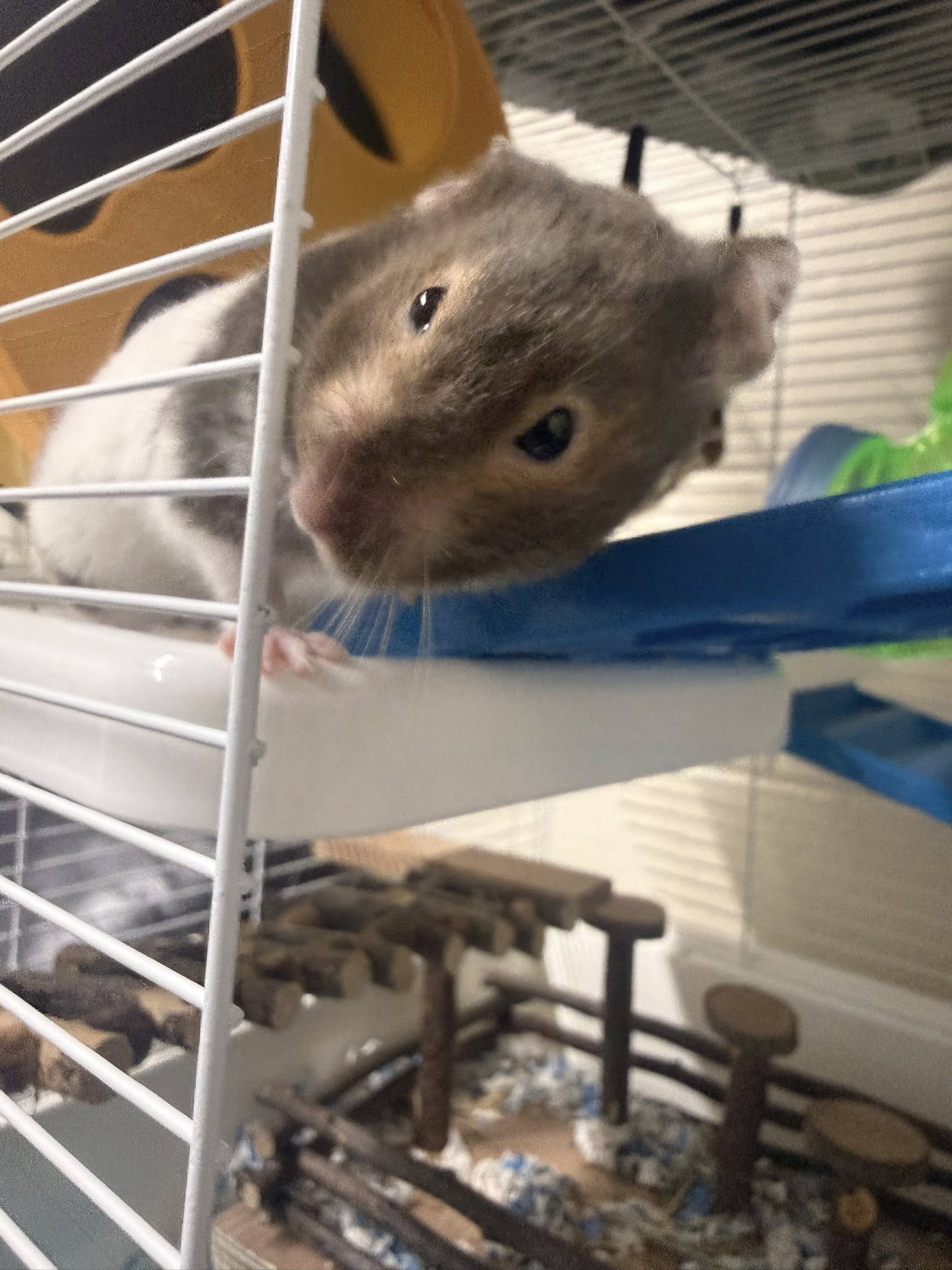
What to do
Identify and remove the stressor immediately. If the hamster is being handled, put it back gently and give it space. If another animal is near the cage, move them apart. If two hamsters are fighting, separate them — this is critical, because hamster fights can be fatal within minutes.
Most importantly, leave the hamster alone for a while after the stress event. Repeated stress like this leads to chronic problems including reduced appetite, withdrawal, and increased illness risk.
Sound 3: Chirping Or Chattering (Contentment Or Communication)
This is one of the loveliest sounds you can hear from a hamster, and it confuses owners because it does not sound like what they expect from a small rodent. Some hamsters — particularly dwarf hamsters — produce soft chirping or chattering sounds that almost resemble birds.
These sounds are usually heard when:
- The hamster is eating or stuffing food into its pouches
- It is grooming itself contentedly
- It is exploring familiar territory calmly
- It is interacting peacefully with its environment
The sounds are soft, repetitive, and often almost musical. They are the hamster equivalent of a cat’s purr — a sign of contentment.
What to do
Enjoy it. Chirping is a strong positive welfare signal. A hamster that chirps frequently is generally a relaxed, comfortable hamster that feels safe in its environment.
Sound 4: Teeth Grinding Or Chattering Teeth (Warning Or Pain)
This one needs careful attention because it can mean two completely different things, and they need different responses.
A hamster’s teeth grinding sound — a quick, repetitive clicking or grinding noise — most often means warning. The hamster is telling another animal (or you) to back off. It is a defensive signal that says “do not come any closer.” If you ignore it, the hamster may bite.
But the same sound, in a different context, can also indicate pain. A hamster that is sitting still, hunched, and grinding its teeth is often in genuine physical discomfort — internal pain, dental problems, or illness.
The way to tell the difference is the bird’s posture and surroundings:
- Warning grinding — alert, defensive posture, often facing the perceived threat, may also be vocalising or moving away
- Pain grinding — sitting hunched, eyes half-closed, not actively engaging with environment, often combined with reduced eating or sluggish movement
- Warning grinding — usually short bursts triggered by specific events
- Pain grinding — sustained, repeated, often when nothing in particular is happening

What to do
For warning grinding — back off, give the hamster space, and try again later when it is more relaxed.
For pain grinding — this is a vet visit, ideally an exotic vet who has experience with hamsters. Pain in hamsters is genuine and often signals something serious. Do not wait.
Sound 5: Wheeze, Whistle, Or Clicking Breathing (Respiratory Illness)
This is one of the most important sounds to recognise, because it almost always means something is wrong. A hamster that is making wheezing, whistling, or clicking sounds when breathing has a respiratory problem — almost always.
The sound is usually faint and you have to listen carefully. It is most noticeable when the hamster is sitting still or sleeping. You may also see signs of effort with breathing — the sides moving more than usual, or the head bobbing slightly with each breath.
Hamster respiratory infections are serious. They progress fast, and pneumonia in a hamster can be fatal within 48 hours if not treated. This is one of the few hamster sounds that requires same-day veterinary attention.

- Wheezing, whistling, or clicking sounds when breathing
- Visible effort with breathing — sides or head moving more than usual
- Discharge from nose or eyes
- Sneezing repeatedly
- Reduced activity and appetite
- Sleeping more than usual
- Fluffed up appearance
What to do
See an exotic vet today. Respiratory infections in hamsters need antibiotics, and the choice of antibiotic matters — many common medications are not suitable for hamsters. While you arrange the vet, keep the cage warm, away from drafts, and keep the hamster as undisturbed as possible.
For more on the urgent signs that your hamster is unwell, our guide on hamsters that have stopped eating covers the broader emergency picture.
Sound 6: Hissing Or Snorting (Aggression Or Threat Response)
A hamster that is hissing or snorting is genuinely angry or feels seriously threatened. The sound is harsh, sharp, and very different from the normal squeaks and chirps. You may also see the hamster lifting its front paws, baring its teeth, or rolling onto its back as a defensive posture.
This happens most often when:
- The hamster is being handled when it does not want to be
- Two hamsters are housed together and one is aggressive towards the other
- The hamster has been startled or feels cornered
- A pregnant or nursing female feels her babies are threatened
- The hamster is in pain and being approached
What to do
Stop whatever you are doing and back away. Do not try to pick up a hissing hamster — you will be bitten, and the bite will be hard. Give the animal time and space to calm down.
If two hamsters are hissing at each other, separate them permanently. Syrian hamsters in particular are solitary animals and should not be housed together once they reach about 8 weeks old. Continued housing leads to fights that can be fatal.
Sound 7: Bar Biting Or Cage Climbing Noises (Boredom Or Stress)
This is not technically a squeak, but it is the most common “nighttime sound” complaint I get from parents — and it is worth addressing.
A hamster that spends its active hours biting the cage bars, climbing the bars repeatedly, or scrabbling at the corners of the cage is showing signs of boredom or stress. The sounds are repetitive, metallic, and can be very loud at night when the house is silent.
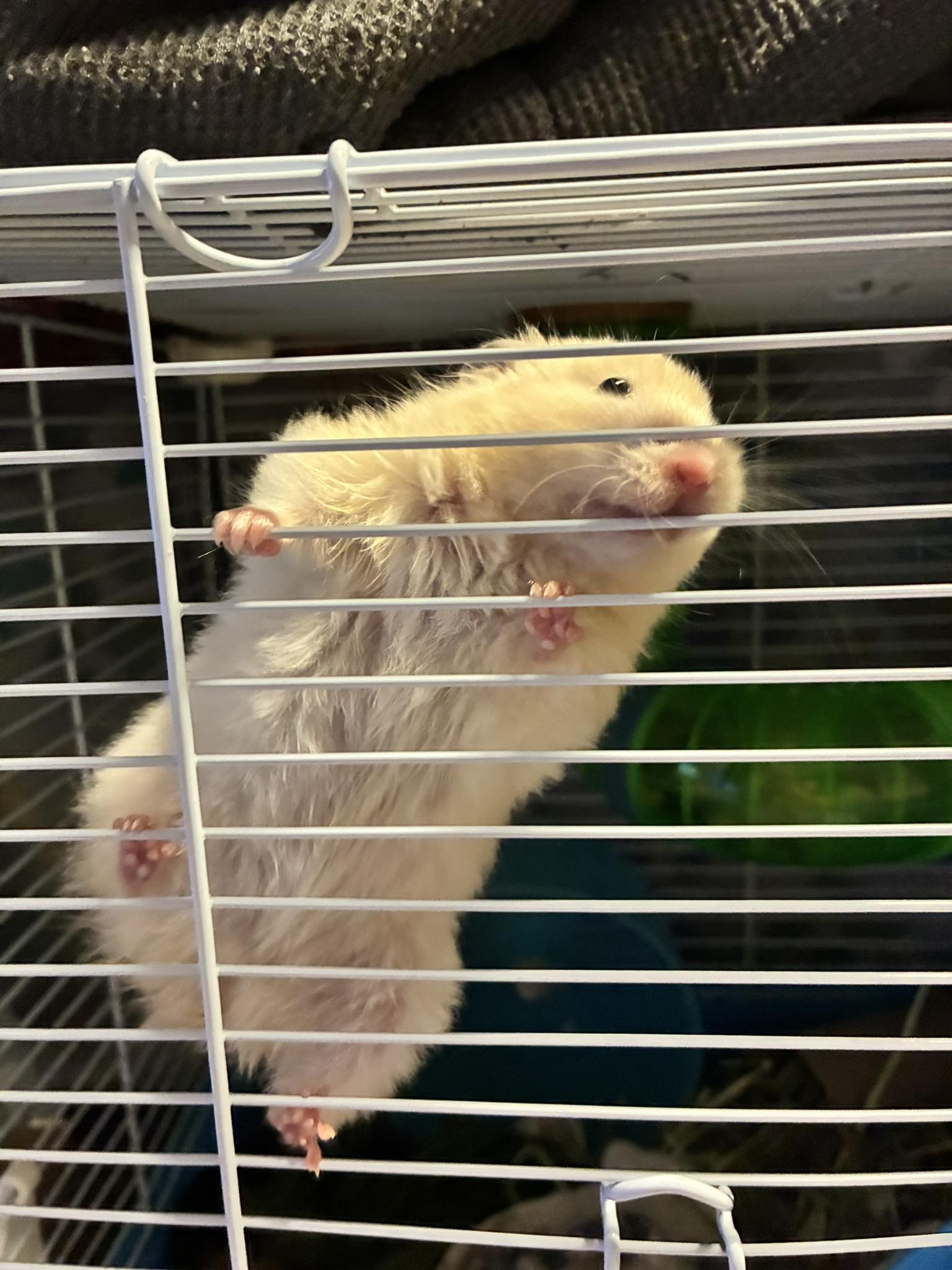 This is not normal behaviour. It is a sign that the hamster’s environment is not meeting its needs. Common causes:
- How big is the cage? PDSA’s guide cites at least 100cm by 50cm of floor space; smaller hamster species also need a spacious enclosure.
- How deep is the bedding? Hamsters need at least 6 inches of substrate to burrow and dig properly.
- Is there a wheel? Solid silent wheels, minimum 28cm diameter for Syrians.
- How much enrichment? Tubes, hides, chew toys, foraging opportunities — without these, hamsters become bored.
- Are bedtime and lights matching natural cycle? Bright artificial light at night disrupts hamster activity patterns.
What to do
Upgrade the setup. A bigger cage, deeper substrate, more enrichment, and a proper silent wheel can transform a bored, bar-biting hamster into a content, quiet one. The improvement is often dramatic — within a week or two, the night sounds reduce significantly.
For more on what hamsters actually need in UK homes, our complete hamster care guide covers proper setup in detail.
Why “At Night” Squeaking Worries Parents Most
This is the thing I want to address directly, because it is a common concern UK parents bring into my shop. The squeaking happens at night, the family is trying to sleep, and the worry is twofold — is the hamster okay, and how do we get some rest?
Both concerns are valid, and both have solutions.
First, the hamster is almost certainly okay. As I have said, 90% of nighttime hamster squeaking is normal active-period communication. The hamster is doing what it has evolved to do, and it is genuinely thriving by being awake at the times that suit its biology.
Second, the family does need to sleep. And the answer is not to suppress the hamster’s natural behaviour — it is to manage the environment so the noise does not reach the bedrooms.
How to manage nighttime hamster noise in UK homes
- Move the cage out of the bedroom — living room, kitchen, hallway, or spare room are all better options
- Replace squeaky wheels with silent wheels — a solid silent wheel of proper size makes the biggest single difference
- Provide deeper substrate — burrowing hamsters are quieter than bar-biting ones
- Use solid-floor cages — wire mesh floors amplify sound
- Add chewing materials — wood blocks, cardboard tubes — gives the hamster something quiet to gnaw on
- Add foraging opportunities — scattered food keeps the hamster busy with quieter activities
- Accept some noise — completely silent is unrealistic. Reduced and tolerable is the goal.

The single biggest change most families need to make is moving the cage out of children’s bedrooms. Many UK families assume the cage should be in the child’s room “so they can bond with the pet,” but the reality is the bond happens during waking hours — which for a hamster is the evening, not the middle of the night. A cage in a quiet corner of the living room often works much better for everyone.
What I Check When A Squeaking Hamster Comes Into The Shop
When an owner comes in worried about their hamster’s nighttime sounds, I do not just guess. There is a process I work through. Here is what it looks like.
- What time of night is the squeaking happening?
Middle of the night during peak activity = usually normal. Early morning when hamster should be sleeping = more concerning. - Is it continuous or in short bursts?
Short bursts = usually communication or excitement. Continuous = stress, fear, or pain. - What does the hamster look like when squeaking?
Active and engaged = normal. Hunched and still = pain or illness. - Is there anything else changed recently?
New pet in house, cage moved, new bedding, recent handling? Stress events affect behaviour. - Is the hamster otherwise well?
Eating, drinking, active during normal hours, droppings normal? Or showing other concerning signs? - How is the breathing?
Quiet and normal = good. Wheezing, clicking, whistling = vet emergency. - What is the cage setup like?
Size, bedding depth, wheel type, enrichment? Poor setup often equals nighttime noise problems.
Five minutes of these questions usually narrows things down enough to know whether it is normal hamster communication, stress that needs addressing, or a health issue that needs a vet.
When Squeaking Means “See A Vet”
Most squeaking is normal, but there are specific situations where I would tell you straight — go to an exotic vet, do not wait. These include:
- Wheezing, whistling, or clicking sounds when breathing
- Continuous squealing combined with hunched, still posture
- Squeaking accompanied by visible breathing difficulty
- Sounds combined with reduced eating, lethargy, or weight loss
- Teeth grinding in a still, withdrawn hamster (not warning context)
- Any sound changes alongside other illness signs
- Sustained distressed squeaking from a young hamster (under 12 weeks) — possible wet tail
For everything else — the brief night squeaks, the wheel running noises, the excited chirps when you appear — these are normal hamster sounds and not something to worry about.
How To Tell Your Hamster Is Actually Happy
After all this talk of worrying sounds, let me end on a positive note. There are clear signs that your hamster is doing well — and most owners can spot them within a few weeks of bringing a hamster home.
- Active during evening hours — exploring, running on wheel, eating
- Good appetite — empties food bowl regularly, stuffs pouches with food
- Bright, alert eyes — not dull or half-closed during active times
- Clean coat — well-groomed, no bald patches or matting
- Normal droppings — small, dry, regular
- Curiosity — approaching the cage front when you appear, sniffing the air
- Contented sounds — short chirps, quiet grooming noises, occasional excitement squeaks
- Deep sleep during the day — curled up in nest, peaceful
A hamster showing these signs is doing well, even if it makes some night noise. The noise is part of being a healthy, active hamster.
Frequently Asked Questions
Is it normal for hamsters to squeak at night?
Yes, completely normal in most cases. Hamsters are nocturnal animals, and night is their natural active period. The squeaking you hear is usually normal communication — excitement, exploration, contentment. Most night sounds are not cause for concern.
Why is my hamster squeaking continuously?
Continuous squeaking usually indicates stress, fear, or pain — not normal communication. Look for environmental causes (other pets nearby, recent handling, loud noises) or signs of physical illness (hunched posture, reduced eating, breathing difficulty).
What does it mean when a hamster makes wheezing sounds?
Wheezing, whistling, or clicking sounds when breathing almost always indicate respiratory illness. This is a same-day vet emergency — hamster respiratory infections progress fast and need prompt antibiotic treatment.
Can I stop my hamster from being noisy at night?
Not completely — they are nocturnal animals and night activity is natural. But you can reduce noise significantly with a silent wheel, deeper substrate, more enrichment, and moving the cage out of bedrooms. Most families find these changes make a big difference.
Why does my hamster grind its teeth?
Teeth grinding has two meanings — warning (back off) or pain. Look at the hamster’s posture and context. An alert, defensive hamster is warning you. A hunched, still hamster grinding teeth is likely in pain and needs a vet.
Should I move my hamster’s cage out of my child’s bedroom?
Often yes. Hamsters are active at night when children need to sleep. A cage in the living room often works better — the child still has plenty of evening interaction time, but the family can sleep properly. This is the most common improvement I recommend.
Where can I get honest hamster advice in Swindon?
Come and see us at Paradise Pets, Manor Garden Centre, Cheney Manor, Swindon SN2 2QJ. Or give us a ring on 01793 512400. The advice is free and I have been doing this for 35 years.
One Last Thing From Me
A squeaking hamster is not usually a sick hamster. After 35 years of selling these animals, I can tell you that the vast majority of nighttime hamster sounds I get asked about turn out to be completely normal — communication, excitement, contentment, or just the natural noises of an active nocturnal animal doing what it does.
The young mum I mentioned at the start of this article? Her son’s hamster turned out to be a perfectly healthy young Syrian, doing exactly what young Syrians do at 2am — running on the wheel, eating, exploring his cage, occasionally squeaking with excitement when he discovered new things. We talked through it together. She moved the cage from her son’s bedroom to the living room, replaced the wheel with a silent one, added more enrichment, and within a week the whole family was sleeping again. The hamster was happier in the new spot too — more space, less disturbance.
That is the outcome you want. A hamster that thrives in its natural rhythm, and a family that gets to sleep through the night. Both are completely achievable once you understand what is going on.
If you are reading this with a noisy hamster at home, work through the checks in this article first. Most of the time, you will find the answer in the normal sounds section. If something looks more serious — wheezing, hunched posture, sustained distress — get to an exotic vet promptly. And if you are local and unsure, come and see us. That is what we are here for.
Worried About Your Hamster? Come And See Me
Bring a video, bring your questions, or just bring your concerns. I will have a proper listen and tell you honestly what I think. Free advice, no obligation. That is how we have done things for 35 years.