


Neil has kept, bred, and sold budgies at Paradise Pets Swindon since 1988. He has talked more owners through a budgie escape than he can count. Most recoveries happen. Most failures happen for the same preventable reasons. Read this fast — the next thirty minutes matter.
Stop. Breathe. Read this before you do anything else.
I know your instinct right now is to run, shout, grab, or panic. I need you to do none of those things. What you do in the next thirty minutes — and specifically how calmly you do it — will determine whether you get your bird back.
A panicking owner chasing a free bird is one of the most reliable ways to ensure the bird goes somewhere harder to reach, or gets outside. A calm owner who knows the correct sequence of actions recovers their bird most of the time.
Here is that sequence.
Step One — Do These Things in the Next 60 Seconds
Before anything else, do these four things. In this order. Right now.
One: Close every exit from the room the bird is in. If you know which room the bird is in, close the door. Close any open windows — carefully and slowly, without sudden movement. If other household members are nearby, get them to cover other exits quietly. The goal is to confine the bird to one space while you work out what to do next.
Two: Get other pets out of that room immediately. A cat or dog in the same room as a loose budgie is a life-threatening situation. Get them out and keep them out. Close the door behind them.
Three: Lower the noise level in the house. Television off. Radio off. No shouting, no running. A quiet environment is a less frightening one for the bird. A less frightened bird moves less frantically and lands sooner.
Four: Do not chase the bird. Not yet. Not at all, if possible. Chasing a bird that is already alarmed drives it further from you and further toward exits. Every pursuit makes the situation harder. Stop moving rapidly. Lower yourself — sit on the floor if you can. Become as non-threatening as possible.
Inside the House — The 30-Minute Protocol
If the bird is loose inside the house and exits are secured, you are in a manageable situation. Work through this in order.
Locate the bird without approaching it. Stand still, listen, and look. Budgies chirp — a loose, alarmed budgie will often make contact calls. Follow the sound. Once you can see where the bird is, note the location and do not move toward it.
Dim the room lighting slightly. Not total darkness — but reducing bright overhead lighting calms birds significantly. A bird in lower light is less inclined to panic-fly. If the room has blinds, draw them partially. This single step makes a significant difference to how quickly a loose bird settles.
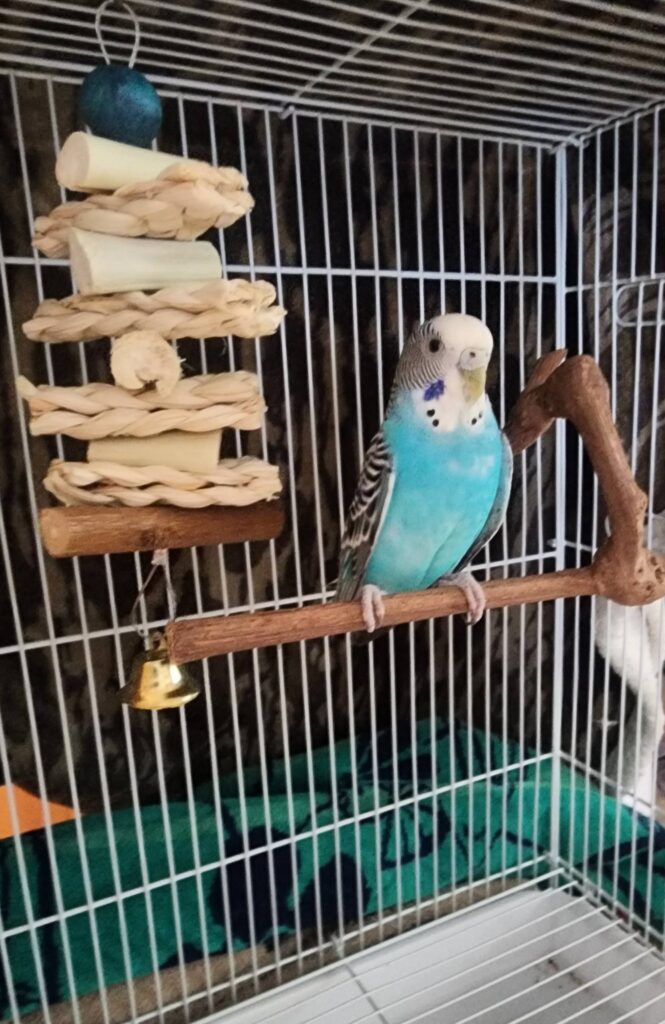
Bring the cage into the same room and open the door. Place the cage at roughly the same height as where the bird has landed, or slightly below it. Open the cage door. Put fresh millet or the bird’s favourite food in the bowl and near the open door. Leave the cage and move to the opposite side of the room. Sit down. Wait.
Many budgies, given a quiet room and a familiar cage with food visible, will return to the cage on their own within twenty to forty minutes. This is by far the easiest and least stressful recovery method — for you and for the bird.
Use the bird’s own sounds. Budgie contact calls on a phone or tablet, played at moderate volume near the cage, can encourage a loose bird to respond and move toward the familiar sound. If you have a second bird, bring its cage into the room — a bird that can hear and see its companion will often move toward it.
Talk to the bird quietly and consistently. If the bird knows your voice, use it. Not excitedly, not desperately — calmly, at conversational volume. The same tone you use when you are near the cage normally. The familiar voice is reassuring to a bird that is currently in an unfamiliar situation.
If the bird lands within reach and is calm, offer a hand slowly. Not a grab — a slow, flat hand offered from below. Say step up if the bird knows the command. Give it time. A bird that is ready to step up will do so. A bird that is not ready will move away — let it, and wait for a better moment.
>
The Specific Mistakes That Cost People Their Bird
I have talked owners through enough of these situations to know exactly where it goes wrong. Avoid these.
Chasing the bird around the room. Every pursuit sends the bird higher, further, and closer to any exit it can find. Stop moving and let the bird settle. If you must move, do it slowly, low to the ground, in the opposite direction from the bird.
Multiple people trying to help simultaneously. Three people moving around a room trying to catch a bird is three times the chaos and three times the alarm for the bird. One calm person only. Everyone else out of the room, quiet, on standby.
Grabbing when the bird is within reach. A grab attempt that fails moves the bird to a higher, less accessible position, increases its fear dramatically, and makes the next approach harder. Only attempt to pick the bird up when it is calm, when it has been still in one place for several minutes, and when a step-up approach has a realistic chance of succeeding.
Leaving windows or exterior doors open while searching. It seems obvious in retrospect. In the stress of a loose bird, people open windows to look outside, or open front doors to call for help, and the bird exits. Every exit stays closed until the bird is secured. No exceptions.
Waiting too long to act if the bird gets outside. An inside escape gives you time. An outside escape does not. If the bird gets out, the search needs to start immediately, not after you have spent an hour trying to catch it indoors.
If Your Budgie Has Escaped Outside
This is the more urgent situation and it needs a different response.
A domestic budgie outside is not equipped for independent survival. It has no experience of predators, no knowledge of food and water sources, and no shelter strategy. The window for recovery is real but not unlimited.
Note the exact location where the bird was last seen. The direction it flew. How high. Which way it turned. This is where you start your search and where you return.
Start calling immediately, from below. Do not run after the bird. Stand still in the area where it was last seen, call its name, whistle its contact call, or play recorded budgie sounds from a phone. A bird that has flown a short distance and is frightened will often land in a nearby tree. It will be watching you. Your familiar voice and sounds are what draws it back.
Put the cage outside where the bird can see it. The cage with the door open, the bird’s companion visible if you have one, food in the bowl — placed outside in the area the bird was last seen. A bird that is not too far away and has settled will often move toward the familiar cage over time.
Do not lose sight of where the bird is. Keep eyes on the bird if at all possible. If it moves, follow slowly and quietly, maintaining line of sight. The moment you lose visual contact, the search becomes significantly harder.
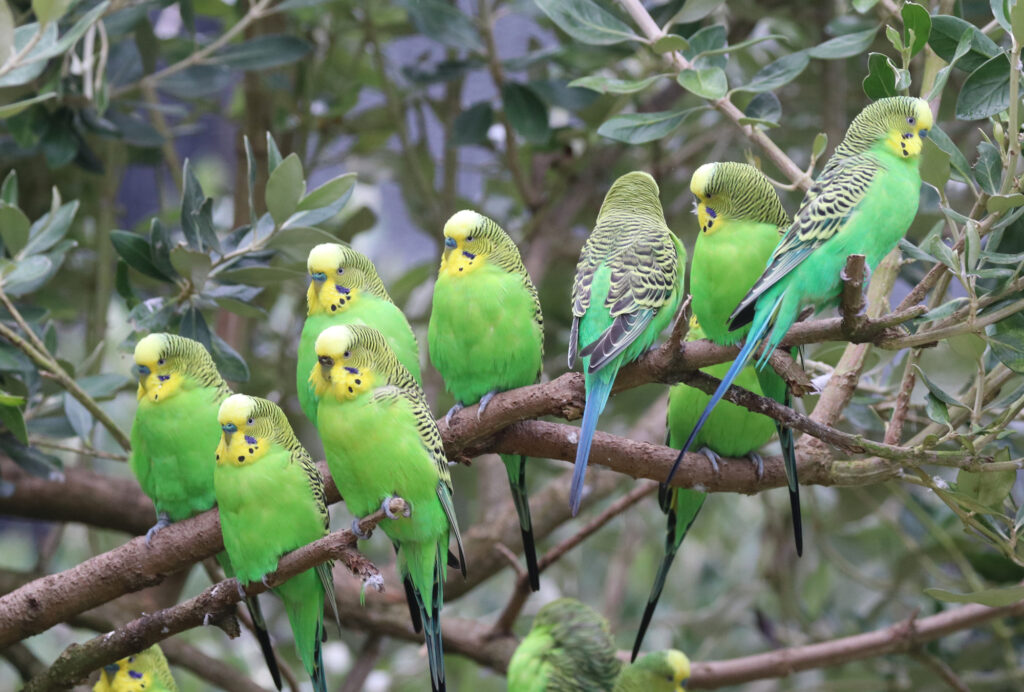
Watch for the bird landing in trees or on rooftops. Frightened budgies climb height. They will land in the highest accessible tree in the area. Start your visual search up, not along the ground.
The First Hour Outside — Actions That Improve Recovery Chances
If the bird is outside and you have not retrieved it within fifteen minutes of it escaping, begin these steps in parallel with your direct search.
Tell the neighbours immediately. Knock on the doors of the three or four nearest properties. Tell them your bird is loose. Ask them to check their gardens. A budgie that has landed in a neighbour’s garden is a budgie that a neighbour could potentially help you catch — if they know to look.
Post on local social media immediately. Facebook neighbourhood groups, Nextdoor, local community pages. A clear photograph of your bird — ideally showing its colour and markings — with your contact number and the address where it escaped. Post this within the first thirty minutes. The more eyes looking, the faster a sighted bird is reported.
Contact local vets and animal shelters. Call the nearest two or three veterinary practices and local animal rescue organisations. Give them a description and your contact number. If someone finds your bird and takes it to a vet, this is how you hear about it.
Make a brief note of the time, weather, and wind direction. This sounds overly methodical in a crisis. It is useful for expanding your search area correctly if the bird is not found quickly. Birds drift with the wind when flying.
Return to the escape site at dusk. As light drops in the evening, birds become significantly less flighty and more likely to be visible, settled, and approachable. If you have not recovered the bird during the day, return to the area where it was last seen as dusk approaches. Bring the cage, bring the companion bird if you have one, bring millet. Be patient and quiet.
After the First 30 Minutes — If the Bird Is Still Missing Inside
If thirty minutes of the cage method and quiet presence have not produced results and the bird is still loose inside, expand the approach.
Check everywhere the bird could be hiding. A frightened budgie will wedge itself behind furniture, inside a bookshelf, behind curtains, inside a cupboard that was briefly open. Do a methodical search of the room — quietly, slowly, looking in every gap and behind every surface. Move furniture gently if needed.
Leave the cage set up overnight if necessary. If the bird is hiding and will not come out, leave the cage with food and water in the room where you believe the bird is, with the door open. Turn the lights off and close the door. Check in the morning. Many owners have woken up to find the bird back in its cage.
Put food and water in multiple accessible spots in the room. A loose bird that is hungry and thirsty will move toward food. Placing seed and water at floor level and at multiple heights increases the chance of the bird eating and becoming more settled.
Social Media and Community — How to Use Them Correctly
A lost budgie appeal on social media works when it is done well and quickly. Here is what works.
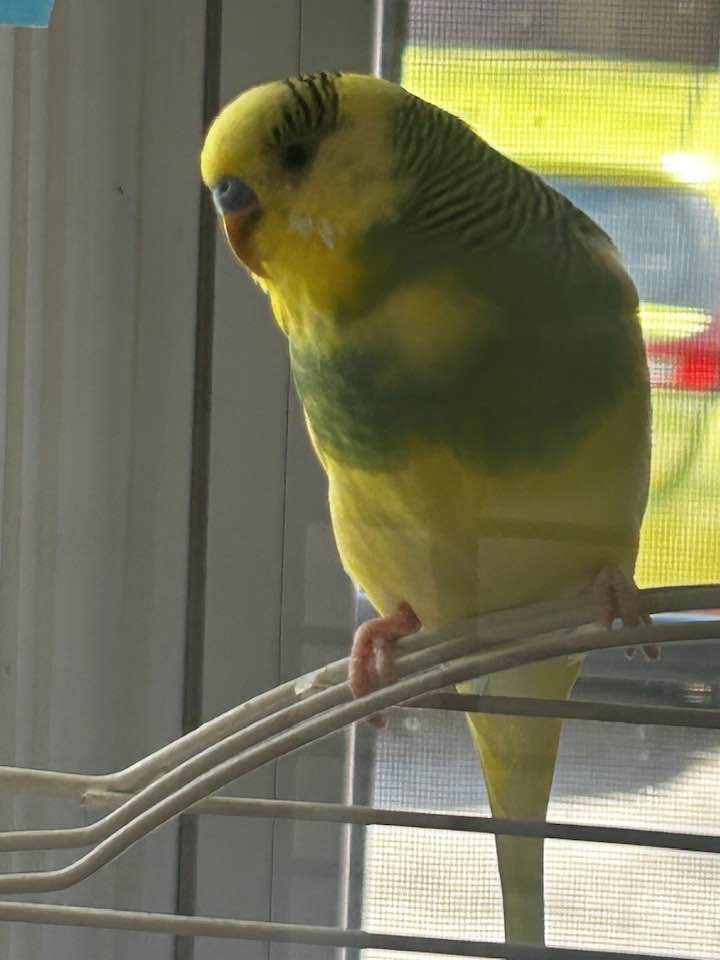
A clear, recent photograph showing the bird’s colour, markings, and distinguishing features. The colour of the cere if distinctive. Any unusual colour combinations or specific markings. The exact address or postcode where the bird escaped. The date and time of escape. Your contact number prominently displayed.
Do not just post and wait. Actively tag local community groups, local vets, local wildlife rescues, and any local Facebook groups for pets or lost animals. Share the post yourself into each relevant group rather than relying on shares.
Post an update if the bird is recovered — this closes the loop for the community that helped and maintains goodwill for future need.
Making Posters the Right Way
Physical posters in the immediate area are worth making if the bird has been outside for more than a few hours. Not instead of social media — alongside it.
A poster needs: a clear photograph, the word LOST in large text, the species and colour description, the location and date escaped, and a contact number. Keep it simple. Print several and put them in a weather-resistant sleeve or laminate if possible.
Post them at eye level on lamp posts, community notice boards, and shop windows within a quarter-mile radius of the escape point. Ask local shops if you can put a copy in their window. Walk the route yourself, looking up into trees and onto rooftops as you go.
When the Bird Returns — What to Check
When your bird is back — whether it found its own way back to the cage or was caught — check these things before assuming everything is fine.
Is the bird eating and drinking normally? A bird that has been outside or loose for several hours may be dehydrated. Fresh water should be available immediately. Watch that it is drinking.
Is the bird’s weight normal? If the bird has been missing for more than a day, weigh it on a kitchen scale. A bird that has lost significant weight needs monitoring and potentially veterinary attention.
Are there any visible injuries? Check the wings, the feet, the cere, and the feathers carefully. A bird that has been outside may have had a collision or been harassed by another bird. Any asymmetry in the wings, any bleeding, any holding of a leg differently — vet visit.
Is the bird’s behaviour normal? Alert, responsive, chirping within a few hours of returning. A bird that remains unusually quiet and puffed up after returning from an outdoor escape may be in shock or be injured. Keep it warm and quiet, and see a vet if it does not recover its normal behaviour within a few hours.
- “I threw a towel over it to catch it” — A towel thrown at a loose bird will cause it to fly immediately, usually toward the nearest window or door. If the towel misses, which it usually does, the situation is worse. If it lands, the bird is terrified and the trust damage is significant. The towel is not the right tool here.
- “I turned all the lights on so I could see it better” — Bright light increases a bird’s activity level and makes it more likely to keep flying. Dimming the light, not increasing it, produces a calmer, more stationary bird. Work in lower light.
- “I waited to see if it came back on its own before calling anyone” — For an outside escape, waiting costs you time you cannot get back. The search and the community alerts need to start immediately, within the first thirty minutes of the escape. Waiting an hour or two before posting on social media halves the effective search community during the most critical window.
- “My cat was in the room but it doesn’t bother the bird normally” — A loose bird in a room with a cat is a genuine emergency. The cat’s normal behaviour around a caged bird is irrelevant to how it responds to a bird loose and potentially landing at ground level. Get the cat out of the room before anything else.
- “I opened the back door to try to guide it outside” — Opening exterior doors to encourage an inside escape to go outside is not a recovery strategy. It is giving up on the easier recovery situation in favour of the harder one. Keep all exterior exits closed until the bird is secured.
Preventing It Next Time
- Identify exactly how the escape happened.
Was a cage door not properly latched? A window open during free-flight time? A visitor who did not know the protocol? The specific cause of this escape is the thing to fix first. If you do not identify it, the same escape route remains available. - Establish a consistent open-door protocol in the household.
Everyone in the household needs to know: when the bird is out, exterior windows and doors stay closed. Not probably closed. Closed. This is a non-negotiable rule, communicated clearly to every person who comes through your front door. - “Wing clip” is a personal decision that needs consideration.
Wing clipping — trimming the primary flight feathers to limit the bird’s ability to gain height rapidly — is a controversial topic in bird keeping. It does reduce the risk of rapid escape and high-altitude loss. It also reduces the bird’s ability to exercise normally and alters the bird’s relationship with its environment. I do not advocate either way. I raise it as an option worth considering and discussing with a vet if you have had repeated escape issues. - Check cage latch security regularly.
Cage latches can work loose over time. A budgie that has learned to lift or push a latch is a surprisingly common cause of apparent-mystery escapes. Check every closure point on the cage monthly. Consider a secondary clip or lock on any latch that has shown signs of loosening. - Create a household emergency plan.
Who closes which exits. Who removes the pets. Who manages the cage retrieval. One calm person in charge. Having agreed this in advance means the first thirty seconds of an escape happen correctly rather than in chaos. Write it down if necessary. It seems overly prepared until the moment you need it.
If your bird has escaped and you are in the middle of this situation right now — focus on the steps above and call us when you can. We are at Manor Garden Centre, Cheney Manor Industrial Estate, Swindon, SN2 2QJ — open every day — and you can reach us on 01793 512400. We have talked owners through this before and we are always happy to help.
Visit Us at Paradise Pets Swindon
We stock budgies year-round — all UK-bred, all handled from a young age. If you have questions about cage security, free-flight safety, or how to prevent future escapes, come in and talk to us. And if your bird has just escaped — call us. We will help you think through the recovery steps.
We also stock a full range of cockatiels, canaries, and finches, alongside guinea pigs, rabbits, and gerbils and hamsters.