
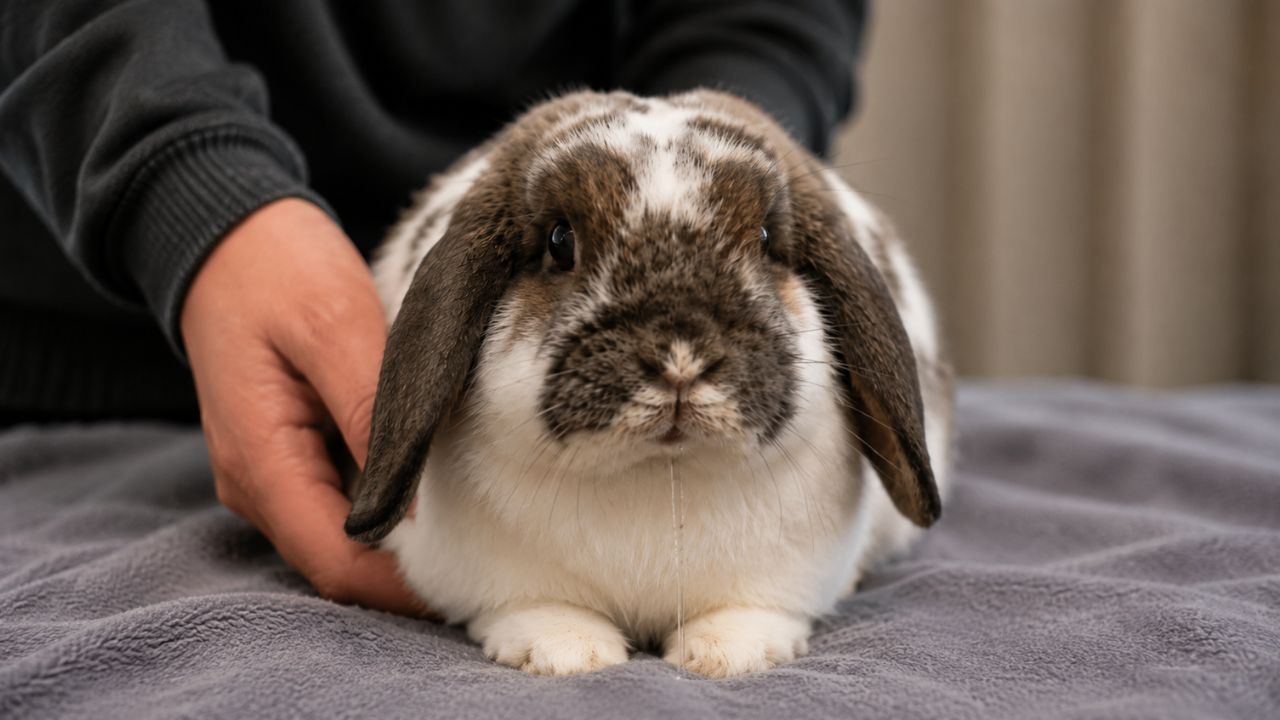

Neil has kept, bred, and sold rabbits at Paradise Pets Swindon since 1988 — over 35 years of first-hand experience with these animals. In that time, he has seen drooling kill more rabbits than almost any other single symptom — because owners do not recognise it as the urgent dental emergency it almost always is. This is his honest, urgent guide on what drooling in a UK pet rabbit really means, and exactly what to do.
A woman came into the shop one Wednesday afternoon carrying a small carrier. Inside was a rabbit with a damp chin, matted fur around the mouth, and a slightly hunched posture. “Neil,” she said, “his chin has been wet for about a week. I thought he had spilled his water. But this morning he stopped eating his hay, and I am genuinely worried now.”
I looked at the rabbit properly, and the picture was already clear before I had even opened the carrier. The damp chin, the wet matted fur around the mouth, the slight hunching — these were the classic signs of dental disease, one of the most common and most serious health problems in UK pet rabbits. The bird-meets-tortoise quality to her bunny told me he had been suffering quietly for some time.
I told her honestly — this needs a rabbit-savvy vet today, not tomorrow. She drove straight to the emergency vet, and they confirmed what I had suspected. Severely overgrown molars, sores on the cheeks, and the start of a tongue abscess. He needed dental work under anaesthetic that afternoon. With prompt treatment and ongoing dental management, he recovered. But it had been close — another week or two without action and the outcome could have been different.
In 35 years of selling rabbits at Paradise Pets, I have learned that drooling is one of the most overlooked warning signs in pet rabbits. It looks subtle — a wet chin, slightly matted fur, sometimes nothing more dramatic than that. Owners think the rabbit has drunk messily, or spilled water, or got something on its chin. Meanwhile, underneath the fur, a serious problem is developing.
This article is the conversation I have with worried owners at the counter, written down for every UK rabbit owner who has ever noticed a wet chin and wondered whether it matters. By the end of it, you will know exactly what drooling means in a rabbit, why time matters, and what to do today.
First — What Drooling Actually Looks Like In A Rabbit
Let me start with what to look for, because the signs are sometimes subtle. Rabbit drooling does not always look the way you might imagine — it is rarely a dramatic dripping. Most cases I see start with quiet, easy-to-miss symptoms that build up over days or weeks.
Common signs that your rabbit is drooling:
- Wet or damp chin — the first and most obvious sign
- Matted, sticky, or yellowed fur around the mouth and chin
- Wet dewlap — the loose skin under the chin staying constantly damp
- Stained or discoloured fur on the front legs — where the rabbit wipes its face
- Bad smell from the mouth or face area
- Skin irritation or sores under the chin from constant moisture
- The rabbit pawing or rubbing at its face
- Loss of fur in patches around the mouth from constant wetness
What you do not usually see — and this is important — is dramatic drooling like a dog might do. Rabbits hide pain and illness very effectively, so the drooling is often disguised by their grooming behaviour. By the time the chin stays visibly wet, the underlying problem has usually been developing for some time.
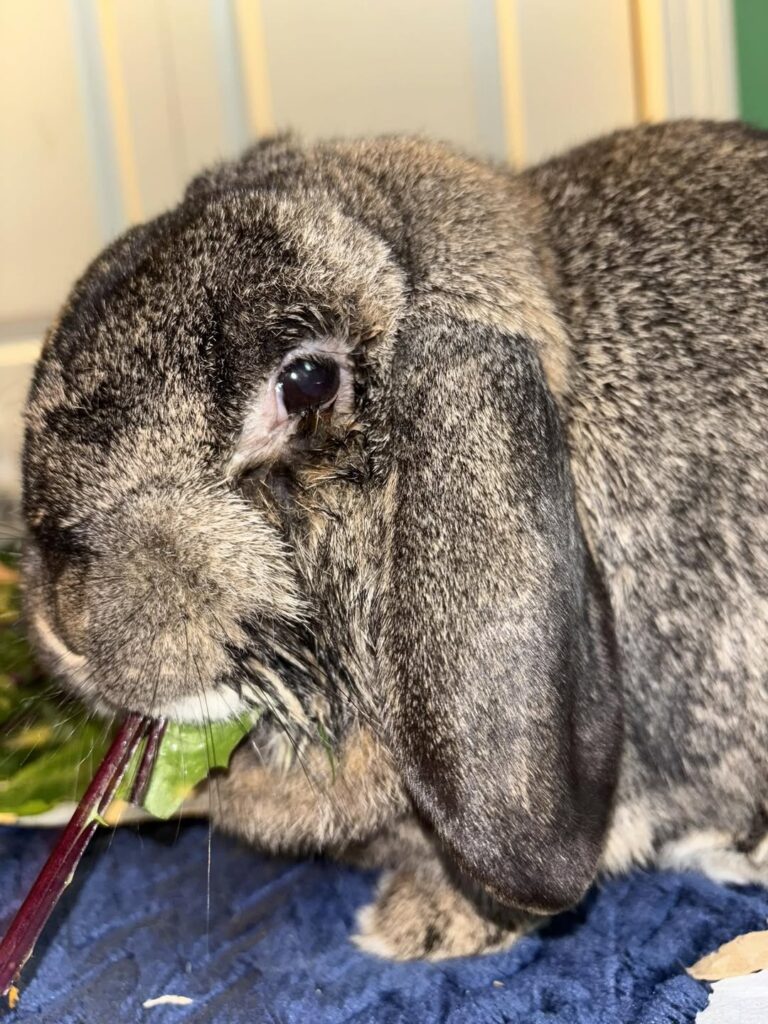
Why Drooling Is Almost Always A Dental Problem
This is the part you need to understand properly. Rabbits have a unique dental biology that makes them prone to specific problems — and drooling is almost always the visible sign of those problems.
Unlike most other animals, rabbit teeth grow continuously throughout their entire life. All of them — incisors at the front, premolars and molars at the back. To stay at the right length, the teeth need constant wear from chewing fibrous food, primarily hay. This is why hay is so important in a rabbit’s diet — it is not just nutrition, it is the only thing that keeps the teeth functioning properly.
When something disrupts this wear — wrong diet, genetics, an injury, age, or an underlying condition — the teeth start overgrowing. They become misaligned. Sharp points form where the teeth meet (or fail to meet) properly. Those points cut into the cheeks, tongue, and gums, causing pain. The pain makes the rabbit chew less. Chewing less means even less wear. The cycle accelerates.
The drooling itself is the body’s response to all of this. Sharp tooth points cause excess saliva production. Painful mouths make rabbits unable to swallow normally. Tongue and cheek sores create constant irritation that triggers more drooling. Within weeks, a rabbit with developing dental disease has a constantly wet chin.
This is why drooling and dental disease are practically synonymous in rabbits. They are not always the same thing — but they are the same thing often enough that you should assume dental disease until a vet rules it out.
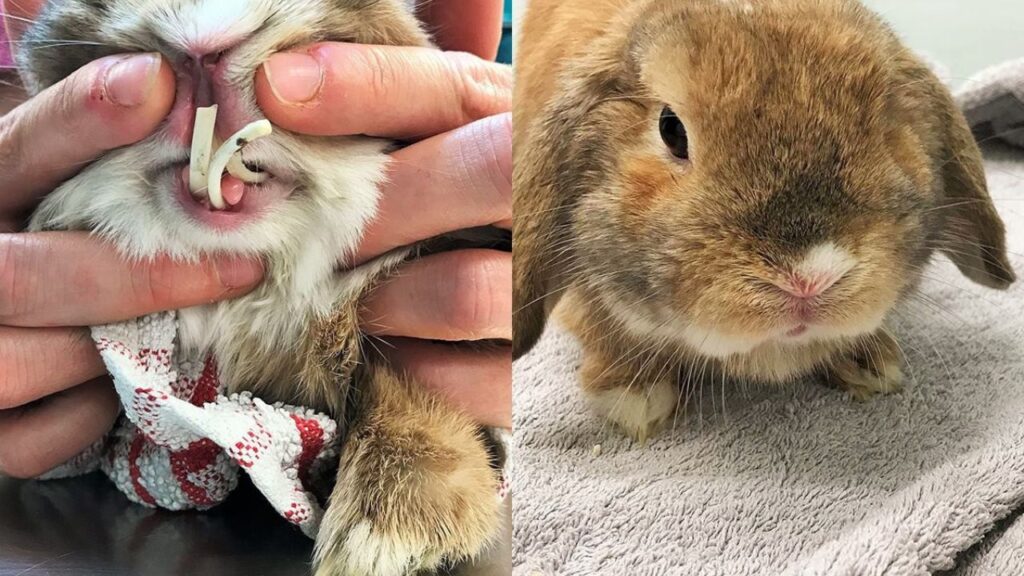
The Main Causes Of Drooling In UK Rabbits
After 35 years, I can usually narrow down what is causing a rabbit’s drooling within a few minutes of looking at the rabbit and asking the right questions. Here are the main causes, in order of how often I see them.
Cause 1: Molar Spurs And Overgrown Back Teeth — By Far The Most Common
This is the cause behind most cases of rabbit drooling I see at the counter. The molars and premolars at the back of the mouth grow too long or develop sharp points (spurs) that cut into the cheeks and tongue. The rabbit is in pain, cannot eat properly, and produces excess saliva that drips out as drooling.
The frustrating part for owners is that molar problems are invisible from the outside. You cannot see them by looking in the rabbit’s mouth without proper veterinary equipment. The first visible sign is usually the drooling and the secondary effects — reduced eating, weight loss, change in stool quality.

- Wet chin combined with reduced hay consumption
- Selecting only soft foods (pellets, fresh vegetables) and avoiding hay
- Dropping food from the mouth while eating
- Smaller, fewer, or wetter droppings
- Weight loss over weeks
- Reduced grooming or unkempt appearance
- Hunched posture or sitting still more than usual
- Bad breath or facial smell
What to do
See a rabbit-savvy vet within 24-48 hours. A proper dental examination requires specialised equipment and often sedation to see the back of the mouth properly. Treatment usually involves filing or trimming the overgrown teeth, possibly under anaesthetic, plus pain relief and dietary support.
Cause 2: Overgrown Incisors — Visible But Less Common
The front teeth (incisors) can also overgrow, and unlike the molars, you can often see this from the outside. Overgrown incisors cause the rabbit difficulty closing its mouth properly, leading to drooling and difficulty eating.
This is more common in rabbits with genetic dental problems (malocclusion — a condition where the teeth do not align properly) and in older rabbits whose dental wear has gradually deteriorated.
Signs: visibly long front teeth (sometimes curling outward or sideways), difficulty grasping food, drooling, weight loss, possibly nasal discharge if the misalignment is severe.
What to do: prompt vet visit. Incisor problems are usually obvious during a basic examination, and treatment involves regular trimming. Some rabbits with severe malocclusion eventually have their incisors removed entirely — they can live well without them when properly managed.
Cause 3: Tooth Root Abscesses
This is a serious cause and one that genuinely worries me when I see it. The roots of overgrown teeth can push into the jaw bone, causing infections and abscesses that need surgical treatment. These abscesses can develop slowly over months, and the first sign is often persistent drooling combined with facial swelling.
Signs: visible swelling on one side of the jaw or face, drooling, bad smell, possibly nasal discharge from one nostril, reduced eating.
What to do: urgent vet visit, usually a rabbit-specialist vet. Tooth root abscesses are treatable but require expert care — surgery, long-term antibiotics, and sometimes ongoing management. The longer you wait, the more difficult treatment becomes.
Cause 4: Mouth Sores And Soft Tissue Trauma
Sometimes the drooling comes from sores, cuts, or trauma inside the mouth rather than the teeth directly — though dental problems usually cause the sores in the first place. Sharp tooth points cutting into the tongue or cheeks create painful ulcers that produce excess saliva.
Foreign objects can also cause this — a piece of plastic, a sharp seed husk, a splinter from a wooden toy lodged in the mouth or throat.
Signs: drooling, possibly visible swelling or sores if you can see inside the mouth (rare without vet examination), reluctance to eat, pawing at the face.
What to do: vet visit. The cause needs to be identified — usually dental, but occasionally a foreign body — and treated accordingly.
Cause 5: Pasteurellosis And Respiratory Infections (Less Common)
Some respiratory infections in rabbits, particularly the bacterial disease pasteurellosis (often called “snuffles”), can spread to the mouth and cause drooling alongside other respiratory symptoms. This is less common than dental causes, but worth knowing about.
Signs: drooling combined with nasal discharge, sneezing, eye discharge, breathing changes. The respiratory symptoms are usually more prominent than the drooling.
What to do: prompt vet visit. Pasteurellosis is treatable but needs proper antibiotics and care. For more on respiratory issues in rabbits, our guide on rabbit sneezing covers respiratory disease in detail.
Cause 6: Heat Stress (Rare But Possible)
During UK summer heatwaves, rabbits can become heat-stressed and produce more saliva than usual. This is rarely the actual cause of significant drooling, but in hot weather it is worth considering as a contributing factor.
Signs: drooling combined with rapid breathing, lying stretched out, lethargy, hot ears, in obviously warm conditions.
What to do: cool the rabbit immediately (move to cooler room, offer cool water, damp towel under the rabbit). If symptoms continue once cool, the drooling is from another cause and needs vet attention.
Why Diet Is Behind Most Rabbit Dental Disease
This is the part that hurts every honest pet shop owner to talk about, because the dental disease I see at the counter is almost always preventable with proper feeding. The single biggest cause of dental disease in UK pet rabbits is not enough hay in the diet.
Rabbits need to graze on hay almost continuously. The chewing motion of breaking down fibrous hay is what wears their teeth down to the right length. Without enough hay, the teeth overgrow no matter what else the rabbit eats. The cycle starts within months and becomes serious within a year or two.
The frustrating reality:
- Many UK pet shops sell “rabbit food” mixes that are mostly grain and pellets
- Rabbits prefer the soft, sweet bits and leave the hay
- Owners think the rabbit is “well fed” because the bowl is being emptied
- Hay sits in the cage unused while the teeth quietly overgrow
- By the time drooling appears, dental disease is already advanced
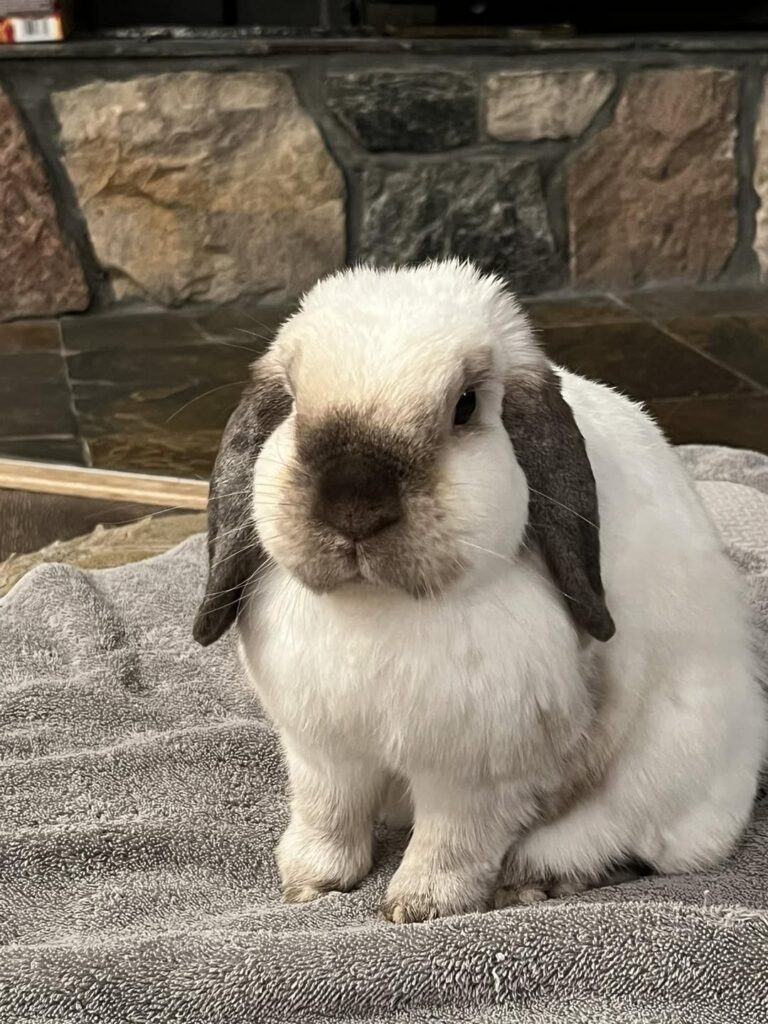
A proper rabbit diet should be 80% good quality hay, freely available, all the time. Plus a small amount of pellets, plus fresh leafy greens. Treats and grains should be minimal. Most UK pet rabbits I see are fed roughly the opposite of this — and the dental problems follow inevitably.
The Honest Time Window — How Urgent Is Drooling?
This is the part where I have to be properly direct with you. Drooling in rabbits is not a “see if it improves” situation. It is a “see a vet promptly” situation, even if the rabbit seems otherwise okay.
| Time Since Drooling Started | Action | Urgency |
|---|---|---|
| Just noticed (less than 24 hours) | Book vet appointment within 24-48 hours | Urgent |
| A few days | See vet today or tomorrow | Very urgent |
| A week or more | See vet today | Emergency |
| Combined with reduced eating | Emergency vet visit immediately | Critical |
| Combined with weight loss | Emergency vet visit immediately | Critical |
| Combined with not eating at all | Out-of-hours emergency vet | Life-threatening |
The honest reason this matters — rabbits decline very quickly once they stop eating properly. A rabbit that has not eaten for 12-24 hours can develop a condition called gut stasis, where the digestive system shuts down. Gut stasis kills rabbits very quickly. The drooling itself is rarely what kills the rabbit — but the chain reaction that follows it can be fatal within days.
For more on this critical chain reaction, our guide on rabbits that stop eating covers the gut stasis emergency in detail.
What To Do Right Now If Your Rabbit Is Drooling
For UK owners reading this with a drooling rabbit at home, here is the practical immediate action plan.
- Look at the broader picture
Is the rabbit eating its hay? Drinking? Producing droppings? Active or hunched? Note everything for the vet. - Take a photo or video of the drooling
Useful for the vet to see, particularly if it varies through the day. - Book a rabbit-savvy vet appointment now
Not a generic small animal vet — ideally one with rabbit dental experience. If unsure, the Rabbit Welfare Association lists rabbit-friendly vets. - If reduced eating or weight loss is also present, treat as emergency
Out-of-hours emergency vet if needed. Do not wait until normal hours. - Offer plenty of fresh hay
Even if the rabbit cannot eat much, easy-access hay encourages what chewing it can manage. - Add fresh leafy greens
Easier to eat than hay. Useful for keeping calories and hydration up. - Keep the chin clean and dry
Gently wipe with a soft cloth. Damp fur can lead to skin sores. - Watch for any deterioration
Any change to “not eating at all” is a life-threatening emergency.
What NOT To Do
This is as important as what you should do. Several common reactions to a drooling rabbit waste critical time or cause harm.
- Do not “wait and see” for more than 24-48 hours — time is genuinely critical
- Do not try to file or trim teeth yourself — needs proper veterinary equipment and skill
- Do not use clippers or any sharp instrument near a rabbit’s mouth — can cause fatal jaw fractures
- Do not assume it is just water spillage — even if it might be, only a vet can confirm
- Do not give the rabbit anything by mouth (medication, supplements) without vet guidance
- Do not delay because of cost concerns — early treatment is far cheaper than emergency dental surgery
- Do not assume “if eating, it’s fine” — rabbits eat through pain remarkably well, until they cannot any more
What The Vet Will Do
For owners worried about what the vet visit will involve, here is honestly what to expect. Knowing in advance often helps people make the call sooner.
A rabbit-savvy vet will:
- Take a full history of the rabbit’s diet, behaviour, and symptoms
- Examine the rabbit’s face, mouth (externally), and body condition
- Look at the front teeth (incisors) directly
- Use a specialised instrument to look at the back teeth — usually requires sedation
- Check for asymmetry, swelling, sores, or visible problems
- Possibly take X-rays if a deeper problem is suspected
- Discuss findings honestly with you
- Recommend treatment based on what they find
Most simple molar problems can be treated in one visit with sedation and dental burring. More complex cases (abscesses, severe malocclusion) may need surgery or ongoing management. Cost varies but early treatment is always cheaper than emergency intervention later.
How To Prevent Dental Disease In Rabbits
The honest truth — most dental disease I see at the counter is preventable. Here is what every UK rabbit owner should do to keep their rabbit’s teeth healthy.
1. Hay, Hay, And More Hay
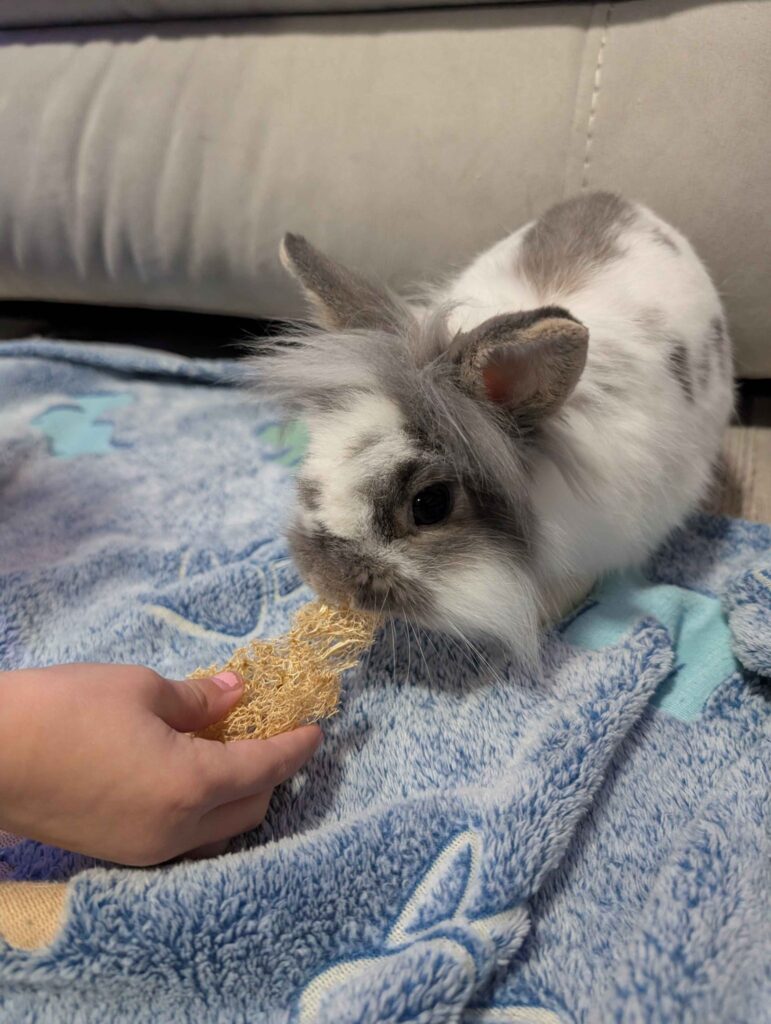
This is the single most important factor. Good quality timothy or meadow hay must be available to your rabbit at all times, and it must make up roughly 80% of what they actually eat — not just what is offered. Watch the rabbit’s hay consumption. If they are leaving most of it, the diet is wrong.
- Provide multiple piles of hay in the cage and run
- Replace daily so it stays fresh and inviting
- Use a hay rack to keep hay clean
- Try different brands and types until you find one your rabbit prefers
- Never let the hay run out — even overnight
2. Limit Pellets To A Small Daily Portion
Pellets should be a supplement, not the main diet. For an adult rabbit, around an eggcup full per day is plenty. More than this and the rabbit fills up on pellets instead of hay, leading directly to dental problems.
Choose plain timothy-based pellets, not muesli-style mixes with grains and dried fruit pieces.
2. Fresh Leafy Greens Daily
A small handful of safe leafy greens daily provides variety, hydration, and nutrients. Good options include kale, spring greens, dandelion leaves, romaine lettuce, parsley, coriander, basil. Introduce new greens gradually.
3. Avoid Sugary Treats And Pet Shop Mixes
Most commercial “rabbit treats” are sugary, high-calorie, and contribute to dental problems and obesity. Yogurt drops, dried fruit, honey sticks — all should be very occasional or avoided entirely. Real treats are a piece of carrot top, a slice of apple (without seeds), or fresh herbs.
4. Provide Safe Wood And Chew Items
Apple wood branches (untreated), willow toys, and untreated wooden chews all provide additional chewing exercise beyond hay. They are not a substitute for hay but a useful addition.
5. Regular Vet Dental Checks
Have a rabbit-savvy vet check your rabbit’s teeth annually as part of a general health check. By the time you notice drooling, problems have usually been developing for some time. Annual checks catch issues much earlier.
What I Ask Owners About A Drooling Rabbit
When an owner comes in or rings about a drooling rabbit, I work through specific questions to help me understand the situation and advise them properly.
- How long has the drooling been going on?
Recent (days) vs prolonged (weeks/months) affects urgency level. - Is the rabbit still eating?
Eating well but drooling = urgent vet. Reduced eating = emergency. - Is the rabbit eating hay specifically?
Avoiding hay while still eating soft foods = classic dental disease pattern. - What does the diet look like?
Heavy on pellets/grain, light on hay = likely cause identified. - How old is the rabbit?
Older rabbits more prone to dental disease, younger rabbits often have genetic causes. - Has it ever had dental work before?
Previous dental problems mean recurrence is likely. - Any other symptoms?
Weight loss, change in droppings, behaviour changes, swelling — all important. - Do you have a rabbit-savvy vet?
Some vets do not have rabbit dental expertise. Best to know in advance.
Five minutes of these questions usually confirms that the rabbit needs a vet visit promptly. Almost every case I have ever advised on has been dental in origin.
Frequently Asked Questions
Is rabbit drooling always serious?
Almost always, yes. Drooling in rabbits is almost never normal — it is the classic sign of dental disease, which is one of the most common and serious health problems in pet rabbits. Even if the cause turns out to be something else, the only way to know is a proper veterinary examination. Never ignore drooling.
Why is my rabbit drooling but still eating?
Rabbits often continue eating through significant dental pain because they are biologically driven to keep eating to maintain gut function. The drooling tells you that something is wrong even when the eating looks normal. Many rabbits I see are still “eating” but only soft foods like pellets and vegetables, while avoiding hay — a classic early sign of dental disease.
How quickly should I see a vet for a drooling rabbit?
Within 24-48 hours at most. If the rabbit has stopped eating, see a vet immediately as an emergency, including out-of-hours if necessary. Rabbits can develop life-threatening gut stasis within 12-24 hours of not eating properly. Time genuinely matters.
Can I trim my rabbit’s teeth myself?
No, absolutely never. Rabbit dental work needs proper veterinary equipment, often sedation, and trained skill. Attempting to trim teeth yourself can cause jaw fractures, tooth root damage, and serious injury. This is one of the most dangerous things you can do to a rabbit. Always use a vet for any dental work.
Can rabbit dental disease be cured?
Managed rather than cured, usually. Most rabbits with dental disease need ongoing management — regular dental checks, sometimes recurring dental work, and dietary changes. The good news is that with proper care, most rabbits with dental disease can live good quality lives. Early treatment makes management easier.
What does normal rabbit saliva look like?
Normal rabbits do not show visible saliva at all. A small amount of dampness around the mouth after drinking is normal and quickly dries. Visible drooling, persistently wet fur around the chin, or saliva on the front legs is not normal and indicates a problem.
Where can I get honest rabbit advice in Swindon?
Come and see us at Paradise Pets, Manor Garden Centre, Cheney Manor, Swindon SN2 2QJ. Or give us a ring on 01793 512400. We can advise on diet, husbandry, and signs to watch for. The advice is free and we have been doing this for 35 years. For active dental problems, you need a rabbit-savvy vet, not us.
One Last Thing From Me
“Why is my rabbit drooling?” is the question. The honest answer, after 35 years of selling rabbits, is — almost always dental disease, almost always urgent, and almost always treatable if you act fast. Do not wait. Do not hope it passes. See a rabbit-savvy vet today or tomorrow.
The woman I mentioned at the start of this article? Her rabbit recovered well after the emergency dental work. She came back to the shop a few weeks later, just to update me. “Neil, he is a different rabbit. He is eating his hay again, he is bright and active, he has put weight back on. Thank you for sending me straight to the vet that day. I was going to wait until the weekend.” Her relief was palpable. So was mine.
That is the outcome I want for every UK rabbit owner reading this. Recognition. Action. A trip to a good vet. Treatment. Recovery. Plus ongoing changes to diet and husbandry that prevent the problem coming back. It is achievable for every owner who acts quickly when they spot the signs.
If you are reading this with a drooling rabbit at home, stop reading and book a vet appointment now. Today if possible, tomorrow at the latest. Do not wait. Do not assume it will improve. Do not try home remedies. This is one of the symptoms in pet rabbit keeping where time genuinely matters.
If you are reading this proactively, before any problem has happened, even better. Get your rabbit’s diet right now — more hay, fewer pellets, less treats — and have an annual dental check booked. You may well prevent this entire problem developing in the first place. And if you are local and unsure about your rabbit’s diet or husbandry, come and see us. That is what we are here for, and helping you prevent problems is more rewarding than helping you fix them later.
Worried About Your Rabbit? Come And See Me — Or See A Vet Today
For an actively drooling rabbit, please book a vet appointment now. For questions about prevention, diet, or husbandry, come and see us. Free advice, no obligation. That is how we have done things for 35 years.
