


Neil has kept, bred, and sold cage and aviary birds at Paradise Pets Swindon since 1988 — over 35 years of watching the same mistakes shorten bird lives again and again. This article is his attempt to address them all in one place, before they become your experience rather than someone else’s.
I have been selling birds for thirty-five years. In that time I have seen thousands of birds go to good homes and do well. I have also had hundreds of conversations with owners whose birds were unwell, declining, or already dead — conversations that almost always reveal the same handful of mistakes made in the same order.
The individual mistakes are different. The root cause is almost always the same.
People treat birds as low-maintenance pets.
Dogs are high-maintenance. Cats are medium-maintenance. Fish are low-maintenance. Birds sit somewhere in between, and most people assume they sit much closer to fish than they actually do. You fill the bowl, you change the water, you let the bird get on with it. What else could there be?
There is quite a lot else. And the gap between what most UK bird owners do and what their bird actually needs is the gap where most of the problems I see at this counter come from.
This article covers the five biggest mistakes, in the order I see them most often, with exactly what to do about each one today.
What the Mistake Actually Looks Like Day-to-Day
I want to describe this specifically, because it does not look like neglect. It looks like normal, reasonable care — the kind of care that would be perfectly adequate for a hamster or a fish.
The bird has a cage. The cage has a seed bowl and a water bottle. The seed bowl is topped up when it looks low. The water is changed when it looks dirty. The cage is cleaned occasionally. The bird is given a mirror and a plastic bell. It is in the living room where people come and go. It looks fine.
And in the short term — weeks, months, even a few years — it may genuinely be fine. Healthy birds are resilient, particularly when they are young and were well-raised before they arrived. The problems build slowly. They are quiet problems. Fatty liver from a seed-only diet. Respiratory irritation from cooking fumes. The slow psychological compression of a social animal kept alone. The illness that progresses for two weeks without visible symptoms before it is finally obvious.
By the time it is obvious, the easy intervention window has often closed.
That is what this looks like in practice. Not dramatic neglect — ordinary, well-meaning under-care sustained over years.
Mistake 1 — Seeds as a Complete Diet
This is the most common mistake I see, across every species I sell, in the majority of UK bird-owning households.
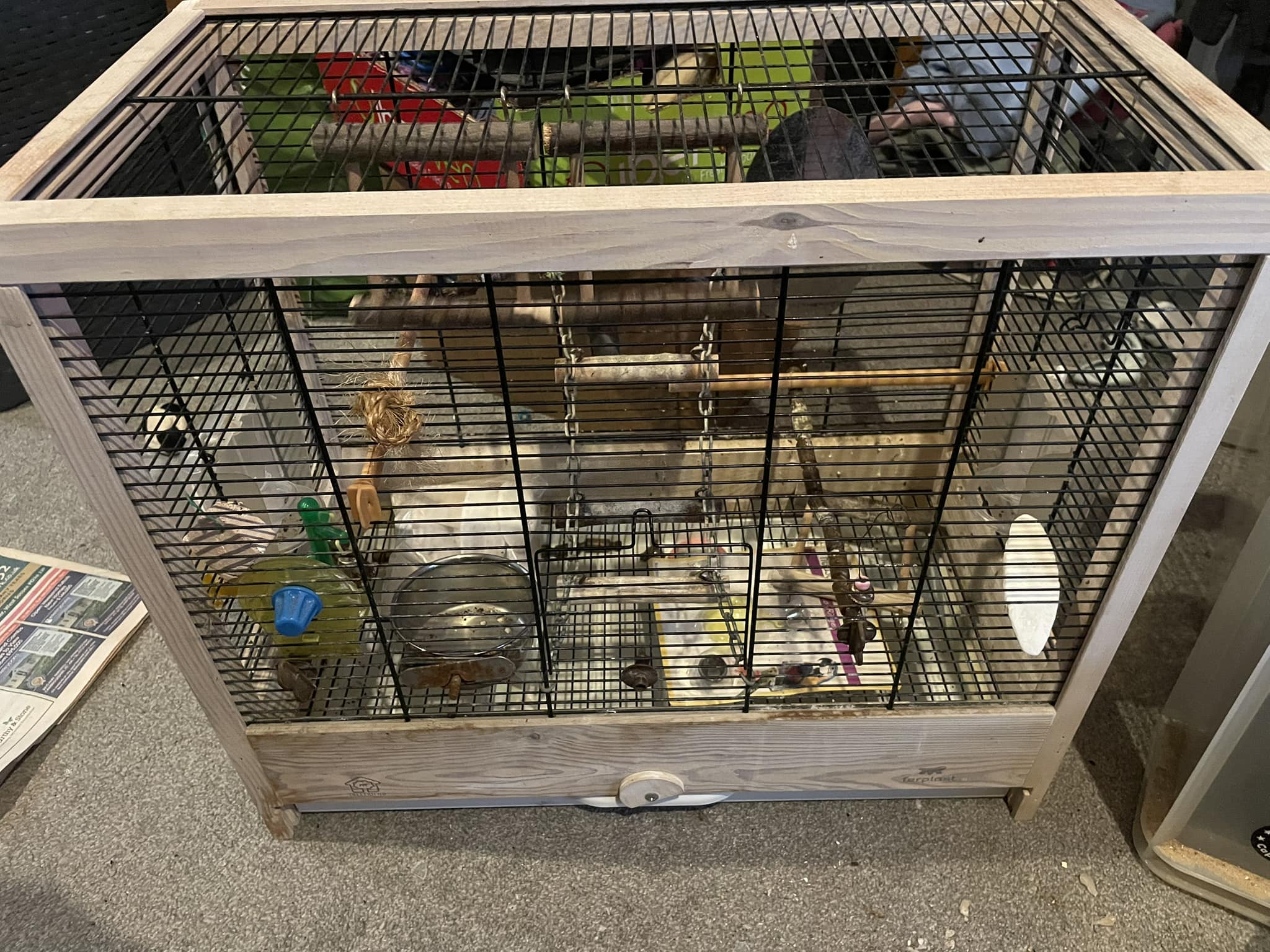
Seeds are part of a healthy bird diet. They are not a healthy bird diet on their own. They are high in fat and low in protein, vitamins, and minerals. A bird living exclusively on seeds is meeting its caloric needs while missing substantial portions of its nutritional needs. The consequences are not immediate — they build silently over years.
Fatty liver disease is the most common result in budgies and cockatiels kept on seed-only diets. By the time it is diagnosable, it has usually been developing for eighteen months or more. The bird looked healthy. It ate consistently. It moved around. It died younger than it should have, and the owner had no idea the diet was the reason.
The fix is straightforward. Seeds as a base, not as the whole diet. Quality pellets formulated for the species. Fresh vegetables every single day — leafy greens, broccoli, carrot, red bell pepper. Not occasionally. Every day.
If your bird currently eats nothing except seeds, the transition to a better diet takes patience. Read our complete guide on what budgies should eat for a full walkthrough of how to introduce new foods to a bird that refuses everything except seeds. The same principles apply to cockatiels and most other cage birds.
You can start today. Buy a bag of pellets. Buy a piece of broccoli. Put a small piece of each in the bowl alongside the seed. That is the beginning.
Mistake 2 — The Kitchen Danger Most UK Bird Owners Have Never Heard Of
This is the one I always want to say first, because the consequences of getting it wrong are immediate and irreversible. I hold it back until now because I want people reading this to understand the context — but please read this section carefully, and if any of it describes your household, act on it today.
Non-stick cookware — pots and pans coated with PTFE, sold under brand names including Teflon — releases fumes when heated. At normal cooking temperatures those fumes are harmless to humans. To birds, they are lethal.
A bird in or near a kitchen where a non-stick pan is overheated — left too long, heated dry, or subjected to any kind of scorching — can be dead within minutes. There is no gradual decline, no warning sign to act on. The bird is well, and then it is dead. I have spoken to owners who have lost birds this way. In every case, they had no idea the risk existed.
PTFE is present in most UK kitchens. It is in non-stick frying pans, some baking trays, some kitchen appliances. It is in self-cleaning oven coatings, which use high heat to clean and release fumes in the process. Most people who own these items have no idea that they are dangerous to the birds in their home.
The fix: switch to stainless steel or cast iron cookware. Do it before the next time you cook, not at some point when it is convenient. If you cannot immediately replace all your cookware, keep the bird out of the kitchen entirely and ensure there is good ventilation between the kitchen and the bird’s room when cooking.
Other airborne hazards in the same category: aerosol sprays of any kind used near the bird, scented candles in the same room, cigarette smoke, paint fumes, hairspray, and cleaning product sprays. Birds have a respiratory system that extracts airborne compounds far more efficiently than a mammal’s. What a human does not notice at all can be enough to cause chronic damage or acute crisis in a bird.
I have written about this in more detail in our guide on why budgies sneeze — the fumes section is essential reading for every bird owner, not just those with sneezing birds.
Mistake 3 — Keeping a Social Bird in Isolation
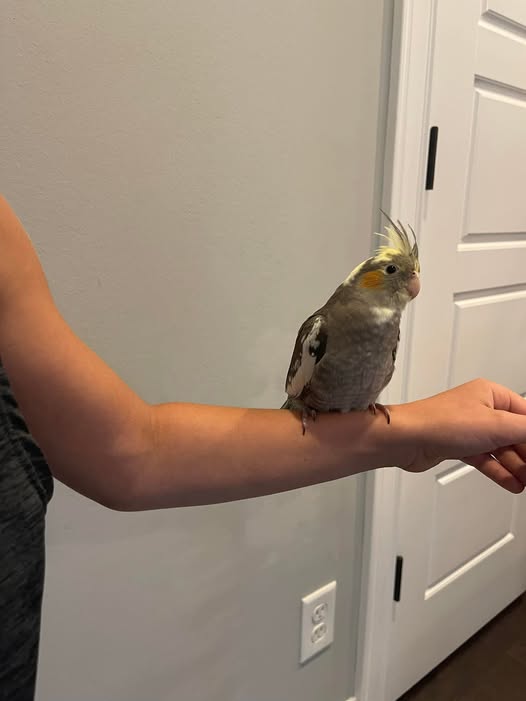
Budgies, cockatiels, and most other cage birds commonly kept in UK homes are flock animals. They evolved to live in groups. Their nervous systems, their hormonal responses, their behaviour — all of it is built around the expectation that another bird will be present.
When that expectation is not met, things go wrong gradually.
A lone budgie in its first weeks may seem fine. Active, curious, eating well. By month two or three, it is slightly quieter. By month six, it may be displaying stereotypic behaviours — pacing the same route around the cage, bar-chewing, sitting still for long periods. By the end of the first year, the bird’s psychological health has been compromised in ways that are difficult to reverse.
I see this regularly. Owners bring in birds — sometimes animals they have had for a year or more — asking why they seem different from how they were when they first arrived. In many cases the answer is simple: the bird is alone and it should not be.
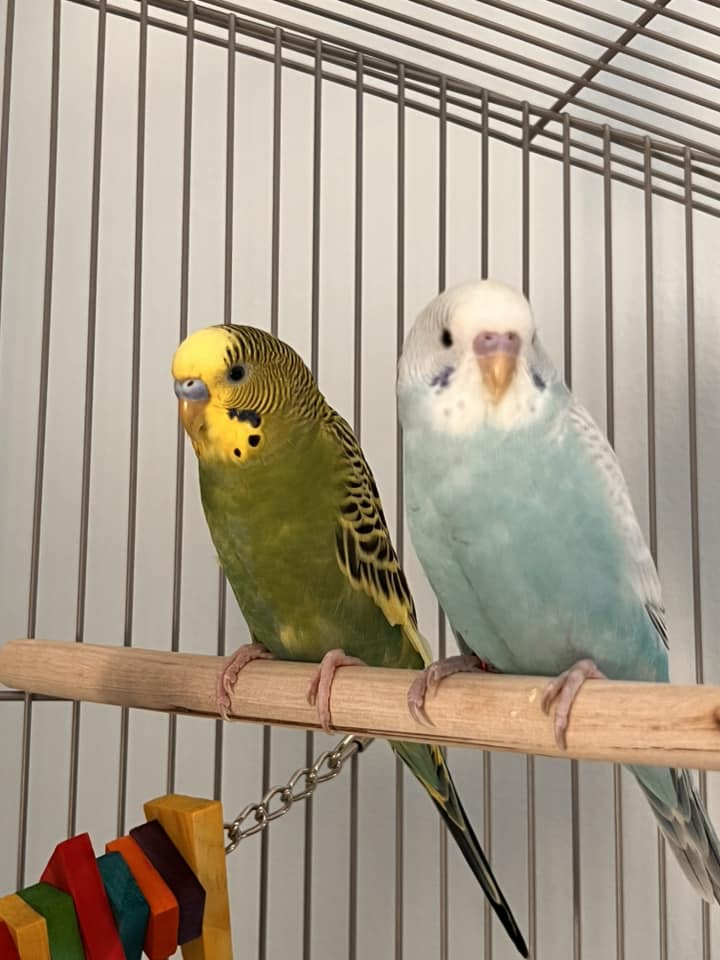
Two budgies rather than one. Two cockatiels rather than one. The second bird is not twice the work — in most cases it is less work, because birds that have a companion are more settled, less demanding of human attention, and less likely to develop the stress behaviours that lone birds do.
If you currently have a single bird that has been alone for some time, come and talk to us before you buy a companion. Introduction needs to be done correctly — putting two unfamiliar adult birds directly into the same cage without a proper introduction process can result in fighting. Done right, most introductions succeed. Done wrong, they create a different set of problems.
Mistake 4 — Not Monitoring Health Until Something Is Obviously Wrong
Birds hide illness. This is not behaviour that can be trained away or managed around — it is evolutionary. In the wild, a bird that looks sick is a bird that gets eaten. So they maintain normal-looking behaviour until they physically cannot.
By the time a bird is visibly unwell — sitting on the cage floor, tail bobbing with each breath, puffed up and unresponsive — the illness has usually been developing for several days. The visible symptoms are not the beginning. They are often the late stages.
This means that owners who wait for visible signs before seeking help are, in most cases, already dealing with a more advanced situation than the one they would have faced if they had noticed earlier. Earlier is almost always better. Earlier means more treatment options, shorter recovery, better outcomes.
The way to catch things early is not to watch for obvious symptoms — it is to know your bird well enough that subtle changes are noticeable. Daily observation, morning and evening. Weight checked weekly on a kitchen scale — for a budgie or cockatiel, a change of two to three grams sustained over several days is meaningful. Dropping the food bowl every morning so you know what the bird has actually eaten rather than just whether the bowl looks full.
Owners who do these things consistently catch problems at the early stage. Owners who observe casually and wait for something obvious catch them at the late stage. The difference in outcomes between the two groups is significant.
Find an avian vet before you need one. A vet with genuine bird experience, not a general practice that sees birds occasionally. Know how to get an urgent appointment. When the moment comes — and for a long-lived bird, some kind of health event is almost inevitable over the years — you will not have time to search for a vet from scratch.
Mistake 5 — The Cage That Looks Right but Is Not
The cage question is where the low-maintenance assumption shows up most clearly in practical terms. People buy what the pet shop has, or what comes up first in a search, or whatever has a picture of a budgie on the box. They assume that if it is sold as a budgie cage, it is an appropriate budgie cage.
Many are not.
The most common problems I see:
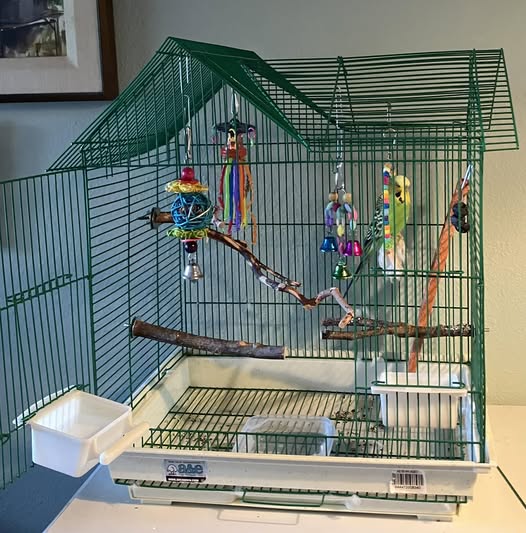
Too small. For a single budgie, minimum 60 centimetres wide. For a pair, 80 centimetres or more. Many cages sold and labelled as budgie cages in UK shops are significantly smaller than this. The bird accommodates the space it has — it does not tell you the cage is wrong. The evidence shows up later, as bar-chewing, feather plucking, and repetitive pacing.
The wrong shape. Round cages are widely sold and entirely wrong for most cage birds. They provide no corners — and birds need corners to feel secure, to retreat to, to sleep with structure around them. A round cage is a permanently exposed space. A rectangular cage gives the bird the geometry it needs.
Wrong perches. The standard plastic dowel perches that come with most budget cages are the wrong diameter and the wrong texture for a bird’s foot to use healthily over years. Replace them with natural wood branches of varying diameters. Fruit wood — apple, pear, cherry — is safe and available for almost nothing if you have access to the trees.
Wrong position. Kitchen — no. Direct all-day sun — no. In a draught — no. At floor level — no. The right position is in the main living area, at or above eye level, away from cooking fumes, away from draughts, with access to natural light but with shade available.
I have covered the full cage guide in detail at our complete guide to budgie cages. The same principles apply in most respects to cockatiels and other cage birds.
- “Birds are easy — that’s why we got one” — Birds are manageable. They are not easy in the sense that most people mean when they say easy — minimal daily effort, forgiving of neglect, fine if you go away for the weekend. They require consistent daily attention and a level of knowledge that most new owners do not have at the start.
- “It’s been fine on seeds for three years” — Survived for three years on seeds is not the same as thrived for three years on seeds. The damage from a nutritionally incomplete diet is cumulative and largely invisible until it is not. A seven-year-old budgie on a seed-only diet is not evidence that seeds are fine. It is evidence that this particular bird has good genetics and has been lucky so far.
- “Non-stick pans are fine as long as you’re careful” — PTFE fumes are released at temperatures below visible burning. Being careful is not a reliable protection. Changing to stainless steel or cast iron is a reliable protection. One is a habit. The other is a decision made once.
- “She seems happy enough on her own” — A bird that has never had a companion has no baseline for comparison. It is doing the best it can with what it has. That is not the same as being happy — it is an animal adapting to a situation it did not choose and cannot change.
- “I’ll sort the cage situation when I can afford something better” — Some cage improvements cost almost nothing. Moving the cage out of the kitchen costs nothing. Replacing plastic perches with a fruit tree branch costs nothing. Emptying and refilling the food bowl every day rather than topping it up costs nothing. Start with the free fixes today, and save for the larger ones.
How to Fix All of This Today — The Practical List
- Check what is in your kitchen.
Do you have non-stick pans? A self-cleaning oven? If the bird’s room has any airflow connection to the kitchen, this is the most urgent thing on this list. Move the bird if necessary. Plan to replace the cookware. Today — not eventually. - Look at what is in the food bowl.
Is it seeds only? Buy a piece of broccoli. Buy some kale. Put a small amount in the bowl alongside the seed today. The bird may ignore it for days or weeks — that is normal. Keep offering it. Read our full diet guide for the transition process. - Measure the cage width.
Get a tape measure. How wide is the cage? Under 60 centimetres for one bird, or under 80 for two? Start planning a replacement. In the meantime, ensure the bird has as much daily out-of-cage time in a safe, bird-proofed room as possible. - Check the perches.
Plastic dowels only? Find a suitable fruit wood branch — apple, pear, or cherry — wash it, dry it, and put it in the cage. Remove one of the plastic perches to make room. The bird’s feet will be using different surfaces, different diameters, different textures from today. - Weigh the bird.
Put a small perch on a kitchen scale and let the bird stand on it. Note the weight. Write it down. Do this every week from today. You now have a baseline — and any change from that baseline becomes visible early, rather than when it is already serious. - Think honestly about companionship.
Is your bird alone? Has it been alone for its entire life in your home? Come and talk to us about introducing a companion. We will walk you through the right approach based on the species, the bird’s age, and how long it has been solitary. It is not always simple, but it is almost always possible — and the difference to the bird’s wellbeing is significant.
None of these take more than an hour in total. Most take minutes. The birds that do well in UK homes are not in unusually expert households — they are in households where the owner made a handful of correct decisions, consistently, and paid attention to the animal they had committed to keeping.
If any of this raises questions about your specific situation, come in and see us. We are at Manor Garden Centre, Cheney Manor Industrial Estate, Swindon, SN2 2QJ — open every day. Or call on 01793 512400. Thirty-five years of doing this means we have seen almost every variation of every problem, and we would rather answer a question today than hear how something went wrong next month.
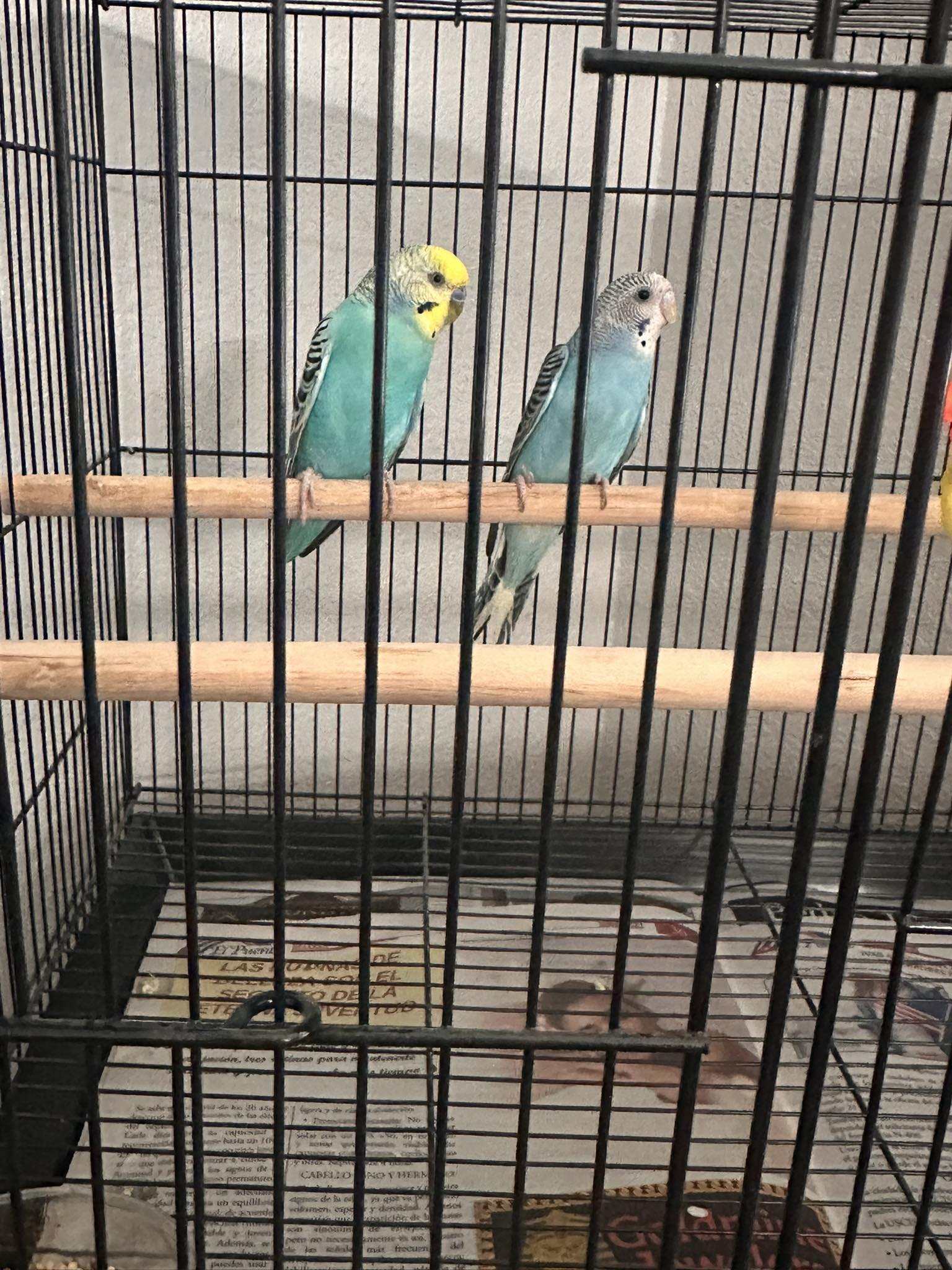
Visit Us at Paradise Pets Swindon
We stock budgies, cockatiels, canaries, finches, and a range of other cage and aviary birds year-round — all UK-bred, all handled and checked before they go to a new home. We also stock quality seed mixes, pellets, natural perches, and appropriate cages chosen with the bird’s actual needs in mind, not the manufacturer’s marketing.
Come in, ask questions, look at the birds. No pressure, no rush. And if you have a bird at home that is not doing as well as it should be, bring it in or call us first.
We also stock a full range of guinea pigs, rabbits, and gerbils and hamsters.
⭐ Customer Reviews
Amazing Bird Selection
Had a lovley visit today,staff were very friendly and very helpful,such a great petshop,their selection of birds is incredible,really impressed,thank so much to the staff at Paradise Pets

Friendly Helpful Staff
I have been coming to this place for years and they have a great stock of food for all types of pets. Have a great selection of small mammals and a lot of birds. Staff are friendly and helpful.

Great Quality Hutch
Bought a guinea pigs hutch and run combo, very happy with the service, the hutch was put in my car for me without even asking for help. The wood quality is very good, the instructions easy to follow and we are extremely happy with the fully built hutch. A good size for 2 guinea pigs

Response from Paradise Pets | Wiltshire
Thank you Melanie Latus Nice to provide services to you.
Best Bird Shop Around
It’s the best pet shop in and around Swindon. They always have an amazing selection of birds and all you need to keep them happy. I keep birds myself and the guys there are happy to answer questions and really know their stuff. I have seen budgies etc. in chain pet shops in the area looking really unhealthy and ill – I wouldn’t go anywhere else than Paradise Pets for animals.

Highly Recommended Bird Shop
I could not praise this shop enough. Really helped my Grandson buy his first bird and he’s loving it. Travelled from Somerset and was welcomed with open arms.

Great Shop with Competitive Prices
Great shop with amazing selection for small animals, hamsters, mice ect, highly recommend!
Also has a great selection for dogs & cats too & very competitive prices! 💖

