

Safety correction, 24 September 2026: Revised the veterinary-contact advice and removed fixed waiting periods for concerning signs. Veterinary guidance on signs of illness in birds supports prompt professional assessment; breathing difficulty is an emergency.
Neil has kept, bred, and sold budgies at Paradise Pets Swindon since 1988 — over 35 years of answering questions about these birds from owners who are worried, confused, or simply not sure what normal looks like. A budgie that has gone quiet is one of the most common concerns he hears. Sometimes it means nothing. Sometimes it means something serious. This guide tells you how to tell the difference.
A woman came in last autumn with her phone out before she had even reached the counter.
She had a video to show me. Her budgie — a blue male she had owned for about two years — had been noticeably quieter than usual for the past four or five days. Not silent, she was careful to say. Just quieter. Less chattering, less whistling, less of the general noise she had come to think of as the background soundtrack of her kitchen. She had filmed him that morning so she could show me what she meant.
I watched the video. The bird was sitting on his perch, feathers slightly puffed, eyes half-closed in that way budgies have when they are not fully alert. Not moving much. Not his usual self.
I asked her a few questions. Any change in droppings? She thought so — slightly darker, maybe. Was he eating normally? She was not entirely sure — he was near the food bowl but she had not seen him eating. Had anything changed in the household recently? A new cleaning product, maybe. She had switched to a different spray cleaner in the kitchen a week ago.
I told her my honest suspicion — that the bird might be reacting to fumes from the new spray cleaner, which can cause respiratory irritation in budgies extremely quickly — but that given what she was describing, a vet call the same day was the right move. Not the next morning. That day.
She called me two days later to say the vet had confirmed a mild respiratory infection, caught early. The bird was on antibiotics and already chirping again.
That story captures almost everything useful I know about quiet budgies. A quiet budgie is not always a sick budgie. But a budgie that has changed — that was vocal and is now not — is a budgie telling you something. The job is figuring out what.
The First Question to Ask — Is This Normal for This Bird, or Has Something Changed?
Before anything else, this distinction matters enormously. There are budgies that are naturally quiet birds. There are female budgies. There are budgies that are settling into a new home. There are budgies that are moulting. In all of these cases, a quieter bird may be completely normal and not a cause for concern.
What changes the calculation completely is the word new.
A budgie that has always been relatively quiet is one thing. A budgie that was vocal yesterday and is quiet today is something entirely different. Any change in behaviour — including a sudden or gradual reduction in vocalisation — is the bird communicating that something in its world has shifted. That shift may be harmless. Or it may not be. Your job as an owner is to work through the possibilities honestly rather than assuming the best.
The sections below cover every common reason a budgie goes quiet — from the completely normal to the genuinely urgent. Read through them in order, and be honest with yourself about which one matches what you are actually seeing.
Normal Reasons a Budgie Goes Quiet — Start Here
A New Bird in a New Home
A budgie that has just arrived home will often be almost completely silent for the first few days, sometimes the first two weeks. This is entirely normal. The bird is in a strange environment, surrounded by unfamiliar sounds and sights, and it is doing what prey animals do in unfamiliar situations — keeping quiet and observing.
A new budgie that is eating, drinking, and moving around the cage normally — even if quietly — is a healthy bird doing exactly what it should. The vocalisation will come. Give it time, give it quiet and consistency, and do not interpret silence as illness in a bird that arrived in your home within the last fortnight.
Female Budgies Are Naturally Quieter
This surprises people more than it should. Male budgies are the vocalisers — the chatterers, the mimics, the birds that learn words and whistle tunes and fill a room with noise. Female budgies are naturally less vocal. They chirp, they communicate, but they do not perform in the same way. If you have a female budgie and you were expecting the same volume of noise you have seen in videos online, the bird is probably fine. She is just female.
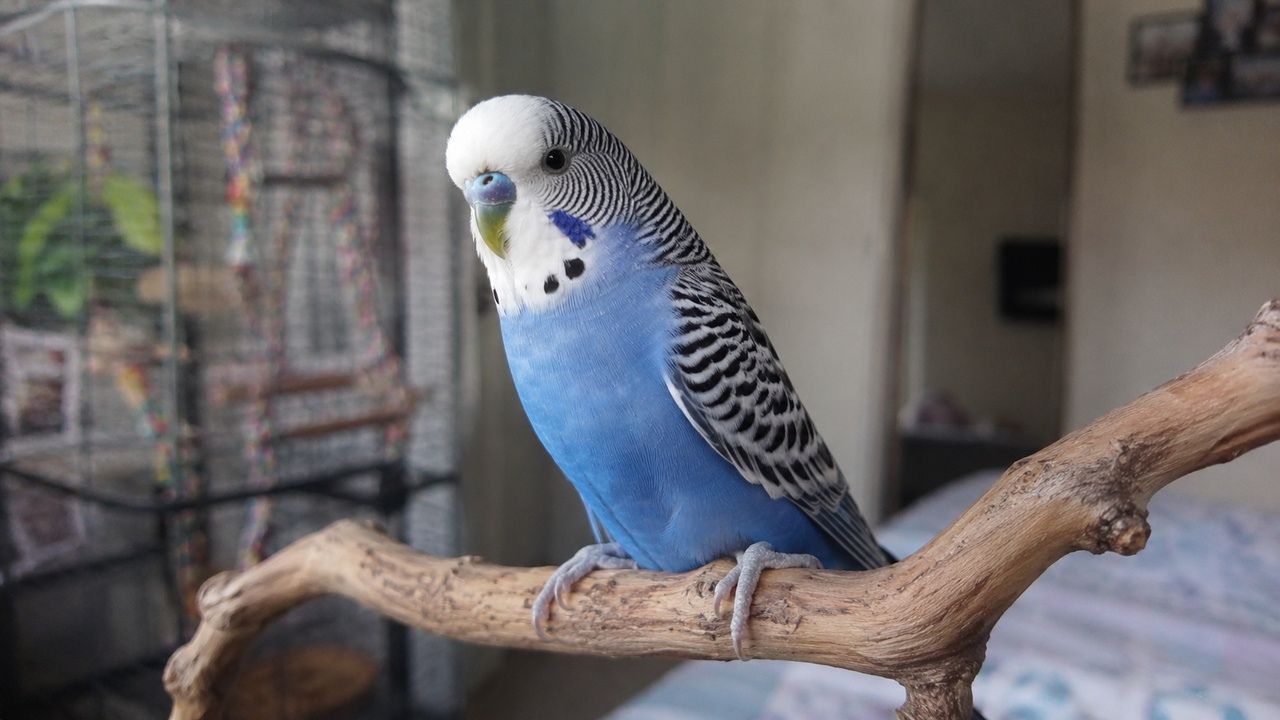
The easiest way to tell: the cere — the fleshy area just above the beak where the nostrils are — is blue or purple-blue in males and brown or white in females. If your bird is quieter than you expected and has a brown or whitish cere, this is almost certainly the explanation.
Moulting
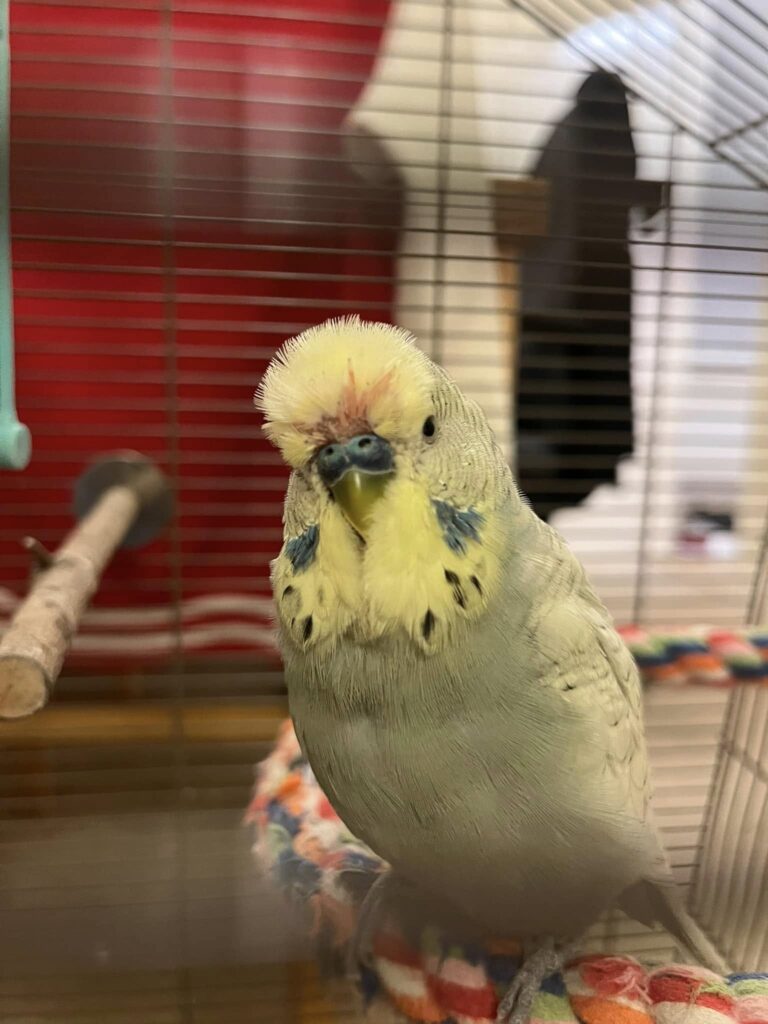
Budgies moult — shed and replace their feathers — typically once or twice a year. During a moult, the pin feathers growing through the skin are sensitive and the process is physically demanding. Many budgies become noticeably quieter, less active, and slightly more irritable during this period. They may also eat and drink more than usual.
A moulting budgie that is quiet but otherwise eating normally, has no respiratory symptoms, and has visible new pin feathers coming through is not a sick bird — it is a bird going through a normal physical process. Leave it alone more than usual, make sure it has access to good nutrition, and the usual vocalisation will return once the moult is complete.
Shorter Days and Less Light
Budgies are sensitive to light levels in a way that many owners do not realise. In the wild, their activity and vocalisation patterns follow daylight hours. A budgie kept in a room that gets significantly less natural light in winter, or one that is covered early in the evening, will often be noticeably quieter during the darker months. This is seasonal behaviour and does not indicate illness.
If you notice your budgie gets quieter every autumn and livelier in spring, this is almost certainly the reason. Ensuring the bird gets adequate exposure to natural light — or a full-spectrum bird lamp — through the winter months can make a meaningful difference.
- New bird, arrived within the last 14 days: Settling in silence is completely normal. Watch for eating and drinking.
- Female budgie that has always been quieter than expected: This is just her nature. Check the cere colour.
- Visible pin feathers, slightly puffy, eating well: Normal moult behaviour. Leave it alone and let the process complete.
- Quieter in winter, livelier in spring every year: Seasonal light response. Consider a full-spectrum lamp through the darker months.
- Quiet at certain times of day: Budgies have natural rest periods. Quiet mid-morning or mid-afternoon is not unusual in a bird that is otherwise active.
When a Quiet Budgie Is Telling You Something Is Wrong
Everything in the previous section involves a quiet budgie that is otherwise normal — eating, drinking, moving, not showing other symptoms. When quietness is accompanied by anything else, the calculation changes.
The reason I want to be direct about this is that birds are prey animals. In the wild, a sick bird that shows obvious signs of illness is a bird that gets targeted by predators. So birds have evolved to hide illness extremely well and for as long as they possibly can. By the time a budgie is showing obvious signs of being unwell — sitting puffed on the bottom of the cage, clearly unable to perch, not eating — it has often been ill for longer than the owner realises. The quiet period before the obvious signs appeared was the window during which action would have made the most difference.
This is the principle behind what I tell every owner: a change in vocalisation, particularly in a bird that is normally talkative, is one of the earliest warning signs available to you. Pay attention to it.
Respiratory Problems — The Most Common Serious Cause
Respiratory infections are the most frequent health problem I see in budgies, and a reduction in vocalisation is often the first sign. A budgie with a respiratory problem may go quiet because it is simply harder to produce sound when breathing is compromised. You may also notice: tail bobbing with each breath, clicking or wheezing sounds, laboured or more rapid breathing, discharge from the nostrils, or the bird sitting with its beak slightly open.
Budgies are extremely sensitive to airborne irritants — cigarette smoke, scented candles, aerosol sprays, non-stick cookware fumes, air fresheners, and strongly scented cleaning products can all cause respiratory damage quickly. If the quiet coincided with any change in the household environment involving airborne products, that connection is worth investigating.
A quiet budgie with respiratory signs needs immediate veterinary contact. Obvious breathing difficulty requires emergency help, rather than waiting until later in the day.
Other Signs of Illness That Accompany Quietness
Any of the following alongside a quiet bird is a reason to call a vet the same day — not tomorrow, not after the weekend:
Feathers puffed up for most of the day when the bird is not moulting. Sitting on the floor of the cage rather than on perches. Eyes half-closed when the bird should be alert. Changes in droppings — watery, very dark, or unusual in volume. Weight loss visible in the breastbone becoming more prominent. One or both eyes showing discharge or unusual appearance. Regurgitating food repeatedly without the swallowing motion that indicates normal feeding.
- Tail bobbing with each breath, clicking or wheezing: Respiratory infection — deteriorates fast
- Puffed feathers for most of the day, not moulting: Classic illness posture — do not wait
- Sitting on cage floor, not perching: Significant weakness — urgent
- Eyes half-closed when the bird should be alert: Sign of illness, not sleepiness
- Changed droppings — watery, very dark, unusual volume: Internal issue — same day
- Eating less or not eating: Contact an avian vet promptly; do not wait for twenty-four hours to pass
- Discharge from nose or eyes: Infection — needs assessment
Stress and Environmental Changes — More Common Than Owners Realise
A budgie that has gone quiet and is showing no obvious illness signs may be responding to something that has changed in its environment. Budgies are more sensitive to change than most owners appreciate, and the changes that affect them are not always obvious.
Moving the cage to a new position — even within the same room — can unsettle a budgie for several days. A new piece of furniture near the cage. A change in the household routine that alters when the bird is covered, fed, or has lights-on time. A new pet arriving in the household. Building work with loud or unpredictable noise. Visitors who spend time near the cage. Any of these can produce a temporary quietening in a bird that is otherwise healthy.
The difference between stress-quiet and illness-quiet is usually the presence or absence of other symptoms, and whether the bird is still eating and drinking normally. A stressed budgie that has gone quiet will typically still eat, still move around the cage, and will not show the physical signs of illness I described above. It will also generally return to normal vocalisation within a few days once whatever disturbed it has settled.
If you cannot identify an environmental cause and the bird remains quiet for more than five to seven days with no return to normal behaviour, treat it as illness until proven otherwise and get it seen.
Bereavement — When a Budgie Has Lost Its Cage Mate
This is the situation that owners are often least prepared for, and the one I find myself having to explain most gently.
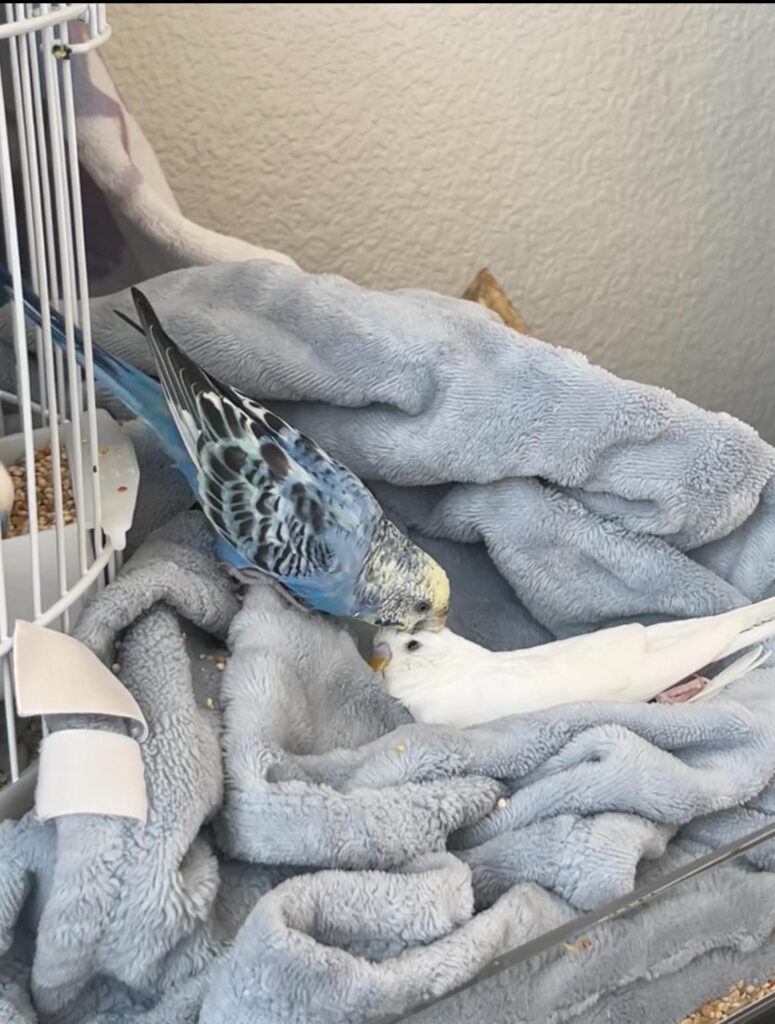
Budgies form genuine social bonds. A pair of budgies that have lived together — particularly for a year or more — are not interchangeable companions. They know each other. When one dies, the surviving bird often enters a period of genuinely changed behaviour: quieter, less active, less interested in food, spending more time in the area of the cage where its companion used to sleep.
This is real. It is not anthropomorphism. It is a social animal responding to the loss of its primary social bond, and it can last anywhere from a few days to several weeks.
A companion’s death can affect behaviour, but do not use bereavement to rule out illness. Keep the routine consistent and contact an avian vet about a new or persistent change, especially if the cause of the companion’s death is unknown.
A bereaved budgie that stops eating or eats less needs a prompt call to an avian vet. Do not wait forty-eight hours or assume appetite will return as the bird adjusts. Breathing difficulty, collapse or marked weakness requires emergency help.
The longer term question — whether to introduce a new companion — is worth thinking through carefully rather than rushing. Come and speak to us about it. Introducing a new bird to a grieving adult budgie has its own considerations and is not always as straightforward as people expect.
Loneliness and Boredom in a Single Budgie
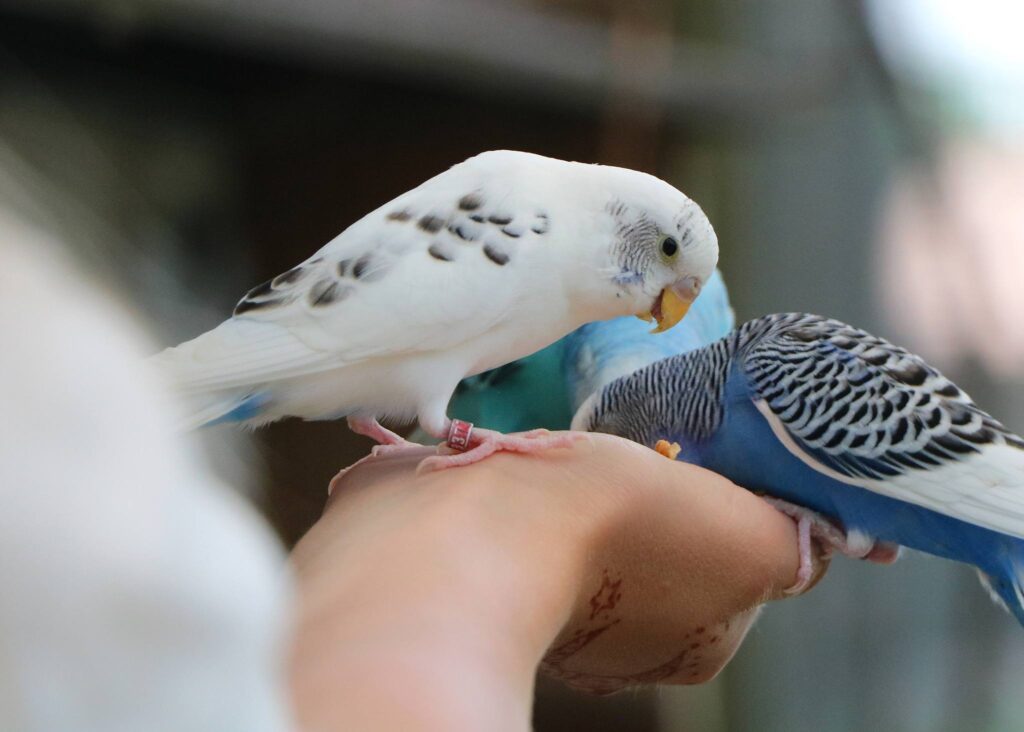
A single budgie kept without adequate social interaction can become quiet in a way that is not illness but is still a welfare problem. Budgies are flock animals. Silence, in the wild, is a danger signal — a quiet flock is a flock under threat. A single bird in a quiet house with no interaction, no stimulation, and no company for most of the day may begin to show signs of depression — reduced vocalisation, reduced activity, reduced interest in food and enrichment.
This is different from illness, but it is not nothing. A bird living like this has a worse quality of life than it should, and the quietness is it telling you that something is missing.
The solutions are not complicated: more daily interaction with you, more enrichment in the cage, a mirror or toys if the bird is alone, or — most effectively — a companion bird. If you are going to be away from home for most of the day most days of the week, a single budgie is genuinely not the right setup. Two birds together are a different experience for everyone involved.
The Male and Female Difference — Worth Knowing
I touched on this earlier but it is worth being clear about, because it catches people out.
Male budgies are the talkers, the mimics, the chatterboxes. A young male budgie given consistent human interaction in a stimulating environment will typically be almost constantly vocal when active. The vocalisation of a happy male budgie is a significant feature of any room he is in.
Female budgies are not wired the same way. They communicate, they chirp, they have personalities — but they do not vocalise in the same volume or frequency as males. A female budgie that is quiet is not necessarily unhappy or unwell. She may simply be a female budgie.
If you bought your budgie without being told the sex, it is worth knowing. The cere — the fleshy area above the beak — is the easiest indicator. Blue or purple-blue means male. Brown, white, or tan means female. In young birds under three months, both sexes can have a pink or pale cere that makes sexing harder, but it will become clearer as the bird matures.
Quick Reference — Why Your Budgie Is Quiet
| What You Are Seeing | Most Likely Cause | What To Do |
|---|---|---|
| New bird, quiet since arriving home | Settling in — completely normal | Nothing. Give it 7–14 days. Watch for eating and drinking. |
| Female bird, always been quieter than expected | Sex — females are naturally quieter | Nothing. Check cere colour to confirm sex. |
| Quiet, slightly puffed, visible pin feathers | Moulting | Leave it alone. Good nutrition. Will return to normal when moult completes. |
| Quieter every winter, livelier in spring | Seasonal light response | Ensure adequate natural light or add a full-spectrum lamp. |
| Sudden quietness after a change in household | Stress — environmental change | Address an obvious disturbance, but contact an avian vet about a new or persistent behavioural change. Do not wait a week if anything else is abnormal. |
| Quiet since losing cage mate | Bereavement | Keep a steady routine. Call an avian vet promptly if eating falls or stops; do not wait forty-eight hours. |
| Quiet, puffed, tail bobbing, clicking sounds | Respiratory infection | Contact an avian vet immediately; breathing difficulty is an emergency. |
| Quiet, puffed, on cage floor, not eating | Illness — unknown cause | Same-day vet. This bird is unwell. |
| Quiet, active, eating — single bird, rarely interacted with | Loneliness and boredom | More interaction, more enrichment, consider a companion bird. |
The Rule I Give Every Budgie Owner
Know your bird’s normal.
That is the most useful piece of advice I can give any budgie owner, and it is simpler than people think. It just means: pay enough attention to your bird on its ordinary, healthy days that you will immediately notice when something is different.
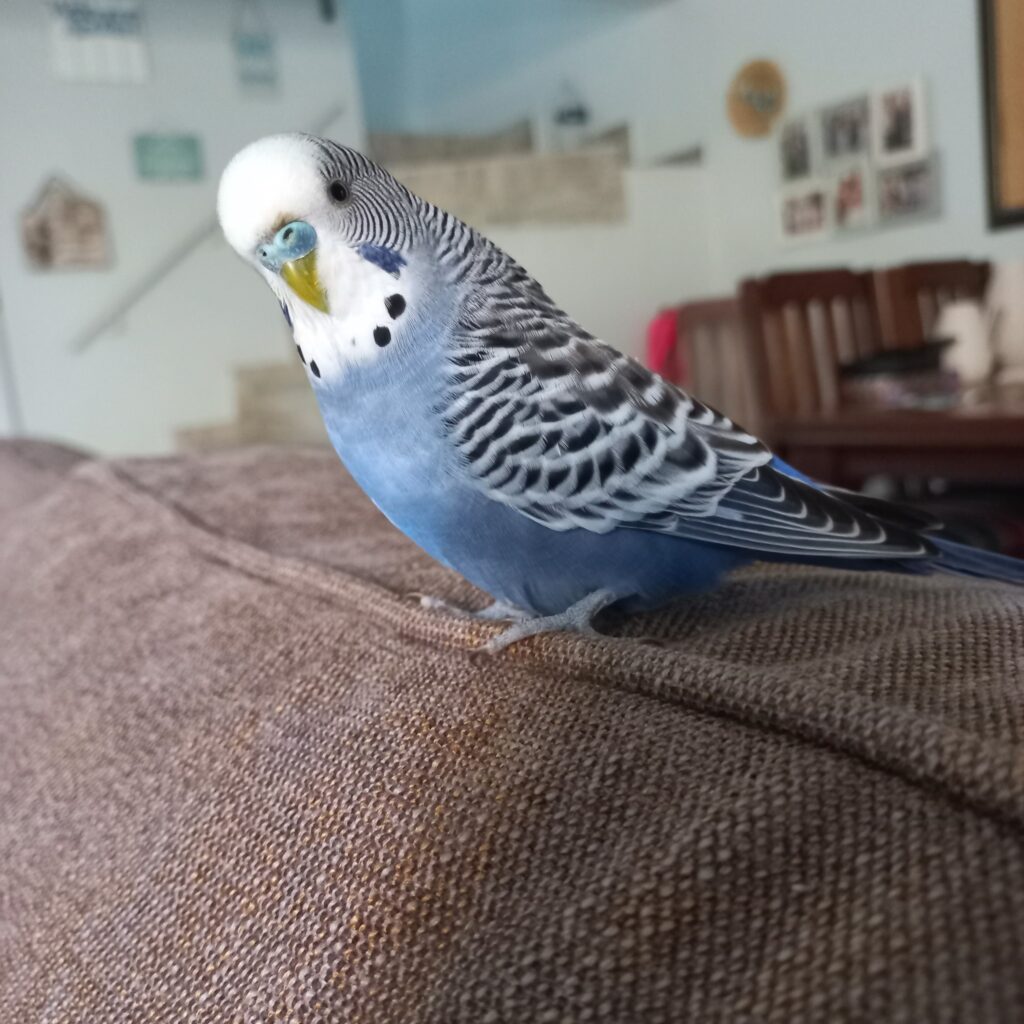 A bird you know well is a bird you can advocate for. When the vocalisation drops, when the posture changes, when the food consumption changes — you will notice, because you know what normal looks like for this specific animal. And you will act on it before the window closes.
Budgies are small animals with limited reserves. A bird that is quietly unwell today can be in serious difficulty by tomorrow if left untreated. The owners whose birds do best are not the ones who wait and hope. They are the ones who notice the quiet, take it seriously, and make the call.
If you are ever unsure — if something feels different and you cannot place it — call a vet and describe what you are seeing. A two-minute phone call costs nothing and may save you a great deal more than that.
Frequently Asked Questions
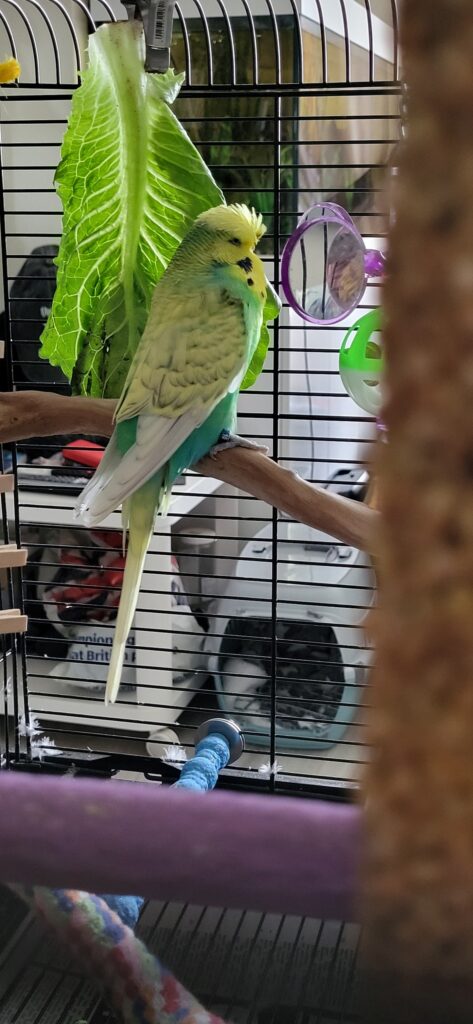
My budgie has suddenly gone quiet — should I be worried?
A sudden or persistent change in vocalisation is worth discussing promptly with an avian vet. Describe appetite, droppings, posture and breathing. An apparently alert bird can still be unwell; do not wait another twenty-four to forty-eight hours for additional signs.
My budgie is quiet and puffed up — is it sick?
Puffed feathers alongside quietness is a combination worth taking seriously. A budgie that is puffed up for most of the day — not just after waking, but through its normal active hours — is telling you it is not well. This is a classic illness posture. Check for other symptoms: is it on the perch or the floor, is it eating, is there any change in breathing. If anything else is off alongside the puffed feathers and the quiet, call a vet that day rather than waiting to see.
Could fumes or smells in my home make my budgie quiet?
Yes, absolutely — and this is more common than most owners realise. Budgies have extremely sensitive respiratory systems. Cigarette smoke, scented candles, aerosol sprays, air fresheners, non-stick cookware overheating, and strongly scented cleaning products can all cause respiratory irritation or damage quickly. If the quietness coincided with using a new product in the home — particularly anything sprayed or burned in the room where the cage is — that connection is worth investigating. Remove the product, ventilate the room, and if the bird shows any breathing symptoms at all, get it seen the same day.
My budgie is quiet but eating and drinking normally — is it still worth seeing a vet?
Yes. A new or persistent change should be discussed promptly with an avian vet, even if eating and drinking continue. The practice can advise on assessment; do not rely on a five-to-seven-day waiting rule.
My budgie went quiet after I rearranged the room — is this normal?
Moving a cage can affect behaviour, but does not establish why a bird has gone quiet. Keep the setting calm, watch food access and describe a new or persistent change to an avian vet rather than assuming it will resolve within a week.
Where can I buy a budgie in Swindon?
We always have budgies in stock at Paradise Pets — young birds, good temperaments, available individually or in pairs. Come and see us at Manor Garden Centre, Cheney Manor, Swindon SN2 2QJ, or call us on 01793 512400. We are happy to answer questions before you visit and to help you choose the right bird for your household.
Worried About Your Quiet Budgie? Come and Talk to Us
For a new or persistent change in behaviour, contact an avian vet directly. A short video can help if it does not delay care. Paradise Pets can help separately with general housing, food and equipment questions.