
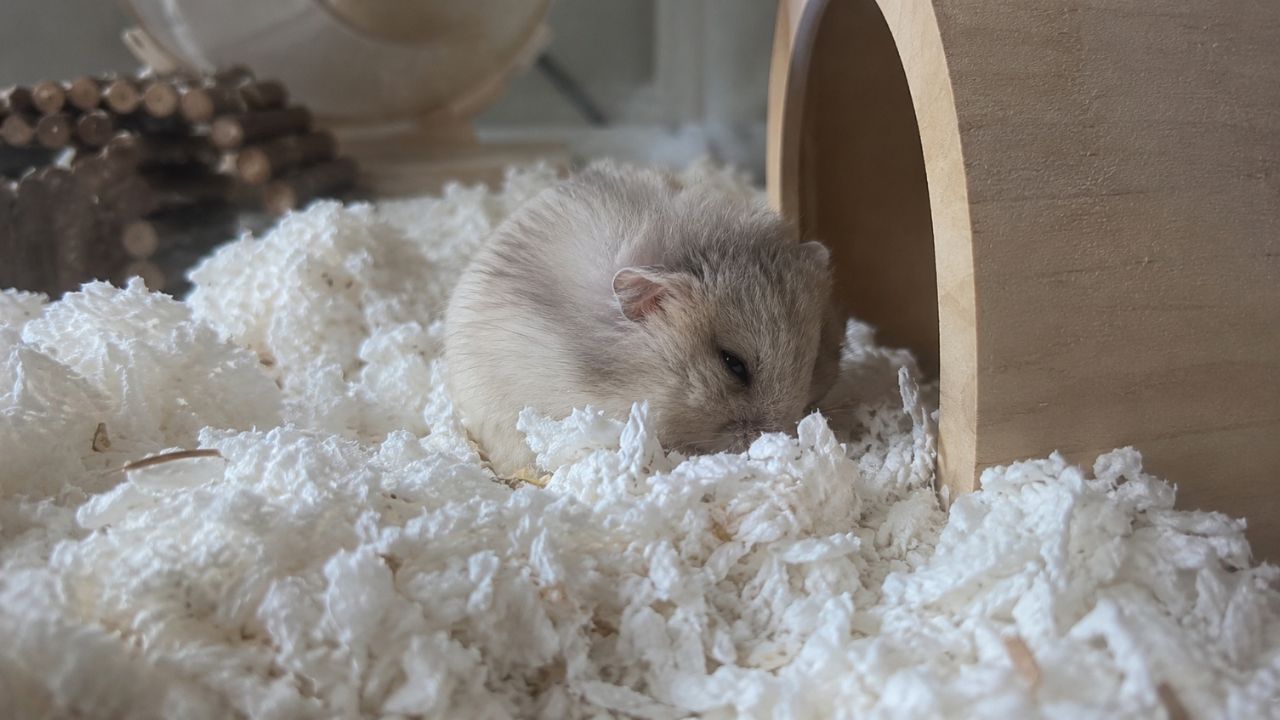

Neil has kept, bred, and sold hamsters at Paradise Pets Swindon since 1988 — over 35 years of first-hand experience with Syrian and dwarf hamsters. In that time, he has answered more panicked “I think my hamster is dead” calls than he can count — many of which turned out to be hibernation. This is his honest, urgent guide on what hibernation really means in a UK pet hamster, and exactly what to do.
The phone rang one cold January morning at about 8 o’clock. A woman on the other end was crying. “Neil, my daughter’s hamster is dead. He’s cold, he’s not moving, he’s stiff. We don’t know what to do. She’s going to be devastated.”
I asked her a few quick questions. Was the room cold overnight? Yes, the heating had been off, and the cage was near a window. Had she actually checked for breathing? She wasn’t sure. Could she look very carefully right now and tell me what she saw?
She put the phone down, came back a minute later. “Neil — I think I saw his whisker move. Just very slightly. Could that be…?”
I told her exactly what to do. Get the hamster gently into warm cupped hands, take him into the warmest room in the house, wrap him in something soft, and wait. Within about an hour, that hamster was back to himself — slowly waking, eating a piece of apple, then back to his wheel by lunchtime. He was not dead. He had been in torpor — a hibernation-like state hamsters enter when they get dangerously cold — and the family had nearly buried a living animal.
That call has stayed with me, because it is genuinely common. Every UK winter, I get versions of that call. Some end happily. Some, sadly, do not — because by the time the owner realised what was happening, it was too late to bring the hamster back.
The honest truth is this — hamster hibernation in UK pet homes is not normal, it is not healthy, and it is a genuine medical emergency. But the hamster is usually not dead. If you act quickly and properly, most hibernating hamsters can be brought back.
This article is the conversation I have at the counter, written down for every UK hamster owner who has ever stared at a still, cold hamster and thought the worst. By the end of it, you will know what hibernation actually is in a pet hamster, how to tell it from death, exactly what to do, and how to make sure it never happens again.
First — What Hibernation Actually Means In A Pet Hamster
Let me explain what is actually happening, because this is genuinely misunderstood. The proper word for what pet hamsters do is torpor — a hibernation-like emergency state, not true hibernation. The distinction matters because it changes what you need to do.
True hibernation in wild animals is a deliberate, prepared state — they fatten up, find a safe den, and slow their metabolism for the winter in a controlled way. They are designed for it. Most wild Syrian hamsters do not even hibernate — they live in warmer climates where they do not need to.
Torpor is different. Torpor is an emergency survival response a pet hamster’s body switches on when it gets dangerously cold. The hamster is not prepared for it. Its body shuts down most functions to preserve life until conditions improve. Breathing slows to almost nothing. Heart rate drops dramatically. The hamster becomes cold, still, and almost impossible to detect signs of life in.
This is why pet hamster owners mistake it for death. Everything that normally signals life — visible breathing, warmth, movement, response to touch — is gone or almost gone. The hamster looks dead. It feels dead. But it is not dead, and with proper action it can usually be brought back.

Why Pet Hamsters Hibernate In The UK — The Main Causes
Understanding why hibernation happens helps you both treat it and prevent it. In 35 years of UK pet hamster keeping, these are the situations that cause it.

Cause 1: A Cold Room — By Far The Most Common Cause
This is the cause behind almost every UK hibernation case I hear about. The room temperature has dropped too low, usually overnight when the heating switches off, and the hamster’s body has responded by entering torpor.
UK homes can get genuinely cold overnight in winter, particularly:
- Bedrooms with windows open or heating off overnight
- Rooms with single-glazed windows or poor insulation
- Older UK houses with draughty rooms
- Rooms left empty for long periods during winter
- Spare rooms or back rooms where the heating is rarely on
- Cages near external walls or cold floor surfaces

A hamster does not need to be in freezing temperatures to enter torpor. Anything below about 15°C, particularly for sustained periods, can trigger it. Some sensitive hamsters react at slightly higher temperatures.
Cause 2: Sudden Temperature Drops
Sometimes the problem is not the absolute temperature but a sudden change. A hamster acclimatised to a warm room that suddenly drops several degrees — perhaps because heating broke down, a window was left open, or the cage was moved to a colder room — can enter torpor even at temperatures that would normally be fine.
This is why temperature stability matters as much as the actual reading. A hamster that has lived at a stable 19°C all winter can react badly to a sudden drop to 14°C, while a hamster acclimatised gradually to cooler temperatures may handle it better.
Cause 3: Draughts And Wind Chill
Even in a room that reads a reasonable temperature on the thermostat, draughts can create localised cold spots that trigger torpor. A hamster cage placed near a draughty window, door, or air vent can experience effective temperatures much lower than the rest of the room.
This is particularly relevant in UK homes during winter, where draughts are common in older buildings. The cage might be in a “warm” room but in a position where cold air constantly flows past it.
Cause 4: An Underlying Health Issue Combined With Cold
Sometimes a healthy hamster handles a cool room, but a sick or elderly one cannot. Hamsters that are unwell, very young, very old, or have underlying conditions are more vulnerable to torpor at temperatures that would not affect a healthy adult.
If your hamster enters torpor in a room temperature that would normally be fine, it is worth investigating whether there is an underlying health issue once the bird has fully recovered. A vet check is sensible after any torpor episode.
How To Tell Torpor From Death — The Critical Skill
This is the part that genuinely matters most. When you find a still, cold hamster, you need to know whether it is in torpor (which you can fix) or has died (which you cannot). Here is how to tell.
- Look very carefully for breathing
Watch the body closely for several minutes. Torpor breathing can be as slow as one breath every 2-3 minutes — easy to miss if you do not watch long enough. Hold a small mirror near the nose to see if it fogs. - Check for whisker twitches
Even in deep torpor, tiny whisker movements can occur. Watch the face very carefully. - Feel for very faint warmth in the body core
A dead hamster will be the same temperature as the room throughout. A torpid hamster usually retains some faint warmth in the chest and abdomen, even when extremities are cold. - Check the body position
Torpid hamsters are usually curled up tightly in their nest, looking peaceful. A hamster that has died often has a different posture — may be on its side, stretched out, or have eyes wide open. - Look at the eyes
Torpid hamster eyes are usually closed. A hamster that died with eyes open and dry suggests death rather than torpor. - Consider the temperature of the room
Was it cold overnight? If yes, torpor is highly likely. If the room has been warm and stable, death is more likely.

The Honest Rule Of Thumb
If you find a still, cold hamster after a cold night, assume torpor and start warming the animal immediately. Do not assume death. The cost of treating a dead hamster as torpid is nothing — you simply discover after warming that it has died. The cost of treating a torpid hamster as dead is fatal. Always err on the side of trying.
What To Do If Your Hamster Is In Torpor — Step By Step
This is the most important section of this entire article, because acting correctly genuinely saves lives. Here is exactly what to do, in the right order, with no panicking.
- Stay calm and act quickly but gently
Panicking and rough handling can hurt a fragile torpid hamster. Slow, calm, deliberate action. - Move the hamster to a warm room immediately
The warmest room in your house. The living room with heating on is ideal. Avoid rooms with sudden heat sources or draughts. - Pick the hamster up in cupped hands
Hold the hamster gently in cupped hands against your body. Your body warmth is the safest, most gradual heat source available. Around 35-37°C and steady. - Wrap in something soft and warm
If holding becomes uncomfortable, wrap the hamster in a soft towel or piece of fleece that has been at room temperature. Keep them close to your body warmth. - Wait patiently — this takes time
Most hamsters take 1-2 hours to fully wake from torpor. Some take longer. Do not rush, do not give up early, do not force movement. - Watch for signs of waking
First signs are usually slightly faster breathing, then whisker twitches, then small movements of the legs or head. The hamster will gradually come back. - Once the hamster is moving, offer warm water and food
A small dish of slightly warm water (not hot), and a small piece of fruit or vegetable. Torpid hamsters often dehydrate and need glucose energy. - Keep the hamster warm for several hours
Even after waking, the hamster is vulnerable. Keep it in a warm spot for the rest of the day before returning to its normal cage.

Critical — What NOT To Do
This part matters as much as what you should do. Several common reactions to a hibernating hamster actually cause harm or death. Avoid these completely.
- Do not apply direct heat — no hot water bottles directly on the hamster, no heat lamps shining on it, no putting it on a radiator. Sudden heat shocks the system and kills the hamster.
- Do not put it in hot water or warm bath — water shock can kill instantly
- Do not microwave a towel or hot pad and apply directly — uneven heat can burn or shock
- Do not rub the hamster vigorously — gentle warming, not friction
- Do not force-feed during torpor — wait until the hamster is fully awake and able to swallow
- Do not give up too quickly — recovery can take 1-2 hours or longer
- Do not assume death without thorough checking — always try to warm first
- Do not immediately return to a cold cage — that is what caused the problem
The principle here is gentle and gradual. The hamster’s system has shut down. Sudden changes are dangerous. Slow, gentle warming from a natural source (your body warmth, a warm room) is the safest path back.
After Recovery — Aftercare And Vet Check
A hamster that has been in torpor needs proper aftercare. Just because it has woken up does not mean it is fully out of danger.
- Keep the hamster warm for at least 24 hours — at a stable 20-22°C minimum
- Watch for normal behaviour — eating, drinking, normal activity over the next day
- Offer extra nutrition — small amounts of fresh fruit or vegetable for energy
- Provide warm water — and check the hamster drinks normally
- Move the cage to a warmer, more stable location — never put it back where the torpor happened
- Watch for any signs of illness — torpor can weaken the immune system temporarily
- Take the hamster to a small-animal-savvy vet within a day or two — particularly if the torpor was prolonged or the hamster seems weak
A vet visit after torpor matters because the episode may have caused underlying problems (organ stress, respiratory issues) and because it is worth checking for any underlying condition that made the hamster vulnerable in the first place.
How To Prevent Hamster Hibernation Completely
Once you have been through this once, you will never want to go through it again. The good news is that hibernation in UK pet hamsters is largely preventable with proper husbandry. Here is what I tell every UK owner.
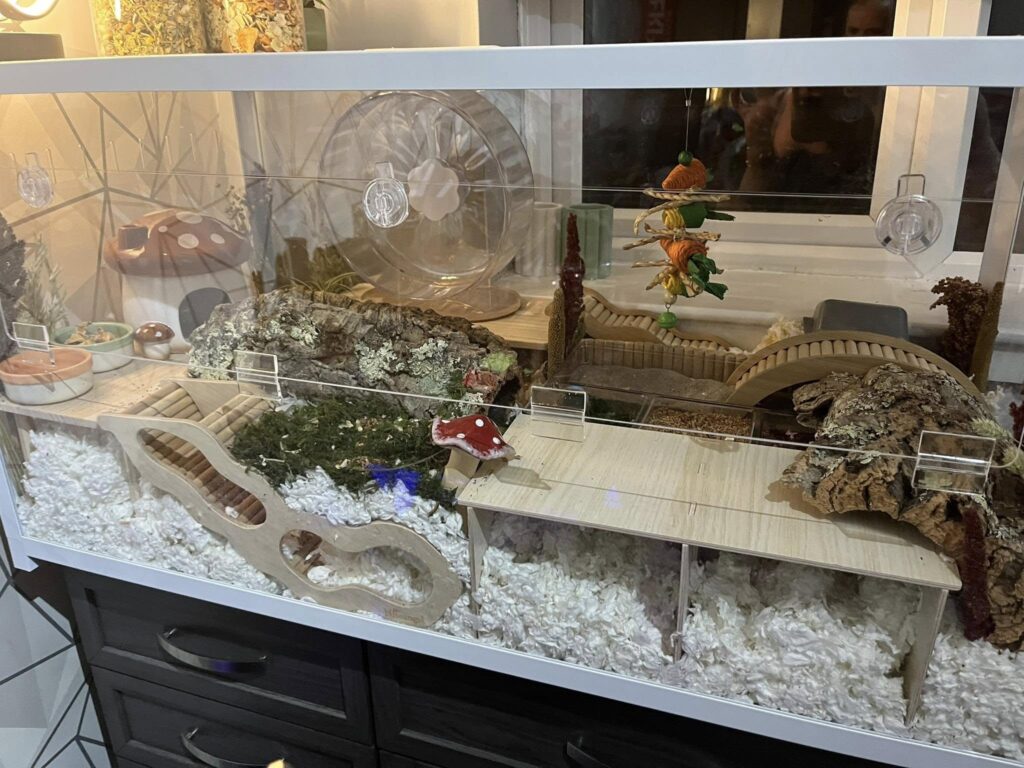
1. Keep The Room Temperature Stable And Warm
This is the single most important factor. Aim for 18-22°C (65-72°F) in the room where your hamster lives, day and night, all year round. This is the same comfortable range most UK homes maintain when occupied.
The challenge is overnight in winter. Many UK households turn the heating right down or off at night, which can drop room temperatures into the danger zone. Consider:
- Keep heating on a low constant setting overnight in the hamster’s room
- Use a programmable thermostat to keep minimum temperature at 18°C
- Move the cage to a room that stays warmer overnight
- Consider an oil-filled radiator or panel heater for the hamster’s room
- Never below 15°C, even briefly
2. Choose The Right Room For The Cage
Some rooms are far better than others for keeping a hamster warm consistently. The right room for a UK hamster is:
- Living room — usually the best choice
The most temperature-stable room in most UK homes. Heated when people are home, generally well-insulated, manageable overnight temperatures. - A heated bedroom (if you can tolerate the noise)
Hamster wheels at night may disturb sleep. But if you keep heating on overnight, this works. - Avoid garages, conservatories, sheds — temperature extremes are deadly
- Avoid unheated spare rooms — often the coldest rooms in UK houses
- Avoid rooms with single-glazed windows or external walls — major cold spots
- Avoid placing cage near windows, doors, or vents — draughts create localised cold zones
3. Position The Cage Properly Within The Room
Within your chosen room, where exactly the cage sits matters. The aim is to minimise cold spots and draughts.
- Against an interior wall, not an external wall — external walls are colder, especially in older UK homes
- Away from windows by at least 2 feet — windows are cold spots, particularly overnight
- Away from doors leading outside — every time the door opens, cold air rushes past
- Not directly under a heating vent or radiator — fluctuating temperatures stress the hamster
- Off the floor — cold rises from floors, especially in older houses with poor insulation
- On a stand or shelf at chest height — warmer air, and easier to monitor the hamster
4. Provide Adequate Bedding And Nesting Material
Even with proper room temperature, the hamster’s cage itself should provide insulation and warmth. Hamsters in the wild burrow into the ground for thermal stability — pet hamsters need the same in their cage.
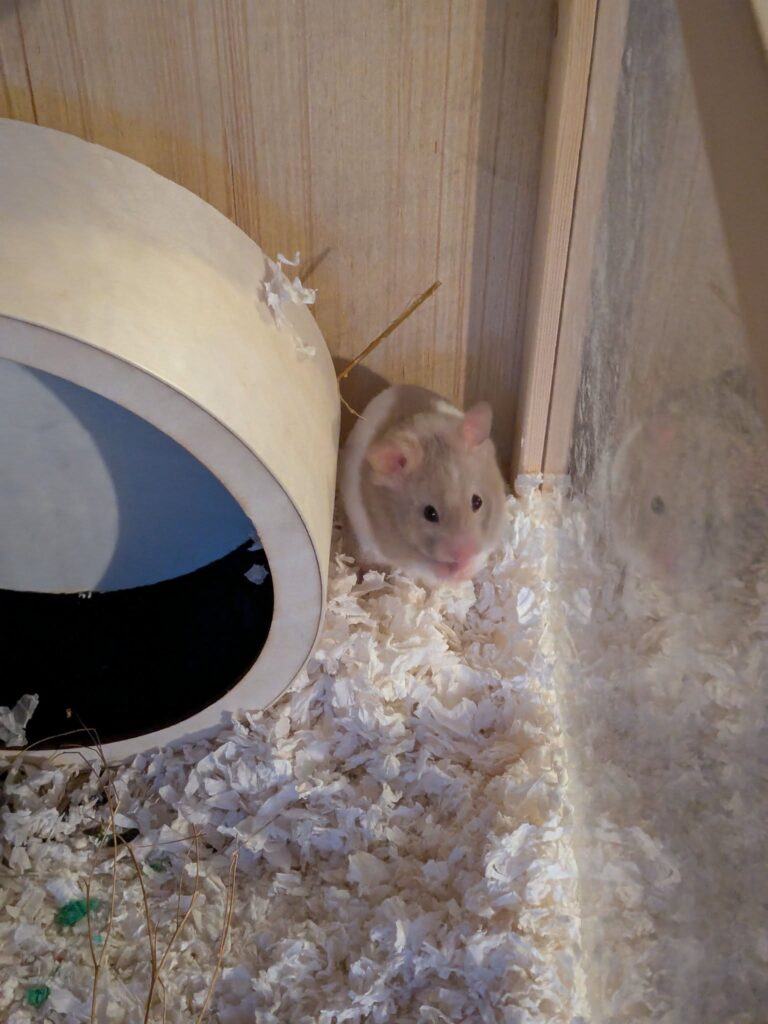
- Provide deep bedding — at least 6 inches (15 cm), more is better — for burrowing and insulation
- Offer a proper enclosed nest box — a wooden or ceramic shelter for sleeping
- Provide soft nesting material — unscented soft paper bedding or natural plant material
- Cover the nest box if needed — some hamsters prefer dark, insulated nesting
- Never use cotton wool — gets stuck in cheek pouches and around limbs
5. Monitor Temperature With A Thermometer
You cannot manage what you do not measure. A simple room thermometer near the hamster’s cage tells you whether the temperature is dropping into the danger zone. This is genuinely worth doing during UK winter.
A digital thermometer with a min/max function shows you the lowest temperature reached overnight. If you see readings below 15°C, you know there is a problem to address even if the daytime temperature looks fine.
What I Ask Owners At The Counter When Their Hamster Has Hibernated
When a UK owner rings or comes in after a hibernation episode, I work through specific questions to help them understand what happened and prevent it happening again.
- What room is the hamster in?
Living room, bedroom, spare room? Tells me about likely temperature stability. - How cold did the room get overnight?
If you do not know, get a min/max thermometer. This is essential information. - Where in the room is the cage?
Near a window? On the floor? Against an external wall? All increase risk. - What is your heating routine?
On all night? Off overnight? Programmable? Affects minimum temperatures reached. - What bedding depth do you use?
Less than 6 inches means inadequate insulation for cold periods. - How is the hamster otherwise?
Healthy, eating well, active before the incident? Or signs of underlying problems? - Has this happened before?
First time means an environmental issue to fix. Repeat occurrences suggest a vulnerability that needs vet attention.
Five minutes of these questions usually identifies exactly what went wrong and how to prevent it. Most cases are simple environmental issues that are fixable. A few suggest underlying health issues that need vet attention.
Hibernation In Different Hamster Types
Worth knowing — different hamster species have slightly different tolerances. Some are more vulnerable to torpor than others.
| Hamster Type | Torpor Risk | Notes |
|---|---|---|
| Syrian hamster | High at below 15°C | Most common UK pet hamster — the species most often affected |
| Roborovski dwarf hamster | High at below 15°C | Small body size makes them vulnerable |
| Russian winter white dwarf | Moderate | Slightly more cold-tolerant but still need warmth |
| Campbell’s dwarf hamster | Moderate | Similar to Russian whites |
| Chinese hamster | Moderate to high | Small body, less common as pets in UK |
| Very young or very old hamsters | Higher risk | Of any species — more vulnerable to temperature |
| Sick or weakened hamsters | Much higher risk | Need stable warmth, vet attention |
The honest practical advice — regardless of species, all UK pet hamsters need a stable warm environment. Do not assume a particular species is “hardy enough” to cope with cold UK rooms. Provide proper conditions for all of them.
For more on these animals, our complete hamster care guide covers everything UK owners need to know about housing and routine.
Frequently Asked Questions
Is my hamster dead or hibernating?
Check very carefully before assuming death. Look for slow breathing (could be one breath every 2-3 minutes), tiny whisker twitches, faint warmth in the body core, and a curled-up position in the nest. If the room was cold overnight and the hamster appears dead, assume torpor and start gentle warming immediately. Many “dead” hamsters are actually torpid and revivable with proper action.
What temperature causes hamsters to hibernate?
UK pet hamsters can enter torpor at temperatures below about 15°C (59°F), particularly when sustained or following a sudden drop. Some sensitive hamsters react at slightly higher temperatures. Aim for a stable 18-22°C in your hamster’s room year-round to prevent any risk.
How do I wake a hibernating hamster safely?
Move to a warm room, hold the hamster gently in cupped hands against your body for gradual warming, wrap in a soft towel if needed, and wait patiently — 1-2 hours is normal. Never apply direct heat (no hot water bottles, heat lamps, hot water, or microwaved pads). Once awake, offer warm water and food, and keep in a warm spot for 24 hours.
Can a hamster die from hibernation?
Yes, sadly. If torpor is not recognised and the hamster is not warmed properly, it can die. The body’s systems can fail if conditions remain too cold for too long. Acting quickly when you find a still, cold hamster is what saves lives. Always try gentle warming before assuming death.
Is it normal for hamsters to hibernate in winter?
No, not for pet hamsters in UK homes. Pet hamsters should not hibernate — it is an emergency response to dangerous cold, not a normal seasonal behaviour. If your pet hamster hibernates, something has gone wrong in the environment that needs fixing. Proper room temperature should prevent it entirely.
Why does my hamster keep entering torpor?
Recurring torpor usually means the environment is consistently too cold, or there is an underlying health issue making the hamster more vulnerable. Address the environment first — heating, cage location, bedding depth. If torpor recurs despite proper warmth, see a small-animal-savvy vet to check for underlying problems.
Where can I get honest hamster advice in Swindon?
Come and see us at Paradise Pets, Manor Garden Centre, Cheney Manor, Swindon SN2 2QJ. Or give us a ring on 01793 512400. The advice is free and we have been doing this for 35 years.
One Last Thing From Me
“Is my hamster dead or hibernating?” is one of the most frightening questions a UK pet owner can face. The honest answer, after 35 years of selling these animals, is — usually hibernating, usually fixable, but only if you act quickly and gently. And almost always preventable with the right setup from the start.
The mum and her daughter I mentioned at the start of this article? They had their hamster back within an hour of finding him. He went on to live another full healthy year, properly warm in a new spot in their living room. Her daughter never knew how close they came to burying him alive. The mum and I still talk about that morning when she comes into the shop.
That is the outcome you want — a hibernating hamster brought back, a household that learns the lesson, and a setup that prevents it ever happening again. It is genuinely achievable for every UK owner who knows what to look for and what to do.
If you are reading this and your hamster is in torpor right now, stop reading and start warming. Cupped hands, warm room, gentle and gradual. Do not give up for at least an hour or two. Most hamsters come back if you act in time.
If you are reading this proactively, before any problem has happened, even better. Get your hamster’s setup right — proper room temperature, good cage placement, adequate bedding, ideally a thermometer to monitor — and you will likely never need to use any of this advice. And if you are local and unsure about your setup, come and see us. We will help you make sure your hamster is properly safe for whatever winter brings.
Worried About Your Hamster? Come And See Me
Bring your hamster, bring your setup questions, or just bring your concerns. I will tell you honestly what is happening and what to do. For an actively hibernating hamster, start warming immediately and ring us for guidance. Free advice, no obligation. That is how we have done things for 35 years.