
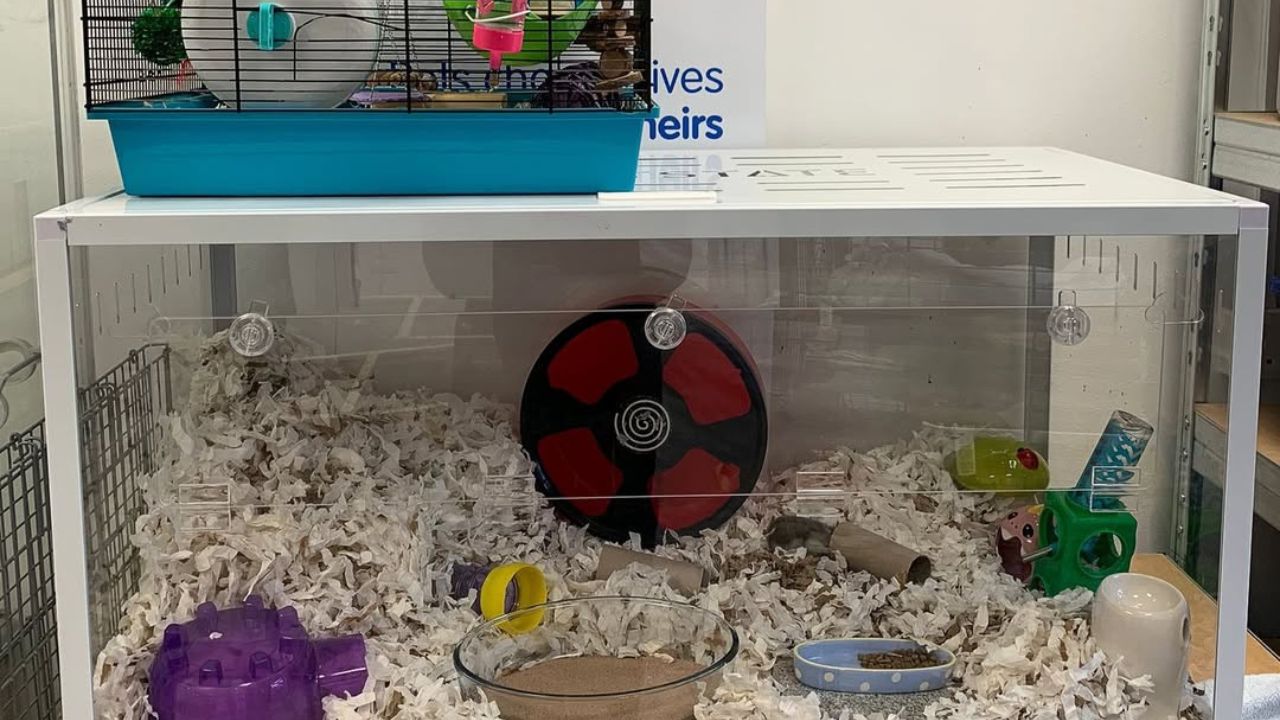

Hamster cages are often bought in a rush. The problem is that a tiny gap does not look important until the hamster finds it first.
Hamsters are small, curious and surprisingly determined. A loose door, a wide bar gap, a weak clip or a badly fitted tube can become the part of the cage the owner remembers for all the wrong reasons.
Neil has seen plenty of owners focus on colour, shelves and accessories while missing the boring details that matter most: escape points, ventilation, cleaning access, base depth and safe space.
Why This Matters
The RSPCA advises owners to research the needs of hamsters carefully, including housing and environment. A cage is not just a container. It is the animal’s living space, exercise area, sleeping area and digging area.
A small escape risk is especially stressful because hamsters are most active when the house is quiet. By the time an owner notices, the hamster may already be behind furniture or near hazards.

The Quick Owner Check
- Check bar spacing
Bars should suit the size and species of hamster. - Test every door
Doors should close firmly without wobbling open. - Look at tube joins
Plastic tubes and attachments must lock properly and be easy to inspect. - Check base depth
Hamsters need space for bedding and natural digging behaviour. - Inspect sharp edges
Cheap joins, cracked plastic or bent wire can become safety problems.
What To Do Before You Buy Or Move The Cage
- Press the clips
If a clip feels weak in your hand, it may not survive regular use. - Think about adult size
A young hamster may grow, and the cage should still suit it later. - Keep cleaning simple
A cage that is hard to clean often becomes a cage that is cleaned badly. - Plan bedding depth
Do not choose a shallow tray if you want proper burrowing space. - Ask before adding extras
Some accessories look fun but steal floor space or create fall risks.
The Mistake Neil Sees Most Often
The mistake Neil sees most often is choosing a cage because it looks exciting to a human. Bright tubes and platforms can be useful, but only if the basic space, safety and cleaning design are right.
Another mistake is assuming all hamster cages suit all hamsters. Size, activity level and species matter. A setup that works for one hamster may be wrong for another.
When To Get Help Quickly
If a hamster escapes, secure other pets, close doors, remove immediate hazards and search calmly. Do not place dangerous sticky traps or unsafe bait.
If the hamster is injured, cold, weak, breathing oddly, or has been missing for a long time, contact a qualified vet for advice.
Neil’s Honest Advice
Neil’s advice is to inspect a hamster cage like the hamster is already planning an escape. That mindset helps owners notice clips, joins, corners and gaps before they become a problem.
A reliable cage is not the most complicated cage. It is the one that gives the hamster safe space, secure fittings, bedding depth and easy daily checks.

Need a hamster cage checked before buying?
Paradise Pets can help compare hamster cage options, bedding depth, wheels, bottles and safe accessories for new owners in Swindon.