
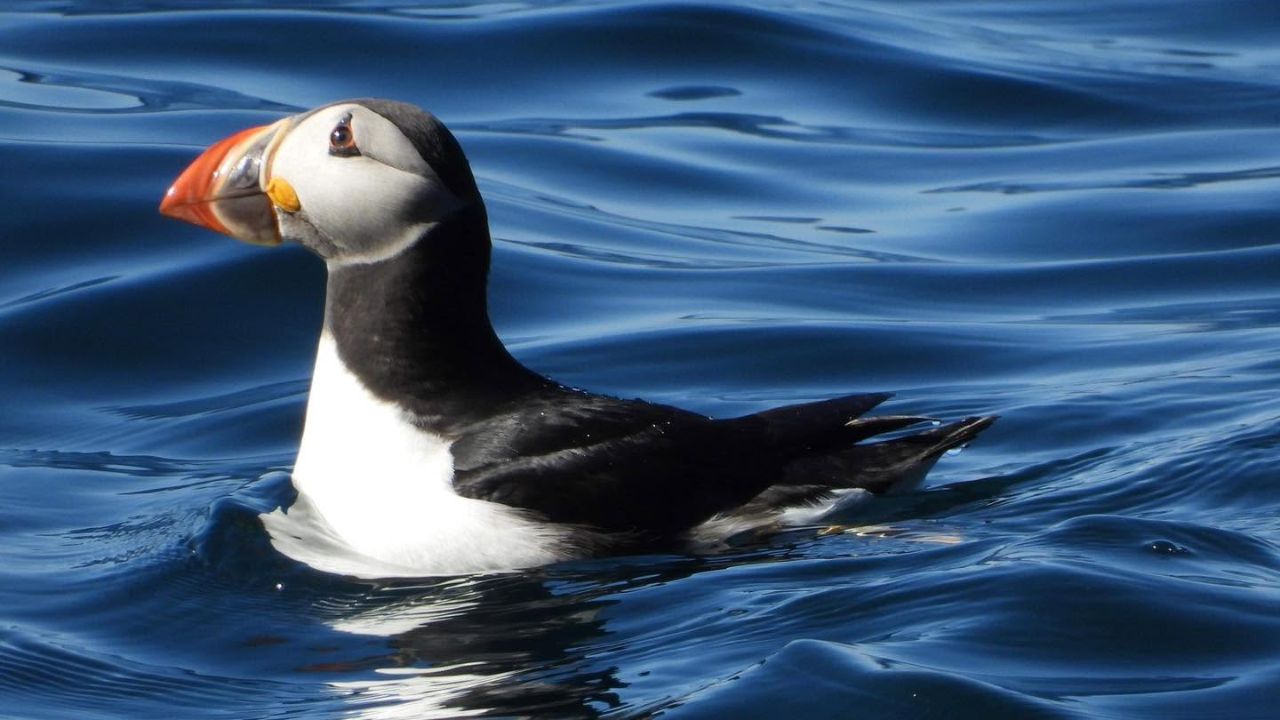

Neil has kept, bred, and sold birds at Paradise Pets Swindon since 1988 — over 35 years of thinking about what birds are, what they need, and the gap between a bird’s natural life and the life most pet birds actually live. The annual return of puffins to Lundy Island off North Devon — and the simultaneous crisis playing out at Dancing Ledge in Dorset, where England’s last mainland south-coast colony clings on with six birds — is his starting point this summer for the most honest question he knows how to ask about pet bird welfare.
Every spring, Atlantic puffins return to Lundy Island.
Lundy, which means Puffin Island in Norse — lund for puffin, ey for island — sits eleven miles off the North Devon coast in the Bristol Channel. It is a rocky, steep-sided island of roughly three miles long, a National Nature Reserve, and from late April through July it is home to hundreds of Atlantic puffins that come ashore to breed, spending most of their lives at sea but returning here, year after year, to the same burrows in the clifftop grass, to the same mates they paired with years or even decades ago.
The puffins arrive and the birdwatchers follow. Boat trips run from Ilfracombe. On a good spring day, you can watch puffins standing at the clifftop within comfortable viewing distance, carrying fish back to the burrow, displaying to their partners, going about the serious business of raising a puffling. Male puffins can live to twenty-five years or more and return to the same clifftop year after year to reunite with their mate.
Twenty-five years. The same mate. The same cliff. The same burrow.
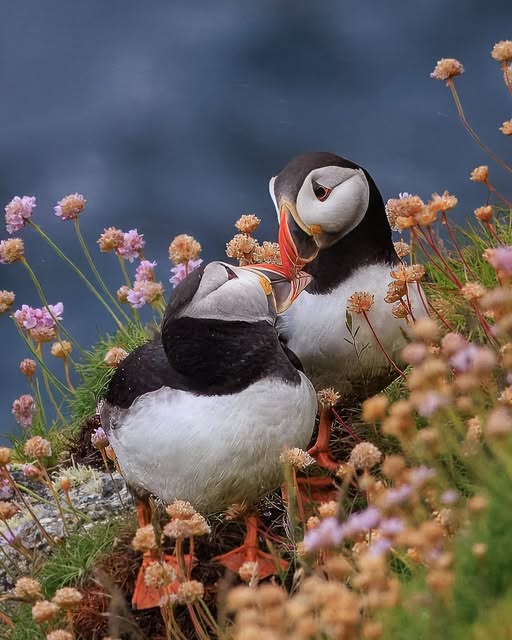
And then there is Dancing Ledge, fifty-odd miles east along the same English coast, at the foot of the Purbeck cliffs in Dorset. There were eighty-five puffins recorded at Dancing Ledge in 1958. By 1975 the numbers had reduced to twenty-three. In 2025, there were only three nesting pairs and no fledglings have been spotted for several years.
This spring, all six birds returned. There were concerns for the remaining two following reports of thousands of dead puffins washing up on Europe’s beaches during this winter’s storms. But they came back. The National Trust said it was “very relieved.”
Six birds. The last puffin colony on mainland England’s south coast. The colony has not produced a successfully fledged chick in roughly a decade.
Two puffin stories from the same coastline. One thriving, one clinging on. Both of them made me think about the budgies in the cages I see every week at this counter — and whether the question in the title of this article is one more people should be asking themselves.
What Puffins Actually Do — The Life Most People Don’t Know
I want to describe what a puffin’s natural life looks like in some detail, not to make pet owners feel guilty by comparison but because the specificity of what a bird’s natural life involves is useful context for understanding what good captive conditions are trying to approximate.
Puffins spend most of their lives at sea, only coming inland during the spring and summer months to form breeding colonies. Puffin season in the UK typically spans from late March to late July. Outside those months, the puffin is out in the North Atlantic — diving, swimming, feeding, existing in the most challenging environment available to a seabird. The rest of the year is the open ocean.
Upon fledging, young puffins venture out to sea, where they will spend the next few years of their lives before returning to their natal colonies to breed. This cycle of reproduction and dispersal ensures the continuation of puffin populations.
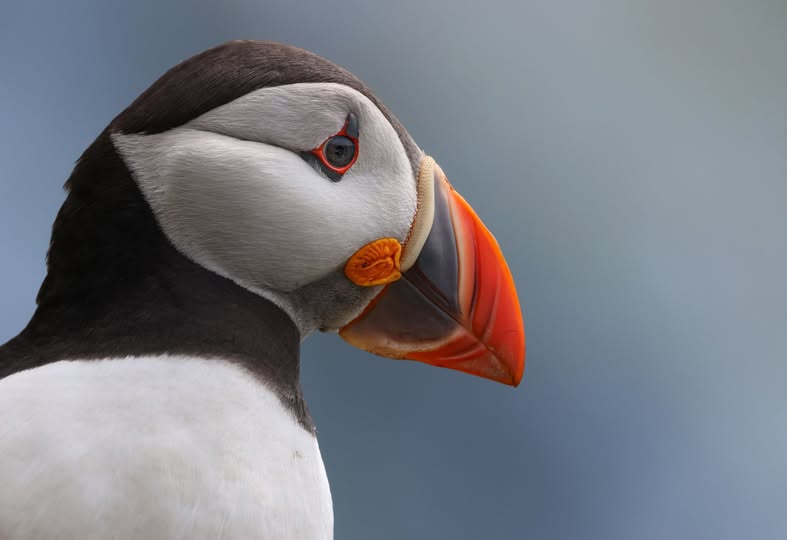
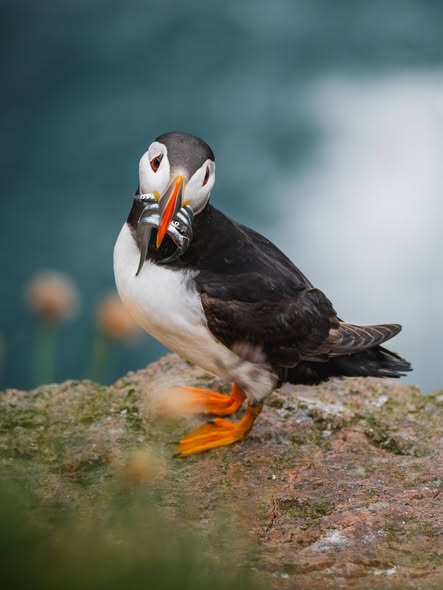
The specific things a puffin does every day: it dives. It pursues fish underwater with a swimming technique that uses its wings for propulsion — the same wings used for flight, applied to a different medium. It can dive to depths of sixty metres or more. It can hold multiple fish in its bill simultaneously — sometimes a dozen or more, held crosswise, the bright bill clamped shut while it catches one more. It flies back to the clifftop. It lands with purpose. It goes to the burrow it has used for years.
Courtship rituals play a vital role in pair bonding, with male puffins engaging in elaborate displays to attract potential mates. Courtship displays include bill-knocking and ritualised walking. Puffins are monogamous — they pair for life, recognise their mate individually, and the reunion after months apart at sea is, by any behavioural description, a genuine social event between two animals that know each other.
None of this is available to a pet bird. I am not suggesting it should be. I am describing what the life of a wild bird actually involves, because the contrast illuminates something important about what pet birds need — what drives them, what their nervous systems are built for, what a good captive life is trying to provide.
The Dancing Ledge Story — What Six Birds Tell Us
The Dancing Ledge puffin situation is genuinely one of the more poignant stories in British wildlife this year, and I want to give it the space it deserves before moving to the comparison I am building toward.
The colony has not produced a successfully fledged chick in roughly a decade. Adults have continued to occupy Dancing Ledge and display breeding behaviour year after year, but chick survival has proved elusive.
In an effort to find out what is happening to the eggs, the National Trust has installed high-tech cameras angled into the crevices to capture images of any activity around the nests, in a last-ditch attempt to save the colony. If predators like rats or crows are spotted on camera, then that may provide an answer to the problem.
The cameras were installed by specialist climbers in March 2026. Because the cameras are not live-streaming, the outcome of the 2026 breeding season will not be known until the equipment is retrieved later in the summer. For now, the early signs — courtship, nest-building and possible egg-laying — are encouraging. But that same sequence has played out in previous years without producing fledged chicks. The colony remains highly vulnerable.
Puffins can live for thirty to forty years and the remaining puffins are estimated to be more than twenty years old. There is a one in ten chance every year that an individual will die, so eventually the six birds will disappear. Sadly if they don’t reproduce there will be no new chicks to take their place, meaning the last remaining colony of puffins on mainland England’s South Coast could all be gone by about 2040, if not sooner.
Six birds. Estimated to be over twenty years old. Returning every spring to a cliff where they have bred for decades, or tried to, finding each other after months at sea, displaying, building nests, laying eggs — and watching those eggs fail to produce chicks that survive, year after year, for a decade.
The resilience in that image is extraordinary. The fidelity of those birds to their colony, their mate, their burrow — returning in spring of 2026 after a winter in which thousands of puffins washed up dead on European beaches, after concerns that two of the six might not have survived — is something that I find genuinely moving.
The Question the Title Is Actually Asking
Now I want to make the comparison explicit, because the title of this article promises it and I want to deliver it honestly rather than obliquely.
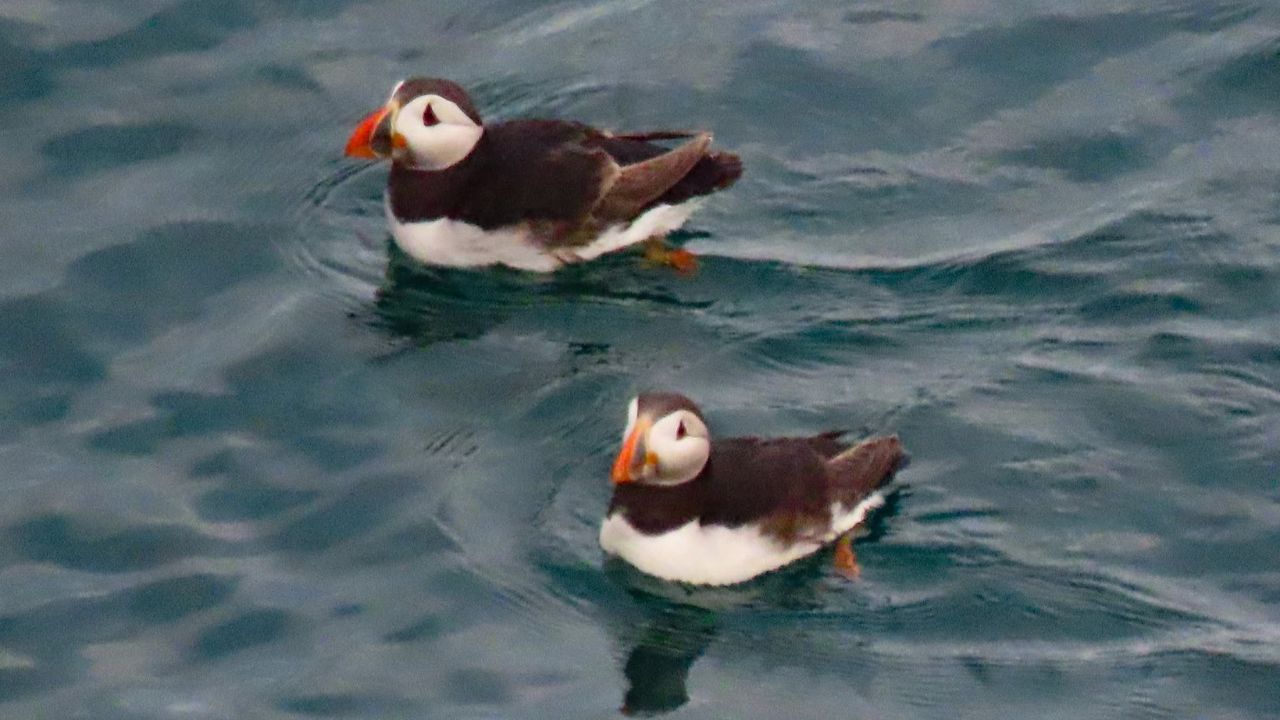
A puffin on Lundy Island is living a life that, by any assessment, meets the needs of its species. It has a mate. It has space — genuinely unlimited space for most of the year. It has appropriate food. It has the social life of a seabird colony during the breeding season and the independence of the open ocean for the rest. It exercises every function its body and its nervous system were built for. It lives, in the research records, to twenty-five or thirty years and beyond.
A pet budgie in the UK lives, on average, five to seven years against a biological potential of ten to fifteen. It lives in a cage that is, in the majority of cases, too small for meaningful flight. It eats a diet that is, in the majority of cases, nutritionally incomplete. It may live alone, without the social contact that its nervous system requires for normal function. It sees a vet, in most cases, either once or never.
The question in the title — is your pet bird getting half as good a life? — is not a rhetorical trick. It is a genuine question, and the honest answer for a significant proportion of UK pet birds is no. Not through malice. Not through indifference. Through the gap between what the bird was bought with and what the bird actually needs — a gap that the pet industry has not done enough to close at the point of purchase.
The puffin standard is not what I am asking pet bird owners to meet. I am asking them to think about whether they are meeting the pet bird standard that their specific animal’s needs define — and whether, if they are honest about the comparison, the answer is yes.
What the Puffin’s Life Can Teach Pet Bird Owners Specifically
Let me make this concrete rather than leaving it as an abstract contrast.
The Pair Bond
Puffins mate for life and recognise their mate individually after months of separation. What this tells us about the biology of birds — including the budgie in the living room — is that birds are not emotionally simple. They form attachments. They recognise individuals. They have social lives that are species-specific and that matter to their wellbeing.
A single budgie with no companion is a bird whose social biology is entirely unaddressed. The lesson from the puffin pair bond is not that your budgie needs to mate. It is that your budgie needs company of its own species, because the social capacity of birds is real and its absence is a welfare cost.
The Space and Movement
A puffin’s life is, in large part, physical. It dives, swims, flies, walks the clifftop, launches into headwinds. Its body is maintained in the condition it is because it uses its body in the way its body was designed to be used.
A budgie in a cage where meaningful flight is not possible is a bird whose cardiovascular and muscular systems are slowly deconditioned by the absence of the activity they require. The lesson is not that a pet bird needs to fly the Bristol Channel. It is that it needs enough space to genuinely use its wings — daily, meaningfully, as a matter of routine.
The Diet
A puffin eats fish — live, whole, varied by species and size depending on what is available. It is not eating the same thing every day from a bowl that never changes. Its diet is a reflection of the real nutritional complexity of what the species evolved to eat.
A budgie eating seed alone is eating a diet that reflects the cost structure of the pet food industry rather than the nutritional requirements of the species. The lesson is not that your budgie should eat sand eels. It is that variety — fresh vegetables, varied seeds, appropriate supplements — matters, because seed alone does not provide what the bird’s body needs over a decade.
The Lifespan
A puffin, in normal wild conditions, lives twenty-five to forty years. The Dancing Ledge birds are estimated at over twenty years old. A well-kept budgie reaches ten to fifteen years. The average UK pet budgie reaches five to seven.
The lifespan comparison is not between a wild puffin and a pet budgie. It is between the potential lifespan of a well-kept budgie and the actual lifespan of the typical UK pet budgie. That gap — five to seven years instead of ten to fifteen — is entirely attributable to care conditions, not to genetics or inherent species fragility. The puffin living its full life on a Devon clifftop is doing so because its conditions meet its needs. The budgie dying at six is not dying because six is what budgies do. It is dying because the conditions it lived in did not meet its needs across the decade it was capable of living.
The Honest Self-Assessment — Five Questions
I want to end the comparison section with something practical — a set of questions that, answered honestly, tell an owner whether their bird is getting half as good a life as the title asks about.
Does your bird have genuine flight space every day?
Not a large cage by entry-level standards. Actual wing-extension flight between perches with meaningful distance, or daily time in a safe room with free-flight access. If the answer is no — if the bird does not leave the cage for a meaningful period on most days — this is the first thing to address.
Does your bird have another bird for company?
The pair bond is species-specific and cannot be provided by a human owner regardless of how attentive they are. If your bird is alone, its social biology is unaddressed. This is the second thing to address.
Is your bird eating something other than seed?
Fresh vegetables several times a week — carrot, dark leafy greens, red pepper — provide the vitamin A and micronutrients that seed cannot. If the answer is no, the bird’s nutritional status is almost certainly compromised. This is the third thing to address.
Has your bird ever been seen by a vet with avian experience?
The conditions that most commonly kill UK pet budgies before their time are all significantly more treatable at early stage than late stage. Most UK pet budgies die without ever having been examined by a vet who knows what to look for. If the answer is no, this is the fourth thing to address.
Do you check the keel weekly?
The breastbone check — running a finger along the keel to feel whether the flanking muscle is full or reduced — is the most sensitive early health indicator available to an owner without any equipment. If the answer is no, you are missing the only consistent early-warning mechanism available to you. This is the fifth thing to address.
The Puffin Question — What It Really Asks
I want to say plainly what I think this comparison is for.
I did not write this article to make anyone feel bad about their bird. The people who keep pet birds are, in my experience, people who care about those animals. The relationships they form are real and the affection is genuine. The budgie in the cage in the living room is loved.
What I am asking is whether love is enough, or whether love needs to be accompanied by the specific practical knowledge of what the animal needs in order to receive the life its biology can support.
The puffin on the Lundy cliff does not need its owner to love it. It needs the conditions that allow it to express its full behavioural and physiological potential. A pet budgie does need its owner’s love — but it also needs the conditions that allow it to express its full behavioural and physiological potential, within the constraints of captive life. And those conditions are specific: adequate space, appropriate diet, species-appropriate social life, regular health monitoring, veterinary access.
The puffin returning to its burrow on a North Devon island every spring is, in the most direct sense, a bird living its life. The question in the title is whether the bird in your living room is living its life — the best version of the life available to it within the home you have provided — or whether it is making do with something less.
After 35 years at this counter, I think that question is worth asking. And I think the answer, more often than people realise, contains room for improvement.
The Puffin Season — For Anyone Who Wants to See What a Bird Living Its Life Looks Like
I want to end with a practical note for anyone who has never seen a wild puffin and who finds themselves, after reading this, curious about what the comparison looks and feels like in person.
Puffin season in the UK typically spans from late March to late July. The best viewing on the south coast is at Lundy Island off North Devon — ferry from Ilfracombe — and at Skomer Island off the Pembrokeshire coast in Wales, which holds one of the largest puffin colonies in southern Britain, around six thousand breeding pairs.
Visiting a puffin colony during the breeding season is one of those experiences in British wildlife that most people who do it describe in terms they do not normally use for wildlife encounters. The birds are close. They are going about their lives. They do not perform for the audience. They are simply there — diving, flying, carrying fish, standing at the clifftop with the kind of absolute presence of an animal living exactly the life it evolved for.
That image is worth holding when you next look at your bird in its cage. Not as a source of guilt. As a reference point. As the standard — not the achievable standard, but the biological reference point — against which the question of what your bird’s captive life involves can be honestly measured.
Frequently Asked Questions
Where can I see puffins near Devon in 2026?
Lundy Island, which means Puffin Island in Norse, sits off the North Devon coast and has a puffin colony. Ferry trips run from Ilfracombe, and the puffins can be viewed at Jenny’s Cove and along much of the island’s west and north coast during the breeding season.The puffins are typically present from late March to late July. Binoculars or a camera with zoom are recommended as viewing is from a respectful distance.
What is happening at Dancing Ledge in 2026?
All six puffins at Dancing Ledge, the last puffin colony on mainland England’s south coast, returned in spring 2026 after fears for the remaining two following winter storms. The National Trust has installed cameras in the nesting crevices in 2026, repeating a scheme from 2024 in an attempt to understand why the colony has not fledged a chick in approximately a decade. If predation by rats or other birds is identified as the cause, targeted intervention may be possible. The outcome of the 2026 breeding season will not be known until the cameras are retrieved later in the summer.
How long do puffins live?
Puffins can live for thirty to forty years, and the remaining Dancing Ledge birds are estimated to be more than twenty years old.Male puffins can live to twenty-five years or more and return to the same clifftop year after year to reunite with their mate.
What can I do right now to improve my pet bird’s quality of life?
The five most impactful changes, in order of effect: provide adequate flight space or daily out-of-cage time; get a companion bird if your bird is alone; add fresh vegetables to the diet three to four times a week; find an avian-experienced vet and register before you need one urgently; begin weekly keel checks to establish a health baseline. None of these require significant financial outlay. All of them have a meaningful impact on the bird’s quality and length of life.
How long should a budgie live?
A well-kept budgie should live ten to fifteen years. The average UK pet budgie lives five to seven years. The gap between these figures is attributable to specific, identifiable care conditions — diet, space, social life, and veterinary detection — rather than to genetics or species fragility. I have written a full article on this subject on this site.
Where can I talk to someone about improving my bird’s care in Swindon?
Come and see us at Paradise Pets — Manor Garden Centre, Cheney Manor, Swindon SN2 2QJ. I am happy to have the honest conversation about what your bird currently has and what would make the most practical difference. Call 01793 512400 before visiting.
Thinking About Whether Your Bird Is Getting the Life It Deserves? Come and Talk
The questions I have outlined in this article are worth asking, and the answers are worth acting on. Come in. Tell me about your bird — what it eats, where it lives, how much time it has outside the cage. I will give you an honest assessment and practical advice about what would make the most difference. That conversation is always available here.
