
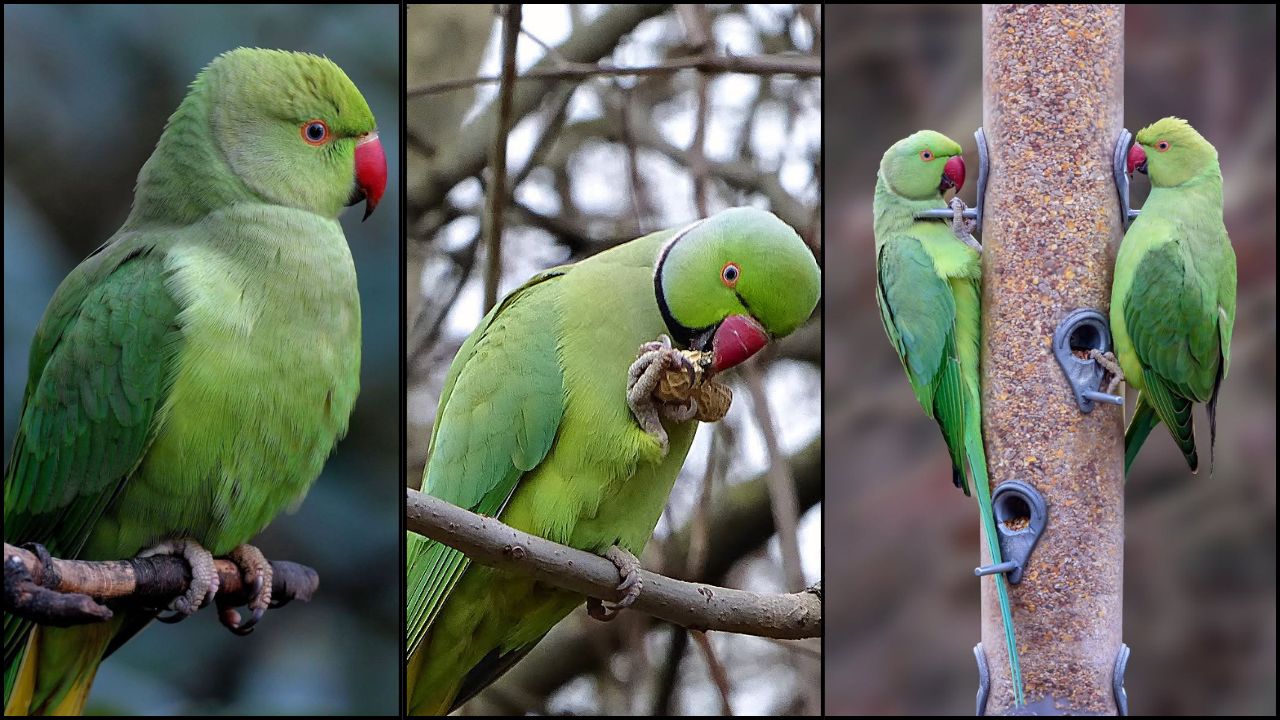

Neil has run Paradise Pets Swindon since 1988 — over 35 years of selling pet birds and watching how the UK’s bird keeping landscape has changed around them. Invasive Species Week 2026 runs from 22 to 28 June. Every year, the coverage focuses on what invasive species do to native wildlife. This year, Neil wants to talk about the direction the conversation never goes — and why it matters directly to anyone who keeps a budgerigar, a cockatiel, a canary, or any other pet bird in England today.
Invasive Species Week does important work. The coverage it generates about the threats posed by non-native species to UK wildlife — the ring-necked parakeet competing with native birds for nest sites, the monk parakeet building its communal structures on infrastructure, the cascading effects of species introduced where they do not belong — is coverage that matters and that I am glad exists.
But there is a direction in this conversation that I have not once seen covered in the mainstream coverage of invasive parakeets in the UK. Not during Invasive Species Week, not in the wildlife press, not in the places where bird owners might actually encounter it.
The conversation always runs one way: from the invasive species outward, toward native wildlife. What the parakeet does to native birds. What it takes from them. What it competes with them for.
What nobody is talking about is what the wild parakeet population can do to your pet bird. The disease risk that runs in the opposite direction — from the growing feral flock outside your window, through your garden feeder, into your home — is real, documented in scientific literature, and almost entirely absent from the conversation reaching UK pet bird owners. After 35 years in this trade, I want to change that today, before Invasive Species Week closes tomorrow and the conversation moves on to something else.
Who The Ring-Necked Parakeet Actually Is — And How Many There Are Now
I want to establish the scale of this before I get to the disease question, because it is relevant to how seriously the risk needs to be taken.
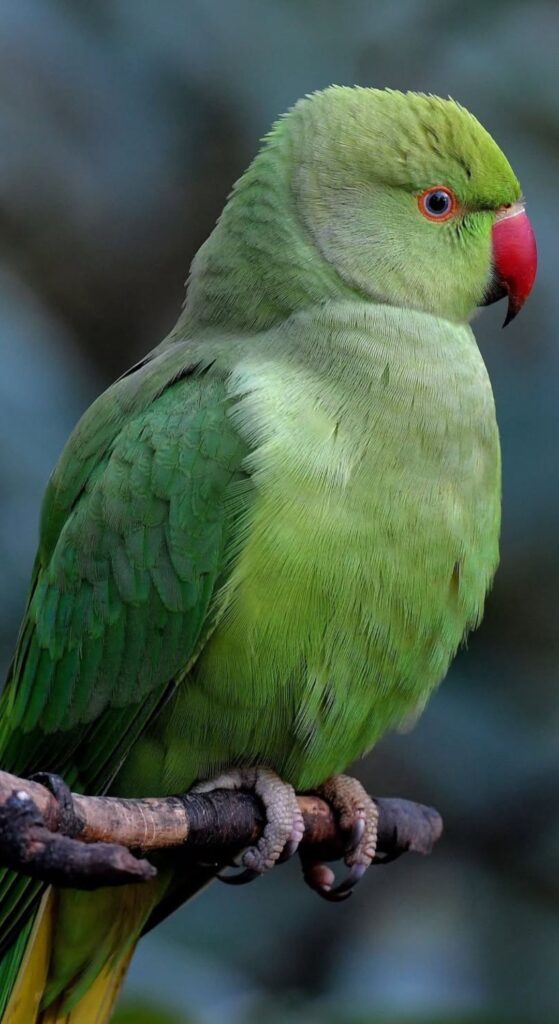
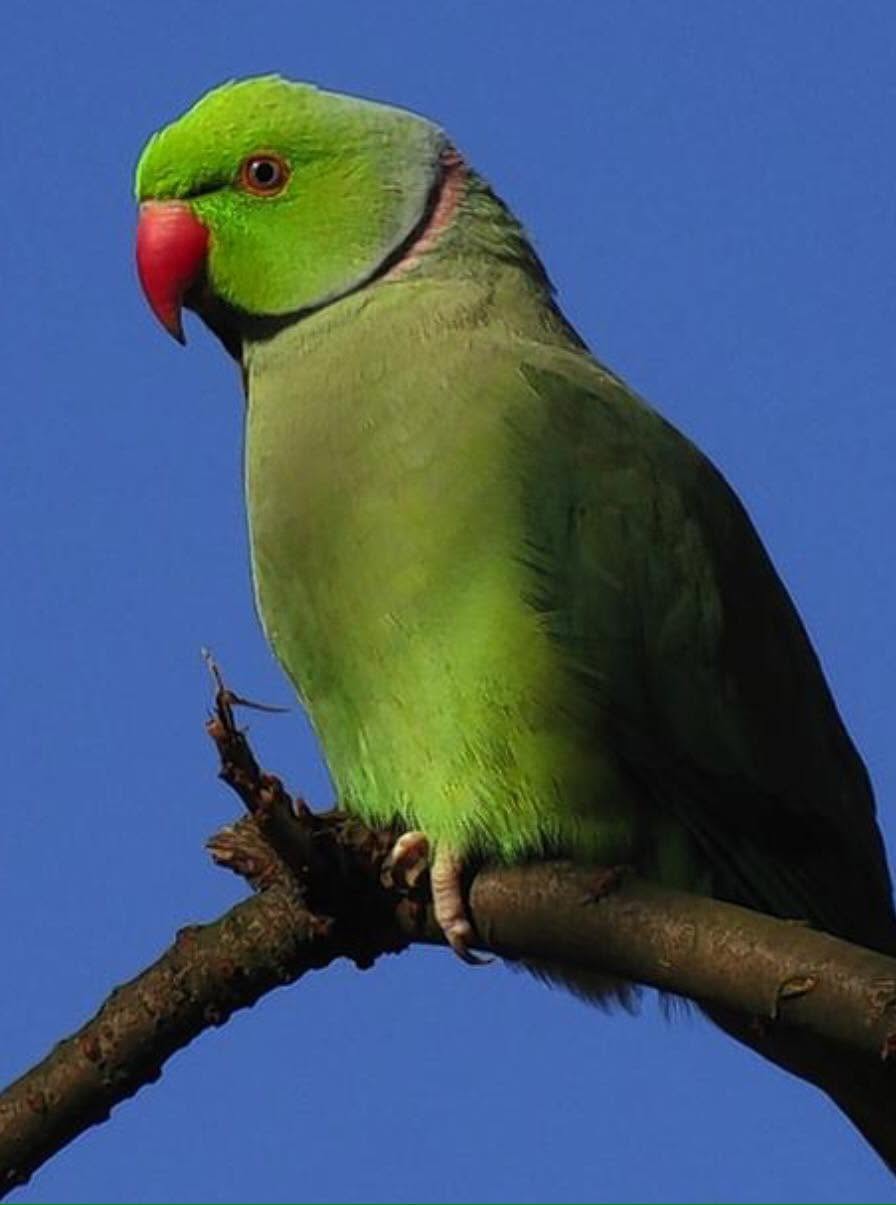
The rose-ringed or ring-necked parakeet — Psittacula krameri — is native to Africa and the Indian subcontinent. It has been present in feral form in the UK since escaped and released pet birds established breeding populations in the 1960s. For decades it was primarily a south-east England phenomenon, concentrated in London and the Home Counties. It is no longer.
The ring-necked parakeet’s UK population has more than doubled in ten years. It has been recorded in most English counties, much of Wales, past the Scottish borders, and across the Irish Sea into Northern Ireland. It is classified as one of the hundred most invasive species in Europe. Its observed growth rate is among the highest of any bird species currently recorded in the British population. Flocks numbering hundreds at roost sites are not unusual in areas where it has established itself.
Expert opinion on whether this constitutes an ecological crisis is divided — some researchers are cautious about calling it a problem without further study, while others point to its competitive behaviour at garden feeders, its early nesting season which gives it first access to tree cavities before native species, and its aggressive tendencies toward smaller birds, as evidence of real impact. That debate is legitimate and ongoing.
What is not debated in the scientific literature is the disease profile of the species. And that is the part of this story that has not reached the people who need to hear it.
The Disease Nobody Is Talking About — Psittacosis And What It Means For Your Pet Bird
Ring-necked parakeets are known carriers of Chlamydia psittaci — the bacterium responsible for the disease called psittacosis in humans, and avian chlamydiosis in birds. This is not a new discovery. Psittacosis has been documented in ring-necked parakeet populations for decades, and the species’ role as a reservoir host — carrying the organism without always showing obvious signs of illness — is well established in the veterinary and public health literature.
In birds, Chlamydia psittaci infection causes avian chlamydiosis. Infected birds shed the bacteria continuously through their droppings and respiratory secretions, and crucially, many infected birds show no visible signs of illness. The bacteria remain viable in dried droppings for weeks to months. It is transmitted to other birds through contact with contaminated droppings, respiratory secretions, or dust from dried droppings — including dust that travels on the air, through open windows, and onto surfaces that other birds then contact.
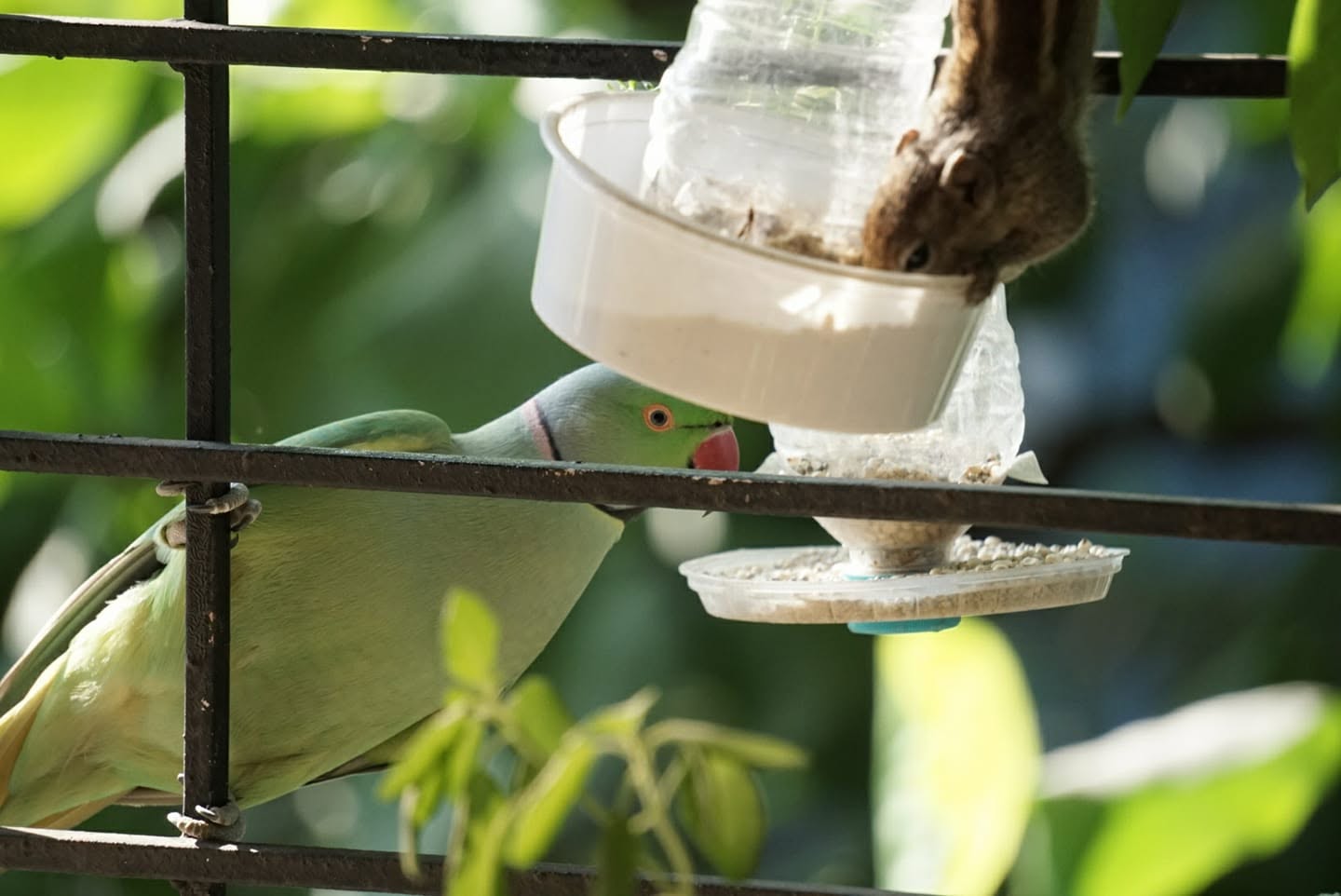
What this means for a pet bird owner in southern or south-eastern England — or indeed anywhere in England where ring-necked parakeets now visit garden feeders — is this. If a wild parakeet visits your garden feeder, it may leave behind droppings that carry Chlamydia psittaci. If your pet bird’s cage is near an open window, if you allow your bird any outdoor access, if you bring food or equipment inside that has been in contact with areas frequented by wild parakeets, you have created a potential transmission route between the wild flock and your pet bird.
A budgerigar, a cockatiel, or a canary that contracts avian chlamydiosis from this route may or may not show obvious signs of illness immediately — the incubation period varies and stress commonly triggers severe symptoms from what was previously a subclinical infection. When it does show signs, they are not specific to this disease: lethargy, reduced appetite, respiratory signs, changed droppings. By the time those signs are identified and an avian vet has diagnosed the cause, the bird has often been shedding the organism itself for some time.
And avian chlamydiosis in pet birds is not just a bird welfare issue. Chlamydia psittaci is a zoonotic pathogen — it can transfer from birds to humans. In humans, psittacosis causes flu-like illness, and in some cases serious pneumonia with complications including endocarditis and hepatitis. It is treatable with antibiotics, but it can be severe, particularly in older people or those with underlying health conditions. Historically, psittacosis outbreaks in the UK have been linked directly to pet birds — it is the disease that caused “parrot fever” scares in the 1930s and 1950s, and led to the mass release of pet parakeets by frightened owners that itself contributed to the establishment of the feral population we have today.
The Second Disease — PBFD And Why It Matters More Than Most Owners Know
Psittacine Beak and Feather Disease — PBFD — is caused by a circovirus, Beak and Feather Disease Virus, and it represents a significant threat to pet birds that the UK pet bird community has not adequately engaged with.
PBFD causes progressive destruction of feathers and beak tissue in affected birds. There is no cure. There is no commercially available vaccine. The disease is frequently fatal, and its progression — from early feather abnormalities to complete feather loss, beak deformity, immune suppression, and eventual death — can span months to years, during which the bird remains infectious to other birds in contact with it.
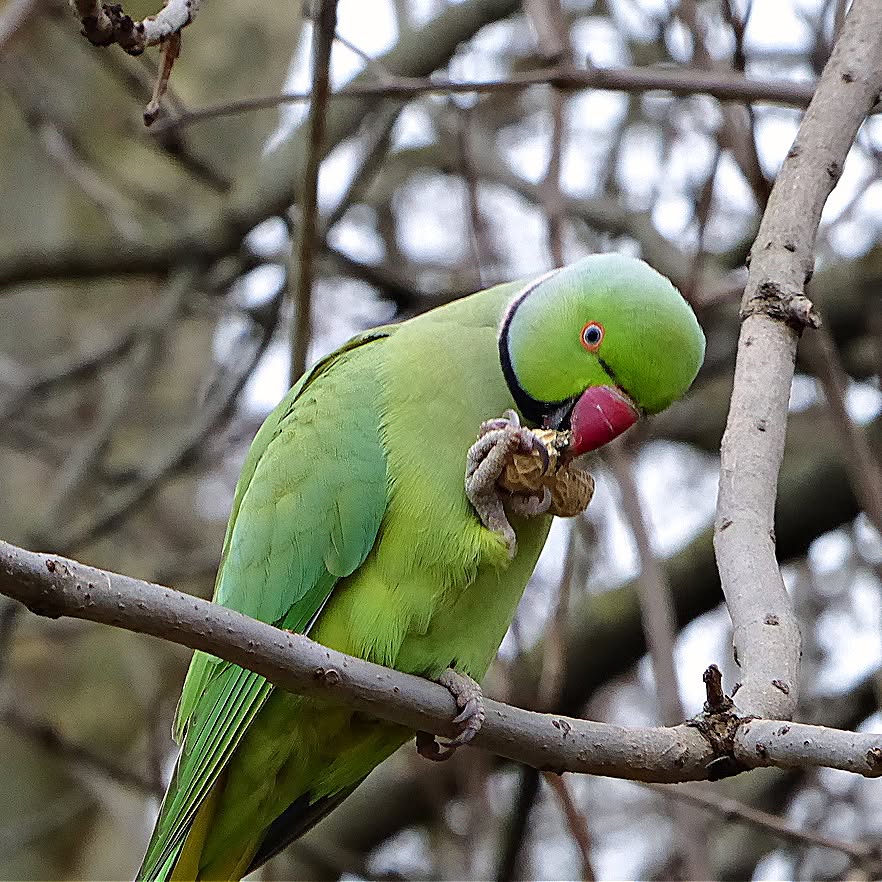
The ring-necked parakeet has been identified in peer-reviewed research as a reservoir host for PBFD virus. The species functions as a carrier — molecularly confirmed in multiple studies — and facilitates the spread of the virus across geographic areas and into contact with other susceptible psittacine species. Research published recently found that P. krameri populations in urban environments serve as hotspots for viral recombination and cross-species transmission.
The mechanism of transmission from a wild feral parakeet to a pet budgerigar or cockatiel follows the same routes as psittacosis: contaminated droppings, respiratory contact, fomites carried on hands, equipment, or materials that have been in areas frequented by infected wild birds. A bird that attends a show or fair where birds from multiple sources are present, a bird that has any access to outdoor areas where wild parakeets are present, a bird brought home from any source that has not been properly health-screened, may have encountered PBFD virus.
The absence of a cure and the absence of a vaccine make prevention the only meaningful response. And prevention requires knowing that the risk exists — which most UK pet bird owners currently do not, because this aspect of the invasive parakeet story is not being told.
Why This Is Specifically A 2026 Problem — The Expanding Range
I want to be clear that I am not describing a risk that has been constant throughout the 35 years I have been running this shop. I am describing a risk that has grown in proportion to the feral parakeet population — and that population has grown dramatically.
When I started at this counter in 1988, ring-necked parakeets were a curiosity. You might see one in a south London park. They were not a garden bird in Swindon, or in the Midlands, or in Yorkshire, or in Wales. They are now. The range expansion that has occurred over the past decade in particular has moved this from a concern for a relatively small geographic area in south-east England to a concern relevant to the majority of bird owners in England and a significant proportion of those in Wales.
The Invasive Species Week 2026 coverage this year has noted the range expansion, the population doubling, the increasing presence in areas that were previously outside the established range. What it has not noted is what that expanding range means for the approximately three million pet birds kept in UK homes — the budgerigars, cockatiels, canaries, and other species whose owners are now, in many cases, in proximity to feral parakeet populations for the first time.
A bird owner in Swindon in 1988 did not need to think about ring-necked parakeets. A bird owner in Swindon in 2026 may have ring-necked parakeets visiting their garden feeder. That is a different situation, and it requires a different level of awareness than the situation that existed when most of the general pet bird care advice in circulation was written.
The Practical Steps — What Pet Bird Owners Should Actually Do
I want to be concrete rather than simply alarming, because the point of this article is not to make people afraid of their garden birds. It is to give pet bird owners specific, actionable information that most of them do not currently have.
The first and most immediately important step is to separate your garden bird feeding from your pet bird’s environment. If ring-necked parakeets visit your garden feeder — and if you live in southern or south-eastern England, or in many other parts of England where the population has expanded, they may — the droppings they leave at that feeder are a potential source of both psittacosis and PBFD virus. Keep your garden feeder away from windows near your pet bird’s cage. Do not handle bird feeder equipment and then handle your pet bird without washing your hands thoroughly in between. If you use a garden feeder that parakeets visit, treat the area around it with the same hygiene awareness you would apply to any surface that wild birds with unknown health status have frequented.
Second: if your pet bird has any outdoor access — a cage on a balcony, time in a garden aviary, attendance at bird shows or fairs — be aware that wild parakeet contact through shared air, shared surfaces, or shared proximity at those events is a real risk. The biosecurity principles the AIPZ required of bird keepers for bird flu apply here too, in a different context: minimise contact with wild birds, maintain clean equipment, and treat any new bird brought into contact with your existing birds as a potential source of infection until it has been properly health-screened.
Third: know the signs of both diseases in your specific bird. Psittacosis in pet birds presents with non-specific respiratory signs, lethargy, reduced appetite, and changed droppings — the same signs that indicate almost any systemic illness in a bird. The key is catching those signs early, which requires the baseline knowledge of your own bird’s normal behaviour that I have written about at length elsewhere on this site. A bird whose normal has shifted, observed by an owner who knows what normal looks like, is a bird that reaches an avian vet early enough for the diagnosis to be meaningful.
PBFD presents differently: the early signs are feather abnormalities — retained feathers, abnormal feather structure, pin feathers that fail to develop normally — alongside signs of immune suppression, including recurrent illness and slow recovery from infections that a healthy bird would fight off more readily. If your bird is showing abnormal feather development, this needs avian veterinary assessment. It is not always PBFD. But PBFD needs to be on the list of possibilities that is assessed, particularly if the bird has had any contact with wild parakeet populations.
Fourth: when you buy a new bird from any source, ask about the health screening it has received. A bird from a reputable source — one that health-screens stock and can tell you what that screening has included — carries a meaningfully lower risk of introducing either disease into your home than one from a source where health status is unknown. This has always been true in the pet bird trade and it remains true. The expanding range of feral parakeets in the UK has not changed the standard of what a reputable source looks like. It has raised the stakes for not meeting that standard.
The Conversation That Needs To Happen After This Week Ends
Invasive Species Week ends tomorrow. The media coverage that has accompanied it will largely move on. The ring-necked parakeet will continue to be discussed as a conservation and ecological question — what it does to native species, how its population should be managed, what the long-term trajectory of its UK presence will be.
What I would like to see is the other half of that conversation — the disease risk to pet birds, the expanding geographic footprint of the feral population, and the practical biosecurity steps that pet bird owners need to take — receive the same sustained attention. Not as a scare story. As practical information, delivered to the people for whom it is actually relevant, in a form they can act on.
Pet bird owners in England are not, in the main, aware that the bright green birds visiting their garden feeders carry pathogens that can be transmitted to their budgerigar or their cockatiel. They have no reason to know, because nobody has told them, because the conversation about invasive parakeets in the UK has never been directed at them. It has been directed at conservationists, ecologists, and wildlife managers who are thinking about native species — not at the person with a pair of budgies in the living room and a ring-necked parakeet on the garden feeder.
This article is an attempt to change that, in a small way, at a moment when the topic is at least in the public eye. If it reaches one person who has a bird show coming up and makes them think more carefully about biosecurity, or one person who realises that the feeder in their south-east London garden and the cage in their living room are closer to each other than they should be, it will have done what I intended it to do.
Frequently Asked Questions
Are ring-necked parakeets definitely in my area?
The ring-necked parakeet has now been recorded in most English counties and much of Wales. If you live in southern or south-eastern England, their presence is likely. If you live further north or in Wales, their presence is possible and increasing. The British Trust for Ornithology’s BirdTrack and the NBN Atlas both carry distribution records that will tell you whether parakeets have been recorded in your specific area. If they have been recorded within a few miles of your home, the risk I describe in this article is relevant to you.
My bird is kept entirely indoors and never goes outside. Am I at risk?
The risk is lower for a bird kept entirely indoors with no contact with wild birds. However, transmission via hands and clothing after handling garden feeders is a real route, and transmission via open windows in areas with high parakeet presence — through dried droppings becoming airborne in the vicinity of the property — is documented in the scientific literature. The indoor bird is not at zero risk, but the risk is considerably lower than for birds with any outdoor access or birds that attend shows and fairs. Apply hand hygiene between garden feeder contact and pet bird contact. That is the most important practical step for the keeper of an exclusively indoor bird.
How do I know if my bird has psittacosis or PBFD?
You cannot determine this through observation alone, and I would not want anyone to try. Psittacosis requires laboratory diagnosis — serology or PCR testing by a vet. PBFD similarly requires PCR testing to confirm the presence of the circovirus. What you can do is observe your bird closely enough to identify when something has changed from its normal, bring it to an avian vet promptly when you identify that change, and make sure the vet is aware of any potential exposure to wild parakeets so that the appropriate tests are included in the assessment. Telling the vet that you have ring-necked parakeets visiting your garden feeder is clinically relevant information. Include it.
Should I stop feeding garden birds because of this risk?
That is a decision for each individual owner based on their specific situation — how many parakeets visit, how close the feeder is to windows near the pet bird’s cage, what hygiene measures are feasible. I am not advocating that people stop feeding garden birds entirely. I am advocating that people understand the specific risk that ring-necked parakeet presence at a garden feeder introduces, take the hygiene steps I describe, and consider the positioning of feeders relative to where their pet bird’s cage is. Those are proportionate responses to a real but manageable risk, not an instruction to withdraw from garden bird feeding entirely.
Are the birds at Paradise Pets health-screened for these diseases?
We have always taken the health status of the birds we sell seriously, and our sourcing, vet check processes, and care standards reflect that. If you have questions about the specific health screening that applies to birds we have in stock, come in and ask us directly. We will give you a straight answer. That conversation has always been available at this counter, and it remains available now.
One Last Thing
The invasive species conversation in the UK is important, and Invasive Species Week does valuable work in keeping it in public view. The ring-necked parakeet’s impact on native birds, on native ecosystems, on the fabric of the British countryside and urban greenspace, deserves serious attention and serious management.
But the pet bird owner with a budgerigar on the windowsill and a ring-necked parakeet on the feeder in the garden is not a conservation manager. They are not thinking about the ecological implications of an expanding feral population. They are thinking about their bird, and whether it is well, and what they need to do to keep it that way.
This article is for them. Come and talk to us if any of it raises questions about your specific situation, your bird, or the health screening we provide on the birds we sell. That is the conversation this week’s coverage should have prompted, and it is one we are always happy to have.
Questions About Your Pet Bird’s Health And The Risks From Wild Birds? Come And Talk To Us.
After 35 years in this trade, we know this subject well and we will give you honest, practical answers about what the risk means for your specific bird and your specific situation. No alarm, no upselling — just the information you need.