


From the counter at Paradise Pets
A young woman came in a few months ago with what she described as a slightly unsettling problem.
Her budgie — a blue male she had owned for about four months — would sit on his perch and stare at her. Not occasionally. Constantly. Whenever she was in the room, wherever she moved, his head would turn to follow her. When she sat at her desk, he watched her work. When she ate breakfast, he watched her eat. When she watched television, he watched her watch it.
“It’s a bit creepy,” she said. “Like he’s judging me.”
I told her it was one of the best signs she could have seen in a four-month-old budgie that she had recently brought home.
She looked unconvinced.
So I explained what the staring actually means — and by the time I had finished, she looked at it entirely differently. What had felt unsettling turned out to be the clearest possible signal that her budgie was doing exactly what a well-settled, bonding budgie should do.
First — Understand How Budgies Actually See
Before you can understand why your budgie stares at you, it helps to understand how budgies see the world. Their vision is fundamentally different from ours, and that difference explains a great deal of their behaviour.
Budgies have eyes positioned on the sides of their head — a wide-angle field of vision that allows them to detect predators and movement across almost 340 degrees. This is enormously useful in the wild. But it also means that a budgie looking directly at you with one eye is not being strange or suspicious. It is simply using its eyes the way they are designed to be used.
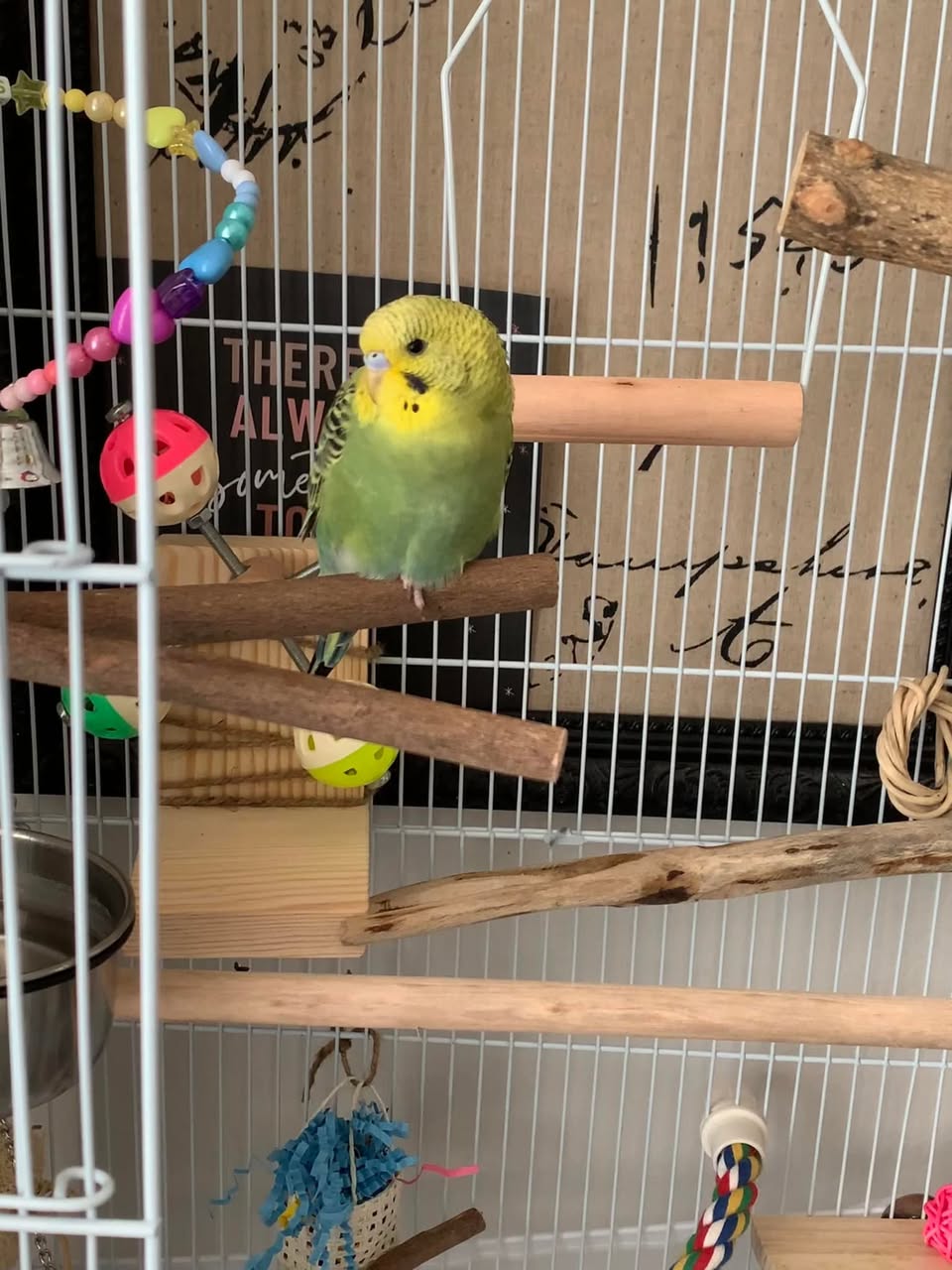
To look at something with focused attention, a budgie turns its head so one eye is pointed directly at the subject. This is called monocular vision — using one eye at a time. When your budgie turns its head and fixes one eye on you, it is giving you its full, concentrated visual attention. That is not creepy. That is a compliment.
Budgies can also see ultraviolet light that is invisible to humans. Their world is visually richer and more detailed than ours. When a budgie stares at you, it is processing more information about you than you can process about it.
- Eyes on the sides of the head give budgies nearly 340-degree vision
- Monocular focus — one eye fixed on a subject — is their version of direct, concentrated attention
- A budgie turning its head to fix one eye on you is not suspicious behaviour — it is focused interest
- Budgies can see UV light, meaning they see detail in you that you cannot see in yourself
- Binocular vision — both eyes focused forward — is used when the bird is examining something very close, like food or a toy
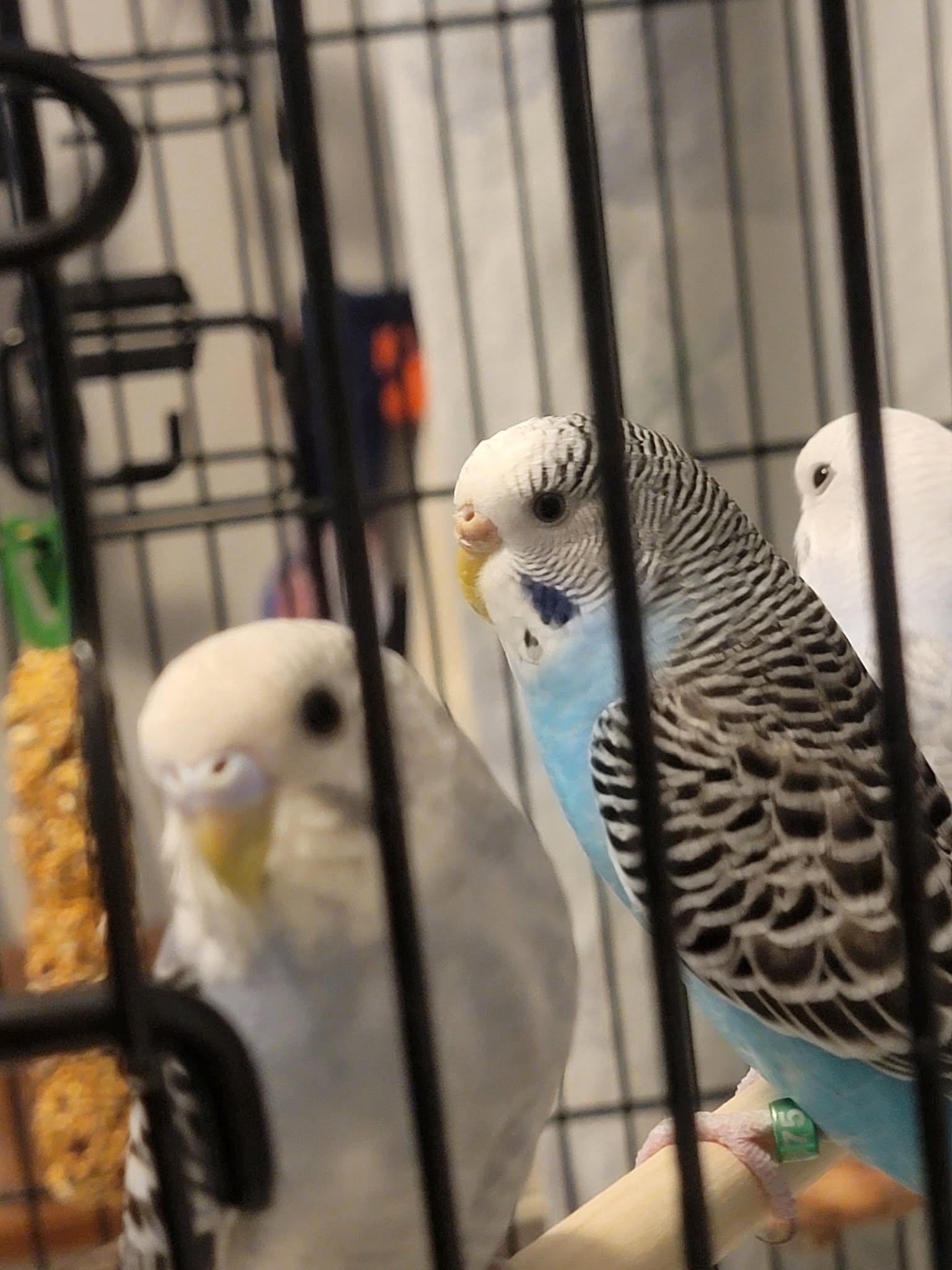
The 7 Reasons Your Budgie Stares At You
Budgie staring is not one thing. It has different meanings in different contexts, and the same behaviour can communicate very different things depending on the bird’s body language, the situation, and the relationship between bird and owner. Here are the seven reasons I see most often — and what each one is actually telling you.
Reason 1: You Are the Most Interesting Thing in the Room
This is the most common reason, and the simplest. Budgies are highly intelligent, highly curious birds. They need stimulation. They need things to watch, process, and respond to. In a domestic environment, the owner is usually the most dynamic, unpredictable, and interesting thing available.
You move. You make sounds. You do different things at different times. You bring food. You interact. You are, from your budgie’s perspective, endlessly variable and therefore endlessly interesting. The staring is not sinister. It is the budgie equivalent of watching television — you are the most engaging programme available.
This is particularly pronounced in single budgies kept without a companion bird. A budgie without another bird to interact with will direct a much greater proportion of its social attention toward its owner. The staring in these birds is often very intense and very consistent — you are not just interesting, you are the primary social focus of the bird’s entire day.
- The staring happens whenever you are in the room and doing things — moving, talking, eating
- The bird tracks your movement with its head, following you as you move around
- The bird is livelier and more vocal when you are present than when you are not
- The bird is kept alone without a companion budgie — you are its primary social contact
- The staring reduces when you give the bird direct attention — it is seeking interaction, not just observing
What this tells you
Your budgie is engaged with you. That is a good thing. A budgie that ignores its owner entirely is a much harder bird to bond with than one that watches everything you do. The watching is the beginning of the relationship — the bird is learning you, mapping your patterns, building familiarity.
If the bird is kept alone and the staring is very intense, it is worth considering whether a companion budgie would improve its quality of life. Budgies are flock animals. A single bird that is wholly dependent on its owner for social stimulation is under more pressure than one that has another bird to interact with through the day.
Reason 2: The Bird Is Bonding With You
In the early weeks and months of ownership, a budgie that stares at you is almost certainly in the process of bonding. This is what was happening with the young woman’s blue male — four months in, he was deep in the process of deciding that she was his person.
Bonding in budgies involves a sustained period of observation before physical closeness. The bird watches. It assesses. It learns the owner’s patterns, movements, voice, and behaviour. It determines that the owner is safe, reliable, and worth investing social attachment in. This process takes time — weeks to months depending on the individual bird — and the staring is a central part of it.
A bird that is bonding will progress from watching at a distance to wanting to be closer. You may notice that it moves along its perches toward whatever side of the cage you are on. That it vocalises when you leave the room and quiets when you return. That it is interested in being out of the cage when you are nearby. The staring is the first chapter of a story that ends with a bird sitting on your shoulder.
- The bird is relatively new — you have had it for less than six months
- The staring is accompanied by the bird moving toward you along the cage perches
- The bird vocalises when you leave the room and is quieter when you are away
- The bird is alert and interested — crest slightly raised, posture upright — when watching you
- Over time, the bird is gradually becoming more comfortable with your proximity
What this tells you
Let the process happen at the bird’s pace. Do not rush physical interaction with a bird that is still in the observation phase. The watching is the bird’s way of building confidence in you — disrupting it by trying to handle the bird before it is ready will slow the bonding process, not accelerate it. Be present, be consistent, talk to the bird, and let it come to you.
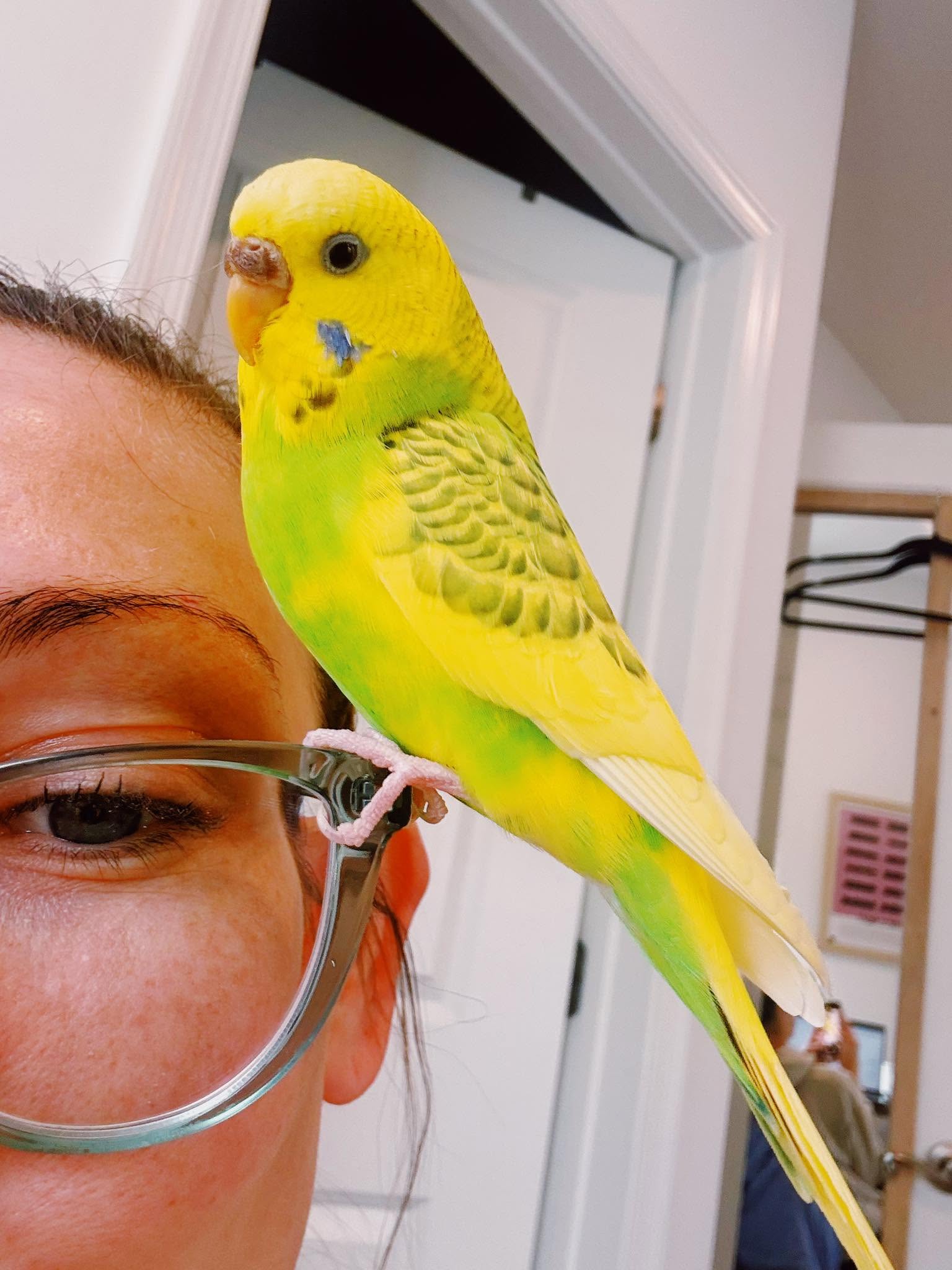
Reason 3: The Bird Is Communicating — And Waiting for a Response
Budgies are communicative birds. They use vocalisations, body language, and — yes — sustained eye contact to initiate interaction with the people they are bonded to. A budgie that stares at you is very often doing so because it wants something to happen. It is not passive observation. It is active communication.
What does it want? Usually one of a small number of things: to come out of the cage, to have your attention, to be talked to, or to receive a food treat it has learned to associate with your presence. The staring in these cases has a quality of expectation to it — the bird is waiting for you to respond.
You will often see this most clearly when the bird has learned a routine. If you have a habit of letting it out at a certain time of day, it will start watching you intently in the lead-up to that time. If you always talk to it when you come into the room and one day you do not, it will stare at you with what can only be described as pointed expectation until you acknowledge it.
- The staring is accompanied by vocalisations — chattering, specific calls, or contact calls directed at you
- The bird moves to the cage door or the part of the cage nearest to you when staring
- The staring intensifies when you are doing things the bird associates with interaction — getting its food, approaching the cage
- The bird stops staring and relaxes once you interact with it
- The staring is more persistent at certain times of day — the bird has learned your routine
What this tells you
Your budgie has learned that you are responsive to its communication. That is a sign of a healthy, engaged relationship. Respond to it — talk to the bird, make eye contact back, acknowledge it. Budgies that receive consistent responses to their communication attempts become more communicative over time, not less. The conversation is worth having.
Reason 4: The Bird Is Reading Your Mood
This is the one that surprises owners most when I explain it — but it is real, and I have seen it clearly in many birds over the years.
Budgies are socially sensitive animals. In the wild, they live in flocks and are constantly monitoring the emotional state and behaviour of the birds around them. A bird that missed the signs of a flock-mate’s alarm or distress was a bird at risk. That sensitivity does not disappear in domestication — it transfers to the owner.
A bonded budgie will watch its owner for signs of mood and emotional state. It learns what normal looks like — your usual voice, your usual movements, your usual energy. When something is different, the bird notices. It stares more intently because it is trying to process the change and determine whether it represents a threat or something it needs to respond to.
Owners often tell me that their budgie seems to know when they are upset. That it watches them more carefully on difficult days. That it is quieter when they are quiet and more vocal when they are cheerful. This is not anthropomorphism. It is the bird’s social intelligence working exactly as it evolved to work.
- The staring increases when your behaviour is different from normal — you are upset, stressed, or unwell
- The bird vocalises differently in response to your emotional state — quieter when you are low, more active when you are well
- The bird watches you more closely when you are doing something unfamiliar or when the household routine is disrupted
- The bird seems to relax when you are calm and become more alert when you are agitated
What this tells you
Your budgie knows you better than you might think. The watching is not random — it is attentive, responsive observation by an animal that has invested genuine social interest in you. That is not a trivial thing. It is one of the most interesting aspects of keeping budgies, and one of the reasons a well-bonded budgie is such good company.
Reason 5: Something Has Changed and the Bird Is Assessing It
Budgies are alert to novelty. When something in their environment changes — a new piece of furniture, a different outfit on their owner, a visitor in the house, a change in the room layout — they notice. And they stare at it until they have assessed whether it is safe.
This means that sometimes a budgie stares at you not because of the general bond between you, but because something specific about you is different. You are wearing a hat you do not normally wear. You have come home smelling of another animal. You have changed your hair. You are wearing glasses for the first time. From the budgie’s perspective, there is something that requires processing before normal interaction can resume.
This assessment staring is usually temporary — the bird works out that you are still you, adjusts, and returns to normal behaviour. But in the short term it can be quite intense, and owners who do not know what is driving it sometimes find it disconcerting.
- The intense staring started or increased following a specific change — new clothes, new hair, a visitor, a changed room
- The bird is more cautious than usual alongside the staring — slightly reluctant to approach or interact
- The staring reduces over a short period as the bird habituates to the change
- Other members of the household or regular visitors also receive this assessment staring when they change something about their appearance
What this tells you
Your budgie pays close enough attention to you to notice when something is different. Give it time to adjust. Do not force interaction immediately after a significant change — let the bird assess from a distance and come to its own conclusion that everything is fine. It usually does, fairly quickly.
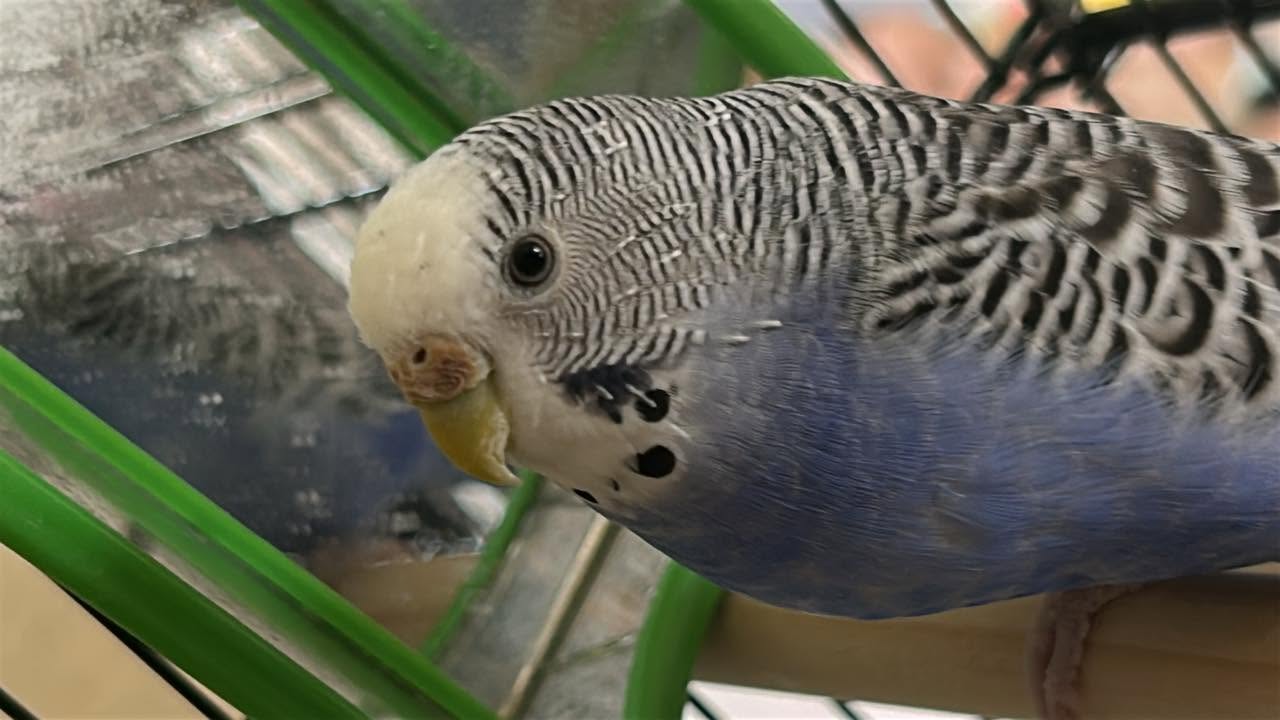
Reason 6: The Bird Is Displaying — You Are Its Flock
A bonded, confident budgie will sometimes stare at its owner as part of a broader display behaviour — a performance, of sorts, directed at the person it considers its primary social companion. This is most obvious in males, who will often stare intently, bob their head, and sing or chatter in a way that is clearly directed at the owner rather than at nothing in particular.
This is the budgie treating you as a flock member. It is showing off. It is performing. In the wild, this kind of social display is directed at other flock members — it is how budgies maintain social bonds and communicate status and affection within the group. In a domestic setting, with you as the flock, you receive the display.
The staring in this context is part of the performance — the bird is checking that you are watching, responding to your attention, and directing its social energy at you specifically rather than at the room in general.
- The staring is accompanied by head bobbing, singing, or chattering directed toward you
- The bird is visibly animated — crest up, posture upright, active and vocal
- The display increases when you make eye contact or respond to the bird verbally
- The bird is well settled and confident — this is not anxious watching but active, energetic attention
- The behaviour is most common in male budgies, particularly those that are well bonded to their owner
What this tells you
Your budgie considers you part of its social world in the most active sense. It is not just tolerating your presence — it is engaging with you as a social companion. Talk back to it. Respond to the display. The interaction this creates is one of the genuinely rewarding parts of keeping a well-bonded budgie.
Reason 7: The Bird Is Alert to Something Beyond You
Not all budgie staring is directed at you specifically — sometimes the bird is staring in your direction but focused on something beyond or behind you. A movement outside the window. A sound from another room. A cat that has just entered the space at the edge of its peripheral vision. The bird’s gaze appears to be fixed on you, but you are not actually what it is watching.
This type of staring has a different quality to it. The bird is alert rather than relaxed. The crest may be slightly raised. The body is tense rather than settled. The bird is not tracking your movements — it is frozen, watching a specific point. If you move, it does not follow you. Its gaze stays on whatever has its attention.
- The bird’s gaze does not follow you when you move — it is fixed on a point, not tracking you
- The bird is visibly alert — tense posture, crest slightly raised, not relaxed
- There is something in the environment that could explain the alertness — a sound, a movement, another pet
- The staring is accompanied by alarm calls or a sudden freeze rather than relaxed chattering
- The bird relaxes once the source of the alert is removed or resolves itself
What this tells you
Check the environment. Is there something the bird can see that you have not noticed? A cat outside the window, a reflection, a movement? Persistent alert staring at a fixed point is worth investigating — the bird’s senses are sharper than yours in several ways, and it may be detecting something real. If the alert staring is associated with another pet in the household that can approach the cage, address the predator access issue. A bird in sustained low-level alert is a stressed bird.
What the Staring Is Telling You About Your Relationship
Taken together, the reasons above tell you something important about budgie staring as a whole. It is almost never random. It is almost never a sign of something wrong. And it is almost always a sign of social engagement — the bird paying attention to you, processing you, relating to you in the way that budgies relate to the members of their social group.
- Relaxed body, one eye fixed on you, tracking your movement. This is attentive interest. The bird is engaged with you. This is the most common type and the most positive.
- Alert posture, crest slightly raised, staring and chattering or bobbing. This is active social engagement — the bird is performing for you or communicating. Respond to it.
- Tense body, crest raised, fixed gaze that does not follow your movement. This is alert staring at something beyond you. Check the environment for the source.
- Staring from a distance, cautious, not approaching. This is assessment behaviour — something has changed and the bird is evaluating it. Give it time.
- Staring with head tilting slightly — alternating which eye is focused. The bird is examining you with focused curiosity. This is a sign of high interest and usually precedes attempts to interact.
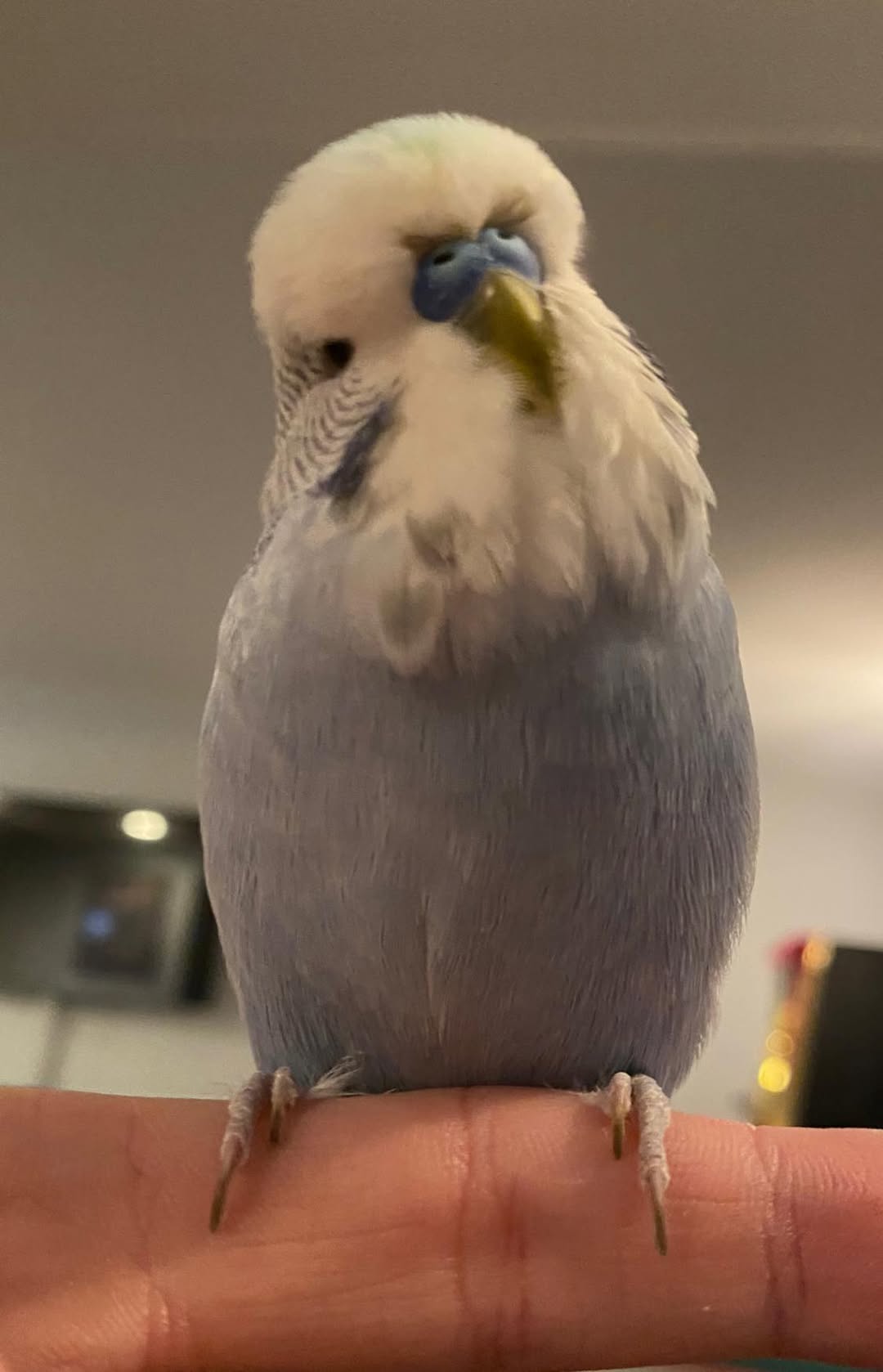
When Staring Is Not Normal — The Exceptions
In the interests of being complete, there are a small number of situations where sustained staring in a budgie warrants closer attention rather than reassurance.
A budgie that stares blankly — without tracking movement, without responsiveness, without the normal animated quality of engaged attention — may not be staring in the social sense at all. A bird that is unwell, disoriented, or experiencing a neurological issue can appear to stare at nothing with a fixed, unfocused gaze. This looks distinctly different from normal attentive staring. The bird is not tracking. It is not responsive. The gaze has no social quality to it.
If the staring is accompanied by any of the following, it warrants a vet check rather than reassurance:
- The bird is not responsive when you move or speak — the gaze does not change
- The staring is accompanied by loss of balance or unsteady posture on the perch
- The bird’s head is tilted to one side alongside the staring — this can indicate an inner ear or neurological issue
- The bird is otherwise unwell — sleeping more, eating less, changed droppings
- The staring started suddenly in a bird that was not previously a starer — sudden behavioural change always warrants attention
These cases are uncommon. The vast majority of budgie staring is exactly what I described in the sections above — social, attentive, and positive. But it is worth knowing the exceptions.
Frequently Asked Questions
My budgie stares at me and then bobs its head — what does this mean?
Head bobbing directed at an owner is one of the clearest signs of an actively bonded budgie. The bird is displaying at you — performing socially, treating you as a valued member of its flock. In males this is often accompanied by singing or chattering. It is an entirely positive behaviour and a sign that the bond between you is strong. Bob back if you feel inclined. The bird will almost certainly respond.
My budgie stares at me from inside the cage but will not come out — is something wrong?
Not necessarily — this is often simply a confidence issue rather than a bond issue. The bird is interested in you and paying close attention, but has not yet built the confidence to enter open space. Some budgies take longer than others to feel secure outside the cage. Do not force it. Continue interacting with the bird through the cage — talking, offering treats, being consistently present — and allow the confidence to build at its own pace.
My budgie only stares at me and not at other people in the household — why?
Because it has bonded with you specifically. Budgies form preferential attachments — they have a primary person, and that person receives the most sustained attention. This is not a problem unless it creates significant jealousy-related biting toward other household members. It is a normal expression of how budgies form social bonds. The other people in the household can build their own relationships with the bird through their own consistent, patient interaction.
Is my budgie staring because it wants to come out?
Often, yes — particularly if the staring is accompanied by movement toward the cage door or contact calls directed at you. A budgie that has learned that watching you produces interaction will use the staring as a communication tool. If the bird stares, you respond, and it gets to come out, it has learned that staring works. This is not a problem. It is the bird communicating clearly and effectively.
Where can I get budgie behaviour advice in Swindon?
Come and see us at Paradise Pets, Manor Garden Centre, Cheney Manor Industrial Estate, Swindon SN2 2QJ. Or ring us on 01793 512400. We have been keeping and advising on budgies for over 35 years and are happy to talk through any aspect of budgie behaviour — staring included.
One Last Thing From Me
The young woman came back about six weeks after our first conversation. Her blue budgie was now stepping up onto her hand. He was talking — a few words, a lot of chattering. He sat on her shoulder while she worked.
He was still staring at her constantly, she said. But now she understood what it meant, it felt completely different. It felt like company.
That is what it is. A budgie that watches you is a budgie that is invested in you. In a small animal with a brain the size of a walnut, that level of social attention is genuinely remarkable when you stop to think about it. They are paying attention to us in ways that most people do not fully appreciate.
The staring is not creepy. It is the bird telling you that you matter to it.
That seems worth knowing.
Questions About Your Budgie’s Behaviour? Come In and Ask
We have been keeping, selling, and advising on budgies for over 35 years. Budgie behaviour — staring, bobbing, chattering, biting, or anything else — always has a reason, and understanding that reason makes keeping budgies a far richer experience. Come in for a chat. Free advice, no obligation. That is how we have always done things.