
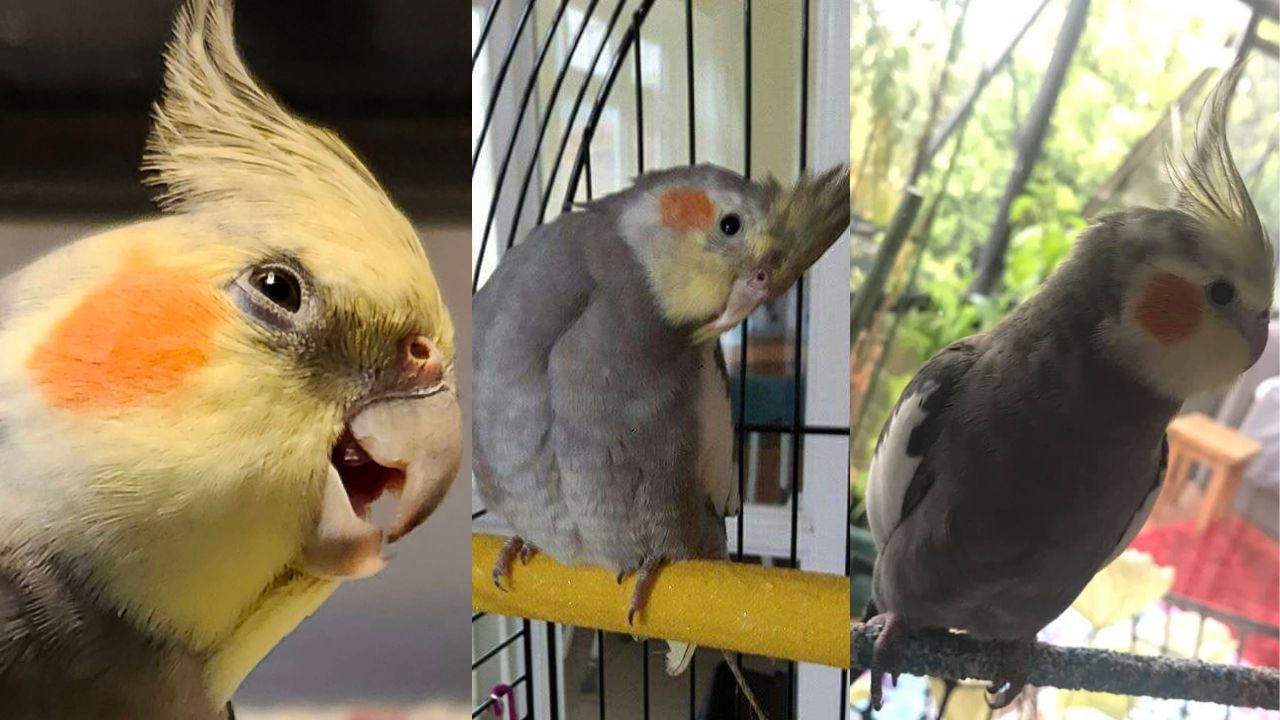

Neil has kept, bred, and sold cockatiels at Paradise Pets Swindon since 1988 — over 35 years of first-hand experience with this species. Constant whistling is one of the most common questions he gets asked, and the answer is rarely what people expect. This is his honest guide to why it happens and what, if anything, to do about it.
A woman came in a couple of months ago looking genuinely exhausted. Her cockatiel, she said, would not stop whistling. Morning, afternoon, evening — the same few notes, over and over, sometimes for what felt like hours. She loved the bird. She was also seriously considering whether she had made a mistake getting one.
I asked her a few questions. Was the whistling the same tune repeated, or did it vary? Did the bird whistle more when she was in the room or when she was out of it? Had anything changed recently — a house move, a new pet, a change in her own routine?
She said it was the same tune, learned from her partner whistling it to the bird as a chick. It got worse, she said, when she left the room. And nothing else had changed recently.
I told her what she had was a perfectly normal, perfectly healthy cockatiel doing exactly what cockatiels are built to do — communicate, constantly, with the people it considers its flock. The whistling was not a problem with the bird. It was a mismatch between a very normal cockatiel behaviour and an owner who had not been told what to expect.
That conversation happens often enough that I think it deserves a proper, honest explanation. This article is that explanation.
Why Cockatiels Whistle So Much — The Honest Reason
Cockatiels are flock birds. In the wild, they live in groups, and constant vocal contact is how the flock stays together and stays informed about where everyone is. A cockatiel kept as a single pet treats its human household as its flock. Whistling, chirping, and calling are how it maintains contact with you.
This is the single most important thing to understand before anything else in this article: whistling is not attention-seeking in the negative sense people sometimes mean by that phrase. It is not naughtiness, and it is not a behavioural problem to be corrected. It is the bird doing exactly what a cockatiel is supposed to do — staying in vocal contact with its flock, which in this case is you.
A cockatiel that whistles a lot is, in the overwhelming majority of cases, a confident, comfortable, socially engaged bird. The alternative — a permanently silent cockatiel — is usually far more concerning than a noisy one.
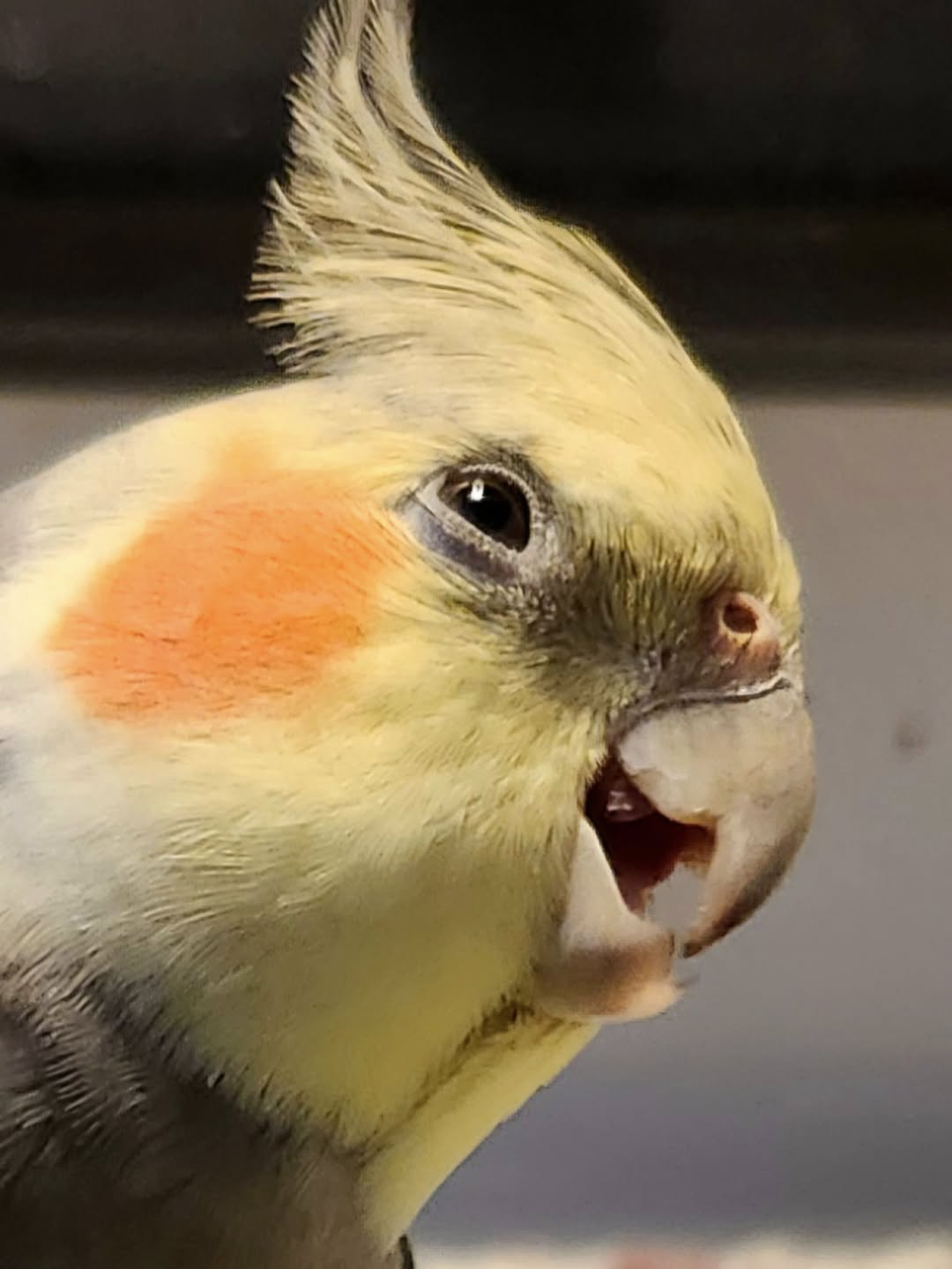
The Specific Triggers That Make Whistling Worse
While whistling itself is normal, certain situations reliably increase it. Understanding these helps you predict and, where you want to, manage it.
You Leaving The Room
This is the most common trigger I hear about, and it is exactly what happened with the woman I mentioned. Cockatiels frequently increase their calling when their person leaves the room or the house, because the flock has just become separated and the bird’s instinct is to call out and re-establish contact. It is the avian equivalent of “where did everyone go?”
Mornings and Evenings
Cockatiels, like most parrot species, are naturally most vocal around dawn and dusk. This corresponds to when flocks in the wild would be most active and most vocally coordinated. If your cockatiel has a noticeable whistling peak first thing in the morning and again in the early evening, that is entirely normal and not something to be concerned about.
Boredom and Lack of Stimulation
A cockatiel left alone for long stretches with nothing to do will often vocalise more, partly from genuine boredom and partly as an attempt to summon attention or interaction. This is one of the few situations where increased whistling does point to something worth addressing — not the bird’s health, but its environment.
Mirrors and Reflective Surfaces
Cockatiels can become quite vocal toward mirrors or other reflective surfaces, sometimes whistling at what they perceive as another bird. This is generally harmless, though some owners prefer to limit access to mirrors if it becomes excessive or if the bird seems to fixate unhealthily on its reflection.
Learned Patterns From You
If you or anyone in the household regularly whistles a particular tune to the bird, it will often learn that tune and repeat it — sometimes extensively. This is exactly what had happened with the woman’s bird. The repetition is the bird demonstrating that it has successfully learned something, which is, from the bird’s point of view, a genuine achievement worth repeating.
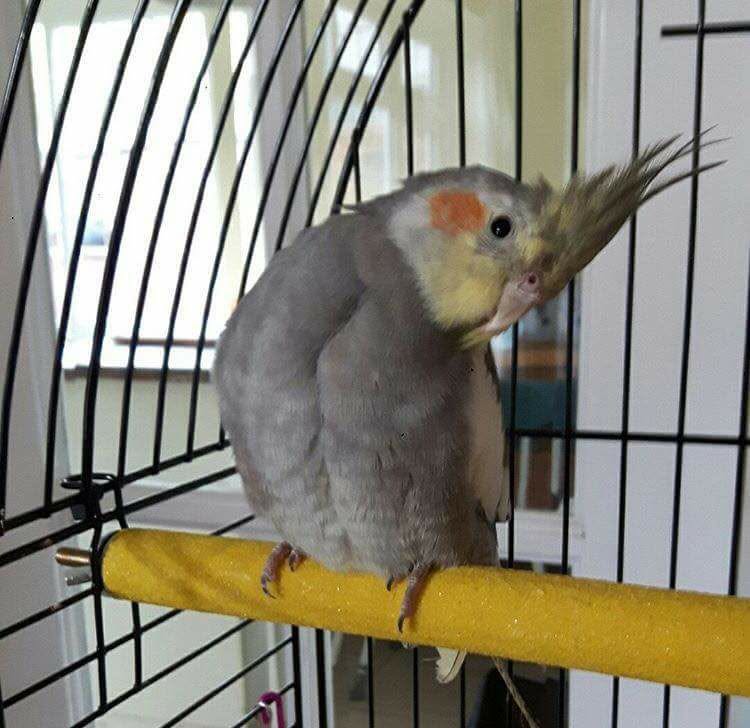
When Whistling Crosses Into Something Worth Addressing
I want to be honest that there is a difference between normal, healthy vocalisation and excessive calling that points to an underlying problem. The distinction matters, because the response to each is different.
The key thing to watch for is a change from your individual bird’s normal pattern, rather than the volume or frequency in isolation. A cockatiel that has always been vocal and continues to be vocal in the same way is simply being itself. A cockatiel whose calling pattern changes noticeably, especially alongside other signs, is telling you something different is going on.
Is It Ever A Sign Of Stress Or Distress?
Sometimes, yes — and it is worth knowing the difference between contact calling and distress calling, because they can sound similar to an untrained ear but come from different places.
Contact calling is rhythmic, often repetitive, and tends to settle once the bird gets a response — your voice, your presence back in the room, eye contact. Distress calling tends to be more frantic, often louder and more erratic, and does not settle with the things that normally satisfy a contact call. It is frequently associated with a specific frightening event — a perceived predator, a loud noise, separation in an unfamiliar environment.
If your cockatiel’s whistling fits the contact-calling pattern, even if it is frequent and occasionally tiring, you are dealing with a normal, healthy bird. If it sounds genuinely distressed and does not settle with reassurance, it is worth looking at the immediate environment for something that might be frightening the bird, and considering whether anything else about its behaviour has changed.
Can You Reduce The Whistling Without Suppressing The Bird?
This is the question most owners are really asking, and the honest answer is: partially, and you should be careful about how you go about it. You cannot and should not try to stop a cockatiel from vocalising — that would mean suppressing a fundamental, healthy behaviour. What you can do is manage the situations that trigger excessive or particularly inconvenient calling.
Respond Calmly Rather Than Reactively
If you respond to whistling by rushing over, talking loudly, or otherwise giving a big reaction, you can inadvertently reinforce that whistling produces an exciting response. A calmer acknowledgement — a quiet word, a glance, walking past rather than running to the cage — often satisfies the contact-seeking instinct without escalating the behaviour into something louder and more attention-grabbing over time.
Increase Enrichment
If boredom is contributing, address it directly. Rotate toys regularly, provide foraging opportunities where the bird has to work for some of its food, and ensure there is enough going on in its environment to occupy it during the hours you cannot be present.
Build In Predictable Interaction
Cockatiels that know interaction is coming at predictable points in the day often settle into quieter patterns between those points, because the constant uncertainty of “will someone respond to me” is reduced. Short, regular sessions of attention can do more to settle excessive calling than occasional long sessions at unpredictable times.
Avoid Reinforcing Specific Loud Behaviours
If you have taught your bird a particular whistle, recognise that you are the one who created that pattern, and it will likely continue indefinitely. This is not something to fight against — it is simply worth knowing before you teach a new tune that you are happy to hear on repeat for years.
What Whistling Is Not — Common Misunderstandings
A few things I hear regularly that are worth correcting directly.
Whistling is not a sign that the bird is unhappy in its cage or wants to be let out specifically — though letting a cockatiel out for supervised time daily is good practice regardless. It is not a sign of being mistreated. It is not something that indicates the bird needs a companion bird to “talk to,” though a second cockatiel is a legitimate option for owners who are out for long stretches and want their bird to have company — that is a separate decision with its own considerations, not a solution to whistling specifically.
And it is not something that responds well to punishment of any kind. Covering the cage to stop noise, raising your voice at the bird, or other punitive responses do not reduce healthy contact calling in any lasting way, and can damage the trust between you and the bird.
Frequently Asked Questions
Is it normal for a cockatiel to whistle the same tune over and over?
Yes, very normal. Cockatiels often latch onto a particular sound — a tune someone has whistled to them, a phone ringtone, a doorbell — and repeat it extensively because they have successfully learned it. This is a sign of a confident, engaged bird rather than a problem to correct.
Why does my cockatiel whistle more when I leave the room than when I’m in it?
This is one of the most common and most normal patterns. Cockatiels treat their household as their flock, and leaving the room represents a separation that triggers contact calling — the bird’s way of checking where you have gone and re-establishing connection.
Will getting a second cockatiel stop the whistling?
Not necessarily, and it should not be the primary reason for getting a second bird. Two cockatiels will often vocalise with each other as well as with you, and the overall noise level in the household can increase rather than decrease. Getting a companion bird is a legitimate decision for other reasons, but it is not a reliable fix for whistling specifically.
My cockatiel’s whistling has suddenly gotten much louder and more frantic — should I worry?
A sudden, marked change in tone or intensity — particularly if it sounds distressed rather than its usual contact calling, or is accompanied by other behaviour changes — is worth investigating. Check the immediate environment for anything that might have frightened the bird, and watch for other signs such as reduced eating, fluffed feathers, or laboured breathing. If those are present, a vet visit is appropriate.
Can excessive whistling damage a cockatiel’s voice or health?
Healthy vocalisation, even frequent, does not harm a cockatiel. If you notice the voice itself sounding hoarse, strained, or different from normal — rather than simply frequent — that is a different matter and worth a vet check, as it can indicate a respiratory issue rather than normal behaviour.
Is there a way to train a cockatiel to be quieter?
You can manage the situations that escalate calling — calm responses rather than big reactions, good enrichment, predictable interaction — but you should not aim to eliminate vocalisation entirely. A degree of regular calling is a sign of a healthy, socially engaged bird, and total silence in a cockatiel is generally more of a concern than noise.
One Last Thing From Me
The woman who came in exhausted by her bird’s whistling left with a different outlook than she arrived with. Not because the whistling stopped — it did not, and it was never going to — but because she understood, for the first time, what it actually meant.
That shift matters. A behaviour that feels like a problem when you do not understand it often feels like a perfectly reasonable, even endearing, part of having the animal once you do. Her cockatiel was not malfunctioning. It was communicating, in the way cockatiels have always communicated, with the flock it had chosen — which happened to be her.
I will always tell people honestly when a behaviour is a genuine concern that needs addressing. Whistling, in the vast majority of cases I have seen across 35 years, is not that. It is simply what a contented cockatiel sounds like.
If you want to talk through your own bird’s behaviour, or anything else about keeping cockatiels well, come and find us at Manor Garden Centre, Cheney Manor, Swindon SN2 2QJ. Get in touch here or call 01793 512400.
Got A Vocal Cockatiel? Come And Talk To Us
We stock cockatiels and everything you need to keep them happy and well. If you have a question about your bird’s behaviour, come in and talk to us — we have been answering this exact question for 35 years.