


Neil has kept, bred, and sold birds at Paradise Pets Swindon since 1988 — over 35 years of first-hand experience with avian care. Birds are masters at hiding illness. By the time the signs are obvious, the situation is often already serious. This is his honest, practical guide on what to check on your bird twice every day — what to look for, why it matters, and how this simple habit has saved more UK pet birds’ lives than almost anything else owners can do.
A woman came into the shop a few years ago with a budgerigar in a travel box. She had noticed that morning that something looked off — she could not quite say what. The bird was still eating, still sitting on its perch, still making noise. But something was different.
She was right to come in. The bird had a respiratory infection that, left another day or two, would have been significantly harder to treat. We sent her straight to the avian vet that afternoon. Two weeks of treatment later, the bird was completely back to normal.
I asked her how she had noticed. She said she just knew. And when I pressed her on it, she described exactly the kind of twice-daily observation that most experienced bird owners build without even realising they are doing it. She had seen her bird every morning and every evening for three years. She knew what normal looked like. And that morning, normal was missing.
That is the whole point of checking twice a day. Not to diagnose. Not to perform veterinary assessments. Simply to know your bird well enough that a change registers — because by the time the signs are obvious to a casual observer, the underlying problem has often been developing for days.
This article is the conversation I have been having with bird owners at the counter for over three decades. By the end of it, you will know exactly what to check in the morning, what to check in the evening, when something means “monitor closely” versus “vet today,” and how to build the consistent observation habit that genuinely saves bird lives across UK households.
Why Twice a Day — And Not Once?
Birds deteriorate quickly. This is not alarmism — it is physiology. A small bird has a fast metabolism and a limited energy reserve. An illness that would take days to visibly affect a dog can make a bird critically ill within twelve to twenty-four hours.
A single daily check means a twelve-hour window where something could go wrong and go unnoticed. Twice daily — morning and evening — narrows that window considerably. It also gives you two distinct behavioural snapshots to compare: how the bird is first thing in the morning, before the activity of the day, and how it is in the evening after a full day.
Those two moments often tell different stories. A bird that seems sluggish first thing but perks up by evening is different from one that is quiet in the morning and quieter still by night. Twice-daily checking makes that distinction possible.
Why this matters so much for UK pet birds specifically:
- Most UK pet birds are small species — budgies, canaries, cockatiels — and small birds deteriorate fastest
- Indoor pet birds have no flock to compensate — they are entirely dependent on your observation
- Avian vets are often not local — getting one urgently may take a few hours, so early notice gives a buffer
- Birds instinctively hide illness — prey-animal behaviour means they conceal weakness until they cannot
- UK seasonal changes affect birds — winter respiratory issues, summer heat stress, breeding hormonal cycles
- Most household risks are subtle — air freshener fumes, draughts, dietary issues develop gradually

What We Look For — The Morning Check
The morning check is the more revealing of the two. You are seeing the bird fresh — before it has warmed up, before it has eaten, before the stimulation of the day has had any effect. A bird that is genuinely unwell will often be most visibly so first thing in the morning.
Time it before you do anything else. Before you uncover the cage fully, before you refill food or water, before you talk to the bird. Just look. Two minutes of quiet observation tells you more than ten minutes of interaction will.
Posture on the Perch
A healthy bird waking up sits upright and alert. It may be a little slower to react than it will be later in the day, but its posture should be balanced and its weight evenly distributed across both feet.
A bird that is sitting low on the perch, leaning, or — significantly — sitting on the cage floor rather than a perch, is telling you something. Birds drop to the floor when they lack the energy to maintain a perch. This is one of the clearest signs that something is wrong, and it warrants action.
Puffed-up feathers are also worth noting. Birds fluff their feathers to conserve heat, and some puffing first thing in the morning is normal. Sustained puffing — the bird staying fluffed well into the day, or appearing fluffed when the room is warm — is not.

Eyes
Both eyes should be open, clear, and bright. A bird with a partially closed eye, a discharge around the eye, or swelling near the eye needs to be seen by a vet. One eye closed can indicate a localised issue; both eyes partially closed, combined with puffed feathers and low posture, is a more serious picture.
Eye-watching specifics worth knowing:
- Bright, alert, fully open — healthy baseline you want to see
- Slow blinking when relaxed — normal when bird is settled and content
- One eye partially closed during day — possible localised eye issue, vet check
- Both eyes partially closed during day — systemic illness sign, urgent
- Crusting or discharge around eye — infection, respiratory issue, or trauma
- Swelling around eye — sinus or infection, vet attention
- Eye held tightly shut — pain or significant problem, urgent

Nostrils and Beak Area
The nostrils should be clean and dry. Any discharge — watery, crusty, or coloured — is worth investigating. The area around the beak and nostrils should be clean. In budgerigars specifically, the cere (the fleshy area above the beak) can also indicate health problems if it changes colour or texture significantly.
Look for:
- Clean dry nostrils — normal baseline
- Crusty deposits around nostrils — possible respiratory infection developing
- Watery or cloudy discharge — active respiratory issue
- Beak surface smooth and even — normal
- White spots or honeycomb texture on beak — possible scaly face mite
- Significant cere colour change in budgies — possible hormonal or health issue
- Stained or matted feathers around beak — eating issues or discharge wiping
Droppings Overnight
Look at what has accumulated on the cage floor overnight before you disturb the bird. Normal droppings have three distinct parts: a dark solid portion, a white or off-white urate portion, and a small clear liquid portion. Droppings that are entirely watery, very dark, blood-tinged, or absent are significant. A bird that has produced nothing overnight is not eating or is very unwell.

The overnight droppings tell you specifically:
- Quantity — normal output suggests bird ate properly the previous day
- Consistency — proper three-part structure indicates healthy digestion
- Colour — normal brown/green solid with white urates is the baseline
- Distribution — droppings spread around cage suggest active bird overnight
- Smell — strong unusual smell can indicate infection or diet issue
- Any blood — always significant, never normal, always vet
What We Look For — The Evening Check
The evening check is about activity, appetite, and the bird’s engagement with its environment. By evening you should have a reasonable picture of how the bird’s day has gone — whether it has eaten, whether it has been active, whether the morning’s baseline has held up or whether something has changed.
Eating and Drinking
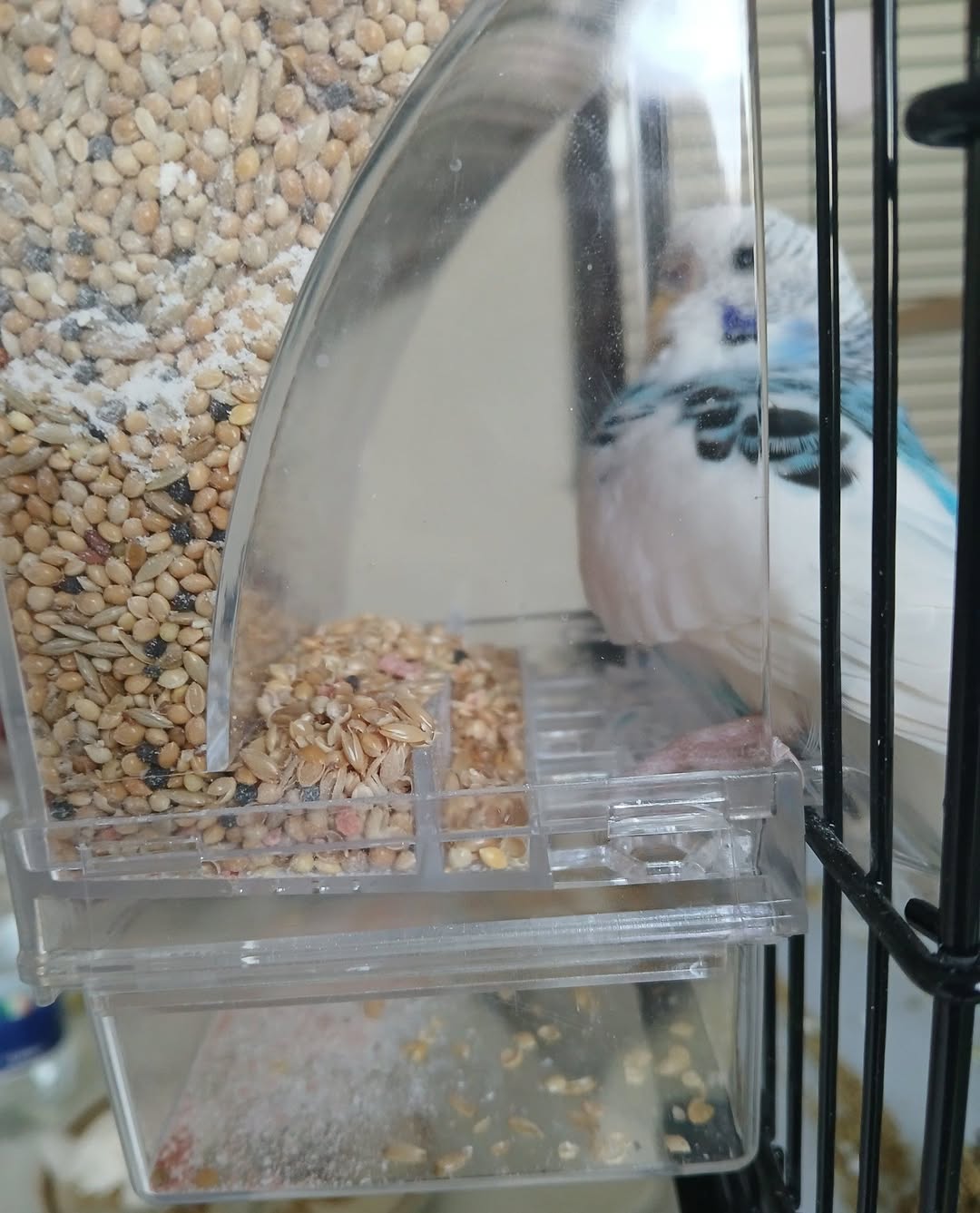
By evening you should have a reasonable picture of whether the bird has eaten during the day. Seed husks should be present in the food bowl. The water level should have dropped at least slightly. A bird that has not eaten or drunk is showing you one of the earliest and most consistent signs of illness.
Do not be misled by a full-looking seed bowl. Budgerigars and canaries husk their seed, leaving the empty shell behind. A bowl that looks full of seed may in fact be full of empty husks, with nothing of nutritional value remaining. Blow gently across the surface — husks will lift away and reveal whether there is whole seed underneath.
Activity and Vocalisation
An active, healthy bird will be moving — climbing, exploring, interacting with toys, calling. The evening is often the most vocal time for many species. Know what your bird’s evening pattern looks like. If a bird that usually chatters through the early evening is sitting quietly, that is a change worth registering.
The key indicators here:
- Movement around the cage — climbing, hopping between perches, exploring
- Engagement with toys or mirror — interest in environment
- Vocalisation pattern — typical chatter, songs, or calls for the species
- Response to you entering the room — alert reaction, possible greeting
- Preening — normal grooming behaviour throughout the evening
- Eating behaviour — visible feeding activity
- Social interaction — if paired or in a flock, normal engagement with others
Breathing
Watch the bird at rest. Breathing should be even, regular, and not visibly laboured. You should not see the tail bobbing with each breath. You should not hear clicking, wheezing, or rasping. Any of these signs at rest indicate a respiratory problem and need veterinary attention promptly.
Breathing observations to make in the evening:
- Tail bobbing at rest — concerning, suggests respiratory distress
- Open-beak breathing without recent activity — urgent, vet attention
- Clicking or wheezing sounds — respiratory infection or obstruction
- Rapid breathing rate at rest — possible illness, stress, or overheating
- Visible chest movement with each breath — laboured breathing
- Stretching neck repeatedly — possible attempt to clear airways
The Signs That Mean Act Now — Not Tomorrow
Most of what I have described above falls into the category of things to monitor and respond to with a vet appointment. But some things require same-day action. After 35 years, the difference between birds that recover and birds that do not often comes down to recognising the difference between “monitor” and “act now.”
- Bird on the cage floor — fundamental loss of strength, urgent
- Visibly laboured breathing — tail bobbing with every breath, open-beak breathing at rest
- Complete unresponsiveness — bird not reacting to your presence at all
- Blood in droppings or from any body part — internal or external bleeding
- Severe injury or visible trauma — collision, attack, accident
- Seizure or sudden collapse — neurological emergency
- Choking or difficulty swallowing — possible foreign body or crop issue
- Inhalation of fumes (PTFE, smoke, aerosols) — rapidly fatal, immediate vet
A bird on the cage floor is a genuine emergency. Do not wait until morning. Do not see how it is in an hour. Get to a vet.
Similarly, visibly laboured breathing — where you can see the effort of each breath, where the tail bobs with every inhalation — is not something that resolves on its own. Birds can deteriorate very rapidly when respiratory function is compromised.

Keeping the Check Consistent
The value of the twice-daily check comes from consistency. An observation made in the same way, at roughly the same time, each day gives you a meaningful baseline. Random checks at inconsistent intervals do not.
- Morning check — before anything else
Before you uncover the cage, before you refill food or water, before you talk to the bird. That is when you see the overnight picture undisturbed. - Evening check — during the bird’s active period
Not just before you go to bed, when the bird may already be settling. You want to see it alert and moving, so you can assess activity and energy. - Same time roughly every day
Consistency builds the comparison baseline that lets you spot changes. - Two to three minutes each check
That is genuinely all it takes once you know what you are looking for. - Note anything different
Even minor changes. Keep a simple log if it helps — date and a sentence is enough. - Weigh weekly if possible
A small kitchen scale gives you an extra early-warning indicator that visual checks alone do not. - Photograph occasionally
Reference photos when the bird is healthy give you something to compare against. - Make it routine, not stressful
This is a habit, not a worry. The bird should not pick up on tension from you doing it.
It does not take long. Two or three minutes each time. Once it is habit, it costs you almost nothing. What it gives you is the ability to act when it matters.
Species Make a Difference — But the Principle Does Not
Different species present illness differently. After 35 years of selling budgies, canaries, cockatiels, and other species at Paradise Pets, I can tell you that the general check approach works for all of them — but the specific signs to watch for vary slightly between species.
| Species | What To Watch For Specifically |
|---|---|
| Budgerigar | Cere colour changes, tail bobbing, sitting on cage floor, beak grinding stopping, vocalisation reduction. Budgies mask illness particularly effectively. |
| Canary | Stopping singing is often the first sign — before any other visible symptoms. Also watch for feather quality and posture changes. |
| Cockatiel | Crest position (held low constantly suggests illness), reduced interest in handling, irritability or biting, voice changes. |
| Lovebird | Reduced social interaction with cage mate, less preening between bonded pair, fluffing during day, reduced food carrying behaviour. |
| Conure / small parrot | Reduced vocalisation, less interest in shoulder time or interaction, quieter cage behaviour, slower response to greetings. |
| Finch (zebra, society, etc.) | Sitting apart from flock, reduced flying within cage, time spent on cage floor, beak tucked under wing during day. |
The specific signs vary. The principle does not — know your individual bird’s normal, check consistently, and act on change.
For more on recognising health issues in specific species, our guide on how to know if your budgie is dying covers the deeper warning signs, and our article on why your budgie may be breathing heavy covers the specific respiratory symptoms in more detail.
If you have come to this article because you have a specific concern about your bird right now — do not delay looking for answers. If the bird is on the floor, not breathing well, or visibly distressed, call a vet today.
The Mistakes UK Owners Most Often Make
For balance, here are the genuine mistakes I see at the counter when UK owners describe how they monitor their birds. Avoiding these makes the twice-daily check genuinely effective.
- Checking only when the bird seems “off” — by then, the baseline comparison is impossible
- Skipping mornings because of work schedule — morning check is the more revealing one
- Confusing seed husks with eaten seed — full bowl can mean nothing was eaten
- Assuming a quiet bird is content — quiet can mean unwell, particularly if usually vocal
- Not knowing what normal droppings look like — comparison fails without the baseline
- Picking up the bird to “check it” — stress masks illness signs; quiet observation reveals more
- Treating one good day as proof everything is fine — illness can fluctuate visibly
- Waiting for “obvious” signs before acting — by then it may be too late
- Not knowing where the nearest avian vet is — finding one in an emergency wastes critical time
- Cleaning cage thoroughly before observing droppings — destroys the most useful diagnostic information
The single most common mistake I see is owners who only “check” the bird when they already suspect something is wrong. The twice-daily check is preventive — building the baseline of familiarity that lets you spot problems before they become emergencies.
Building The Habit — Practical Tips
For UK owners who want to actually build this routine into their lives — not just intend to but actually do it — here are the practical tips that have worked for hundreds of customers I have advised over 35 years.
- Link the check to an existing routine
Morning kettle on, evening dinner cleanup. Routines stack onto existing routines best. - Position the cage where you naturally pass
A cage in a corner you only visit deliberately gets checked less than a cage by the kitchen door. - Start with a paper log
A simple notebook by the cage. Date and a brief sentence each check for the first month builds the habit. - Take photos weekly
Phone photos of the bird at the same time on the same day give you visual comparison over months. - Learn one new normal each week
First week — normal droppings. Second week — normal posture. Build the baseline incrementally. - Save your avian vet’s number in your phone now
Before you need it. With a clear label so anyone in the household can find it. - Get other household members involved
Children especially benefit from learning observation skills and contributing. - Make the bird’s setup easy to observe
Good lighting, clear sight lines, not too cluttered. Hard to observe means less observation.
The owners who genuinely build this habit are the owners whose birds live long, healthy lives. It is not a coincidence.
Frequently Asked Questions
Is it normal for my bird to be quiet in the morning?
Some birds are slower to warm up in the morning, particularly before they have had access to light for a while. A bird that is quiet first thing but becomes progressively more active and vocal as the morning continues is likely fine. A bird that remains quiet, puffed, and low on the perch well into the morning is worth watching closely.
My bird is eating but seems less active than usual — should I be worried?
A bird that is eating normally is in better shape than one that is not, but reduced activity on its own is still worth monitoring. Keep your twice-daily checks going and watch for any additional changes. If the reduced activity continues for more than a day or two without explanation, a vet conversation is reasonable.
How do I know if my bird’s droppings are normal?
Normal droppings have three components: a darker solid portion, white or off-white urates, and a small clear liquid component. Droppings that are entirely liquid, very dark throughout, lime-green, or blood-tinged fall outside normal range. Diet can affect droppings — certain fresh foods will change colour and consistency temporarily — so factor in what the bird has eaten.
My bird sleeps a lot during the day — is that normal?
Many birds do rest during the day, particularly around midday. A bird that naps for a period and then is active and alert in the morning and evening is likely fine. A bird that sleeps throughout most of the day and is not responsive during what should be its active periods is a different picture.
Should I weigh my bird regularly?
For owners who are comfortable doing so, regular weighing is one of the most sensitive early indicators of illness in birds. Weight loss can precede visible symptoms by days. A set of small digital kitchen scales works well. If you are weighing consistently, a drop of more than a few percent from baseline is worth discussing with a vet.
What if I miss a check or two?
The point of the routine is consistency over time, not perfection every single day. Missing the occasional check is fine. What matters is that it is your default behaviour, not your exception behaviour. If you have missed a few days because of holidays or unusual circumstances, just start again. The habit builds back quickly.
Where can I get bird health advice in Swindon?
Come and see us at Paradise Pets, Manor Garden Centre, Cheney Manor, Swindon SN2 2QJ. We are always happy to talk about what you are seeing in your bird, and we can advise on whether something looks like it needs vet attention. For genuine medical emergencies, please contact an avian vet directly. Ring us on 01793 512400. The advice is free and we have been doing this for 35 years.
One Last Thing
The twice-daily check is not complicated. It does not require specialist knowledge or equipment. It requires familiarity — and familiarity requires showing up consistently.
The owners who bring birds in early enough to make a real difference are almost always the ones who know their bird well. They noticed something. They could not always say exactly what. But they knew their bird, and they knew something was wrong.
That knowledge is not innate. It is built through the habit of looking, twice a day, every day, at what normal actually looks like for your individual bird. After 35 years, I have come to see this single habit as the foundation of responsible UK bird ownership — more important than any single piece of equipment, food choice, or care advice. Get the observation right and you have the protection that genuinely matters.
The woman with the budgerigar that morning saved her bird’s life because she had built this habit over three years. The bird was still eating, still on the perch, still vocalising — by almost any casual measure it looked fine. But she knew her bird. She knew normal. And she knew something was missing. That is what we are trying to build for every UK bird owner.
If you have a concern about your bird’s health or behaviour that this article has not covered, come and find us at Manor Garden Centre, Cheney Manor, Swindon SN2 2QJ. Get in touch here or call 01793 512400.
Want To Build Better Bird Care Habits? Come And See Me
We stock a range of birds year-round alongside everything you need to keep them well. If you have a concern about your bird’s health or behaviour, come in and talk to us. Free honest advice based on 35 years of UK bird keeping. That is how we have done things since 1988.