


Neil has been keeping, breeding, and selling birds at Paradise Pets Swindon since 1988 — over 35 years of daily experience with cage birds and a lifelong interest in wild birds beyond the shop walls. This summer, as it does every summer, the twitching world has been mobilising across Britain — hundreds of people dropping everything and driving through the night to see a bird that has no business being in this country. This is his honest meditation on what that says about the relationship between humans and birds, and why he thinks the bird in the living room is more remarkable than anything on a twitch list.
A customer came in last week with a story that made me smile. He had spent two years on a waiting list for a particular bird. He had driven four hours through the night to see it. He had stood in a muddy field in West Wales for three hours in the rain with sixty other people, all of them pointing binoculars at a hedgerow. The bird had eventually appeared for approximately ninety seconds, flicked its tail, and disappeared. He had driven four hours home.
He was not complaining. He was absolutely delighted.
He also keeps a cockatiel at home — has done for twelve years — and he mentioned in passing that the cockatiel had learned a new phrase that week. Something it had overheard from the television, apparently, which it had decided to incorporate into its morning routine.
I asked him which had given him more pleasure this month. The four-hour drive and the ninety seconds in the hedgerow, or the new phrase from the bird he had kept for twelve years.
He thought about it seriously, which told me he understood the question.
“Different things,” he said eventually. “But the cockatiel, probably.”
That answer is what this article is about.
What Twitching Is — And Why It Is More Interesting Than It Looks From Outside
Before I make the case for the budgie in the living room, I want to be fair about twitching — because it is easy to caricature and the caricature misses something genuine.
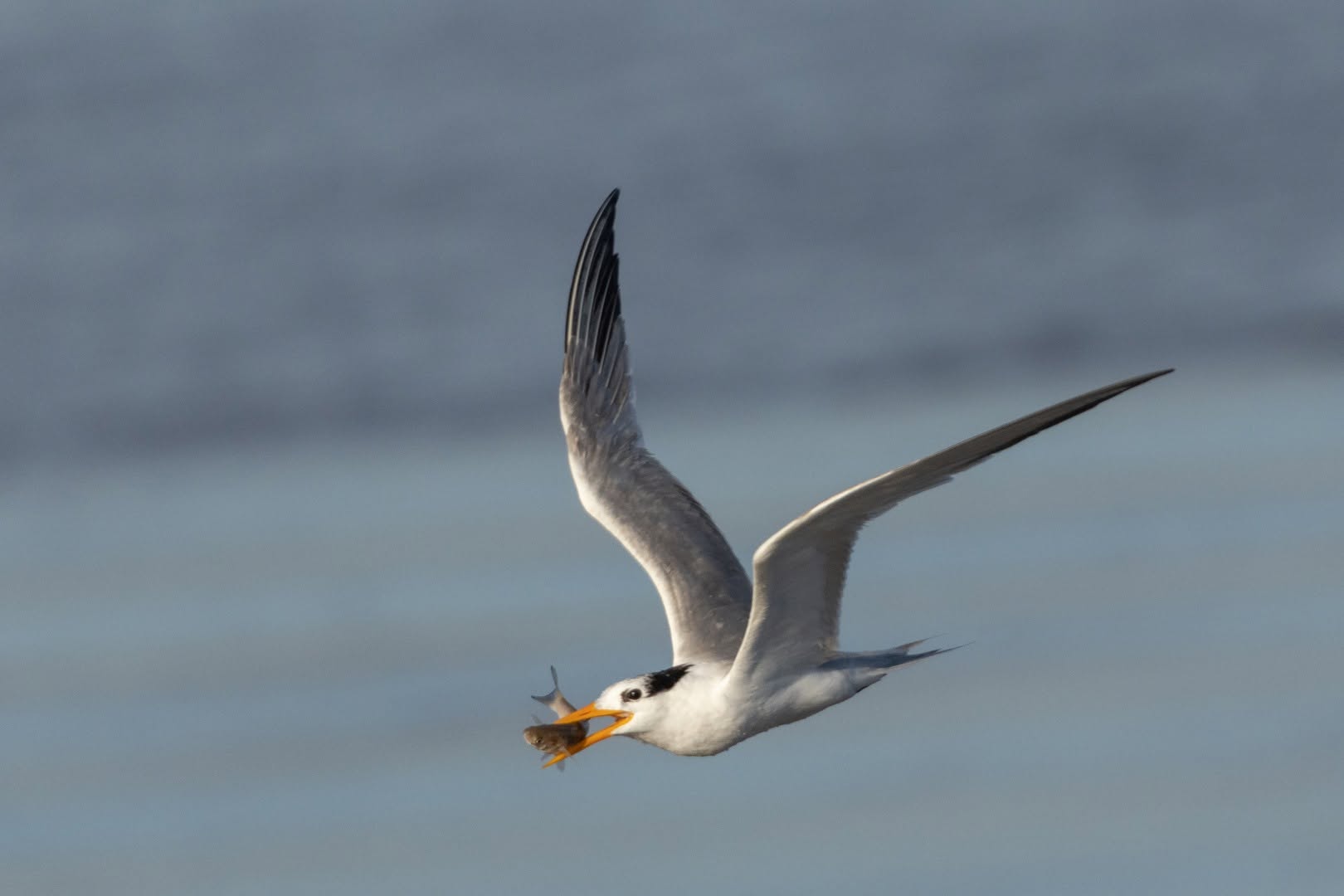
A twitch is, in the terminology of British birding, the pursuit of a previously located rare bird — typically a vagrant that has been blown off course during migration and has appeared somewhere in the UK far outside its normal range. The British Isles are geographically positioned at the edge of the Atlantic migration flyway, which means that birds from North America, Central Asia, and sub-Saharan Africa turn up on British soil every year in numbers that make the UK one of the most productive places in the world for rare bird sightings.
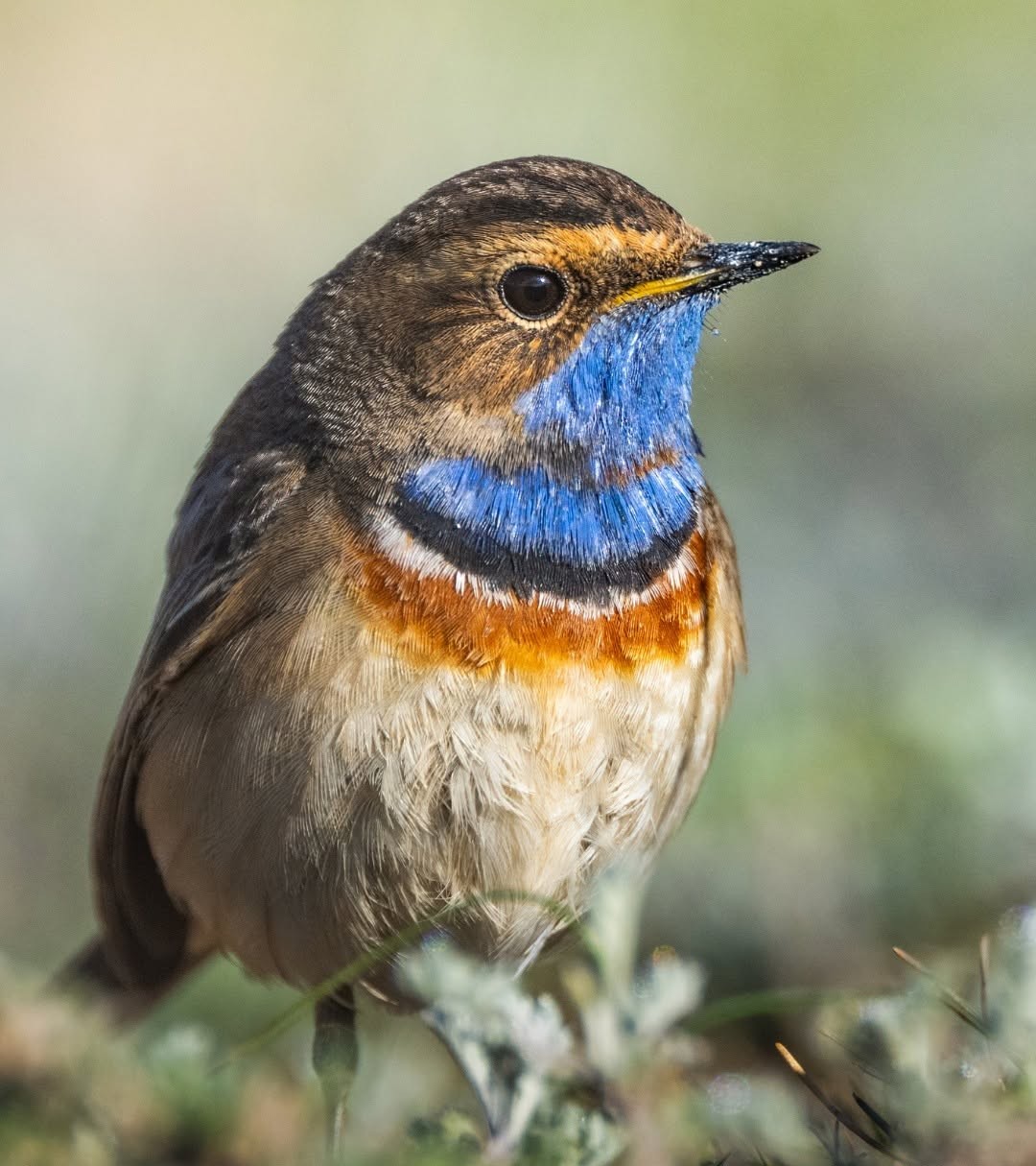
When a genuinely rare bird is found — say, an American warbler in a garden in Yorkshire, or an Asian flycatcher in Shetland — word goes out through networks including Rare Bird Alert and Birdguides, and birders converge from across the country. The famous mega-twitches can bring hundreds or even thousands of people to a site within hours.
- The appeal is not simply the tick — the addition of the species to a personal list — though that matters to list-oriented birders; it is also the genuine wonder of seeing a bird that has crossed an ocean or a continent and somehow ended up in a suburban garden in the north of England; the unlikelihood is part of the experience
- Twitchers, almost without exception, care deeply about birds — the image of a crowd of people trampling habitat to photograph something with their phones misrepresents the majority of twitchers, who are serious birders with long-term commitments to conservation, monitoring, and protection of the species they pursue
- The social element is real and underacknowledged — a twitch is also a community gathering; birders who have known each other for years via newsletters and online groups meet in person at twitches; the shared experience and shared enthusiasm produces something that individual birding does not
- The experience of seeing something genuinely rare is not nothing — I have been out early on a cold morning and seen a species I did not expect, and the quality of attention that moment produces — the complete focus on a specific bird in a specific moment — is something I understand and do not want to dismiss
What Twitching Cannot Offer — The Honest Limits
The twitch experience, for all its genuine qualities, has specific limits that become clear when you compare it directly with what a well-kept cage bird provides. These are not criticisms — they are simply the nature of the thing.
- A twitched bird does not know you exist — it is not responding to you, not reading you, not adjusting its behaviour based on your presence in any way that involves you specifically; you are simply another large mammal in its perceptual field; the bird is doing what it would do regardless of whether you specifically were there
- The interaction is entirely one-way — you observe; the bird does not reciprocate; the experience is closer to looking at a beautiful painting than to a relationship; both valuable, not the same thing
- Duration is typically measured in seconds or minutes — even a cooperative rare bird is seen briefly in the context of hours of travel and waiting; the ratio of effort to encounter is extreme by any normal standard
- The experience is not repeatable in any personal sense — you can return to see the same bird, but the encounter does not build; the bird is no more familiar with you on the fourth visit than the first; there is no accumulated relationship
- What you are seeing is a bird under stress — a vagrant that has ended up in the wrong place at the wrong time is typically an exhausted, disoriented animal far from its normal range; it is not displaying the behaviours it would show in a healthy, familiar environment; you are seeing a fraction of what the species is
What A Well-Kept Pet Bird Actually Offers — The Case For Remarking On It
I am going to make the argument here that I make occasionally at the counter — the one that is sometimes received with slight surprise because it comes from someone who keeps and sells birds rather than from an outside observer.
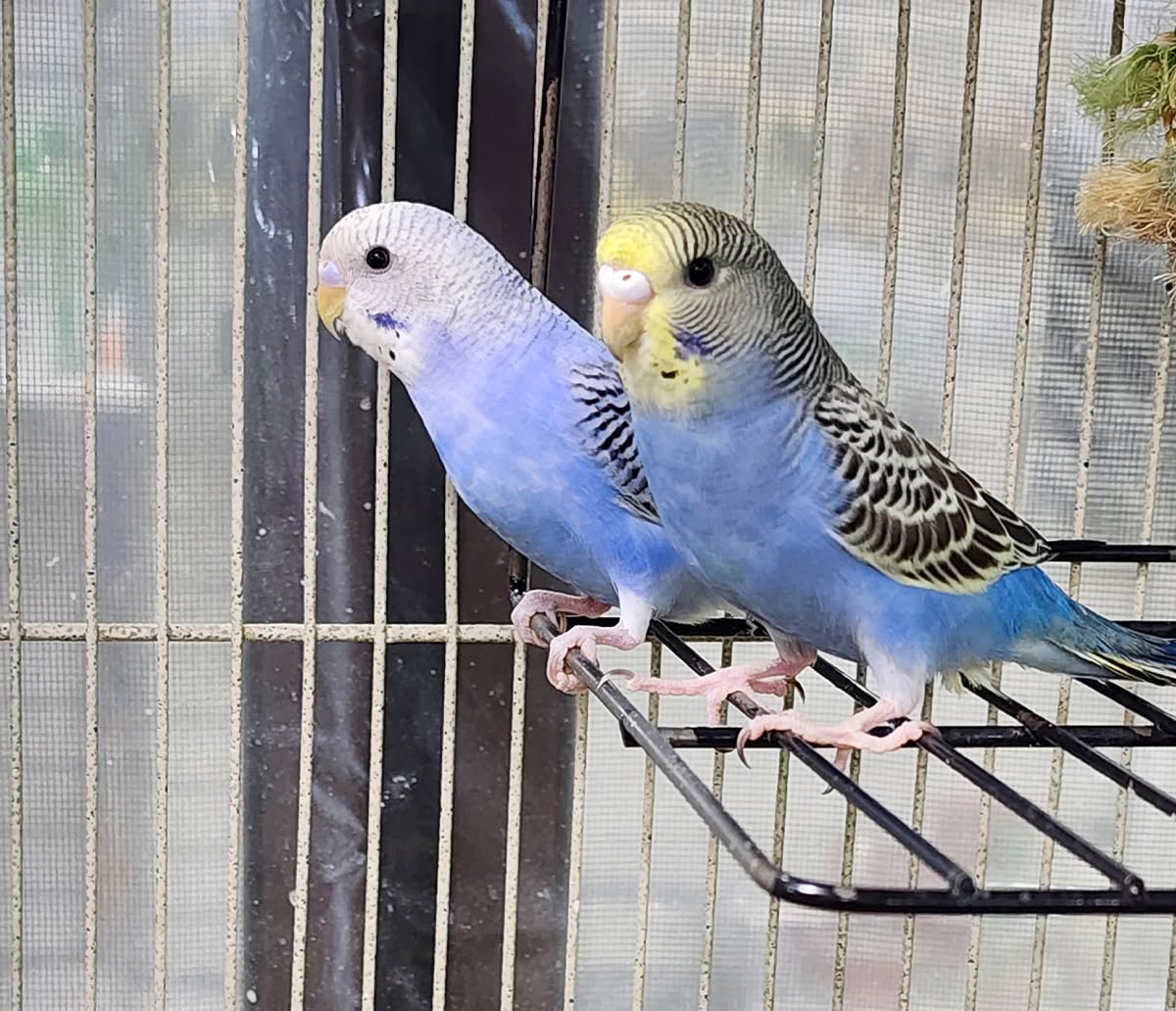
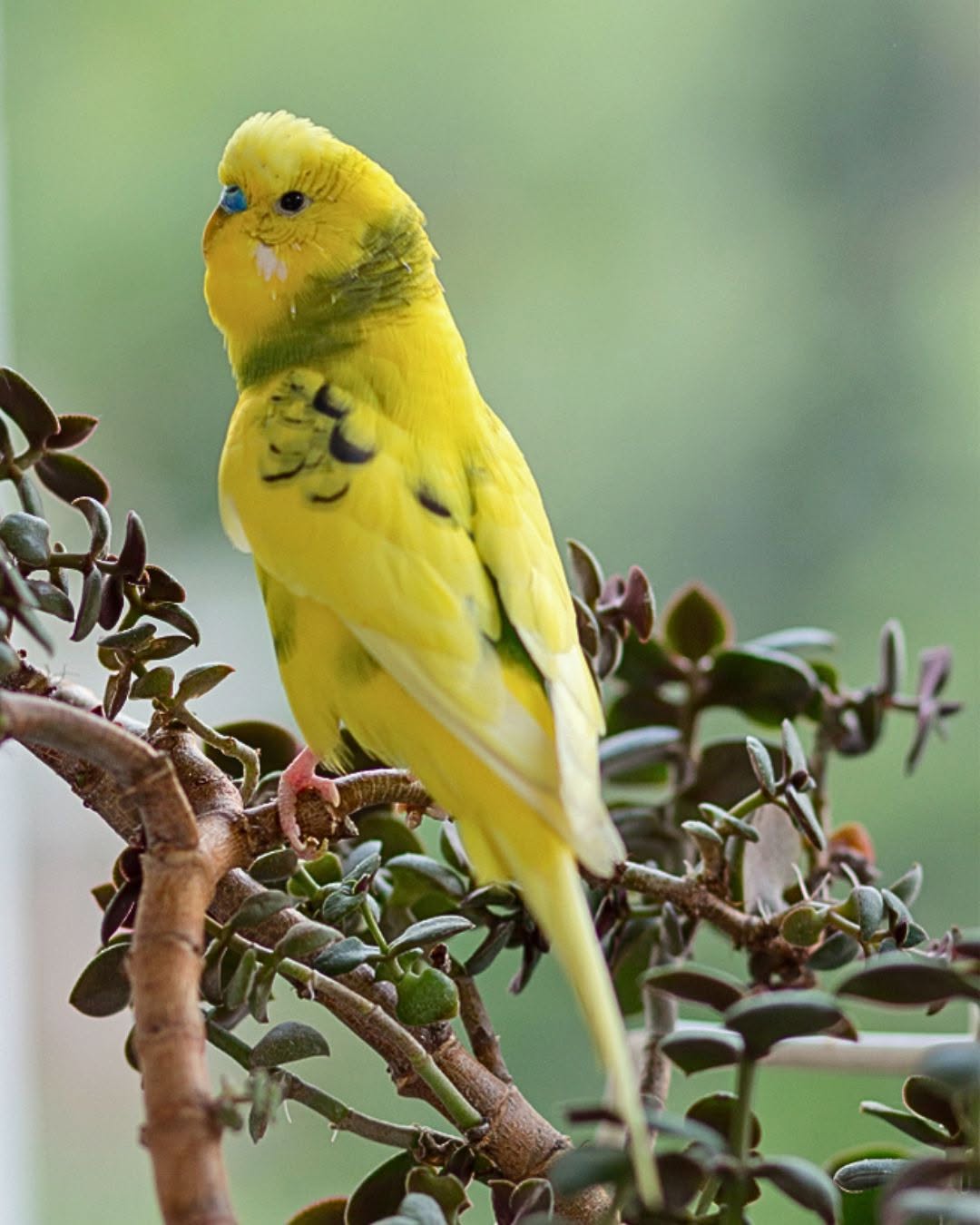
A budgie that has lived with a person for six years is more remarkable, in the ways that actually matter most, than almost any rare bird on a British twitch list.
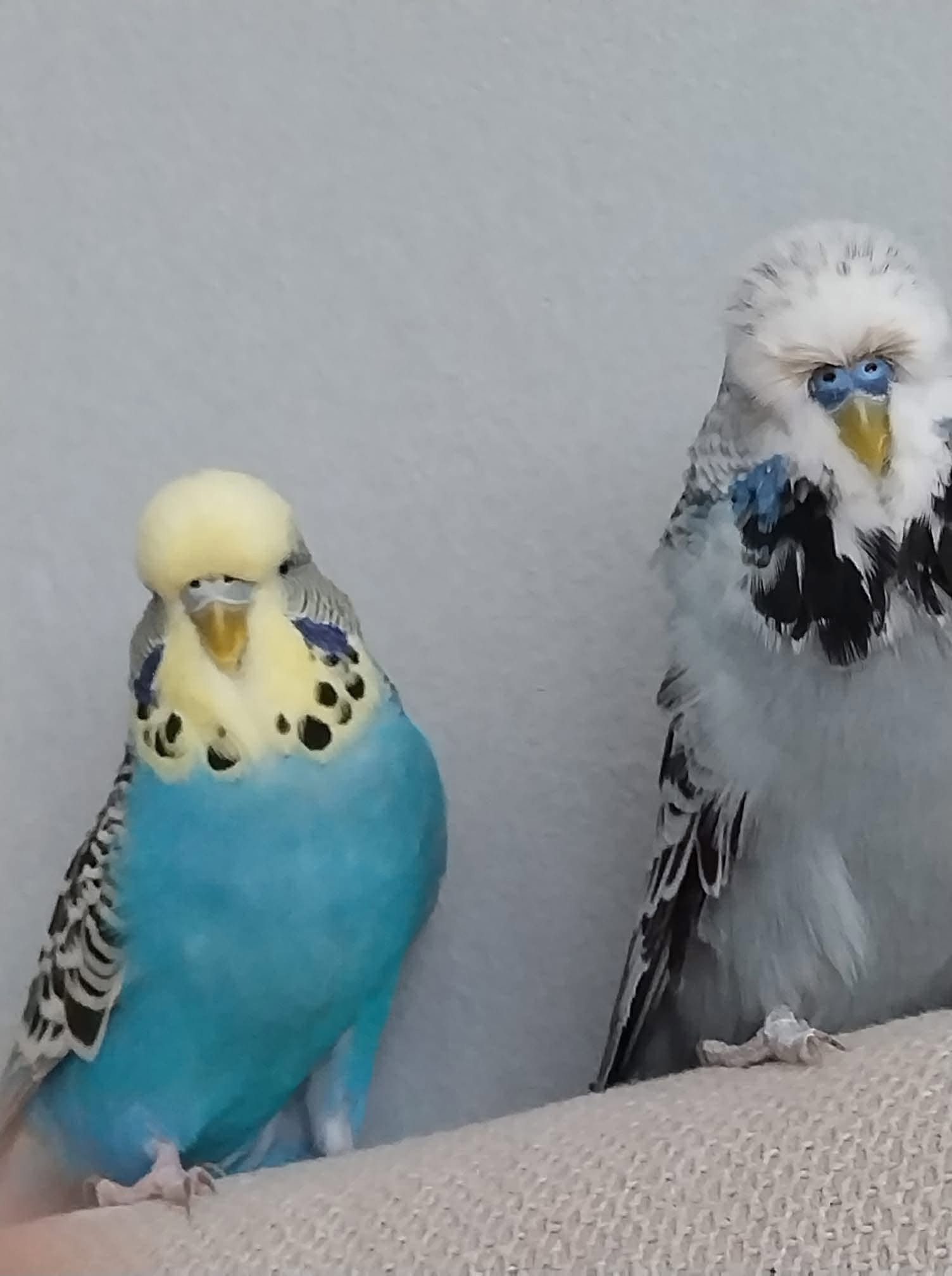
- It knows you specifically — not humans in general; you; your voice distinguished from every other voice it has heard, your footstep pattern recognised before you enter the room, your mood read from your posture and the quality of your movement; it has built a detailed individual model of you over years of accumulated observation, and it applies that model every time you interact
- It responds to you in real time — the crest that rises when you arrive home, the specific call it makes when it hears your car, the way it tracks your movement around the room; this is not generic bird behaviour, it is behaviour directed specifically at you because you have been the consistent social reference point in its environment for years
- It communicates in a language you can learn — the crest positions, the eye pinning, the wing postures, the vocalisations; all of it is consistent, learnable, and meaningful; a person who has kept a cockatiel for six years and paid attention to it reads that bird as fluently as they read familiar humans; the communication is real
- It has a relationship with you that has a history — it remembers the early weeks of uncertainty and the gradual trust-building that followed; a bird that was initially cautious and became confident in your presence carries that arc of relationship in its behaviour; you can see the history of the relationship in how it behaves with you compared with unfamiliar people
- You are seeing what the species actually is — not a stressed vagrant in the wrong country, but a bird in its settled environment, expressing the full range of behaviours and cognitive capacities that the species has; a budgie singing in a familiar cage is closer to what budgerigars actually are than a lost budgerigar found in a field in Norfolk is
The Cognitive Capacity Argument — What Birds Actually Are
This is the part that tends to genuinely interest people who have not thought about it before, because the scientific picture of bird cognition has changed significantly over the past thirty years and most of the popular understanding of birds has not kept pace with it.
- The avian brain, despite its size, is not a simpler version of the mammalian brain — it is differently organised; the forebrain structures that perform the cognitive functions associated with intelligence in mammals are present in birds in different architectural form but comparable functional capacity; bird brains are not small mammal brains, they are a separate evolutionary solution to similar cognitive problems
- Corvids — crows, jays, ravens — can plan for the future, use tools, and pass information between generations — these are capacities that were, not long ago, considered exclusively mammalian; the research on corvid cognition over the past twenty years has been one of the most significant revisions in our understanding of animal intelligence
- Parrots, including budgerigars, show comparable cognitive capacities — concept formation, numerical understanding, the ability to understand that words refer to real-world categories rather than simply being trained sounds; Alex the African grey parrot, studied by Irene Pepperberg for thirty years, demonstrated capacities that resemble what children demonstrate at around the four-year-old level
- A budgie in your living room is not a simple stimulus-response machine — it is processing its environment, forming expectations, updating its models of the people around it, and communicating the results of that processing in real time; understanding this changes what it means to keep one well and what it means to pay attention to one
- The bird on the twitch list does not show you any of this — the stressed vagrant in a hedgerow is not displaying the cognitive complexity that characterises its species in a settled environment; you are seeing the species at its worst, not at its most remarkable
Why Both Matter — The Honest Conclusion
I want to be clear that I am not arguing against twitching. I am arguing for something that twitching culture sometimes undervalues — the significance of long, careful, attentive observation of a bird that you know well.
- The twitching world produces serious conservationists — the people who care enough about birds to drive four hours at night to see one are, almost universally, people who care about what happens to bird populations; the twitching community has been a significant driver of conservation awareness and funding in Britain for decades
- The pet bird keeping world produces a different but equally valuable form of bird knowledge — not the taxonomic breadth of the experienced twitcher, but the depth of attention to a specific species and a specific individual; the person who has kept a cockatiel for twelve years knows cockatiels in a way that the person who has ticked the species on a zoo visit does not
- Both forms of attention are part of the same larger care for birds that conservation needs — the twitcher who also keeps birds at home, or who feeds garden birds carefully, or who participates in citizen science monitoring, is bringing all of these different forms of bird attention together in ways that have real conservation value
- The pet bird in the living room is an argument for why birds matter — not the argument from aesthetics or rarity, but the argument from relationship; a person who has a genuine relationship with a bird they have kept for years understands, in a way that no amount of reading about birds can produce, what is actually at stake when bird populations decline
Frequently Asked Questions
Is twitching a good introduction to birdwatching?
It is an introduction to one specific aspect of it — the pursuit of rarity. The broader practice of birdwatching, which includes patch birding, garden birdwatching, seabird counting, and the long-term monitoring work that underpins conservation science, is better introduced through local birds than through rare ones. Learning the common species well enough to recognise a deviation from them is both more practically useful and, for most people, more consistently rewarding than chasing rarities. Twitching as an entry point tends to produce people interested in lists rather than in birds; patch birding as an entry point tends to produce people interested in birds.
Can I keep both a pet bird and be a serious birder?
Yes, and the combination tends to produce particularly attentive observation of both. The depth of attention that living with a bird develops — the daily observation, the reading of behaviour, the understanding of what a healthy and contented bird looks like — carries over into observation of wild birds in genuinely useful ways. The regular birdwatcher who also keeps a bird at home typically shows greater interest in the behaviour and ecology of the species they encounter than the birdwatcher who has never lived with a bird. The two forms of attention complement each other rather than competing.
My budgie does not seem to notice me the way you describe. What am I missing?
Probably time and opportunity rather than anything the bird is failing to do. The responsiveness I am describing develops over months and years of consistent interaction — the bird building its model of you through accumulated observation. A budgie that has been in a household for three months is in a very different relationship with the household than one that has been there for three years. The other relevant factor is whether you have been talking to the bird, moving near it, and generally being present in its environment in ways that give it material to work with. A bird that is largely left alone develops less of this responsiveness than one that is a regular part of the household’s daily activity.
What can I do to deepen the relationship with my pet bird?
The most effective thing is simply more time spent in the bird’s presence without any specific agenda — sitting near the cage reading, talking to the bird in the natural course of being in the room, letting the bird observe you going about your life. The relationship deepens through accumulated familiarity more than through directed training sessions, though training has its place. The bird is building its model of you constantly; give it material. Respond to its signals when you recognise them. Let it see that communication between you produces a response.
Where can I talk about my bird and its behaviour in Swindon?
Come in to Paradise Pets at Manor Garden Centre, Cheney Manor Industrial Estate, Swindon SN2 2QJ — or call us on 01793 512400. I am happy to talk about any aspect of bird behaviour, wild or domestic — it is what I have spent 35 years paying attention to. Free advice, no obligation.
One Last Thing From Me
The customer who had driven to West Wales and back came in to buy more bird food. He described the trip again, with the same enthusiasm — the rain, the mud, the ninety seconds, the drive home in the dark. Then he told me what the cockatiel had said that morning. Apparently it had started using the phrase in the wrong context, which he found funnier than its original use.
I watched him while he talked about the cockatiel and while he talked about the twitch, and the difference in the quality of his engagement was unmistakable. The twitch was a good story. The cockatiel was a relationship.
Both of those things matter. They are not in competition. But after 35 years, I am very clear about which one I think gets undervalued — and it is not the bird in the hedgerow.
The bird in your living room, paid close attention to, is one of the more remarkable things a person can share their home with. It has been worth paying attention to all along. Most owners, I think, already know this. They just have not always been given the vocabulary to say why.
Want To Talk About Your Bird — Or Birds In General? Come In.
Whether it is a question about your specific bird’s behaviour, what it is communicating, or simply a conversation about birds and why they matter, I am always happy to talk. Free, no obligation. That is how we have done things here for 35 years.