
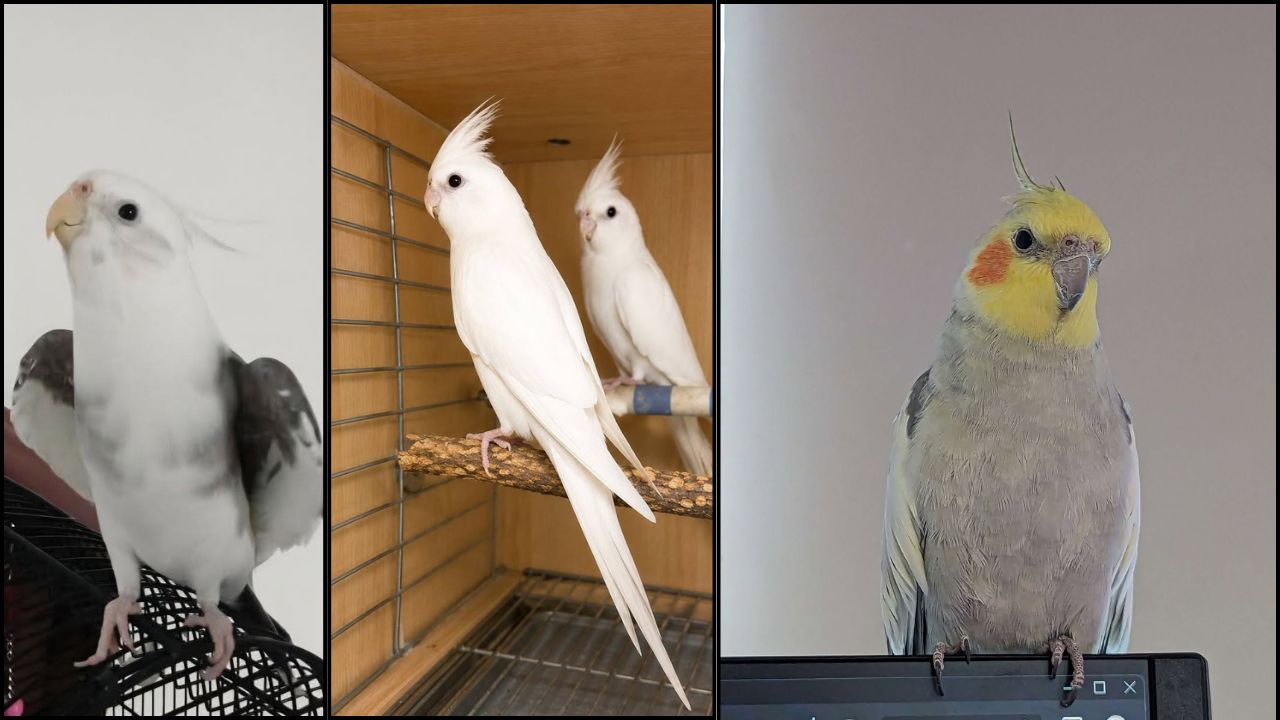

Neil has kept and sold cockatiels at Paradise Pets Swindon since 1988 — over 35 years of experience with one of the UK’s most popular companion birds. Following the record-breaking June 2026 heatwave — which saw temperatures reach 38°C and produced more bird heat stress emergencies than any event Neil can remember — July brings continued elevated temperatures and an owner population that is now, rightly, more alert to the risk. This article is his honest, complete guide to cockatiel heat stress specifically: what it looks like, why cockatiels are particularly vulnerable to misreading, and exactly what to do at each stage.
A man came into the shop last week — two days after the amber warnings from the June heatwave had finally stepped down — with his cockatiel in a carry cage and a look on his face that I know well.
Not panic. Something worse than panic, in a way. The quiet, frightened look of someone who thinks they may have missed something important and is not yet sure whether it matters.
“He’s been a bit off since the hot week,” he said. “Not dramatically. Just not quite himself.”
I looked at the bird. Normal perching posture. Eyes open and tracking. No obvious respiratory distress. But the man was right — there was something. A faint quality of reduced alertness that I have learned to read over thirty-five years. Not a bird in crisis. A bird that had been under sustained thermal stress for several days and had not fully recovered.
I asked him where the cage had been during the heatwave. The living room, he said. Near the window because the bird liked the light. He had moved it once, on the Wednesday when temperatures reached 38°C, but then moved it back on the Thursday because the bird seemed fine.
The bird had not been fine. He had been masking it — as cockatiels do, as all prey birds do — and the three days of accumulated heat stress had not resolved the moment temperatures dropped.
He went to an avian vet that afternoon. The bird was dehydrated, with early signs of heat-related kidney stress. He is recovering. But the man spent a week in the wrong kind of anxious — the kind that comes from not knowing what to look for until the moment it matters.
This article is for every cockatiel owner in the UK who does not want to be in that position in July.
Why Cockatiels Are Specifically Vulnerable — And Specifically Easy to Misread
All cage birds are vulnerable to heat stress. But cockatiels occupy a specific position in that vulnerability spectrum that makes them worth addressing directly rather than folding into a general bird heat article.
Cockatiels are medium-sized birds — larger than budgies and canaries, smaller than the bigger parrots. Their body mass gives them more thermal reserve than a finch, which means they take longer to reach crisis. This sounds like an advantage. It is also a danger. The extra time before crisis is the time during which owners most commonly rationalise away the warning signs — the bird is still on its perch, still eating, still responding — while the cumulative thermal stress accumulates toward a point where the crash, when it comes, arrives fast.
They are also from Australia — which leads many owners to assume heat tolerance that is not unlimited. Wild cockatiels in Australia manage heat through behavioural thermoregulation: finding shade, roosting in hollow trees during the hottest part of the day, choosing cool ground cover. A cockatiel in a cage near a window in a UK summer cannot do any of these things. It has no shade. It cannot move away. The Australian origin means something in a truly arid, dry heat. It means less in a humid UK July, where high humidity specifically impairs panting — the bird’s only cooling mechanism.
And their warning signs genuinely do overlap with relaxed, comfortable behaviour in ways that other species’ do not. The open wings that mean thermal distress in a heat-stressed cockatiel look similar to the casual wing-spreading of a bird that has just been preening and is settling its feathers. The context, the degree, and the combination of signs is what distinguishes them — and owners who have not been specifically taught the distinction will, in many cases, get it wrong.
- Medium body mass means more thermal reserve than small birds — but this delays the crisis rather than preventing it, and means warning signs appear earlier than crisis does
- Australian origin does not mean unlimited heat tolerance — in high humidity, panting is impaired in cockatiels as in all birds, and the adaptation to dry heat does not transfer directly to humid UK summers
- The wing-spreading that is an early heat stress sign genuinely overlaps with the casual wing posture of a relaxed bird — the distinction requires knowing your specific bird’s normal behaviour
- Cockatiels that are managing heat stress actively — that are coping but struggling — look to most owners like birds that are doing fine, until they are not
- The post-heatwave recovery period matters — a bird that appeared to manage the June 2026 event may have sustained cumulative stress that is now showing subtly. Do not assume the worst is over just because temperatures have dropped
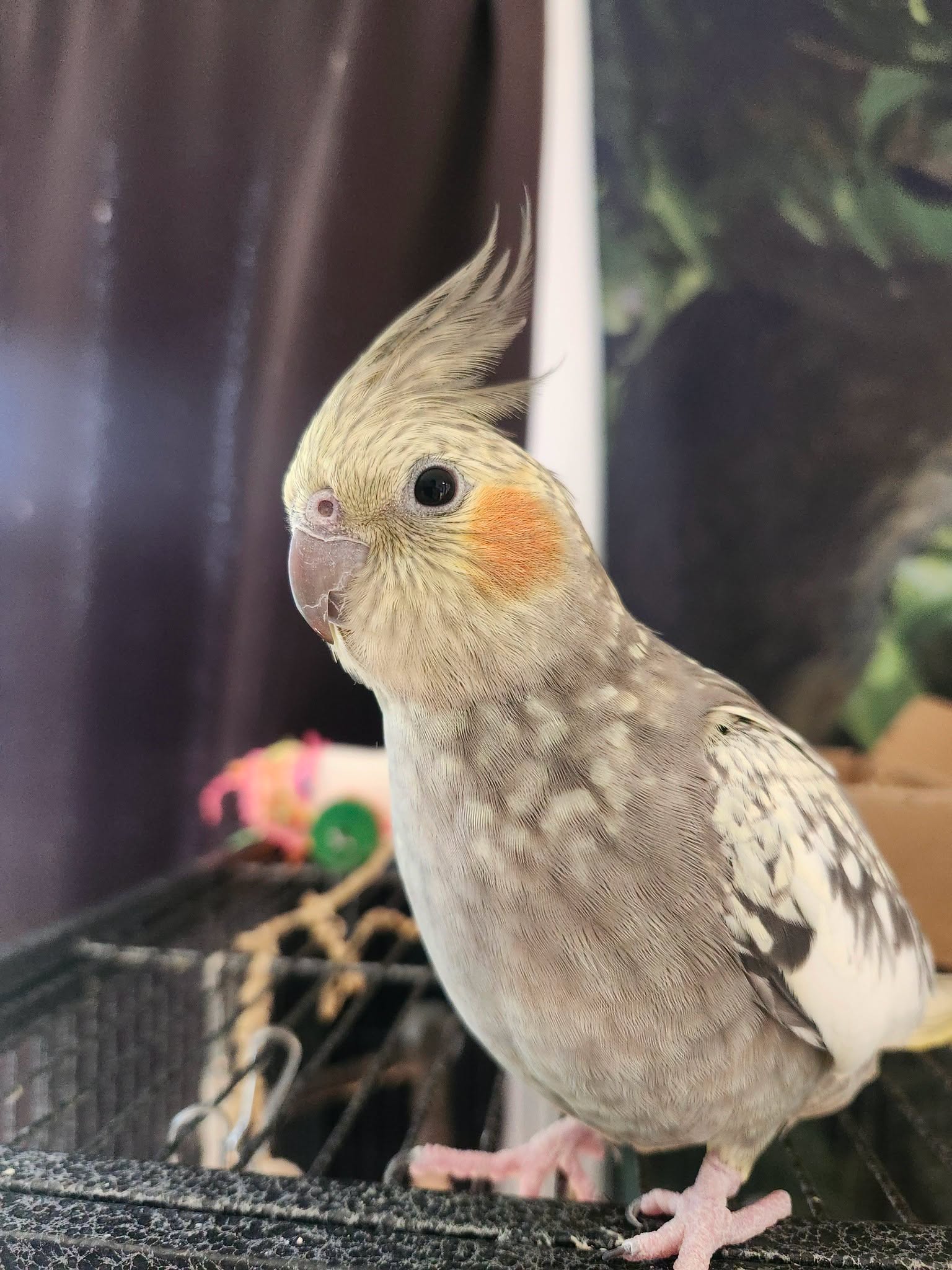
The Warning Signs — In Order of Escalation
I want to give these in order of how early in the heat stress progression they appear — not in order of how alarming they look — because early detection is what determines outcome. The earliest signs are the least alarming. The most alarming signs are also the latest, which means acting on them alone is too late.
Early Signs — Act Now, Not Later
These are the signs that most cockatiel owners, in my experience, either miss entirely or interpret as normal behaviour. They should be treated as the prompt to move the cage, change the water, and start misting. Not to watch and see.
Wings held slightly away from the body. Not dramatically open — not the full, flagged-out posture of severe heat stress. A slight elevation. The bird’s wings are not folded tightly against its body as they normally are at rest. There is a gap, a degree or two of separation, and the wings are held with a specific, maintained effort that is different from the casual, brief stretch of a preening bird.
The test: watch the bird for two minutes without disturbing it. A bird preening or stretching will move the wings, fold them back, and settle. A bird with early thermal distress will maintain that slight separation consistently — it is not a momentary action, it is a held position.
Feathers slicked more tightly than usual against the body. The counterpart to wing-spreading — the bird is reducing the insulating effect of its feathers by compressing them. A cockatiel at a comfortable temperature carries its feathers slightly relaxed. In heat, they lie almost flat, as the bird tries to reduce the insulating layer that would trap body heat.
Increased panting — visible movement of the throat and a slightly open beak. This is the bird’s primary active cooling mechanism engaging. Brief, occasional beak opening in a warm room is normal. Consistent, visible throat movement with the beak open during rest — not during activity or vocalisation — is the respiratory equivalent of the wing-spreading. The mechanism is active because it needs to be.
Seeking the lowest perch available. Heat rises. A bird that has moved to the lowest perch in its cage, or is spending time on the cage floor, may be seeking cooler air. Not always — sometimes a bird on the cage floor is a bird in serious trouble for other reasons. But a bird that was on a high perch and has moved down without obvious reason in warm conditions is worth attention.
- Wings held consistently slightly away from body — maintained, not momentary
- Feathers compressed more tightly than normal resting position
- Visible throat movement and consistent beak opening during rest
- Movement to lower perch or cage floor without obvious non-thermal reason
- Any one of these in conditions above 28°C at cage height is a prompt to act — not to watch further
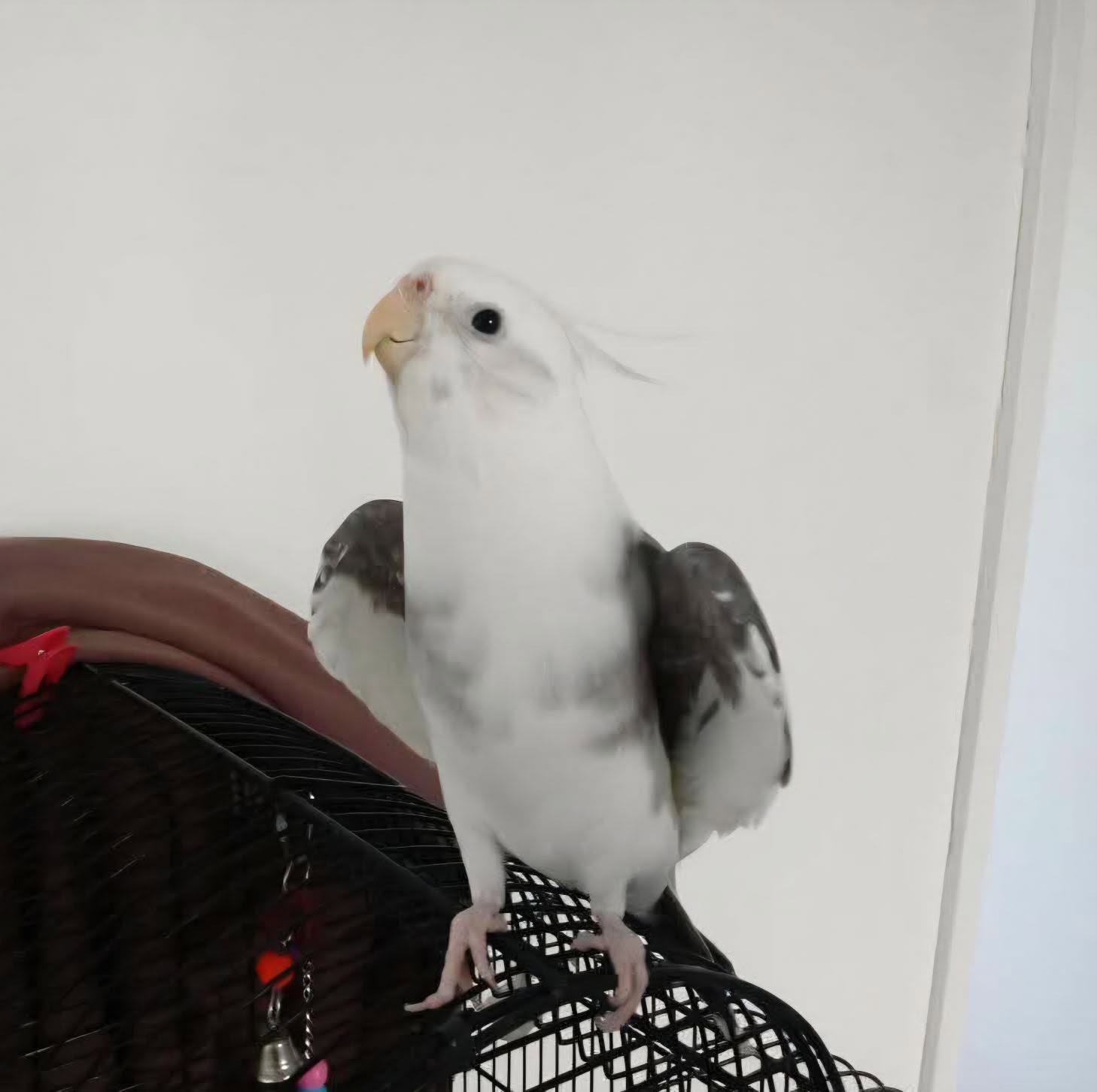
Moderate Signs — Move Faster
If you are seeing any of these, the bird’s thermal regulation is being significantly challenged. The window for simple environmental intervention — moving the cage, misting, providing fresh water — is narrowing. Do these things now, and add the vet call to the same five minutes.
Wings visibly extended and held out from the body. The dramatic version of the early wing-spreading. Both wings are clearly extended, held parallel to the body but away from it, in a posture that takes effort and has no plausible non-thermal explanation if the conditions are warm. This is not a bird stretching. This is a bird doing everything it physiologically can to increase surface area for heat dissipation.
Beak clearly open and panting continuously. Not occasionally, not briefly during activity. Open beak at rest, consistent visible respiratory effort, the throat visibly moving with each breath. The bird is using every available cooling mechanism simultaneously. Panting continuously is the sound of a system under significant strain.
Reduced responsiveness to your voice or approach. A cockatiel that normally turns toward you when you speak, or moves to the side of the cage when you approach, and is now doing neither is diverting the energy that would normally go into social responsiveness toward managing its temperature. This is a significant sign even in a bird that still appears upright on its perch.
Crest drooping. A cockatiel’s crest position is one of its most expressive features. A fully upright crest means alert and engaged. A crest that is drooped flat against the head — in a context where the bird is not asleep — is a sign of significant distress or physical difficulty. In a heatwave context, this is a heat stress sign. In any context, it warrants immediate attention.
- Wings clearly extended and held away from body — a maintained, obvious posture rather than a brief adjustment
- Beak continuously open at rest with visible throat movement
- Reduced or absent social responsiveness — not turning toward you, not moving toward the cage front
- Crest drooped flat while the bird is awake
- These signs together mean: move the cage now, mist now, offer water now, ring the vet while you do all of this
Late Signs — This Is An Emergency
If you are seeing any of these signs, you are not in a situation where environmental management alone is sufficient. You need an avian vet today. Ring while you are doing the cooling steps, not after.
- Bird on the cage floor and not moving purposefully
- Loss of balance or coordination — falling from the perch, unsteady when standing
- Eyes half-closed or fully closed in a bird that is not sleeping — not responding to stimulation
- Open beak panting with no sign of relief despite any cooling measures you have applied
- Convulsions or seizure-like movements
- A bird that was showing moderate signs and has rapidly deteriorated — the speed of deterioration is itself a warning sign
A bird showing late signs has been in thermal stress for longer than the visible crisis suggests. The masking behaviour that birds are evolved to maintain — staying on the perch, staying alert — fails at this stage because there is no longer sufficient physiological reserve to sustain it. Thermal stress at this point has moved beyond a temperature management problem into a physiological emergency affecting multiple organ systems. The earlier you have acted on the moderate signs, the less likely the bird reaches this stage.
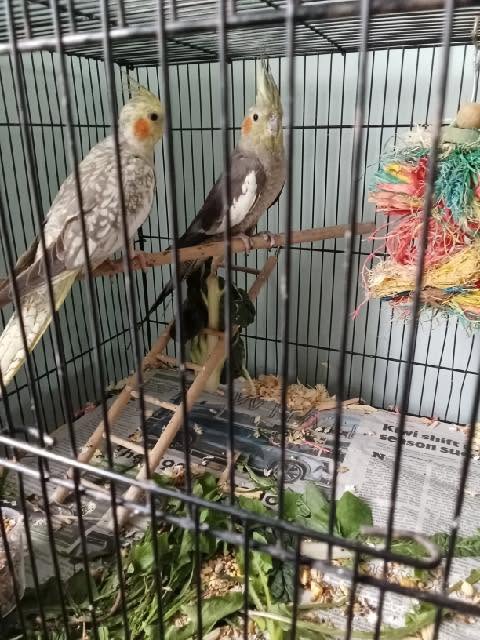
The Emergency Response — What to Do and in What Order
If your bird is showing moderate or late signs, here is the exact sequence that gives the best outcome. Not in sequence — simultaneously.
- Move the cage to the coolest room available — interior room, north-facing if possible, away from any window and any direct or indirect solar loading
- Fine mist of cool water — not cold, not soaking — over the feathers and particularly the feet. The feet have blood vessels very close to the surface and are an efficient heat exchange site in birds
- Fresh cool water — not ice cold — placed at the level the bird currently occupies. If it is on the cage floor, water at cage floor level
- Ring an avian vet while doing the above. Do not wait for the bird to improve before ringing. Ring during the response, not after it
- Gentle room airflow from a fan positioned to move air in the room — not aimed at the cage at high speed, which causes respiratory stress and can chill a wet bird dangerously
- Keep the environment calm and quiet — cover part of the cage, speak quietly, reduce all unnecessary stimulation. Stress increases metabolic heat production at precisely the point when that is least affordable
- Do not put the bird in cold water, under a cold tap, or in front of air conditioning on a cold setting — thermal shock compounds the physiological crisis. Gradual cooling is the target
The Post-Heatwave Period — Why July Still Matters
The June 2026 heatwave peaked at 38°C on Wednesday 25 June with red extreme heat warnings across most of England. Amber warnings stepped down by Friday evening. Most owners — understandably — relaxed once temperatures dropped to the mid-twenties over the weekend.
The man who came in last week with his not-quite-right cockatiel is the reason I want to address this period specifically. Temperatures dropping after a sustained heat event does not mean a bird that was heat-stressed through that event has fully recovered. Cumulative heat stress — particularly when sustained across multiple days and nights without adequate overnight recovery, as happened in June — can leave lingering effects that manifest days after the acute event has ended.
A cockatiel that was heat-stressed through the June event but appeared to manage it may now be showing subtle signs of post-stress depletion. Slightly reduced activity. Slightly reduced vocalisation. A quality of less-than-fullness that owners who know their bird well will detect before it becomes obvious to anyone else.
If your cockatiel was in a cage position that was less than optimal through the June event — near a window, in a room that heated through the day without adequate overnight cooling — and is now seeming slightly subdued, that observation deserves attention rather than reassurance.
- Cumulative heat stress from a multi-day event does not resolve immediately when temperatures drop — the physiological recovery takes time
- A bird that appeared to manage the acute event may be showing post-stress depletion in the days following it
- Subtle signs — slightly reduced activity, slightly less vocal, slightly less responsive — in a bird that was in a suboptimal cage position through the heatwave are worth a vet check, not dismissal
- Dehydration sustained across multiple days can produce kidney stress that is not visible in the bird’s immediate behaviour but is detectable through examination and blood work
- July temperatures in the UK — typically the country’s hottest month on average — mean the risk period is ongoing, not concluded
- Cage position and management established during the June event should be maintained through July, not relaxed because the most dramatic temperatures have passed
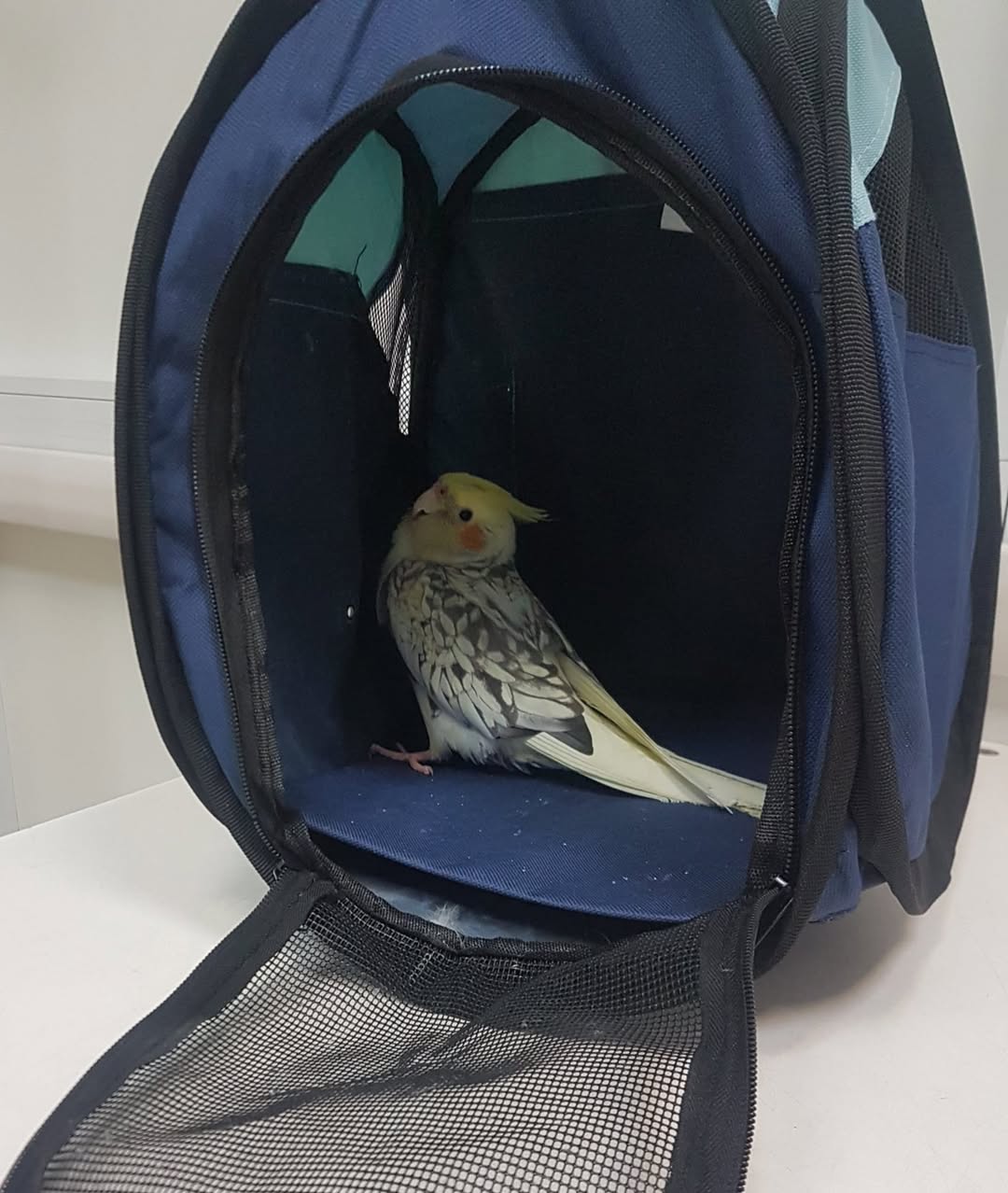
Cage Position for July — What Is and Is Not Adequate
With July following the June event, and UK summer temperatures typically peaking in July, this is not the month to return the cage to its winter position and hope for the best. Here is what adequate looks like specifically for cockatiels in a UK July.
- No cage against a south or west-facing window during any part of the day — glass amplifies solar radiation significantly above ambient air temperature, and what feels comfortable to a person in the room can be ten to fifteen degrees higher at the cage near the glass
- The coolest room in the house — typically an interior room with no external south or west-facing walls, or a north-facing room that receives no direct sun at any point — is the appropriate July position for a cockatiel cage
- A thermometer placed at cage height, read at 2pm on a warm July afternoon, is the most reliable way to know whether the position is adequate. Above 28°C — caution and monitoring. Above 30°C — active management required. Above 32°C — emergency territory for sustained exposure
- The cage position that was comfortable in May is not necessarily adequate in July — the sun is at its highest and the days at their longest in June and July, and the solar loading on any east, south, or west-facing window is greater than at any other time of year
- An outbuilding or garage is not a better option than an interior room unless it is genuinely cooler and well-ventilated — garages can trap heat significantly above ambient outdoor temperature, and any space where a vehicle is started produces carbon monoxide that is rapidly fatal to birds
Frequently Asked Questions
How do I tell if my cockatiel’s wing-spreading is heat stress or just normal behaviour?
The test is duration, context, and combination. A bird preening its wings spreads them briefly, adjusts, and closes them — the action is purposeful and brief. A bird in early heat stress holds the wings slightly away from the body consistently, with no folding back and settling, while sitting at rest rather than actively doing anything. If the wings are slightly separated at rest and you can measure the room temperature at cage height above 28°C, assume thermal stress and act. If the bird is in a cool room and the posture is intermittent rather than held, it is more likely normal behaviour.
My cockatiel was showing wing-spreading last week during the heatwave. He seems fine now. Do I still need to go to the vet?
If he seems completely back to his established normal — same activity level, same vocalisation pattern, same appetite, same social responsiveness — and the cage was managed well enough through the event that you are confident he was not seriously stressed, then a vet visit is not immediately urgent. But if anything is even slightly different — a degree less active, a degree less vocal, eating slightly less than his norm — that subtle difference following a period of known thermal stress is worth a vet check. The man who came in last week thought his bird seemed fine too, until he described the specifics and both of us could see that something had shifted.
Is a misting fan suitable for a cockatiel in July?
A misting fan that produces a fine water mist dispersed into room air — rather than a directed jet of water at the bird — is generally suitable and helpful for the ambient environment. The airflow moves heat away from the cage. The moisture in the air slightly reduces the humidity differential that makes panting less effective in hot, dry indoor air. The concern is always direct, high-velocity airflow aimed at the bird or at a wet bird — that specific combination causes respiratory stress and can produce dangerous chilling. General room misting and airflow, yes. Directed spray and strong airflow directly at the bird, no.
Where can I get urgent cockatiel advice in Swindon this July?
Come and see us at Paradise Pets, Manor Garden Centre, Cheney Manor Industrial Estate, Swindon SN2 2QJ. Or ring us on 01793 512400. If your cockatiel is showing any of the signs in this article, ring an avian vet first — then ring us if you need help identifying the nearest avian specialist or guidance on what to do while you arrange the appointment.
One Last Thing From Me
The man whose cockatiel had the lingering post-heatwave effects rang me three days after the vet visit. The bird had responded well to supportive care — hydration fluids and a short period of close monitoring at the practice. He was home, in a better cage position, eating normally, crest up.
“The vet said the kidneys were slightly stressed,” the man told me. “Nothing permanent. But it would have become permanent if I’d left it much longer.”
He had been watching a bird that looked, in almost every respect, like a bird doing fine. The only indication was that faint quality of slightly-less-than-himself that he had noticed precisely because he had owned the bird for long enough to know what himself looked like.
That is the skill. Not medical knowledge. Not specialist equipment. Knowing your specific bird’s normal well enough to notice when it is subtly different — and trusting that noticing enough to act on it before it becomes something you can no longer miss.
July in the UK is the hottest month of the year on average, following a June that broke records. Check your cage position today. Check the temperature at cage height this afternoon. Know what you are looking at when you look at your bird.
The wing-spreading that means everything is fine and the wing-spreading that means something is wrong look almost identical. The only thing that makes the difference is whether you know how to read what you are seeing.
Now you do.
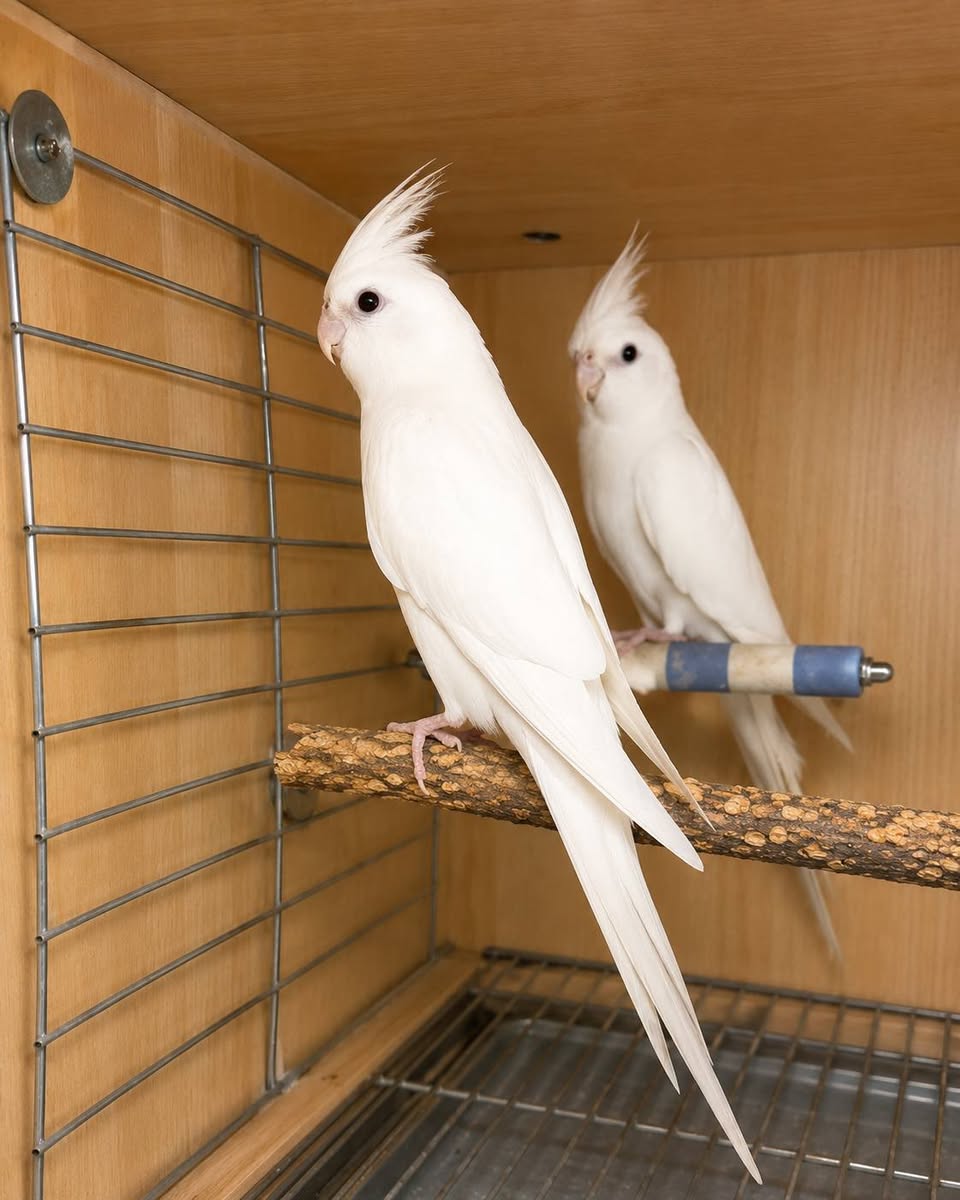
Cockatiel Showing Any Heat Stress Signs? Ring Us Now or Come In
We have been keeping cockatiels and advising on bird heat stress for over 35 years. If your cockatiel is showing any of the signs in this article — or if you noticed something during the June heatwave that you are still not sure about — come in and describe what you are seeing. We will tell you honestly whether this needs a vet today. Free advice, no obligation. That is how we have always done things.