
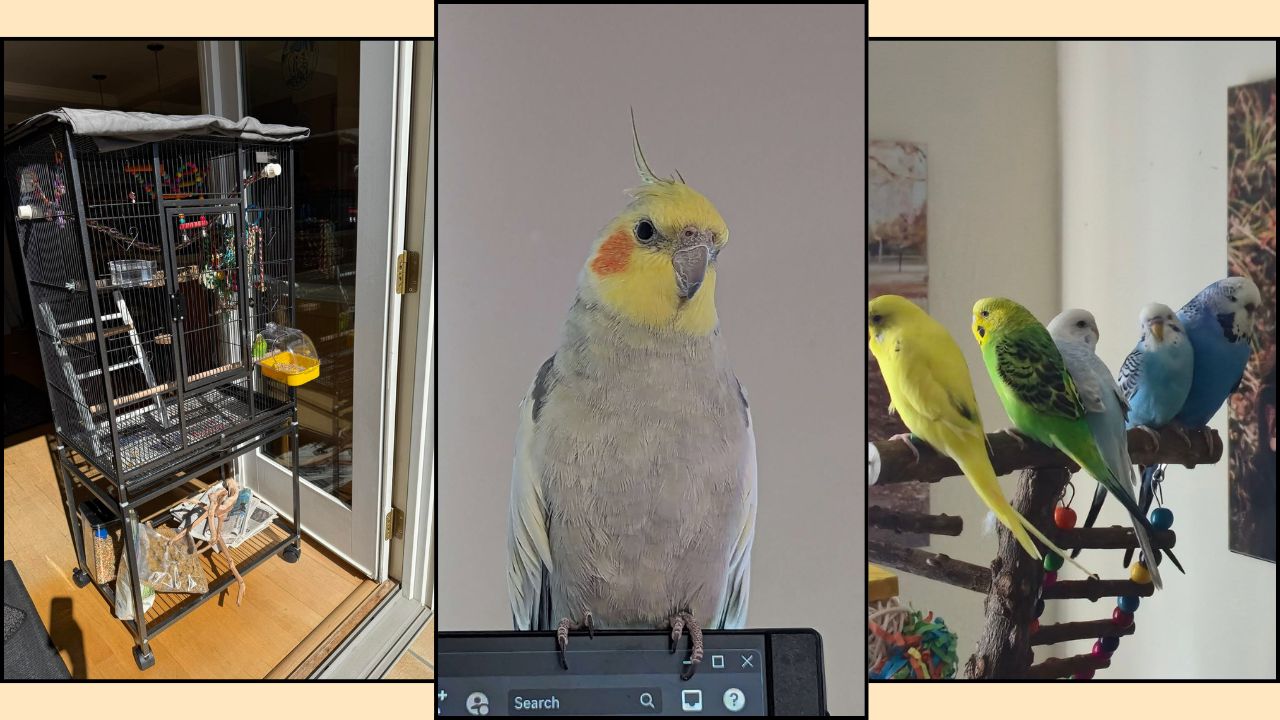

Neil has sold and kept cage birds at Paradise Pets Swindon since 1988 — over 35 years of experience with budgies, cockatiels, and a full range of companion birds. Every summer without fail, he sees the same preventable emergency arrive at the counter or hear about it over the phone. A bird that was fine in the morning is collapsed by afternoon. The owner is certain the bird cannot be too hot — the house felt comfortable to them. This article is his honest account of the heat stress mistake UK bird owners make every summer, why it keeps happening, and exactly what to do before it does.
A woman rang the shop on a Thursday afternoon in July about three summers ago. Her voice told me everything before her words did.
“My cockatiel is on the bottom of the cage,” she said. “He was fine this morning. He’s not moving properly. His beak is open.”
I asked her one question: where was the cage?
“By the window,” she said. “He loves the sunlight.”
There it was.
It had been a warm July day in Swindon — not extreme by any measure, mid-twenties, the kind of day that UK residents consider pleasantly warm rather than dangerously hot. The window had amplified the temperature in the space directly around the cage to something considerably higher. The bird had had no shade, no airflow, and nowhere to go.
She got him to an avian vet within the hour. He survived — just. The vet told her that another thirty minutes would likely have been a different outcome.
This is not an unusual story. I hear a version of it every summer. What makes it so frustrating — and so preventable — is that the owners are never negligent people. They are people who love their birds, who were trying to give them something good, and who did not know that what they were doing was dangerous.
First — Why Birds and Humans Experience Heat So Differently
The fundamental problem is a mismatch in perception. A UK summer day that a human experiences as warm and pleasant can simultaneously be dangerous for a caged bird — and the owner has no physiological signal telling them that. They feel fine. They assume the bird feels fine. The bird does not feel fine.
There are several reasons why birds are so much more vulnerable to heat than their owners realise.
Birds have a higher resting body temperature than humans — typically between 40 and 42 degrees Celsius depending on species. This sounds like it should make them more heat-tolerant, but it means the opposite — they have a much smaller margin between their normal body temperature and the temperature at which heat stress and organ damage begin. A human’s core temperature needs to rise several degrees above normal before serious harm occurs. A bird’s body temperature is already close to that threshold at rest.
Birds cannot sweat. Humans regulate temperature through sweating — a highly efficient evaporative cooling system. Birds have no sweat glands. Their primary heat dissipation mechanism is panting — breathing rapidly with the beak open, which loses heat through evaporation from the respiratory tract. This works, but it is far less efficient than sweating, and it has a critical limitation: it requires the bird to be breathing moist air. In a hot, dry room, panting provides progressively less relief.
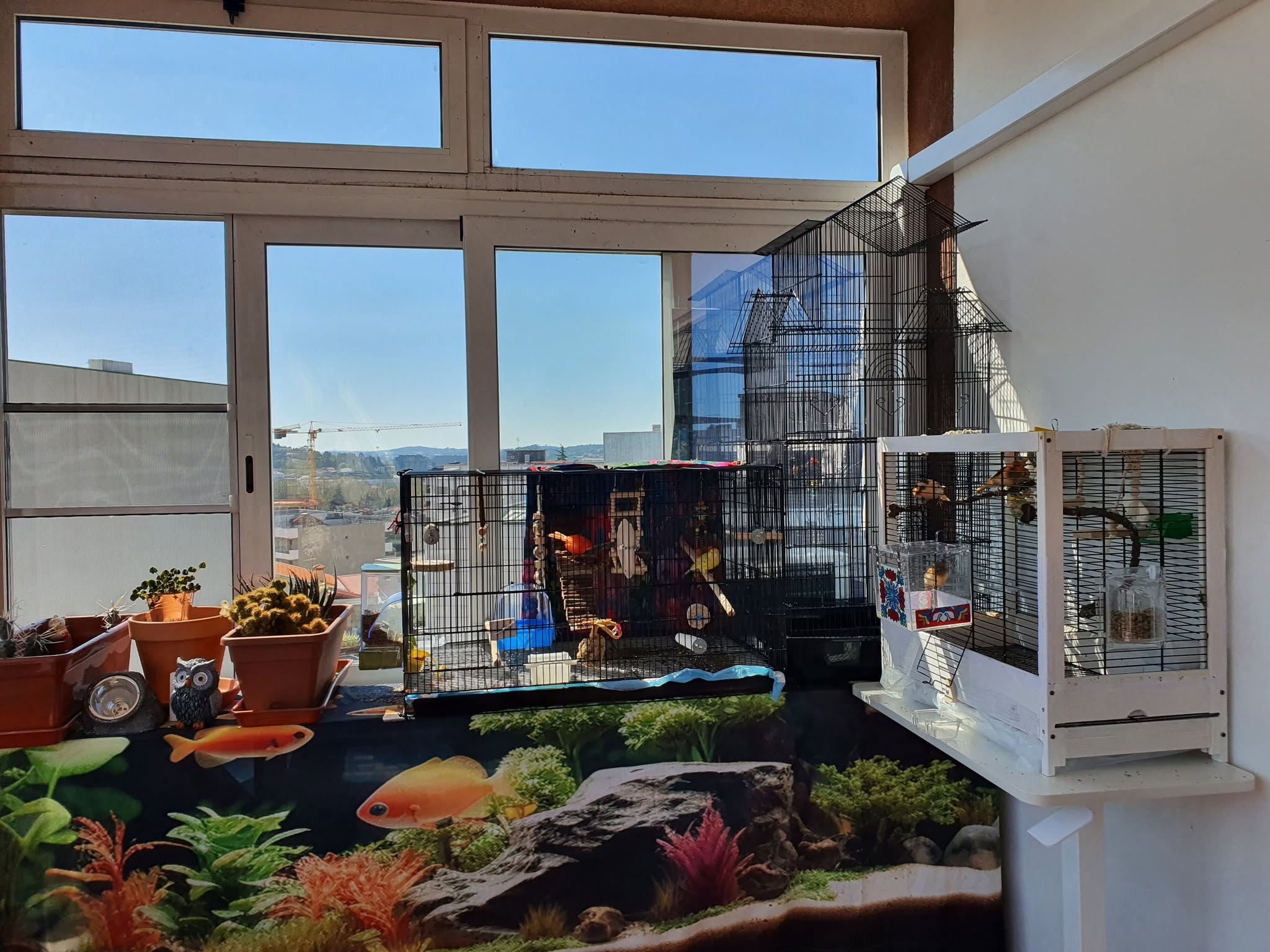
Cages trap heat. The ambient air temperature in a room is not the temperature inside a cage sitting in direct sunlight or near a window. Glass amplifies solar radiation significantly. A window that faces south or west on a July afternoon can raise the temperature of the air directly around a cage by ten to fifteen degrees above the room temperature. The owner feels the room. The bird feels the cage position.
- Birds’ resting body temperature is 40–42°C — they have a much smaller heat margin than humans before organ stress begins
- Birds cannot sweat — they rely on panting, which is far less efficient as temperatures rise
- Cages near windows or in direct sunlight reach temperatures significantly above room temperature
- UK summer temperatures that feel comfortable to a human in a house can be dangerous for a caged bird in a poorly positioned cage
- Heat stress in birds develops faster than owners expect — a bird that appears fine in the morning can be in serious distress by early afternoon if conditions worsen
- Small birds — budgies, finches — reach dangerous temperatures faster than larger birds due to their lower thermal mass
The Specific Mistake — What It Actually Looks Like
The heat stress mistake UK bird owners make is not one thing. It is a pattern — a combination of assumptions and habits that compound each other, and that individually seem reasonable but together create dangerous conditions.
Here is the pattern, as I have seen it play out dozens of times over thirty-five summers.
The owner moves the cage to a sunny position in spring because the bird clearly enjoys the warmth and the light. This is genuinely pleasant for the bird in March and April — mild sun, lower ambient temperatures, the bird sits in the warmth and fluffs up contentedly. The owner sees a happy bird and the habit is established.
By July, the sun is higher, stronger, and present for longer. The temperature on a warm afternoon is twenty degrees higher than it was in March. But the cage is in the same position it has been since April, and the owner’s habit is established. They do not register that the conditions have changed because the change has been gradual and their own comfort has not been significantly affected.
The bird has no way to move away from the heat. It pants. It fluffs. It holds its wings away from its body — a thermoregulation behaviour that owners sometimes misread as the bird being relaxed. The warning signs are present. The owner is not aware they are warning signs.
And then, sometime in the afternoon of a warm July day, the bird is on the cage floor.
The Warning Signs — What Heat Stress Looks Like Before the Crisis
This is the section that can make the difference between a bird that is treated in time and one that is not. Heat stress in birds has a progression — from early warning through to emergency. The earlier it is identified in that progression, the better the outcome.
- Panting — beak open, rapid breathing, tongue sometimes visible. This is the bird’s primary cooling mechanism and its first visible sign of thermal stress
- Wings held slightly away from the body — the bird is trying to increase surface area for heat loss. Not the loose, relaxed wing-droop of a contented bird. A specific, effortful holding-out position
- Reduced activity — a bird that was moving and vocalising in the morning becomes still and quiet as heat stress builds
- Seeking the lowest point in the cage — heat rises. A bird moving to the cage floor or the lowest available perch is trying to find cooler air
- Reduced interest in food and water — though counter-intuitively, a heat-stressed bird may drink more. A bird that has stopped drinking in heat is in serious trouble
- Feathers slicked down tightly against the body — the bird is trying to minimise insulation. The opposite of the fluffy posture seen in a cold or unwell bird
- Bird on the cage floor, unsteady, or unable to perch properly
- Beak open and panting continuously with no sign of relief
- Eyes half-closed, bird unresponsive to your voice or approach
- Convulsions or loss of coordination
- Any bird showing these signs needs cooling and an avian vet immediately — not monitoring, not waiting to see if it improves
What to Do If Your Bird Is Already Heat Stressed
If you come home, or come into the room, and your bird is showing the crisis signs above — here is exactly what to do. The sequence matters.
- Move the cage immediately to the coolest room in the house — not outside, not into air conditioning set to very cold. A cool indoor room is the goal
- Offer fresh cool water immediately — not ice cold, not warm. Room temperature or slightly cool. Place it directly accessible to wherever the bird currently is
- Mist the bird lightly with cool water from a spray bottle — not soaking, not cold. A fine mist over the feathers and feet. This assists evaporative cooling
- Do not put the bird directly into cold water or directly in front of a fan at full power — rapid cooling is as dangerous as slow cooling. Gradual is what you are aiming for
- Contact an avian vet while you are doing the above — do not wait to see if the bird improves before making contact. Call while you cool
- Keep the bird calm — stress increases heat production. Speak quietly, avoid sudden movements, cover part of the cage to reduce visual stimulation if the bird is distressed
A bird that is panting but still upright and responsive is in a better position than one that is on the floor — but both need the same immediate cooling response and both warrant a vet call. Do not wait for full recovery before contacting a vet. Heat stress causes internal damage that is not always visible in the bird’s immediate behaviour, and a bird that seems to have recovered may have sustained kidney or liver damage that requires treatment.
The Prevention — What to Actually Do Through a UK Summer
Prevention is simpler than the emergency it prevents. Here is what adequate summer bird care actually looks like — not complicated, not expensive, not time-consuming. Straightforward habits that eliminate the risk.
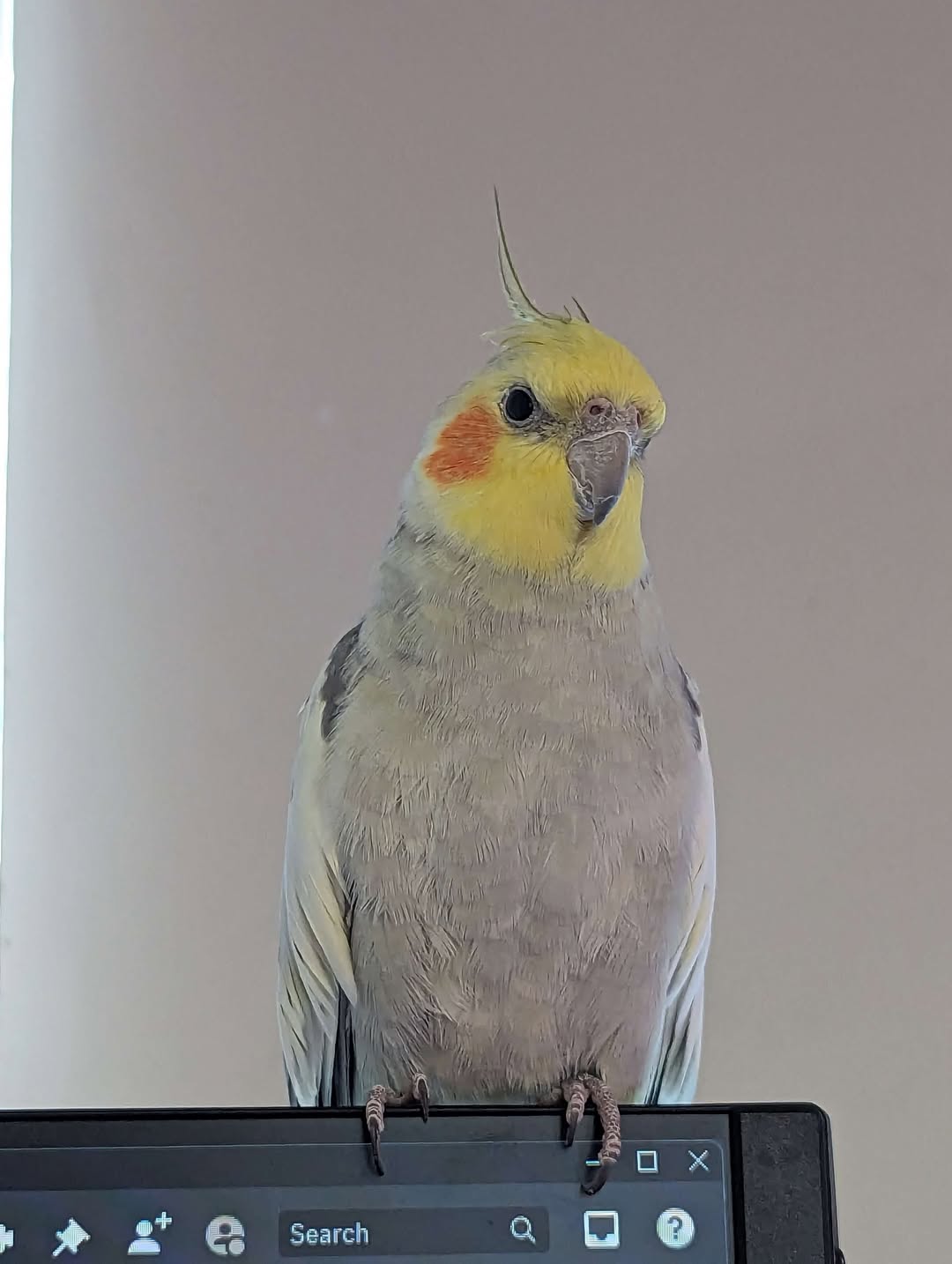
Cage Position
This is the most important single factor. A cage in the right position in summer is the foundation of everything else.
- No cage against a window or in direct sunlight at any point during a warm day — even a few hours of direct afternoon sun through glass creates dangerous conditions
- South-facing and west-facing windows are the highest risk in a UK summer — afternoon sun through these windows in July and August is intense and sustained
- Move the cage to an interior wall position for summer if it has been near a window — the difference in temperature is significant and the change takes minutes
- Ensure the cage position has natural airflow — not in a corner with no air movement, not in a room where doors and windows are kept closed
- The coolest room in the house is usually the best summer position — north-facing rooms, rooms that do not receive direct sun, rooms with thick walls
Airflow and Ventilation
Airflow is the second most important factor after cage position. Moving air assists the bird’s panting mechanism — it increases the rate of evaporative cooling from the respiratory tract. Still, hot air provides no relief. Gentle moving air does.
- Open windows in the cool of the morning to bring cool air into the house before the day warms — then close windows and draw curtains on the sunny side before the heat builds
- A gentle fan positioned to create airflow in the room — not directed straight at the cage, but creating general air movement — helps significantly
- Never use an air conditioning unit to cool a room from very hot to very cold rapidly with a bird in it — the sudden temperature drop is a respiratory shock. Cool gradually
- Cross-ventilation — opposite windows or doors open at the same time — creates through-flow that is more effective than a single open window
Water
Fresh, cool water available at all times through summer is non-negotiable. A bird that is panting — even mildly — is losing moisture through respiration and needs to drink to compensate.
- Change water at least twice daily in warm weather — water warms quickly in a hot room and warm water provides less cooling relief than cool water
- Offer a shallow bath dish during warm weather — most cage birds will bathe when warm and the evaporation from wet feathers provides significant cooling
- A light misting with a spray bottle once or twice during a warm day assists cooling even in birds that do not actively bathe — most birds accept this readily once accustomed
- Ensure water is accessible from wherever the bird is resting — a bird that has moved to the cage floor in heat needs water accessible at floor level
The Temperatures That Matter — What the Numbers Actually Mean
One of the reasons heat stress catches UK bird owners off guard is that the temperatures involved are not the extreme numbers associated with European heat waves. The danger zone for caged birds is lower than most owners assume — and the temperatures that create it are entirely normal for a UK summer.
- Below 25°C ambient. The comfortable range for most cage birds. No specific heat management required beyond normal fresh water provision and reasonable cage positioning.
- 25–30°C ambient. The caution zone. At these temperatures, cage position becomes important. Direct sunlight through glass can raise the local temperature around a cage to dangerous levels even when the room feels comfortable. Ensure shade, airflow, and fresh water. Monitor the bird for early warning signs.
- 30–35°C ambient. Active management required. This temperature range in a UK home without air conditioning — which applies to the majority of UK homes — is genuinely dangerous for caged birds. Cage must be in the coolest available position, airflow must be active, water must be refreshed frequently, and the bird must be checked regularly.
- Above 35°C ambient. Emergency territory for small birds. At these temperatures, heat stress develops rapidly regardless of other measures. If outdoor temperatures are forecast to exceed 35°C — as they have in the UK in recent summers — birds should be actively managed, with cool damp towels near the cage, regular misting, and immediate vet contact if any warning signs appear.
- The window multiplier. Whatever the ambient temperature is, direct sunlight through glass adds a further ten to fifteen degrees to the local temperature around the cage. A 24°C room with the cage in direct afternoon sunlight is a 35–38°C environment for the bird. This is the most important number to hold in mind.
Species-Specific Considerations
Not all cage birds respond to heat in exactly the same way — and knowing the specific vulnerability of the species you keep helps you calibrate your response appropriately.
Budgies
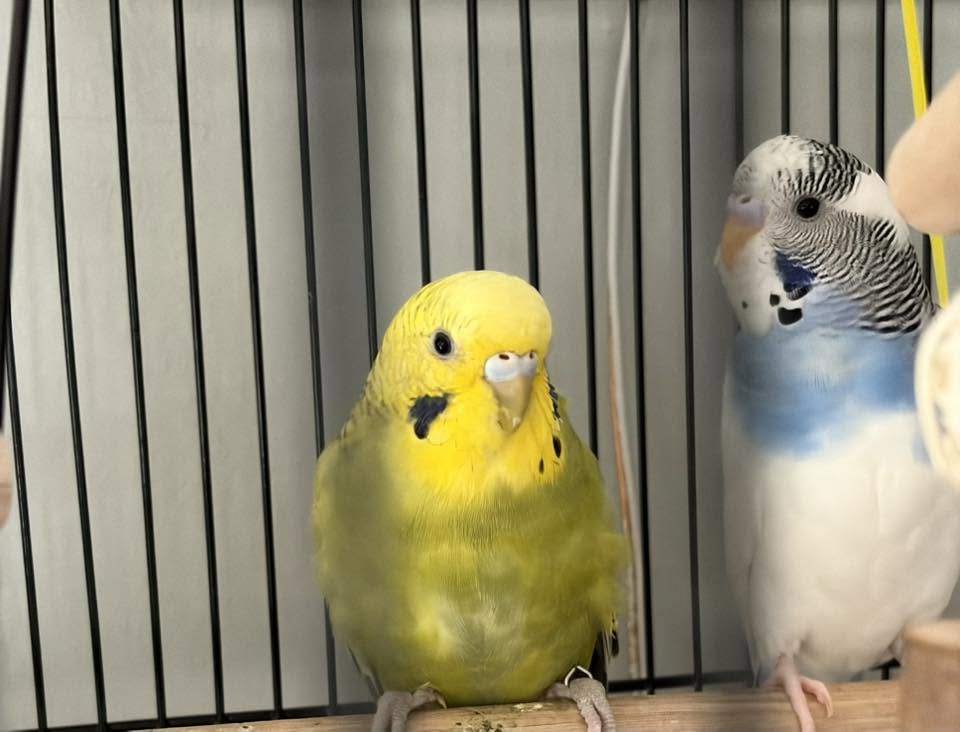
Budgies are from Australia — specifically from the hot, arid interior — and are arguably more heat-adapted than most cage birds kept in the UK. They tolerate warmth better than cockatiels or many finches. But this relative tolerance has limits, and a budgie in a cage in direct UK summer sun will still overheat. Their small body mass means they reach dangerous temperatures faster than larger birds once conditions worsen. Do not use their Australian origin as a reason for complacency.
Cockatiels
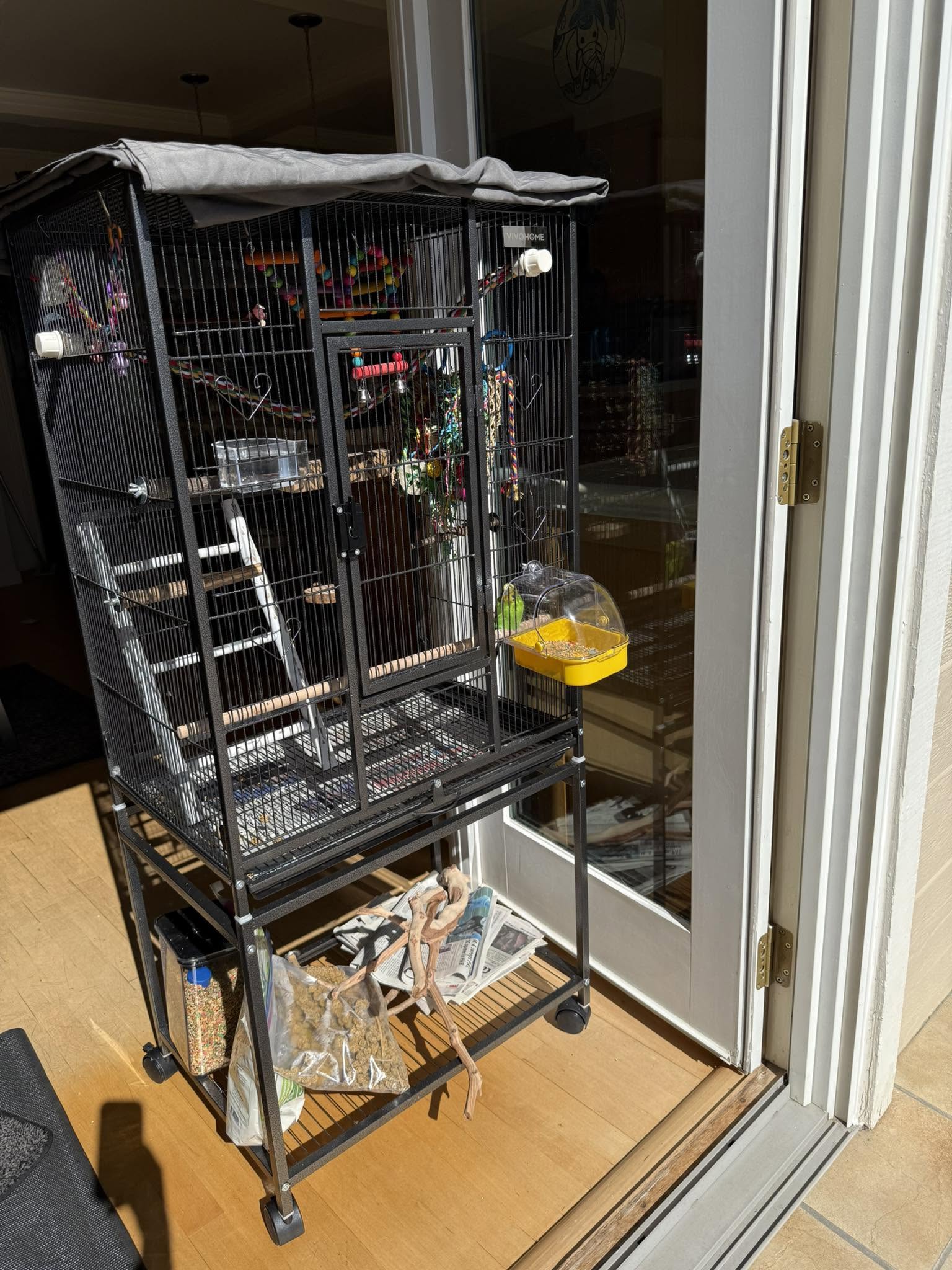
Cockatiels are also from Australia but from a wider range of habitats than budgies. They are moderately heat-tolerant but show heat stress signs clearly — open-beak panting and wing-spreading in cockatiels is very visible and should be acted on immediately. The woman whose bird I described at the start of this article had a cockatiel. They are not as robust as their size might suggest.
Canaries and Finches
Small finches — zebra finches, canaries, Bengalese finches — have the lowest thermal mass of any commonly kept cage bird and are the most vulnerable to rapid temperature change. Their small body size means they reach critical temperatures faster and have less physiological reserve. In a hot room, a small finch can deteriorate from comfortable to critical faster than any other species I keep or sell. They require the most careful summer management.
Parrots
Larger parrots have more thermal mass and more physiological reserve than small birds, but they are not immune to heat stress. A large parrot in a very hot, unventilated room will overheat. The warning signs are the same — open-beak panting, wing-spreading, reduced activity — but the progression to crisis is typically slower than in small birds, giving more time to respond.
What Not To Do — The Responses That Make Things Worse
| What owners do | Why it makes things worse | What to do instead |
|---|---|---|
| Put the bird directly into cold water or under a cold tap | Rapid cooling causes thermal shock — the sudden temperature change constricts blood vessels and can cause cardiac stress in a bird that is already physiologically compromised. It can also cause hypothermia if the bird becomes fully soaked in cold conditions | Cool gradually — fine mist of cool water, move to a cooler room, offer cool drinking water. The goal is slow reduction, not rapid shock |
| Direct a powerful fan straight at the cage | High-velocity airflow directed at a bird causes respiratory stress and can chill a wet bird dangerously quickly. It can also cause eye irritation and feather damage | Use a fan to create general room airflow — positioned to move air in the room rather than blast the cage directly. Gentle movement is what you want |
| Assume the bird will manage because it seemed fine all morning | Heat stress develops fastest in the hottest part of the day — typically 1pm to 4pm in a UK summer. A bird that was active and well at 9am can be in serious distress by 2pm if conditions have worsened through the day | Check the bird at midday and early afternoon on warm days, not just morning and evening. The worst of the heat arrives several hours after the temperature starts rising |
| Wait until the bird is on the cage floor before acting | A bird on the cage floor is already in advanced heat stress. Acting at the first signs — panting, wing-spreading, reduced activity — gives a much better outcome than waiting for collapse | Know the early warning signs and act on them. Early intervention is the difference between a bird that recovers fully and one that sustains lasting damage |
| Move the cage back to its usual sunny position once the bird has recovered | A bird that has experienced heat stress once is not immune to experiencing it again. If the cage position caused the problem, the position needs to change permanently — not just until the bird recovers from this episode | Reassess the cage position for the whole of the summer season and every subsequent summer. The bird’s comfort through the year matters more than the position it was in before |
Planning Ahead — The Summer Habit That Prevents All of This
Everything above happens reactively — responding to heat stress that has already developed. The better approach is a small amount of proactive planning at the start of summer that prevents the reactive situation from arising.
- In May or early June, before the hottest weather arrives, assess the cage position for summer — where will the sun fall in July and August, and is the cage in the path of it?
- Identify the coolest room or the coolest position in the room and plan to move the cage there for the summer months if the current position is at risk
- Check the weather forecast on warm days — if temperatures above 28°C are expected, that is the day to be more attentive, not the day to leave the bird unsupervised for long periods
- Tell anyone in the household who might be responsible for the bird what the warning signs look like and what to do if they see them — heat stress emergencies often happen when the primary owner is out
- Have the contact details of an avian vet saved in your phone before you need them urgently. Searching for an avian vet while a bird is in crisis costs time you cannot afford
Frequently Asked Questions
My bird is from a hot country — surely it can handle a warm UK summer?
The origin of the species is less relevant than the conditions of the individual bird in your home. A budgie from the Australian outback in the wild has shade, airflow, and the ability to move freely to find cooler conditions. Your budgie in a cage by a window in July has none of those options. The species’ natural heat tolerance does not transfer to an animal in a fixed, enclosed space with no ability to thermoregulate through movement. Origin is not a safety guarantee.
How do I know if the room is too hot for my bird?
A simple thermometer placed at cage height is the most reliable answer. The temperature at cage height — particularly if the cage is near a window — is often several degrees higher than a wall thermostat or your own perception of the room. If you are uncertain, measure. A reading above 28°C at cage height on a summer afternoon should prompt cage position reassessment. Above 32°C is a situation requiring active cooling.
Can I put ice in the bird’s water to keep it cool?
A small amount of ice in the water dish to keep drinking water cool is fine. You are not trying to make the water very cold — just cooler than room temperature. The risk is if the bird steps into the water dish, which some birds do when hot. Very cold water contact on a bird’s feet causes a rapid temperature shock. Keep the water cool but not ice-cold, and use a dish small enough that the bird cannot immerse itself.
Should I leave a window open when I go out on a warm day?
This depends on the window position and the expected temperature. A shaded, north-facing window open on a 22°C day is a good idea — it creates airflow. A south-facing window open on a 30°C afternoon creates a heat funnel rather than cooling. Open windows in the early morning to bring cool air in, then close and shade the sunny side before you leave on a warm day. The house stays cooler if you trap the morning cool air inside rather than letting afternoon heat in.
Where can I get advice on bird heat management in Swindon?
Come and see us at Paradise Pets, Manor Garden Centre, Cheney Manor Industrial Estate, Swindon SN2 2QJ. Or ring us on 01793 512400. We can advise on cage positioning, ventilation, appropriate summer products — and we will give you the avian vet contacts you should have saved before you need them in an emergency.
One Last Thing From Me
The cockatiel survived. The woman who rang me that July afternoon came in a week later to buy a thermometer for the room where the cage lived and a spray bottle for summer misting. The cage had been moved to an interior wall away from any window.
“I had no idea,” she said. “He loves the sun. I thought I was giving him something good.”
She was. In March and April, when the sun was mild and the ambient temperature was fifteen degrees, that window position was probably exactly right. By July it had become dangerous — and the change had been gradual enough that neither of them had noticed it happening.
That is the thirty-five year truth about heat stress in UK cage birds. It is not dramatic. It is not the result of obviously bad decisions. It is the result of a habit formed in one season persisting unchanged into a season where it causes harm.
Check the cage position. Check the temperature. Check the bird in the early afternoon, not just the morning.
That is all it takes.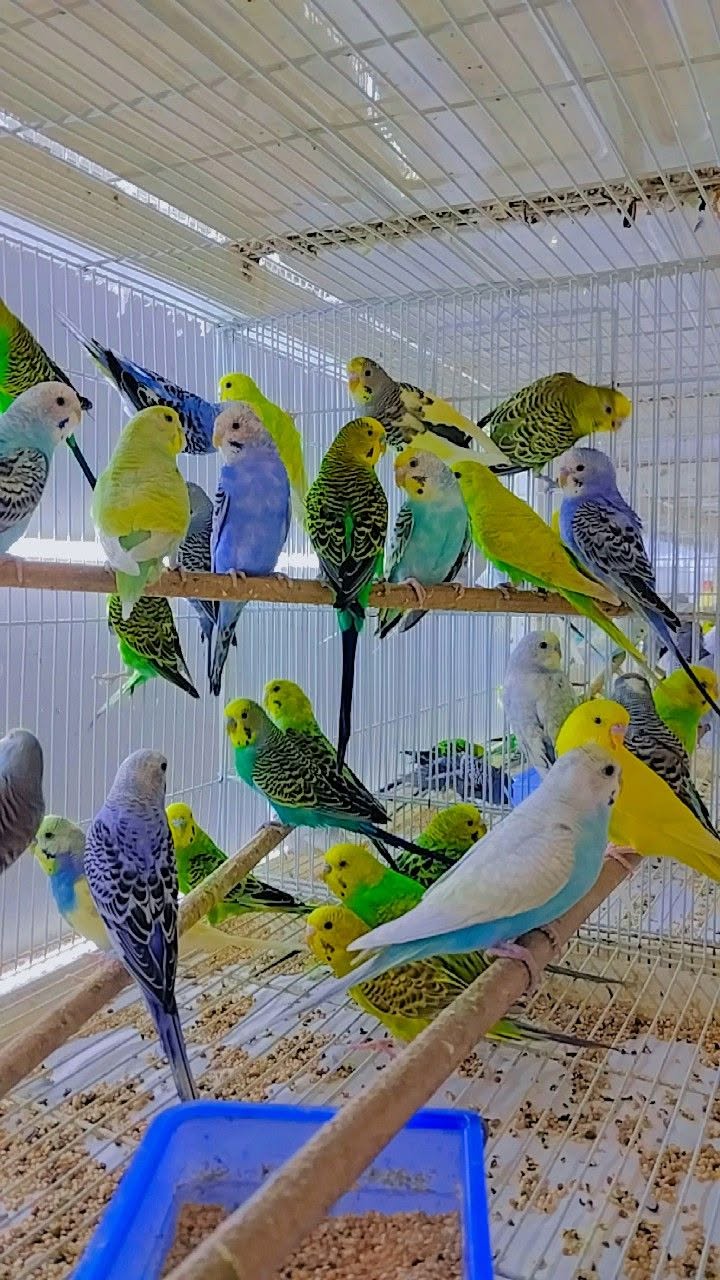
Worried About Your Bird in the Summer Heat? Come In and Let’s Talk It Through
We have been keeping and advising on cage birds for over 35 years. Heat stress is one of the most preventable emergencies we see — and one of the quickest to cause serious harm. Come in before it happens, not after. Free advice, no obligation. That is how we have always done things.
⭐ Customer Reviews
Amazing Bird Selection
Had a lovley visit today,staff were very friendly and very helpful,such a great petshop,their selection of birds is incredible,really impressed,thank so much to the staff at Paradise Pets

Friendly Helpful Staff
I have been coming to this place for years and they have a great stock of food for all types of pets. Have a great selection of small mammals and a lot of birds. Staff are friendly and helpful.

Great Quality Hutch
Bought a guinea pigs hutch and run combo, very happy with the service, the hutch was put in my car for me without even asking for help. The wood quality is very good, the instructions easy to follow and we are extremely happy with the fully built hutch. A good size for 2 guinea pigs

Response from Paradise Pets | Wiltshire
Thank you Melanie Latus Nice to provide services to you.
Best Bird Shop Around
It’s the best pet shop in and around Swindon. They always have an amazing selection of birds and all you need to keep them happy. I keep birds myself and the guys there are happy to answer questions and really know their stuff. I have seen budgies etc. in chain pet shops in the area looking really unhealthy and ill – I wouldn’t go anywhere else than Paradise Pets for animals.

Highly Recommended Bird Shop
I could not praise this shop enough. Really helped my Grandson buy his first bird and he’s loving it. Travelled from Somerset and was welcomed with open arms.

Great Shop with Competitive Prices
Great shop with amazing selection for small animals, hamsters, mice ect, highly recommend!
Also has a great selection for dogs & cats too & very competitive prices! 💖

