
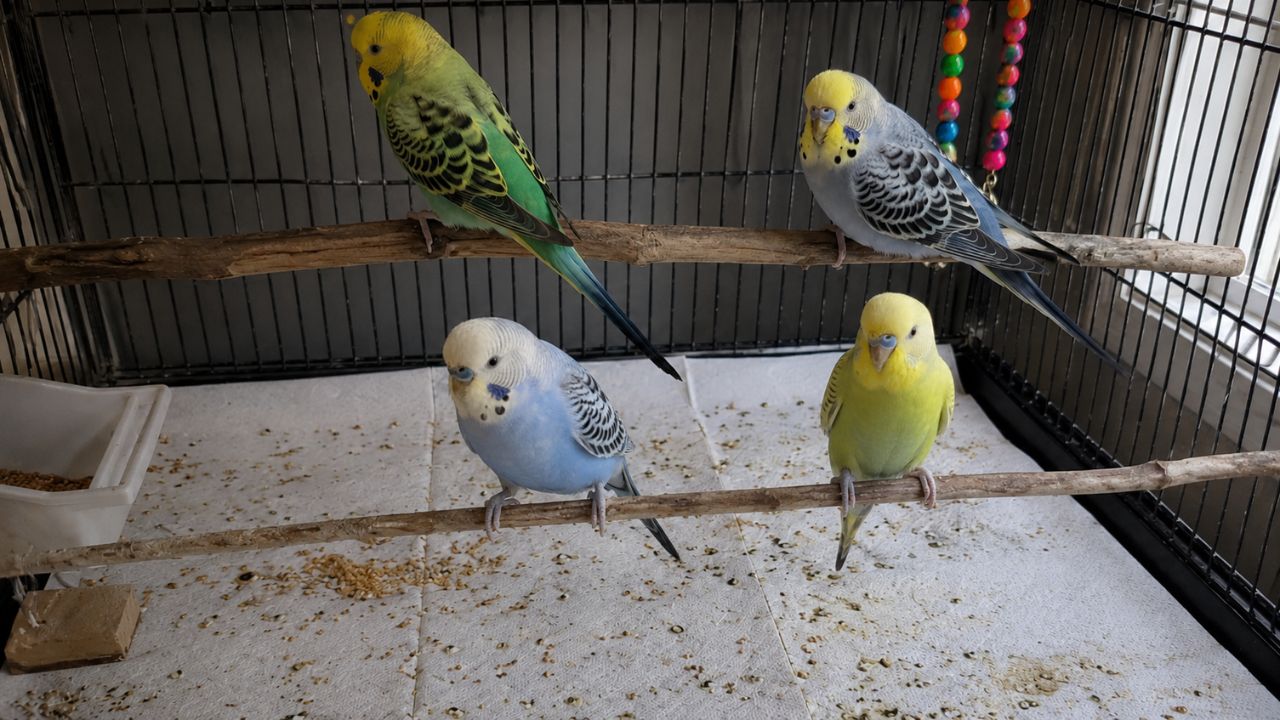

Neil has kept, bred, and sold budgies at Paradise Pets Swindon since 1988 — over 35 years of first-hand experience with these birds. In that time, he has answered more “is my budgie’s poo normal?” questions than he can count. This article is his honest, practical guide on what your budgie’s droppings are really telling you.
A lady came into the shop last Tuesday holding her phone out at me. “Neil,” she said, “I know this is going to sound strange, but can you look at this?” On the screen was a close-up photo of the bottom of her budgie’s cage. Droppings. Lots of them. “Is this normal? She seems to be pooping more than usual, and I don’t know if I’m imagining it.”
She was not imagining it. And she was not the first person to ask me about budgie droppings, and she will not be the last. In 35 years of running Paradise Pets, I have answered this question hundreds of times — and most owners feel a bit awkward asking it, which is exactly why I want to address it properly here.
The honest truth is this: your budgie’s droppings are one of the most reliable health indicators you have. A bird that hides everything else — illness, pain, weakness — cannot hide what is coming out the other end. If you know what to look for, the bottom of the cage tells you more about your budgie’s health than the bird itself ever will.
So let me walk you through what 35 years of staring at budgie cages has taught me. What is normal. What is not. What different colours and consistencies mean. And when “pooping a lot” is just normal budgie behaviour versus when it is a warning sign that needs urgent attention.
This article is the conversation I have at the counter every week, written down properly. Please read it — it might save your bird one day.
How Often Do Budgies Actually Poo?
Let me answer the first question most owners have, because the number alone often surprises people. A healthy adult budgie produces between 40 and 50 droppings a day. Some birds produce even more — up to 60 or so on a busy day. That is roughly one dropping every 15 to 20 minutes during waking hours.
Yes, you read that right. Budgies poo a lot. It is normal. They have a fast metabolism, a small digestive system, and they eat almost continuously through the day. Frequent droppings are simply how their body is designed to work.
So when an owner comes in worried because “my budgie keeps pooing all the time” — usually, that bird is doing exactly what it should be doing. What you should be watching for is not the quantity, but the quality. The colour, the consistency, the shape, and whether anything about them has changed recently.
What A Normal Budgie Dropping Looks Like
This is the part that surprises most new owners, because a budgie dropping has three distinct parts and most people do not realise this until I point it out.
- The dark green or brown solid part — this is the actual faeces, the digested food. Should be firm but not hard, well-formed, and in a small coil shape.
- The white or cream creamy part — this is the urate, which is the solid form of urine in birds. Should be white to off-white, not yellow.
- A small clear liquid component — this is the actual urine, in liquid form. There should not be much of it in a healthy budgie.
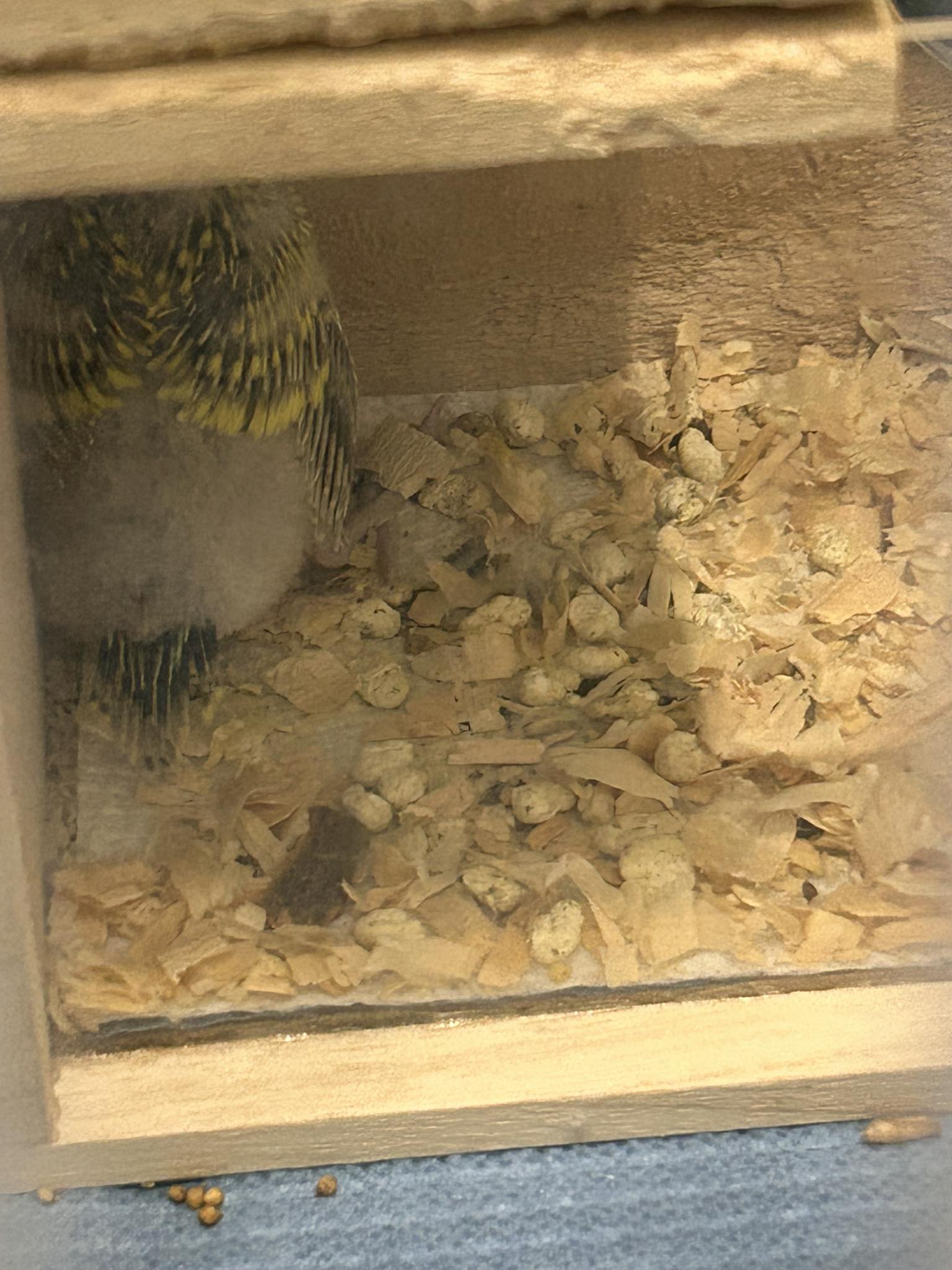
All three parts should be present in roughly equal proportions in a normal dropping. The dark solid bit and the white urate are usually visible together, with maybe a small wet ring around them. That is what healthy looks like.
If you have never really looked properly at your budgie’s droppings before, go and have a look now. Get familiar with what your bird’s normal looks like. Because the moment “normal” changes, that is when you need to pay attention.
What Different Dropping Colours Mean
Colour is the single most useful indicator of what is going on inside your bird. After 35 years, I can usually narrow down what is wrong with a budgie just by looking at the bottom of the cage. Let me walk you through what each colour tells me.
| Colour | What It Usually Means | Urgency |
|---|---|---|
| Dark green / brown | Normal — this is what a healthy budgie’s droppings look like on a standard seed and pellet diet | None |
| Bright green | The bird has eaten a lot of greens recently — kale, spinach, broccoli. Normal if you have been feeding fresh greens. | None (if dietary) |
| Yellow or mustard | Possible liver problem, or in some cases a bacterial infection. Concerning. | See a vet within days |
| Red or pink | Could be from eating red food (beetroot, pomegranate) — or could be blood. Investigate carefully. | Same-day vet if dietary cause unclear |
| Black or tarry | Often indicates digested blood — usually internal bleeding. Serious. | Same-day vet emergency |
| Very pale or grey | Possible liver disease or chronic illness. Always concerning. | Vet visit within days |
| White only (no faecal part) | Bird is not eating. Major warning sign. | Same-day vet |
What Different Consistencies Mean
Equally important to colour is consistency. A change in how firm or runny the droppings are tells you a great deal about what is happening inside.
- Watery droppings (polyuria) — more liquid than usual, but solid part still present. Could be stress, dietary, or the start of illness.
- Diarrhoea — no solid form, completely loose. Always a concern. Dehydration risk.
- Very small, dry, hard droppings — bird may not be eating enough, or could be dehydrated.
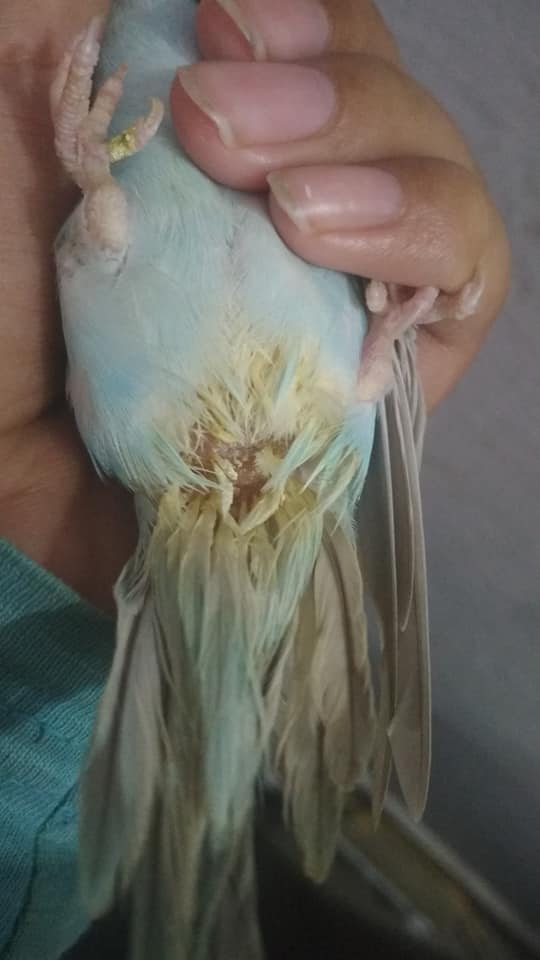
- Pasty droppings stuck around the vent — gut issues, possibly infection. The bird may need help cleaning, but the cause needs investigating.
- Foamy or bubbly droppings — possible bacterial or parasitic infection. Vet visit needed.
- Undigested seeds visible in droppings — digestive issue. The bird’s gut is not processing food properly.
A one-off odd dropping is not necessarily cause for panic. But if the change persists over more than a day, or if you see multiple unusual droppings together, that is when it becomes a warning sign.
The 6 Main Reasons For Changes In Budgie Droppings
After 35 years, I can usually narrow down what is causing a change in droppings by asking a few questions. Here are the six most common causes I see in the shop.
Cause 1: Diet Changes — The Most Common Cause
This is by far the most common reason I see for sudden changes in budgie droppings, and the easiest one to identify. If your bird has just started eating something new — fresh greens, a new fruit, a new pellet brand, a treat you have not given before — the droppings will change.
Bright green droppings after a meal of kale or spinach? Normal. Red droppings after eating beetroot or pomegranate? Normal. Watery droppings after a juicy piece of cucumber or apple? Also normal — fresh food contains more water than seed, so the urine component increases.
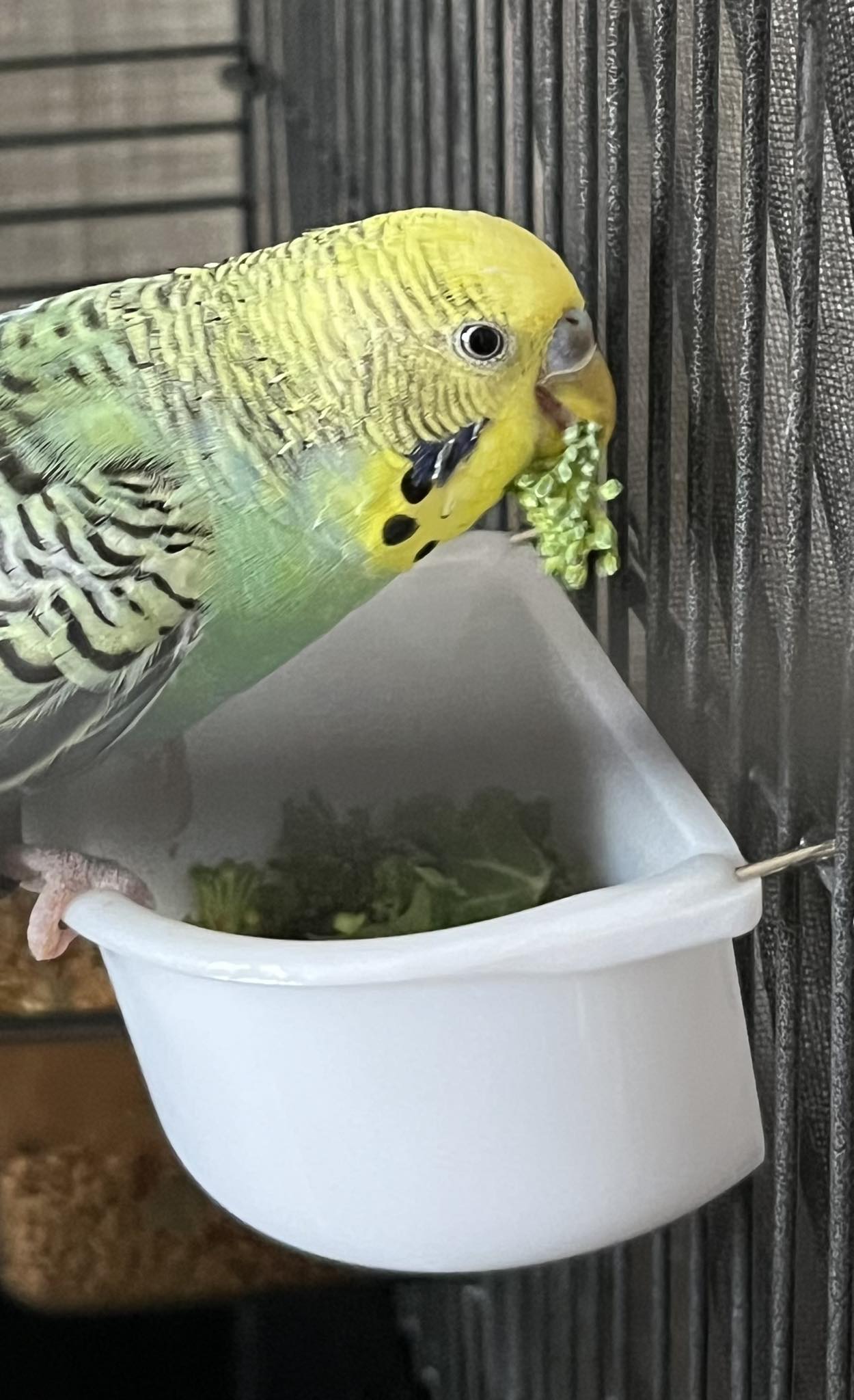
The key here is whether the change makes sense with what you have been feeding. If you started a new food and the droppings changed within a day, the food is almost certainly the cause. The droppings should return to normal within a day or two of removing the new item, or as the bird adjusts.
What to do
Think back to what you have fed in the last 24 to 48 hours. If you can identify a new food that matches the timing of the change, that is probably the cause. If the bird is otherwise well — active, eating, chirping — just monitor for a day or two and the droppings should return to normal. If they do not, look at the other causes below.
Cause 2: Stress And Environmental Changes
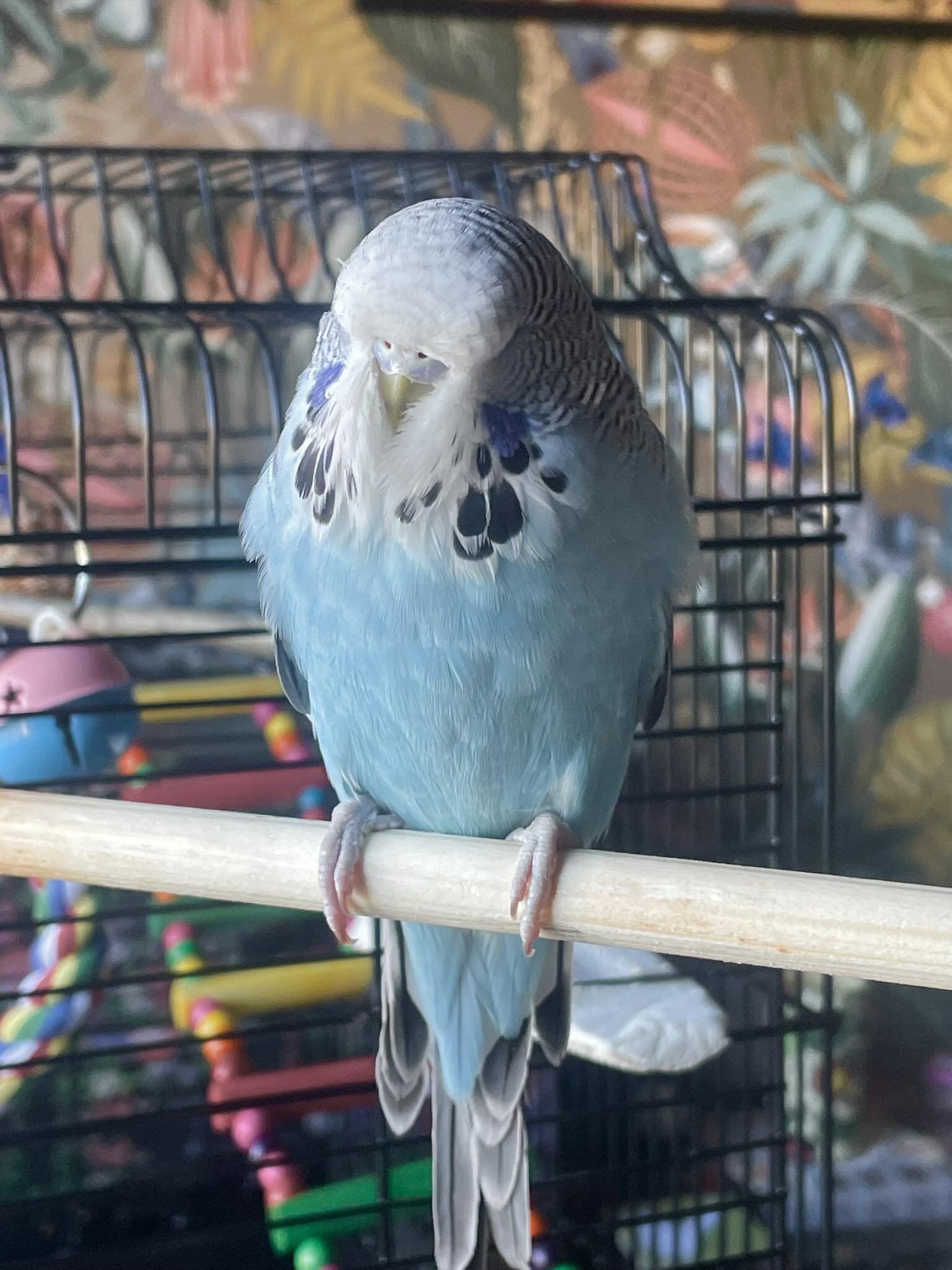
Budgies are sensitive birds, and stress shows up in their droppings remarkably quickly. A bird that has just been moved to a new home, had its cage moved, met a new pet in the house, or experienced loud noises and disruption can show changes in droppings within hours.
The classic stress dropping is increased water content — more urine surrounding the solid faecal part. The bird is not unwell. It is anxious, and the stress response is making it produce more urine. This is sometimes called “stress polyuria” and it is one of the most common reasons new owners panic about their bird’s droppings in the first few days after bringing it home.
- Recent purchase or rehoming? New birds often have watery droppings for days as they settle.
- Cage moved or rearranged? Budgies notice every change in their environment.
- New pet in the household? Particularly cats and dogs the bird can see.
- Loud noises or building work nearby? Sustained noise stress affects digestion.
- Changes in routine? New working hours, family members coming or going.
- Different temperature or lighting? Both can affect the bird’s stress level.
What to do
Identify the stressor if you can, and either remove it or help the bird adjust. Stress-related changes in droppings usually resolve within a few days once the bird settles. If the watery droppings continue for more than a week, or if other symptoms appear, see a vet.
Cause 3: Bacterial Or Parasitic Infection
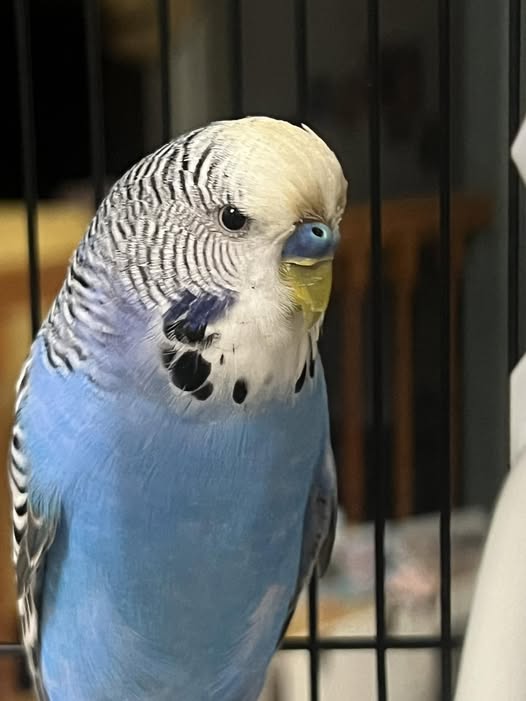
This is one I see more often than owners realise, and it is one of the more serious causes of changed droppings. Bacterial infections of the digestive system — and parasitic infections like giardia or worms — can cause significant changes in droppings, often before the bird shows any other obvious symptoms.
Signs to watch for include foamy droppings, very loose diarrhoea, undigested food in the droppings, foul-smelling droppings, and droppings that stick to the bird’s vent feathers. The bird may also lose weight gradually, have a duller appearance, and become less active.
What to do
This is a vet visit. Infections need proper diagnosis — usually a faecal sample test — and the right treatment. They will not resolve on their own and can become life-threatening if left untreated. An avian vet can usually treat them effectively if caught early. For more on the early signs of an unwell budgie, our guide on hidden health signs in budgies covers what to watch for alongside dropping changes.
Cause 4: Liver Or Kidney Disease
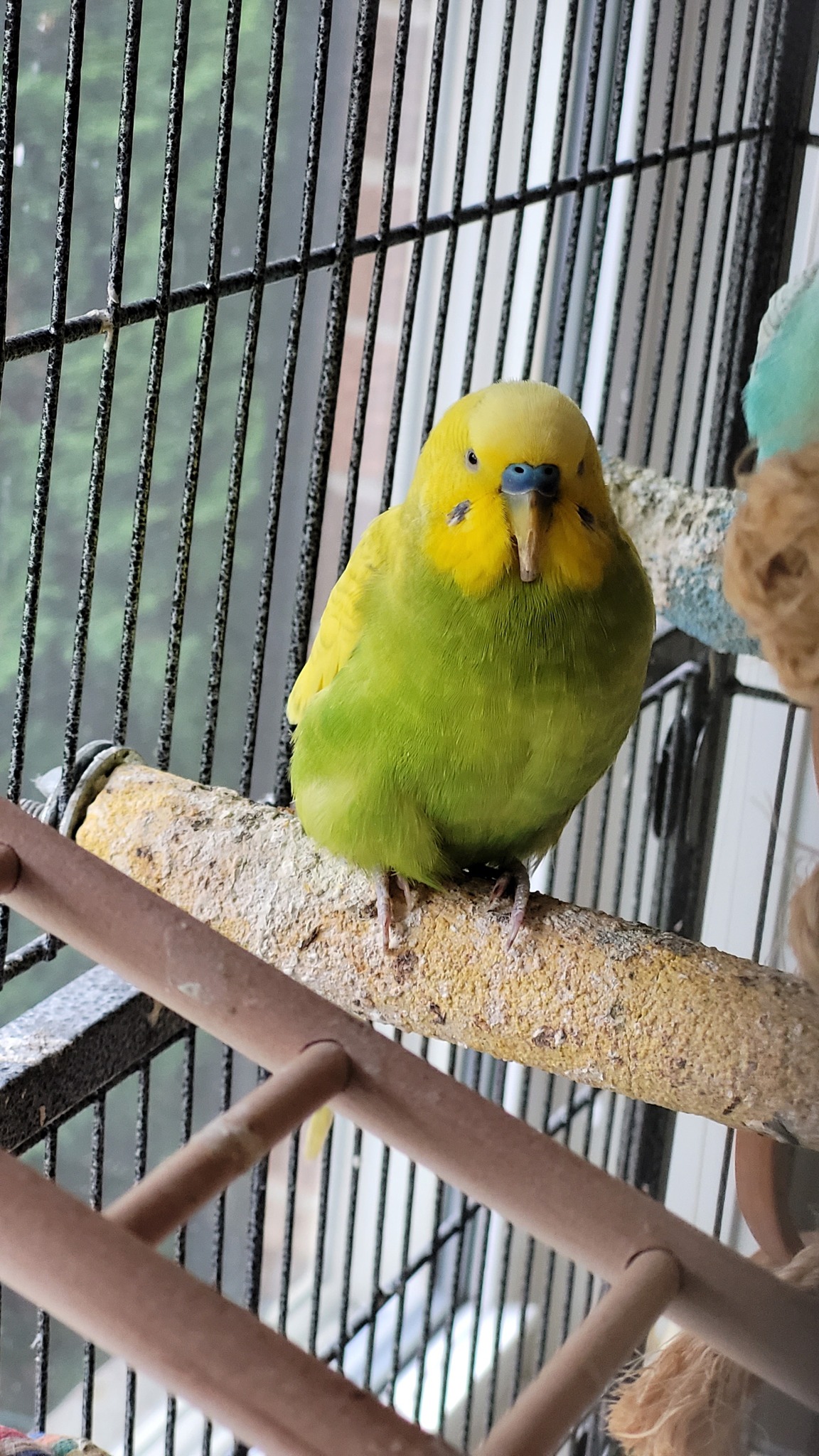
This is a sadder one, but it is important to recognise. Long-term liver and kidney problems in budgies — often caused by poor diet over many years, particularly seed-only diets — show up clearly in droppings.
Liver disease often produces yellow or mustard-coloured droppings as the bird’s liver struggles to process waste properly. Kidney problems often cause very pale or grey droppings with increased water content. Both are usually accompanied by other symptoms — weight loss, lethargy, sometimes feather quality issues — but the droppings often change first.
These conditions are more common in older birds and in birds that have been kept on poor diets for years. They are also more common than people think — many budgies live and die with undiagnosed liver problems caused by years of cheap seed mixes.
What to do
See an avian vet. Liver and kidney conditions can be managed if caught early enough, often with dietary changes and supplements. The vet will likely want blood tests and may want to examine the bird thoroughly. Diet is the foundation of recovery — our article on common UK budgie diet mistakes covers what needs to change.
Cause 5: Egg-Laying In Females
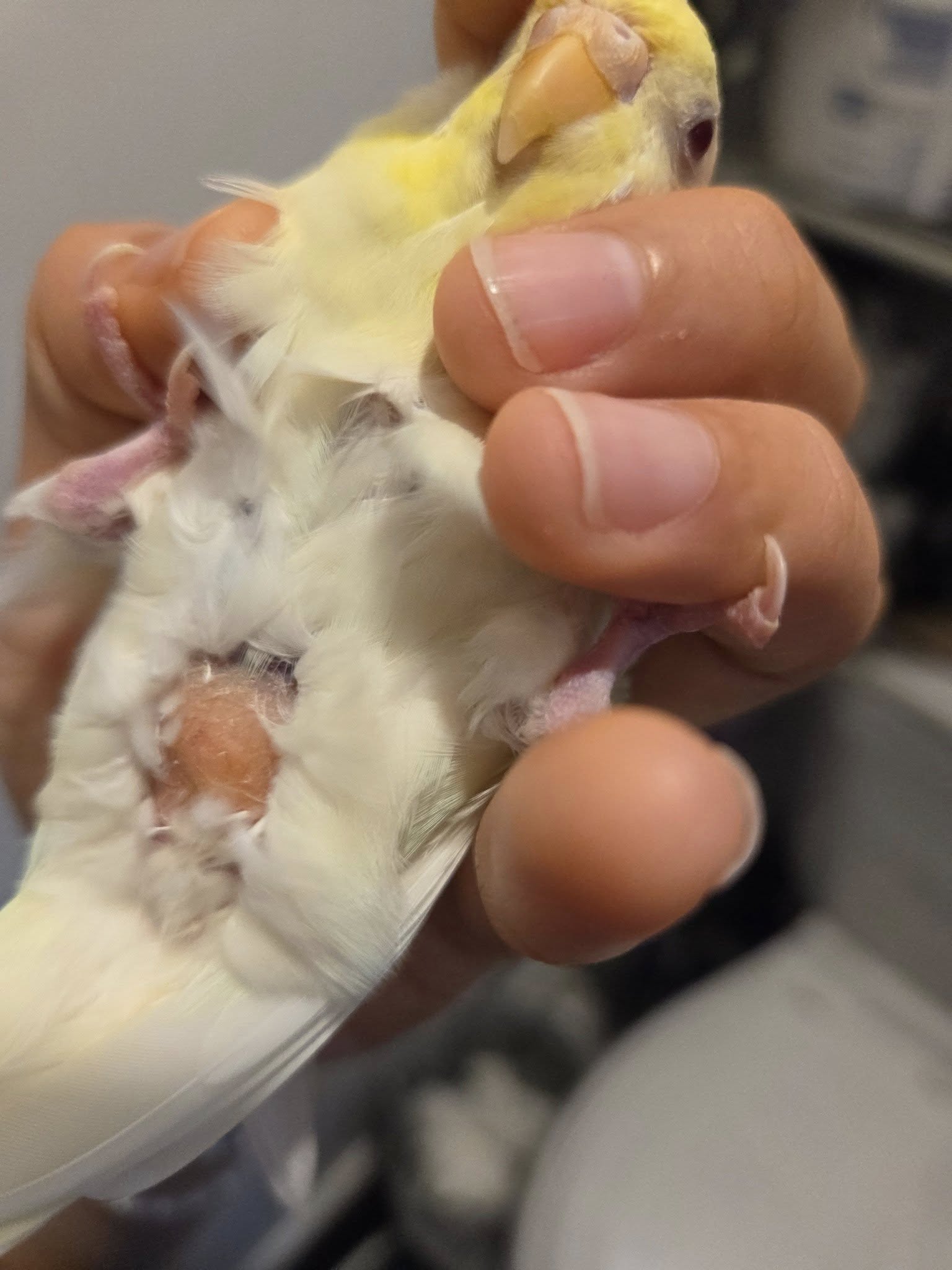
This is one many UK owners do not realise. Female budgies — even ones that have never been around a male — can lay eggs hormonally, especially in spring and autumn. And egg-laying significantly changes droppings.
A female budgie that is about to lay an egg, or actively laying, often produces very large, watery droppings. Sometimes these are 10 times the size of normal droppings. The reason is that the bird is holding bowel movements while the egg passes through, and when it finally goes, everything comes out at once.
This is normal and not a cause for alarm in itself, but it does mean you have a hen that is laying — and that brings its own set of considerations. Chronic egg-laying can deplete the bird’s calcium and cause serious health problems. If you are seeing these very large droppings regularly, and your bird is female, you need to be aware that egg-laying may be happening.
What to do
First, confirm whether your bird is male or female if you are not sure. Our guide on how to tell male from female budgies walks you through it. If you have a chronic egg-layer, you may need to manage the bird’s environment — reducing daylight hours, removing nesting materials, and sometimes consulting a vet about hormonal treatments.
Cause 6: Heavy Metal Or Toxin Exposure
This one is rarer but worth knowing about. Budgies that have been exposed to heavy metals — usually from chewing on old cage bars with lead paint, costume jewellery, certain metal toys, or sometimes lead in old plumbing — can develop characteristic droppings.
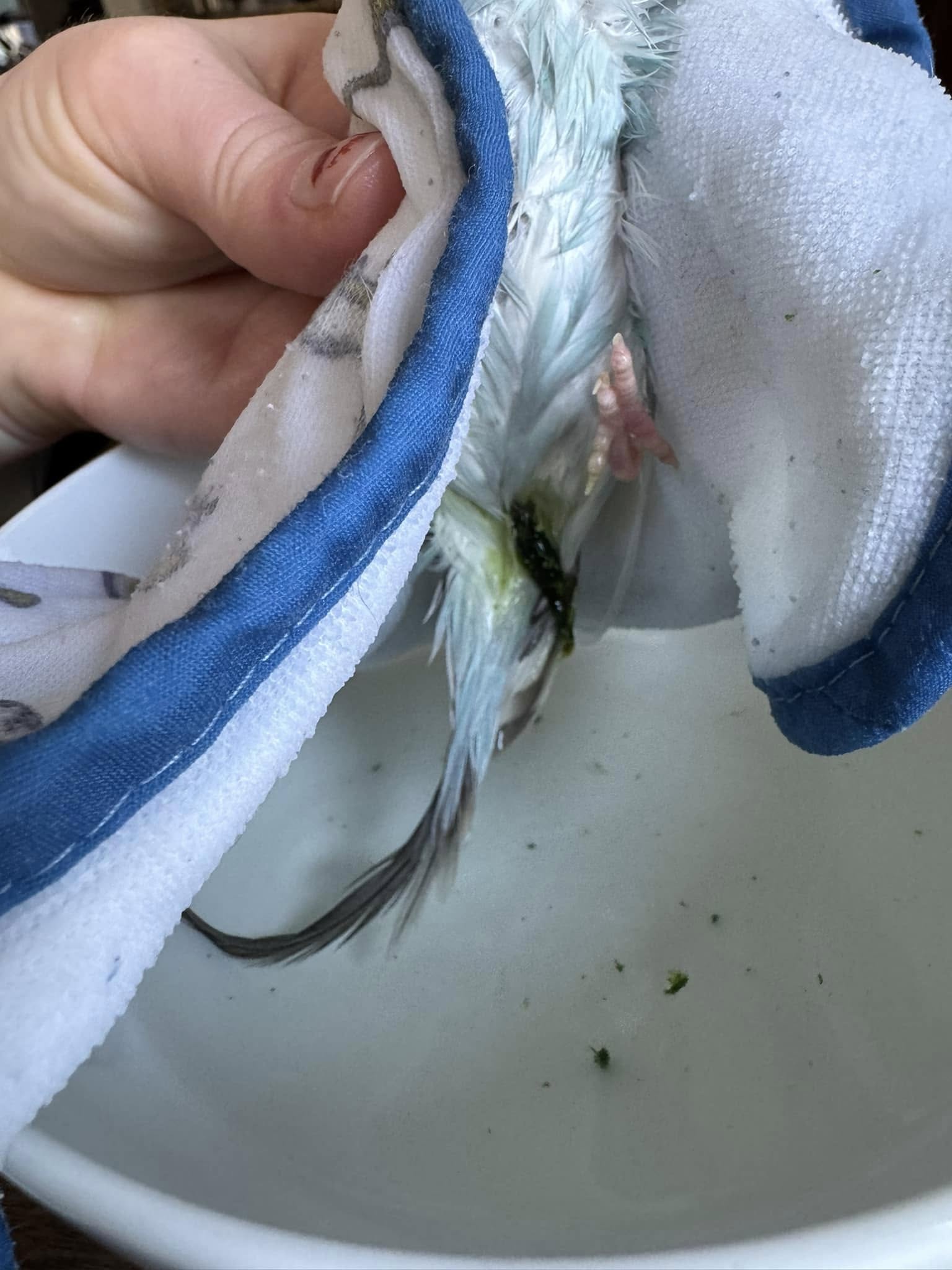
The classic sign is bright green or fluorescent green watery droppings — significantly different from the dark green of greens-related dietary changes. The bird may also seem disoriented, weak, or unable to balance properly. Lead poisoning in budgies is a vet emergency.
Other toxin exposures — non-stick cookware fumes, scented candles, aerosols — can also affect droppings, often making them more watery or pale.
What to do
If you suspect any kind of toxin exposure, this is a same-day vet emergency. Identify and remove the source — check the cage for any chewed metal, check what the bird could have been exposed to in the room. Lead poisoning is treatable if caught early but fatal if missed.
What I Check When An Owner Brings In A Droppings Concern
When an owner comes in worried about their budgie’s droppings, I do not just guess. There is a process I work through. Here is what it looks like.
- What does the bird’s normal look like?
You cannot identify “abnormal” without knowing what normal is. The first thing I ask is whether the owner knows their bird’s usual droppings. - What has changed recently — diet, environment, anything?
Most changes have a cause that owners can identify when they think about it. - How long has the change been going on?
A one-day change is rarely serious. A week-long change is. - Is the bird otherwise well — eating, chirping, active?
Droppings changes alongside other symptoms are more concerning than droppings changes alone. - Have you seen any blood, foam, or undigested food?
These are red-flag observations that change the urgency. - Is the bird male or female?
Egg-laying in females explains a lot of dropping changes. - What is the bird’s diet?
Birds on seed-only diets have very different long-term droppings than birds on varied diets.
Five minutes of these questions usually narrows things down enough to know whether it is a “watch and see” situation or a “see a vet” situation.
How To Make Reading Droppings Easier
The single biggest reason owners struggle to interpret their bird’s droppings is the cage liner makes it impossible to see clearly. Here is a simple trick that has saved more than a few birds in the years I have been recommending it.
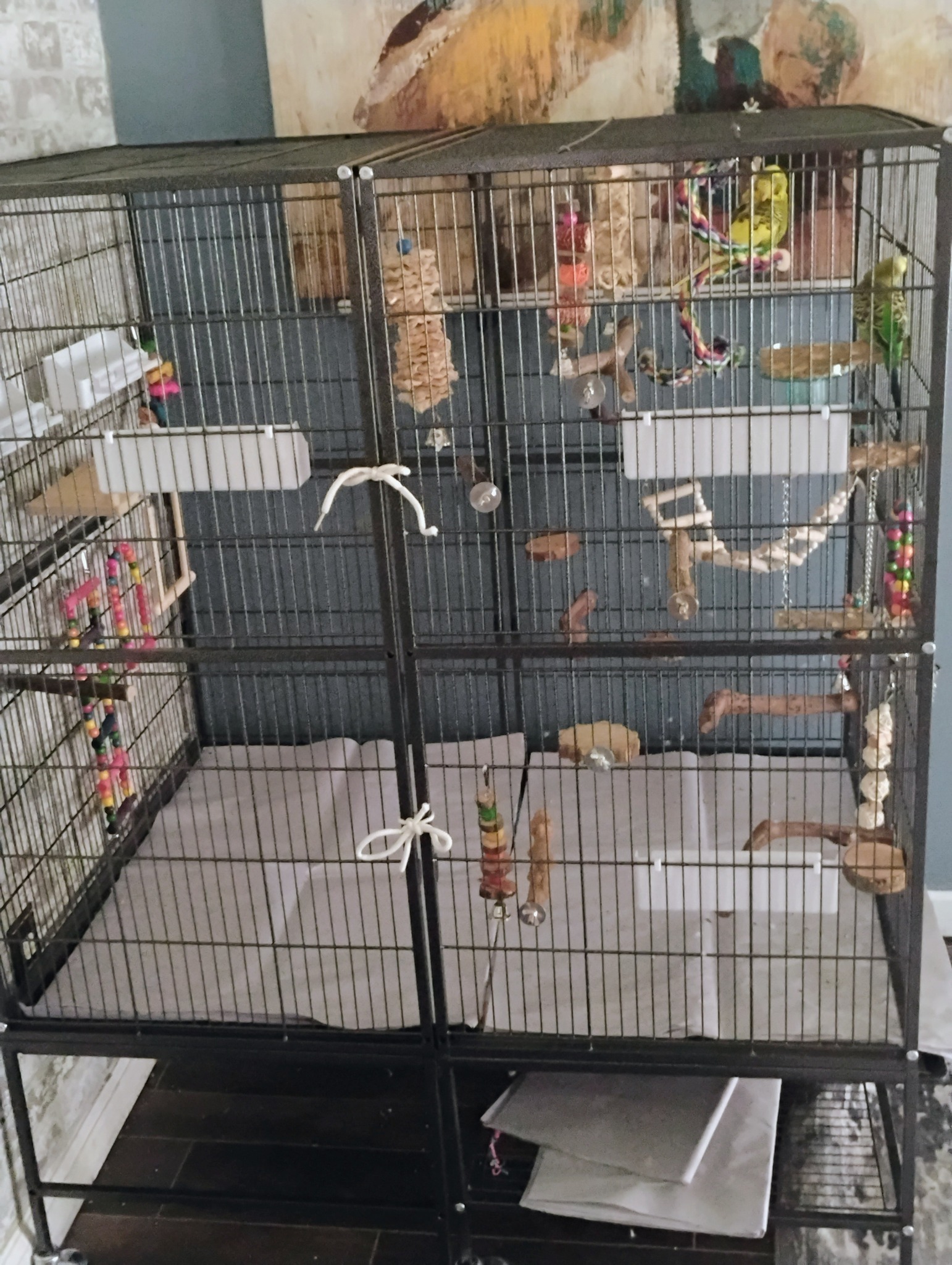
- Use plain white newspaper, paper towels, or unprinted paper as your cage liner
- Change it daily — fresh paper means you can see exactly what has happened in the last 24 hours
- Take a quick look every morning while you are refilling food and water
- If anything looks unusual, take a photo on your phone — useful if you end up needing to show a vet
- Avoid coloured cage liners, printed newspaper, or bedding that hides what is going on
This sounds basic, but it is genuinely the difference between catching problems early and missing them until the bird is seriously unwell.
When To Worry — And When Not To
After 35 years, I have a fairly clear sense of when droppings changes are serious and when they are not. Here is my honest summary.
| Situation | Action |
|---|---|
| One-off odd dropping, bird otherwise well | Monitor for a day or two — usually resolves on its own |
| Dietary change explains it, bird well | No action needed — droppings will normalise |
| Watery droppings for 1-2 days after new bird arrives | Stress-related — give the bird time to settle |
| Changes lasting more than 3-4 days | See a vet — something is going on |
| Yellow, red, black, or very pale droppings | Same-day vet — often a sign of serious illness |
| Diarrhoea with the bird looking unwell | Same-day vet — dehydration risk plus underlying cause |
| Bright fluorescent green watery droppings | Suspect toxin — same-day vet emergency |
| Droppings stuck around vent, bird unwell | Vet visit — possible infection |
Frequently Asked Questions
How many times a day should a healthy budgie poo?
A healthy adult budgie produces between 40 and 50 droppings a day, sometimes more. That is roughly one every 15 to 20 minutes during waking hours. High frequency is normal for budgies — what matters is quality, not quantity.
Why is my budgie’s poo green?
Dark green is normal. Bright green often means the bird has been eating fresh greens (kale, spinach, broccoli) recently. Fluorescent or unnaturally bright green watery droppings, however, can indicate toxin exposure and need urgent veterinary attention.
What does a healthy budgie dropping look like?
A healthy budgie dropping has three parts — a firm dark green or brown coiled solid (faeces), a creamy white component (urate), and a small clear liquid ring (urine). All three should be visible in roughly equal proportions.
Why does my budgie have watery droppings?
Could be diet (fresh fruit or vegetables increase water content), stress (new home, environment changes), egg-laying in females, or illness. Look at recent changes and check whether the bird seems otherwise well.
How often should I check my budgie’s droppings?
Daily. A quick look at the bottom of the cage each morning takes 30 seconds and is the single most useful health check you can do for your budgie. Use plain paper liners so you can see clearly.
When are dropping changes a vet emergency?
Yellow, red, black, very pale, or fluorescent green droppings are all potential emergencies, especially if combined with the bird looking unwell. Severe diarrhoea or droppings with visible blood are also same-day vet situations.
Where can I get honest budgie advice in Swindon?
Come and see us at Paradise Pets, Manor Garden Centre, Cheney Manor, Swindon SN2 2QJ. Or give us a ring on 01793 512400. The advice is free and I have been doing this for 35 years.
One Last Thing From Me
Looking at your budgie’s droppings is not glamorous, but it is one of the most important things you can do as a budgie owner. The bottom of the cage is where the truth lives — long before your bird looks unwell, before it stops eating, before it stops chirping, the droppings will tell you something is changing.
The lady I mentioned at the start of this article? Her budgie was producing more droppings than usual, but they all looked healthy — three parts visible, dark green solid, white urate, small water ring. The bird had simply been eating more recently. We talked through what to watch for, she went home reassured, and her budgie is doing fine.
That is the conversation I want every UK budgie owner to be able to have. Once you know what to look for, you stop panicking about normal things and you start catching real problems early. Both outcomes are good for your bird.
If you have spotted something unusual and you are unsure, come and see us or take a photo to your vet. The earlier you investigate, the better the outcome. That is what 35 years of doing this has taught me.
Worried About Your Budgie’s Droppings? Come And See Me
Bring a photo or video, or just bring your questions. I will have a proper look and tell you honestly what I think. Free advice, no obligation. That is how we have done things for 35 years.