

Neil has run Paradise Pets Swindon since 1988 — over 35 years of watching budgerigars communicate and watching their owners miss what is being communicated. The signs that a budgie is unwell are present well before the bird looks obviously sick. They are not dramatic. They are not obvious. They come in clusters rather than in isolation, and understanding the difference between a single signal and a cluster of signals is the difference between catching something early and catching it too late. This is his honest explanation of what those clusters look like — and why they are consistently missed.
A customer came in carrying her budgerigar in a small carrier. She had noticed him that morning sitting at the bottom of the cage, barely moving. He was six years old. She had had him since he was twelve weeks.
I asked her when she had first noticed something was different.
She thought about it. Then she said: he had been quieter than usual for about three days. And she had noticed on Tuesday that he was sitting on the lower perch rather than the top one, which was where he always sat. But she had put both of those things down to the hot weather. He had seemed otherwise normal. He was still eating — she thought. He had not been fanning his wings or panting. She had not been particularly worried until this morning.
I knew, before I had finished listening, that we were not in the early stages. We were in the late stages of something that had been communicating itself clearly for at least three days, in a language she had not been given the tools to read.
That is the conversation I want to have in this article — not about what a budgie looks like when it is obviously unwell, because by then the conversation is about managing a crisis rather than preventing one. About what a budgie looks like in the days before it is obviously unwell, and why what it looks like in those days is genuinely readable if you know what you are looking for.
Why Budgies Are So Difficult To Read — The Biology Behind The Problem
I have explained this in other articles on this site, but I want to state it here again because it is the foundation without which the rest of what I am going to say does not make sense.
Budgerigars are prey animals. They have been prey animals for millions of years. In the wild, a bird that shows visible signs of weakness becomes a target — for predators, and sometimes for members of its own flock who will exploit weakness within the group hierarchy. The instinct to appear well when unwell is therefore not an occasional response to specific circumstances. It is one of the most deeply embedded survival behaviours in the species.
This instinct does not disappear in a captive budgerigar living in a Swindon living room with no predators and a human owner who wants nothing more than for it to be well. The biology does not update for the domestic environment. The bird that is developing an illness continues to invest energy in appearing normal for as long as it is physically capable of doing so. By the time it stops — by the time it is sitting puffed at the bottom of the cage, visibly distressed, no longer able to maintain the effort of appearing well — it has often been unwell for days.
That investment of energy in appearing normal does not produce a perfect mask. It produces a slightly imperfect one. The bird that is working to appear well is not quite behaving exactly as it would if it were genuinely well, and those imperfections — the signals it cannot entirely suppress — are present and readable in the days before the mask fails completely. The problem is not that the bird is not communicating. The problem is that what it is communicating does not look like what most owners expect illness to look like, and so it gets explained away.
The Single Signal Trap — Why One Thing Is Never Enough
The most consistent mistake I see is what I have come to think of as the single signal trap. The owner notices something — the bird is quieter than usual, or sitting lower than normal, or has left more food than it usually does — and assesses it in isolation. They find a benign explanation. The weather is warm. It was noisy last night. The food was a different batch. And they move on, having satisfied themselves that the thing they noticed was not concerning.
Sometimes they are right. A budgerigar that is quieter than usual on a single hot afternoon is often simply a budgerigar managing the heat. A bird that moves to a lower perch once, in isolation, is often simply varying its routine. A single signal, in isolation, frequently does have a benign explanation.
The trap is that the single signal assessment becomes a habit. The owner who explained away the quietness on Tuesday explains away the lower perch on Wednesday without connecting them. They explain away the reduced food on Thursday. By Friday, the bird has produced three signals across four days and the owner has logged zero of them as concerning, because each one was assessed individually rather than as part of a picture.
The avian behaviour research on this is consistent and the language it uses matters: read clusters. Not individual signals, but combinations of signals read together, in the context of their timing and their relationship to each other. Two or three signals appearing in the same bird across the same two-to-three-day period is not two or three coincidences. It is a pattern, and a pattern in a prey animal that is biologically motivated to conceal weakness is a pattern worth taking seriously.
The three-signal cluster is the one I ask owners to hold in their heads as a threshold. One thing noticed — monitor, not alarm. Two things noticed in the same short period — pay closer attention, start tracking. Three things noticed across three or four days — this is no longer a collection of separate benign events. This is a budgie telling you something and the message deserves to be received.
The Signals Most Owners Miss — And What Each One Actually Means
I want to go through these specifically, because “watch for early signs” is advice that is easier to give than to act on without knowing what the signs actually look like and why they are easy to dismiss.
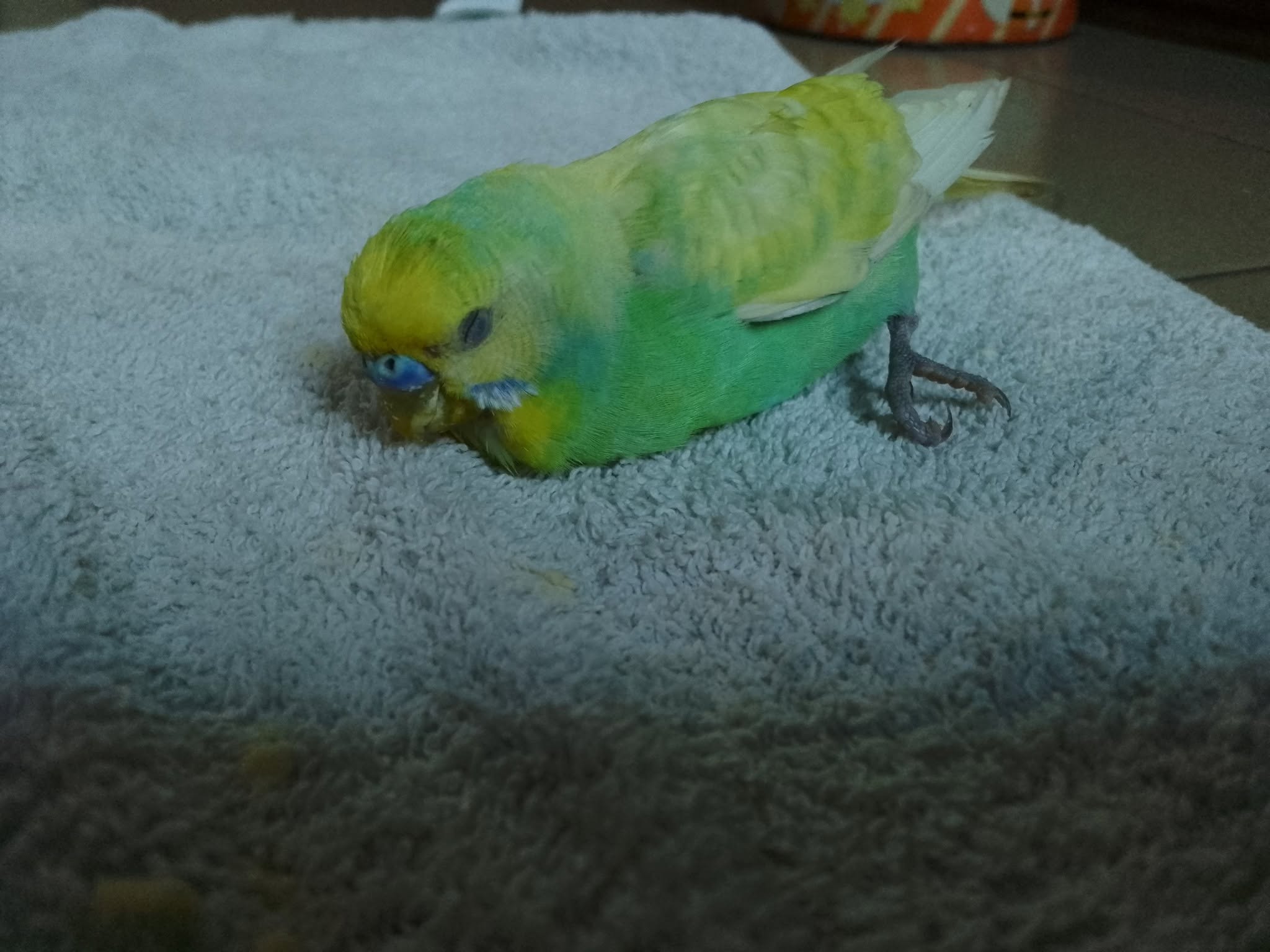
A change in perch position. Every budgerigar has preferred positions in its cage — a favourite perch, a height it gravitates toward at particular times of day. The bird that normally occupies the top perch through the active part of the morning and has moved to a lower position for several consecutive days is not simply varying its routine. Lower perch position is one of the earliest signs that a bird is conserving energy or is uncomfortable in the positions it normally occupies. The owner who explains this as preference or boredom has dismissed a meaningful signal. The owner who notes it and watches for what else changes has caught something at day one rather than day five.
A reduction in vocalisation. This is the signal most frequently explained away, because it is also the one most frequently explained away correctly in isolation. A hot day produces quieter birds. A disrupted night produces quieter birds. A new stimulus in the environment produces quieter birds while they process it. But a bird that is measurably quieter than its normal for three or more days, without an environmental explanation that accounts for the whole period, is a bird whose vocal energy is reduced in a way that reflects something other than weather or circumstance. The budgerigar that was chattering through the morning and now is not has changed its baseline. That change is worth noting.
Leaving food. This is the signal most owners check last and assess least carefully, because the food bowl that still has food in it looks fine. The distinction that matters is not whether there is food in the bowl but whether the pattern of eating has changed. A bird that normally empties its bowl by midday and now has food remaining in the early afternoon has changed something. A bird that was enthusiastically sorting through its seed mix and is now making less active contact with the food is communicating a change in appetite that precedes the visible food remaining. Watch the bird at its food, not just the bowl after the fact.
Beak grinding at the wrong time. Beak grinding — the quiet, rhythmic sound a budgie makes by rubbing the edges of its beak together — is a sign of contentment when it happens as the bird is settling down to sleep. It means the bird is relaxed, comfortable, and at ease. Beak grinding that occurs during the active part of the day, when the bird is not settling to sleep, can indicate discomfort or nausea. The same sound, at the wrong time, carries a different meaning. Context is what distinguishes between the two, and context is what an owner without a baseline cannot assess.
Tail bobbing at rest. This one I want to flag specifically because it is clinically significant in a way that the others are not always. Tail bobbing — a gentle, rhythmic movement of the tail when the bird is at rest — indicates respiratory effort. The bird’s tail is moving because it is working to breathe. This is not a signal that can be reasonably explained away. A bird with tail bobbing at rest needs to be seen by an avian vet. It does not wait, it does not monitor, it does not improve on its own from here. Tail bobbing is the signal that has moved past the cluster stage and is telling you directly that the body is under significant strain.
The Signals Owners Most Consistently Misread As Something Else
There is a specific category of signals that I see misread regularly — not dismissed, but actively misinterpreted as positive or neutral when they are actually concerning. These are worth addressing separately, because the misreading produces a more dangerous outcome than dismissal. A dismissed signal might prompt a second look later. A misread signal produces active reassurance that everything is fine.
The “suddenly calm” bird. A budgerigar that was previously active, chattery, and engaged with its environment, and that has become noticeably quieter and more docile over a period of days, is sometimes described by its owners as having “settled down” or become “calmer.” This is a misread. A budgerigar that has genuinely settled into its home and its routine does become calmer than it was in the first weeks — but gradually, over months, not suddenly over days. A sudden increase in quietness and apparent calmness in a previously active bird is not a behavioural development. It is a reduction in energy output that reflects something physical. The bird is not calmer. It is conserving.
The bird that is “finally letting you touch it.” A budgerigar that has previously been reluctant to be handled and that has suddenly become tolerant of being picked up or stroked is sometimes interpreted as a breakthrough in the human-bird relationship. In some cases, it is. In other cases — particularly where the change is sudden rather than gradual, and particularly where it coincides with other behavioural changes — it is a bird that no longer has the energy or the inclination to resist handling. The submission is not trust. It is exhaustion. Context distinguishes between the two, and the owner who does not know their bird’s baseline cannot make that distinction reliably.
The head tuck that looks like sleeping. Budgerigars tuck their head under their wing to sleep. This is normal, expected, and fine at the appropriate times — in the evening, during a midday nap, when the environment is dim and quiet. A bird that is tucking its head during the active part of the morning, repeatedly, when it would normally be alert and engaged, is not napping. It is withdrawing from an environment it does not have the energy to engage with. The posture is the same. The timing and the context tell you something different is happening.
Why The Baseline Is The Only Thing That Makes Any Of This Readable
I have said this in other places on this site and I will say it here again, because it is the thread that connects everything in this article and without which the specific signals I have described are not actually assessable.
None of the signals I have described are meaningful without a baseline. A bird sitting on a lower perch than usual is only notable if you know which perch it usually occupies. A reduction in vocalisation is only detectable if you know how vocal this bird normally is. The food bowl that has more food remaining than expected is only a signal if you know what the normal pattern of eating looks like for this specific bird at this specific time of day.
The owner who has spent five minutes a day, consistently, actually observing their bird — not glancing at it, but watching it — has built that baseline over weeks and months. They know where the bird sits at different times of day. They know its vocal patterns. They know what it does when it is well, which is the only thing that allows them to recognise when it is not.
The owner who has not built that baseline is trying to read a language they have never been taught in an alphabet they have never seen. They notice the dramatic signals — the bird on the cage floor, the open-beak panting, the obvious distress — because those signals are legible without any prior knowledge. But those are the late signals. The early signals, the cluster of three subtle things across three days that would have made the difference between early intervention and crisis management, were invisible to them because they had no reference point against which to compare them.
Building the baseline takes five minutes a day for two weeks. After those two weeks, it takes thirty seconds a day to confirm that what you are seeing today is consistent with what you know about this bird’s normal. That thirty seconds, every day, is what turns the language of budgerigar communication from something opaque into something readable. And readable is the difference between the conversation I have to have with an owner whose bird was already in crisis, and the conversation I would rather have — the one where something was caught early, acted on promptly, and treated effectively.
What To Do When You Spot A Cluster — The Specific Next Steps
I want to be concrete about what happens after you have identified a cluster — two or three signals in the same bird across a short period — because “ring an avian vet” is the right answer but it is not the whole answer, and the conversation with the vet goes better if you have done the preparation I am about to describe.
Write down what you have observed. Not a general impression — specific observations, with dates and times. Which perch. What the vocalisation level was compared to normal. What the food bowl looked like at what time. What the droppings looked like — colour, consistency, volume — if you have been checking them. This specific information is clinically useful to an avian vet in a way that “he seems a bit off” is not. A vet who knows that a bird has moved from its top perch to a lower one on three consecutive mornings, has left food that it would normally have finished by mid-morning, and has produced fewer vocalisations than normal during its usually active period, has a specific clinical picture to work with. Describe what you have seen, when you saw it, and how it compares to what is normal for this bird.
Do not wait for a fourth or fifth signal to confirm the cluster before ringing. The cluster of three signals is the threshold. Once you are there, the call to the avian vet is the next step, not further monitoring. The avian vet can help you decide whether what you are describing warrants an appointment today or whether careful continued monitoring with specific things to watch for is the appropriate response. That decision belongs with the vet. Your job is to make the call.
Keep the bird warm and quiet in the meantime. A sick bird loses heat faster than a well one — the energy that normally maintains body temperature is redirected to managing illness. A bird cage in a room below 20 degrees Celsius that would be comfortable for a healthy bird may be inadequate for a bird that is unwell. A supplementary heat source — a heat lamp positioned to one side of the cage so the bird can move away from it if it chooses — is appropriate supportive care while you are waiting for a vet appointment.
Do not change the diet, add supplements, or attempt to treat the bird at home based on what you find online. Specific nutritional interventions for specific illnesses are within the domain of avian veterinary medicine. General interventions applied without a diagnosis can complicate the picture in ways that make it harder for the vet to assess what is actually happening. The role of the owner between spotting a cluster and reaching a vet is supportive rather than clinical.
Frequently Asked Questions
How do I know if my budgie is just tired or actually unwell?
The distinction that matters is duration and pattern rather than a single observation. A bird that seems tired on one afternoon, recovers by the following morning, and behaves entirely normally for the rest of the week is almost certainly just tired. A bird that is consistently less active, consistently quieter, consistently less engaged with its food or its environment across two or more consecutive days is showing a pattern rather than a temporary state. Duration and consistency are what separate something that needs watching from something that needs acting on.
My budgie is quiet today. Should I be worried?
One quiet day, in isolation, in a bird that has been entirely normal — probably not. Is there something in the environment that might account for it? High temperature, disrupted sleep, a new or stressful stimulus. If there is an obvious environmental explanation and the bird returns to its normal vocalisation level within a day, the quiet day was probably what it appeared to be. If there is no obvious explanation, if the quietness continues into a second day, or if it coincides with any other change — perch position, food consumption, posture — then you are starting to accumulate signals that deserve closer attention.
How often should I observe my budgie properly?
Five minutes of deliberate, specific observation at the same time every day is the minimum that builds and maintains a useful baseline. The time of day matters — choose the time when your bird is normally at its most active, which is typically mid-morning for most budgerigars. Five minutes at the most active part of the bird’s day gives you the richest behavioural information to compare against. Thirty seconds at a random point in the day gives you much less. Consistency of timing matters as much as the duration.
What do budgie droppings tell me about its health?
A great deal, which is why I include them in the observation routine I recommend. Normal budgerigar droppings have a dark, firm component and a white component, with a small amount of liquid. A significant change in the colour of the dark component — very green, very dark, or very pale — indicates something worth noting. A dramatic increase in the liquid portion suggests excess water consumption or a digestive issue. Very small droppings across multiple consecutive observations may indicate reduced food consumption. Any change that persists for more than a day without an obvious dietary explanation — you gave more fruit than usual, or the water consumption was higher for a known reason — is worth including in the picture you are building and worth mentioning to an avian vet.
Is a budgie that grinds its beak always healthy?
Beak grinding as the bird settles to sleep — a quiet, rasping, rhythmic sound made as the bird becomes drowsy — is a sign of contentment and an indicator of a relaxed, comfortable bird. Beak grinding during the active part of the day, when the bird is not preparing to sleep, is a different signal in a different context. The sound is the same. The meaning is not. Beak grinding at inappropriate times — when the bird is alert, during the morning active period, or when it is not in its normal sleep posture — can indicate nausea or discomfort. It is a signal worth noting if it occurs out of its normal context, particularly if it coincides with other changes.
The Conversation I Would Rather Have
The customer with the six-year-old budgerigar did not leave with good news. The illness was at a stage where the options were limited. She had noticed things — she had noticed the right things — but she had noticed them and found reasons why each one was not concerning, and by the time the reasons ran out, we were in a different conversation from the one I would have wanted.
I tell that story not to make anyone feel the way she felt leaving this shop that day. I tell it because she is not unusual. She is the norm rather than the exception — a caring, attentive owner who did not have the specific tool that would have made those three days of signals readable as a cluster rather than as three separate, explicable, non-concerning events.
The tool is simple. It is a baseline and the habit of checking against it. It is knowing your bird well enough to notice when something has changed. It is the decision to read three signals together rather than separately. And it is the willingness to ring an avian vet when the cluster tells you to, rather than waiting until the cluster has become a crisis.
Come and talk to us if you are not sure whether what you are observing in your bird constitutes a cluster worth acting on. Describe what you have seen. We will help you assess whether it requires immediate veterinary attention or whether continued close monitoring with specific things to watch for is the appropriate response. That conversation is exactly what this counter is for — and it is considerably more useful before the crisis than during it.
Not Sure Whether What You Are Seeing In Your Budgie Is Cause For Concern? Ring Us.
Describe what you have observed and when. We will help you work out whether you are looking at a cluster that needs a vet today or something that warrants close monitoring. That call costs nothing and is exactly the kind of thing this number exists for.