


Neil has sold and kept budgies at Paradise Pets Swindon since 1988 — over 35 years of matching birds to owners. Healthcare workers are among the buyers he thinks about most carefully — because the specific demands of NHS and care sector work create a set of ownership challenges that are genuinely different from any other profession. Long shifts. Night rotations. Irregular hours. Emotional exhaustion at the end of a working day. This article is his honest guide to what that means for budgie ownership — and which birds actually fit that life.
A nurse came in one Saturday morning about three years ago. She worked on a surgical ward at a hospital about twelve miles away. She had been thinking about getting a budgie for months, she said — specifically because she had read that birds reduced stress and she was, by her own description, in a period of sustained, bone-deep exhaustion.
She wanted to know which variety was best.
I asked her a series of questions before I answered that. What did her rota look like? How many nights did she do per month? Did she have a partner or housemate, or was she living alone? What did a typical week look like in terms of when she was home and when she was not?
The answers she gave me changed the advice I gave her — not on variety specifically, but on the whole structure of what she was about to take on. Her situation was not the same as someone who works nine to five Monday to Friday. It was more complex. It had specific pressures that a standard pet buying conversation does not normally surface. And the bird she needed — or more precisely, the setup she needed — was shaped by those pressures in ways that the variety question alone could not answer.
We talked for nearly half an hour. She left without buying anything that day. She came back two weeks later, having thought it through, and bought two birds and a cage that was the right size for what she needed. Both birds are still with her. She told me recently they are the best decision she made that year.
The Shift Work Problem — Why Healthcare Is Different
Most guides to budgie ownership for working people focus on the number of hours the owner is absent. For a nine-to-five office worker, the question is: can a budgie manage ten hours alone, five days a week? The answer is structured and consistent — the bird knows the pattern, can rely on the routine, and adjusts accordingly.
Healthcare work does not look like this. A nurse on a rotating shift pattern may work three twelve-hour days this week, two nights next week, a weekend, and then have four days off. A care home worker may work early shifts one week and late shifts the next. A hospital porter may have split shifts, last-minute overtime, or emergency cover requirements that mean the hours at home are unpredictable in ways that cannot be communicated to a bird in advance.
This unpredictability is the specific challenge for the healthcare owner — and it is the thing that shapes every recommendation I make to buyers in this profession. A budgie does not understand rotas. It understands presence and absence, routine and disruption, and the emotional quality of the human it has bonded with when that human is present. All of those things are affected by shift work in ways that need to be understood before the first bird is bought.
- Irregular hours mean the bird cannot establish a predictable routine around owner presence — which increases the importance of the bird’s own social resources
- Night shifts mean the bird may be disturbed by the owner returning in the early hours — or the owner may need to leave when the bird is most active in the morning
- Emotional exhaustion after long shifts affects the quality of owner-bird interaction — a bird that needs attentive, engaged interaction from an owner who has nothing left to give is a bird whose social needs are not being met
- The days off that follow a run of shifts can be genuinely intensive social time — which is good for the bird but creates a feast-and-famine pattern that some individuals find unsettling
- Unpredictable overtime or emergency cover means the bird cannot rely on the owner being home when expected — which affects the trust-based routine that settled birds depend on
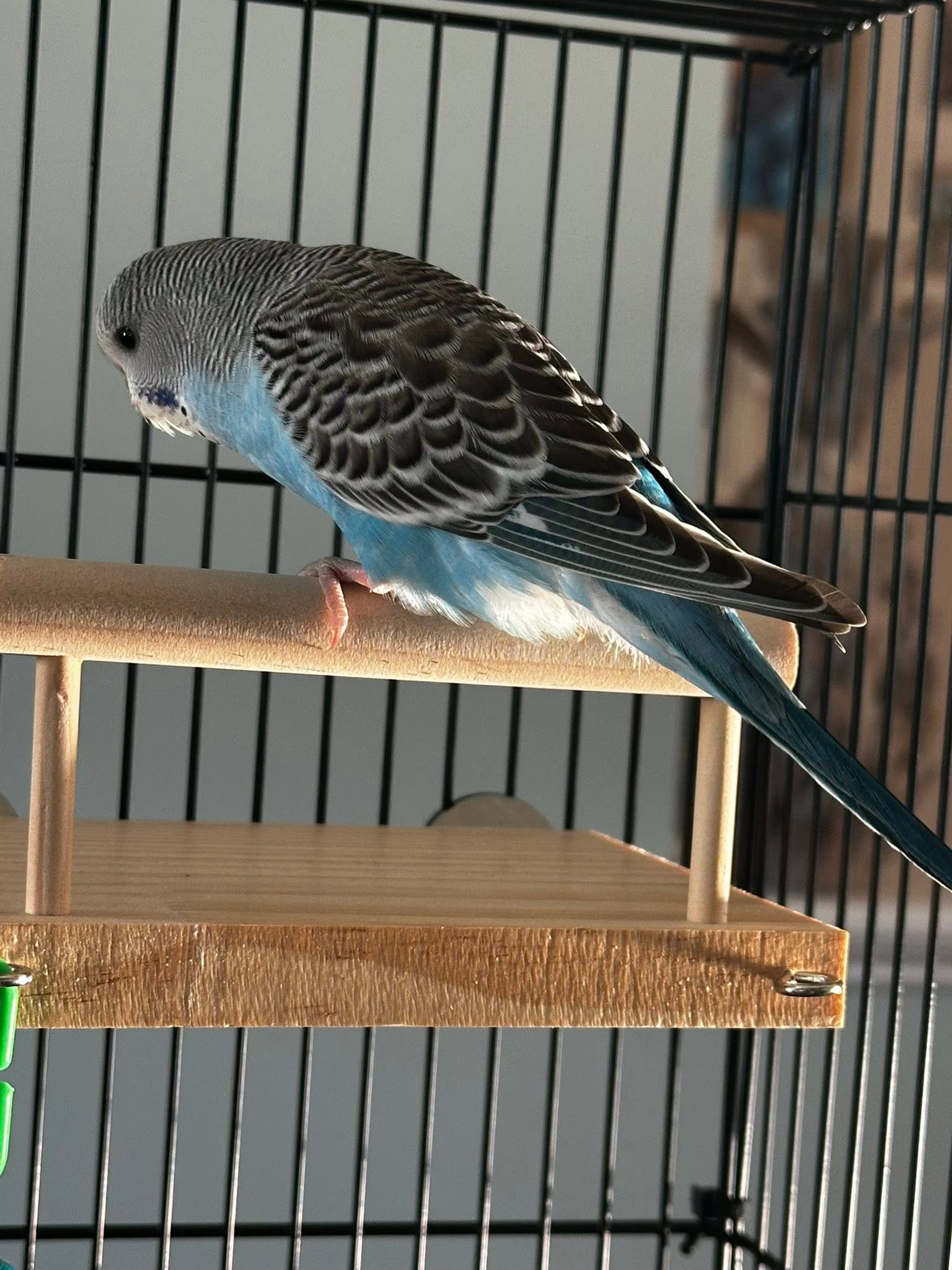
The One Decision That Matters More Than Any Variety
Before I get to the varieties — and they do matter, and I will get to them — I need to say something that every healthcare worker considering a budgie needs to hear first.
Get two birds. Not one. Two.
For a regular office worker, a single budgie with an attentive owner who is reliably home by seven every evening is a borderline welfare situation that can work with enough compensating attention. For a healthcare worker on a rotating shift pattern who may be doing three twelve-hour nights in a row followed by days off followed by a run of earlies, a single budgie is a welfare problem. The social isolation that accumulates across those absences cannot be compensated for by even the most devoted owner in the hours that remain.
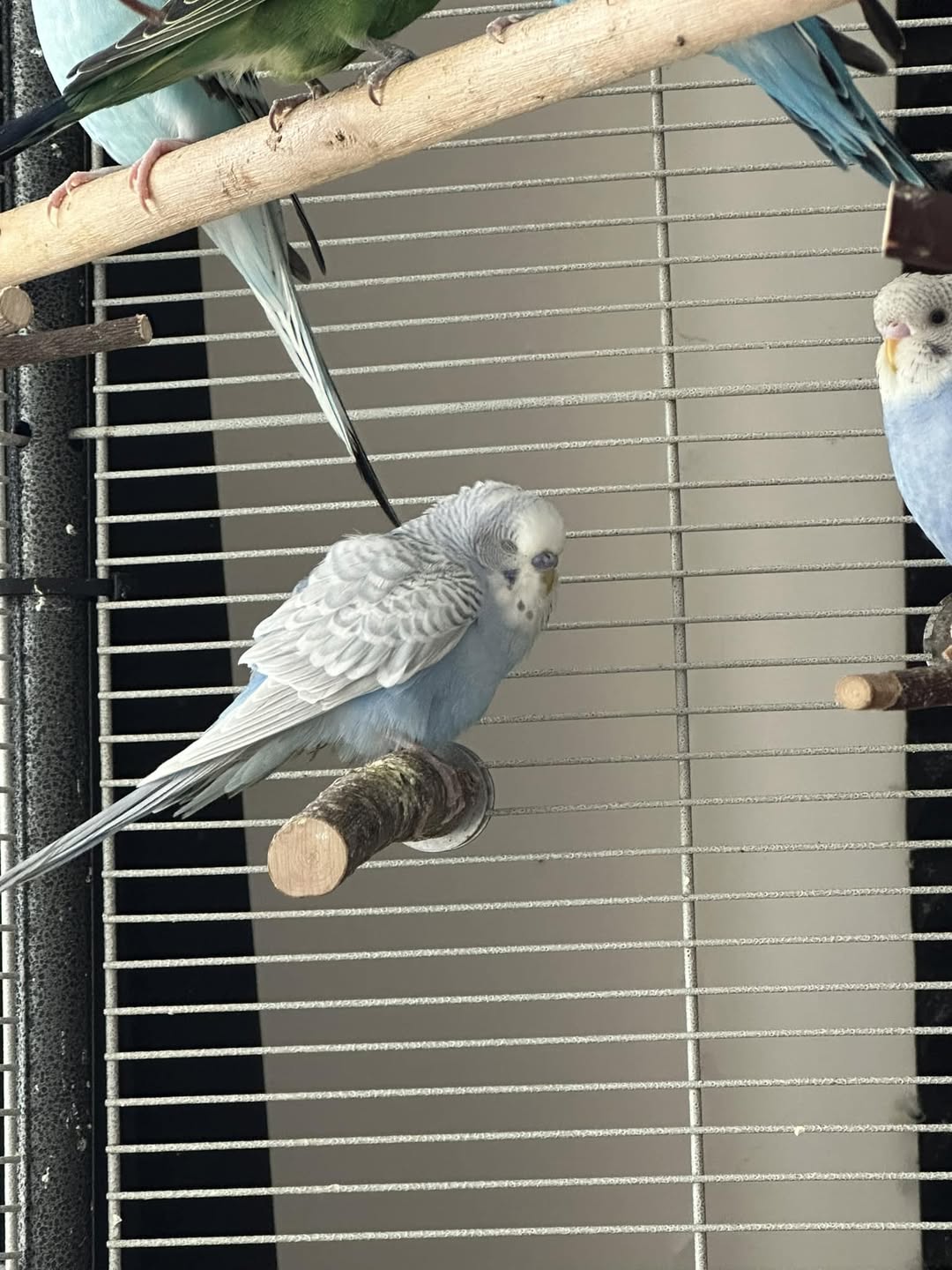
Two budgies together changes the equation entirely. The birds have each other. They manage the irregular absences, the night shifts, the unpredictable overtime, by meeting each other’s social needs through the hours when the owner is not there. When the owner returns — exhausted or energised, early or late — the birds are not in a state of accumulated social deprivation. They are settled, bonded, and ready to engage on whatever terms the owner can manage that evening.
This is not optional advice for healthcare workers. It is the foundation of everything else.
The Variety Question — What Actually Differs and Why It Matters Here
With the two-bird foundation established, the variety question becomes genuinely relevant. Because while no variety eliminates the welfare considerations above, different varieties respond differently to the specific conditions that healthcare shift work creates — and those differences are worth understanding.
The Standard Budgie — The Most Resilient Choice for Irregular Hours
The standard Australian budgie — the common pet budgie most people are familiar with — is my first recommendation for healthcare workers, and the reasons are specific to shift work rather than general.
Standard budgies are robust. They are adaptable. They are, in my experience over thirty-five years, the variety that handles disruption and irregular routines most readily. They are active self-entertainers — a pair of standard budgies will fill irregular hours with noise, play, investigation, and mutual interaction in a way that keeps both birds engaged regardless of when the owner appears or disappears.
They are also, critically, the variety most likely to engage enthusiastically with an owner who has variable energy levels. A standard budgie that has been well socialised and kept in good welfare conditions will respond to owner attention with the same readiness whether the owner arrives home after a difficult twelve-hour shift or a relaxed day off. They do not, in my experience, punish the exhausted owner by being withdrawn or indifferent. They engage at whatever level the owner can offer.
For a healthcare worker who comes home sometimes buzzing with the need to decompress and sometimes too tired to do more than sit quietly near the cage, the standard budgie’s consistent responsiveness is a genuine asset.
- Highly adaptable to irregular routines — the most resilient variety for unpredictable owner presence patterns
- Active self-entertainers in pairs — manage extended absences better than calmer, more sedentary varieties
- Consistently responsive to owner interaction regardless of the owner’s energy level on a given evening
- Wide availability means a larger selection to choose from — important for finding two individuals with compatible temperaments
- Lower purchase price frees budget for what matters more in a healthcare setup — cage size and enrichment quality
- Vocal and communicative — the chattering and activity of a pair of standard budgies provides genuine ambient company for owners who come home to an otherwise quiet flat or house
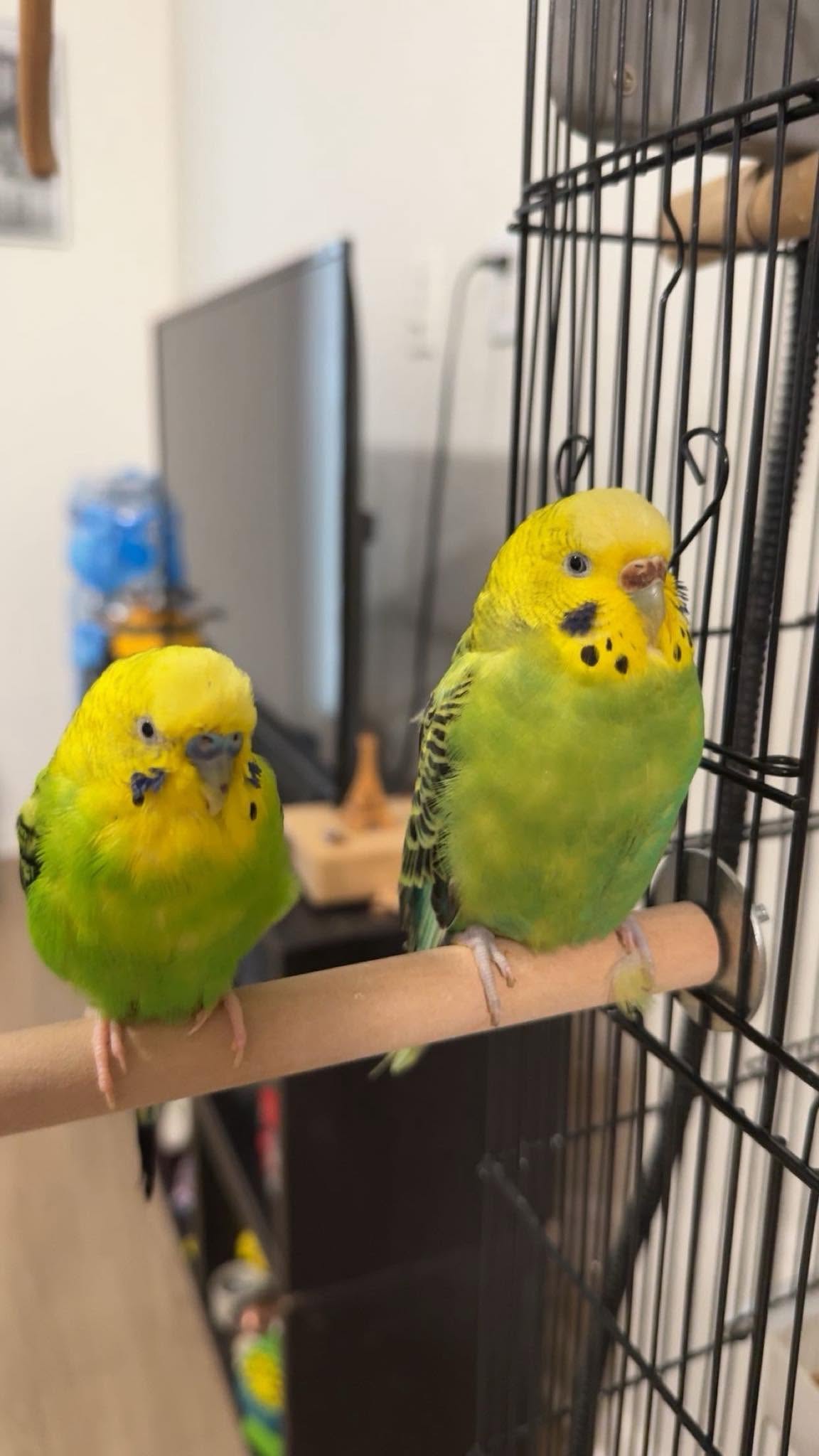
The English Budgie — When the Calmer Option Makes Sense
The English show budgie — larger, calmer, quieter, more sedentary than its Australian counterpart — suits a specific subset of healthcare workers and is the wrong choice for others. Understanding which group you are in matters.
The healthcare workers for whom English budgies make most sense are those for whom quiet and calm at home is a genuine therapeutic need rather than just a preference. Some healthcare roles — intensive care, emergency medicine, busy surgical wards — involve sustained sensory overload through the working day. Noise, urgency, constant demands on attention. Coming home to a pair of active, vocal standard budgies chattering and playing can, for some people in these roles, feel like an extension of the workday rather than a departure from it.
For these owners, the English budgie’s quieter, more contained character is not a compromise — it is specifically what they need. A pair of English budgies will still provide company, interaction, and the genuine psychological benefit of caring for living creatures. They will do so at a lower volume and a slower pace, which for the right owner is exactly right.
The healthcare workers for whom English budgies are the wrong choice are those on heavy rotation patterns with significant and irregular absences. The English budgie’s calmer temperament means it is less actively self-entertaining when alone — it sits more, plays less, is quieter through the day. A pair of English budgies managing long, irregular absences in a cage without sustained activity will become under-stimulated in ways that affect their welfare. The standard budgie’s activity level compensates for irregular owner presence in a way that the English budgie’s does not.
- The right choice for healthcare workers who need quiet and calm at home as a therapeutic counterbalance to sensory overload at work
- Calmer, quieter, more sedentary — suits owners for whom noise at home after a long shift is genuinely difficult
- Less actively self-entertaining when alone — requires a more enriched cage setup to compensate for irregular owner absence
- More attentive health monitoring needed — the English budgie’s larger body and selective breeding history means health changes can require more careful observation, which is harder for owners with unpredictable hours
- Higher purchase price — a consideration for healthcare workers who may have tighter budgets and for whom cage and enrichment quality should take priority
Night Shifts — The Specific Problem Nobody Mentions
Night shifts create a welfare issue for budgie owners that is rarely discussed in generic pet keeping guides but is genuinely significant for healthcare workers: light disruption.
Budgies regulate their activity, sleep, and hormonal cycles by light. They need ten to twelve hours of darkness per night to maintain normal circadian rhythm, good feather condition, and psychological wellbeing. A budgie kept in a room where lights are turned on at two in the morning when an owner comes home from a night shift, or where curtains are opened at five in the morning before a healthcare worker leaves for an early, is a budgie whose light cycle is being disrupted.
Chronic light disruption in budgies produces real welfare consequences. It contributes to feather problems, hormonal disruption, and the kind of low-level chronic stress that does not produce dramatic symptoms but does reduce quality of life consistently over time. Most healthcare workers who are disrupting their bird’s light cycle are not aware they are doing it — because the consequences are subtle and develop slowly.
The solution is a cage cover — a dark, fitted cover that creates reliable darkness around the cage regardless of what is happening in the room. Paired with a consistent covering time that the healthcare worker can maintain even on night shift days — covered before leaving for a night shift, uncovered at a consistent morning time by a partner or housemate if possible — this largely eliminates the light disruption problem.
- Returning from night shifts and turning on lights disrupts the bird’s sleep — a cage cover eliminates this problem
- Leaving for early shifts before dawn in winter means uncovering the cage in darkness — maintaining the cover until natural light is present protects the sleep cycle
- If a partner or housemate is available to maintain a consistent morning uncovering time, this significantly reduces the impact of night shift disruption on the bird
- A cage in a room with a door that closes — rather than an open-plan living space — gives more control over light exposure independent of household activity
- Blackout curtains in the bird’s room are a genuine investment for night shift workers — they allow the bird’s environment to remain dark regardless of external conditions or household lighting
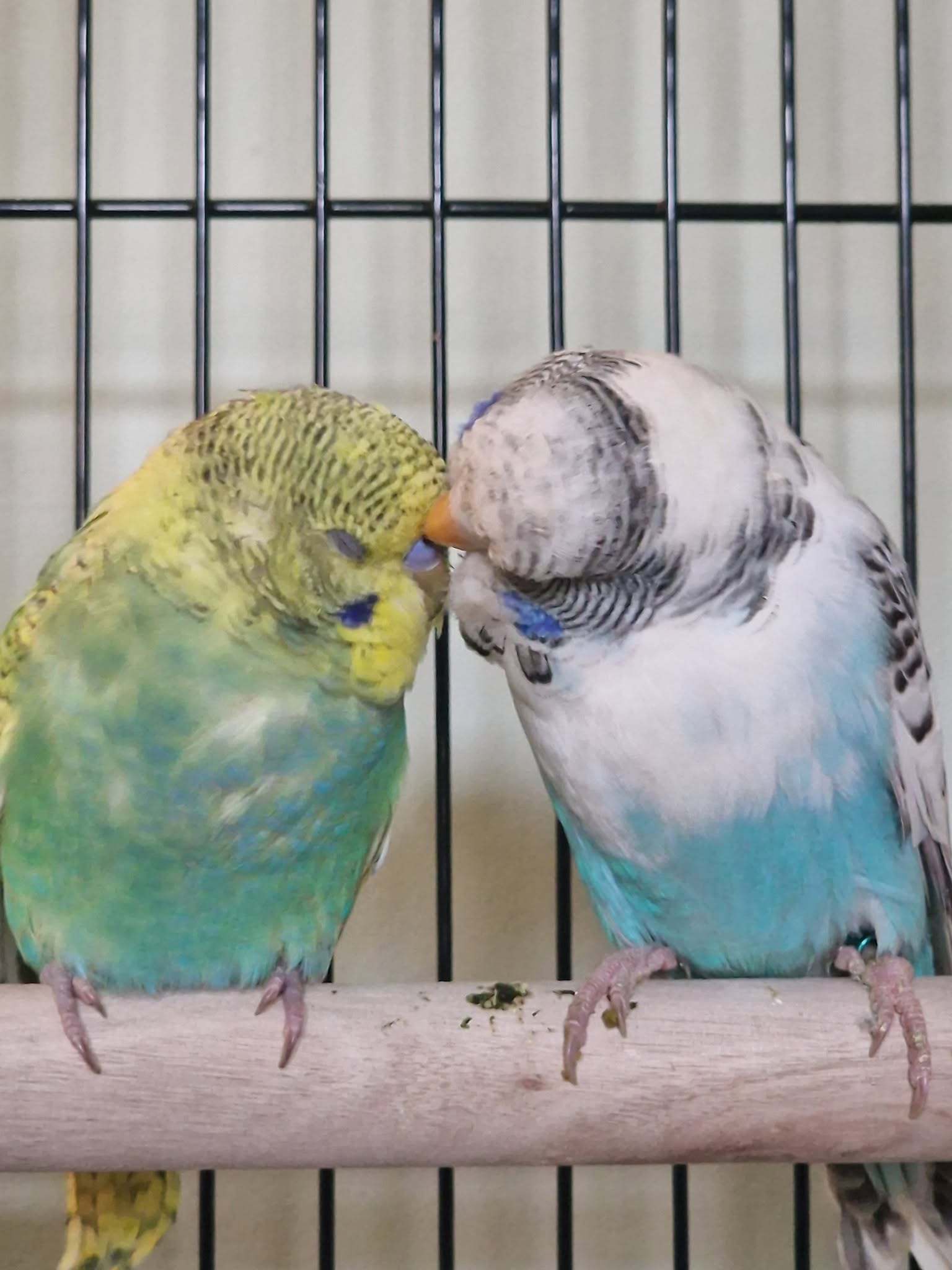
The Decompression Factor — Why Budgies Work for Healthcare Stress
The nurse who came in three years ago mentioned stress relief as her primary motivation. She had read something about animals reducing cortisol levels. She wanted to know if it was true.
I told her that in my experience — not scientific, not clinical, but thirty-five years of watching people keep birds — the stress relief aspect of budgie ownership is real. But it works in a specific way that is worth understanding, because it does not work automatically or unconditionally.
The stress relief comes not from passive proximity to a bird but from active engagement with it. Talking to a budgie. Watching it move. Responding to its vocalisations. Being the person the bird moves toward when you enter the room. These interactions produce the kind of present-moment focus — attention on a living creature rather than on the events of the shift just finished — that is genuinely restorative for people who have spent twelve hours in high-demand clinical environments.
But this only works if the bird is well and settled. A stressed bird, an unwell bird, a bird that is showing signs of welfare problems, does not provide stress relief — it provides additional worry. A healthcare worker who comes home from a demanding shift to a bird that is fluffed and quiet and not eating has just added to their burden, not reduced it.
This is why getting the setup right — the pair, the cage, the enrichment, the light management — is not just about the bird’s welfare. It is about the owner’s. A well-settled pair of budgies in an adequate setup produces the conditions for genuine therapeutic benefit. A poorly set-up single bird in a small cage in a disrupted light environment does not.
- Active engagement with a well-settled bird produces genuine present-moment focus that is restorative after clinical shift work
- The ambient presence of a chattering, active pair provides company in a quiet house that returning night shift workers often find unexpectedly valuable
- The routine of feeding, changing water, and brief morning interaction before leaving provides a grounding daily structure that some shift workers find helpful
- A bird that requires care on the owner’s days off — out-of-cage time, interaction, observation — provides a gentle structure to days off that some healthcare workers otherwise find difficult to navigate
- The welfare of the bird directly affects the therapeutic value for the owner — a well bird is good for the owner’s mental health, an unwell bird increases stress
What the Cage Setup Needs to Look Like for Shift Workers
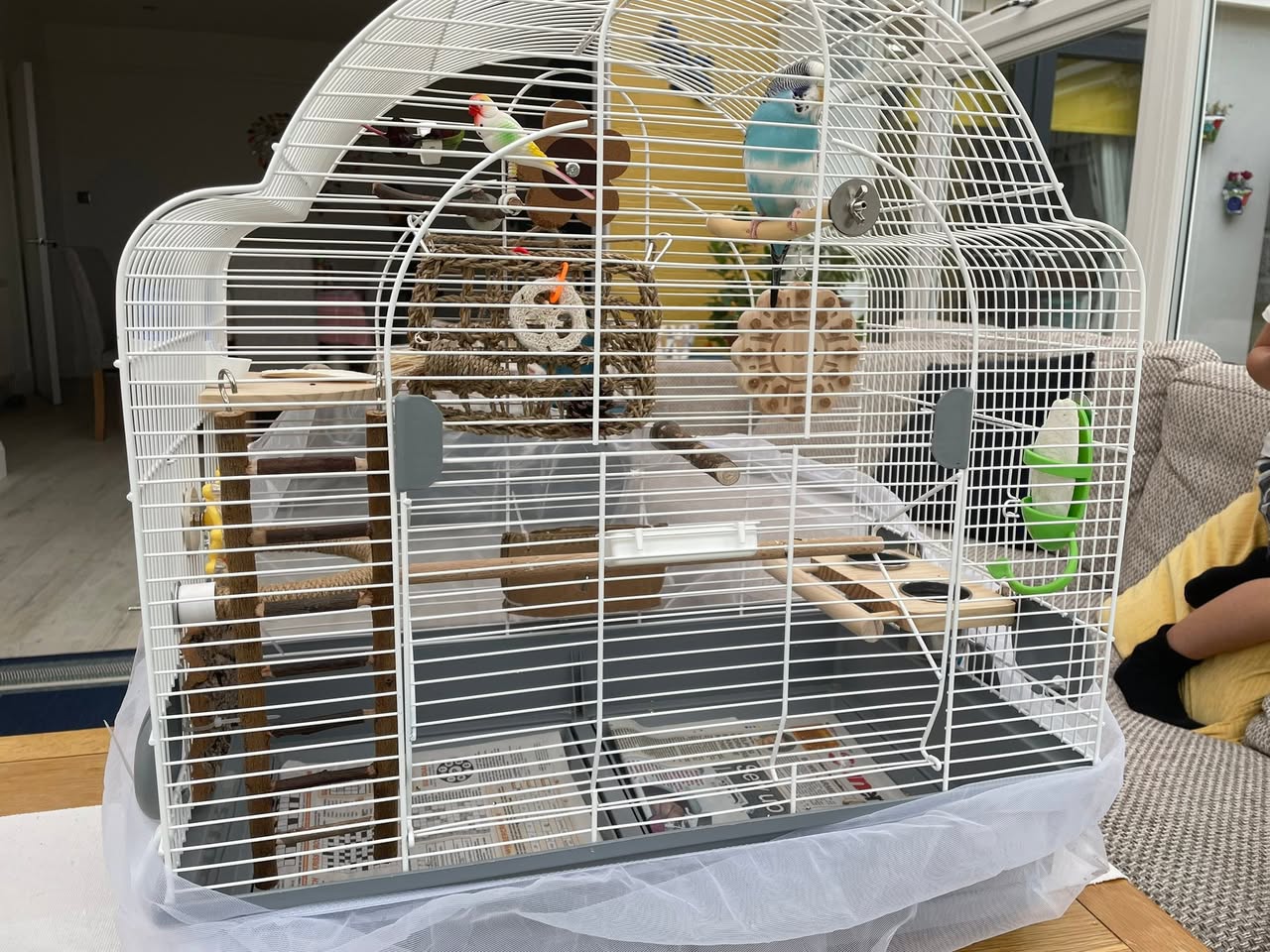
The specific demands of shift work mean the cage setup for a healthcare worker’s budgies needs to do more work than a standard setup. Here is what that looks like in practice.
- Cage size — larger than standard guidance suggests. For a pair of budgies that will sometimes spend eighteen to twenty hours without significant owner interaction — during a night shift followed by sleep — the cage needs to be large enough to provide adequate space for activity and movement. A minimum of 80cm wide, 50cm deep, and 60cm tall for a pair. More is better. The cage is doing significant welfare work during extended absences.
- Enrichment rotation. A pair of intelligent birds in the same cage with the same toys for weeks becomes bored in ways that produce welfare problems — feather chewing, reduced activity, increased aggression between the pair. Rotating toys and enrichment items on a weekly basis — removing some, introducing others — maintains novelty and stimulation through the irregular absences of shift work. This does not need to be expensive. Cardboard, paper, safe wooden objects, foraging challenges made from household materials all count.
- A cage cover that the birds associate with sleep. Establish the cage cover as a consistent sleep signal from the first week. Covered means sleep time. The cover should be dark, fitted, and used consistently regardless of the owner’s shift pattern. This is the single most protective step a shift-working owner can take for their bird’s circadian health.
- Water that cannot be contaminated overnight. A shift worker who leaves for a night shift at 7pm may not return until 8am. In thirteen hours, an open water dish in a cage with active birds accumulates feather detritus, seed husks, and droppings. A closed drinking tube rather than an open dish is more appropriate for extended absences — it keeps the water cleaner for longer and reduces the risk of the birds spending the night with fouled water.
- A position in the house that is neither isolated nor over-stimulated. The bird’s room should have natural daylight, ambient household sounds during the day when the owner is home, and the ability to be quietened — door closed, cover on — during the owner’s sleeping hours after a night shift without completely isolating the birds from all sensory input.
Frequently Asked Questions
I do four nights in a row every other week — is that too much for a budgie?
Four nights in a row is a significant absence pattern — but it is manageable with the right setup. Two birds, large cage, good enrichment rotation, consistent cage cover routine, and if possible someone checking in during the day to confirm the birds are well and water is clean. The days off that follow a run of nights are the time to invest in intensive interaction — extended out-of-cage time, direct engagement, the kind of presence that compensates for the absence. The pattern works if the compensating conditions are genuinely in place.
I come home from nights completely exhausted — will I actually be able to give the birds what they need?
This is one of the most honest questions I hear and it deserves a direct answer. After a night shift, you will not be able to give the birds much. You will feed them, change the water, briefly acknowledge them, and sleep. That is not enough on its own — but it is also not what the birds are depending on. They are depending on each other through your absence and sleep period. What they need from you is the quality time on your days off, not the depleted hours immediately after nights. If you can genuinely commit to the days off interaction, the night shift depletion is manageable.
My shifts change every week and I never know what my hours will be — is any budgie setup sustainable in that situation?
It is harder to sustain than a predictable rotation, but it is not impossible. The key is that the birds’ welfare cannot depend on owner routine if owner routine does not exist. The cage setup needs to be robust enough that the birds are adequately provided for regardless of when the owner arrives or departs. This means a larger cage, consistent enrichment, a partner or trusted person who can check in on genuinely unpredictable weeks, and the honest self-assessment of whether the commitment level is realistic for your specific rota. I would rather have this conversation before the birds are bought than after.
Will a budgie actually help with work stress or is that oversold?
It is not oversold — but it is conditional. A well-settled pair of budgies in a good setup provides genuine company, present-moment engagement, and a care routine that many healthcare workers find genuinely grounding. The condition is that the birds are well. If the setup is wrong and the birds are struggling, the stress relief becomes stress addition. Get the foundation right — pair, cage, enrichment, light management — and the therapeutic value is real.
Where can I get budgies and honest advice in Swindon?
Come and see us at Paradise Pets, Manor Garden Centre, Cheney Manor Industrial Estate, Swindon SN2 2QJ. Or ring us on 01793 512400. We will ask you about your rota before we tell you which birds to buy — because for a healthcare worker, the rota question is more important than the variety question. Free advice, no obligation. That is how we have always done things.
One Last Thing From Me
The nurse came back about eight months after she bought her two birds. She had done four night blocks since then, a run of weekends, and what she described as the most difficult three months of her career. She looked tired in the way that healthcare workers sometimes look — not the temporary tiredness of a bad week but something more settled and more serious.
She told me the birds had been the one consistent thing through those months. That coming home to them after nights — even just ten minutes of sitting near the cage before she slept — had made the coming home feel like arriving somewhere rather than just collapsing. That on her days off, the routine of caring for them had given her days a structure that stopped them from dissolving into the flatness that some healthcare workers describe after sustained difficult periods.
“I didn’t expect it to matter this much,” she said.
I told her that was the thing about getting it right from the beginning. The birds were settled because the setup was right. The setup was right because she had thought it through before she bought anything. The thinking through had been uncomfortable — questions she had not wanted to ask herself about her hours and her energy and her realistic capacity. But it had produced an outcome that was genuinely good for both the birds and for her.
That is the whole job, at the counter. Not just selling the bird. Making sure what comes after the sale is what it should be.
Healthcare Worker Thinking About Budgies? Talk to Us Before You Buy
We have been selling budgies and giving honest advice for over 35 years. For healthcare workers specifically, the conversation before the purchase matters more than for almost any other buyer — because your hours are not straightforward and the birds’ welfare depends on getting the setup right from the start. Come in and tell us about your rota. We will tell you what is realistic and what is not. Free advice, no obligation. That is how we have always done things.