

Updated : Expanded the cage-buying checklist with housing, equipment and setup-cost considerations linked to welfare guidance.
Compare the space your pet can actually use, the equipment that must fit inside, and the cost of keeping the setup safe. A low price is useful only when the enclosure meets the animal’s needs.
A cage that needs replacing after a few weeks can cost more than a suitable setup bought once. Price alone cannot tell you whether an enclosure is suitable: neither an expensive cage nor a product labelled “starter” is a welfare guarantee.
This checklist is for comparing options before a purchase. The species-specific guidance linked below should determine the final choice.
1. Write down the animal’s needs before comparing prices
Record the species, adult size, number of animals and their daily routine. Ask whether the enclosure is the main home, a sleeping area or a short-term transport carrier. These are different jobs. A carrier that is appropriate for a journey is not automatically a suitable permanent home.
PDSA’s enclosure guidance explains why small pets need room for resting, feeding, toileting and activity, with bedding and enrichment suited to their species. An empty display cage can conceal how little usable space remains once these essentials are added.
2. Check the complete setup, not just the outside dimensions
- Measure the inside. Ask for usable internal dimensions. A roof, stand or decorative top may be included in advertised measurements without adding living space.
- Plan the furniture. Draw where bowls, hides, perches, bedding, a suitable wheel or other essentials will go. Check that the animal can still move normally.
- Check every opening. Ask the manufacturer whether bar spacing, door gaps and locks suit the species and adult animal. A large enclosure with unsuitable gaps can still be unsafe.
- Test access. Open the doors and inspect the cleaning tray. Can you reach every corner and safely remove equipment without dismantling the whole enclosure?
- Inspect its condition. Check for sharp edges, damaged coatings, loose fittings and missing parts. For second-hand equipment, establish whether it can be cleaned properly before use.
3. Use different checks for birds, rabbits and hamsters
Pet birds: room to move and a safe flight routine
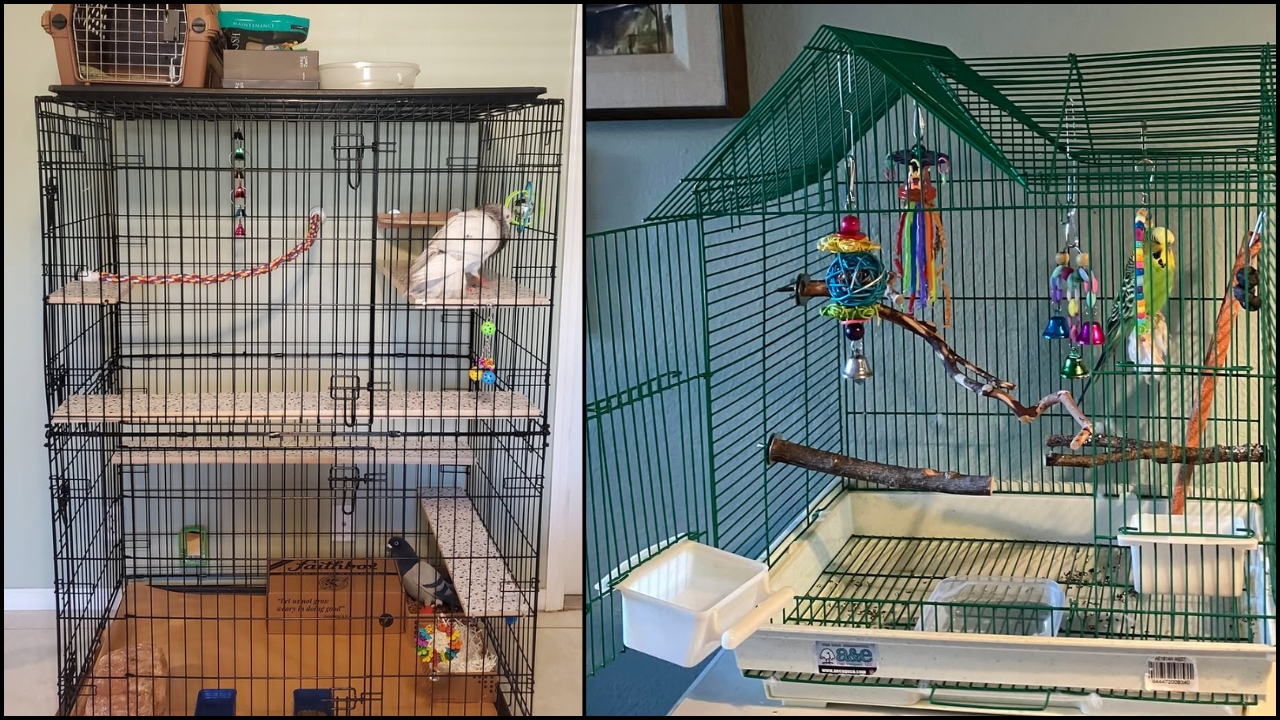
The RSPCA’s bird housing guidance bases cage dimensions on wingspan, time spent inside and the number of birds. It also calls for uncluttered wing movement and at least six hours of safe time outside an indoor cage each day. A tall cage packed with toys does not solve a shortage of usable movement space.
Plan perch positions without blocking movement or placing them over food and water. Work out where safe flight can happen before bringing the bird home. Follow the linked guidance for the species and group size; this general checklist is not a universal cage-size rule.
Rabbits: a hutch alone is not a complete home
Rabbit housing needs connected space for shelter and exercise. The RSPCA’s rabbit environment guide explains the need for permanent access to their living and exercise areas, suitable hiding places, protection from weather and security from predators. Compare the price of the whole connected setup, rather than the sleeping hutch by itself.
Hamsters: floor space, bedding and equipment must work together
Hamster housing needs its own checklist. Extra shelves do not answer every question about usable floor space, deep bedding and room for a suitable wheel. Use our hamster housing guidance to compare the linked welfare recommendations before choosing a model. Ask about the specific hamster’s housing needs rather than assuming that all small pets share the same requirements.
4. Compare the total cost in writing
Make two columns for the setups you are considering. Include:
- The enclosure, stand and any permanently connected exercise area.
- Species-appropriate bedding or substrate, bowls, hides, perches and other essential equipment.
- Cleaning supplies, replacement parts and regular consumables.
- Delivery, assembly and any changes needed to place it safely at home.
Keep routine veterinary care and an emergency-care budget separate from the shopping total. Do not buy an unsuitable enclosure on the assumption that you will upgrade later. If a suitable home cannot fit the available space or budget, delay the purchase and reconsider the plan.
5. Take these details to the shop
Bring the species and number of pets, measurements of the planned location, a photograph of that space and your complete setup budget. Ask the seller to explain which welfare guidance supports the proposed enclosure and to show how the essential equipment fits.
For a bird cage, review the cage-position checks as well. Heat, direct sunlight and other hazards at home still matter after you have chosen the enclosure.
An animal that is injured, struggling to breathe, not eating or suddenly behaving unusually needs veterinary advice. Replacing a cage does not diagnose or treat illness.
Planning a setup in Swindon?
Contact Paradise Pets with your pet species and measurements to discuss available cages and accessories. Call 01793 512400 before travelling to confirm opening hours and current stock.