
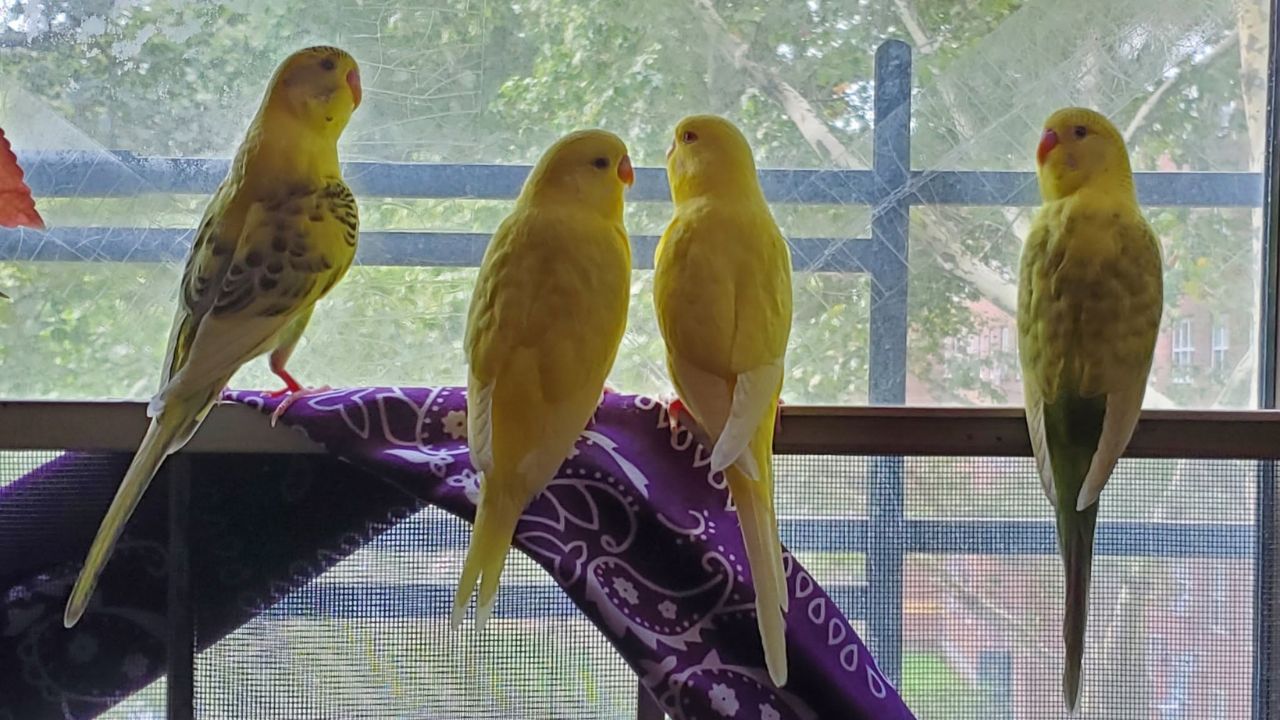

Neil has kept, bred, and sold cage birds at Paradise Pets Swindon since 1988 — over 35 years of watching owners make mistakes that cost their birds’ lives through no fault of their own, simply because nobody told them the right information at the right time. The houseplant question is one of the most serious he encounters — because the plants most likely to kill a pet bird are almost always the ones the owner never thought to question.
A young woman came in two years ago and described what had happened to her budgie the previous week.
She had let him out for his usual morning fly around the living room. She had recently moved her avocado plant — one she had been growing from the stone for about eighteen months — from the kitchen windowsill to the living room, where it had more space and better light. The budgie had investigated it, as he investigated everything in the room. She had not thought to stop him.
He was dead before she got home from work.
She came in because she wanted to know what had happened. Her vet had told her the likely cause. She had not, until that moment, known that the avocado plant she had been nurturing for a year and a half was one of the most reliably lethal things she could have had in a room with a pet bird.
“It’s just a plant,” she said.
Yes. Just a plant. That is exactly the problem.
The Plant Most Commonly In UK Homes — And Most Dangerous to Pet Birds
I want to lead with the avocado because it is, in my experience, the most consistently underestimated plant danger in UK households with pet birds. Not because it is the most exotic or unusual. Because it is extremely common, appears completely benign, and its toxicity to birds is severe and fast-acting in a way that gives owners almost no time to respond.
Growing an avocado from the stone has become one of the most popular indoor plant projects in Britain. It is inexpensive, satisfying, and produces an attractive plant with large, glossy leaves. The avocado plant sits in homes everywhere — kitchens, living rooms, conservatories. Most owners of pet birds who have one have never thought to question it.
Following two incidents in which a pet canary and three pet cockatiels died under conditions suggesting ingestion of avocado as cause of death, an experimental study was undertaken. Avocados were administered to 8 canaries and 8 budgerigars. Six budgerigars and 1 canary died within 24 to 47 hours after the first administration of avocado. Deaths were associated with administration of both avocado cultivars. Higher dose was associated with greater mortality. It is concluded that avocados are highly toxic to budgerigars and less toxic to canaries.
Six of eight budgies. Dead within forty-seven hours. From a single exposure.
The toxic compound in avocado — found in the flesh, the skin, the stone, and throughout the entire plant including the leaves — is called persin. It causes cardiac damage, respiratory distress, and fluid accumulation around the heart in birds. The progression can be rapid. A bird that has nibbled at an avocado leaf or investigated the plant may show symptoms within hours. By the time the owner recognises something is wrong, the cardiac damage may already be irreversible.
Not only is the fruit poisonous, but the plant itself is also poisonous.
This means the avocado on your kitchen counter is a risk. The avocado plant growing on your windowsill is a risk. The avocado leaves that fall within range of a bird’s beak during out-of-cage time are a risk. All of it, always.
If you have an avocado plant and a pet bird, they cannot share a space. The plant must go to a room the bird never accesses. Permanently.
The Living Room Staples That Are Not Safe
The avocado is the most dangerous specific plant I encounter, but it is far from the only one. Several of the most popular UK houseplants of recent years — the ones that appear in every home décor magazine, the ones sold in every garden centre and supermarket — are toxic to birds to varying degrees.
Pothos and Philodendron — The Modern Favourite That Harms Birds
Pothos (Epipremnum aureum) — also sold as Devil’s Ivy — and the closely related philodendron family are among the most popular UK houseplants of the past decade. They trail beautifully, tolerate low light, require minimal watering, and are available everywhere. They are also on virtually every avian toxicology list.
Pothos and English ivy are listed among unsafe plants for birds.
The toxic component in pothos and philodendron is insoluble calcium oxalate crystals — needle-like structures that cause intense irritation to mucous membranes on contact. In a bird that chews on a leaf, this means immediate irritation to the mouth, throat, and potentially the digestive tract. In severe cases or with larger ingestion, systemic effects can follow. These plants are not as rapidly fatal as avocado, but they can cause serious harm and prolonged illness.
The trailing habit of pothos makes it particularly problematic: the long stems that hang down from shelves and hanging baskets are exactly what a free-flying bird will land on and investigate.
Dieffenbachia (Dumb Cane) — Very Common, Genuinely Dangerous
Dieffenbachia is a staple of UK offices and homes — large, attractive, with broad patterned leaves. It is sold as an easy-care indoor plant and is extraordinarily common.
It contains the same insoluble calcium oxalate crystals as pothos, at higher concentrations. Contact with the sap causes intense burning and swelling of the mouth and throat. In a bird, even a small amount of contact with the sap can cause significant distress. The study noted that dieffenbachia proved fatal to canaries in experimental conditions.
A bird during out-of-cage flight that lands on a Dieffenbachia and takes even a brief bite is at risk of serious oral and throat injury. The plant is common enough that this combination — a common houseplant and a free-flying bird — happens regularly in UK households.
Lily Varieties — Seasonal and Year-Round Risk
Lily plants appear in British homes throughout the year — as garden cut flowers, as potted plants at Easter, and as houseplants. Many lily varieties are severely toxic to cats, and this risk is reasonably well known. The risk to birds is less discussed but equally real.
Peace lily (Spathiphyllum) — one of the most popular UK houseplants, consistently recommended as an air-purifying indoor plant — contains calcium oxalate crystals throughout the plant including the flowers. Amaryllis, which appears in many British homes at Christmas and is often regrown from the bulb for subsequent seasons, contains alkaloids that affect the heart and nervous system of birds.
If a bird has access during flight time to any room containing lily plants of any variety, it has potential exposure to toxic material.
The Christmas and Seasonal Plants — When Risk Increases
Several plants that specifically appear in UK homes at certain times of year carry risks that owners almost never think about, because the seasonal context means they are not considered as part of the bird’s normal environment.
Poinsettia — the defining Christmas houseplant in Britain — is frequently cited as severely toxic but is actually one of the more moderate risks on this list: it causes digestive irritation and discomfort rather than rapid fatality. However, it should still be kept away from birds.
Holly and mistletoe — which appear in many British homes in December — are significantly more dangerous. Holly berries and mistletoe berries are toxic to birds, as are the leaves. A bird that has access to holly brought in as decoration during the Christmas period is a bird with access to a serious toxin.
Luckily, most plants considered poisonous do not cause serious illness — stomach upset is the most common sign of poisoning, although some plants can cause severe effects or even death.
The variation in severity across different toxic plants is important context. The casual contact with a mildly toxic plant during a brief moment of out-of-cage time may produce nothing more than transient digestive upset. The more prolonged exposure to a severely toxic plant — avocado, certain lilies, oleander — can be fatal. Neither extreme should produce complacency. The appropriate standard is to ensure that during out-of-cage time, the bird’s environment does not contain plants with any known toxicity.
Why Birds Are More Vulnerable Than Other Pets
This is worth explaining clearly, because the logic of “my cat occasionally chews on this plant with no ill effect” does not transfer to birds.
Birds are significantly more physiologically sensitive to toxins than mammals of equivalent size. Their respiratory systems are uniquely efficient — a feature that makes them excellent at extracting oxygen but also means that compounds inhaled or ingested are processed through the body faster and with greater systemic reach. The same efficient physiology that made canaries useful as early-warning systems in coal mines makes them vulnerable to toxic compounds at concentrations that would be tolerated by a mammal.
This is why coal miners used to take canaries into mines — because they are more vulnerable to gases or fumes. Even the fumes from someone puffing on a vape nearby can harm or even kill a bird.
The toxicity of avocado to budgies at the concentrations demonstrated in the experimental studies — and the speed of the resulting mortality — reflects this physiological sensitivity. A compound that might produce mild gastrointestinal upset in a dog can cause cardiac failure in a budgie. A plant that a cat investigates and walks away from can kill a bird that briefly chews on its leaves.
Body size compounds the vulnerability further. A budgerigar weighs between 25 and 35 grams. The amount of a toxic compound needed to produce a fatal dose is proportionally small. A brief nibble on a highly toxic plant can deliver a lethal quantity.
The Hidden Risk — Indirect Exposure
Most owners, when they think about plant toxicity, think about direct contact — the bird chewing on a leaf or eating a berry. Direct contact is the primary route. But there are indirect routes that are less obvious and less discussed.
Pesticides and fertilisers on houseplants are a significant secondary risk. Commercial houseplants are often treated with systemic pesticides that persist in the plant tissue after purchase. A bird that chews on a plant that appears otherwise harmless may be ingesting pesticide residue. Always assume that a plant purchased from a shop has been treated unless you have specific evidence to the contrary.
Soil exposure during out-of-cage time. A bird that lands near a plant pot and investigates the soil has potential exposure to fertiliser compounds, soil bacteria, and mould that can all cause harm. Keeping plant pots inaccessible during flight time is part of safe plant management.
Water from plant saucers. Some plants leach toxic compounds into the water that sits in their drip trays. A bird that drinks from a plant saucer during out-of-cage time may be consuming concentrated toxic residue from the root zone of a toxic plant.
None of these indirect routes is as immediately dangerous as direct ingestion of a highly toxic plant. But they represent additional reasons why the appropriate standard during out-of-cage time is a plant-free environment, not just an avoidance of obviously toxic plants.
- Do not wait for symptoms to develop: Symptoms of plant poisoning in birds can appear rapidly — within minutes to hours depending on the toxin. Do not wait to see whether the bird recovers.
- Call an avian vet immediately: Describe what plant you believe the bird accessed, how much you think it ingested, and what symptoms you are seeing. Time is critical.
- Do not attempt home treatment: Induced vomiting, water flushing, or any other home intervention is not appropriate without veterinary guidance and can make the situation worse.
- Note the plant’s name: If you know what the plant is, tell the vet. If you are not sure, take the plant or a photo of it with you — the vet needs to know what toxin is involved to treat appropriately.
- Pet Poison Helpline: Available for veterinary professionals 24/7. Your vet can call for specialist toxicology guidance specific to the plant and the species.
The Safe Plants — What Can Stay
I want to be clear that the appropriate message is not “remove all plants from your home.” Many plants are safe in proximity to birds, and some genuinely benefit the environment around a cage. The appropriate message is: know what you have, verify its safety, and manage exposure during out-of-cage time.
Safe indoor plants for birds include spider plants, Boston ferns, and Areca palms. Spider plants feature arching foliage and thrive in various lighting conditions. Boston ferns mimic a tropical setting and are safe for pet birds. African violets are excellent non-toxic plants for birds. Phalaenopsis orchids are non-toxic and add sophistication to the space.
Other plants generally considered safe for birds: bamboo palm, Areca palm, aloe vera, Swedish ivy (different from English ivy), many herbs including basil, mint, and dill when grown without pesticides.
The important qualification for all plants — including those on safe lists — is the pesticide and fertiliser point. A spider plant treated with systemic insecticide at the nursery is not safe simply because spider plants are listed as non-toxic. Verify sourcing. If in doubt, place the plant out of reach during flight time until you are satisfied it is free of treatment residues.
The Practical Framework — What Out-of-Cage Time Should Look Like
Out-of-cage time is one of the most welfare-positive things an owner can provide for a pet bird. The daily flight, the exploration, the interaction with a larger environment — all of these contribute to physical and mental health in ways that staying in the cage does not replicate.
The appropriate framework for safe out-of-cage time is not complex. It is a defined, checked space.
Before allowing the bird out, assess the room. Every plant in the room should be identified and its safety verified. Any plant with uncertain or known toxicity should be removed from the room or placed completely out of reach — not just placed higher, but in a location the bird cannot access in flight. Any open windows should be secured. Any recently cooked non-stick cookware or aerosol products should be out of the room and ventilated. Then allow the bird to fly.
This is not a burdensome process once it becomes habit. The bird’s flight space should be a constant — the same room, with the same verified safe environment, assessed once and maintained rather than reassessed each time.
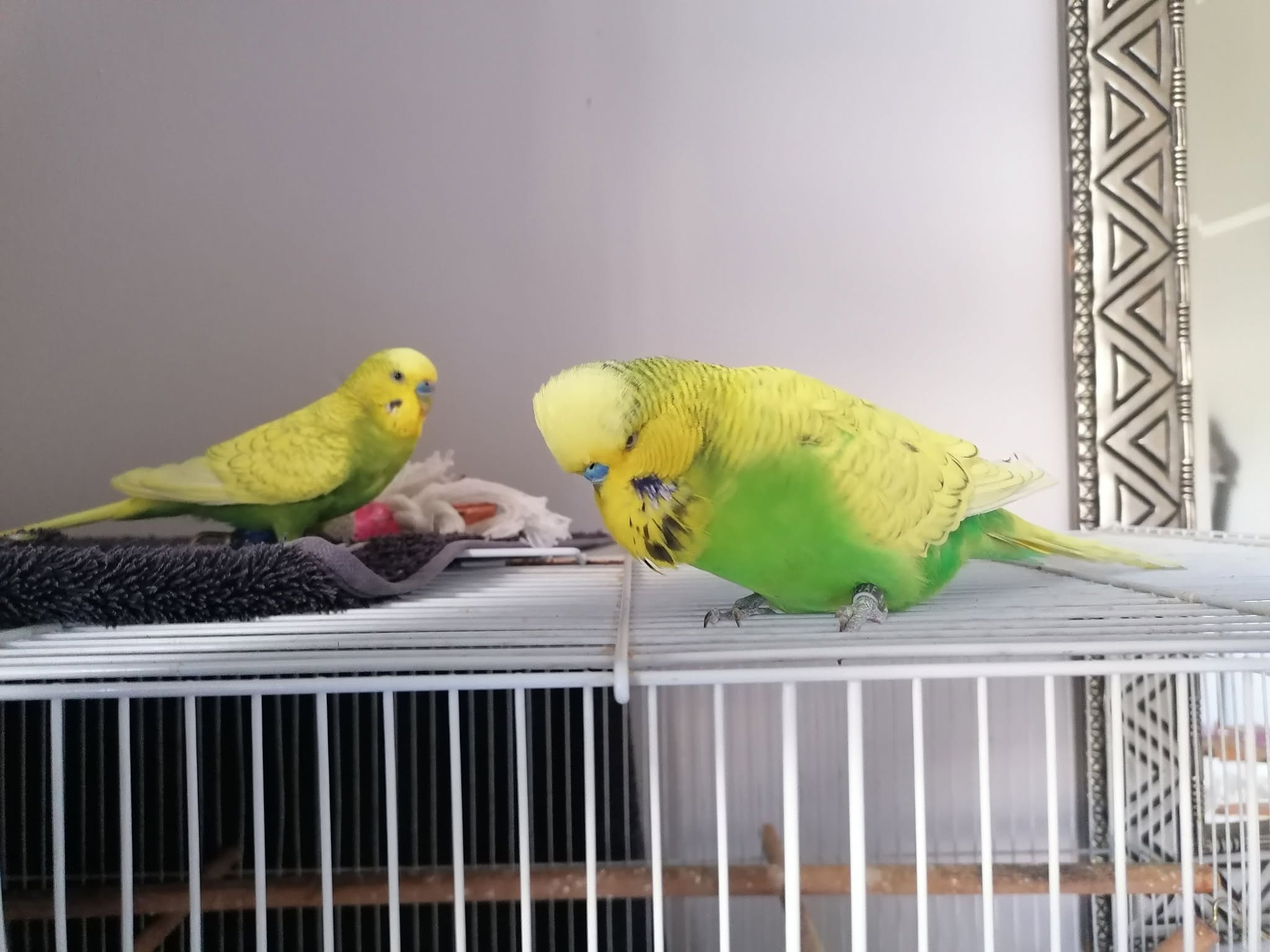
The Full Reference — Toxic and Safe Plants Common in UK Homes
| Plant | Toxicity Level | How Common in UK Homes | Action |
|---|---|---|---|
| Avocado (plant or fruit) | 🚨 Severely toxic — potentially fatal within 24–47 hours in budgies | Very common — grown from stone, used in cooking | Remove from any room bird accesses. No exceptions. |
| Pothos / Devil’s Ivy | ⚠️ Toxic — causes oral and digestive irritation, can cause systemic illness | Extremely common — trailing plant sold everywhere | Remove from bird’s flight space. Do not allow access. |
| Dieffenbachia (Dumb Cane) | ⚠️ Toxic — severe oral irritation, proven fatal to canaries in studies | Very common — office and home staple | Remove from bird’s flight space entirely. |
| Peace lily (Spathiphyllum) | ⚠️ Toxic — calcium oxalates throughout plant including flowers | Very common — sold as air-purifying plant | Remove from bird’s flight space entirely. |
| Philodendron (all varieties) | ⚠️ Toxic — calcium oxalates, causes irritation and systemic effects | Extremely common — fashionable houseplant | Remove from bird’s flight space entirely. |
| English Ivy (Hedera helix) | ⚠️ Toxic — berries and leaves toxic, causes digestive and neurological symptoms | Very common — UK garden and houseplant | Keep out of reach. Remove from flight space. |
| Amaryllis | ⚠️ Toxic — bulbs and flowers contain cardiac-affecting alkaloids | Common — Christmas houseplant, often regrown annually | Remove from bird’s environment during growing season. |
| Holly and Mistletoe | ⚠️ Toxic — berries and leaves toxic to birds | Common — seasonal Christmas decoration | Keep all seasonal greenery out of bird’s access area. |
| Poinsettia | 🔍 Mildly toxic — causes digestive upset more than fatality | Very common — seasonal Christmas plant | Keep out of reach during flight time as precaution. |
| Spider plant | ✅ Safe — non-toxic, can be kept near cage and in flight space | Very common | Safe but verify no pesticide treatment at purchase. |
| Boston fern | ✅ Safe — non-toxic for birds | Common | Safe in flight space. Verify pesticide-free sourcing. |
| African violet | ✅ Safe — non-toxic for birds | Common | Safe near cage and in flight space. |
| Areca palm | ✅ Safe — non-toxic, air purifying | Increasingly common | Safe in flight space. Good choice for bird-friendly décor. |
| Phalaenopsis orchid | ✅ Safe — non-toxic for birds | Very common | Safe near cage and in flight space. |
Frequently Asked Questions
Is the avocado plant dangerous even if the bird doesn’t eat the fruit?
Yes. Not only is the fruit poisonous, but the avocado plant itself is also poisonous. The toxic compound — persin — is present throughout the plant, including in the leaves, stems, and skin. A bird that nibbles on the leaves of an avocado plant is exposed to the same toxin as one that contacts the fruit. The avocado plant must be kept completely out of any room the bird accesses, not just out of reach of the cage.
What should I do if I think my bird has eaten part of a toxic plant?
Call an avian vet immediately. Do not wait for symptoms to appear — by the time clinical signs are visible in a bird that has ingested a severely toxic plant, significant damage may already have occurred. Tell the vet what plant you believe was ingested, how much you think was eaten, and what symptoms you are currently observing. Do not attempt home treatment.
My bird flew near my pothos but I didn’t see it eat anything — should I be worried?
If the bird was in contact with the plant for a brief moment and you saw no chewing or ingestion, monitor closely over the next 24 hours for any change in behaviour, vocalisation, breathing, or dropping character. If anything changes, call a vet. If the bird shows no symptoms after 24 hours of normal observation, the brief contact was likely without consequence. Going forward, remove pothos from the bird’s flight space so the question does not arise again.
Are all plants dangerous to birds?
No. Safe indoor plants for birds include spider plants, Boston ferns, African violets, Areca palms, and Phalaenopsis orchids. Many herbs — basil, mint, dill, parsley — are also safe and can even be offered as food to birds. The appropriate approach is not to remove all plants from the home, but to verify each plant in the bird’s environment against a toxicology list from a reputable avian veterinary source, and to ensure that any plant with uncertain or known toxicity is excluded from the flight space.
Does cooking avocado make it safe to have in the kitchen when the bird is out?
No. The persin compound in avocado is not neutralised by cooking, and cooking may release compounds into the air as well as into the food. A kitchen where avocado is being cooked should be off-limits during cooking for a free-flying bird. Additionally, the fruit on the counter, the stone in the bin, and the plant on the windowsill are all sources of exposure. Avocado in any form should be managed carefully in a household with birds.
Where can I get advice about my specific houseplants and bird safety in Swindon?
Come and talk to us at Paradise Pets — Manor Garden Centre, Cheney Manor, Swindon SN2 2QJ. I am happy to go through the specific plants in your home and give you an honest assessment of which need to move. Call 01793 512400 before visiting.
Not Sure if the Plants in Your Home Are Safe for Your Bird? Come and Check
Bring a list or photos of your houseplants and I will tell you which are safe and which need to come out of the bird’s environment. This is one of the most practically important conversations a bird owner can have, and it costs nothing to have it here before a problem occurs.
⭐ Customer Reviews
Amazing Bird Selection
Had a lovley visit today,staff were very friendly and very helpful,such a great petshop,their selection of birds is incredible,really impressed,thank so much to the staff at Paradise Pets

Friendly Helpful Staff
I have been coming to this place for years and they have a great stock of food for all types of pets. Have a great selection of small mammals and a lot of birds. Staff are friendly and helpful.

Great Quality Hutch
Bought a guinea pigs hutch and run combo, very happy with the service, the hutch was put in my car for me without even asking for help. The wood quality is very good, the instructions easy to follow and we are extremely happy with the fully built hutch. A good size for 2 guinea pigs

Response from Paradise Pets | Wiltshire
Thank you Melanie Latus Nice to provide services to you.
Best Bird Shop Around
It’s the best pet shop in and around Swindon. They always have an amazing selection of birds and all you need to keep them happy. I keep birds myself and the guys there are happy to answer questions and really know their stuff. I have seen budgies etc. in chain pet shops in the area looking really unhealthy and ill – I wouldn’t go anywhere else than Paradise Pets for animals.

Highly Recommended Bird Shop
I could not praise this shop enough. Really helped my Grandson buy his first bird and he’s loving it. Travelled from Somerset and was welcomed with open arms.

Great Shop with Competitive Prices
Great shop with amazing selection for small animals, hamsters, mice ect, highly recommend!
Also has a great selection for dogs & cats too & very competitive prices! 💖

