

Neil has kept, bred, and sold birds at Paradise Pets Swindon since 1988 — over 35 years of watching what happens to pet birds across every kind of British summer. In a summer like 2026 — record heat, unprecedented May temperatures, Amber warnings into June — the question of why more birds are dying than usual has a more complicated answer than any single headline captures. This is his honest attempt to give the full picture.
I have had more conversations about bird deaths this summer than in most summers I can remember. Not all from the same cause. Not all in the same circumstances. But often with the same underlying shape to them — a bird that had been fine, that seemed well, that then was not, in a way the owner genuinely did not see coming.
When I ask the questions that help work out what happened — housing, diet, routine, recent changes, cooking habits, what the house has been like in the heat — the answer is almost never one single thing. It is almost always several things, coinciding.
That pattern is, I think, the real answer to the question in this article’s title. Not one cause. Not one overlooked villain. A cluster of things that are each manageable on their own, but that summer stacks together in a way that overwhelms a bird that might have coped with any one of them individually.
Why This Summer Specifically Has Produced More Deaths Than Usual
The 2026 summer has been genuinely extraordinary by UK standards. May broke century-old daily maximum temperature records, with 35.1°C recorded at Kew Gardens — the hottest UK May day ever recorded. June brought Amber Extreme Heat Warnings and temperatures forecast to reach 38°C, with overnight temperatures remaining unusually high rather than giving birds the overnight cooling that normally allows some recovery between hot days.
Avian research published in March 2026, covering a 60-year dataset of nestling birds, specifically found that extreme weather events — sustained high temperatures, particularly when combined with other environmental stressors — measurably reduce bird survival odds compared with moderate conditions. That finding was about wild birds, but the principle it captures applies directly to pet birds: environmental stress does not produce a proportional, predictable effect. It interacts with other stressors in ways that can tip a bird from coping to not coping, suddenly, without obvious prior warning.
The Real Problem — Cumulative Summer Stress, Not A Single Cause
Here is the honest picture of what summer actually does to a pet bird, stated as a complete list rather than in isolation.
A bird in summer is managing heat, with all the physiological effort that involves — panting, altered metabolism, redistributing blood flow to the skin to lose heat, all of which costs energy and taxes the body’s reserves. At the same time, many birds are going through an annual moult — one of the most energetically demanding processes in a bird’s year, requiring significant protein and energy at exactly the moment the heat is already drawing on those reserves. The longer daylight hours of summer trigger hormonal shifts that add further physiological load, and in some birds produce genuine behavioural changes that themselves generate stress. The disease pressure specifically connected to the warmer months is real and well documented — trichomonosis, for instance, spreads most effectively during exactly this period.
And on top of all of that, in 2026 specifically: record temperatures have pushed many UK households into sealed, air-conditioned environments, changing the air quality and airborne toxin concentrations in a way I have written about separately. The accumulation of all of this, arriving in the same season, on the same bird, in the same weeks, is the complete picture that most coverage of “summer bird deaths” misses by focusing on any single element of it.
The Specific Ways These Stressors Interact
The reason cumulative stress matters as a distinct concept rather than just a list of individual risks is that these factors genuinely amplify each other, rather than simply adding together.
A bird going through a moult has fewer fully-formed, insulating feathers, which makes thermoregulation harder in extreme heat. A bird under heat stress has a suppressed immune response, which makes it more vulnerable to any infectious disease circulating in its environment at precisely the moment disease pressure is highest. A bird whose diet has not been properly adjusted for the higher energy demands of moult and heat combined becomes depleted faster than the same bird’s diet would deplete it in a mild season. A bird already stressed by heat and hormonal changes responds less well to handling, to changes in routine, or to any additional environmental disruption than it would at a less demanding time of year.
None of this is hypothetical. These interactions are documented in avian physiological research. The practical consequence is that a bird which is managing any one of these pressures with some margin to spare may have no margin left when two or three of them land simultaneously — which is exactly what British summer does, especially a summer as extreme as 2026.
The Signs That A Bird Is Running Out Of Reserve
Because cumulative stress often presents differently from acute single-cause illness, it is worth knowing specifically what to watch for.
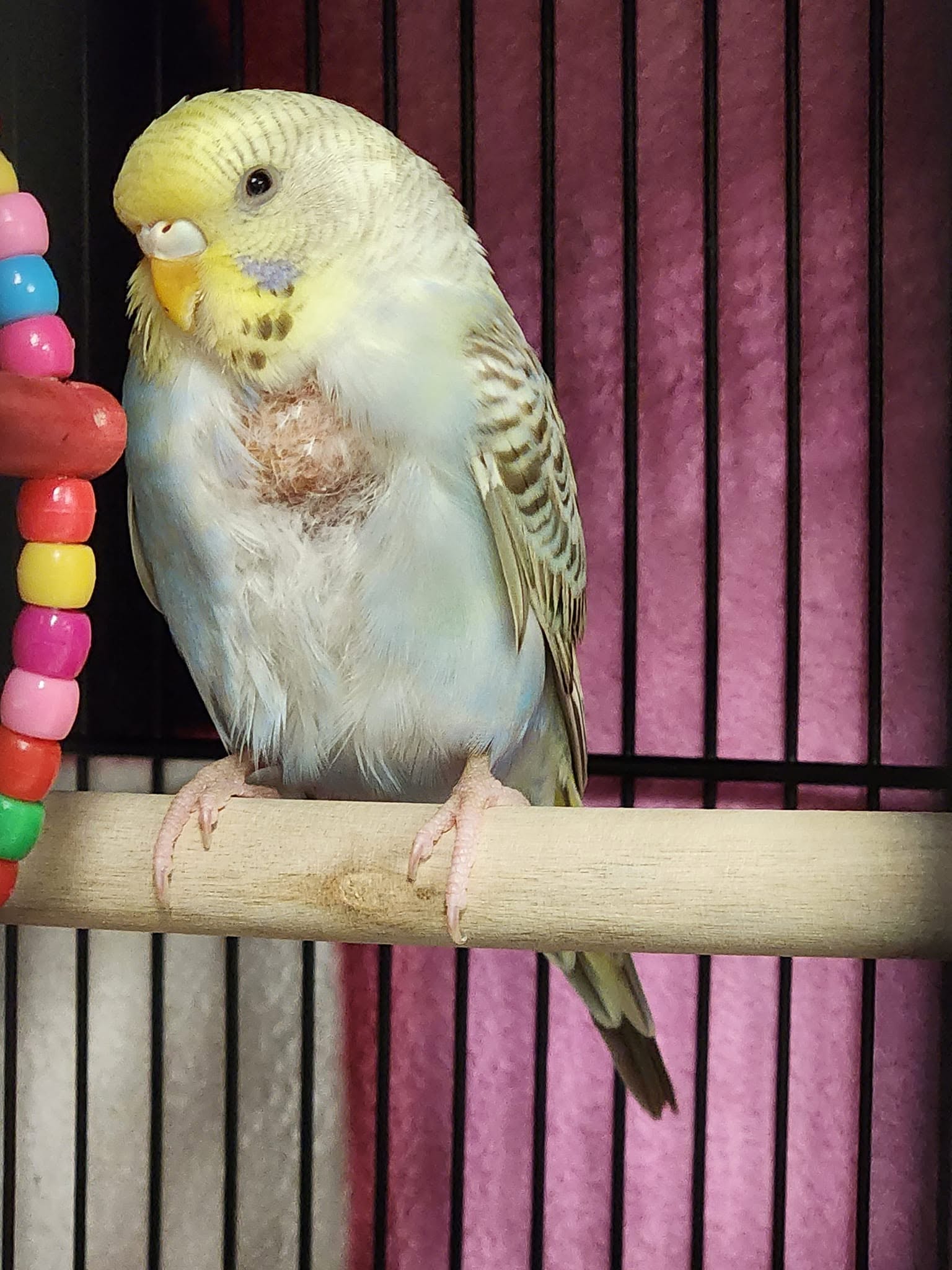
The key point about cumulative stress is that the early signs are genuinely subtle. This is not usually a bird that looks dramatically unwell one day and fine the day before. It is a bird that has been slightly quieter, slightly less enthusiastic, slightly less like itself over a number of days or weeks — and because the change is gradual, it is easy to attribute to summer weather rather than to recognise as a deterioration that needs addressing.
What Actually Helps — Addressing The Load, Not Just The Individual Stressors
If cumulative load is the real problem, the response needs to address the total picture rather than any single element of it.
On heat specifically: cage positioning away from direct sunlight, improved airflow without direct draughts, and consistently fresh water are all standard advice I have given repeatedly this summer — but they matter more when combined with the other pressures below, not less.
On moulting: a diet genuinely appropriate for the moult period — with sufficient protein to support feather regrowth — reduces the energy drain that moulting creates at exactly the time heat is already drawing on reserves. For budgies and cockatiels, this means ensuring the diet is not simply dry seed, but includes the protein sources needed to support feather production.
On disease pressure: following the RSPB’s updated seasonal guidance for any garden bird feeding, and maintaining clean, fresh water for any outdoor exposure, reduces the one major infectious disease risk that peaks in exactly this period. I have covered this in detail in other articles on this site.
On airborne toxins: removing non-stick cookware from the equation, and eliminating scented candles and aerosol products from the bird’s environment, removes a risk that sealed summer homes specifically amplify. This is covered in more detail separately.
And on monitoring: check your bird more often than you normally would through the hottest weeks. Not just a glance — a proper look at droppings, posture, appetite, and response to you. The difference between a bird that is managing and one that is not is sometimes only visible if you are looking for it properly.
Why This Particular Pattern Gets Missed So Often
I want to address this directly, because I think the way bird health in summer tends to be discussed — heat stress on one day, disease on another, toxins in another article — actually works against owners understanding what is really happening to their bird.
A bird dying in summer is very rarely dying of heat alone, or disease alone, or PTFE toxicity alone. It is almost always the case that the bird’s overall resilience had already been reduced by some combination of the pressures this season brings, leaving it with insufficient margin to cope with the final stressor that presents as the immediate cause of death. Addressing one element — moving the cage away from the sun, or removing the non-stick pan — is necessary but not sufficient if the other elements of the cumulative load are not also addressed.
This is what I mean when I say the real answer nobody is talking about. Not a new pathogen, not a specific product, not a single overlooked cause. A genuinely complete picture of what summer does to a pet bird, taken as a whole, across the entire season, rather than treated as a series of individual, unrelated incidents.
Frequently Asked Questions
If my bird dies in summer with no obvious single cause, what should I do?
Contact an avian vet — ideally one experienced with exotic species — and ask about a post-mortem examination if you want to understand what happened. In some cases this will reveal a specific cause; in others, it will reveal the kind of multi-system findings consistent with cumulative stress rather than a single acute event.
Is cumulative stress genuinely recognised in avian medicine?
Yes, the concept of multiple simultaneous stressors compounding each other’s effects in ways that exceed their individual impacts is well established in avian physiology and veterinary medicine. The specific interaction between heat stress and immune suppression in birds is documented, as is the relationship between moulting and energy depletion.
Is there a single most important change I can make to reduce summer risk for my bird?
If I had to choose one: review the complete environment, not just one element of it. The greatest risk in summer is the cumulative picture, and addressing one element while leaving others unaddressed only partially reduces the overall load on the bird.
How do I know if my bird is in genuine distress rather than just being quieter because of summer weather?
Quiet in isolation, with everything else normal, is usually not immediately alarming — birds do respond to heat and seasonal change. The concern is quiet combined with other signs: reduced appetite, changed droppings, puffed feathers persisting past the morning, or reduced responsiveness. That combination, rather than any single element, is the signal worth acting on.
Does this apply to all bird species equally?
The general principle of cumulative stress applies across species. The specific sensitivities vary — budgies, cockatiels, canaries, and finches each have somewhat different tolerance profiles — but all are more vulnerable to the combination of pressures this summer has brought than to any single one in isolation.
Is 2026 genuinely worse than previous summers, or does it just feel like it?
The data is unambiguous on this. May 2026 set the hottest UK May day temperature on record. June brought Amber Extreme Heat Warnings with conditions significantly more severe than typical British summers. The 60-year ScienceDaily research published in 2026 specifically confirmed extreme weather events compound bird mortality rather than simply shifting it. 2026 is genuinely an unusual summer by UK historical standards, not just a perception.
One Last Thing From Me
Every conversation I have had this summer about a bird that died unexpectedly has involved an owner who was doing most things right. They were not careless. They were not uninformed. They were managing the things they knew to manage — and the thing that caught them out was the things they did not know about, or the way those things combined with what they thought they already had under control.
That is the nature of cumulative stress, and it is why I think this particular summer deserves a more complete explanation than any single-cause coverage provides. A bird can cope with heat. It can cope with a moult. It can cope with disease pressure, or with a slightly sealed room, or with a season’s disruption to its routine. What it cannot always cope with is all of those things, arriving together, in a summer this far outside what British bird-keeping has historically had to prepare for.
The preparation that matters is the complete one — covering all the elements, not just the most obvious.
If you have any concern about your bird this summer, come and find us at Manor Garden Centre, Cheney Manor, Swindon SN2 2QJ. Get in touch here or call 01793 512400.
Worried About Your Bird This Summer? Come And Talk To Us
We stock everything you need to help keep your bird well through an unusually demanding season. If something about your bird does not look right, come in and talk to us — and if it looks serious, please contact an avian vet immediately.