
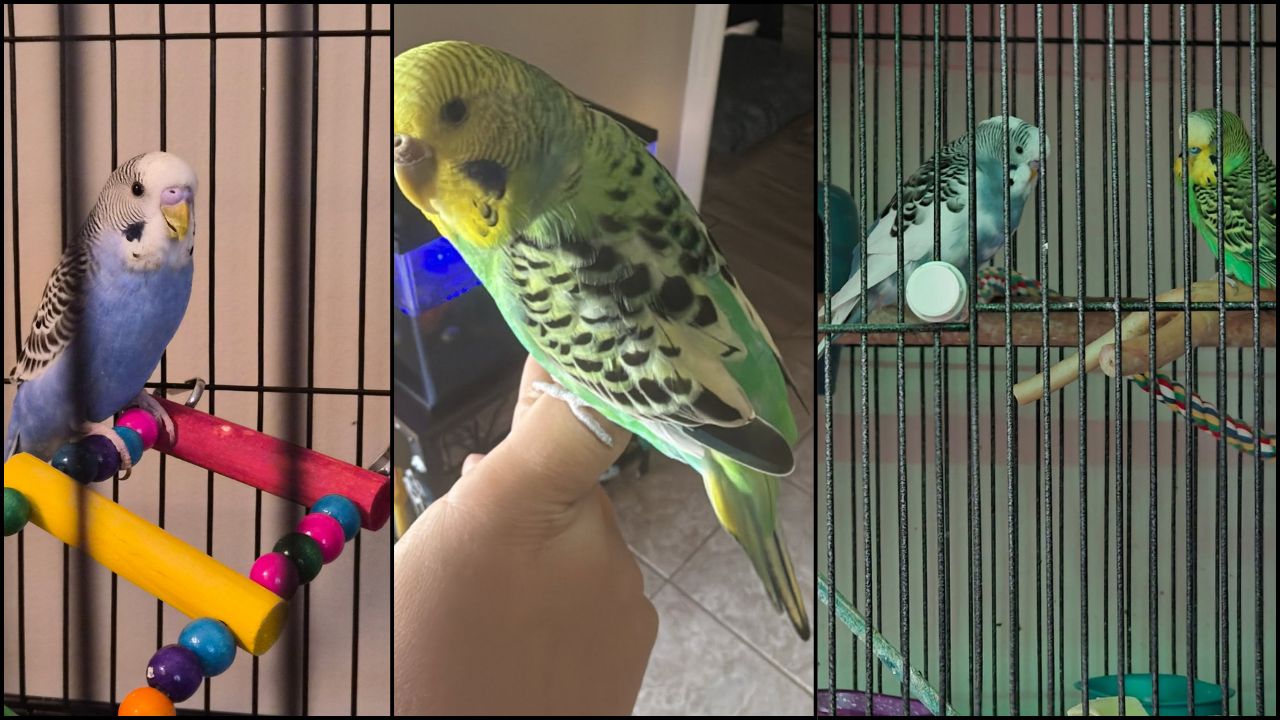

Neil has run Paradise Pets Swindon since 1988 — over 35 years of warning bird owners about the household hazards that nobody tells them about at the point of purchase. Most people who read about birds and kitchen dangers think about non-stick cookware. This article is not about that. It is about something older, more widespread, and in some ways more dangerous — and something that has been in British kitchens long before non-stick coating existed.
I want to start with something that happened in a house in the Midlands a few years ago. A family with two budgerigars. The birds had been fine the previous evening — active, vocal, eating normally. By mid-morning the following day, one was dead in the cage and the other was on the floor, barely moving. The family dog was lethargic. The family themselves had headaches and were feeling nauseous in a way they had put down to a bug going around.
It was not a bug. It was carbon monoxide. The boiler serving their kitchen had a partially blocked flue. The gas engineer who attended described the CO levels in the house as “not immediately lethal to adults, but building.” The bird had died first. The second was saved.
I tell you that story not to alarm you but because it illustrates, precisely, the thing I want to explain in this article. The budgerigar did not die first because it was unlucky. It died first because its respiratory system is so efficient at extracting what is in the air around it that it absorbed a lethal concentration of carbon monoxide before the humans in the same house had absorbed enough to feel more than mildly unwell. The bird was doing exactly what canaries did in coal mines for over a century: providing the earliest possible warning of a gas that cannot be seen, smelled, or tasted — by the time the humans noticed, the bird was already gone.
The question this raises — and it is the question I want this article to answer — is not whether your budgerigar is at risk from carbon monoxide. It is whether you know that it is, and whether your home is adequately protected against the source of that risk. Because the Firechief Global Carbon Monoxide Awareness Report, published in 2026, found that 31 per cent of UK households either do not have a carbon monoxide detector installed or are not sure whether they do. And the percentage of people who are aware of the signs of CO poisoning has, according to that same report, actually decreased since 2024.
What Carbon Monoxide Is — And Why It Is Specifically Dangerous To Birds
Carbon monoxide is produced by incomplete combustion — when a fuel burns without access to sufficient oxygen, it produces CO rather than the less dangerous carbon dioxide. Every gas appliance in a UK home is a potential source: the hob, the boiler, the gas fire, the cooker. Under normal conditions, with proper maintenance and adequate ventilation, these appliances burn cleanly and the small amounts of CO produced are safely expelled through flues, vents, and natural air movement.
The conditions that produce dangerous CO levels are specific and often invisible. A partially blocked flue — perhaps by debris, by a deteriorated seal, or by a bird’s nest in the chimney stack — can prevent combustion gases from escaping properly. A poorly maintained boiler whose burner is not running at the correct mixture can produce elevated CO output. A gas hob in a poorly ventilated kitchen, used for extended cooking at high heat, can produce locally elevated CO concentrations in the immediate area. None of these situations announce themselves. The gas burns. The hob looks normal. The boiler fires as it always does. And CO accumulates silently in the air of the room.
Carbon monoxide is colourless, odourless, and tasteless. The London Fire Brigade records around 50 deaths per year in the UK from CO poisoning, with hundreds more hospitalised. The Firechief Global 2026 report found that the percentage of UK respondents unaware of the signs and symptoms of CO poisoning had tripled compared to the 2024 report. These are not marginal statistics.
For birds, the risk is amplified by the same biological feature that makes them such efficient fliers. A bird’s respiratory system — the air sacs, the flow-through breathing pattern that extracts oxygen from inhaled air in both the inward and outward breath — absorbs gases from the surrounding air at a rate that significantly exceeds the absorption rate of a mammalian respiratory system. The same efficiency that allows a bird to sustain flight at altitude, where oxygen is thin, means it absorbs toxic gases from a contaminated atmosphere faster, reaches dangerous blood concentrations sooner, and has less time from first exposure to critical toxicity than any human in the same space.
A budgerigar in a kitchen where CO is building will show signs of distress — weakness, loss of balance, falling from a perch, disorientation — before the humans in the same room feel more than a mild headache. That is not a coincidence. That is biology. And it is exactly the biology that made canaries the standard safety indicator in coal mines from the late nineteenth century until 1986, when electronic detectors replaced them.
The Specific Sources In A UK Kitchen — What To Know About Each
Not all gas appliances carry the same risk profile, and I want to be specific rather than vague, because a general warning about “gas appliances” is less useful than an understanding of where the actual risk concentrates.
The boiler is the most significant source in most UK homes, not because it is more dangerous by design but because it is the appliance most likely to be inadequately maintained and most likely to have a flue issue that produces elevated CO output without the appliance appearing to malfunction. A boiler that is overdue for its annual service, a flue that has not been inspected, a seal that has deteriorated without visible signs — these are the conditions that produce the slow, building CO accumulation that the Midlands family experienced. A boiler in a kitchen or utility room adjacent to a kitchen is a source worth knowing about specifically. A boiler anywhere in the house with a flue that runs through the building is a potential source for any room that flue passes through or terminates near.
The gas hob produces CO during normal use, particularly at high heat and in poorly ventilated conditions. A kitchen with an extractor fan running and a window open during extended high-heat cooking manages this risk adequately in normal circumstances. A kitchen with no ventilation, windows closed, an old or poorly adjusted hob burner, and extended use at high heat is a different situation. The Which? guidance updated in July 2026 specifically notes that CO detectors should not be placed immediately next to a gas hob — because the minor CO produced during normal ignition can trigger false alarms and create alarm fatigue — but that a detector in the kitchen space, properly positioned, is important for any home with a gas hob.
Gas fires and wood-burning stoves, where present, carry a specific risk from blocked or deteriorated flues. A chimney blocked by a bird’s nest — an irony that I note without enjoyment — or by debris can divert combustion gases back into the room. The Energy UK guidance is explicit that chimneys should be swept at least annually, and that any blockage can alter the combustion balance in a way that produces CO ingress into the home.
Blocked vents and flues from any source are the common thread. The appliance may be functioning correctly by its own standards — burning cleanly, producing the correct flame colour, showing no fault codes — while the egress for its combustion gases is compromised. That combination, functioning appliance and compromised egress, is the scenario that kills people and kills birds, because there is nothing obvious to see.
The Signs Your Budgie Is Showing You — And What They Mean
I want to be direct about this, because this is the section of the article that might, in the right circumstances, save a life. Not the bird’s life specifically — though that matters — but a human life in the same household.
A budgerigar that is showing signs of acute distress in a home with gas appliances is not a budgerigar with an illness until carbon monoxide has been ruled out. The signs overlap significantly — weakness, loss of balance, falling from the perch, disorientation, rapid breathing, collapse — but the context and the timeline are different. An illness typically develops gradually, with subtle early signs building over days. CO toxicity develops quickly, in a house where the bird was well yesterday and is in crisis today, in a pattern that reflects the accumulation of gas in the environment rather than the progression of a disease in the bird’s body.
The specific combination that should prompt immediate action — not observation, immediate action — is this: a bird showing acute distress, weakness, or collapse in a home with gas appliances, where other members of the household are experiencing headaches, nausea, dizziness, or unusual fatigue that they might otherwise attribute to tiredness or a virus. That combination is carbon monoxide until proven otherwise.
The correct response, if you suspect CO, is to get everyone out of the building immediately — people and animals — leaving the door open behind you to allow ventilation, and to call 105 (the National Gas Emergency Service) or 999 from outside the building. Do not go back in for any reason until the building has been assessed and cleared. Do not open windows from inside the building — get out, then ventilate from outside if possible, but the priority is departure.
The Which? guidance on CO detector warning signs is worth knowing: a lazy yellow or orange flame on the hob rather than a crisp blue flame; dark staining around or on gas appliances; the boiler’s pilot light blowing out repeatedly; increased condensation on windows in rooms with gas appliances. None of these are definitive CO indicators, but all of them are reasons to have a gas engineer assess the appliance before continuing to use it.
What Adequate Protection Looks Like — Specifically
I do not want to leave this article at the level of identifying a risk without being specific about what adequate protection actually involves, because I think there is a gap between “I know CO is a risk” and “my home is actually protected” that is worth closing directly.
A carbon monoxide detector on every floor of your home. Not one detector in the hallway — one on every floor, with particular attention to rooms containing or adjacent to gas appliances. The British Gas guidance is explicit: a CO alarm in every room with a fuel-burning appliance, including any room with a flue running through it, and in every sleeping room. For a home with a kitchen boiler or gas hob on the ground floor and bedrooms on the first floor, that means at minimum one detector in the kitchen space and one on the landing or in a bedroom.
The detector should be from a recognised brand purchased through a reputable retailer. The Which? testing conducted in July 2025 and reviewed in July 2026 specifically warns against cheap, unbranded CO detectors from online marketplaces — many of which fail to detect CO adequately in testing. The detector is the last line of defence. It needs to work.
Do not position the detector immediately next to the gas hob — the minor CO produced during normal hob ignition can trigger false alarms that create alarm fatigue, the habit of ignoring an alarm that is the most dangerous possible response to a CO detector sounding. Position it one to three metres from the appliance, at head height, in the broader kitchen space.
Annual boiler service by a Gas Safe registered engineer. Not every other year. Annually. This is the single most important preventive action for CO risk in a UK home, and the one most commonly deferred. The Gas Safe Register is the official list of qualified gas engineers in the UK — any engineer carrying out gas work in your home should be registered, and you should ask to see their ID card before they begin.
Annual chimney sweeping if you have a working chimney or flue from any fuel-burning appliance. A blocked chimney is a CO risk. The Energy UK guidance is clear on this, and it is one of the recommendations most frequently not acted on because a chimney that looks clear from below is not necessarily clear throughout its height.
Never use a gas hob as a heat source. This sounds obvious and I include it because it happens — particularly in cold weather when a heating system has failed — and it is one of the fastest ways to produce dangerous CO levels in a domestic kitchen.
Where Your Budgie’s Cage Should And Should Not Be In Relation To This Risk
I want to address cage placement specifically, because the general advice to keep budgerigars out of kitchens is advice that not everyone follows, and for those who do not, the CO risk is one of the most important reasons why the advice exists.
A budgerigar’s cage should not be in a kitchen. This is a position I have held for 35 years and I have given several reasons for it across the articles on this site — non-stick cookware fumes, aerosol and cooking spray exposure, temperature variation, the specific hazards of an environment where multiple chemical and thermal risks are concentrated. Carbon monoxide risk is an additional reason, and in some ways the most serious of all, because it is the least visible and the least anticipated.
If your bird’s cage is in a kitchen — or in a room directly adjacent to a kitchen, with shared air circulation — and your kitchen contains gas appliances, the bird is in the position of providing the earliest possible warning of a CO event in your home. That is not a role I want an animal to be in inadvertently. It is a role it will fulfil whether it has been placed there intentionally or not, and the outcome for the bird in a genuine CO event is the one I described at the start of this article.
Moving the cage to a room that is not a kitchen, and ensuring that room is not on a shared air circuit with a kitchen containing gas appliances, removes the bird from the position of being the first casualty of a CO event in your home. A CO detector in the kitchen does the job the bird should not have to do — it provides the early warning, it does so without dying, and it does so loud enough to be heard from any room in the house.
If your circumstances mean the bird’s cage must be near the kitchen, then the non-negotiable minimum is a properly positioned, properly maintained CO detector in that kitchen, a Gas Safe registered engineer servicing every gas appliance annually, and a CO emergency plan that everyone in the household knows — where to go, what number to call, and that the bird comes with them when they leave.
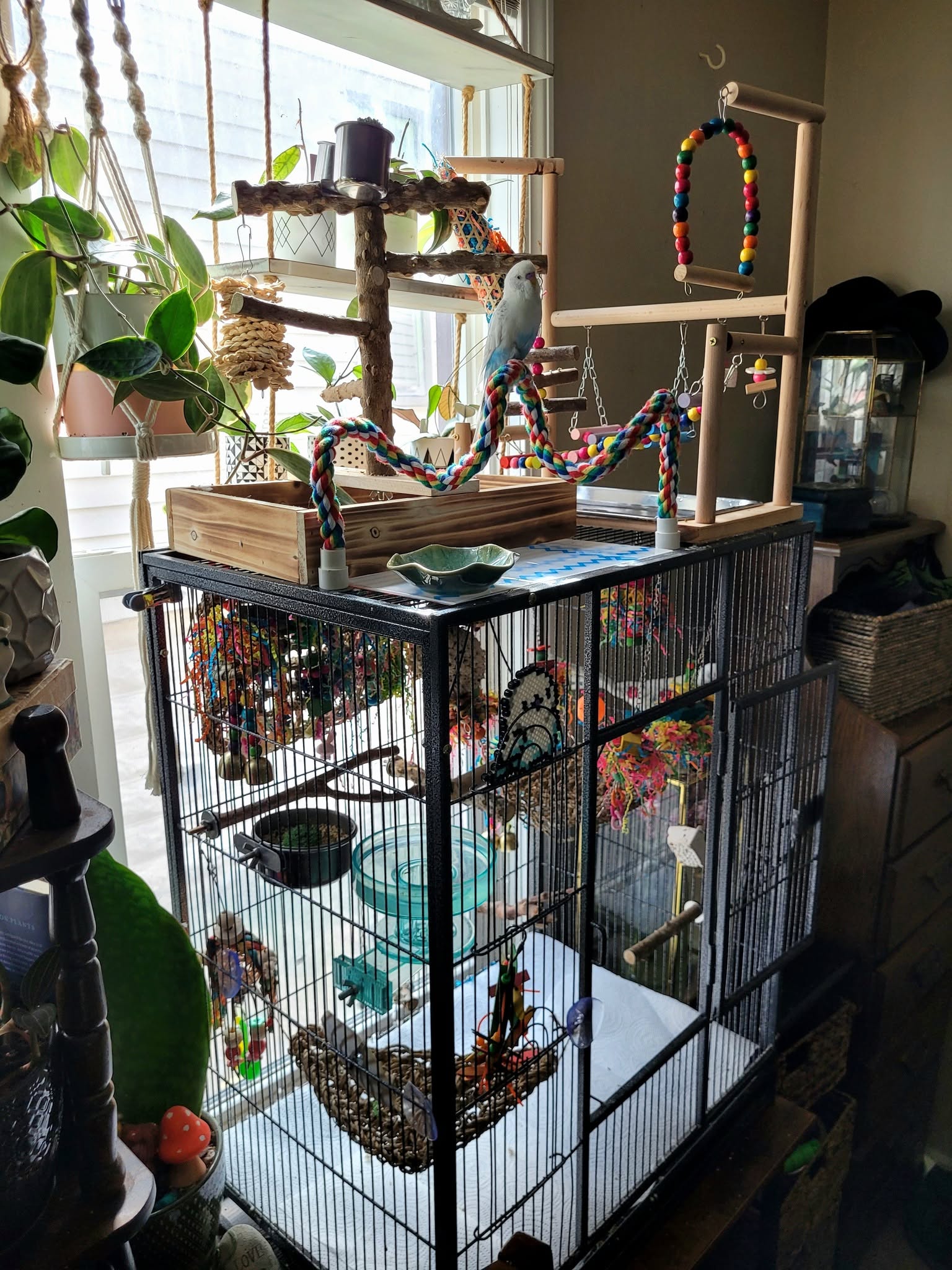
The Canary In The Coal Mine — Why That Phrase Still Matters
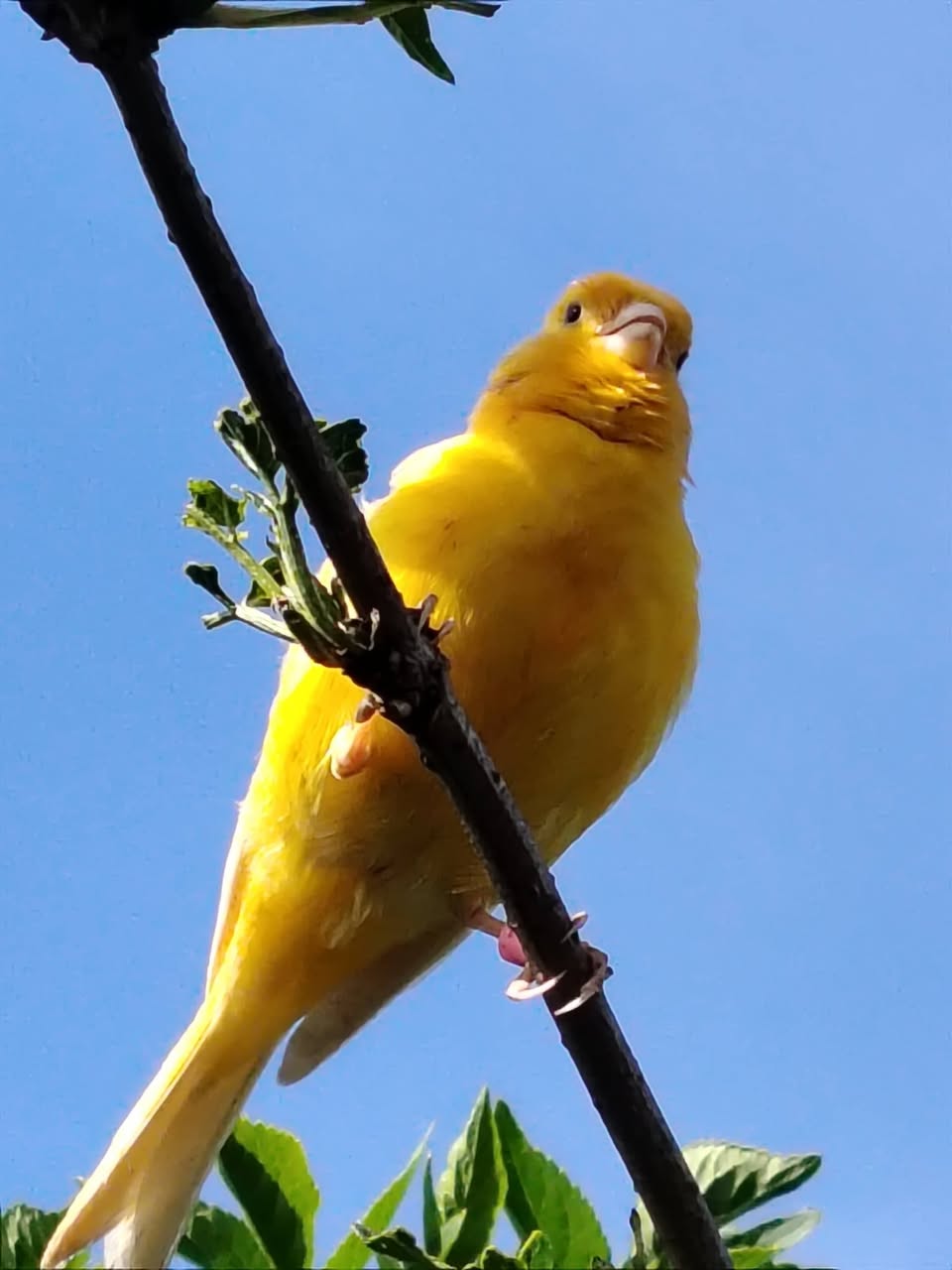
The practice of using canaries as CO detectors in UK coal mines was not discontinued because the method stopped working. It was discontinued in 1986 because electronic CO detectors had become reliable enough to replace a living animal in that role. The canary worked. That is why the phrase entered the language. That is why it has remained there.
The budgerigar in your home is not a canary in a coal mine. It is a companion animal and it deserves to be treated as one. But it is a bird, and its biology means it will detect a CO problem in your home before you do. The question is whether you want to receive that warning because you noticed your bird was in distress and acted on it, or because something worse has already happened.
A CO detector costs less than a single bag of premium seed. An annual boiler service costs considerably less than a single avian veterinary consultation. The protective measures I have described in this article are not expensive or complicated. They are simply things that need to be done, that 31 per cent of UK households are not doing, and that the bird owner is in a specific position to understand the importance of — because they already know, better than most, what it means to pay close attention to the living thing that shares their home.
Check whether you have a working CO detector in your kitchen today. If you do not, get one. If you do, test it. If your boiler has not been serviced in the last twelve months, book a Gas Safe engineer. These are not difficult things. They are the things that mean your budgerigar never has to be the first one to tell you there is a problem.
Frequently Asked Questions
How quickly does carbon monoxide affect a budgerigar?
The speed depends on the concentration of CO in the air and the bird’s size, but the biological reality is that a bird will show signs of CO toxicity significantly faster than a human in the same space. In a genuine CO event with meaningful gas accumulation, a budgerigar may show acute distress within minutes of exposure that would take substantially longer to produce equivalent symptoms in an adult human. This is not an imprecise estimate — it is the biological basis of the canary-in-the-mine practice that was used in UK coal mines for over a century.
My kitchen has a gas hob but I do not have a boiler in the kitchen. Do I still need a CO detector?
Yes. A gas hob is a CO source, particularly in a poorly ventilated kitchen at high heat. The risk from a hob alone is generally lower than the risk from a poorly maintained boiler, but it is real and the appropriate response is the same: a properly positioned CO detector in the kitchen space, operated appliances with adequate ventilation, and regular professional maintenance of all gas equipment.
Can I put a CO detector right next to my gas hob?
No — this is a specific mistake that Which? and Gas Safe both flag. A detector positioned immediately adjacent to the hob will be triggered by the minor CO produced during normal ignition, creating frequent false alarms that lead to alarm fatigue — the habit of ignoring an alarm that is, in a genuine CO event, a potentially fatal response. Position the detector one to three metres from the appliance, at head height, in the broader kitchen space. Read the manufacturer’s instructions for your specific model, as positioning recommendations may vary.
My bird is in a room next to the kitchen. Is it at risk?
This depends on the degree of air circulation between the two spaces. An adjacent room with a closed door and no shared ventilation is a substantially lower-risk environment than an open-plan space where the kitchen and the bird’s room share air circulation. For a bird in a room directly adjacent to a kitchen containing gas appliances, with any degree of open-plan connectivity, I would treat the risk as meaningful and ensure CO detectors are appropriately placed in both spaces.
What are the signs of CO poisoning in a budgerigar?
Weakness, loss of balance, falling from the perch, disorientation, rapid or laboured breathing, and collapse are the signs associated with acute CO toxicity in birds. These signs overlap with several illness presentations, which is why context matters — a bird showing these signs acutely, in a home with gas appliances, particularly where household members also have unexplained headaches or nausea, is a CO emergency until proven otherwise. Get out of the building, take the bird with you, call 105 from outside, and contact an avian vet about the bird’s condition from a safe location.
The Simplest Action From This Article
When you finish reading this, go and look at your kitchen. Note whether there is a working CO detector somewhere in that space — not next to the hob, but in the room. If there is not, order one today. If there is, press the test button and confirm it sounds. Check when your boiler was last serviced by a Gas Safe registered engineer, and if it was more than twelve months ago, book a service.
That is it. Three actions, any of which takes less time than reading this article. The budgerigar in your living room has a respiratory system that will detect CO before you do. The CO detector in your kitchen should detect it before the budgerigar does. Make sure it is there to do that job.
If you have any questions about bird safety in your home — kitchen placement, CO risk, the other hazards I have written about elsewhere on this site — come and talk to us. This is exactly the kind of conversation this counter has always been for.
Questions About Keeping Your Bird Safe In Your Home? Come And Talk To Us.
After 35 years, we have covered every household hazard worth knowing about. If you are not sure whether your home is safe for a bird, come in and ask. A straight conversation, no pressure, no upselling — just the information that matters.
⭐ Customer Reviews
Amazing Bird Selection
Had a lovley visit today,staff were very friendly and very helpful,such a great petshop,their selection of birds is incredible,really impressed,thank so much to the staff at Paradise Pets

Friendly Helpful Staff
I have been coming to this place for years and they have a great stock of food for all types of pets. Have a great selection of small mammals and a lot of birds. Staff are friendly and helpful.

Great Quality Hutch
Bought a guinea pigs hutch and run combo, very happy with the service, the hutch was put in my car for me without even asking for help. The wood quality is very good, the instructions easy to follow and we are extremely happy with the fully built hutch. A good size for 2 guinea pigs

Response from Paradise Pets | Wiltshire
Thank you Melanie Latus Nice to provide services to you.
Best Bird Shop Around
It’s the best pet shop in and around Swindon. They always have an amazing selection of birds and all you need to keep them happy. I keep birds myself and the guys there are happy to answer questions and really know their stuff. I have seen budgies etc. in chain pet shops in the area looking really unhealthy and ill – I wouldn’t go anywhere else than Paradise Pets for animals.

Highly Recommended Bird Shop
I could not praise this shop enough. Really helped my Grandson buy his first bird and he’s loving it. Travelled from Somerset and was welcomed with open arms.

Great Shop with Competitive Prices
Great shop with amazing selection for small animals, hamsters, mice ect, highly recommend!
Also has a great selection for dogs & cats too & very competitive prices! 💖

