
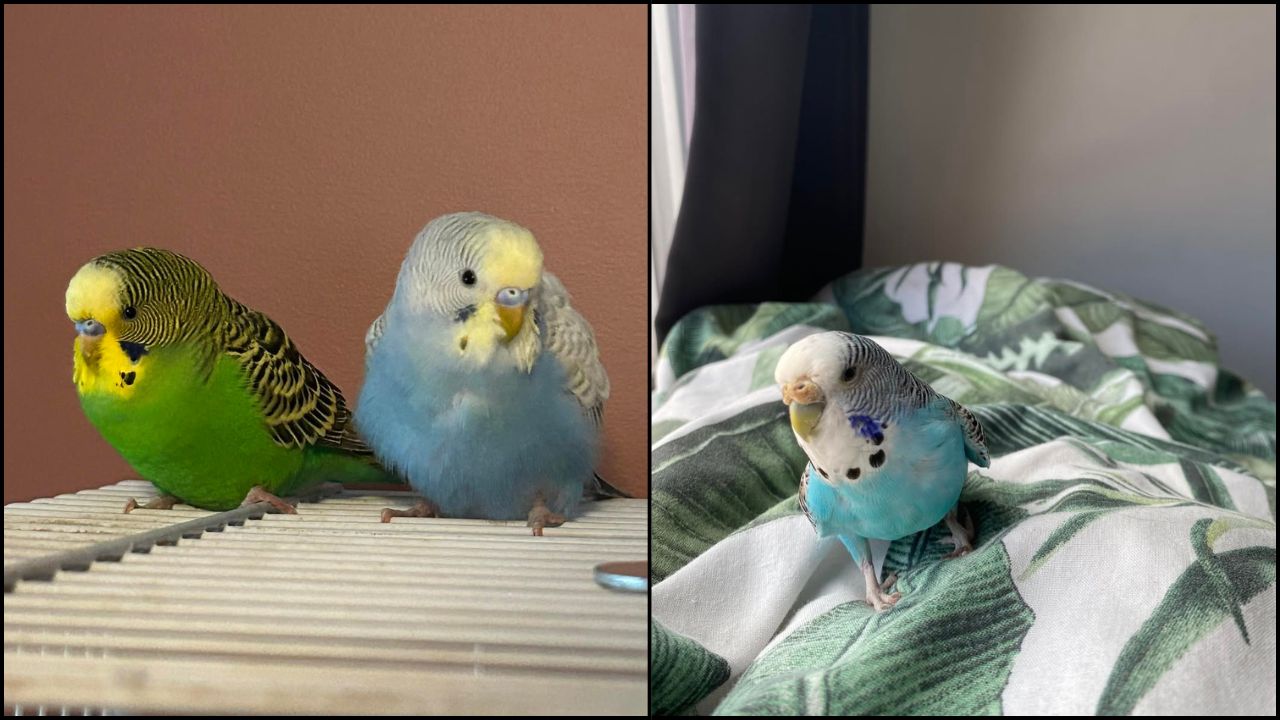

Neil has been keeping, breeding, and selling budgies at Paradise Pets Swindon since 1988 — over 35 years of daily first-hand experience with these birds and the people who feed them. The diet question is the one he answers most often and the one where the gap between what owners are doing and what actually works is widest. This is his honest assessment of what most UK budgies are being fed, why it is insufficient, and what a correct diet actually looks like — without fads, without supplements nobody needs, and without the overcomplicated advice that makes owners give up before they start.
A woman came into the shop carrying a seed mix she had bought from a well-known supermarket. She had been using it for three years. Her budgie was alive and broadly functional — it ate, drank, sat on its perch, and chirped occasionally. She was not there because anything was visibly wrong. She was there because someone had told her that seed-only diets were bad and she wanted to know if that was true.
I told her it was true. I also told her that the fact her bird had survived three years on seed alone was not evidence the diet was adequate — it was evidence that budgies are resilient enough to compensate for nutritional deficiency for a significant period before the consequences become visible.
Then I asked her whether she had ever seen her bird engage enthusiastically with its food — genuinely investigate it, show preference between items, carry food to different parts of the cage, eat with visible appetite. She thought about it.
Not really, she said.
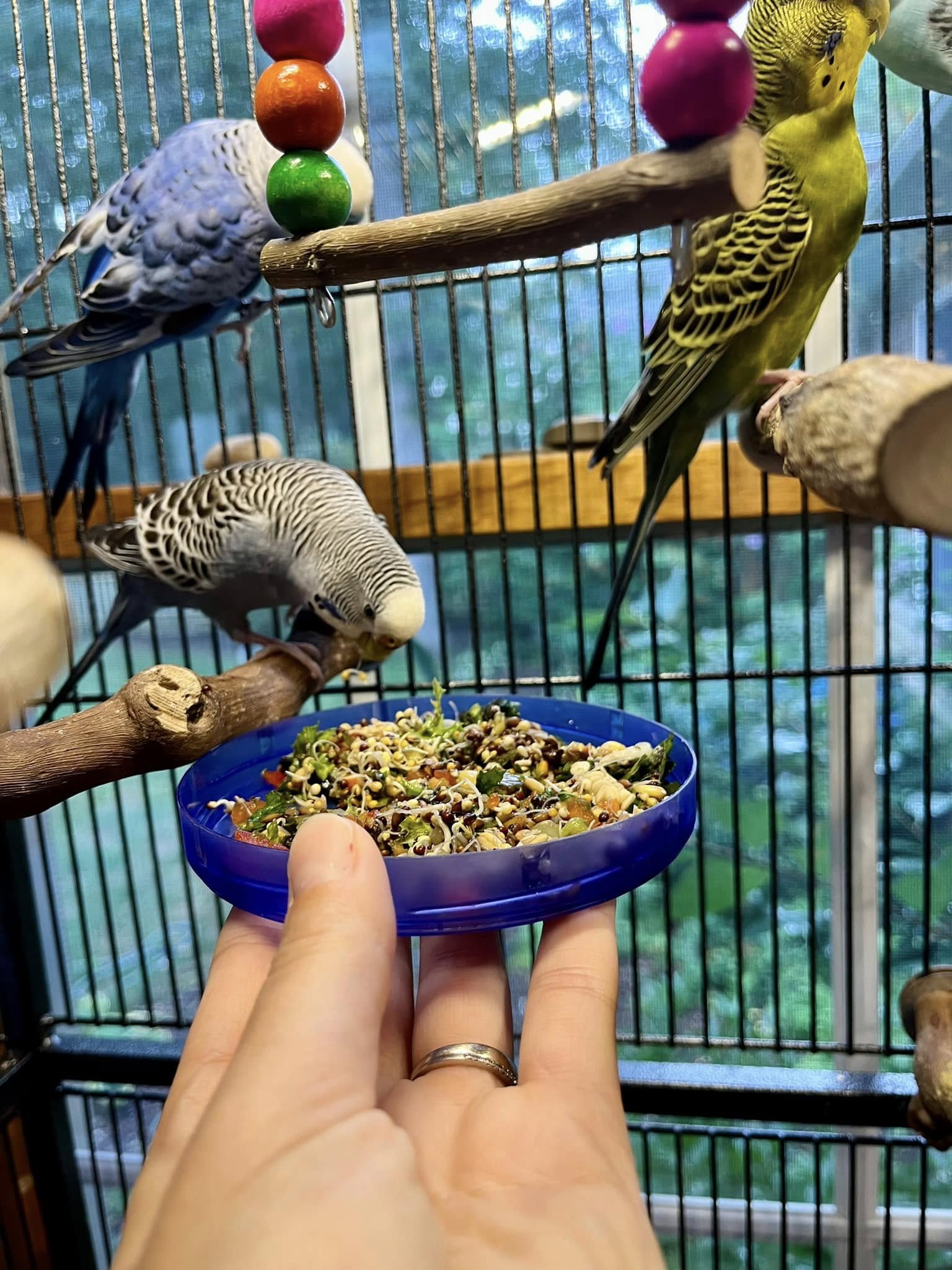
I showed her a bird in our aviary eating freshly sprouted seed alongside chopped capsicum and a piece of broccoli. The difference in engagement was not subtle.
She bought pellets, a bag of sprouting seed, and a conversation that lasted about twenty minutes. She came back three weeks later to tell me the budgie was a different bird. More active, more vocal, more interested in everything around it. She had not realised what she had been missing because she had not known what normal actually looked like.
That is the conversation this article exists to have.
What Most UK Budgies Are Actually Being Fed — The Honest Picture
Before going through what the correct diet looks like, it is worth being honest about what the majority of UK budgies are actually receiving — because understanding the baseline is what makes the improvement meaningful.
The standard UK budgie diet, as fed by the majority of owners who have not specifically researched beyond the basic instructions that came with the bird or the cage, looks like this: a commercial seed mix, water changed most days, and possibly an occasional piece of fruit or vegetable when the owner happens to think of it or when there is something suitable available in the kitchen.
That is the diet. Sometimes there is a millet spray as a treat. Sometimes a cuttlebone, though these are often ignored when the bird has no Vitamin D deficiency driving the instinct to seek calcium. Occasionally something supplemented in the water. But the foundation, in the overwhelming majority of cases, is seed.
- Commercial seed mixes are high in fat and carbohydrate and low in most vitamins and minerals — the mix of millet, canary grass seed, and oats that constitutes a typical budgie seed mix provides energy but is deficient in Vitamin A, Vitamin D3, iodine, calcium relative to phosphorus, and a range of amino acids; these are not minor gaps, they are the nutrients that govern immune function, feather quality, bone health, and reproductive health
- Most budgies actively select the highest-fat seeds in a mixed seed diet — given a choice, a budgie will preferentially eat sunflower seeds, oats, and fatty millet varieties over the less calorie-dense options in a mixed seed; this worsens the nutritional profile of an already inadequate diet by concentrating the selection on the least healthy components
- Vitamin A deficiency is the single most common nutritional problem in UK pet budgies — manifesting as poor feather quality, recurrent respiratory infections, eye discharge, and over time as internal changes that are invisible until they become a veterinary emergency; seed mixes contain almost no Vitamin A or its precursors
- Iodine deficiency from seed-only diets produces goitre — thyroid enlargement that is still one of the most commonly seen nutritional disorders in UK budgies that present at avian vet practices; it is entirely preventable with correct diet and yet it continues to be common because seed-only feeding continues to be common
What A Correct Budgie Diet Actually Looks Like — The Simple Version
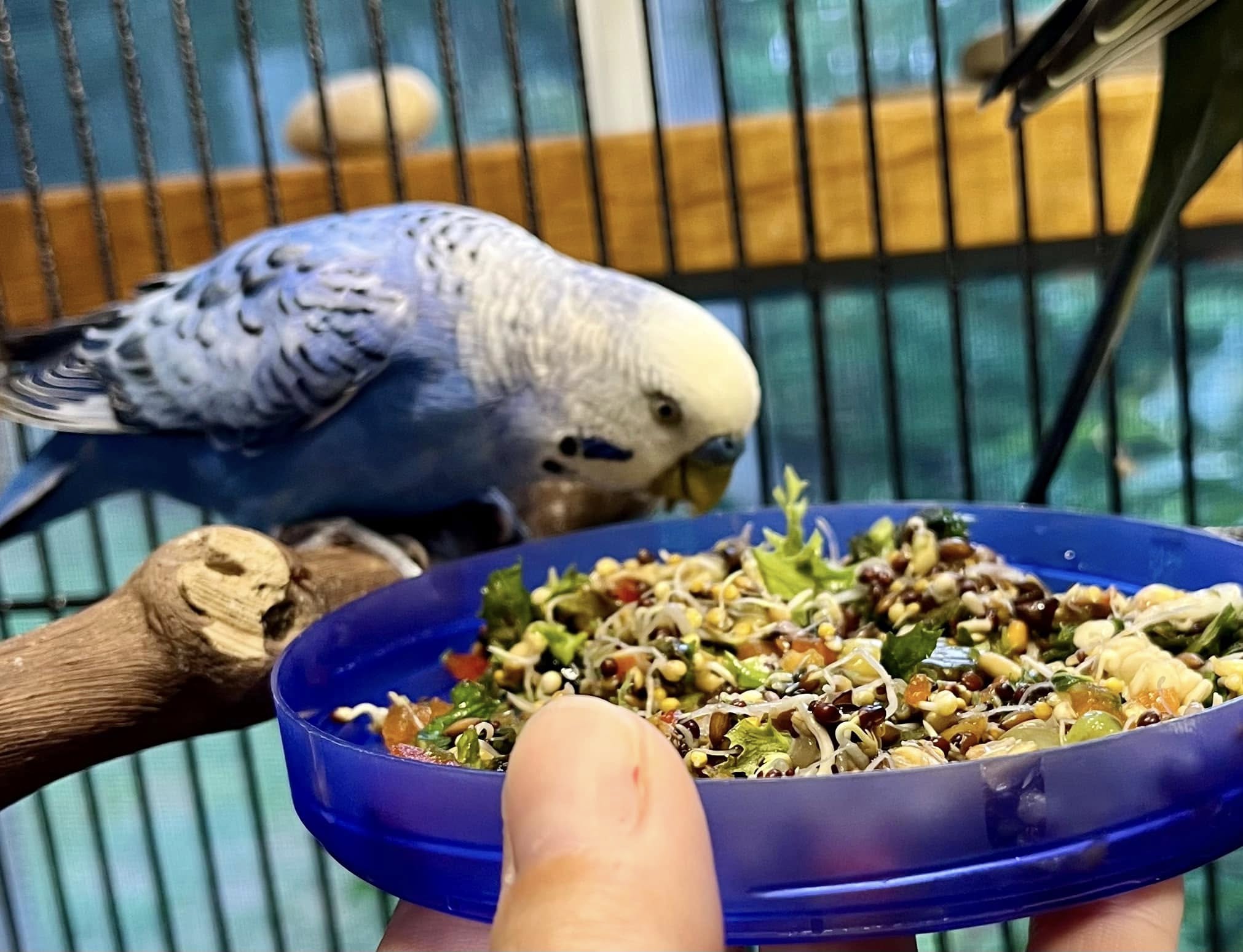
I am going to give you the simple version before the detailed version, because one of the reasons owners fall back on seed is that the alternative advice is often presented in a way that feels complicated and time-consuming. It is not.
A correct budgie diet has four components. Pellets as the nutritional base. Fresh vegetables daily. Seed in moderation. And occasional fruit and other treats. That is it. It does not require supplement powders, special equipment, or hours of preparation. It requires buying pellets, chopping a small amount of whatever vegetable you have available, and offering it every day.
Component One — Pellets
Pellets are formulated to provide complete nutrition in a single food source. A budgie eating a good-quality pellet diet does not need supplementary vitamins, does not need the nutritional balancing act that a fresh food only diet requires, and is receiving consistent nutrition regardless of which items it chooses to eat or ignore on any given day.
- Choose plain, unflavoured pellets from a reputable avian nutrition brand — the brightly coloured, fruit-flavoured pellets marketed to budgie owners are less nutritionally complete and often higher in sugar than plain pellets; the colour appeals to owners, not to birds
- Pellets should constitute approximately 50 to 70 percent of the diet — not the entire diet, which would be overly restrictive and remove the foraging enrichment that fresh food provides; but the majority, because pellets provide the complete nutritional baseline that fresh food and seed alone cannot reliably deliver
- Transitioning from seed to pellets takes time and patience — a bird that has only known seed will not immediately accept pellets; the transition involves gradually introducing pellets alongside seed, reducing the seed proportion over weeks rather than switching immediately; most birds make the transition within four to eight weeks with consistent, patient introduction
- Do not withdraw seed entirely and suddenly to force pellet acceptance — this is sometimes suggested as a rapid transition method and it is genuinely dangerous; budgies can be stubborn enough about new foods to go dangerously long without eating if the familiar option is removed; gradual introduction is always the correct approach
Component Two — Fresh Vegetables Daily
This is the component most often added last and offered least consistently, and it is one of the most nutritionally important.
- Dark leafy greens are the highest-priority fresh food for budgies — kale, spinach, bok choy, rocket, and similar leaves provide Vitamin A precursors, calcium, and a range of micronutrients that support immune function and feather quality; a small amount of dark green leaf daily is among the most impactful single dietary additions an owner can make
- Capsicum — red, yellow, or orange bell pepper — is an excellent Vitamin A and Vitamin C source that most budgies readily accept — bright colour attracts budgie attention, and the nutritional profile is excellent; a small strip of red capsicum daily is a practical, high-value daily food that requires minimal preparation
- Carrot provides beta-carotene, which the body converts to Vitamin A — most budgies will eventually accept raw carrot; it can be offered as a thin slice or grated into the food bowl
- Broccoli, courgette, and cucumber are useful variety foods — all safe, all accepted by most budgies with consistent exposure, all contributing to the varied diet that reduces the risk of selective eating and associated deficiencies
- The amount needed is small — a piece of capsicum the size of a thumbnail, a few leaves of spinach, a thin carrot slice; the goal is daily exposure to varied nutrients, not a meal-sized serving of vegetables
- Remove uneaten fresh food within a few hours — fresh food spoils quickly in a warm cage; offer a small amount in the morning and remove anything uneaten by midday; this also prevents the bird from eating spoiled food that could cause digestive problems
Component Three — Seed In Moderation
Seed is not the enemy. It is a food that budgies have eaten for millions of years of evolution and that forms an appropriate part of the diet in reasonable quantities. The problem is not seed — it is seed as the entirety of the diet, without the nutritional balance that a varied diet provides.
- Seed should constitute approximately 20 to 30 percent of the total diet once pellets and fresh food are established — not zero, and not 100 percent; as a component of a varied diet it provides energy, foraging enrichment, and familiar food security that helps birds accept dietary changes
- A good quality, fresh seed mix is better than a stale or low-quality one — seed that has been sitting in storage for extended periods loses nutritional value and can develop moulds; buy in smaller quantities from a supplier with good turnover rather than large bags that sit for months
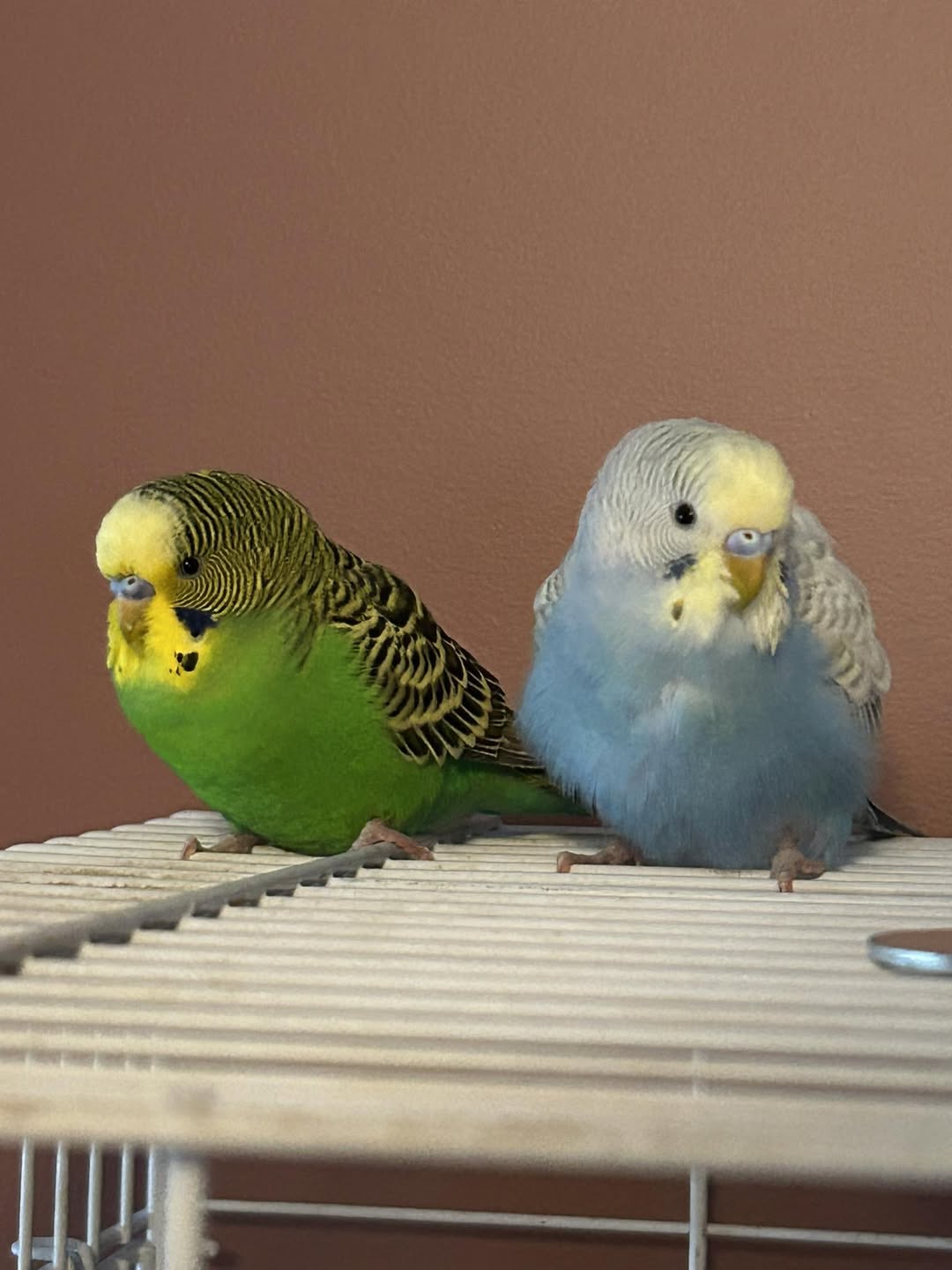
- Sprouted seed is considerably more nutritious than dry seed — the germination process significantly increases vitamin content, reduces fat content, and improves digestibility; a bird that will not readily accept pellets but is eating sprouted seed is in a significantly better nutritional position than one eating dry seed alone; sprouting seed at home requires only a jar, water, and 24 to 48 hours
- Millet spray as a treat is fine in moderation — most budgies find it highly palatable, which makes it useful for training and bonding; it should be a treat rather than a dietary staple
Component Four — Fruits and Occasional Foods
- Fresh fruit two to three times per week, not daily — fruit is high in natural sugar; it provides useful micronutrients but the sugar content means daily large amounts are not appropriate; a small piece of apple without the seeds, a few berries, or a slice of pear a few times a week is appropriate as a component of the diet
- Cooked grains are a useful additional food source — cooked quinoa, brown rice, and barley offer grain-based nutrition in a different form from seed and are often accepted readily; prepare without salt, oil, or seasoning and allow to cool completely; these are useful for adding variety and foraging enrichment
- Egg food during moult — the moult is physically demanding and increases protein requirements significantly; a small amount of commercial egg food during moulting periods supports feather regeneration; this is a seasonal addition rather than a permanent dietary component
Foods That Must Never Be Offered — The Definitive List
- Avocado — toxic to birds and can be fatal in small quantities — persin, the compound responsible, causes cardiac and respiratory distress; never offer any part of an avocado to a budgie
- Onion and garlic in any form — including cooked, powdered, or as a component of human food; these contain compounds that cause red blood cell damage in birds
- Chocolate and cocoa — toxic; causes neurological problems and can be fatal
- Apple seeds and cherry, peach, and plum stones — contain cyanogenic compounds; always core apples before offering and never offer stone fruit pits
- Salt, sugar, and seasoning of any kind — budgies have no tolerance for the salt levels in human food; a piece of salted cracker or a bite of seasoned food can cause kidney problems
- Rhubarb in any form — contains oxalic acid at levels toxic to birds; no part of the rhubarb plant should ever be offered
- Alcohol and caffeinated drinks — obviously; but worth stating because birds can access cups and glasses if allowed out of the cage
How To Tell If Your Current Diet Is Working — The Daily Signs
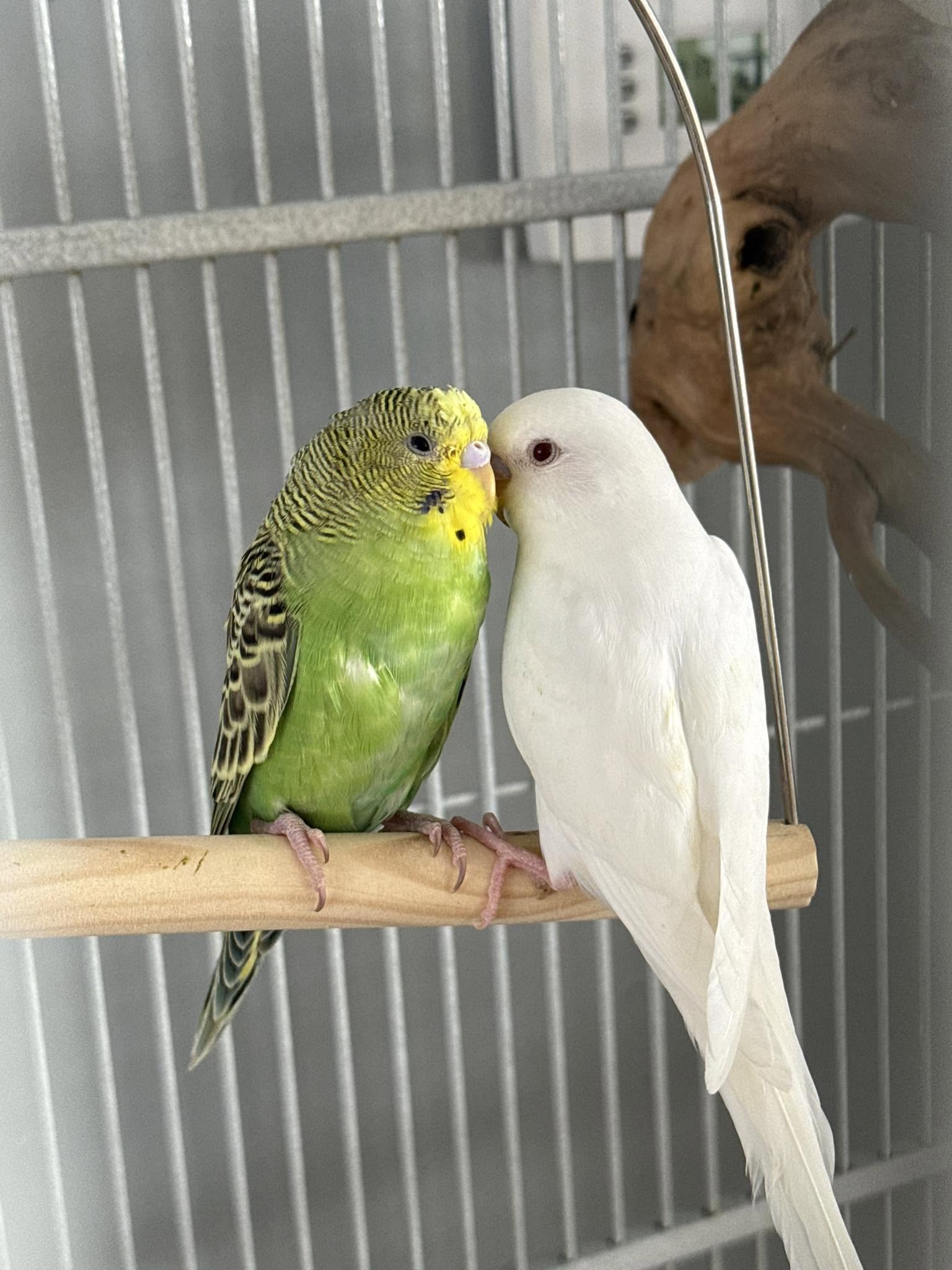
- Feather quality — smooth, tight, glossy feathers in a bird that has moulted and regrown its plumage reflect adequate nutrition; dull, brittle, or poorly formed feathers after moult are a nutritional signal worth investigating
- Energy and engagement — a well-nourished budgie is active during its active periods, engaged with its environment, and interested in food and interaction; a bird that is consistently quiet and inactive is not necessarily unwell, but nutritional inadequacy should be considered as a contributing factor
- Normal, regular droppings — the dropping should have a firm dark green portion, a white urate portion, and a small liquid component; predominantly liquid or discoloured droppings that persist over days warrant investigation
- Appetite engagement with varied foods — a bird on a good varied diet approaches its food with evident interest, investigates different items, and shows clear preferences; a bird that only approaches the seed bowl and ignores everything else is telling you something about both diet and what it has become accustomed to
- Weight stability — a healthy budgie maintains a stable weight; the keel bone should have a moderate amount of muscle on either side rather than being sharply prominent; weighing weekly with a small digital scale and knowing the bird’s normal weight provides an objective health indicator that visual observation cannot
Frequently Asked Questions
My budgie has been on seed for five years and seems fine. Why change now?
Because seeming fine and being as healthy as the bird could be are different states. Nutritional deficiencies in budgies develop slowly — the consequences of Vitamin A deficiency, iodine deficiency, and calcium imbalance accumulate over years before they become visible as illness. A bird that seems fine on seed today may be managing compensated deficiencies that will become veterinary problems in three to five years. Improving the diet now reduces that risk; improving it after problems appear is less effective than preventing the problems in the first place.
My budgie will not eat anything except seed. How do I change this?
Patience and consistency rather than any particular technique. Most budgies that refuse new foods are not biologically incapable of accepting them — they have learned that seed is food and other things are not. The process of changing this involves offering new foods alongside familiar ones every day, removing pressure by not withdrawing seed entirely, and being patient over weeks rather than days. Some birds take four weeks; some take three months; some accept the change quickly. Warm food, food placed near familiar food, or food offered from the hand during bonding time can accelerate the process. The answer is consistency over time.
Are vitamin supplements in the water a substitute for dietary improvement?
No. Water-soluble vitamin supplements added to the drinking water are less bioavailable than vitamins from food, degrade in water and light over the course of the day, and are consumed in unpredictable amounts depending on how much the bird drinks. They are also not a complete solution — supplementing Vitamin A without addressing the underlying diet does not fix the diet. They can be a useful additional support but they do not substitute for dietary improvement.
How much time does correct budgie feeding actually take per day?
Approximately five to ten minutes. Checking and topping up pellets is immediate. Chopping a piece of capsicum or tearing a few spinach leaves takes two minutes. Water refresh takes one minute. Total daily fresh food preparation for a budgie, even on the most elaborate diet, is not a significant time commitment. The reason most owners do not do it is not time — it is not knowing that it matters and not knowing what to do. Both of those problems have now been addressed.
Where can I get budgie food and diet advice in Swindon?
Come in to Paradise Pets at Manor Garden Centre, Cheney Manor Industrial Estate, Swindon SN2 2QJ — or call us on 01793 512400. Tell me what your bird is currently eating and I will tell you honestly what is adequate and what is worth changing, and in what order. Free advice, no obligation. That is how we have done things here for 35 years.
One Last Thing From Me
The woman who came in with the supermarket seed mix — the one whose bird had been broadly functional for three years — came back four months later. Not for food, just to update me.
The bird was singing, she said. Properly singing, in a way it had not done before. It was also exploring its cage more, investigating things, generally behaving as though it had discovered there was more to life than sitting on a perch waiting for the seed bowl to be topped up.
She was not triumphant about it. She was thoughtful. She had owned that bird for three years and had not known what it was actually like when it was well-nourished. The previous version of the bird had been so normal to her that she had not known anything was missing.
That is the thing about nutritional deficiency in budgies. It does not look like illness. It looks like a quiet, functional bird. It looks like normal. And it becomes actually normal after long enough that neither the bird nor the owner can remember what better felt like.
The bird on a correct diet shows you what the species is actually like. Most UK budgies have never had the chance to show their owners that.
Not Sure If Your Budgie’s Diet Is Right? Come In And Talk.
Tell me what it is eating and I will give you my honest assessment — what is adequate, what is worth changing, and in what order. No sales pitch, no unnecessary products. Just 35 years of knowing what actually makes a difference.