

Neil has been keeping, breeding, and selling birds at Paradise Pets Swindon since 1988 — over 35 years of daily experience with cage birds and the people who keep them, alongside a lifelong interest in what is happening to British bird populations beyond the shop walls. The Welsh Government published its Seabird Conservation Strategy in January 2026 — the first of its kind in Wales — in response to the documented collapse of some of the most important seabird colonies in Britain. This is his honest take on what it means, why it matters to anyone who keeps a bird in their living room, and what the two things have to do with each other.
I want to start with Grassholm.
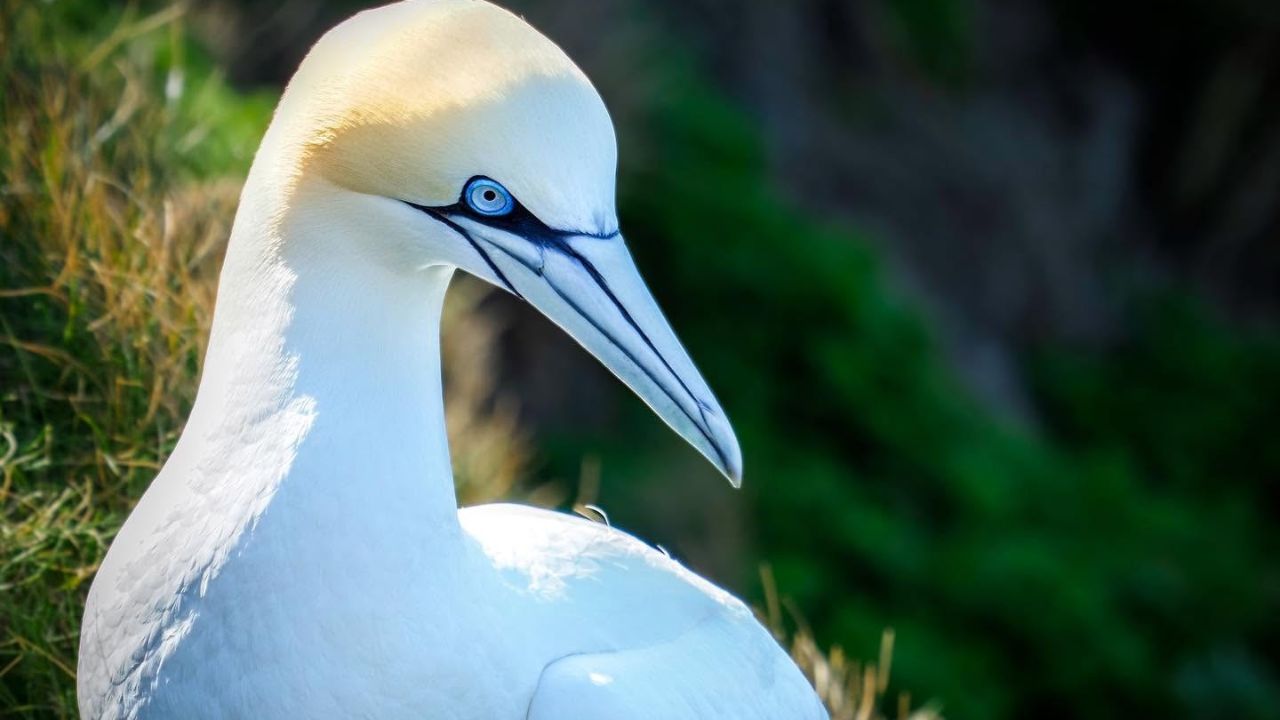
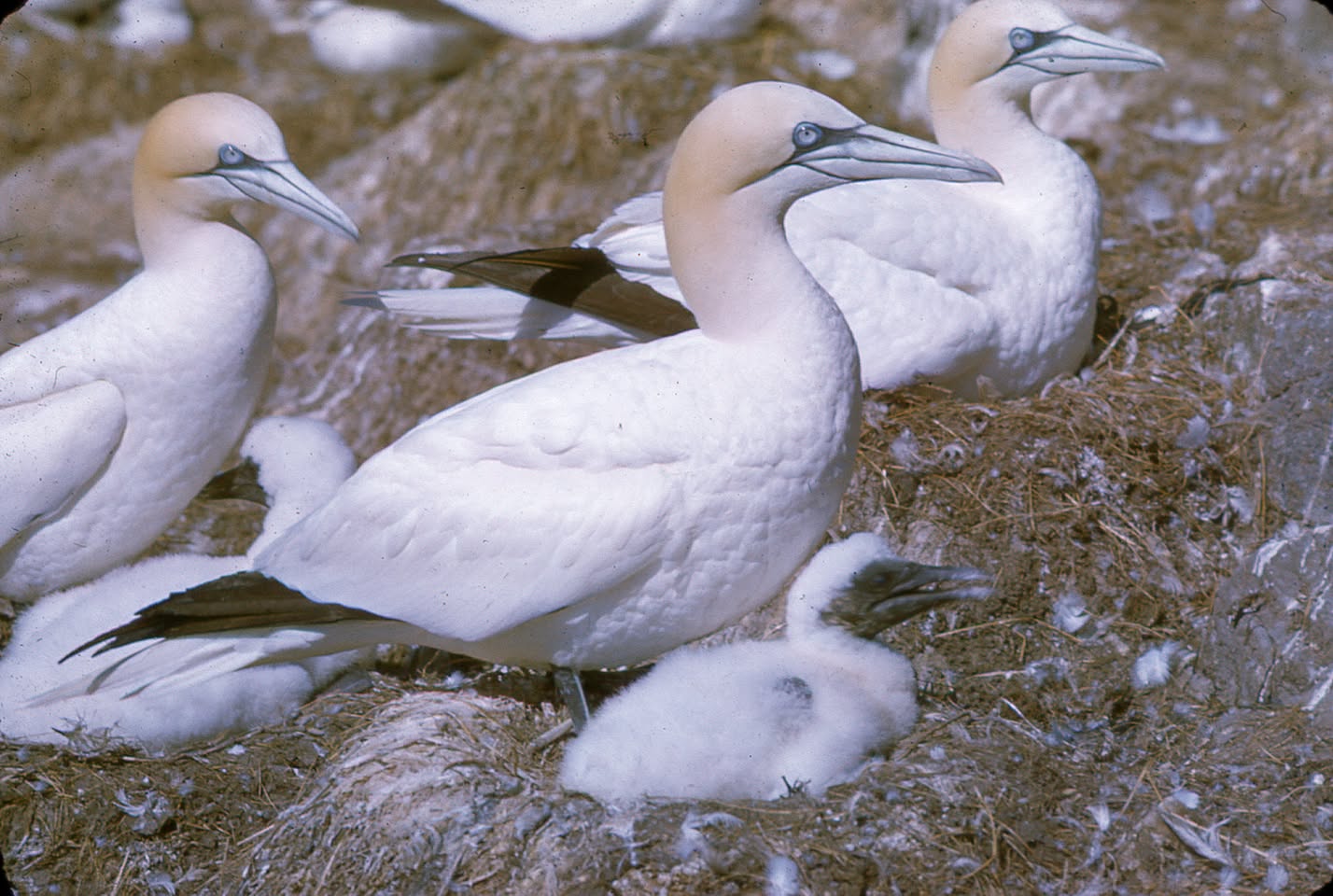
Grassholm is a small, uninhabited island about sixteen kilometres off the Pembrokeshire coast in south-west Wales. Most people who have never been to that part of Britain will not know it by name. But people who know seabirds know Grassholm — because until very recently, it hosted one of the largest gannet colonies in the world. At the height of the season, the island appeared white from a distance. White, because the gannets stood on it shoulder to shoulder, tens of thousands of them, covering virtually every surface in the kind of dense, noisy, extraordinary abundance that makes you understand, viscerally, what a genuinely healthy ecosystem looks like.
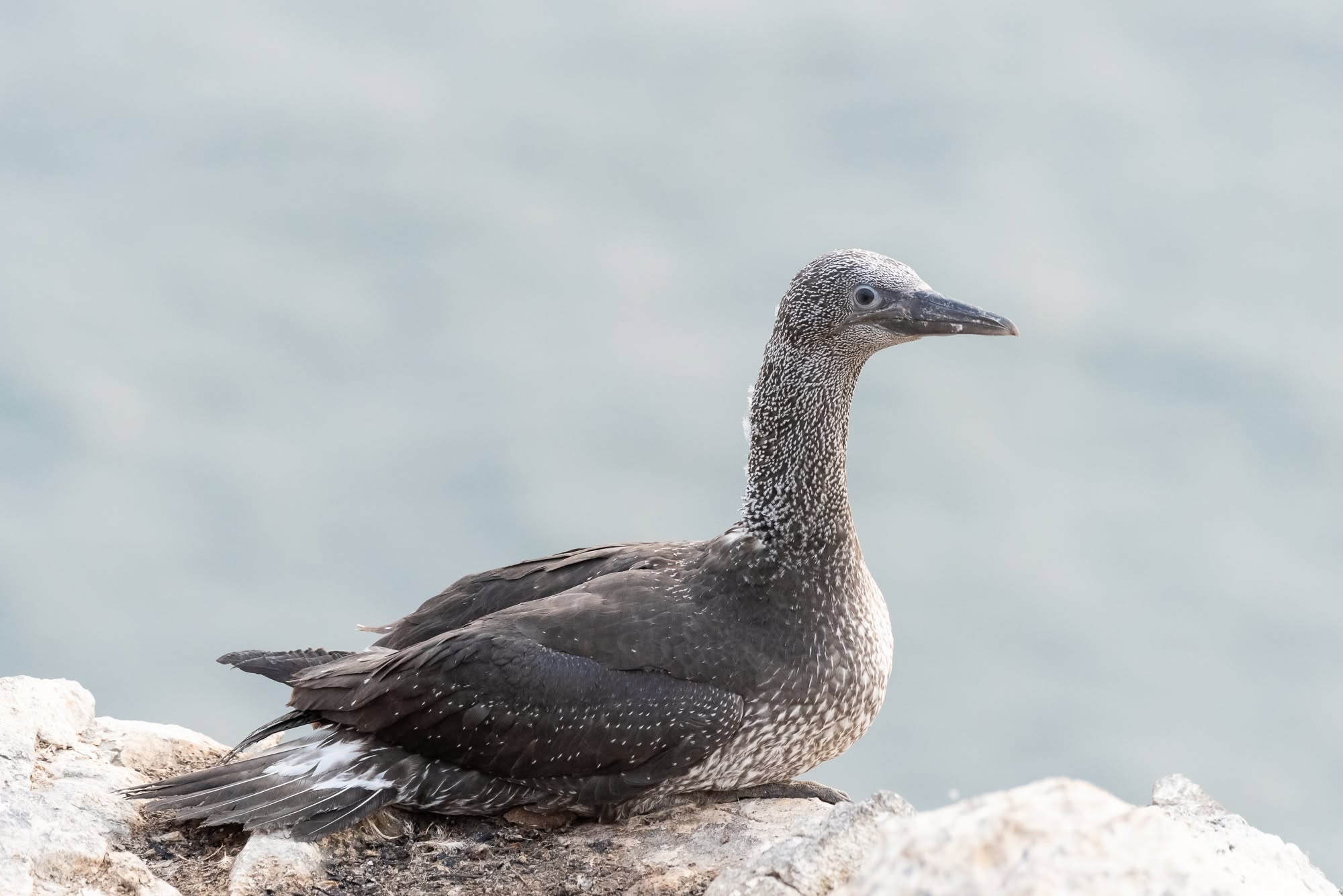
In 2022 — the same year bird flu swept through the colony — Grassholm lost around five thousand gannets to Highly Pathogenic Avian Influenza in a single season. Subsequent surveys documented a fifty-four percent decline in breeding gannet numbers in Wales since 2015. A study published in 2025 estimated that the colony may not return to pre-outbreak population levels until 2041 — nearly two decades from now. Wales held approximately ten percent of Britain and Ireland’s entire gannet population. The international implications of that decline are not a dramatic estimate. They are arithmetic.
I am not telling you this to depress you before a Saturday morning. I am telling you because this is the context in which the Welsh Government published its Seabird Conservation Strategy in January 2026 — and because understanding what has happened to Grassholm makes the strategy, and the urgency behind it, make immediate sense.
What The Welsh Seabird Conservation Strategy Actually Says
The Welsh Seabird Conservation Strategy, published by the Welsh Government in January 2026, is the first formal, government-backed framework for the long-term protection of Wales’s seabird populations. It was developed in collaboration with Natural Resources Wales, the British Trust for Ornithology, the Joint Nature Conservation Committee, and the RSPB — the organisations doing the actual monitoring work — and its development followed years of campaigning by RSPB Cymru, who had been calling for exactly this kind of framework since 2018.
The strategy identifies five main pressures on Welsh seabird populations that are critically affecting their recovery and resilience.
- Highly Pathogenic Avian Influenza — the bird flu strain HPAI H5N1, which has devastated multiple UK seabird colonies since 2021; the strategy recognises this as a new and ongoing threat on top of all existing pressures; at least twenty-one of Britain’s twenty-five regularly breeding seabird species have tested positive for the virus
- Invasive non-native species — primarily rats and other mammals on seabird breeding islands; rodent predation of eggs and chicks is a well-established driver of seabird colony decline and is addressable through targeted eradication programmes
- Climate change — affecting prey availability, breeding timing, and the survivability of coastal habitats; the strategy notes that populations are becoming less resilient as multiple pressures stack on top of each other
- Poorly sited offshore developments — the expansion of offshore wind and other marine infrastructure creates collision risk and habitat disruption for seabirds; the strategy calls for marine planning to reduce these threats at source rather than mitigating them after the fact
- Loss of prey availability — driven by overfishing, climate-related shifts in marine food webs, and the decline of key prey species including sandeels; this underpins long-term declines in species like puffins, kittiwakes, and terns that depend on small fish to feed their chicks
The Numbers That Explain Why This Matters Internationally
This is where the picture gets genuinely important for anyone who thinks of seabird decline as a regional Welsh issue rather than something with much wider significance.
- Britain, Ireland, the Isle of Man, and the Channel Islands together support approximately seventy percent of the world’s breeding northern gannets — this is not a modest share of a globally common species; the UK is, in practical terms, the world’s primary gannet nation; what happens to gannet populations here matters globally
- Skomer and Skokholm Islands off the Pembrokeshire coast support the world’s largest breeding population of Manx shearwater — around 450,000 pairs — the world’s largest; if these populations decline significantly, there is no other location on Earth to compensate for that loss
- Wales holds the UK’s largest Arctic tern colony on the Skerries off Anglesey — and Arctic tern populations have been under sustained pressure across multiple fronts for years
- Sixty-two percent of UK seabird species are currently in decline — that statistic, from the RSPB’s most recent seabird assessment, means this is not a story about one species or one colony; it is a story about an entire ecological group under sustained, multi-source pressure
- Black-headed gulls — a Red-listed species — declined by seventy-seven percent in Wales since the 2015 to 2021 Seabirds Count census — the largest proportional decline of any seabird species in Wales; a bird that was once common has been reduced dramatically within a period that encompasses roughly the same span as this strategy
Why Pet Bird Owners Should Care — The Honest Connection
I want to make the connection between this conservation story and the people who read this blog, because it is genuine and not just rhetorical.
The people who come into this shop and keep birds carefully are, in my experience, the people most likely to already care about what is happening to wild bird populations. The connection between a budgie in a living room in Swindon and a gannet colony off Pembrokeshire might not be immediately obvious, but it is real on several levels.
- The same disease threats that decimated Grassholm can affect domestic birds — HPAI H5N1, the bird flu strain responsible for the gannet collapse, has been detected in a wide range of bird species and in multiple UK domestic contexts; a pet bird keeper who understands what this virus has done to wild seabird populations understands, in concrete terms, why biosecurity around cage birds matters
- The insect and invertebrate ecology that wild birds depend on is the same ecology that influences disease vectors around domestic birds — the connections within bird health ecosystems are not neatly divided between wild and domestic; what affects one tends, in various ways, to affect the other
- The people who notice birds are the people with the observational habits to contribute meaningfully to conservation monitoring — the Big Garden Birdwatch, the BTO’s Garden Birdwatch, and citizen science programmes that generate real conservation data are built on exactly the kind of daily attentiveness that bird keepers practise as a matter of course
- Economic and policy support for bird conservation comes from the proportion of the population that actively cares about birds — and that proportion is, in significant part, people who keep birds or watch them in gardens; the pet bird keeping community represents a constituency of genuine bird concern that, when engaged, adds real weight to conservation efforts
- What is happening to seabirds is a leading indicator of what is happening to marine and coastal ecosystems broadly — and what happens to those ecosystems ultimately affects everything above them in the ecological chain, including us; taking seabird decline seriously is taking environmental change seriously
What The Strategy Is Asking For — And What Has Already Made A Difference
One of the more important things to understand about the Welsh Seabird Conservation Strategy is that it does not describe an entirely hopeless situation. Several of the interventions it calls for have already been tried elsewhere and have worked. That matters, because it means this is a fixable problem — or at least a significantly improvable one — if the will and the resources are applied.
- Invasive predator removal from seabird islands has a strong evidence base for success — the work on Lundy Island in the Bristol Channel, where rats were eradicated over a number of years, has seen puffin numbers recover from near-local extinction to a thriving colony; this is one of the clearest conservation success stories in recent UK bird history and it provides a direct model for what can be achieved on other islands
- The sandeel fishing closure is a positive development — the UK and Scottish governments’ decisions to close sandeel fisheries around key seabird nesting areas follows decades of campaigning; sandeels are the primary prey of puffins, kittiwakes, and terns, and their depletion through overfishing has been a major driver of seabird breeding failure; this closure provides a meaningful lifeline to those species
- Marine Protected Areas, when properly resourced and enforced, demonstrably help — the strategy calls for the creation and proper resourcing of marine protected areas and Special Protection Areas for seabirds; this is not aspirational; it is a replication of approaches that have worked
- Long-term monitoring, when funded consistently, enables early response — the HPAI Seabird Survey Project, the BTO’s seabird monitoring networks, and citizen science schemes that have been running for decades are what allowed the scale of the gannet decline to be quantified and acted on; the strategy calls for this monitoring capacity to be maintained and expanded
What Pet Bird Owners Can Actually Do
- Participate in the Big Garden Birdwatch and BTO Garden Birdwatch — the data generated by these programmes is used directly in conservation science and policy; an hour of bird counting in January by each participating household adds up to a national dataset of genuine scientific value
- Support the RSPB and WWT with membership or donation — not as a gesture but as a practical contribution to the organisations funding the monitoring work, the predator removal projects, and the policy campaigns that produce the conservation outcomes the strategy calls for
- Garden for birds seriously, not decoratively — native plants, particularly those supporting insect life, are seabird-adjacent in the sense that they support the land-based ecological health from which all wildlife conservation ultimately draws; a garden that supports insects supports the birds that eat them
- Be aware of avian influenza as a biosecurity issue for pet birds, not just a wild bird issue — understanding the disease that devastated Grassholm is directly relevant to anyone who keeps birds; know what HPAI looks like, know where to report dead wild birds, and know the biosecurity measures that reduce risk to domestic birds
- Tell people what is happening — the most underestimated conservation action available to any individual is sharing accurate, specific information about what is actually happening to wild bird populations with people who do not know; most people are not indifferent to seabird decline, they simply have not been told about it in terms that make it real
Frequently Asked Questions
Will the Welsh Seabird Conservation Strategy actually make a difference?
Strategies without funding and enforcement are often more aspiration than action. The RSPB has noted directly that the 2026 strategy currently has no dedicated funding attached, and has called for that to change as the essential next step. The strategy’s value is in establishing an evidence-based framework and creating a formal government commitment to seabird conservation — both of which are prerequisites for meaningful action. Whether they translate into outcomes depends on whether the funding and political will follow. That, in turn, depends partly on whether enough people in Wales and beyond treat seabird conservation as important enough to support and demand.
Is the gannet colony at Grassholm gone permanently?
No — the research published in 2025 estimates recovery to pre-outbreak population levels by approximately 2041 if no further major disease events occur and if other pressures are adequately managed. The colony is not gone; thousands of gannets still return to Grassholm every spring, and 2025 surveys recorded around 17,000 breeding pairs. That is a decimated shadow of what was there before the 2022 outbreak, but it is a foundation for recovery. The key uncertainty is whether further HPAI outbreaks occur, whether prey availability holds up under climate pressure, and whether the other threats are addressed with sufficient urgency.
Can HPAI H5N1 affect pet birds?
Yes. HPAI H5N1 is not exclusively a wild bird disease — it has affected domestic poultry extensively and has been detected in a range of species. Pet birds are not currently considered a primary transmission risk in the UK, but the precautionary guidance around biosecurity — not allowing domestic birds contact with wild birds, reporting dead wild birds through the appropriate channels rather than handling them, and being alert to any unusual illness in cage birds — applies directly. Understanding what this virus has done to wild bird populations is the clearest possible illustration of why taking it seriously matters.
How can I report dead wild birds in Wales?
Reports of dead wild birds should go through the GOV.WALES website reporting service, which channels reports to the relevant monitoring and surveillance infrastructure. Do not touch or handle any dead or sick wild birds. The same reporting pathway applies for dead birds in England through GOV.UK. If you find a dead seabird in significant numbers in one location, reporting it promptly is a meaningful contribution to the surveillance that allows conservation organisations to track disease spread.
Where can I learn more about what is happening to UK birds?
The RSPB, British Trust for Ornithology, and Natural Resources Wales all maintain detailed public-facing information about UK seabird status and the pressures they face. For Welsh seabirds specifically, the Welsh Seabird Conservation Strategy document is publicly available through GOV.WALES. The RSPB’s Grassholm and Skomer reserves have publicly accessible information about the colonies and their current status. For an ongoing source of informed, evidence-based updates, BTO membership and RSPB membership both provide access to regular monitoring updates.
One Last Thing From Me
There is a photograph — taken a few years before the 2022 outbreak — of Grassholm from the air, during the breeding season. The island is white. Not partially white, not white in patches. White, the way a snowfield is white. Thirty-nine thousand pairs of gannets, standing on an island less than a kilometre across.
I have looked at that photograph a number of times since reading the survey data. I think about what it represents — not just in terms of birds, but in terms of what a genuinely intact ecosystem looks like when it is functioning as it should. The density, the noise, the smell, the constant movement. A living thing, at scale, doing what it evolved to do.
And I think about what the surveys now show. Seventeen thousand pairs. Not thirty-nine thousand — seventeen thousand, in 2025. A number that, had you shown it to a seabird scientist in 2015, would have been met with dismay. Now it represents the baseline from which recovery is being hoped for.
The Welsh Seabird Conservation Strategy matters because it is an acknowledgement, by a government, that what is happening to these colonies is real, documented, and urgent. It does not solve the problem on its own. But it is a necessary step toward a response proportionate to the scale of what has been lost.
The people who keep birds carefully understand, more instinctively than most, what the loss of a bird means. Not as an abstraction. As a specific, irreplaceable thing.
That understanding is exactly what conservation needs more of. If you have it, use it.
Questions About Wild Bird Conservation Or Your Pet Bird’s Care? Come In.
Whether you want to talk about what is happening to UK wild bird populations, or simply want advice on looking after the birds in your care, we are happy to help. Free advice, no obligation. That is how we have done things here for 35 years.
⭐ Customer Reviews
Amazing Bird Selection
Had a lovley visit today,staff were very friendly and very helpful,such a great petshop,their selection of birds is incredible,really impressed,thank so much to the staff at Paradise Pets

Friendly Helpful Staff
I have been coming to this place for years and they have a great stock of food for all types of pets. Have a great selection of small mammals and a lot of birds. Staff are friendly and helpful.

Great Quality Hutch
Bought a guinea pigs hutch and run combo, very happy with the service, the hutch was put in my car for me without even asking for help. The wood quality is very good, the instructions easy to follow and we are extremely happy with the fully built hutch. A good size for 2 guinea pigs

Response from Paradise Pets | Wiltshire
Thank you Melanie Latus Nice to provide services to you.
Best Bird Shop Around
It’s the best pet shop in and around Swindon. They always have an amazing selection of birds and all you need to keep them happy. I keep birds myself and the guys there are happy to answer questions and really know their stuff. I have seen budgies etc. in chain pet shops in the area looking really unhealthy and ill – I wouldn’t go anywhere else than Paradise Pets for animals.

Highly Recommended Bird Shop
I could not praise this shop enough. Really helped my Grandson buy his first bird and he’s loving it. Travelled from Somerset and was welcomed with open arms.

Great Shop with Competitive Prices
Great shop with amazing selection for small animals, hamsters, mice ect, highly recommend!
Also has a great selection for dogs & cats too & very competitive prices! 💖

