

Neil has kept, bred, and sold cage and aviary birds at Paradise Pets Swindon since 1988 — over 35 years of first-hand experience with budgerigars, cockatiels, canaries, finches, and dozens of other species. A new study published in the journal Biological Conservation this July has quantified, for the first time, the full scale of what the 2022 bird flu outbreak did to UK seabird populations. This is Neil’s honest response — what the research says, what it means for the risk picture going forward, and what every indoor pet bird owner needs to understand about a disease that is not going away.
A study landed this week in the journal Biological Conservation that I think every bird owner in the UK should know about — not because it changes what you need to do today, but because it changes the scale at which you should be thinking about the problem.
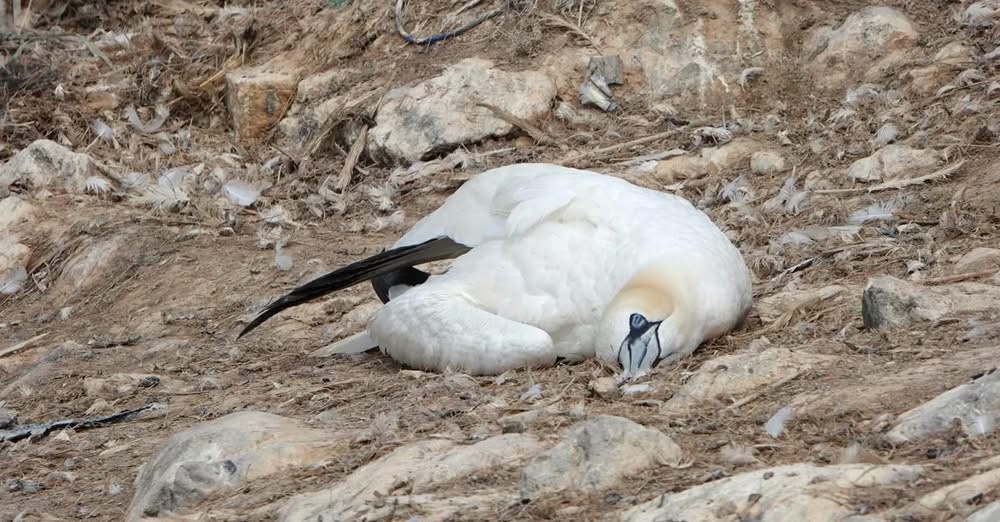
The research, led by Jude Lane at the RSPB, looked at what the 2022 HPAI H5N1 outbreak did to two of the world’s largest gannet colonies — Grassholm in Wales and Bass Rock in Scotland. The finding is stark: the disease was responsible for a fourfold increase in deaths of adult gannets, and the two colonies may not return to pre-outbreak numbers until 2041.
Nearly two decades. For a single outbreak season.
The disease was first confirmed in gannets at Bass Rock on June 4, 2022, and at Grassholm the following month. What followed was a mass mortality event that, at the time, was already known to be devastating. What this new study does, for the first time, is provide robust estimates of adult survival and use those to project forward — to show not just what happened, but how long the consequences will last.
I have been keeping and selling birds since 1988. I have watched avian disease events come and go — some local, some national, some that turned out to be less serious than feared, and some that were worse. This one is in a different category. And the 2041 timeline is the clearest evidence yet that what happened in 2022 was not an episode that is now over. It is a wound in UK bird populations that will still be healing when the children born last year are finishing their GCSEs.
I want to be direct about what this means for the owners reading this — not to cause alarm, but because the scale of the research changes the context in which responsible bird ownership should be understood.
What The New Research Actually Found
Let me be specific about the study before drawing broader conclusions, because the detail matters.
Researchers found that two of the world’s largest northern gannet colonies on Grassholm in Wales and Bass Rock in Scotland may not return to pre-outbreak numbers until 2041 following the spread of highly pathogenic avian influenza (HPAI). The findings, published in the July issue of Biological Conservation, show bird flu was responsible for a fourfold increase in deaths of adult gannets, for which the UK is responsible for a high proportion of the global population.
The significance of adult mortality — rather than chick mortality or breeding failure — is important to understand. Seabird populations are primarily regulated by adult survival because breeding adults are the long-lived, experienced members of the colony that produce chicks over many years. When adult survival rates drop sharply, the effect on population recovery is not linear — it is compounded over time, because each lost adult represents not just one bird but a decade or more of future breeding potential.
A fourfold increase in adult deaths is catastrophic by any measure. And the 2041 projection is not pessimistic speculation — it is the modelled output of applying the measured adult survival rates to realistic population dynamics. It is what the mathematics say.
While the outbreak was already known to have killed tens of thousands of gannets, this latest study is the first to provide robust estimates of adult survival in a seabird species, and, using these estimates, the first to predict the likely recovery timeline.
Jude Lane, lead author of the study and marine conservation scientist at the RSPB, said: “The bird flu outbreak in 2022 dealt an unprecedented deadly blow to UK seabirds and these findings show that key Gannet colonies on Bass Rock and Grassholm will be impacted for decades to come.”
Why This Matters Beyond The Gannets
The gannet colonies are the focus of this study, but the disease that damaged them is not gannet-specific. The outbreak has led to devastating seabird die-offs and outbreaks in farmed birds. While cases subsided in mid-2023, they surged again in autumn 2024, leading to new avian influenza prevention zones in England, Scotland and Wales.
The H5N1 strain responsible — the clade 2.3.4.4b Gs/Gd lineage — has been behaving differently since it evolved in 2020. In 2020, H5N1 evolved to spread more aggressively in wild birds. This is not the same strain that previous generations of bird keepers managed their biosecurity around. It is a virus that has become more capable of causing mass mortality events in previously resistant wild bird populations, that has expanded its host range, and that has proven capable of maintaining itself in wild bird populations year-round rather than only during specific seasonal windows.
From the RSPB’s own surveys: nine species have shown declines of over 10 percent across the sites surveyed. For three key species, these declines have reversed previously positive population trends. Gannets were one of the worst-hit species in the 2022 breeding season, with at least 11,000 deaths recorded across Scotland and 5,000 deaths on the RSPB island reserve of Grassholm, Wales.
The scale of what has happened in UK wild bird populations since 2020 is the context in which every bird keeper — including those with a single budgie in a living room in Swindon — should be thinking about the disease. Not because your budgie is at direct risk from seabird colonies in Wales, but because the virus circulating in those populations is the same virus that has produced confirmed cases in England’s premises each year since 2021, that prompted an Avian Influenza Prevention Zone that lasted from late 2025 to June 2026, and that is not going away.
The Direct Risk To Indoor Pet Birds — Honest And Proportionate
I want to be proportionate here, because alarming pet bird owners without useful context is not honest advice.
The direct risk to a well-managed indoor caged bird from H5N1 is low. Budgies, cockatiels, canaries, and finches in well-maintained indoor cages with good biosecurity and no exposure to wild birds or unscreened new birds are not in the same risk category as gannet colonies on the coast of Wales or outdoor poultry flocks. I am not going to pretend otherwise.
But low direct risk is not no risk, and the 2041 timeline gives important context for why responsible biosecurity in domestic bird keeping matters more now than it did before the current strain of H5N1 emerged.
The indirect risk routes for indoor pet birds are:
First, introduction through a new bird from an unscreened source. A bird that has passed through an uncontrolled supply chain, a bird fair, or a private seller without adequate biosecurity can carry avian pathogens without showing visible signs of illness during an incubation period. This route is entirely preventable through proper quarantine — thirty days, separate airspace, no shared equipment. The 2041 timeline is a reminder that the disease pressure in wild bird populations has not gone away, and that supply chain biosecurity matters in this environment.
Second, contamination through human contact with environments where wild bird concentrations have occurred. This is a lower-probability route for typical indoor pet bird owners but it is real and it is addressed by the mandatory biosecurity measures that remain in force despite the lifting of the AIPZ housing requirements in June 2026.
Third, the general elevation of environmental disease pressure from annual outbreak seasons. Each autumn since 2021 has brought new HPAI cases in the UK. HPAI H5N1 was confirmed at a premises near Pickering, Yorkshire on 3 March 2026. This is not a one-time event followed by a return to normal. It is an annual cycle, and the habits that protect birds need to reflect that.
What The 2041 Timeline Should Change For Bird Keepers
The honest implication of research that says UK bird populations will be living with the consequences of a single outbreak season until 2041 is this: avian influenza in the UK is now a long-term structural feature of the environment for bird keeping, not an episodic crisis to respond to and then recover from.
That changes how responsible bird owners should think about biosecurity — not as an emergency measure to be adopted during formal alert periods and relaxed when the headlines move on, but as a permanent baseline of care that reflects the changed environmental conditions.
The habits that matter are not dramatic or expensive. They are the same habits that have always characterised responsible bird keeping, applied consistently rather than selectively.
- Biosecurity is now a permanent baseline, not an emergency response. Annual outbreak seasons and a wild bird population that will not return to pre-2022 health until 2041 mean the conditions that make biosecurity necessary are not going away. Habits formed and maintained now protect birds through the years ahead
- New bird quarantine is more important, not less, in this environment. The disease pressure in wild bird populations that reach supply chains is elevated and will remain elevated for years. A proper thirty-day quarantine in a separate airspace for every new bird is the most important single protective habit
- Source matters more in a high-pressure environment. Birds from reputable, screened sources represent a different risk profile from birds from bird fairs or unscreened private sellers in an environment where the background disease pressure in wild populations is higher than at any point in living memory
- The AIPZ lifting in June 2026 does not mean the disease pressure has resolved. It means the housing restrictions were no longer proportionate to the immediate risk. The mandatory biosecurity measures remain in place. The underlying wild bird disease reservoir has not changed
- Vigilance for signs of illness in kept birds needs to be maintained year-round. The pattern of annual autumn outbreaks means there is no low-risk season during which reduced vigilance is safe. Know your birds’ normal behaviour. Notice change promptly. Have an avian vet identified before you need one
The Conservation Dimension — Why It Also Just Matters
I want to say something briefly that is not about pet bird biosecurity, because I think it deserves saying.
The gannets at Grassholm and Bass Rock are not an abstract conservation concern. They are among the most spectacular wildlife spectacles in the UK. The UK holds a globally significant proportion of the world’s northern gannet population. What happened at those colonies in 2022, and the recovery timeline that research now tells us extends to 2041, is a genuine tragedy for UK wildlife — and for the people who have watched those colonies for generations.
The disease was responsible for a fourfold increase in deaths of adult gannets, for which the UK is responsible for a high proportion of the global population. The phrase “for which the UK is responsible for a high proportion of the global population” is not an empty formulation. It means that what happened at Grassholm and Bass Rock is not merely a UK conservation issue — it is a matter of global significance for a species.
I keep birds because I find them endlessly fascinating, endlessly rewarding, and because after 35 years of doing this, I still find something to learn every day. That love of birds is not separate from the conservation dimension. What happens to wild bird populations matters — not only as context for biosecurity advice, but because birds matter.
The research that puts a 2041 recovery date on the damage done in a single season should be read, by anyone who keeps and cares about birds, as evidence of what this disease can do when it reaches a population that has no defence against it. That is a reason to take the habits that prevent it from reaching caged populations seriously — and to take the loss to wild populations seriously, too.
Quick Reference — What The 2041 Study Means For Pet Bird Owners
| What The Research Shows | What It Means For Indoor Bird Keepers | Action |
|---|---|---|
| H5N1 caused fourfold increase in adult gannet deaths | Current H5N1 strain is significantly more lethal to birds than previous versions | Treat biosecurity as permanent, not seasonal |
| Colony recovery projected to 2041 | Wild bird disease pressure will remain elevated for nearly two decades | Quarantine every new bird — the pressure is not going away |
| Annual outbreak seasons since 2021 | No safe off-season for relaxing biosecurity habits | Year-round vigilance, not reactive-only response |
| Nine seabird species showing 10%+ declines | Disease is not species-specific — broad avian impact | Apply biosecurity regardless of species kept |
| AIPZ lifted June 2026 but mandatory biosecurity remains | Housing restrictions gone; biosecurity requirements not gone | Maintain mandatory measures — they are still legally required |
Frequently Asked Questions
Does the 2041 recovery timeline mean my indoor budgie is at risk until 2041?
No — the 2041 timeline refers to the projected recovery of the seabird colonies affected by the 2022 outbreak, not to an ongoing direct risk to indoor caged birds. What it does mean is that the wild bird disease reservoir that elevates the background risk for all bird keeping will remain elevated for the foreseeable future. This is context for why biosecurity habits should be maintained permanently rather than treated as an emergency-only response — not a reason for specific alarm about your budgie today.
Is H5N1 now more dangerous than it used to be?
The current H5N1 strain — clade 2.3.4.4b — has been more lethal to wild birds than earlier strains, which is what produced the scale of mortality documented in the seabird research. It evolved in 2020 to spread more aggressively in wild birds, expanded its host range, and has maintained itself in wild populations year-round rather than only seasonally. For practical purposes, this means the disease pressure in wild bird populations that can reach domestic bird supply chains is higher than it has been at any point in the past.
The AIPZ was lifted in June 2026 — does that not mean things have improved?
The housing restrictions were lifted because the immediate acute risk reduced sufficiently to justify removing them. The underlying wild bird disease reservoir has not been resolved. Mandatory biosecurity measures remain in place. The 2041 research published this month is a reminder that the conditions that produced those restrictions have not been returned to a pre-2022 baseline — and will not be for years. Treat the biosecurity habits as permanent. The formal alert status is a different question from the underlying risk.
What is the single most important thing I can do to protect my birds in this environment?
Quarantine every new bird properly before introducing it to existing birds. Thirty days, separate airspace, separate equipment. This is the most significant route by which disease reaches indoor caged birds, and it is entirely preventable with this one habit. Everything else — feeder hygiene, footwear disinfection, vet vigilance — matters and should be maintained. But the quarantine habit, applied consistently to every new bird regardless of source, is the most important single protective action.
Should I stop attending bird fairs given this research?
Bird fairs aggregate birds from many sources in an enclosed space and represent one of the highest-risk environments from a disease transmission perspective. If you attend a bird fair, any bird acquired there should be quarantined particularly carefully before entering your home. In the current environment, with elevated wild bird disease pressure that the 2041 research confirms will persist, I would counsel extra caution around bird fairs specifically — not because the risk of a single visit is dramatic, but because the consequences of a disease introduction in the current environment are more serious than they might have been before 2022.
Where can I get honest bird advice in Swindon?
Come and see us at Paradise Pets, Manor Garden Centre, Cheney Manor, Swindon SN2 2QJ. Or give us a ring on 01793 512400. The advice is free and we have been giving it for 35 years.
One Last Thing From Me
When I read the 2041 projection this week, I thought about the gannet colonies at Grassholm and Bass Rock. I thought about the keepers who have watched those colonies for years, who counted birds before and counted birds after. I thought about what a fourfold increase in adult mortality looks like in practice — the empty ledges, the reduced noise, the reduced movement of a colony that should be teeming.
And then I thought about what it means for the bird keeping community in the UK to be operating in a disease environment that produced those outcomes — and that will continue to shape risk for the next fifteen years.
The answer is not panic. The answer is not to stop keeping birds. The answer is what it has always been: good habits, maintained consistently, informed by honest understanding of the actual risk. Quarantine new birds properly. Source birds responsibly. Keep cages clean. Change water daily. Have a vet identified. Notice when something changes in your bird’s behaviour.
These are not complex. They are the things that experienced bird keepers do as a matter of course, because they understand the conditions in which they are keeping birds. The 2041 research is a reminder that those conditions have changed, permanently and significantly, from what existed before 2022.
Keep the habits. Maintain the vigilance. The birds in your care depend on it in an environment that is more demanding than it used to be.
Questions About Protecting Your Birds In The Current Disease Environment? Come And Talk It Through
We will give you honest, practical advice about biosecurity, sourcing, and what the current risk picture actually means for your specific setup. Free advice, no obligation. That is how we have done things for 35 years.
⭐ Customer Reviews
Amazing Bird Selection
Had a lovley visit today,staff were very friendly and very helpful,such a great petshop,their selection of birds is incredible,really impressed,thank so much to the staff at Paradise Pets

Friendly Helpful Staff
I have been coming to this place for years and they have a great stock of food for all types of pets. Have a great selection of small mammals and a lot of birds. Staff are friendly and helpful.

Great Quality Hutch
Bought a guinea pigs hutch and run combo, very happy with the service, the hutch was put in my car for me without even asking for help. The wood quality is very good, the instructions easy to follow and we are extremely happy with the fully built hutch. A good size for 2 guinea pigs

Response from Paradise Pets | Wiltshire
Thank you Melanie Latus Nice to provide services to you.
Best Bird Shop Around
It’s the best pet shop in and around Swindon. They always have an amazing selection of birds and all you need to keep them happy. I keep birds myself and the guys there are happy to answer questions and really know their stuff. I have seen budgies etc. in chain pet shops in the area looking really unhealthy and ill – I wouldn’t go anywhere else than Paradise Pets for animals.

Highly Recommended Bird Shop
I could not praise this shop enough. Really helped my Grandson buy his first bird and he’s loving it. Travelled from Somerset and was welcomed with open arms.

Great Shop with Competitive Prices
Great shop with amazing selection for small animals, hamsters, mice ect, highly recommend!
Also has a great selection for dogs & cats too & very competitive prices! 💖

