


Neil has kept, bred, and sold small animals at Paradise Pets Swindon since 1988 — over 35 years of first-hand experience with hamsters, gerbils, mice, rats, and the wider small animal section. The first two weeks with a new hamster are the most important two weeks in the entire relationship. Most owners either get them right without knowing it, or get them wrong without knowing it. This is the honest account of which is which — and why it matters more than most people realise.
Every week someone comes into this shop and tells me their new hamster hides all the time. Or bites. Or runs to the back of the cage the moment they approach. And every week I ask the same question — how long have you had it?
Usually the answer is a week. Sometimes two. And my follow-up is always the same as well — what did you do in the first few days after you brought it home?
The answers vary. Some people handled it immediately because they were excited and it seemed fine. Some people tried to let it get used to things and then could not work out when to actually start. Some people followed advice from a forum that told them one thing, and a video that told them something different, and ended up doing neither consistently. And a small number — these are the ones whose hamsters are generally doing well by the time this conversation happens — did the same simple, patient thing from day one and stuck with it.
The first two weeks with a new hamster set the terms for the entire relationship that follows. Get them right and you have a hamster that tolerates handling, comes to you, and becomes the interactive pet people hoped for when they bought it. Get them wrong and you spend months trying to undo a pattern of anxiety that was established in the first few days and that the hamster, quite reasonably from its own perspective, has no particular reason to change.
Here is how to get them right.
What Is Actually Happening When You Bring a New Hamster Home
I want to start here because understanding what the hamster is experiencing makes every practical recommendation that follows make sense rather than feeling like an arbitrary rule.
A hamster is a prey animal. Its entire neurological wiring is built around threat detection and survival, not sociability. In the wild, a hamster’s life is structured around avoiding being eaten — staying hidden during the day, moving at dawn and dusk when predators are less active, responding to sudden movements and unfamiliar smells with immediate retreat or defensive behaviour. This is not a character flaw. It is a species-specific adaptation that has kept hamsters alive for a very long time.
When you bring a hamster home, it arrives in a place that smells of nothing it recognises, with unfamiliar sounds, unfamiliar light patterns, and large animals — you — moving near it in ways that from the hamster’s perspective are indistinguishable from any other large potential predator. Its instinct is to stay hidden, stay still, and wait to understand whether this environment is safe.
Trust is not the hamster’s default position. It has to be earned, and it is earned through consistency, patience, and the repeated experience of being near you without anything bad happening. That process takes time. It cannot be rushed, and attempts to rush it almost always make it take longer.
The two weeks framing I use is not arbitrary — it is roughly the time it takes, with the right approach, for a hamster to begin mapping its environment as safe, to begin associating your scent and presence with the absence of threat, and to start approaching the interaction you both want rather than avoiding it. Two weeks done well builds the foundation. Two weeks done poorly builds a different foundation that you then have to rebuild from.
Days One and Two — Less Is More, And That Means It
The single most common mistake with a new hamster is handling it on the first day. I understand why people do this — the hamster is right there, it looks appealing, and the impulse to interact with a new pet is completely natural. But a hamster that is handled on its first day home is a hamster that is handled before it has had a single night to begin mapping its new environment as safe.
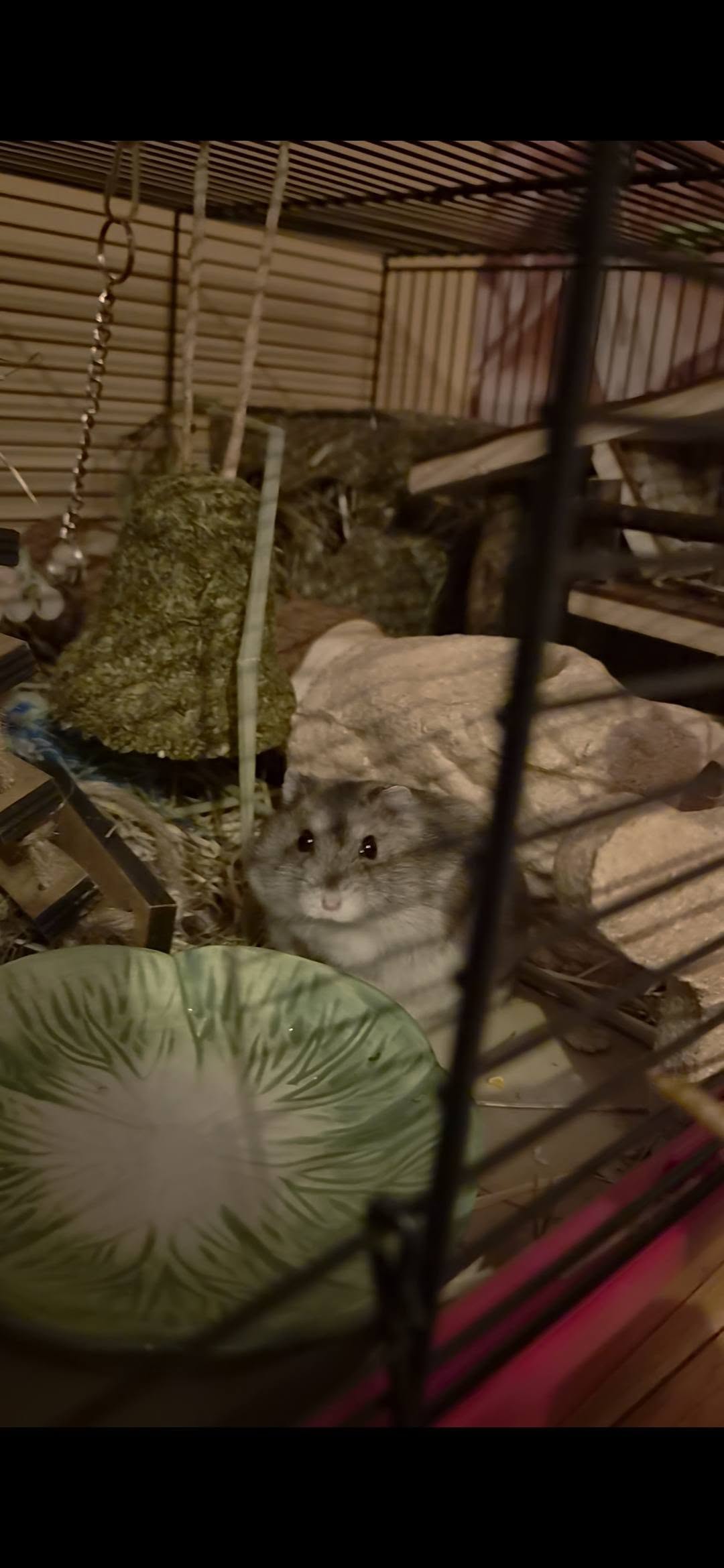
The first day and the first night should be, as far as you can manage it, quiet. Put the cage in its permanent position — the one it will be in long-term, not a temporary location — before the hamster goes in. Let the hamster enter the cage on its own terms, directly from the carrier, without being picked up and placed. Put in fresh food and water and walk away. Let it explore in its own time, in the quiet, without you hovering over the cage watching.
Hamsters are crepuscular — most active at dawn and dusk, and often through the night. The first night in a new cage is when a hamster does most of its initial environmental mapping. It runs the space, checks the corners, establishes its burrow, locates the food and water. This is important work for the hamster, and it needs to happen undisturbed.
On day two, the approach is the same. The cage can be in the room where you are. The hamster can hear your voice and begin getting used to ambient household sounds. But active interaction is not yet the priority. The priority is the hamster beginning to experience its new environment as predictable and safe, without any pressure.
Days Three to Seven — Presence Before Touch
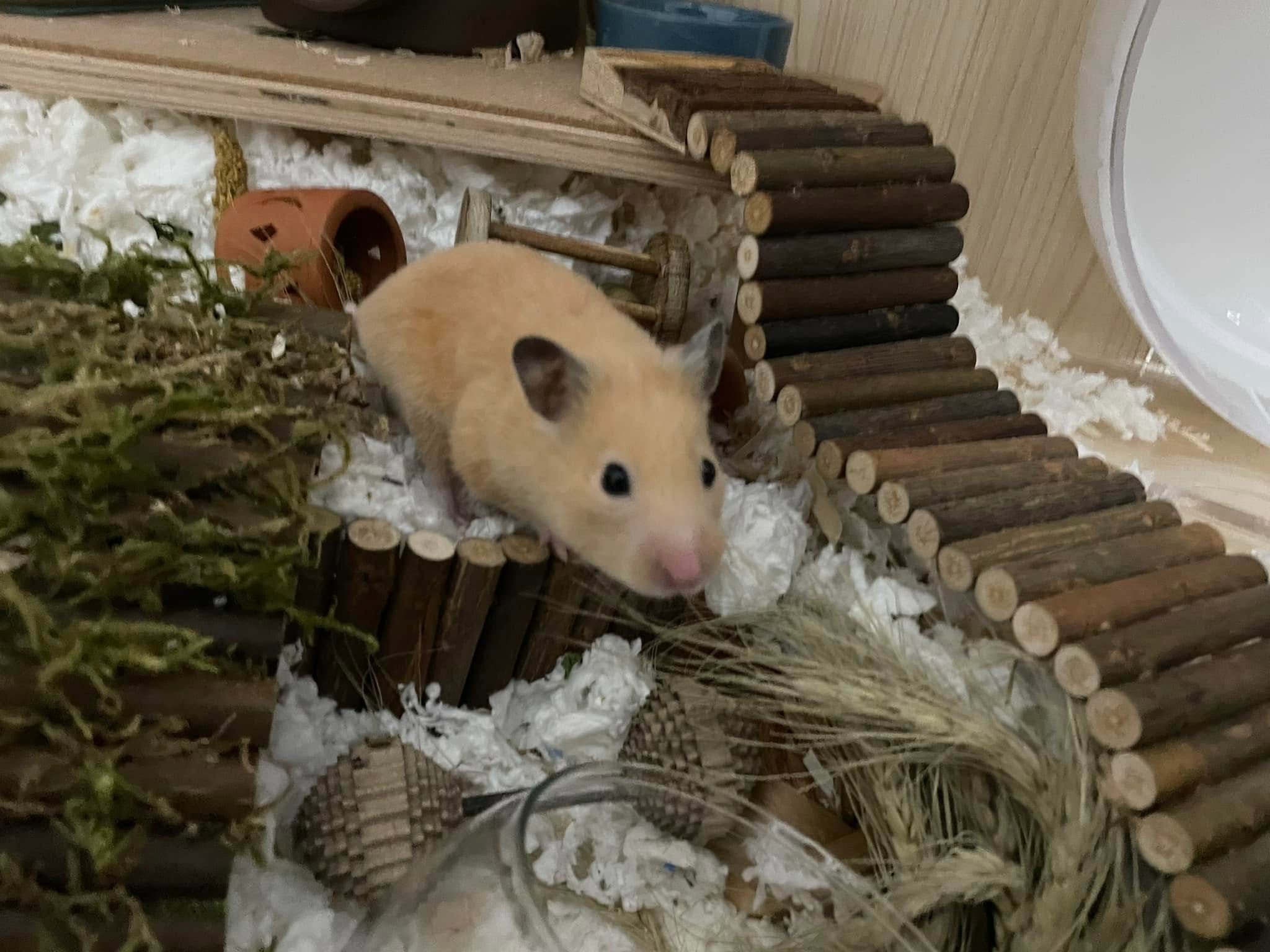
From around day three, you can begin the first stage of active trust-building — and the key word is active, because this is deliberate and consistent, not just happening to be in the same room.
Sit Near the Cage and Talk
This sounds almost too simple to be useful advice, but it is one of the most effective things you can do in the first week. Sit beside or near the cage at the times when the hamster is naturally awake — typically early evening, around dusk. Talk quietly. Read aloud. Watch television. The content does not matter; what matters is that the hamster is repeatedly hearing your voice in the absence of anything threatening, and beginning to map that voice as part of a safe environment.
Hamsters have good hearing and a very strong sense of smell. Your voice and your scent are the two primary things the hamster will use to identify you as safe or unsafe. Every evening you spend near the cage talking quietly is a deposit in that account.
Offer Food From Your Hand
From around day three or four, start offering a small treat from your fingers through the cage bars or from the open cage door — a small piece of carrot, a sunflower seed, a fragment of millet. Do not push the treat at the hamster. Place your hand near the entrance to wherever the hamster is or near the food dish, with the treat visible, and wait.
The hamster may not approach for several sessions. That is fine. The point at this stage is not the interaction but the association — your hand, your scent, near the cage, and nothing bad happens. Eventually the hamster will investigate. Eventually it will take the treat. When it does, that is the first concrete moment of association between your presence and something positive happening, and it matters more than it might look like it does.
Do Not Wake the Hamster to Handle It
A hamster that is woken during the day to be handled is a hamster in a stress state before the interaction has even begun. A disoriented, half-asleep hamster is far more likely to bite, and far less likely to have a positive associative experience, than one that is naturally awake and alert. All early interactions should happen when the hamster is already active — in the evenings, or at whatever time you notice your specific hamster tends to be awake. Work around the hamster’s schedule, not yours, especially in the first week.
Days Seven to Fourteen — From Presence to First Handling
By the end of the first week, a hamster that has been through the approach above will typically be coming to investigate your hand at the cage door, taking treats relatively reliably, and showing no significant defensive or flight response to your presence. This is the point at which first handling becomes appropriate — and again, how you do it is as important as when.

Scoop, Don’t Grab
The single most important physical technique for handling a hamster, particularly an early interaction, is to scoop rather than grab. A hand coming from above looks like a predator from a hamster’s perspective — it is the direction that birds of prey, cats, and other natural threats approach from. A hand approaching from the side or below, scooping under the hamster to lift it, is far less threatening.
Place both hands flat in the cage, close to the hamster, and let it walk onto your hands rather than picking it up against its will. It will not do this immediately — the first few attempts may involve the hamster running off rather than stepping on. Be patient. The act of waiting for the hamster to come to you rather than taking it is itself part of the trust-building.
Low and Cupped
First handling sessions should happen low — seated on the floor, or with your hands over a flat surface the hamster can land on safely if it decides to jump. A hamster dropped from height suffers injury easily. A hamster that falls and is hurt during a handling session associates that experience with being handled, and the association is not the one you want to build.
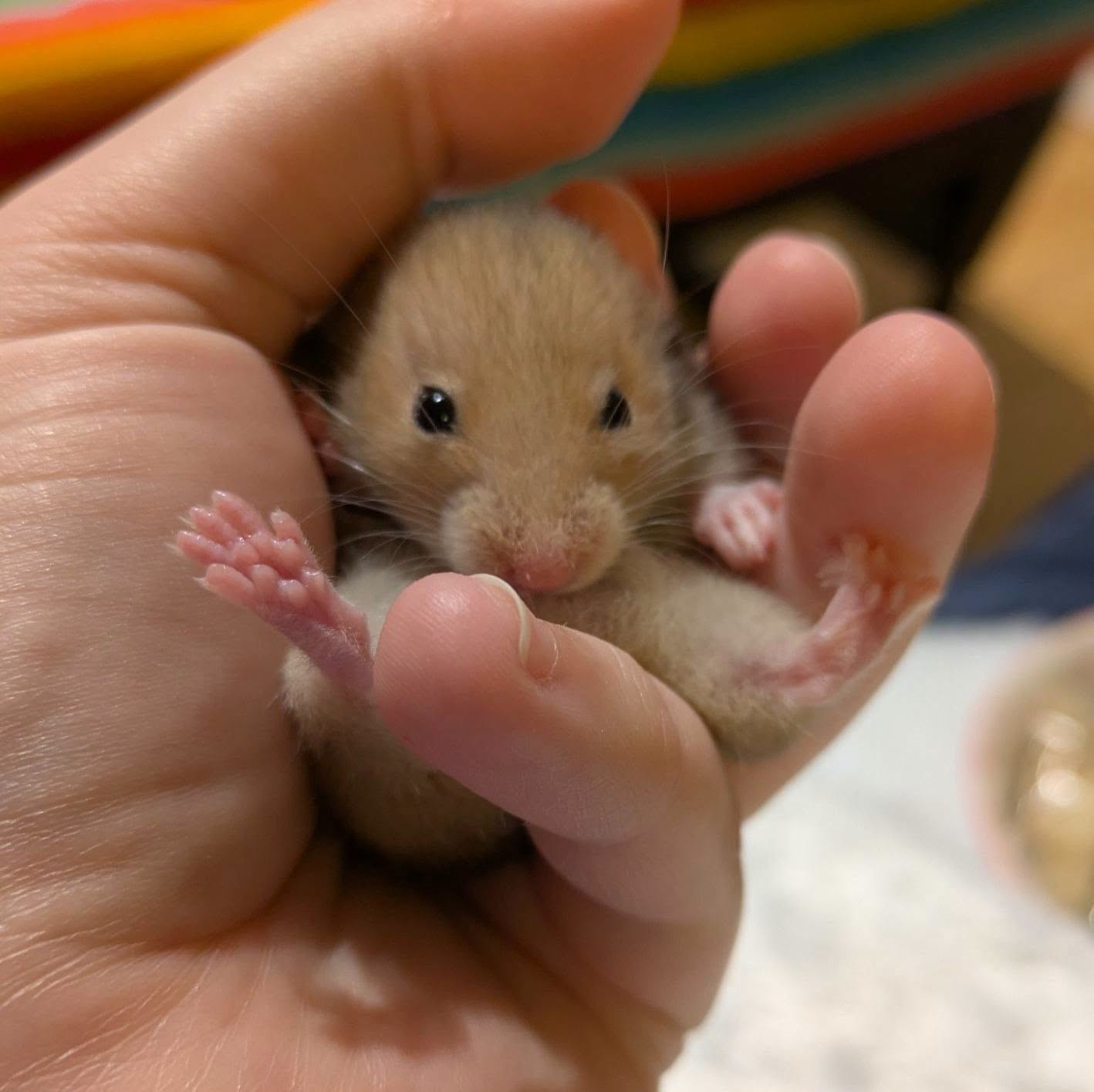
Cupped hands — both hands held together forming a bowl — are more secure and more reassuring for a hamster than one flat palm. The hamster feels enclosed without being gripped, which is closer to the containment of a burrow than the exposure of an open hand.
Short Sessions, Every Day
Five minutes of daily handling builds trust faster and more reliably than twenty minutes once a week. Consistency is the mechanism through which the hamster forms its association — your presence, repeatedly, with nothing bad happening. A once-weekly long session is not enough repetitions for the pattern to establish. Short, regular, and calm beats long, infrequent, and excited every time.
Read the Body Language
A hamster that is comfortable will move around your hands with curiosity, nose actively investigating, moving at a steady pace without erratic rushing. A hamster that is stressed will freeze, rush to escape, flatten against your hands, or emit a high-pitched squeak. If you see these signs, return the hamster to its cage calmly, without rushing, and end the session. Forcing the interaction beyond the point where the hamster is showing stress builds the wrong association — however short and unremarkable an ending feels, it is better than an ending that confirms to the hamster that handling is threatening.
What Not to Do — The Mistakes That Set You Back
I want to be specific about the approaches I see most often that actively damage the trust-building process, because most of them come from a place of good intentions and the owner does not realise what they are doing.
Forcing Handling Before the Hamster Is Ready
A hamster that is gripped and held against its will before it has any positive association with being handled is learning that your hand means constraint and discomfort. That lesson is much harder to undo than it was to create. The hamster’s willingness to approach and step onto your hand is not just a nice-to-have. It is the evidence that the association is positive, and it is what makes the handling session productive rather than counterproductive.
Inconsistency
A hamster that is handled daily for three days and then not at all for five days and then daily again is not experiencing the consistent pattern that builds reliable trust. It is experiencing intermittent, unpredictable contact, which is much slower to lead to a settled, trusting animal. The first two weeks need daily engagement, even if some of those days the engagement is only sitting near the cage and talking for ten minutes. The consistency is the point.
Involving Too Many People Too Quickly
In a household with children, the natural impulse is for everyone to interact with the new hamster from the start. I understand this, but it works against the trust-building process. In the first two weeks, limit handling to one or two people at most — the adults or older children who can maintain the calm, consistent approach the process requires. Once the hamster is settled and handling is reliable, widening the circle of people is straightforward. Trying to do it from the beginning adds unpredictability and unfamiliar scents to a process that depends on the opposite.
Handling Immediately After the Cage Is Cleaned
A freshly cleaned cage is a cage that smells of nothing the hamster recognises, including the scent markings the hamster has spent time establishing. A hamster in a freshly cleaned cage is, briefly, a hamster in an unfamiliar environment again. This is not the moment to handle it. Let the hamster resettle after a cage clean before the next handling session.
A Note on Biting — What It Means and What It Does Not
Almost every new hamster owner either experiences a bite or worries about one, so I want to address this directly.
A hamster that bites in the first two weeks is almost always communicating something specific — startled, asleep when disturbed, in a stress state from too much too soon, or simply investigating with the only tool it has available when your hand smells of something interesting. It is not aggression in the way we usually mean that word. It is communication, and the message is usually clear: this interaction is too much, too fast, too unfamiliar.
The response to a bite is not to withdraw the hand rapidly — sudden movement after a bite tells the hamster that biting worked as a threat and reinforces it. Move the hand calmly and slowly, return the hamster to its cage if you are holding it, and end the session. Review the approach — was the timing right, the handling calm, the session short enough? A bite is information, not a verdict on the hamster’s temperament.
A hamster that continues to bite regularly after several weeks of consistent, patient handling, with no improvement, is worth discussing with a vet or a small animal specialist. This is unusual, and when it happens there is often an underlying reason — a previous handling experience, a health issue causing discomfort, or an environmental factor contributing to chronic stress — that is worth identifying.
The Week-by-Week Summary
- Day 1–2: Settle and leave alone. Cage in permanent position, food and water in place, let the hamster explore undisturbed. Minimal interaction. No handling.
- Day 3–4: Introduce your presence. Sit near the cage at active times. Talk quietly. Begin offering a small treat by hand through the bars or from the open door. Do not reach in and do not attempt to handle. Let the hamster set the pace.
- Day 5–7: Build on treat-taking. Continue daily treat sessions. If the hamster is coming to your hand reliably, you can begin placing your hand flat inside the cage and letting it investigate. Still not lifting it out. Consistency and calm throughout.
- Day 8–10: First handling attempts. With the hamster actively investigating your hand, begin the scooping approach — both hands, low, letting the hamster step on rather than being picked up. First sessions are brief — a few minutes at most, sitting on the floor. Return to the cage calmly at any sign of stress.
- Day 11–14: Build duration gradually. With handling going well, begin extending sessions slightly. Allow the hamster to explore your hands and lap. Continue daily. Introduce a second household member to handling only once the hamster is settled with you specifically.
Frequently Asked Questions
How long until my hamster is tame?
With the consistent approach above, most hamsters show significant improvement in trust and handling comfort within two to four weeks. Full tameness — reliably coming to you, comfortable with extended handling, no defensive behaviour — takes longer for some individuals, particularly older hamsters or those with limited prior handling. The variation is normal. The direction of travel, with consistent daily engagement, should be steadily positive throughout.
My hamster is still hiding all the time after a week. Is something wrong?
Probably not. Hamsters are naturally more active at dawn and dusk, and genuinely nocturnal in their most active phase. A hamster that is hidden and quiet during the day is behaving normally. Check what is happening at dusk — is the hamster active, eating, moving around the cage? If yes, the behaviour is species-typical and not a sign of a problem. If the hamster is also inactive at its natural active times, and not eating or drinking normally, that is when to investigate further.
Can children handle a new hamster in the first two weeks?
I would advise limiting handling in the first two weeks to adults or older, reliably calm children, and keeping very young children to watching rather than touching during this period. The first two weeks are the foundation, and they go best with the fewest variables. Once the hamster is settled and handling is reliable, introducing children is a much smoother process than trying to manage both the settling-in and the unpredictability of young children simultaneously.
What treats are best for building trust with a hamster?
Small, appealing, easy to deliver — a single sunflower seed, a small fragment of carrot or cucumber, a piece of plain popcorn, a tiny piece of apple without the pip. The treat should be something the hamster reliably finds desirable enough to approach for, without being so large that it creates a hygiene issue or disrupts the diet. Keep portions genuinely small — the point is the positive association, not the food quantity.
Where can I get advice on my new hamster in Swindon?
Come and see us at Paradise Pets, Manor Garden Centre, Cheney Manor, Swindon SN2 2QJ, or call us on 01793 512400. We sell hamsters, we know their backgrounds, and we are happy to talk through the settling-in process, what normal looks like, and what to do if you are hitting a specific difficulty. Free advice, no obligation.
One Last Thing
The people who come back into this shop a month after buying a hamster and tell me it is already coming to them, already taking treats from their hands, already calm during handling — they almost always did the same thing. They were patient in the first two days. They were consistent across the first two weeks. They did short sessions rather than long ones. They did not rush the handling.
None of that is difficult. All of it requires a willingness to let the hamster set the pace rather than the owner, especially at the start. That willingness is the thing that separates a hamster that becomes a genuinely interactive pet from one that stays permanently wary.
Two weeks, done right, is all it takes to establish the foundation. After that, the relationship builds on its own.

Just Brought a New Hamster Home? Come In and We Will Talk You Through the First Two Weeks
We can go through the setup, the approach, and any specific difficulties you are already encountering. Free advice, no obligation — that is how we have done things since 1988.