
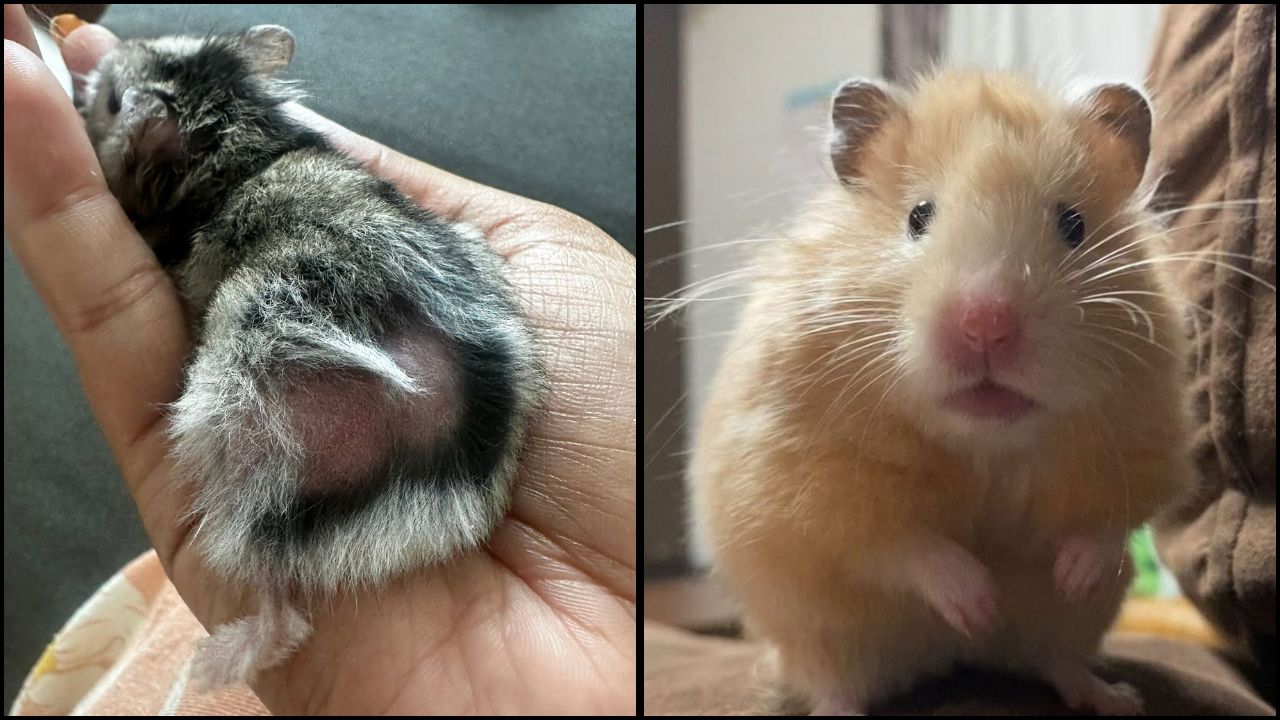

Neil has been keeping, breeding, and selling hamsters at Paradise Pets Swindon since 1988 — over 35 years of daily first-hand experience with these animals and the owners who keep them. Bald patches and fur loss are among the more common concerns owners bring to the counter, and the causes range from entirely normal seasonal changes to conditions that need prompt veterinary attention. The difference, as with most things in hamster health, is in the details — where the bald spot is, what the skin underneath looks like, and what else has changed about the animal alongside it. This article is the honest diagnostic guide.
A mother and her teenage son came in one Saturday morning with a photograph of their Syrian hamster, Biscuit. The fur on his flanks — both sides, roughly symmetrical — had thinned noticeably over the preceding few weeks. The skin underneath appeared clean and unbroken. Biscuit himself was eating normally, moving well, and showing no sign of discomfort when handled.
I looked at the photograph. The symmetrical flank thinning in an older Syrian hamster is one of the most recognisable presentations in hamster health, and it has two quite different possible explanations — one of which is benign and one of which requires veterinary assessment. The key question I asked next was how old Biscuit was.
Just over two years, the son told me.
I explained what I thought was most likely happening, and what they should watch for to tell the two explanations apart. They went home with a clearer picture than they had arrived with, and a sensible plan for whether and when to take Biscuit to a vet.
That conversation is the shape of what this article provides — not a simple reassurance that bald spots are always fine, and not unnecessary alarm about a presentation that is often benign, but the honest, specific framework for working out which category you are actually in.
The Six Causes Of Bald Spots In Hamsters — And How To Tell Them Apart
Cause 1 — Flank Gland Rubbing (Normal — No Action Needed)
This is one of the most frequently misidentified causes of apparent fur loss in Syrian hamsters, and it is entirely normal.
Syrian hamsters have paired scent glands on their flanks — one on each side — that appear as slightly darker, bare, or thinly furred oval patches in that location. These flank glands are used for territorial scent marking and are more prominent and visible in males, though females have them too. They become particularly noticeable when the hamster has been actively rubbing them against surfaces, which is normal territorial behaviour.
- Where it appears — symmetrically on both flanks, roughly midway along the body; the patches appear at the same location on each side
- What the skin underneath looks like — slightly darker pigmentation, dry and clean; no redness, no irritation, no broken skin
- What it looks like — a roughly oval bare or thinly-furred patch, often slightly darker than surrounding skin, present on both sides in the same position
- Which hamsters are most affected — most visible in adult male Syrians, though females have these glands too; active, confident hamsters that engage in territorial marking may have more pronounced patches
- What to do — nothing; this is normal anatomy and normal behaviour
- How to distinguish it from a health concern — flank gland patches are consistent in location, symmetrical, and the skin underneath is clean and dry rather than red, irritated, or broken; they do not spread beyond their typical location, and the hamster shows no sign of discomfort when the area is gently examined
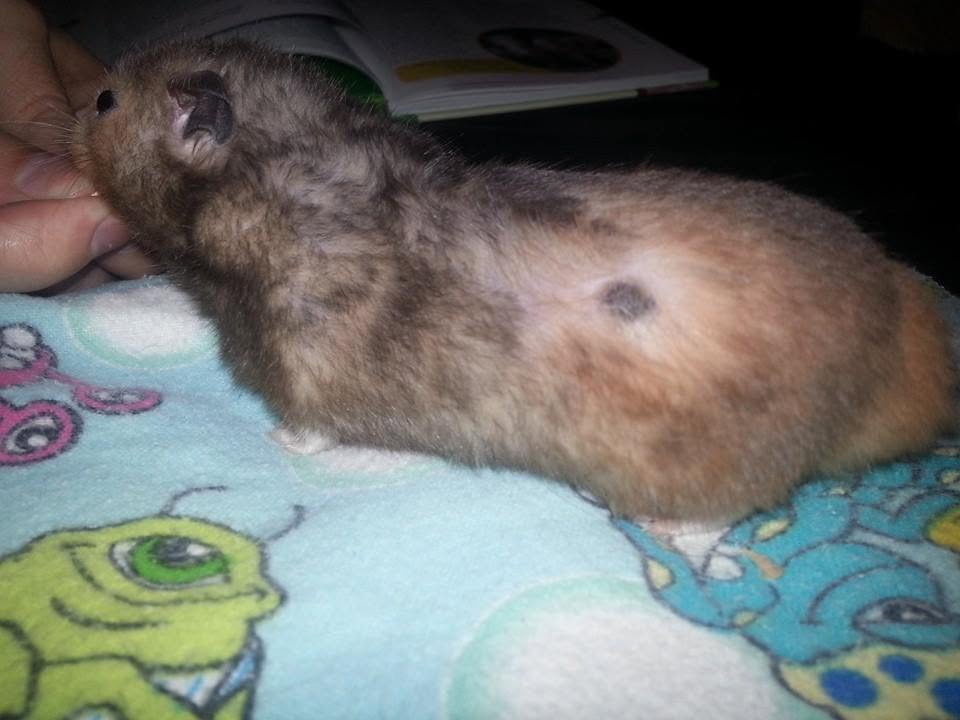
Cause 2 — Normal Seasonal Or Age-Related Coat Change (Normal — Monitor Only)
Hamsters undergo coat changes that can produce temporary, uneven thinning of the fur, particularly as they age. This is not always dramatic or obvious, but it can be noticeable enough that owners bring it to my attention.
- Where it appears — distributed across the body rather than confined to one specific area; thinning may be more noticeable on the flanks and back
- What the skin underneath looks like — clean, healthy, unbroken; the fur that remains looks normal in quality even if the overall coat is less dense than it was
- Which hamsters are most affected — older hamsters, typically over 18 months; some thinning of the coat in the second half of a hamster’s life is common and not necessarily a sign of illness
- What to do — monitor; if the thinning stabilises and the hamster remains healthy in other respects, no specific intervention is needed; if the thinning continues to worsen or other signs appear, reassess using the other causes in this article
- Important qualifier — coat thinning in an older hamster that is also losing weight, drinking more than usual, or showing other behavioural changes should not simply be attributed to normal ageing; these combinations warrant a vet check rather than simple monitoring
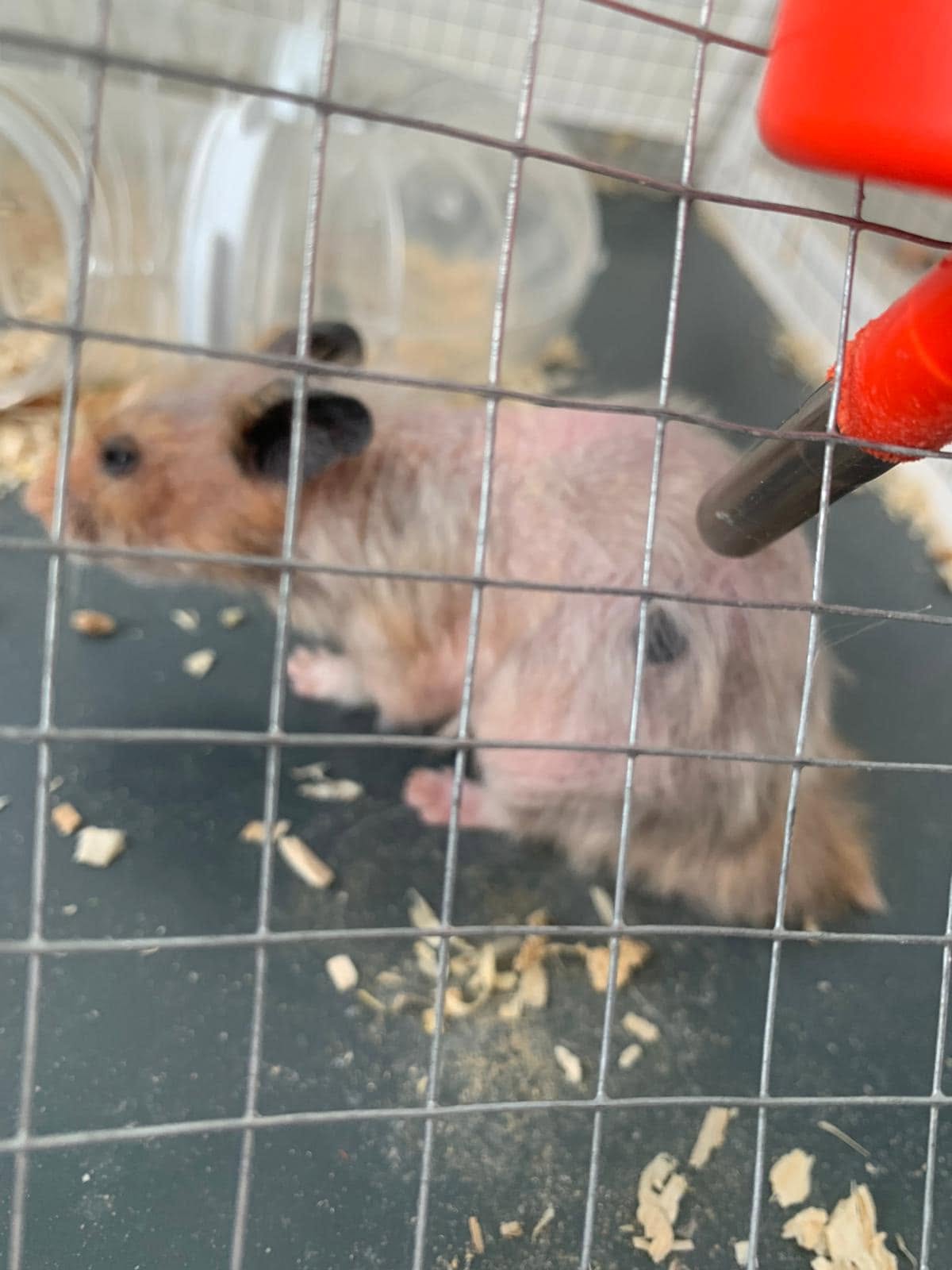
Cause 3 — Barbering By A Cage Companion (Common — Management Needed)
This cause appears specifically in hamsters kept together — which, it is worth noting, is not recommended for Syrian hamsters, who are solitary animals and should not be housed in pairs or groups. However, dwarf hamster species are sometimes kept together, and barbering can occur in these pairings.
Barbering is when one hamster chews or pulls the fur from another — often while the other animal is sleeping, or from areas the affected animal cannot easily reach or groom itself.
- Where it appears — typically on the back, head, or rump — areas where the affected hamster is less able to prevent grooming by a companion; often affects one hamster significantly more than the other
- How to confirm the cause — separate the animals temporarily and observe whether the fur begins to grow back; if it does, and the unaffected hamster continues to show normal, full coat, the companion is the cause
- What the skin underneath looks like — usually clean and unbroken unless barbering has been severe or prolonged
- What to do — if confirmed, permanent separation is the appropriate response; for Syrian hamsters, the presence of a companion at all is the underlying problem and they should always be housed singly; for dwarf species being housed together, assess whether the pairing is working or whether permanent separation is needed

Cause 4 — Mange Mites (Veterinary Treatment Required)
Mange in hamsters is caused by microscopic mites, most commonly Demodex species, that burrow into the skin and cause significant irritation, fur loss, and skin changes. This is one of the causes that genuinely needs veterinary attention rather than home management.
- Where it appears — can start at any location but often begins at the back, rump, or around the ears; spreads progressively if untreated
- What the skin underneath looks like — this is the key distinguishing feature from benign causes; the skin is often red, thickened, flaky, scaly, or crusty; the hamster may show visible signs of discomfort such as scratching, restlessness, or an uncharacteristically tense response to being touched in the affected area
- Additional signs — the hamster may appear itchy or uncomfortable; the fur loss tends to be progressive rather than stable; the edges of the bald area often look irregular rather than clearly defined
- Important context — Demodex mites are actually present in low numbers on healthy hamsters without causing problems; the condition typically becomes visible when the animal’s immune response is compromised — by age, illness, stress, or inadequate nutrition — rather than being introduced from outside; this means mange can appear in a hamster that has had no contact with other animals
- What to do — vet check; prescription antiparasitic treatment is required, and the vet will assess whether there is an underlying cause for the immune compromise that has allowed the mites to become problematic
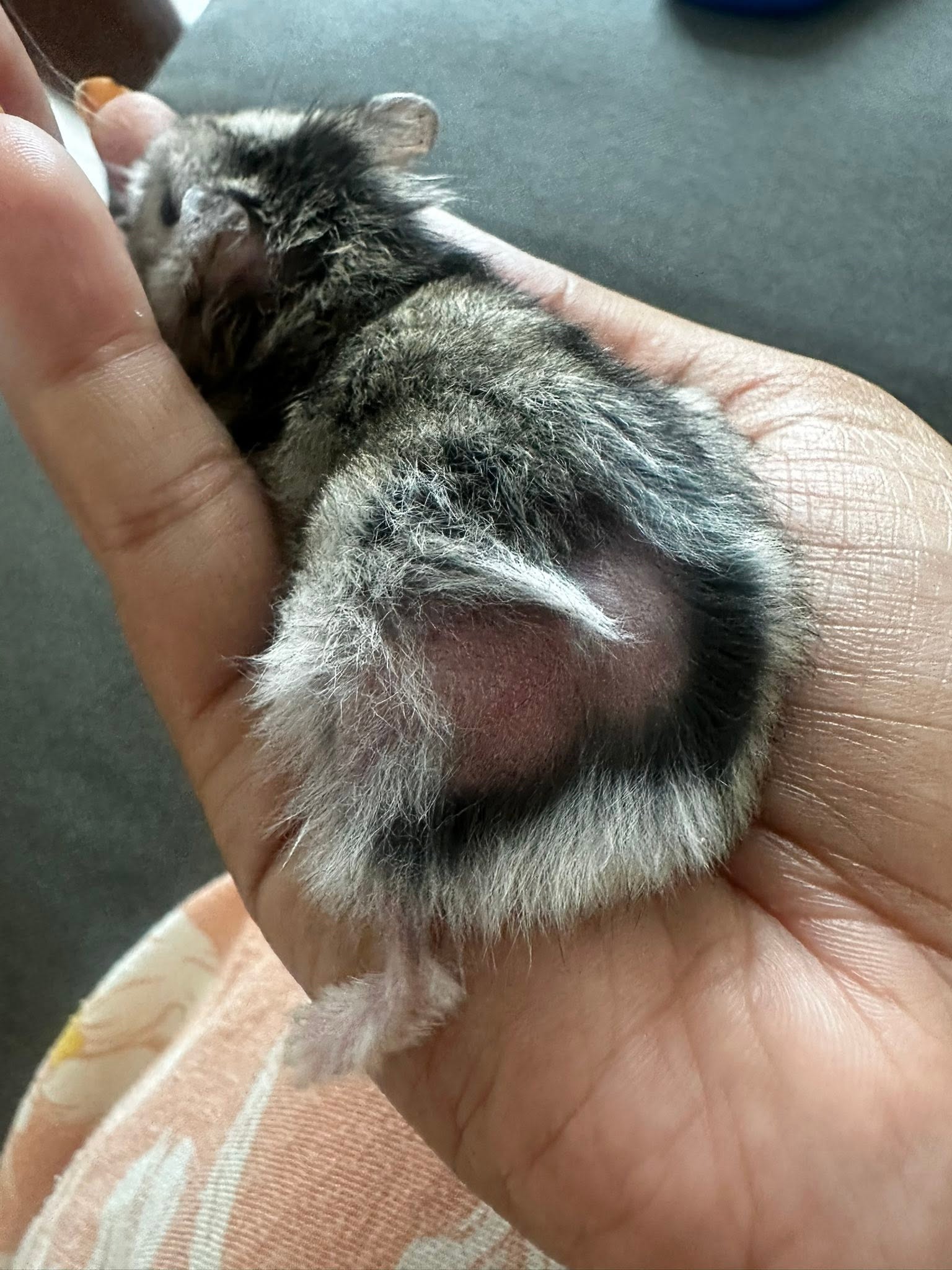
Cause 5 — Ringworm (Veterinary Treatment Required — Zoonotic Risk)
Despite the name, ringworm is a fungal infection rather than a parasite. It produces characteristic circular or irregular bald patches, and it is one of the causes that needs prompt attention both for the hamster and for the people handling it, as it can transmit between hamsters and humans.
- Where it appears — can occur anywhere on the body; characteristic circular or irregular patches with sometimes clearer edges than mange
- What the skin underneath looks like — often red, scaly, or slightly raised at the edges; may look inflamed; the hamster may or may not show visible discomfort
- Zoonotic risk — the important part — ringworm can pass from a hamster to a human handler; if you have developed any circular, red, slightly raised patches on your skin after handling your hamster, this needs attention from your GP alongside the hamster receiving veterinary assessment
- What to do — vet check promptly; antifungal treatment is required; handle the hamster with gloves until the diagnosis is confirmed and treatment has begun; wash hands thoroughly after any contact
- Red, scaly, thickened, or crusty skin beneath or around the bald patch — does not resolve with monitoring
- Circular or irregular patches with raised or inflamed-looking edges, particularly alongside similar marks appearing on your own skin
- Progressive worsening of fur loss over days or weeks rather than a stable patch
- Bald patches combined with significant weight loss, increased drinking, lethargy, or any other sign the hamster is unwell
- A hamster of any age showing skin changes alongside obvious discomfort — scratching, reluctance to be touched, hunched posture
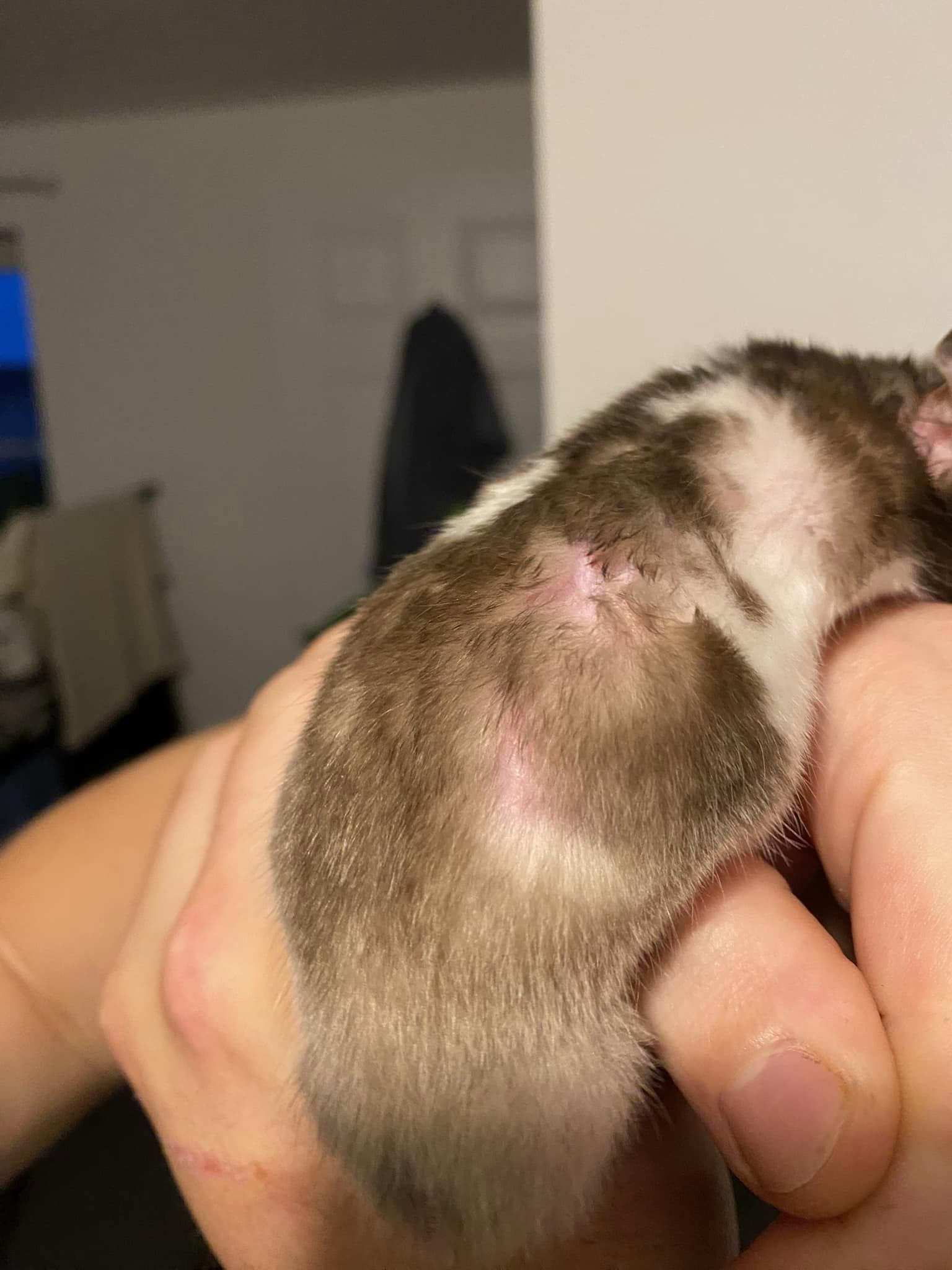
Cause 6 — Adrenal Disease Or Hormonal Condition (Veterinary Assessment)
This is the cause I was thinking about when the family brought in their photograph of Biscuit — and it is the one that produces the most characteristic presentation: symmetrical bilateral thinning in an older hamster that looks similar to normal flank gland markings but is more extensive and is progressing rather than stable.
Adrenal disease — including adrenal tumours and Cushing’s syndrome — is a relatively common condition in older hamsters and can produce generalised, often symmetrical fur thinning alongside other signs.
- Where it appears — often begins on the flanks and back; can resemble exaggerated flank gland patches; typically bilateral and roughly symmetrical in the early stages
- What the skin underneath looks like — often appears thin, slightly slack, or less elastic than normal; may look clean rather than obviously inflamed or scaly in early stages, which is part of why it can initially be confused with normal flank gland markings
- The distinguishing features — the fur loss is progressive rather than stable; it extends beyond the typical flank gland location over time; it is often accompanied by other signs including increased drinking, weight changes despite a normal or increased appetite, a pot-bellied or slightly bloated appearance, or reduced activity
- Which hamsters are most at risk — older hamsters, typically over 18 months, with the risk increasing through the second year; this is one of the conditions I think about specifically in an older Syrian with new bilateral flank thinning, which is why the age question was the first thing I asked about Biscuit
- What to do — vet assessment; a vet experienced with small mammals can examine the hamster and assess whether the presentation fits adrenal disease or a related hormonal condition; the conversation about prognosis and management options is one the vet should lead, as it depends on the specific diagnosis and the individual animal
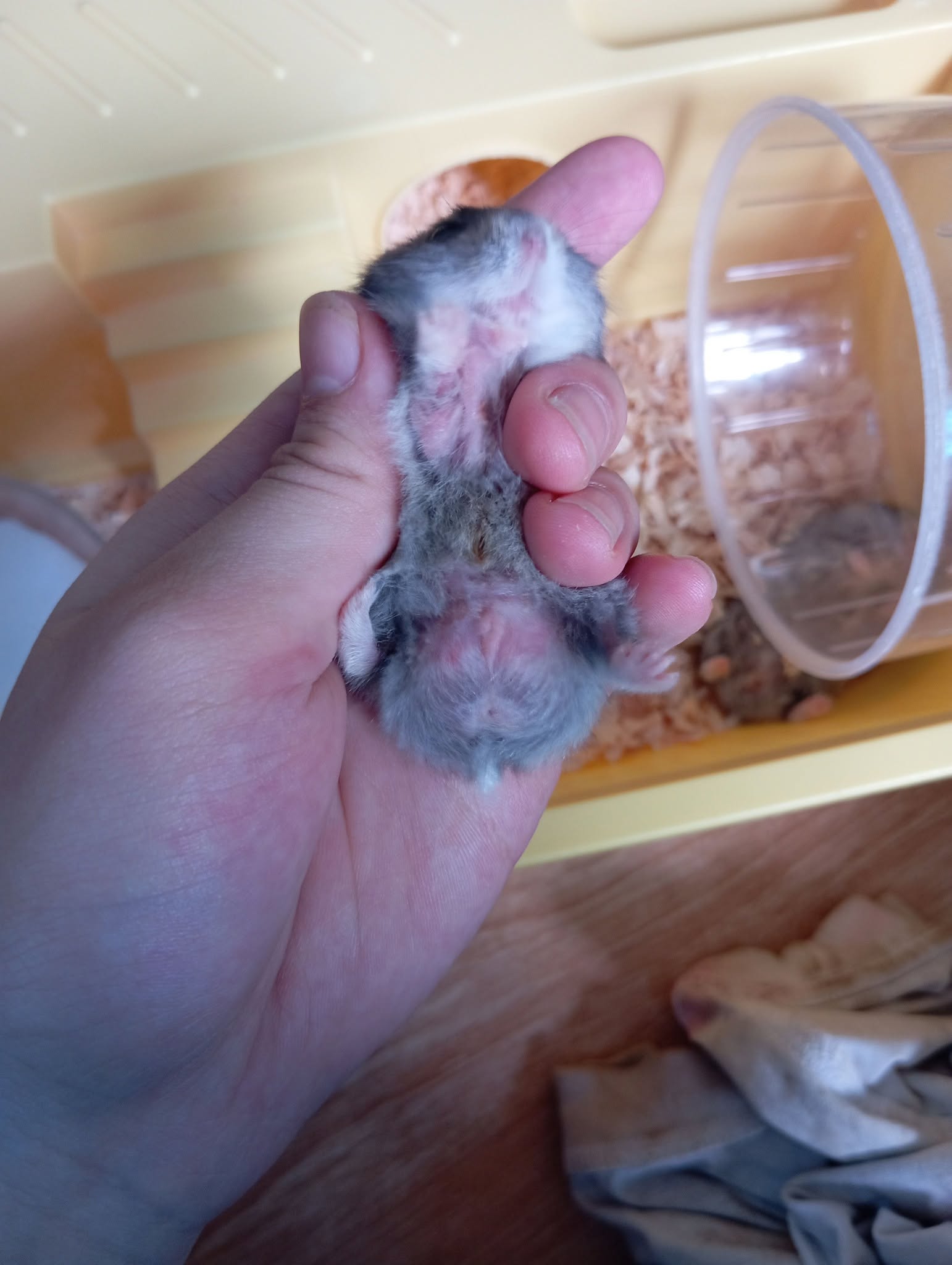
The Diagnostic Flow — Working Out Which Cause You Are Looking At
| What You See | Key Question | Most Likely Cause | What To Do |
|---|---|---|---|
| Small, symmetrical oval patches on both flanks; skin clean and slightly dark; hamster comfortable | Is the hamster a Syrian, particularly a male? | Flank glands — normal | Nothing. Normal anatomy. |
| General thinning of coat, distributed, more noticeable with age; skin clean; hamster otherwise well | Is the hamster over 18 months and otherwise behaving normally? | Normal age-related coat change | Monitor. Vet check if other signs appear. |
| Bald patch on back or rump; one hamster affected significantly more; housed with a companion | Does the fur begin to regrow after separating the animals? | Barbering by companion | Permanent separation. Syrians should always be housed alone. |
| Bald area with red, scaly, thickened, or crusty skin; hamster scratching; progressive spread | Is the skin underneath clearly abnormal rather than clean? | Mange mites | Vet — prescription antiparasitic treatment required. |
| Circular or irregular bald patches; edges may look raised or inflamed; similar marks on handler’s skin | Has anyone handling the hamster developed similar circular marks on their skin? | Ringworm — zoonotic risk | Vet promptly; handle with gloves; wash hands thoroughly. |
| Bilateral flank thinning, progressive; older hamster; combined with increased drinking or weight changes | Is the loss spreading beyond typical flank gland locations and progressing over weeks? | Possible adrenal or hormonal condition | Vet assessment — particularly important in hamsters over 18 months. |
A Five-Minute Assessment You Can Do Right Now
- Where exactly is the bald spot? — both flanks symmetrically in the specific flank gland location, or elsewhere, or extending beyond that location?
- What does the skin underneath look like? — clean, dry, and unbroken, or red, scaly, crusted, or thickened?
- Is it stable or spreading? — the same size it was last week, or visibly larger?
- Is the hamster comfortable when you gently examine the area? — no reaction, or does it pull away, scratch, or show any sign of sensitivity?
- Is the hamster otherwise well? — eating, drinking, and moving normally, or are there other changes alongside the fur loss?
- How old is the hamster? — under 18 months or over?
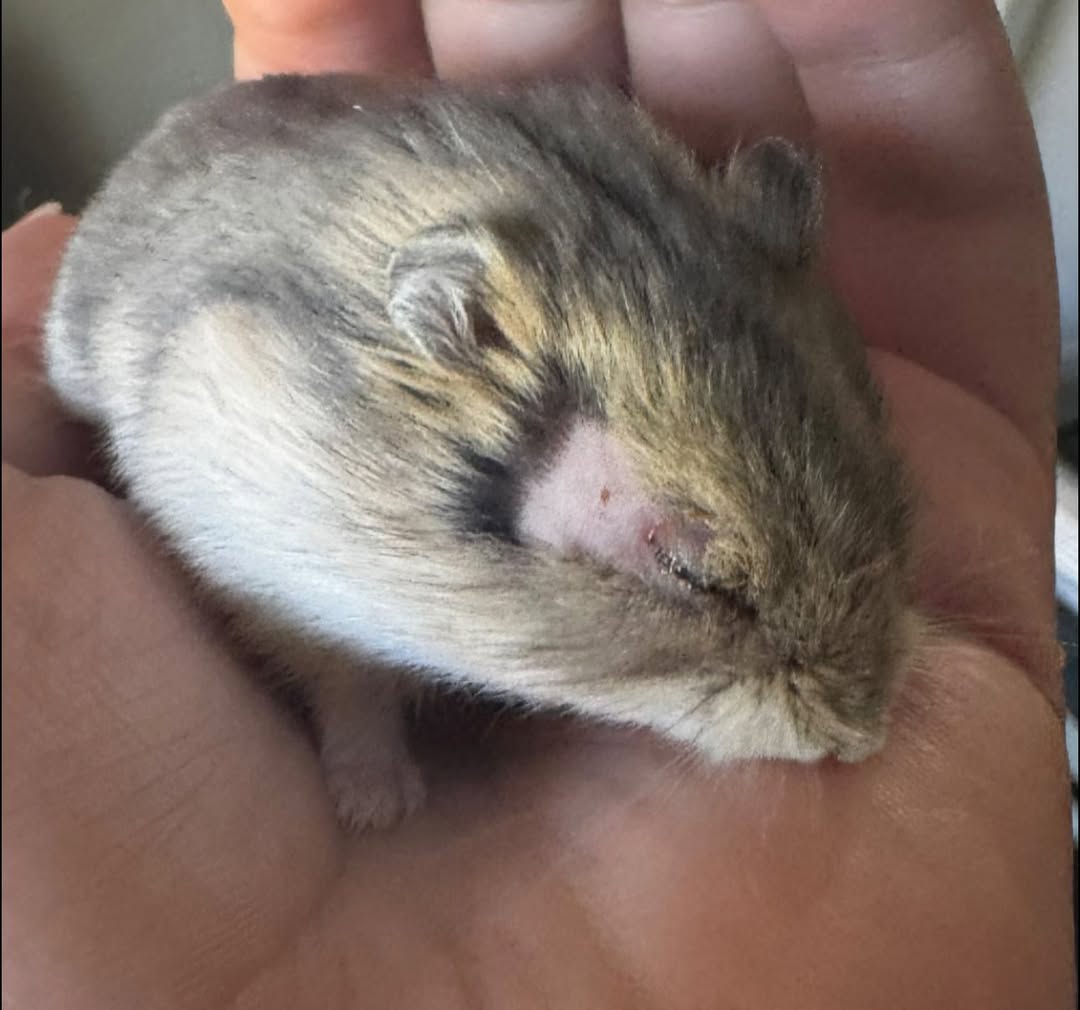
If the answers point toward clean skin, stable patches, normal hamster behaviour, and a typical flank gland location — you are most likely looking at something benign that needs monitoring rather than immediate action. If any of the answers point toward abnormal skin, progressive spread, hamster discomfort, or other signs of illness alongside the fur loss — a vet check is the right response, and the sooner the better.
Frequently Asked Questions
Are bald spots on a hamster always a sign of illness?
No. Several of the most common causes of apparent bald patches in hamsters are entirely normal — visible flank glands in Syrians being the most frequent example — and require no action at all. The key is identifying which category you are in through the specific location, skin condition underneath, symmetry, and what else has or has not changed about the animal. A bald patch alone, without the context of these details, tells you very little.
What are the dark oval patches on my Syrian hamster’s sides?
These are almost certainly the hamster’s flank glands — paired scent glands present on both sides of the body that Syrian hamsters use for territorial scent marking. They appear as slightly darker, bare, or thinly-furred oval patches in a symmetrical location on both flanks. They are more prominent in males, particularly active ones that engage in regular territorial marking, but females have them too. They are normal anatomy, not a health concern.
Can hamsters get mange?
Yes. Mange in hamsters is most commonly caused by Demodex mites — microscopic parasites that burrow into the skin and cause fur loss, skin thickening, scaling, and discomfort. The condition typically becomes visible when the animal’s immune response is compromised by age, illness, stress, or nutritional inadequacy, rather than being introduced from outside. The key distinguishing feature from benign causes is the skin condition underneath the bald patch — red, thickened, scaly, or crusty skin alongside the fur loss is the signal that warrants veterinary assessment rather than monitoring.
Can I catch ringworm from my hamster?
Yes. Ringworm — despite the name, a fungal infection rather than a parasite — can transmit between hamsters and their human handlers. If your hamster has circular or irregularly shaped bald patches with potentially inflamed or raised-looking edges, and you have noticed similar circular red patches on your own skin after handling the animal, both you and the hamster should receive appropriate treatment — the hamster from an avian and exotic vet, and yourself from your GP.
My older hamster is losing fur on its sides. Should I be worried?
Possibly, and the specific details matter here. Some coat thinning in older hamsters, particularly over 18 months, can be a normal age-related change. However, bilateral flank thinning that is progressive rather than stable, particularly in an older hamster also showing signs such as increased drinking, weight changes, a pot-bellied appearance, or reduced activity, can indicate an adrenal or hormonal condition that warrants veterinary assessment. Age alone does not make all fur loss benign, and an older hamster showing these combinations of signs should see a vet rather than simply be monitored.
My hamster seems to be scratching a lot alongside losing fur. What does this suggest?
Scratching alongside fur loss is the combination most consistent with a parasitic or fungal cause — mange mites or ringworm — rather than the benign causes that do not typically produce obvious discomfort. This combination warrants a vet check rather than home monitoring, as both of the likely causes require specific prescription treatment and one of them carries a zoonotic risk.
Should Syrian hamsters be housed together?
No. Syrian hamsters are solitary animals and should always be housed singly. Housing them together is a significant welfare problem that causes stress and frequently leads to injury, including barbering and worse. If you have Syrian hamsters currently housed together and one is showing fur loss on its back or rump, separation is both the diagnostic step and the correct long-term solution.
Where can I get advice about my hamster’s bald spots in Swindon?
Come in to Paradise Pets at Manor Garden Centre, Cheney Manor Industrial Estate, Swindon SN2 2QJ — or call us on 01793 512400. Bring the hamster or a clear photograph showing the affected area in good light. We can talk through the diagnostic questions in this article with you and tell you honestly whether we think it warrants a vet check. The advice is always free.
One Last Thing From Me
The family with Biscuit came back a few weeks after that Saturday conversation. He had, in the end, gone to a vet — the bilateral flank thinning had continued to progress slightly and the mother had noticed him drinking a little more than usual, which tipped them toward getting it checked. The vet’s assessment was consistent with early adrenal changes, a not uncommon finding in a Syrian of his age. They came back not with a problem resolved, but with an honest picture of what they were dealing with and a sensible plan for keeping Biscuit comfortable.
“We’d have just kept watching and hoping it was normal if we hadn’t known what to look for,” the son said.
That is the value this article is trying to provide. Most bald spots on hamsters have straightforward explanations, several of them entirely normal, and most owners who come in worried about them leave reassured rather than alarmed. But the framework for telling the benign cases from the ones that need a vet is learnable and specific, and every hamster owner is better served by having it than by either blanket reassurance or unnecessary alarm.
If something about what you are seeing does not quite fit the benign category — if the skin underneath is not clean, if the loss is spreading, if the hamster is scratching or showing any other signs of being unwell alongside it — bring it in or ring us. That conversation has always been free here, and it is usually considerably shorter than the worry it replaces.
Concerned About Your Hamster’s Fur Or Skin? Come In Or Ring Us
Bring the hamster or a clear photograph in good light. We will talk through the diagnostic questions honestly and tell you whether we think it needs a vet or whether it is something you can monitor. Free advice, no obligation. That is how we have done things here for 35 years.