
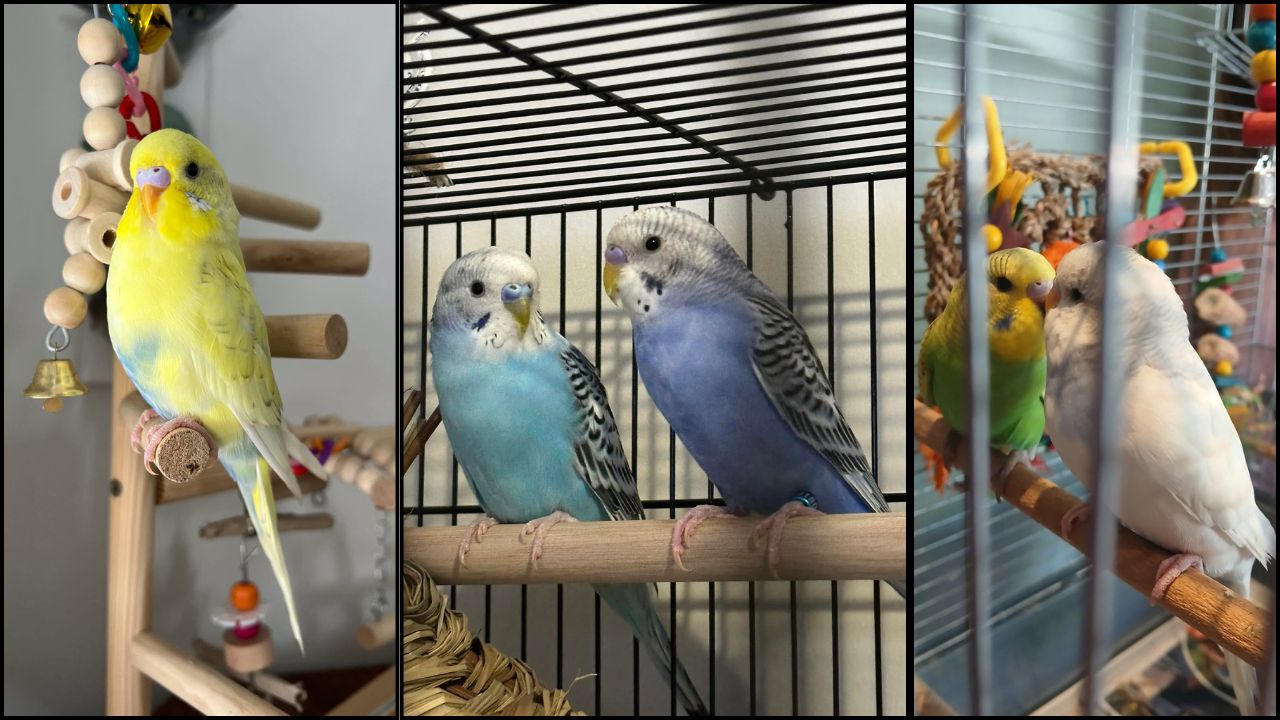

Neil has been keeping, breeding, and selling budgies at Paradise Pets Swindon since 1988 — over 35 years of watching which first budgie purchases turn into happy, decades-spanning family relationships, and which ones turn into a frustrated phone call within a fortnight. Families almost always arrive with an idea of what they want already formed — usually based on colour, or on a single eye-catching bird in the display. What I have learned, across thousands of these conversations, is that the bird most families should leave with is rarely the one they walked in towards. This is my honest account of what I actually recommend, and why.
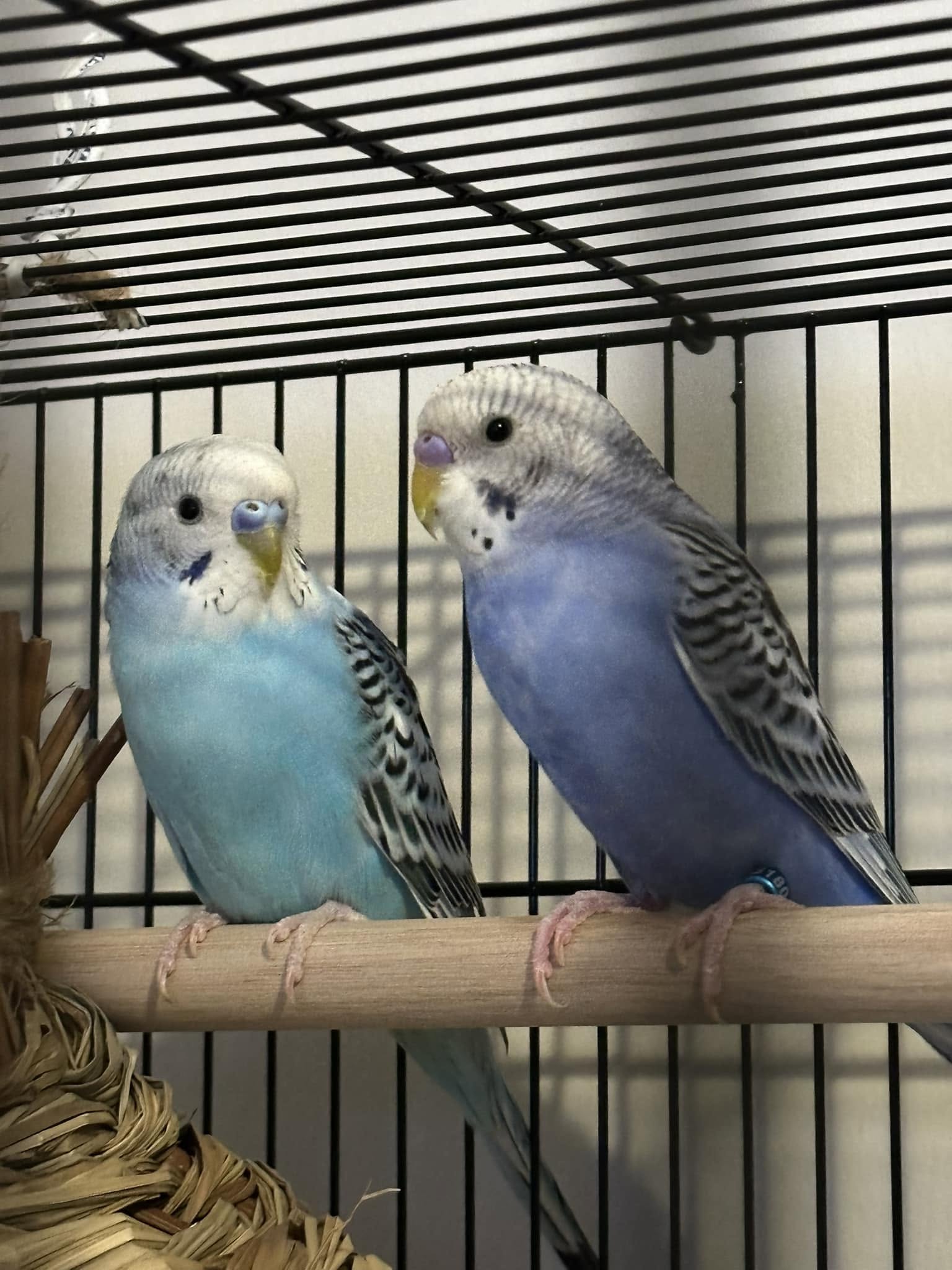
A family came in last spring — two parents, a daughter of about nine, full of the particular excitement that comes before a first pet purchase. The daughter had already chosen her bird before they had even reached the counter. A vivid sky-blue male, striking, confident, clearly the most visually arresting bird in the display. She had named him already. Several times, in fact, as her preferences shifted between options.
I asked a few questions before agreeing to anything. How old was the daughter going to be doing the day-to-day handling? Had they kept birds before? Was this primarily her pet, or a family pet the whole household would share in caring for?
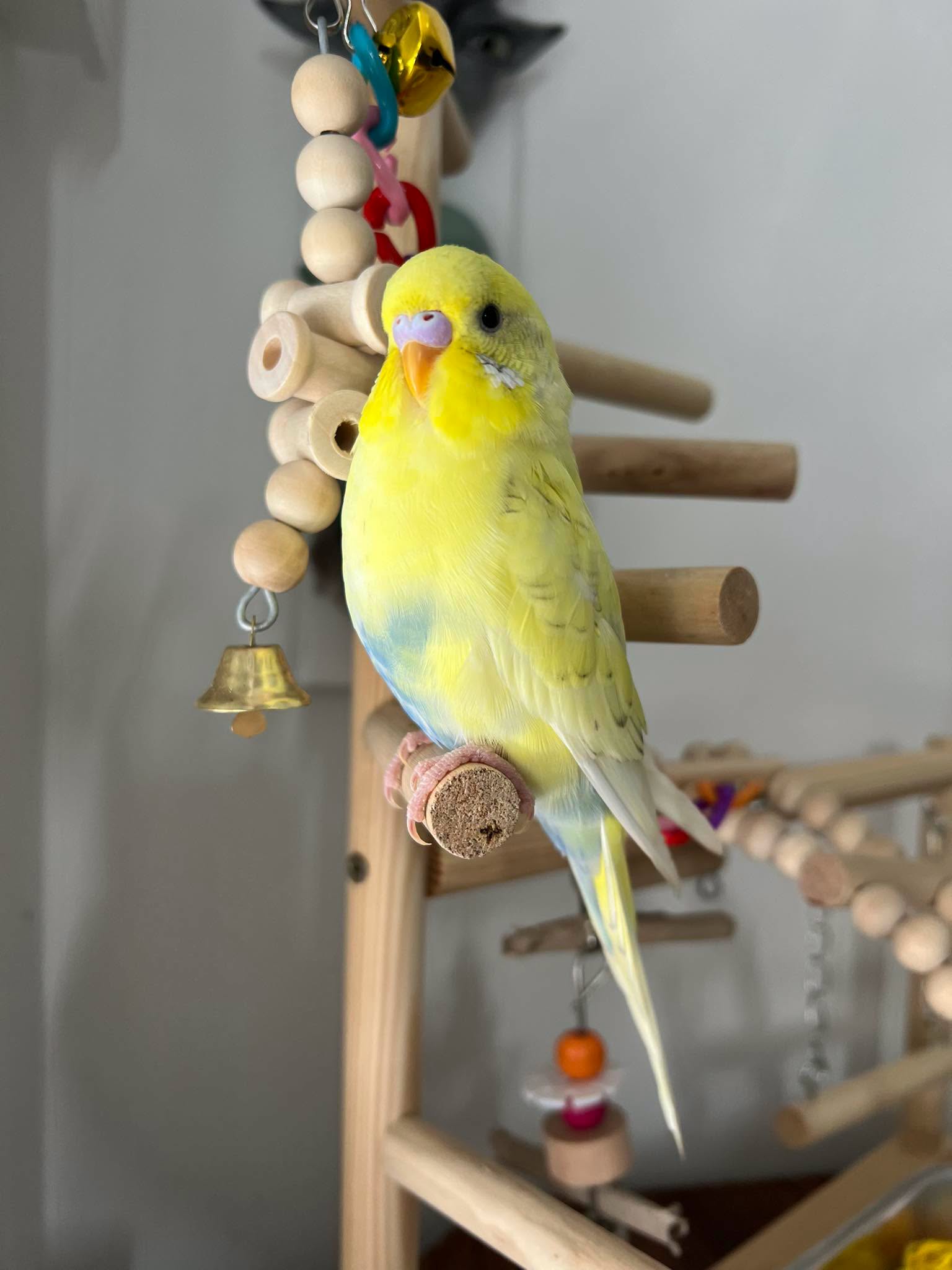
By the end of that conversation, the family left with a different bird entirely — not the vivid blue male she had first pointed at, but a young, recently weaned, calmer green hen from a different part of the display, one that had been quietly observing the shop rather than reacting to every movement near the glass. The daughter was a little disappointed in the moment. Within three weeks, by the mother’s account when she came back for supplies, that calmer green hen was eating from the daughter’s hand and the family could not imagine having chosen differently.
Criterion 1 — Age: Why Younger Is Almost Always Right For A First Bird
This is the single most important factor I assess, and it is the one most families have given the least thought to before they arrive.
- Look for a recently weaned young budgie, typically between 6 and 12 weeks old — old enough to be fully independent and eating well on its own, young enough that it has not yet developed strong, fixed behavioural patterns from a previous home or environment
- Why this matters for a first-time family — a young bird is forming its first significant relationships and routines at exactly the point it comes home with you, which means the family is shaping the bird’s experience of humans from the start, rather than working against an already-established pattern, positive or negative
- What to avoid for a true first bird — an older, previously-owned budgie with an unknown history, however well-intentioned the rehoming reason; rehomed birds can absolutely make wonderful pets, but they frequently carry specific anxieties, handling sensitivities, or behavioural quirks from their previous situation that require more experienced handling to work through than a true first-time family typically has
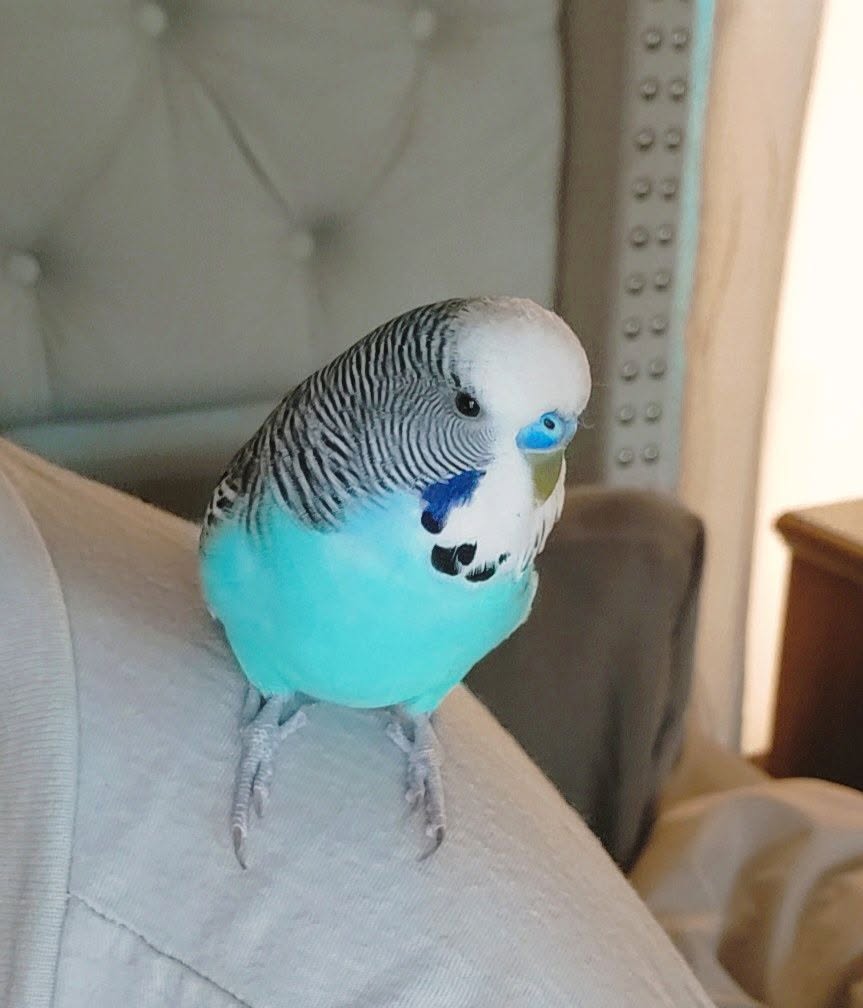
- How to identify a young, recently weaned bird in the shop — look at the cere (the area above the beak); in young budgies it typically has a more uniform, often slightly paler or pinker appearance before adult colouring develops fully; the eyes of a young budgie often still show the dark iris ring that fades as they mature, typically visible up to around three to four months; reputable sellers should also simply tell you the bird’s age and hatch information directly — ask
Criterion 2 — Temperament Observed In The Shop, Not Imagined At Home
This is the part of the process families consistently skip, because it requires patience in the moment that the excitement of buying a first pet does not naturally encourage.
- Spend genuine time watching the birds before choosing, rather than pointing at the first appealing one — ten or fifteen minutes of quiet observation tells you considerably more than a first glance; watch how individual birds behave relative to their cage-mates over that period
- Look for a bird that is alert and engaged with its environment, but not visibly the most reactive or flighty in the group — a bird that startles dramatically at every small movement near the cage, or that is constantly at the most agitated end of the group’s behaviour, is likely to take longer and need more experienced handling to settle than a calmer individual
- A bird that approaches the front of the cage with apparent curiosity rather than alarm when you approach calmly is a good sign — not aggression, not retreat, but genuine investigative interest; this is a reasonable early indicator of a more confident, adaptable temperament
- Avoid choosing based on which bird is loudest or most visually active in the moment you walk past — this is frequently simply the bird that happens to be excited about something unrelated to genuine temperament, such as feeding time or a recent disturbance, rather than a reliable signal of how that bird will settle long-term
- Ask the shop directly about temperament observations from staff who handle the birds daily — at Paradise Pets, we handle our birds regularly from a young age and have a genuine, observed sense of which individuals are naturally calmer or more confident; this information is more reliable than what you can assess in a single ten-minute visit, and any reputable seller should be willing to share it honestly
Criterion 3 — Colour Genuinely Does Not Matter, And Here Is Why I Say That Plainly
I want to address this directly, because it is the criterion families arrive most attached to and the one I spend the most time gently redirecting.
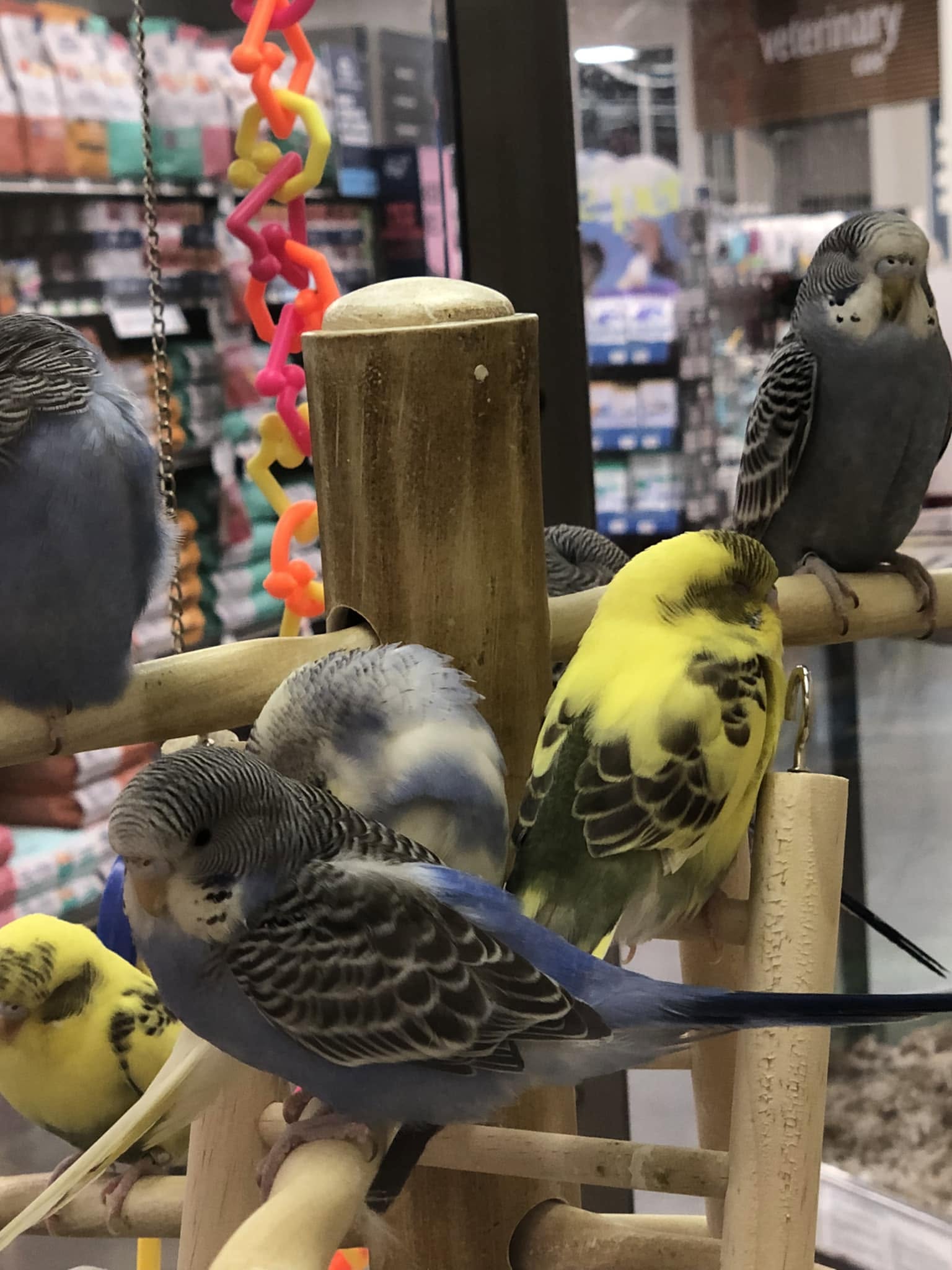
- Colour variety has no bearing on temperament, intelligence, health, or trainability — a vivid blue, a classic green, a pied, or a rare variety are all, behaviourally, simply budgies; the colour genetics that produce these variations have no established connection to behavioural traits
- Choosing primarily on colour means you are choosing on the one factor that has zero predictive value for how the next several years will actually go — this is the single most common mistake I see first-time families make, and it is almost always the parents allowing the child’s immediate visual preference to override the more important questions about temperament and age
- What I tell children specifically — and most children respond to this better than parents expect — that the budgie who is most excited to meet them is a better choice than the budgie who simply looks the prettiest sitting still; reframing the decision around mutual interest rather than appearance tends to genuinely shift a child’s preference once they spend the observation time recommended above
- The exception worth knowing about — if you specifically want a male budgie for the clearest, most reliable indicator of breeding-related cere colour changes later in life, or if you have a strong personal preference for a particular look that you know will not affect your enjoyment of the bird either way, there is nothing wrong with factoring colour in as a tiebreaker between two birds that are otherwise equally suitable on age and temperament — it simply should not be the primary or first criterion
Criterion 4 — Single Bird Versus A Pair, For A First-Time Family Specifically
This decision matters more for first-time owners than most families realise before they ask about it, and the right answer depends genuinely on what the family is hoping for.
- A single budgie, if the family genuinely intends to provide significant daily interaction — talking to it, handling it regularly, treating it as a true companion animal rather than a background pet — will typically bond more closely and become tamer with the household than a budgie kept as part of a pair, because it has no other bird to direct its social energy toward
- A pair, if daily interaction is likely to be more limited — a busy household, young children whose attention is genuinely divided, or anyone who is honest with themselves that daily dedicated time will be inconsistent — provides the bird with companionship that a single budgie in a less interactive household would otherwise lack
- What I ask families to be honest about — how much genuine daily time can realistically be committed, not how much is hoped for in the excitement of the first week; a single budgie in a household that cannot sustain daily interaction is at real risk of becoming a lonely, under-stimulated animal, which is a worse outcome than a well-matched pair that bonds primarily with each other
- For most first-time families with children specifically — I often recommend a single bird if a particular child is genuinely going to take the lead on daily care and interaction, because the resulting bond tends to be the most rewarding family pet experience; but I am honest about the commitment this requires, and a pair is the more reliably welfare-positive choice if that level of commitment is uncertain
Criterion 5 — Source Matters More Than Most Families Realise
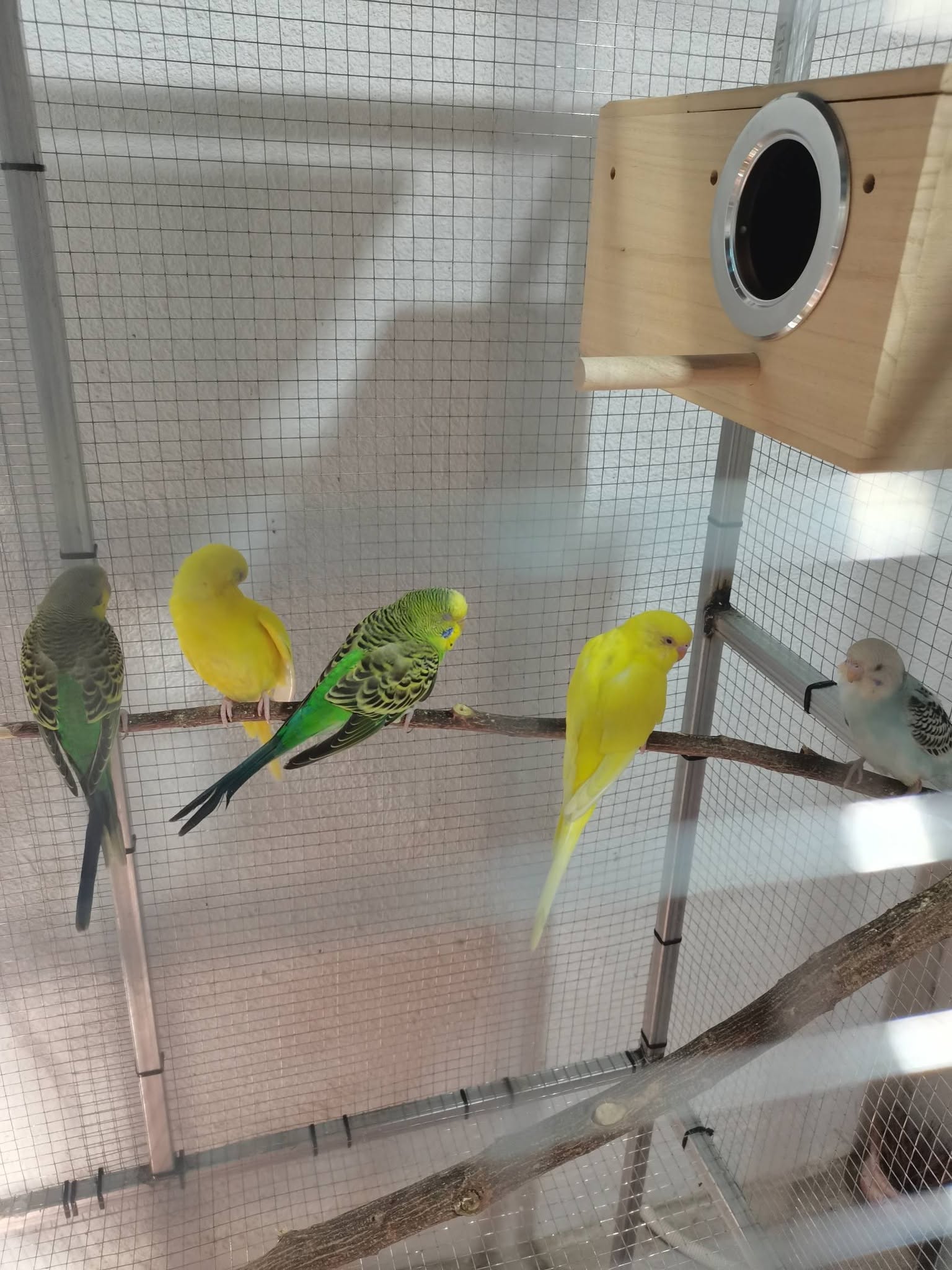
- Buy from a reputable, known UK breeder or a shop with a genuine, traceable relationship with its breeders — at Paradise Pets we only stock birds from UK breeders we know personally; this matters because it gives you accurate information about the bird’s age, history, and any health considerations, none of which is reliably available from an unknown or anonymous source
- Be cautious of significantly underpriced birds from unfamiliar sources — price that is notably below the typical range for a healthy, well-reared young budgie is sometimes, though not always, a signal of poorer breeding conditions or inadequate early handling, neither of which serves a first-time family well
- Ask whether the bird has been regularly handled from a young age — a budgie that has had consistent, gentle human contact from early in its development is considerably easier for a first-time family to build trust with than one that has had minimal handling before arriving in your home
What I Actually Tell Families At The Counter
| What Families Usually Want | What I Actually Recommend | Why |
|---|---|---|
| The most visually striking colour in the display | The calmest, most curious bird observed over genuine time | Colour has no bearing on temperament or how the first months will go |
| An adult bird that already looks “finished” and impressive | A recently weaned young bird, 6–12 weeks old | Young birds form their first significant relationships with the new family directly |
| The loudest, most active bird in the cage | A bird that is alert and curious but not the most reactive in the group | Reactivity often means a longer, more demanding settling process |
| Whichever bird is cheapest or most convenient | A bird from a known, reputable source with traceable age and handling history | Reliable information about the bird’s background genuinely matters for a smooth start |
| A single bird regardless of household routine | Single if genuine daily interaction is committed to; a pair if it is likely to be inconsistent | An under-stimulated single bird is a worse outcome than a well-matched pair |
Frequently Asked Questions
What is the best age to buy a first budgie?
A recently weaned young bird, typically between 6 and 12 weeks old, is the ideal starting point for most first-time families. This age range means the bird is fully independent and eating well on its own, but has not yet developed strong, fixed behavioural patterns from a previous environment, which makes it considerably easier to build a positive relationship with from the very beginning.
Does the colour of a budgie affect its personality?
No. Colour variety in budgies is a result of genetics that have no established connection to temperament, intelligence, or trainability. A vivid blue and a classic green budgie are, behaviourally, simply individual birds with individual personalities unrelated to their colouring. Choosing primarily based on colour means prioritising the one factor with no predictive value for how your experience with the bird will actually go.
Should I get one budgie or two for my first bird?
This depends on how much genuine daily interaction your household can realistically commit to. A single budgie that receives consistent daily attention and handling will typically bond more closely with the family than a budgie kept as part of a pair. A pair is the better choice if daily interaction is likely to be inconsistent, as the birds provide companionship for each other that a neglected single bird would otherwise lack. Be honest about realistic time commitment rather than the level of attention hoped for in the excitement of the first week.
How can I tell which budgie in a display has the best temperament?
Spend genuine time — ten to fifteen minutes at minimum — quietly observing the birds rather than choosing based on a first glance. Look for a bird that is alert and curious, approaching the front of the cage with interest rather than alarm when you approach calmly, without being the most visibly reactive or flighty bird in the group. Ask shop staff who handle the birds daily for their genuine temperament observations, as this is more reliable than a single short visit can reveal on its own.
Is it better to buy a budgie from a pet shop or a private breeder?
What matters most is the reliability and traceability of the source rather than the specific category of seller. A reputable shop with a genuine, known relationship with its breeders can provide the same accurate information about age, history, and handling background that a good private breeder would. What you should avoid is an anonymous or unfamiliar source where this information is not reliably available, regardless of whether it is technically a shop or a private seller.
What signs suggest a budgie has not been well handled before sale?
A bird that shows extreme, sustained alarm at any human approach, that does not settle even slightly over a period of quiet observation, or that shows signs of poor physical condition can indicate inadequate early handling or care. A well-reared, regularly handled young budgie will typically show curiosity alongside some natural caution, rather than persistent extreme distress. Asking the seller directly about the bird’s handling history is a reasonable and reliable way to get this information rather than relying solely on observation.
Should I let my child choose the budgie themselves?
Involving children in the decision is genuinely valuable and tends to strengthen their connection to the bird, but it works best when guided toward the right criteria rather than left entirely to first visual impression. Reframing the choice around which bird seems most interested in meeting the child, after a period of quiet observation together, tends to produce a better match than choosing purely on which bird looks most visually appealing — and most children respond well to this reframing once they understand it.
Where can I get help choosing a first budgie in Swindon?
Come in to Paradise Pets at Manor Garden Centre, Cheney Manor Industrial Estate, Swindon SN2 2QJ — or call us on 01793 512400. Spend some time with us watching the birds, and we will talk honestly through which individual birds we think would suit your family’s specific situation. We have been matching first-time families with the right budgie for 35 years.
One Last Thing From Me
The family with the nine-year-old daughter came back into the shop about six months after that first visit, mostly to buy more seed and to let me know how things were going. The calmer green hen — who had by then been named, renamed, and finally settled on a name that apparently changed weekly for the first month — was, by every measure the mother described, thriving. Talking, or at least attempting the kind of vocal mimicry budgies attempt. Stepping confidently onto the daughter’s hand. Genuinely, by the family’s account, the centre of a great deal of household joy.
“She still talks about the blue one sometimes,” the mother said, smiling. “But she’ll also tell you, completely unprompted, that picking the calm one was the right call. She worked that out herself, eventually.”
That outcome is, more than almost anything else, why I ask the questions I ask and steer families the way I steer them, even when it means gently redirecting a child’s heart set on a particular colour. The bird that catches your eye in the first thirty seconds is rarely the bird that will give your family the best first experience of bird-keeping. The bird that emerges after genuine observation, matched honestly to your household’s age, temperament, and realistic time commitment — that is the recommendation I actually stand behind, every single time, regardless of what initially walked through the door wanting something else.
Thinking About Your Family’s First Budgie? Come And Spend Some Time With Us
Bring the whole family, spend some genuine time watching the birds with us, and we will help you find the one that is honestly the best match — not just the prettiest one in the display. Free advice, no obligation. That is how we have done things here for 35 years.