
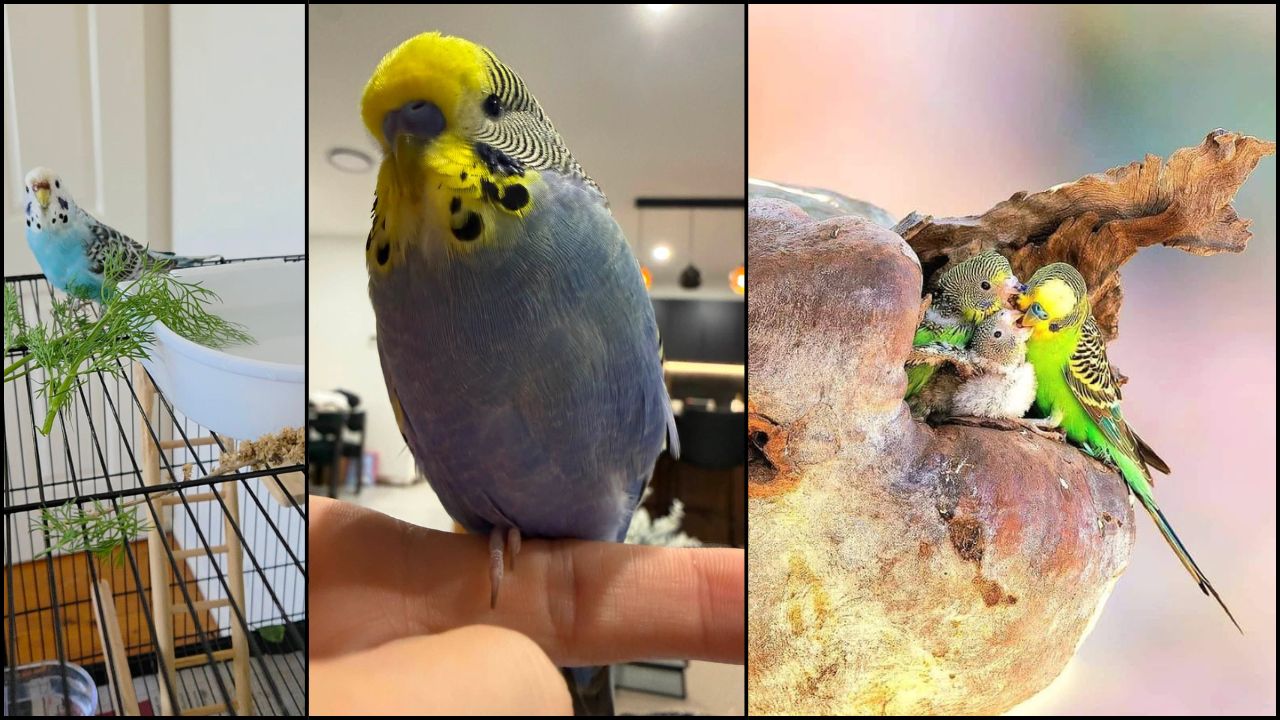

Neil has kept, bred, and sold cage and aviary birds at Paradise Pets Swindon since 1988 — over 35 years of first-hand experience with budgerigars, cockatiels, canaries, finches, and dozens of other species. Budgies have been the UK’s most popular pet bird for as long as he can remember. In 2026 they remain so — by a wide margin. This is his honest account of why, and what it actually means for anyone thinking of getting one.
People ask me fairly regularly which pet bird they should get. Sometimes they have already decided — they want a budgie, they just want confirmation. Sometimes they are genuinely open and want a considered recommendation. And sometimes they have heard that budgies are popular and they want to know whether popular means good, or whether it just means common.
It is a fair question. Popularity does not automatically mean the right choice. Things become popular for all sorts of reasons — marketing, availability, price — that have nothing to do with how good they actually are. A sceptic asking why budgies are the most popular pet bird in the UK is asking a reasonable question, and they deserve a real answer rather than a reassuring one.
So here is the real answer. Budgies are the most popular pet bird in the UK because they are genuinely excellent. Not because they are cheap, not because they are widely available, not because they are easy to find in every pet shop — though all of those things are true. Because the bird itself, when properly kept, is one of the most rewarding pets available to a UK household at any price point. The popularity is earned.
But popularity also creates its own problems. It means there is a lot of misinformation about budgies, a lot of poor advice, and a lot of birds being kept in ways that fall significantly short of what they need. The most popular pet bird in the UK is also one of the most consistently misunderstood. Both things are true simultaneously, and understanding both is what this article is for.
Why Budgies Are the UK’s Most Popular Pet Bird — The Honest Reasons
There are several reasons budgies sit at the top of the UK pet bird market, and they are worth separating out clearly because not all of them reflect equally well on the species.
Price and Availability
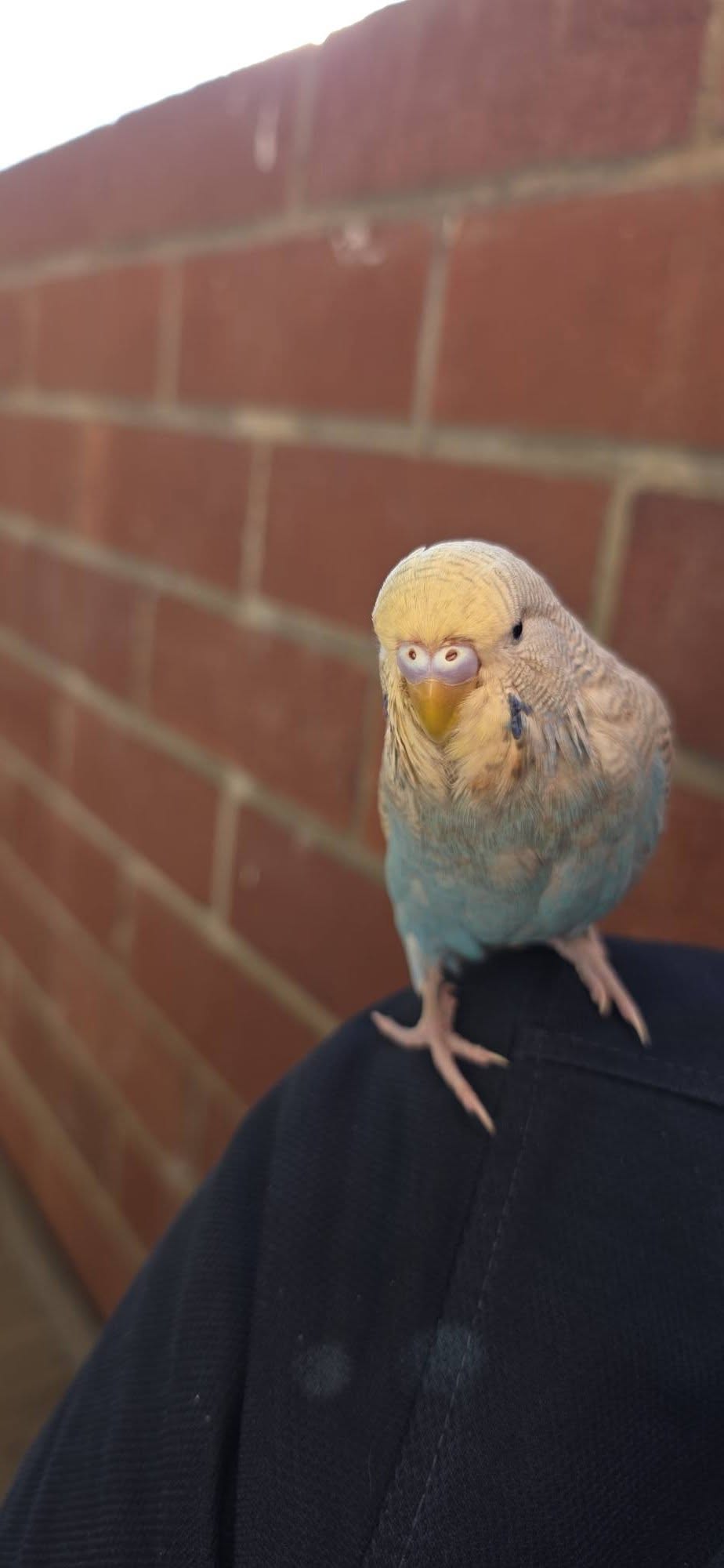
A budgie costs between fifteen and thirty pounds from a reputable source. A decent starter cage costs fifty to a hundred. Monthly running costs for a single bird — quality seed, fresh greens, occasional supplements — are ten to fifteen pounds if bought sensibly. In the context of UK pet ownership, this is an accessible price point, and it makes the budgie available to households that could not reasonably keep a dog, a cat, or a larger parrot species.
Availability reinforces this. Budgies are bred widely and consistently in the UK, which means they are available from a range of sources — specialist breeders, independent pet shops, larger chain retailers. That availability has a downside, which I will come to, but the practical effect is that getting a budgie is straightforward in a way that getting some other species is not.
Size and Practical Requirements
A budgie is a small bird. It does not require an aviary. It does not require a large house. A well-chosen cage for one or two budgies takes up a modest footprint and fits into a flat, a small house, or a single room without difficulty. For a country where a significant proportion of households live in smaller urban and suburban properties, this matters.
The noise level — genuine and worth being honest about — is chattering and conversational rather than the sharp, penetrating calls of some larger parrot species. In a flat or semi-detached house, a budgie’s sound is generally manageable. In the same setting, a cockatoo is not.
The Bird Itself
And then there is the actual reason — the one that explains not just why people get budgies, but why they come back years later and get another one. The budgie, when it is properly kept and properly bonded, is an extraordinary animal.
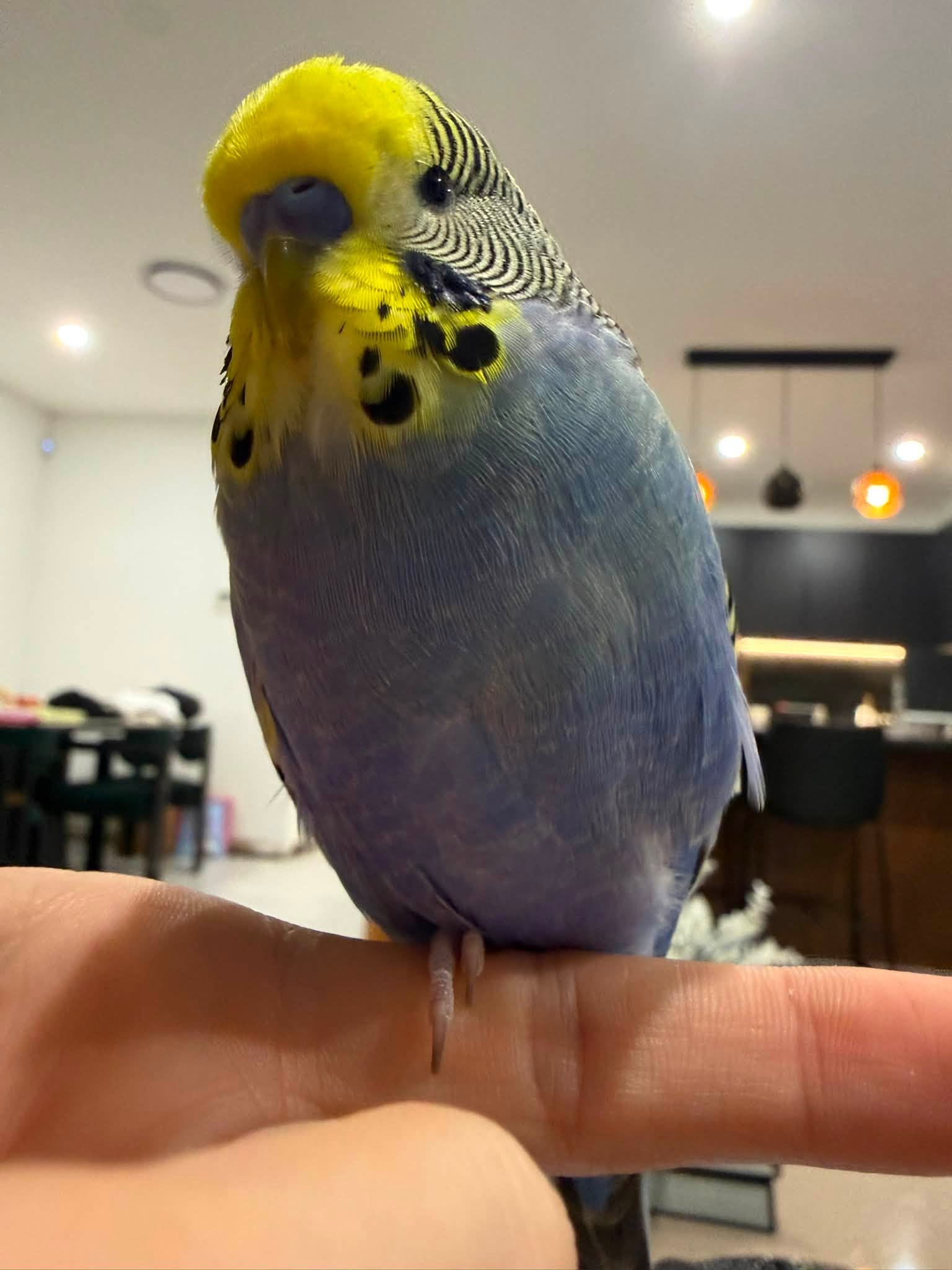
It is cognitively capable in ways that consistently surprise people who did not expect it. It is vocally gifted — capable of learning words and phrases and using them in recognisable contexts in a way that no other pet at this price point can replicate. It forms genuine social bonds with its owners. It has individual personality that is visible every day. It is, in the fullest sense, a companion — not a decoration, not a background pet, but a living creature that knows you and responds to you and whose company is genuinely enjoyable.
That is why budgies are popular. Not because they are cheap. Because they are good.
What Popularity Has Done to the Budgie — The Problems It Creates
Popularity is not without consequences, and honesty requires me to name them.
The first consequence is variable sourcing. Budgies are bred widely, which means they are bred at all levels of quality — from dedicated breeders who handle birds from a young age, select carefully for temperament, and produce birds that tame readily and bond strongly, to high-volume operations where birds receive minimal individual handling and arrive at the point of sale as effectively wild animals in terms of their relationship with humans. The bird you bring home is not the same regardless of where you buy it, and the difference matters enormously for what the relationship turns out to be.
The second consequence is a large volume of poor advice. Because budgies are everywhere, everyone has an opinion about them. Online forums, social media groups, the advice on the back of seed packets — it is abundant and it is inconsistent, and a significant portion of it is wrong. Cage sizes that are too small. Diets that are nutritionally inadequate. Advice about illness that should send someone to a vet but instead sends them to a home remedy. The popularity of budgies has created an ecosystem of information around them, and navigating that ecosystem reliably requires more background knowledge than most new owners have at the start.
The third consequence is that budgies are sometimes bought impulsively, as a beginner’s first pet, by people who have not thought through what keeping one actually involves over a ten-to-fifteen-year lifespan. Those birds are the ones most likely to end up in rescue centres, or in cages where the enthusiasm of the first few months has been replaced by routine neglect — not cruelty, but the gradual reduction of attention that happens when a pet has not been properly integrated into a household’s life.
None of this reflects badly on the budgie. It reflects the realities of what happens to any animal that becomes extremely popular without a corresponding improvement in the quality of information available to the people who keep them.
What You Are Actually Getting — The Budgie Honestly Described
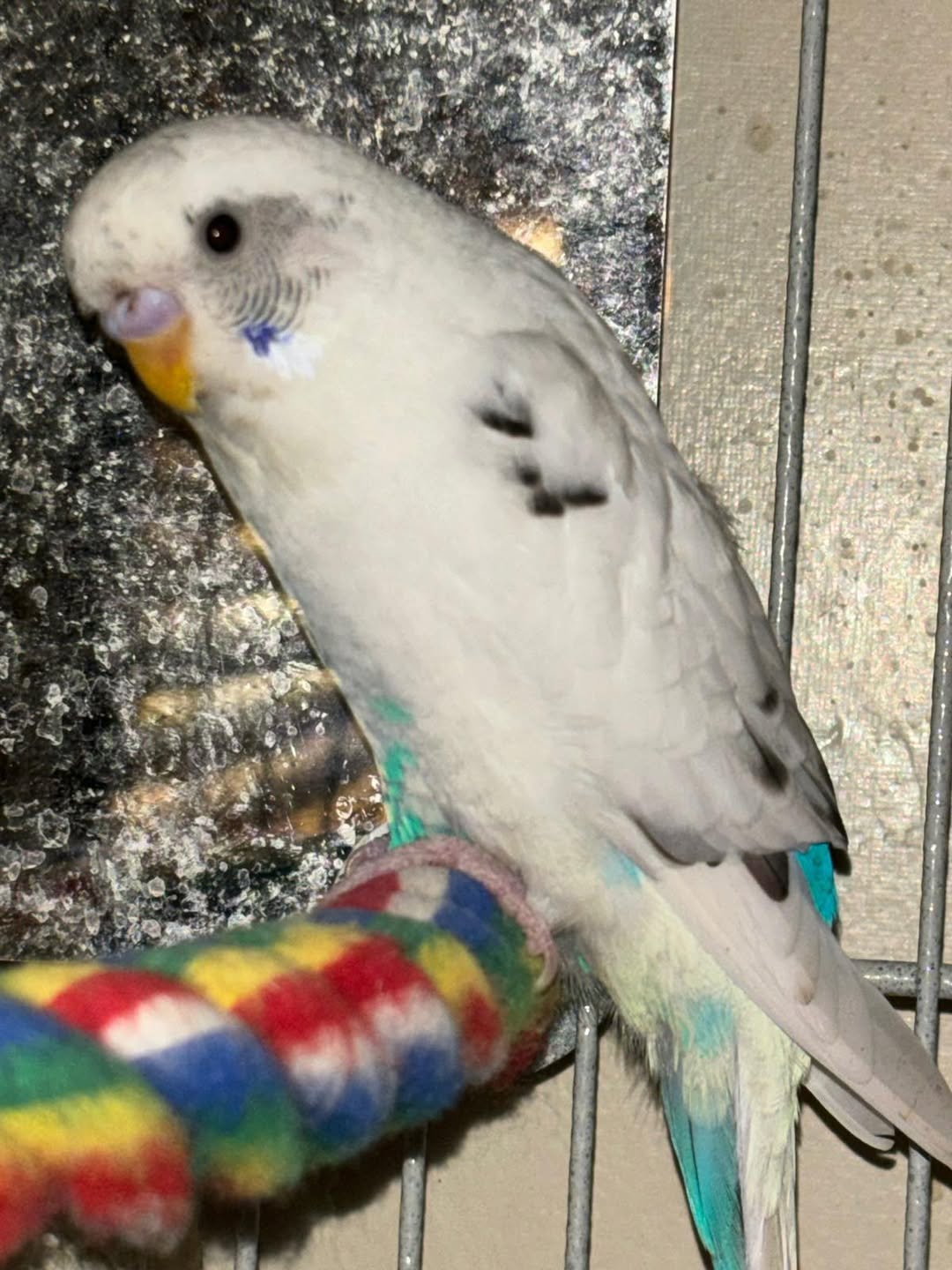
Because so much of the general information about budgies is either too basic or wrong, I want to describe what a budgie actually is — what you can reasonably expect from a well-sourced, properly kept bird — so that anyone thinking of getting one is going in with an accurate picture.
A Bird With Genuine Cognitive Capacity
The budgerigar has a brain-to-body ratio comparable to some primate species. This is not a trivial fact. It means the bird is genuinely intelligent — capable of problem-solving, of recognising individuals, of learning from experience, and of developing a communicative repertoire that its owners come to understand as clearly as a spoken language. The record for budgie vocabulary — over 1,700 words, held by a bird named Puck — is not a freak result. It is an extreme expression of a genuine capacity that every budgie has in some degree.
What this means practically is that a budgie needs mental engagement. A bird with nothing to think about and nothing to do develops the same kinds of problems that any intelligent animal develops in under-stimulating conditions. Variety in its environment, foraging opportunities, interaction with its owner, out-of-cage time — these are not optional enrichment. They are requirements, derived directly from the cognitive capacity of the animal.
A Social Animal That Needs Social Contact
Budgies are flock birds. In the wild they live in large, highly social groups and spend their entire lives in constant contact with other budgies. A pet budgie has been removed from that context, and something needs to replace it.
For a single budgie, that something is its human owner. A single bird that is properly handled and given genuine daily social contact will bond to its owner in a way that is one of the more remarkable things in domestic animal keeping — a bird that chooses to be with you, that seeks you out, that responds to your presence with visible enthusiasm. But this only happens when the social contact is genuinely provided. A single budgie left alone for long periods, with minimal human interaction, does not thrive. It declines — in behaviour, in condition, and eventually in health.
A Long-Term Commitment
A budgie with good care lives ten to fifteen years. This is longer than most people expect when they are standing in a pet shop looking at a small, inexpensive bird. It means the budgie bought for a seven-year-old child will still be alive when that child is in their early twenties. It means the budgie bought on a whim will still need daily care a decade later. It means the commitment made at the point of purchase extends significantly further than the initial enthusiasm.
I am not saying this to discourage anyone. A ten-to-fifteen-year relationship with a well-kept budgie is a genuinely enriching thing, and the length of the commitment is part of what makes it meaningful. I am saying it because going in knowing this is significantly better than discovering it later.
A Bird That Will Surprise You
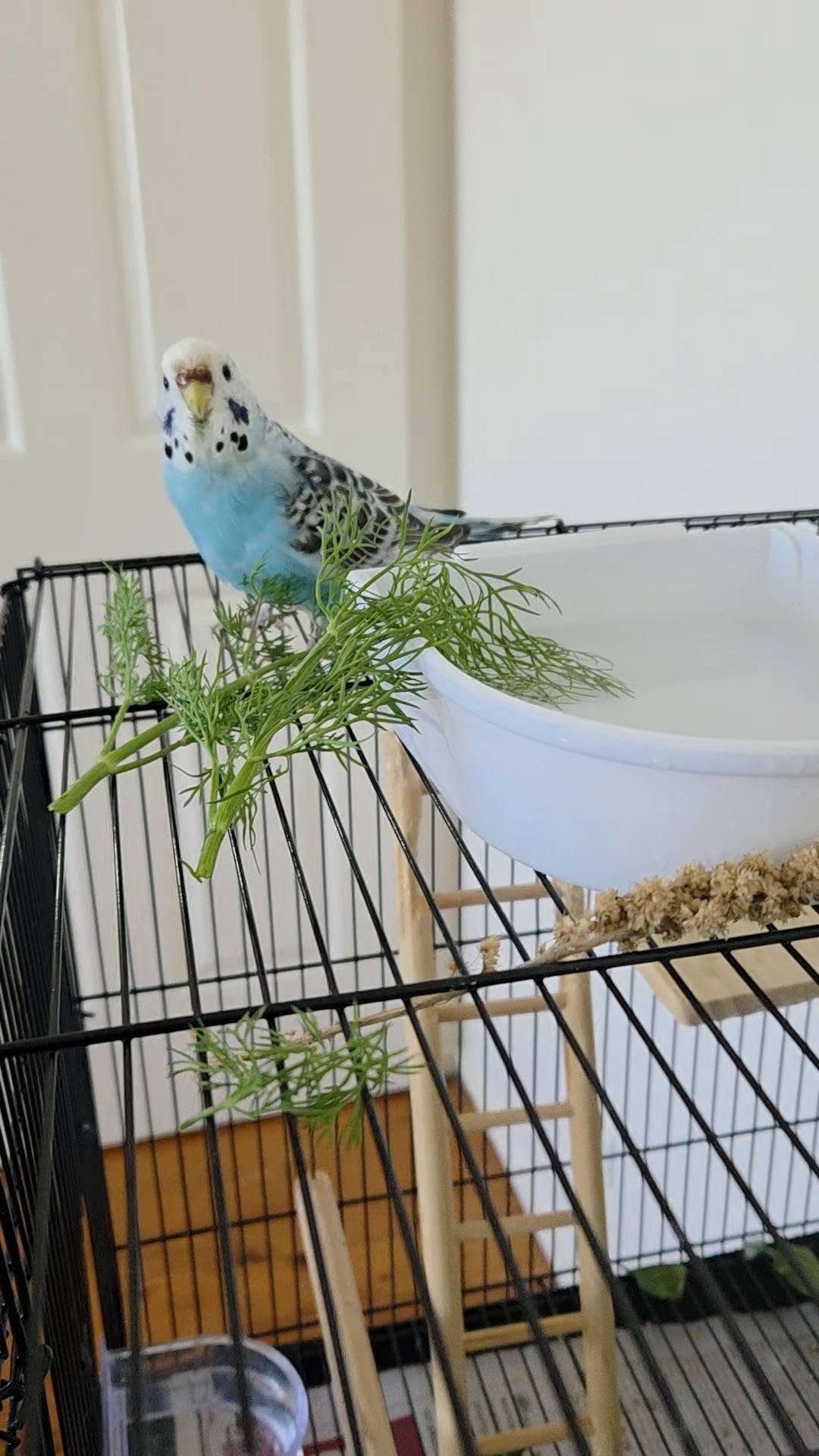
I have been keeping budgies for 35 years and they still surprise me. The individual variation in personality — the bold bird and the cautious one, the talker and the one that expresses itself through movement rather than sound, the bird that is fascinated by mirrors and the one that ignores them — is more pronounced than most people expect from a species they associate with simplicity. Getting to know an individual budgie’s character, and having that character develop and express itself more fully as the bird settles and bonds, is one of the consistent pleasures of keeping them.
What the Popularity Means for Where You Buy — The Sourcing Question
Because budgies are popular and widely available, the question of where to buy one is more important than it might appear. Not all sources produce the same bird, and the difference between a well-sourced budgie and a poorly sourced one is significant enough to determine whether the relationship turns out to be what you hoped for.
The bird you want is a young bird — ideally between six and twelve weeks old — that has been handled regularly by humans from an early age. A bird with that background tames readily, bonds more easily, and becomes the interactive companion that makes budgie keeping rewarding. A bird that has had no meaningful human contact before you buy it is a different proposition — tameable, potentially, but requiring considerably more patience and experience than most first-time owners have.
When you are looking at birds to buy, watch their behaviour. A well-handled young budgie is curious about human presence — it may come toward the front of the cage, it will watch what is happening, it will not retreat to the far corner and sit in a tight group with its cage-mates as far from humans as possible. Behaviour at this stage tells you more than colour, more than price, more than any description on a label.
Ask the seller directly: how old is this bird, and how much has it been handled? A seller who cannot answer these questions confidently, or who gives vague reassurances without specifics, is not a source I would trust. A seller who knows the bird’s age, knows its handling history, and can describe its individual temperament is one worth buying from.
Setting Up Right — What the First Few Weeks Determine
The conditions a new budgie encounters in its first few weeks in a new home have an outsized effect on what the relationship becomes. A bird that settles in a well-set-up environment, with consistent calm handling, develops trust quickly. A bird that arrives into a chaotic environment, is handled inconsistently, or is left alone without social contact in its first weeks, can take significantly longer to settle — and some birds never fully recover the confidence they might otherwise have developed.
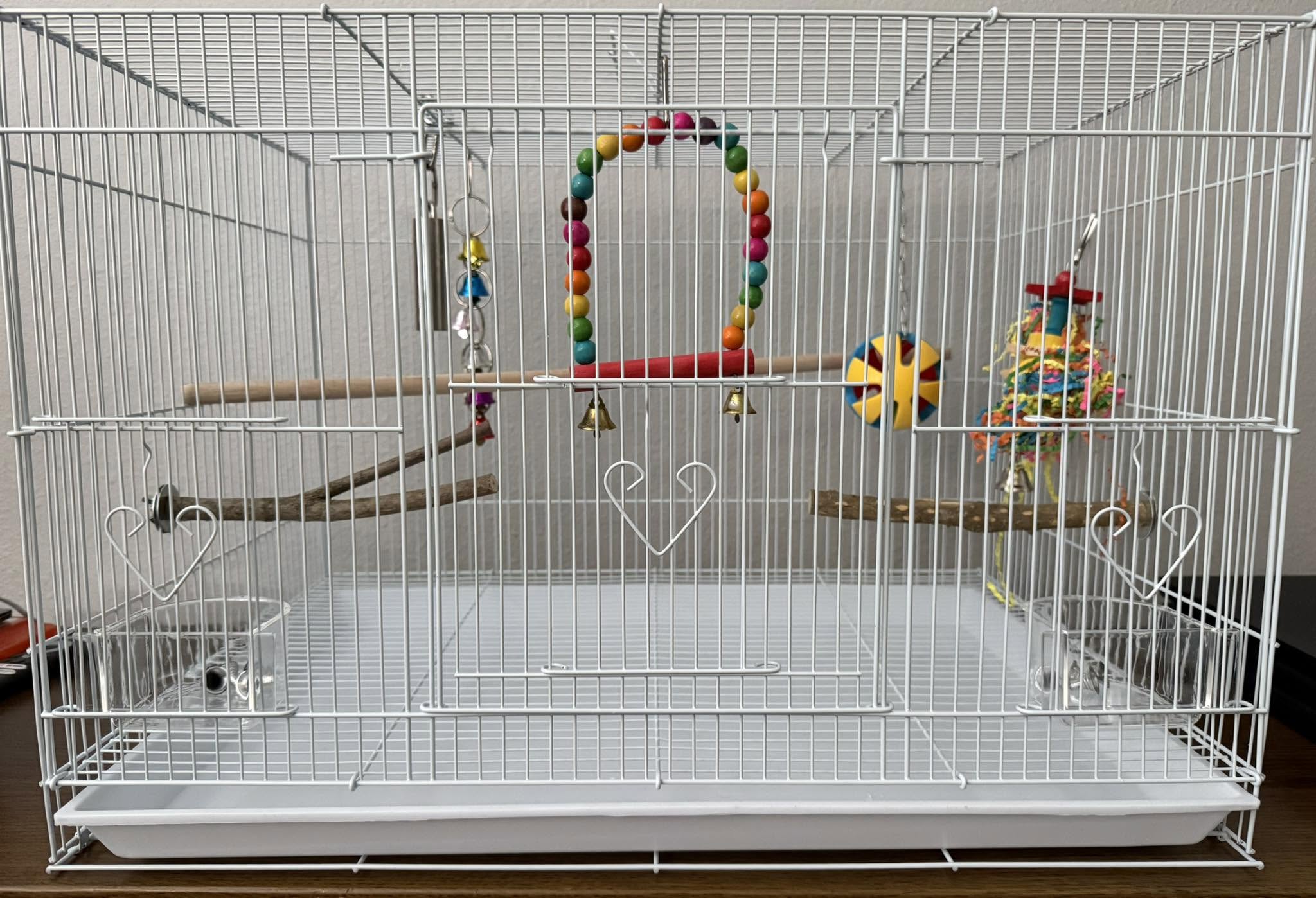
Before the bird comes home, the cage should be set up and ready. Not assembled around a stressed new arrival — ready. It should be the right size — at least 60cm wide, because budgies fly horizontally and width matters more than height. It should be positioned correctly — one side against a wall, at roughly chest height, away from the kitchen, away from draughts, near natural light but not in direct midday sun without shade available. It should have perches of varied natural wood rather than the uniform plastic dowels that come fitted in most cages — varying diameter and texture is better for foot health and significantly more interesting for the bird.
The diet should be in place before the bird arrives. A quality varied seed mix — not the cheapest millet-heavy option, but a genuinely varied mix appropriate for budgies. Fresh greens from day one — a piece of kale, some spinach, some chickweed if you can get it. Fresh water changed daily. This is not complicated, but having it all in place before the bird comes home removes one source of disruption from a period that is already disruptive enough.
In the first few days, let the bird settle. Do not rush handling. Spend time near the cage — talking quietly, moving calmly, letting the bird observe you without pressure. The bond you are building will last ten to fifteen years. The first few days are the foundation of it, and a foundation laid without rushing is a stronger one.
The Questions I Get Asked Most Often by People Considering a Budgie
- Should I get one budgie or two? One budgie bonds more strongly to its human owner and is more likely to talk. Two budgies are company for each other — good for welfare if you are regularly out for long periods — but they become more independent of their human keepers as a result. Decide what you want the relationship to look like before you decide on numbers.
- Will it talk? Many budgies develop vocabulary. Not all of them do, and the ones that do vary significantly in extent. A single young male, properly bonded to its owner, is the most likely profile to develop speech — but it is a tendency, not a guarantee. If talking is the primary thing you want, go in knowing it may or may not happen.
- How much time does it need? Daily care takes fifteen to twenty minutes. The time you spend with the bird beyond that — talking to it, letting it out, sitting near it — is the relationship, not the maintenance. For someone who is home regularly and enjoys that kind of interaction, it is not a burden. For someone who is rarely home and would not naturally spend time with the bird, a budgie is probably not the right choice.
- Can I keep it in a bedroom? Not ideally. Birds are sensitive to air quality, and a bedroom — particularly one with air fresheners, scented candles, or poor ventilation — is not the best environment. A living room or similar main room, with natural light and regular human activity, is better for the bird and better for the relationship.
- What if I go on holiday? You need someone to care for the bird — daily food, water, and a check that everything is as it should be. This is not a pet you can leave with an automatic feeder for a week. It is a living creature that needs daily attention, and planning for your absence is part of the commitment of keeping one.
Quick Reference — Is a Budgie Right for You
| Your Situation | Budgie a Good Fit? | Why |
|---|---|---|
| Home regularly, enjoy interaction | ✅ Excellent fit | The relationship is the point — daily contact produces the bond that makes budgie keeping rewarding |
| Smaller home or flat | ✅ Well suited | Modest space requirement, manageable noise level, no garden needed |
| Children in the household | ✅ Good with supervision | Budgies are robust enough for family life but need calm handling — teach children before the bird arrives |
| Out for long periods daily | ⚠️ Consider carefully | A single budgie needs social contact — long daily absences require a second bird or significant evening commitment |
| Want a hands-off pet | ❌ Wrong choice | A budgie that is not handled and interacted with daily does not thrive — it is not a background pet |
| 10–15 year commitment feels too long | ❌ Reconsider | A well-kept budgie lives a long time — the commitment is real and goes in knowing it |
| Already love birds or garden birds | ✅ Particularly good fit | The attention and interest you already have transfers directly — bird enthusiasts consistently make the best budgie owners |
Frequently Asked Questions
Are budgies good pets for first-time bird owners?
Yes — with the right information going in. The learning curve is gentle, the costs are manageable, and the rewards are clear and relatively quick once the bird settles. The mistake first-time owners make is not the species choice but going in without enough information about what the bird actually needs. That is what this article is for.
How long does it take for a budgie to get used to a new home?
Most young, well-handled budgies show the early signs of settling within a week — eating normally, moving freely around the cage, curious about activity in the room. Meaningful trust with their owner typically takes two to four weeks of consistent, calm interaction. Full bonding — the bird actively seeking out human contact, flying to the owner, genuinely relaxed in their presence — can take several months. Patience in this period is not wasted. It is the investment that produces the relationship.
What is the difference between a budgie from a breeder and one from a pet shop?
Source matters more than the category. A good independent pet shop that sources carefully, handles birds regularly, and knows the background of the birds it sells can produce an excellent bird. A breeder who prioritises colour and show standards over temperament and handling can produce a difficult one. The questions to ask are the same regardless of source — age, handling history, temperament — and the answers tell you more than the category of seller.
Where can I buy a budgie in Swindon?
Come and see us at Paradise Pets, Manor Garden Centre, Cheney Manor, Swindon SN2 2QJ. We have budgies in stock regularly, we know their background, and we will go through everything with you before you leave — setup, diet, handling, what to expect in the first few weeks. Call ahead on 01793 512400 to check current stock.
One Last Thing
The reason budgies are the most popular pet bird in the UK in 2026 is the same reason they were the most popular pet bird in the UK in 1988, when I started this business. The bird itself — what it actually is, what it is capable of, what it becomes when it is properly kept — justifies the popularity. That has not changed.
What I hope has changed, at least for anyone who has read this far, is the quality of information going into the decision. Not the reassuring version that glosses over the commitment and the sourcing and the things that go wrong when budgies are kept badly. The honest version — the one that tells you what you are actually getting, what it actually requires, and why it is, in my considered opinion after 35 years, worth every bit of it.
Come and talk to us if you want to take the next step. We will help you get it right from the start.
Thinking of Getting a Budgie? Come In and We Will Help You Get It Right From the Start
We have budgies in stock regularly and we will go through everything with you — which bird, what setup, what to expect. Free advice, no obligation, as it has always been.