

Neil has kept, bred, and sold budgerigars at Paradise Pets Swindon since 1988 — over 35 years of first-hand experience with this species through every kind of British summer. “Why does my budgie seem to hate summer?” is a question that genuinely comes up every single year, and the honest answer involves several different things happening at once. This is his complete guide to what is actually going on.
A woman came in a few summers back, genuinely puzzled. Her budgie, she said, was a different bird in summer compared to winter — quieter, less interested in her, sitting around more, occasionally seeming irritable when she tried to handle him. She wondered if something was wrong, or whether her budgie had simply taken a dislike to the season.
I told her what I tell most people who ask me this exact question: nothing is wrong, and her budgie does not dislike summer in any emotional sense. What she was describing was a combination of several genuinely normal seasonal changes that, taken together, can make a budgie seem like a different bird for a few months a year — and once you understand each piece individually, the whole picture makes a great deal more sense.
This is one of the most common seasonal questions I get asked across the year, and I want to give it the proper, complete answer it deserves.
The Honest Answer — It’s Rarely One Single Thing
When owners describe a budgie behaving differently in summer, they are almost always describing the combined effect of several distinct, unrelated factors that happen to overlap during the warmer months. Separating them out individually is the key to understanding what is genuinely going on with your own bird.
The main contributors are heat itself, the annual moult, changes in daylight length, and seasonal hormonal shifts connected to breeding behaviour. None of these are problems to be fixed in the sense of something being wrong with your budgie. They are simply different seasonal pressures that, layered on top of each other, can produce a bird that seems noticeably different from how it behaves the rest of the year.
Heat — The Most Obvious, But Not The Only, Factor
Budgies cannot sweat. Their main mechanisms for releasing excess body heat are panting, holding their wings slightly away from the body, and seeking out cooler conditions — all of which work considerably less well in a warm, poorly ventilated room than they would for a bird with the freedom to move to genuinely cooler air.
A budgie that is mildly too warm, without being in any genuine danger, will often become quieter, less active, and less interested in interaction simply because it is expending energy on managing its temperature rather than on play and socialising. This alone explains a meaningful part of the “different bird in summer” experience many owners describe, and it is usually the easiest piece of the puzzle to address — better cage positioning, improved airflow, and fresh water more often through the hottest part of the day make a real, noticeable difference.
It is worth being clear that there is a real difference between this mild, manageable warmth-related quietness and genuine heat stress, which is a more serious, urgent situation requiring immediate action rather than simple environmental adjustment. Watch for visible open-beak panting, sitting persistently at the bottom of the cage, or laboured breathing — those signs move well beyond ordinary summer quietness into something that needs prompt attention.
The Annual Moult — Often Overlooked Entirely
Budgies moult — shedding old feathers and growing new ones — typically once or sometimes twice a year, and for many budgies this falls during the warmer months. A moulting budgie genuinely does feel and behave differently, and this is one of the most commonly overlooked contributors to the “summer personality change” owners describe.
Growing new feathers requires real metabolic energy, and the new feathers themselves, in their early growth stage, can be uncomfortable — itchy, sometimes mildly sensitive to touch around the areas where they are coming through. A budgie going through a moult will often be quieter, less keen on being handled in certain areas, and generally lower energy than usual, not because of any change in temperament but because it is going through a genuinely demanding physical process.
You can usually identify a moult by looking for small, loose feathers around the cage floor and base, slightly patchy or rough-looking plumage in places, and sometimes visible small pin feathers — new feathers still partially encased in their protective sheath — particularly around the head and neck, areas a budgie cannot easily groom itself. If you see these signs alongside the behaviour changes, moulting is very likely part of what you are observing, separate from anything to do with heat specifically.
Daylight Length — A Quieter, Less Obvious Influence
Budgies, like many birds, are sensitive to day length, and the much longer daylight hours of a British summer genuinely affect their internal rhythms compared with the shorter days of winter. This can shift sleep patterns, activity timing, and overall energy distribution across the day in ways that are real, even if they are less immediately obvious than heat or moulting.
A budgie experiencing significantly longer daylight than it is used to may show changes in when it is most active and vocal during the day, sometimes appearing more active very early or very late, with quieter stretches at times an owner would normally expect more engagement. This is a subtler factor than the others, but it genuinely contributes to the overall sense that a budgie’s daily pattern feels different in summer.
Hormonal And Breeding-Related Behaviour
Longer daylight hours and warmer temperatures together are also natural seasonal breeding triggers for budgies, even in birds with no actual breeding pair or intention to breed on the owner’s part. This can produce a cluster of behaviours that owners sometimes interpret as the bird simply being moody or difficult.
In this hormonal state, a budgie — male or female — may become more territorial around its cage, more prone to nipping or biting during handling, more vocal in particular ways, or, in females specifically, may show nesting behaviours such as shredding paper or seeking out enclosed spaces, even without a mate present. None of this indicates anything is wrong; it reflects a genuinely instinctive seasonal response to environmental cues that have, for millions of years, signalled the right time to breed.
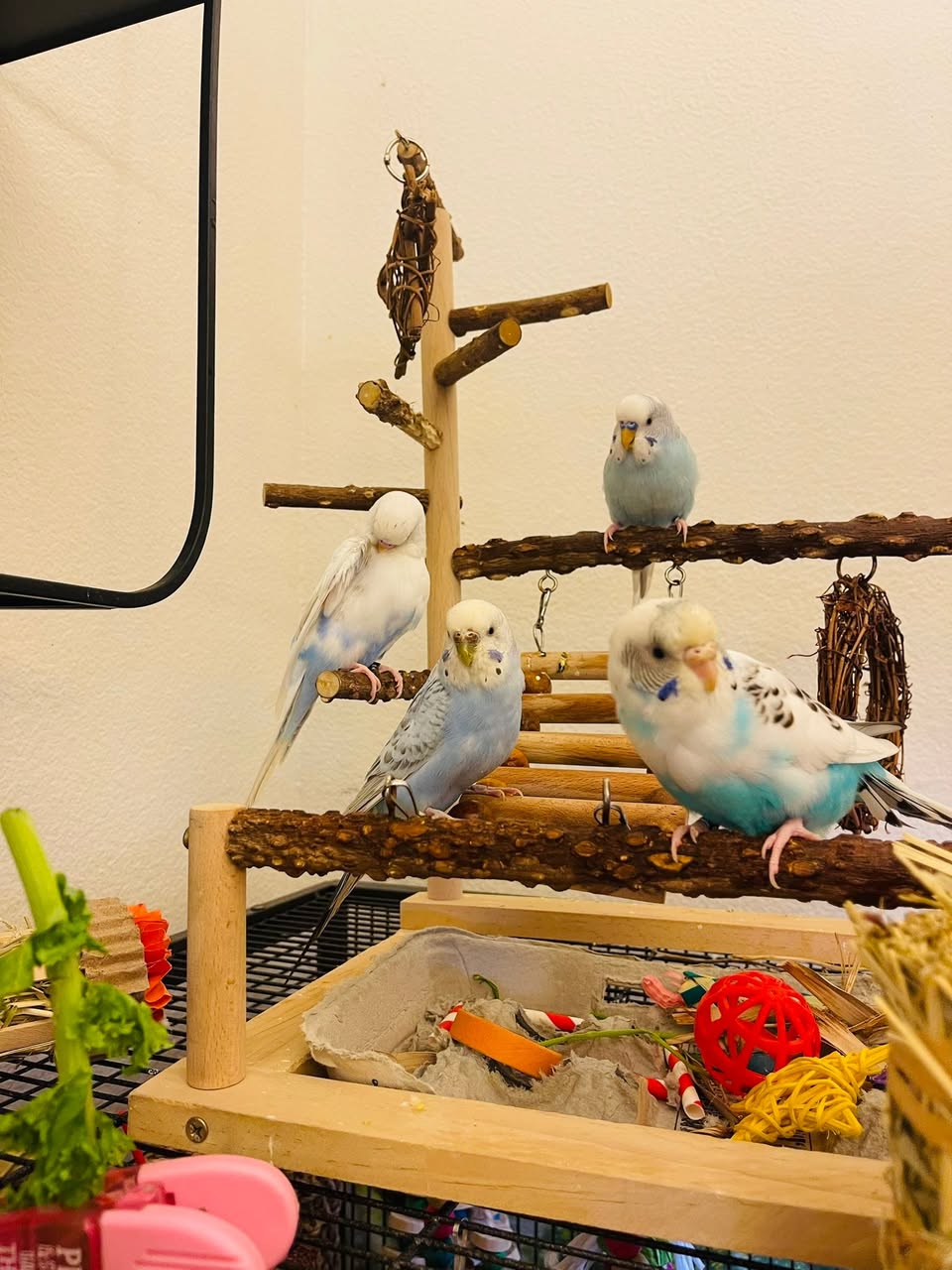
What’s Normal And What Genuinely Needs Attention
With four separate factors potentially overlapping, it is worth being clear about where ordinary seasonal change ends and something genuinely concerning begins.
Quieter behaviour, reduced interest in extended handling sessions, some occasional nippiness, and visible moulting are all within the range of normal seasonal variation, particularly if your budgie is still eating, drinking, and behaving like itself outside of these specific changes. The pattern that warrants closer attention is a combination of signs — sustained loss of appetite, persistent lethargy beyond what fits a simple moult, visible laboured breathing, or behaviour that does not ease once you have addressed cage position, ventilation, and water access. That combination moves beyond ordinary seasonal adjustment into something worth a vet visit.
What You Can Actually Do About Each Factor
For the heat component, reposition the cage away from direct sunlight, improve airflow without creating a direct draught, and offer fresh, cool water more frequently through the hottest parts of the day.
For moulting, resist the urge to over-handle a moulting bird, particularly around areas with visible pin feathers, and ensure the diet includes adequate protein and nutrients to support healthy feather regrowth — a good quality, varied diet matters more during a moult than at almost any other time of year.
For daylight-related shifts, a consistent covering routine at night, even during long summer evenings, helps maintain a more stable day-night rhythm for the bird, regardless of how late it actually gets dark outside.
For hormonal behaviour, avoid reinforcing nesting-type behaviour by removing easy access to shredding materials or overly enclosed hiding spots if this becomes a persistent issue, and be mildly more cautious around handling during periods when nippiness increases, without taking it personally or assuming the bird’s temperament has permanently changed.
Frequently Asked Questions
How long does my budgie’s summer behaviour change typically last?
This varies depending on which factors are involved. Heat-related quietness generally resolves as soon as conditions cool or the environment is adjusted. A full moult typically takes a few weeks from start to finish. Hormonal and daylight-related changes tend to track the season itself and ease as daylight hours shorten again into autumn.
Is it normal for my budgie to bite more in summer than the rest of the year?
Some increase in nippiness during hormonally active periods, often overlapping with summer due to daylight and temperature triggers, is genuinely common and not indicative of any problem with the bird’s temperament. If biting becomes severe, frequent, or seems connected to pain rather than mood, that is worth a closer look.
Should I be worried if my budgie stops singing or chattering as much in summer?
A reduction in vocalisation can relate to any of the factors in this article — particularly heat or moulting — and is not automatically concerning on its own. If it is combined with a loss of appetite, persistent lethargy, or laboured breathing, that combination is worth investigating rather than the quietness alone.
Can I do anything to make the moult easier for my budgie?
A good quality, varied diet with adequate protein supports healthy feather growth, gentle handling that avoids new pin feathers, and patience while the process runs its course are the main practical things an owner can do. The moult itself is a natural process that does not generally need direct intervention beyond supporting the bird’s overall condition.
Does covering the cage at night actually help with the daylight issue in summer?
Yes, a consistent covering routine that provides a period of darkness regardless of how late the sun actually sets helps maintain a more stable sleep-wake rhythm, which can reduce some of the disruption that very long summer daylight hours would otherwise cause.
My budgie seems fine generally but is just a bit quieter — do I need to do anything?
Not necessarily. Mild, temporary quietness during summer that does not affect eating, drinking, or general wellbeing is well within the range of normal seasonal variation. The steps in this article are worth applying as good general practice regardless, but a budgie that is simply a little quieter without other concerning signs does not require urgent intervention.
One Last Thing From Me
The woman who came in puzzled by her “different” summer budgie left with a much clearer picture once we worked through what was actually going on — a touch of heat, a moult that happened to fall around the same time, and the longer daylight hours doing their own quiet work in the background. None of it was her budgie disliking summer. It was simply several ordinary, separate things happening to overlap in a way that looked, from the outside, like a single mysterious change.
That is genuinely the case almost every time I am asked this question. Once you separate the individual threads — heat, moulting, daylight, hormones — the picture stops looking like a personality shift and starts looking like exactly what it is: a normal, healthy bird responding to a normal, if demanding, season.
If you want to talk through your own budgie’s summer behaviour, or anything else about keeping budgies well through the warmer months, come and find us at Manor Garden Centre, Cheney Manor, Swindon SN2 2QJ. Get in touch here or call 01793 512400.
Got Questions About Your Budgie’s Summer Behaviour? Come And Talk To Us
We stock everything you need to help your budgie through the warmer months comfortably. If something about your bird’s behaviour or health has you wondering, come in and talk to us.