
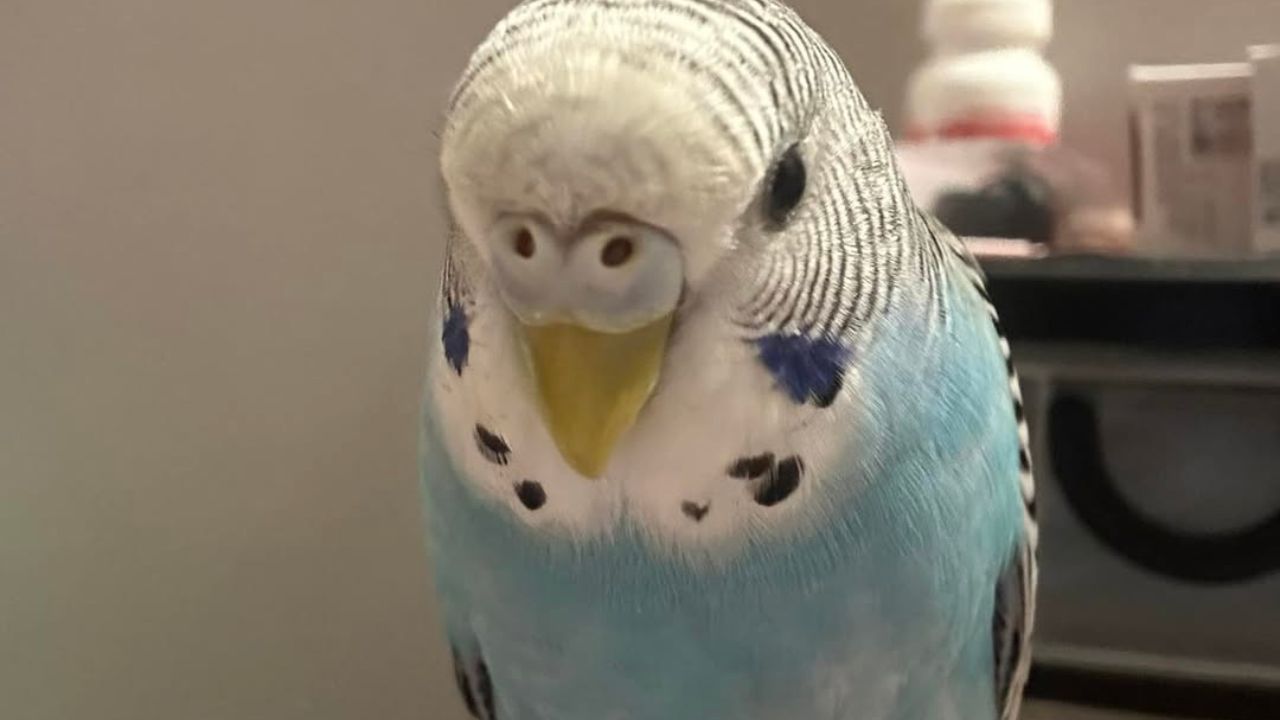

Neil has run Paradise Pets Swindon since 1988 — over 35 years of fielding worried calls from budgie owners who have found their bird on the cage floor in the middle of the night, or watched it lose its grip and fall during the day. Sometimes it is nothing serious. Sometimes it is the most urgent situation a bird owner can face. After 35 years, he knows exactly which sign tells the difference — and why most owners do not know to look for it.
A customer rang at half past eight on a Saturday morning. She had found her budgie at the bottom of the cage when she came downstairs. He was upright, moving around, and had climbed back up to a lower perch by the time she reached the cage — but she had clearly heard a crash in the night, and she wanted to know whether she should be worried.
I asked her one question. The answer to it told me what I needed to know, and it is the same question I ask every time this situation is described to me.
I will tell you the question, and I will explain exactly why it is the right one, because understanding it is the difference between knowing when a budgie falling off its perch is something that can wait until Monday and knowing when it cannot wait at all.
Why Budgies Fall Off Perches — The Full Picture
Before I get to the question, I want to make sure you understand the range of reasons this happens, because the context matters and because the less serious end of that range is genuinely common and genuinely not cause for panic.
The most frequent reason a budgie falls from its perch at night is what is commonly called a night fright. Budgerigars have poor night vision — in complete darkness, they cannot see well enough to navigate, and any sudden disturbance will trigger an immediate panic response. A car backfiring outside. A cat pressing against the window. A smoke alarm low-battery chirp at two in the morning. A phone vibrating on a nearby surface. The bird panics, crashes around the cage in darkness it cannot see through, and ends up on the floor. When the light comes on, it calms down, climbs back up, and is essentially fine.
That is the benign end of the picture. It is common, it is frightening to witness or discover, and it is almost never dangerous in itself, provided the fall has not caused a physical injury.
The serious end of the picture looks, in the immediate aftermath, very similar. A budgie that has experienced a seizure may be found on the cage floor, disoriented, possibly having climbed partly back up by the time the owner arrives. A bird that has had a cardiovascular episode — sometimes called stress seizure or cardiac racing syndrome, which budgies are specifically prone to — may present in almost the same way. A bird in the early stages of a neurological illness, liver disease, heavy metal toxicity, or a nutritional deficiency that has reached the point of affecting the nervous system may fall repeatedly, losing its grip in a way that has nothing to do with fright and everything to do with something happening inside its body.
The fall itself does not tell you which of these things you are looking at. What happens next is what tells you.
The One Question — And Why It Changes Everything
The question I asked that Saturday morning customer was this: when your bird climbed back up, did it grip the perch normally?
Not does it seem okay. Not is it eating. Not does it look better. Specifically: is its grip on the perch normal.
Here is why that question matters above all others.
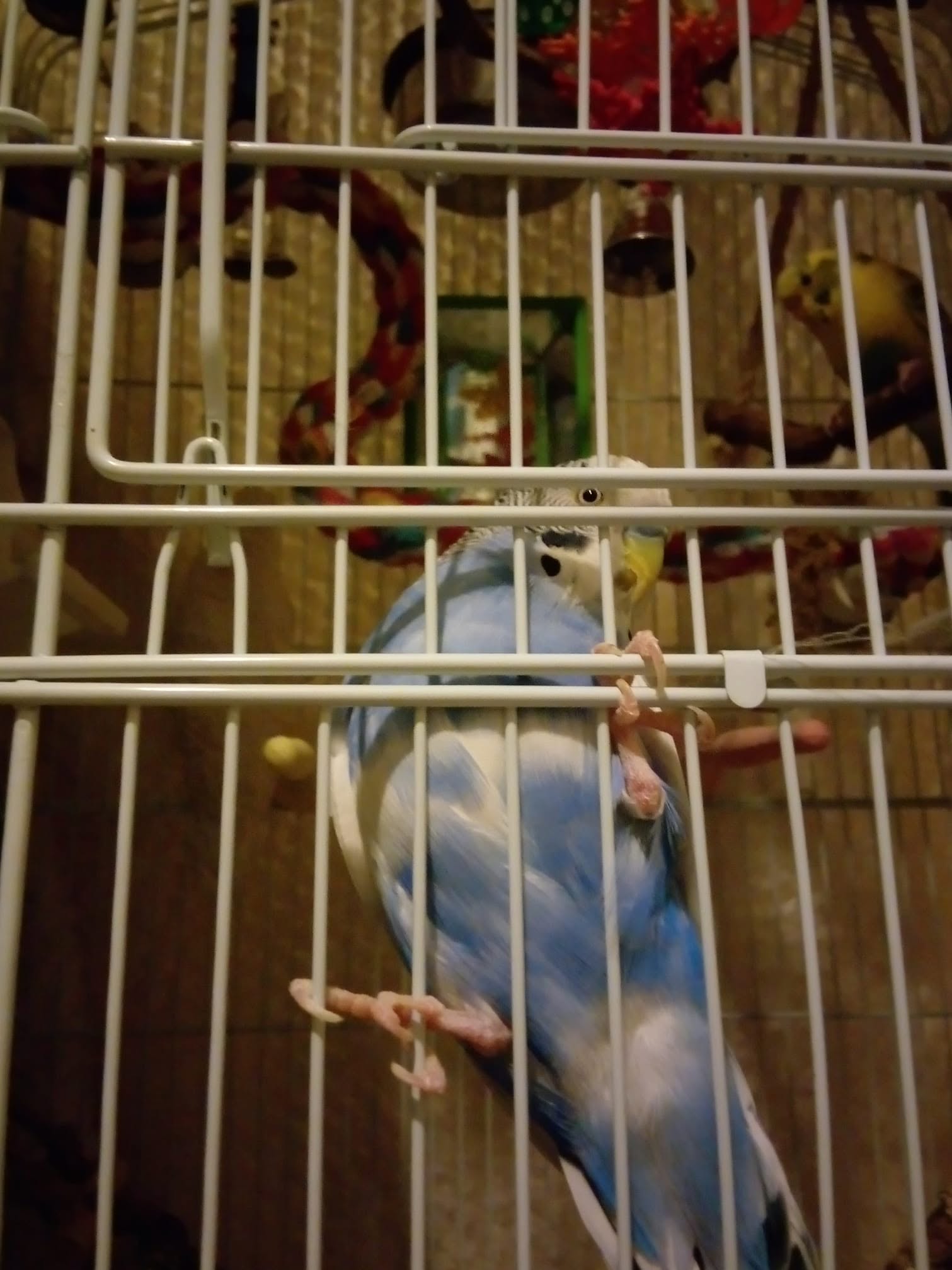
A budgerigar grips a perch through a specific tendon mechanism — when the leg bends, the tendons in the foot automatically close the toes around the perch. It is not a conscious action. It is the reason birds can sleep on a perch for hours without falling. The grip is the default locked position. Opening the foot requires deliberate effort.
When a bird has been through a genuine night fright — a panic response to a sudden noise or disturbance — that mechanism is entirely intact. The bird is shaken, possibly still stressed, but its nervous system is functioning normally. Once it calms down and climbs back to a perch, it grips normally. Its feet close around the perch the way they always do. The balance is correct. The posture is correct. Within a short period — usually fifteen to thirty minutes — the bird is essentially back to its normal self, or close to it.
When a bird has experienced something neurological — a seizure, a cardiovascular event, a toxic exposure affecting the nervous system — that grip is not normal in the aftermath. The foot may be partially open. The bird may grip and immediately slip. It may favour one side. It may appear to be gripping normally but be unable to maintain the position. It may lose its balance even on a perch it is familiar with. You may see one leg or foot behaving differently from the other. The coordination that is automatic in a healthy budgie is absent or impaired.
That impaired grip — the perch hold that is wrong in a way that is hard to articulate but unmistakable once you know to look for it — is the sign that changes everything. It is the sign that tells you this was not a fright. It is the sign that tells you an avian vet needs to see this bird today, not next week, not when it is convenient, but today.
The Night Fright — What It Looks Like And What To Do
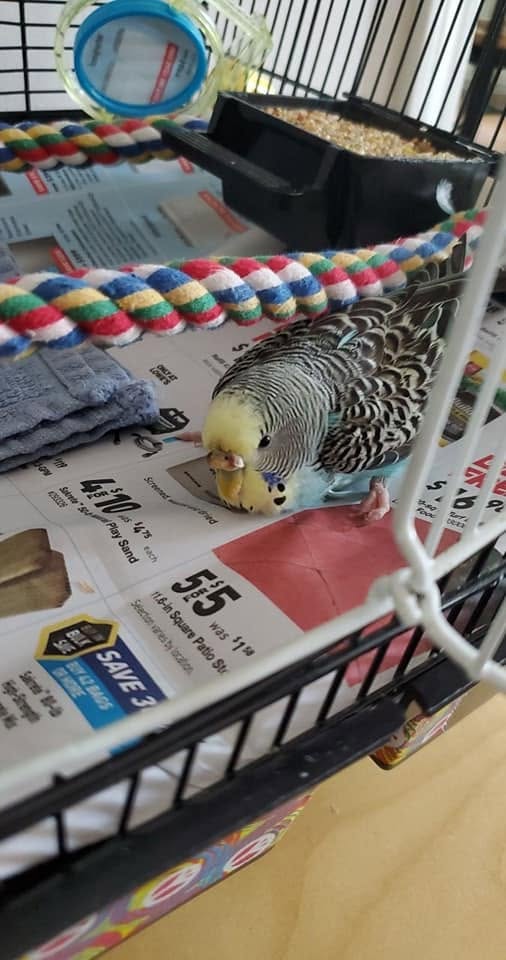
If the answer to the grip question is that the bird is holding the perch normally — if it climbed back up, settled, and is gripping the way it always does — then you are almost certainly looking at a night fright, and the appropriate response is straightforward.
First, identify what caused it if you can. Common triggers in UK homes include: a cat or other animal outside or in the room who got close to the cage; a sudden noise — a vehicle outside, something dropped in another room, an alarm, a phone; light changes, particularly the sudden flash of a car’s headlights through a window or gap in curtains; a draught that moved something near the cage; or simply a disturbance the bird perceived in semi-sleep that no human in the house was aware of.
The response in the moment is to speak quietly and calmly near the cage, turn on a low light if the room is dark — the bird cannot navigate in complete darkness and a dim light gives it enough visual reference to calm down — and give it time to settle without trying to handle it or disturb it further. Being grabbed while in a panic state makes everything worse. Give the bird space, keep the environment calm, and observe it from a distance.
A bird recovering from a genuine night fright will typically settle within fifteen to thirty minutes. It may be quiet for a little while afterwards. By morning, in most cases, it should be back to its normal behaviour.
The preventive measures for repeated night frights are worth taking seriously. Moving the cage to a quieter room or position. Ensuring curtains or blinds prevent headlight flashes from entering. A very low wattage night light near the cage — not bright enough to disturb sleep, but enough to give the bird minimal visual reference if it is disturbed. Checking that no animals have access to the room at night. In my experience, most repeated night fright problems resolve once the specific trigger is identified and removed.
When The Fall Is A Seizure — What You Need To Know
Seizures in budgerigars are more common than most owners realise, and they are caused by a wider range of underlying conditions than most people would expect.
During a seizure, a budgie may lose consciousness, fall from its perch, flap its wings uncontrollably, stiffen its body, or show rapid involuntary twitching of a leg, a wing, or the head. It may vocalise — a distressed sound that is distinct from the bird’s normal calls. It may be completely unresponsive for a period of seconds to a couple of minutes. When it comes around, it will often be confused and disoriented for a period before gradually regaining coordination.
The causes span a significant range. Nutritional deficiencies — particularly calcium deficiency, vitamin D deficiency, and low blood sugar resulting from a poor seed-only diet — are among the more common and more treatable causes in budgies. Liver disease, which develops gradually in birds fed an exclusively high-fat seed diet over years, can reach a stage where toxins accumulate in the bloodstream and affect the central nervous system. Heavy metal toxicity — lead or zinc — from a bird chewing on cage components, toys, or other objects that contain those metals, can cause neurological effects including seizures. Aspergillosis, a fungal infection affecting the respiratory and in severe cases the central nervous system, is another possibility. Head trauma from a collision — a bird that has flown into a window or wall — can cause seizures. And in some cases, no identifiable cause is found, and the bird has what is classified as idiopathic epilepsy.
I say all of this not to alarm but to make clear that the range of causes means the range of treatments is also broad, and that a seizure in a budgie is not a situation where educated guessing is sufficient. It requires diagnosis. It requires an avian vet who can take a history, examine the bird, assess the diet and environment, and run the appropriate tests. Some causes are readily treatable once identified. Others require ongoing management. None of them are well-served by waiting to see whether it happens again.
What To Do In The Moment — Whether It Is Serious Or Not
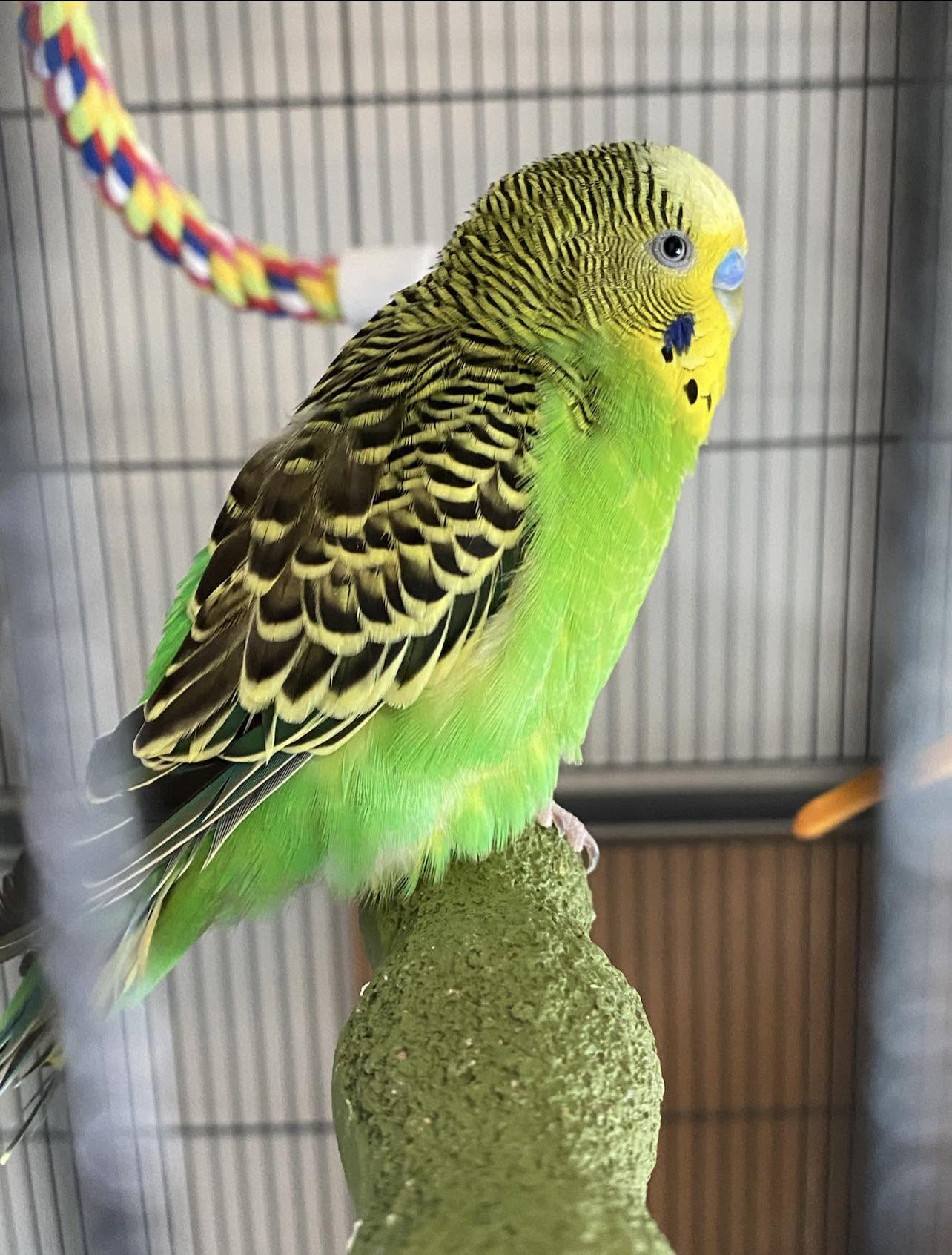
I want to give you a clear, practical sequence for the moment you find your budgie on the cage floor, because the instinct to pick the bird up immediately is understandable and is usually the wrong move.
Do not reach in and grab the bird immediately. A bird that is panicked, disoriented, or still in a post-seizure state will experience being grabbed as an additional threat. It may bite, injure itself further trying to escape, or suffer additional stress at the worst possible moment. Give it a few seconds before you touch it.
Turn on a low light if the room is dark. This gives the bird visual reference, which is almost always calming to a bird that has panicked in darkness.
Speak quietly. Your voice — familiar, calm, low — is one of the most effective things you can offer in those first moments.
Now observe the bird carefully. Is it moving? Is it trying to climb? Does it seem aware of its surroundings? And when it gets back to a perch — or if you gently assist it to one — how is its grip?
If the bird cannot get back up at all, is still twitching, is unresponsive to your presence, or is clearly disoriented in a way that is not settling — move to the emergency response. Remove the perches from the cage so the bird cannot fall again from height. Place something soft on the cage floor. Keep the environment warm and quiet. And get on the phone to an avian vet while you are doing this, not after.
If the bird does get back up, check the grip. If the grip is normal and the bird begins to settle, you are most likely looking at a night fright. Stay with it, keep the environment calm, and continue to monitor it closely for the next hour.
If the grip is wrong, or if you are not sure, ring an avian vet. Describe what you saw and what the bird’s grip looks like. Let the vet help you decide whether this is a same-day emergency or an urgent but non-immediate appointment. Do not try to make that call entirely on your own when you can have a professional’s input.
The Day Falls — Why These Are Different And Why They Matter More
Everything I have described so far applies most obviously to falls at night, because night frights are the most common cause of a budgie being found on the cage floor and the one most owners have heard of. But I want to say something specifically about falls that happen during the day, because these are the ones I am most concerned about when they are described to me.
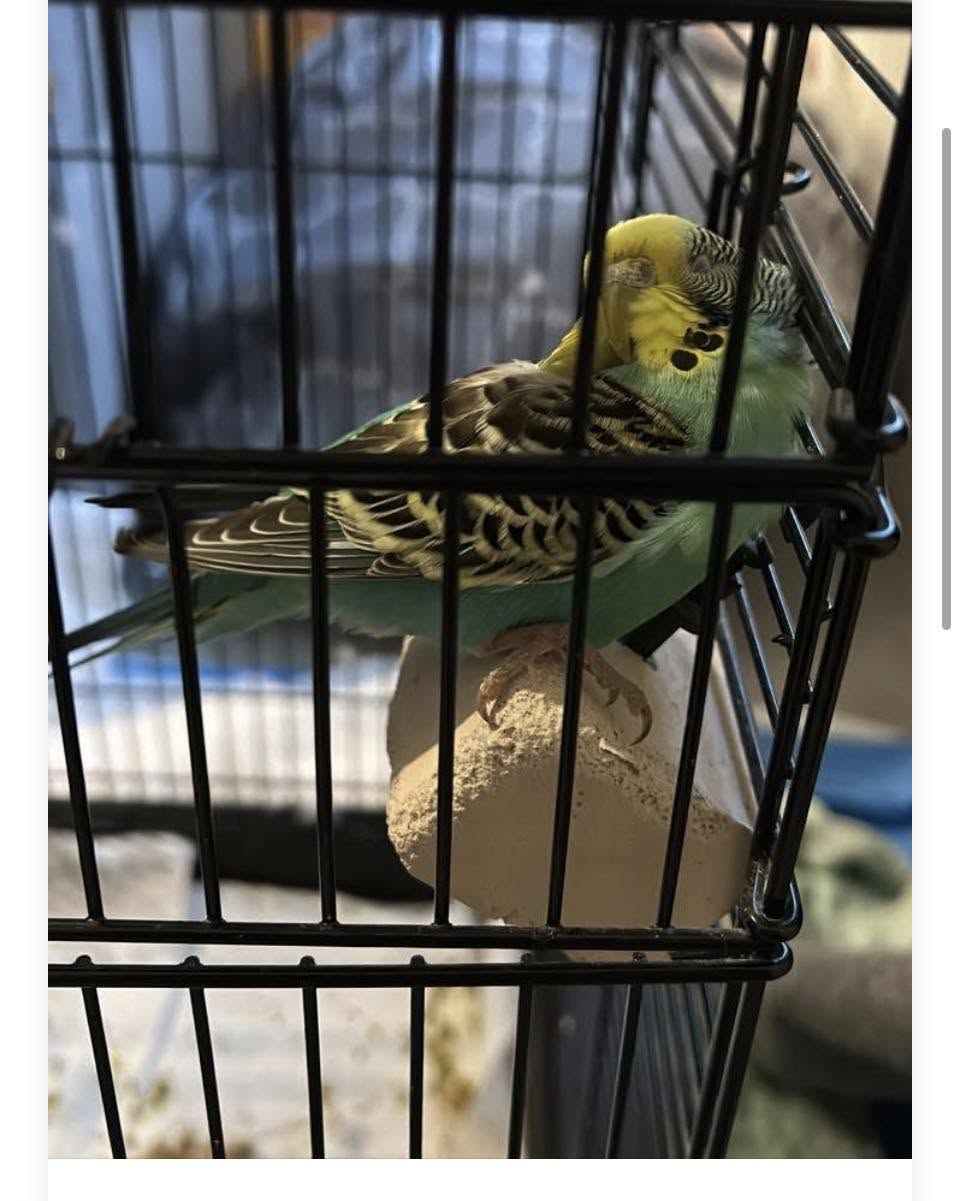
A budgie that falls from its perch during normal waking hours — when there is no obvious fright trigger, when the bird was simply sitting or moving around the cage and lost its grip — is not having a night fright. Night fright, by definition, requires darkness and a sudden disturbance. A daytime fall without an obvious cause is a budgie whose coordination or grip is failing in a way that has a physical cause.
This could be the early sign of a neurological condition. It could be weakness developing from illness or nutritional deficiency. It could be age-related deterioration in an older bird. It could be the effect of a toxic exposure — zinc from cage bars, lead from a toy, a fume the bird has inhaled. In an older bird, it may reflect the accumulated effects of years on an inadequate diet that have caught up with the liver or the nervous system in ways that are now becoming visible.
Whatever the cause, a budgie that falls during the day, repeatedly, with no obvious trigger, needs to see an avian vet. Not after the next fall. Now. The grip test still applies — but the context of daytime falls makes the bar for seeking veterinary advice lower, not higher, than for a single nighttime incident.
In my 35 years, daytime falls that are dismissed as clumsiness or “just the bird being a bit off” are consistently among the situations I most regret not having been consulted about earlier. They are not usually nothing. By the time they are happening repeatedly, something has been building for some time.
How To Reduce The Risk — Practical Steps For Every Budgie Owner
Some of what causes budgies to fall can be managed, and it is worth being specific about what actually makes a difference.
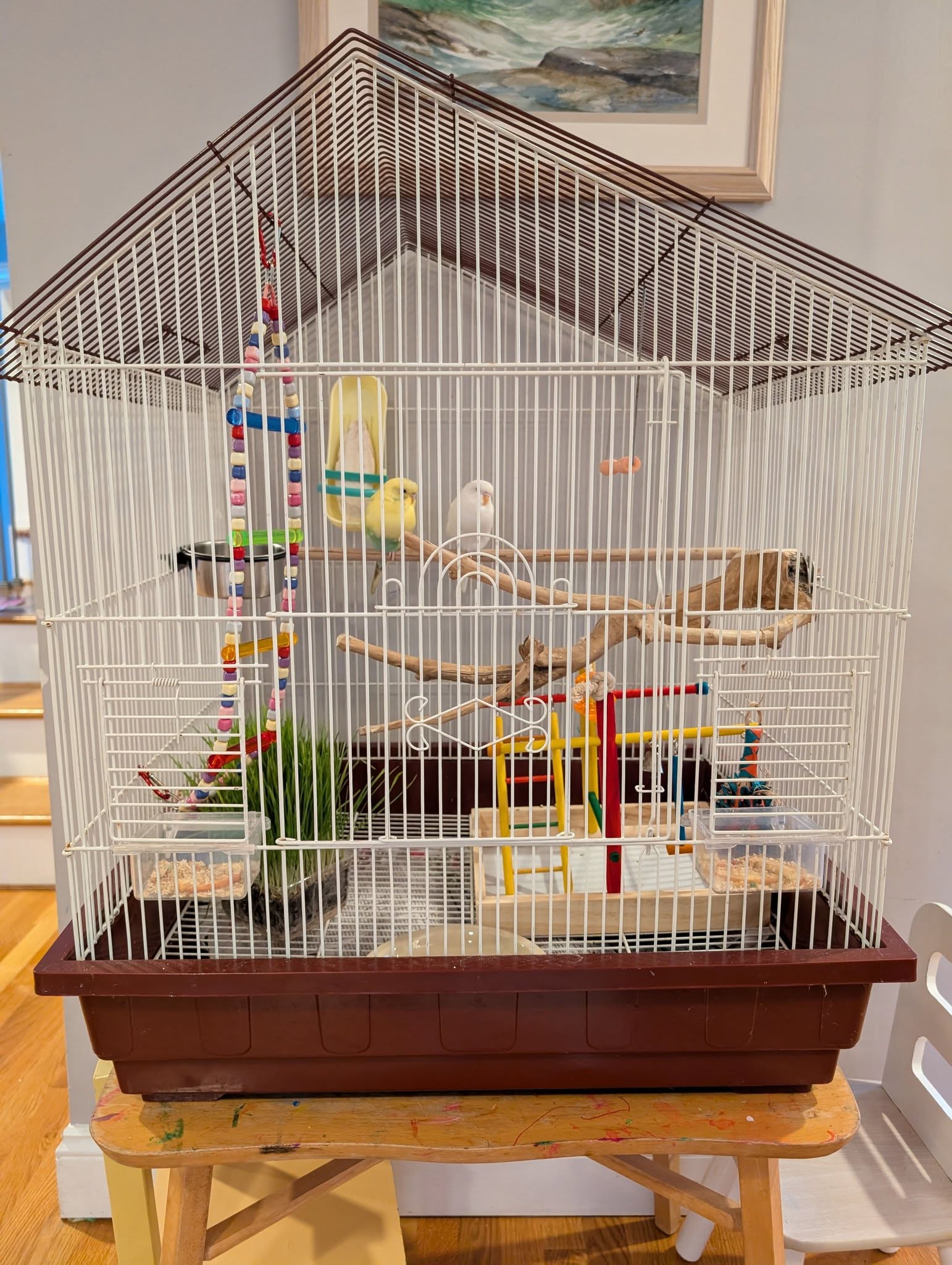
Perch choice matters more than most owners realise. The standard round wooden dowel perch supplied with most cages is a uniform diameter that does not exercise the foot muscles the way a varied-diameter perch does. It also provides less grip variation than a natural branch, and a bird that develops weak foot muscles over time on uniform perches is a bird more likely to lose its grip. Natural branch perches of varying diameter — sanded smooth at the contact surfaces if needed, free of any toxic coatings or treatments — are considerably better. We can advise on appropriate materials if you are unsure.
Perch placement matters. A perch positioned too high in a cage means that a fall from it is a longer fall to a harder surface. A cage with perches at multiple heights and a clear, unobstructed path between them is safer than one with perches stacked directly above each other where a falling bird will clip others on the way down.
Diet is the long-game factor that determines how many of the internal causes of falling materialise in the first place. A bird fed exclusively on seed for years is a bird accumulating nutritional debt — calcium deficiency, vitamin D deficiency, developing liver stress from the fat content of a seed-only diet — that eventually shows up in physical symptoms. The connection between what a bird eats at two and what its nervous system does at seven is real and documented. A varied diet that includes quality pellets or a properly balanced seed mix, fresh greens, and cuttlebone is not a guarantee against illness, but it removes several of the most common causes of the neurological episodes that present as falls.
For night frights specifically: a low-level night light, cage placement away from windows and from rooms with nighttime foot traffic, and curtains or blinds that prevent headlights from reaching the cage all reduce the frequency of disturbance. None of them eliminate the possibility entirely — budgies are light sleepers and some are more reactive than others — but they address the most common triggers.
Back To Saturday Morning
The customer who rang at half past eight told me that her bird had climbed back up to the lower perch and was gripping it normally. He was quiet, she said, but his feet looked right. He was watching her. When she moved around the kitchen, his head followed her the way it usually did.
I told her it sounded like a night fright. I told her what to look for over the rest of the day — any change in grip, any further falls, any change in appetite or droppings, any sign that the bird was not recovering to its normal self. I told her to ring me or go straight to an avian vet if any of those things changed.
She rang back that afternoon. He was chattering. She had found the likely culprit — her neighbour had set off a car alarm at around two in the morning, which she had slept through but which, at cage level in a quiet house, had been enough to send him into a panic in the dark.
She moved the cage slightly further from the window. That was the last night fright he had for more than a year.
That is how these conversations should go. A clear question, an honest answer, the right things to watch for, and the knowledge to know when watching is enough and when it is not. If your budgie has fallen and you are not sure which situation you are in, come and talk to us. We would rather hear from you early than late.
Frequently Asked Questions
My budgie fell off its perch at night but seems fine now. Should I still see a vet?
If the bird is gripping normally, eating normally, and behaving as it typically does — including having moments of its normal chatty, alert personality — then careful monitoring is a reasonable immediate response. Watch it closely through the day. Any change in grip, any further fall, any change in appetite or droppings, any reduction in the bird’s normal level of responsiveness should prompt a call to an avian vet. A single, isolated night fright with full recovery is not automatically a veterinary emergency. A pattern, or a recovery that is not complete, is.
How do I know if my budgie had a seizure rather than a night fright?
The grip test I describe in this article is the most accessible immediate indicator. A post-seizure bird will often have impaired coordination and grip that a post-fright bird will not. Other indicators include: the bird was witnessed during the episode showing twitching, convulsing, or wing-flapping with no apparent stimulus; the bird was unresponsive for a period rather than simply panicked; the recovery has taken significantly longer than thirty minutes; or the bird has fallen during the day when there was no obvious fright trigger. If any of those things are true, the situation needs veterinary assessment.
Are some budgies more prone to night frights than others?
Yes. Younger birds that are still adjusting to a new environment tend to be more reactive. Older birds whose vision has deteriorated are more vulnerable to disorientation in darkness. Birds kept in lighter sleep conditions — a room with outside noise, a position near windows — have more opportunities for disturbance. And some individuals are simply more reactive than others, for reasons that are not always identifiable. If your bird has repeated night frights despite your removing obvious triggers, come and talk to us about whether the cage placement or setup can be improved.
Could the perches I am using be contributing to my bird falling?
Possibly. A perch that is too smooth provides less grip than a natural branch with slight texture variation. A perch that is the wrong diameter for the bird’s foot — too thin or too thick — means the foot cannot close around it correctly. A perch that is positioned at an uncomfortable angle creates unnecessary balance strain. And in an older bird or one with foot problems, the standard dowel perch can become a genuine difficulty. Bring your bird in and let us look at what you have — perch advice is part of the conversation we have always offered and it is one of the most practically useful things we can address.
My budgie falls during the day, not just at night. What does that mean?
It means the cause is not night fright, and it means I would want that bird seen by an avian vet sooner rather than later. Daytime falls without a clear fright trigger indicate something affecting the bird’s coordination, balance, or grip that has a physical cause. That cause needs to be identified and addressed. Please do not wait to see if it resolves on its own.
Not Sure Whether Your Budgie’s Fall Was Serious? Come And Talk To Us.
Describe what you saw and we will help you work out whether you need an avian vet today or whether careful observation is the right response. That conversation is always available, and it costs nothing.
Written by Neil — Neil has owned and run Paradise Pets Swindon since 1988. He has advised budgie owners for over 35 years on exactly these situations. If your bird has fallen and you are not sure what it means, visit us at Manor Garden Centre, Cheney Manor, Swindon — or call 01793 512400.
