
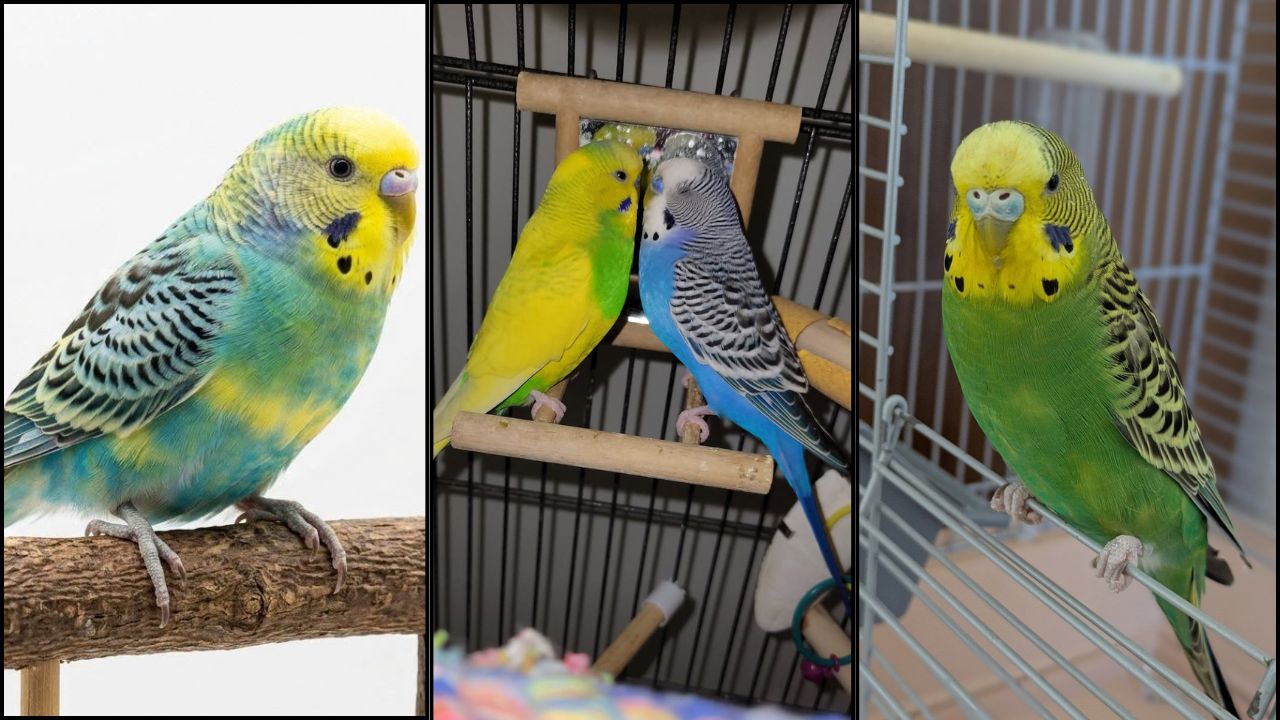

Neil has kept, bred, and sold budgies at Paradise Pets Swindon since 1988 — over 35 years of helping UK owners through the most urgent moments of British pet bird emergencies. The Met Office has issued a Red Extreme Heat Warning for Wednesday and Thursday, with temperatures forecast to reach 39-40°C and potentially break the all-time UK June temperature record. If you are reading this article right now because your budgie is actively panting in the heat, this is the urgent minute-by-minute action protocol — exactly what to do in the next 10 minutes to save your bird’s life. The next 600 seconds genuinely matter. Here is exactly how to use them.
A man called the shop one Tuesday afternoon, panicking. His budgie Sky was panting heavily, holding his wings out from his body, sitting motionless on the cage floor. The man knew something was seriously wrong but did not know what to do first. He had moved the cage, then changed the water, then tried to find a fan, then read something online about misting — and was now realising he was running around the flat doing different things without a clear plan while his bird’s condition was visibly deteriorating. He needed someone to tell him, in order, what to actually do in the next few minutes.
I spent ten minutes on the phone with him walking him through exactly what to do. The first thing. Then the second thing. Then the third. By the time we ended the call, Sky was visibly improving — wings were less extended, breathing was steadier, the bird was responsive again. The crisis had been averted not through any single dramatic intervention, but through a clear minute-by-minute sequence of correct actions that addressed the heat emergency systematically rather than panickedly.
I am writing this article because if you are reading it right now, you may be in exactly the situation that man was in. Your budgie is panting. The peak of this week’s record-breaking UK heatwave is genuinely upon us, with temperatures forecast to reach 39-40°C across southern England Wednesday and Thursday. The phone call I gave that man can save your bird too — but only if you know the exact sequence of actions to take, in the exact order they need to happen, within the next 10 minutes.
This article is the minute-by-minute emergency protocol you need if your budgie is actively panting right now. By the end of it, you will know exactly what to do in minute one, minute two, minute three, all the way through the critical 10-minute window — when to escalate to veterinary contact, what mistakes panicked owners make, and what to expect after the immediate crisis has been addressed.
The Critical 10-Minute Window — What Is Actually Happening
For UK budgie owners whose bird is panting right now, here is the honest physiology behind why these 10 minutes matter so much. Understanding what is happening helps you appreciate why the sequence I am about to give you addresses each problem in the right order.
What is happening when your budgie pants:
- The bird’s natural cooling systems are being overwhelmed — body temperature is rising beyond normal regulation
- Open-mouth breathing is an emergency response — not normal behaviour
- Wing extension creates surface area for heat loss — the bird is using maximum cooling posture
- Sitting on the cage floor seeks the coolest position available
- Water loss is accelerating — through respiration and behaviour
- Internal organ stress is beginning if not addressed promptly
- The 10-minute window is your effective home intervention period
- Beyond about 15 minutes of sustained crisis — veterinary intervention becomes increasingly necessary
The 10-minute frame is not arbitrary. It represents approximately how long an actively panting budgie in current Red warning conditions can typically be managed effectively through owner intervention alone. Acting within those 10 minutes, with the right sequence, usually resolves the immediate crisis. Acting outside that window often means the situation has progressed to a level where veterinary support becomes essential.
For more on the heat stress progression generally, our article on exactly what to do with your budgie when temperatures soar covers the broader emergency framework, and our article on how to tell if your budgie is too hot before it is too late covers the four-stage progression model that puts active panting at the Stage 3 level.
This article is specifically the urgent minute-by-minute protocol for Stage 3 active panting. Use it now if your bird is panting right now.
MINUTE 0-1 — Immediate Assessment And First Actions
The first minute is about quickly confirming the situation and starting the most impactful first action. Do not waste this minute reading about it — act while you scan.
What to do in minute 0-1:
- 0:00 — Confirm the situation is heat-related (panting, wings extended, very warm room, no other obvious cause)
- 0:15 — Find your avian vet’s phone number and place it visible (have it ready, you may need it)
- 0:30 — Open windows on opposite sides of the home to create cross-ventilation (not directly near cage)
- 0:45 — Locate your spray bottle and fill with cool tap water (NOT cold, NOT iced)
- 1:00 — Identify the coolest room in your house (ground floor, north-facing, away from windows)
The single most important action of minute 0-1 is identifying the coolest room. This determines where you will move the cage in minute 1-2. If you do not know which room is coolest, the ground floor is almost always cooler than upper floors, north-facing rooms are cooler than south-facing, and tiled floor areas are cooler than carpeted ones. Decide in this first minute.
Do NOT use this minute to search online for more information. You already have the information you need — this article. Use minute 0-1 for action, not research.
MINUTE 1-2 — Cage Relocation
The second minute is about getting your bird out of the dangerous environment and into the coolest available space. This is the single highest-impact action of the entire 10-minute protocol.
What to do in minute 1-2:
- 1:00 — Approach the cage calmly — do not increase bird’s stress by rushing or panicking
- 1:15 — Lift the cage smoothly — even if heavy, move it as one piece
- 1:30 — Transport to the coolest room you identified in minute 1
- 1:45 — Position cage away from any windows in the new room
- 2:00 — Ensure cage is on a tiled or cool surface if possible
The cage relocation matters more than almost any other intervention because it addresses the underlying problem directly. If the bird is in a 35°C room, no amount of cooling within that room will help as much as moving the bird to a 25°C room. Even within a single UK home, room-to-room temperature differences during heatwave conditions can be 8-12°C — making this single action genuinely transformative.
Move the entire cage rather than the bird alone. Removing the bird from the cage during heat stress adds stress and risk. The cage moves; the bird stays in the cage.
For UK budgies whose normal location is a conservatory, sunroom, or upper floor, this relocation step is even more critical. Conservatories can reach 45°C+ during Red warning conditions — moving the bird to any other room is genuinely life-saving.
MINUTE 2-3 — Setting Up The Cooling Environment
The third minute is about creating the rapid cooling environment around the cage that will help your bird’s body temperature drop. You have one minute to get the basic setup in place.
What to do in minute 2-3:
- 2:00 — Place ice packs wrapped in tea towels around the OUTSIDE of the cage — never inside
- 2:15 — If you have no ice packs, frozen vegetables (peas, sweetcorn) in towels work
- 2:30 — Drape a damp (not soaking) towel over PART of the cage — top and one side
- 2:45 — Leave the front and another side OPEN — air circulation must continue
- 3:00 — Set up a fan on lowest setting at distance, NOT pointed at the bird — aim at the ice packs or the wall
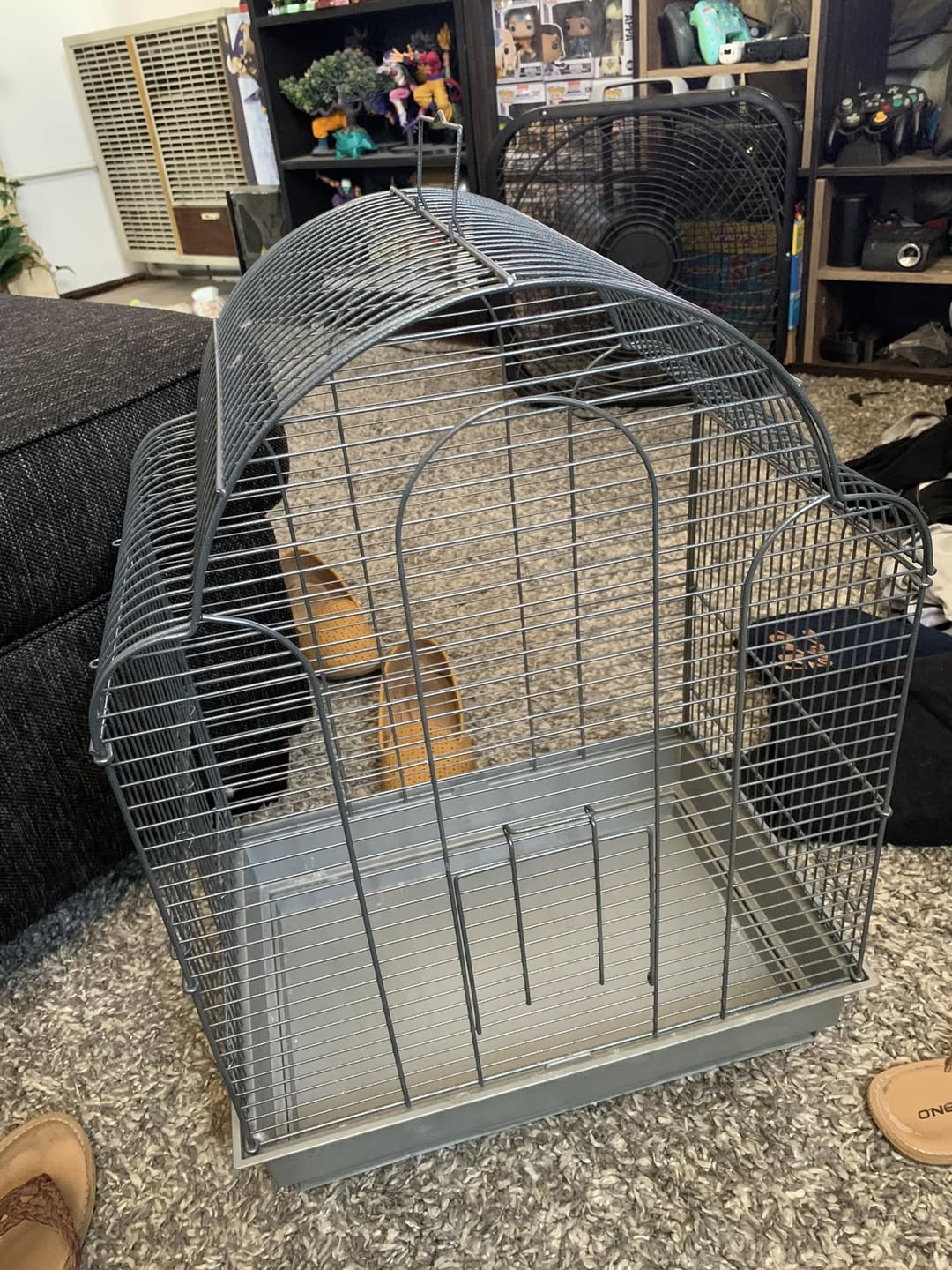
The principle behind this minute is evaporative cooling. Damp towels evaporate water and cool the surrounding air. Ice packs absorb heat from the surrounding air. A gentle fan circulates the cooled air around the cage. None of these elements touches the bird directly — they all work by cooling the environment the bird is breathing.
The critical safety point in minute 2-3 is the fan placement. Direct airflow at a budgie is harmful — it can chill the bird suddenly or cause respiratory irritation. The fan creates air circulation across the room, not focused airflow at the cage. Aim the fan toward the ice packs, toward the wall, or toward the door of the room — anywhere except directly at the bird.
If you do not have ice packs or frozen vegetables, fill water bottles with cold tap water, wrap them in tea towels, and use those as makeshift ice packs. Improvise with what you have.
MINUTE 3-5 — The Misting Protocol
Minutes 3-5 are when you begin the gentle misting protocol that directly helps your bird’s body cool down. This is the first intervention that directly affects the bird.
What to do in minutes 3-5:
- 3:00 — Hold your spray bottle of cool (NOT cold) tap water at arm’s length above the cage
- 3:15 — Mist gently from above — fine spray, not direct stream
- 3:30 — Allow droplets to fall onto the bird naturally — do not aim directly at face
- 3:45 — Wait 30 seconds and observe — bird should not seem startled or stressed
- 4:00 — Mist again gently — short burst, not heavy spraying
- 4:15 — Watch for early improvement signs — wings starting to relax slightly, breathing slowing
- 4:30 — Continue gentle misting every 30-60 seconds
- 5:00 — Bird should be visibly damp but not soaked
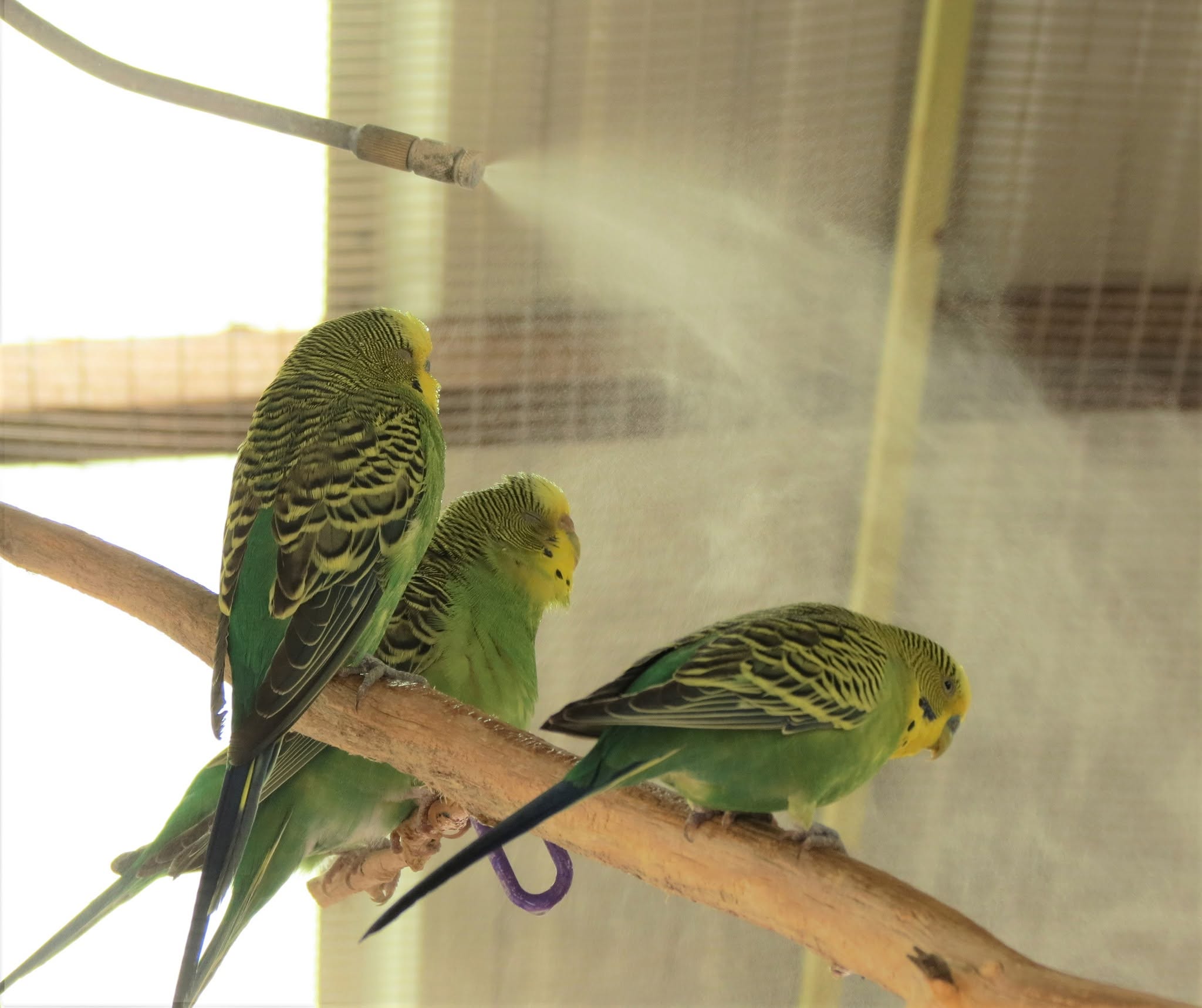
The misting protocol works because water evaporating from feathers cools the bird through evaporative heat loss — exactly how birds cool naturally when bathing. The critical word is “gentle.” Heavy spraying or direct streams at the bird causes stress and can cause thermal shock. Cool tap water at room temperature is the correct temperature — never use cold water from the refrigerator, and absolutely never use iced water.
Hold the spray bottle high enough that the mist falls as a fine shower onto the bird rather than hitting them directly. The droplets should look like rainfall onto the bird, not a direct spray. Most UK budgies tolerate this gentle misting well during heat stress and visibly relax as the cooling effect develops.
If your budgie shows distress or actively avoids the mist, reduce frequency. The goal is helping the bird cool, not stressing them further. Some birds respond better to mist; others to ice packs alone with environmental cooling. Read your bird’s response and adjust.
MINUTE 5-7 — Hydration And Self-Regulation Support
Minutes 5-7 are when you address the bird’s hydration needs and provide opportunities for self-regulation through bathing.
What to do in minutes 5-7:
- 5:00 — Refresh the water dish with cool fresh tap water — change rather than add
- 5:15 — Place a SECOND water source in the cage — accessible from different perch
- 5:30 — Add a shallow heavy ceramic dish on the cage floor — for bathing if bird wants
- 5:45 — Fill the bathing dish with cool tap water about 1cm deep — shallow enough to be safe
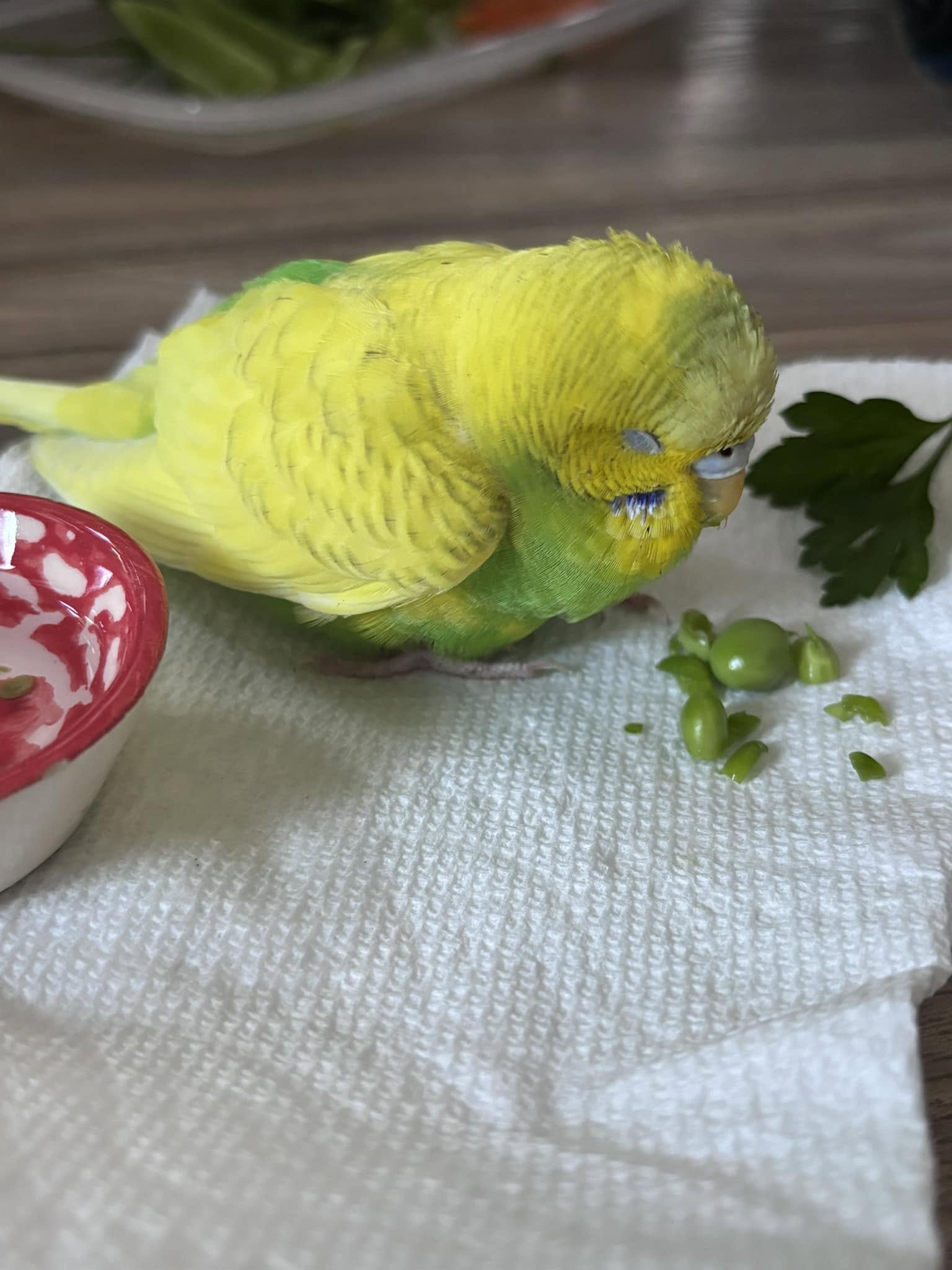
- 6:00 — Offer a frozen pea or piece of frozen sweetcorn through the cage bars — internal cooling
- 6:15 — Continue gentle misting every minute
- 6:30 — Watch for the bird voluntarily approaching water sources
- 6:45 — Note any bathing behaviour — positive sign
- 7:00 — Check bird’s appearance for improvement
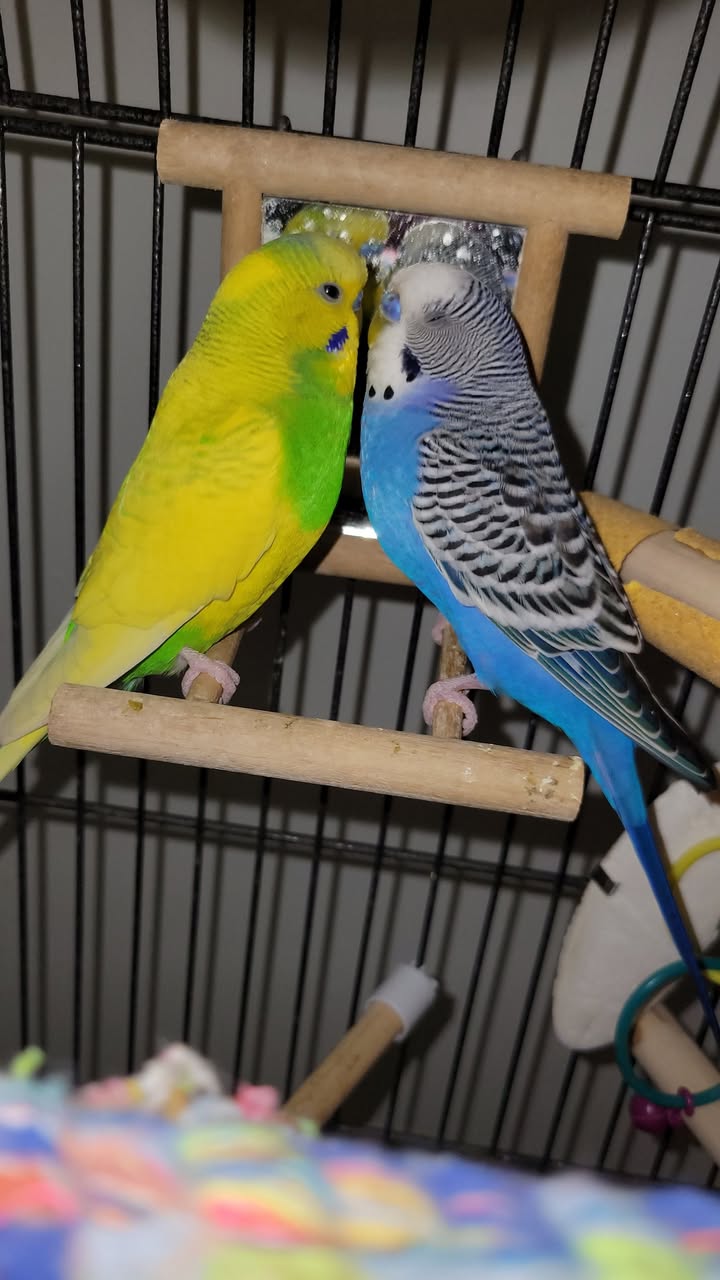
The hydration approach in minutes 5-7 addresses water loss from the panting and heat stress. Multiple water sources increase the chance the bird drinks — and during heat stress, dehydration is a parallel risk to the overheating itself. The bathing dish provides the bird the option to self-cool through their natural mechanism. Some budgies use it; some do not. Either response is acceptable.
The frozen vegetable approach provides internal cooling through ingestion. Most UK budgies will eat frozen peas readily — the cool food helps cool the bird from inside. This is particularly effective if the bird is still alert enough to eat. Do not force feeding; offer and observe.
Continue the gentle misting throughout — minutes 5-7 do not replace the misting, they add to it. The combined effect of environmental cooling, surface cooling (mist), and hydration support is what genuinely turns an active heat emergency around.
MINUTE 7-10 — Critical Monitoring And Escalation Decision
The final three minutes of your critical window are about assessing whether the interventions are working and deciding whether veterinary contact is needed.
What to do in minutes 7-10:
- 7:00 — Look for specific improvement signs — wings starting to relax, breathing slowing
- 7:30 — Note whether bird has moved at all — any movement is positive
- 8:00 — Continue gentle misting, refresh ice packs if any are warming
- 8:30 — Check whether bird is responding to your presence or voice — alertness assessment
- 9:00 — Make the escalation decision — see criteria below
- 9:30 — If escalating, call avian vet IMMEDIATELY while maintaining cooling
- 10:00 — Continue all interventions while making vet contact or continuing home care
Signs of improvement to look for at the 10-minute mark:
- Wings are less extended — closing back toward body
- Breathing is becoming more controlled — less obviously open-mouth
- Bird is more responsive — turning head, looking at you
- Bird has moved at all — any movement is positive
- Eyes are more alert — not closed or half-closed
- Bird may be drinking from water source
- Posture is becoming more normal
Signs that warrant immediate veterinary contact at the 10-minute mark:
- No improvement despite all interventions
- Continued laboured breathing
- Bird remains unresponsive to you
- Any sign of collapse or extreme weakness
- Bird is on cage floor unable to stand
- Convulsions or seizure-like activity
- Eyes closed and not opening when you talk to bird
- Bird appears to be deteriorating despite cooling
The decision at the 10-minute mark is whether the home intervention is working or whether veterinary support is now needed. Improving birds usually show clear signs by 10 minutes — even subtle improvement is meaningful. Birds that are not improving by 10 minutes, or that are continuing to deteriorate, need professional intervention. Do not wait beyond 10 minutes of sustained crisis to call the vet — the diminishing window of effective intervention matters genuinely.
What NOT To Do In Those Critical 10 Minutes
For UK budgie owners, knowing what to avoid is as important as knowing what to do. After 35 years of watching panicked owners during heat emergencies, here are the mistakes that genuinely make situations worse.
- DO NOT put ice or cold water directly on the bird — thermal shock risk
- DO NOT use cold water from the refrigerator for misting — cool tap water only
- DO NOT put ice cubes in the drinking water — cool fresh tap water is sufficient
- DO NOT point a fan directly at the bird — air circulation in room only
- DO NOT pick up the bird — handling adds stress and may worsen condition
- DO NOT cover the entire cage with wet towels — air circulation must continue
- DO NOT spend minute 1 searching online for advice — act first, research later
- DO NOT panic-call multiple vets — call one, follow their advice
- DO NOT try to feed the bird forcefully — offer cool foods, do not force
- DO NOT submerge the bird in water — misting only, no immersion
- DO NOT use any products containing essential oils or aerosols nearby — respiratory damage
- DO NOT wait to see if things improve before acting — the 10-minute window starts now
The single most dangerous panic response I see is owners trying to ice the bird directly — putting ice cubes in the cage, on the bird, or in the water. The instinct is understandable. The execution is harmful. Thermal shock from sudden cold contact can cause as much physiological stress as the heat itself. The correct cooling is gradual, controlled, and through air and mist rather than direct cold contact.
The second most common mistake is using minute 1 for research rather than action. By the time you read several articles or watch videos, much of your critical window is already gone. This article exists so you can read it once and have the sequence ready when you need it.
After The Critical 10 Minutes — The Next 30
For UK budgie owners whose bird has come through the immediate crisis, here is what to do in the 30 minutes following the initial intervention. The recovery period matters as much as the emergency response.
What to do in the 30 minutes after immediate crisis:
- Continue gentle misting every 5-10 minutes — frequency reduces as bird improves
- Maintain cooling environment — refresh ice packs as needed
- Keep cage in the cool room — do NOT return to previous location yet
- Monitor breathing pattern — should continue to improve
- Watch for return of normal posture — wings relaxed, alert head position
- Allow bird to drink and bathe at own pace — voluntary engagement is positive
- Reduce direct attention — bird needs to recover quietly
- Note time of crisis for follow-up vet consultation — even if home-managed
- Plan to continue cool room placement for rest of day
- Be prepared to repeat protocol if symptoms return
A budgie that comes through an active panting heat emergency successfully needs gentle continued attention through the rest of the day. The crisis is resolved when symptoms have completely settled — typically 30-60 minutes of continued cool environment after the initial intervention. Returning the bird to the previous cage location too quickly can trigger relapse if that location is still genuinely too warm.
Many UK budgie owners ask whether to follow up with a vet consultation even after successful home management. The answer is usually yes — a brief phone call or visit to your avian vet helps confirm the bird has fully recovered and identifies any lingering effects that might need attention. The protocol above resolves the immediate crisis; veterinary follow-up confirms full recovery.
Frequently Asked Questions
How long do I have to act when my budgie is panting?
You have approximately 10 critical minutes during which owner intervention typically resolves an active panting heat emergency in current Red warning conditions. Acting within those 10 minutes with the right sequence usually addresses the crisis successfully. Beyond about 15 minutes of sustained crisis without effective intervention, the situation often progresses to a level where veterinary support becomes essential. The 10-minute window is not arbitrary — it reflects realistic timelines for UK budgie heat emergency response.
What is the single most important thing to do in the first minute?
Identify the coolest room in your house so you can move the cage immediately in minute 1-2. Ground floor north-facing rooms are typically coolest, tiled floors are cooler than carpeted areas, and rooms away from windows during peak heat hours are cooler than south or west-facing rooms. The cage relocation is the highest-impact single action of the entire protocol — even within a single UK home, room-to-room temperature differences can be 8-12°C during heatwave conditions.
Should I put ice cubes in the cage to cool my bird quickly?
No — never put ice or frozen items inside the cage. Direct contact with ice can cause cold injury and thermal shock, which can be as dangerous as the heat itself. Ice packs should be placed OUTSIDE the cage, wrapped in tea towels, to cool the surrounding air. Cool (not iced) tap water for misting is correct. Cool fresh tap water in the drinking dish is correct. Ice and frozen items belong outside the cage helping to cool the air around the bird, not in contact with the bird.
How do I know if the 10-minute protocol is working?
Look for specific improvement signs at the 10-minute mark — wings becoming less extended and starting to relax back toward the body, breathing becoming more controlled and less obviously open-mouth, the bird becoming more responsive to you and your voice, any movement or shift in posture, eyes more alert rather than half-closed. Even subtle improvements are meaningful. A bird showing no improvement, or continuing to deteriorate, despite all interventions, needs immediate veterinary contact.
What if my budgie still pants after 10 minutes of intervention?
Call your avian vet immediately. Continued active panting despite all the interventions in this protocol indicates the situation has progressed beyond what home management can address. Maintain all cooling interventions while making vet contact. Be prepared to travel to the vet if directed. The diminishing window for effective intervention beyond 10-15 minutes means waiting longer to seek professional help can affect outcomes negatively.
Can I use this protocol multiple times if the bird relapses?
Yes — and you should be prepared to. UK budgies that come through one heat emergency may show symptoms again if the room environment continues to be too warm or if other stressors return. The protocol can be repeated, but persistent or recurring symptoms warrant veterinary consultation regardless of whether home management is initially successful. Multiple episodes in one day suggest the cage environment fundamentally cannot keep the bird safe in current conditions and needs reassessment.
Where can I get urgent UK budgie supplies in Swindon this week?
Come and see us at Paradise Pets, Manor Garden Centre, Cheney Manor, Swindon SN2 2QJ. We are open through the Red warning heatwave with spray bottles, bathing dishes, cooling supplies, and emergency essentials. Free urgent advice based on 35 years of helping UK budgies through British heat emergencies. Ring us on 01793 512400.
One Last Thing From Me
“What do I do RIGHT NOW?” is the question UK budgie owners ask me most urgently during British heat emergencies, and one I want to answer as clearly and practically as possible. The honest answer, after 35 years of helping UK pet birds through summer crises, is — you do exactly what is in this article, in the exact order, starting now. The next 10 minutes have a clear structure. Each minute has a specific action. The sequence works because it addresses the bird’s physiological needs in the correct order — environment first, surface cooling second, hydration third, monitoring and escalation last. UK budgie owners who follow this protocol calmly through the critical 10-minute window genuinely save their birds. UK budgie owners who panic and try many things at once, or who waste minutes searching online, or who delay action, often have worse outcomes. The difference between these two groups is rarely about how much they care — it is about whether they have a clear sequence to follow. This article is that sequence. Use it now if you need to.
The man with Sky on the phone that Tuesday afternoon? Sky recovered fully within the 10-minute window, and the man called me back two hours later to say his budgie was eating normally, vocalising, and looked completely recovered. He told me afterwards that the protocol had given him something genuinely valuable beyond saving Sky — it had given him confidence that he would know what to do next time. He no longer felt helpless in the face of UK summer heat emergencies. He had the sequence.
That is what I want for every UK budgie owner reading this article. Not the experience of panicked helplessness during a bird emergency, but the confidence of knowing exactly what to do in the next 10 minutes. UK heatwaves like this week’s will continue to affect British pet birds in coming summers. The owners whose birds genuinely come through these emergencies are not the ones who happen to do the right thing accidentally — they are the ones who have a clear protocol ready when they need it. This article is that protocol. Save it. Bookmark it. Have it ready for the next time your bird, or any UK pet bird belonging to friends or family, faces an active heat emergency.
If your budgie is panting right now and you have read this article all the way through during the actual emergency — please stop reading and start the protocol. Minute zero starts now. Move the cage. Set up cooling. Begin misting. Address hydration. Monitor improvement. Escalate to vet if needed. The sequence I have given you has worked for UK budgies through every British summer since 1988. It will work for yours.
If you are local to Swindon and need urgent supplies or advice this week, we are open and happy to help. After 35 years at the counter, helping UK budgie owners through critical moments is one of the most genuinely valuable things any independent pet shop can do.
Need Urgent UK Budgie Heatwave Supplies This Week? Come And See Me
We are open through the Red warning heatwave and stock spray bottles, bathing dishes, cooling supplies, and emergency essentials. Free urgent advice on heat emergency protocols based on 35 years of helping UK budgies through British heat crises. That is how we have done things since 1988.